
On this page
Start here
Quick answer
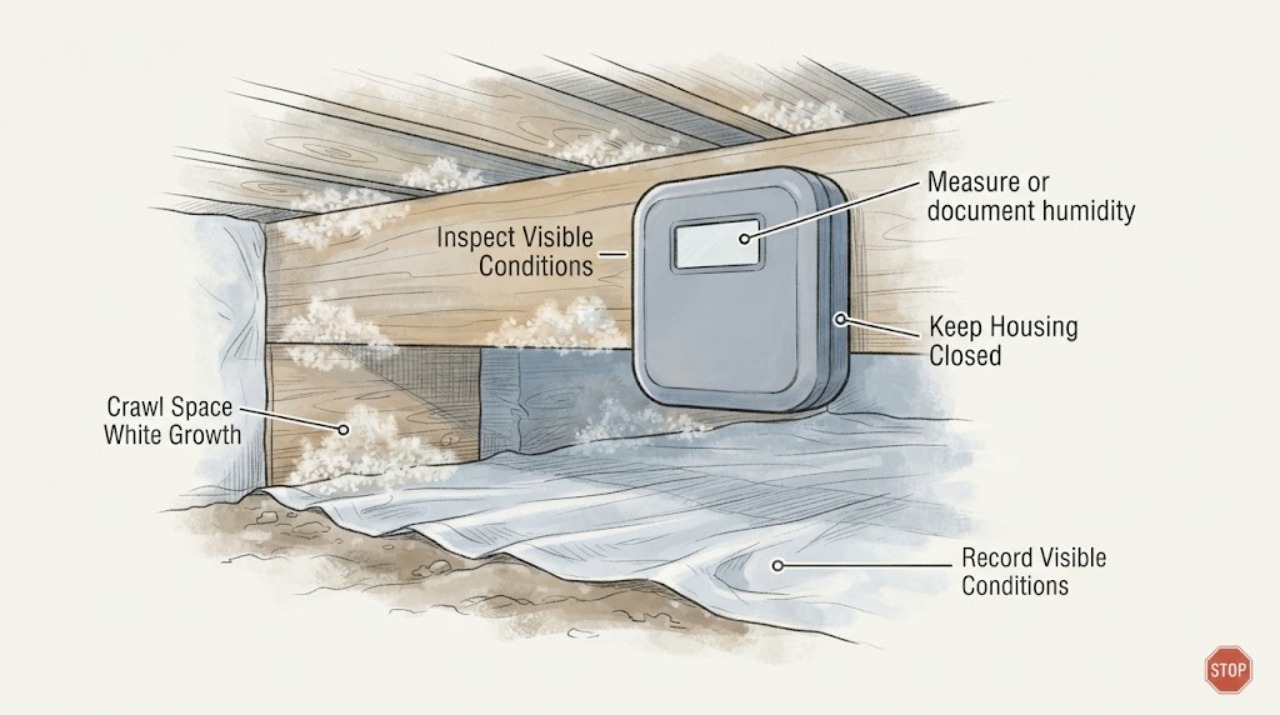
White growth in a crawl space is not enough to identify mold: EPA notes that white, soluble fibrous material on crawl-space soil may be alkaline salts, while mold can also grow in damp, dark spaces. From the access opening, document the material, humidity, exposed or damaged ground cover, standing water, plumbing leaks, and damp insulation without crawling in or disturbing anything. A vapor retarder can be part of a complete ground-moisture plan, but it will not correct standing water, a plumbing leak, unsafe access, or established contamination by itself. Stop and arrange experienced moisture or mold service when the space is confined, contaminated, wet, structurally questionable, or the source cannot be safely identified.
Work through in order
Diagnostic checks
Use only checks that match the exact appliance or system and its official guide.
-
Observe the crawl space without entering
From the access opening or another stable location, use a flashlight and camera to record where the white material, dampness, odor, pooled water, exposed soil, damaged ground cover, or wet insulation appears. Keep people and pets away and do not crawl under the building for a closer look.
Expected result: The material is limited to soil, appears on wood or insulation, is near a foundation wall or plumbing, is accompanied by standing water, or extends beyond what can be seen from the opening.
Next step: Take dated photos and describe the visible extent for a mold and moisture professional; keep the access area closed until the space is assessed.
Stop if: Do not enter a low, dark, wet, contaminated, or poorly ventilated space, and stop if the opening reveals sagging structure, loose insulation, exposed wiring, sewage, or standing water.
Why this matters
Why: Location and extent help distinguish a soil moisture clue from a building-material or plumbing problem, but a view from the opening cannot rule out hidden growth or unsafe conditions.
-
Record clues without trying to identify the white material by touch
From the safe viewing position, photograph the material against its surrounding soil or building surface and note whether it looks fibrous, fuzzy, crusted, powdery, or associated with a musty odor, dampness, or previous water entry. Do not scrape, brush, vacuum, wet, or remove it.
Expected result: The material is white and fibrous on soil, fuzzy on a damp building material, crusted near a water path, odor-associated, or not clearly visible enough to classify.
Next step: Leave the material undisturbed and give the photos, moisture history, and odor notes to an experienced mold or moisture investigator; do not order treatment based on color alone.
Stop if: Stop immediately if observing the area causes breathing, eye, skin, or other symptoms, or if reaching it would require entering or disturbing the crawl space.
Why this matters
Why: A white soil deposit can be alkaline salts rather than mold, while color and texture still cannot confirm a species or make a cleanup plan. Moisture history and the material it is growing on matter more than the color label.
-
Measure or document humidity and condensation from a safe position
If a humidity reading can be taken at the access opening without entering or placing a device in an unsafe area, record the relative humidity, date, weather, and any condensation on ducts, pipes, joists, or the underside of the floor. Do not crawl in to place a meter or reposition insulation.
Expected result: Humidity is repeatedly high, condensation is visible, insulation is damp, the reading changes sharply after weather, or no safe reading is available.
Next step: Log readings and conditions for the professional, and have the crawl-space moisture strategy assessed before changing vents, adding a dehumidifier, or sealing the ground.
Stop if: Do not enter to take measurements, touch wet electrical equipment, move ductwork, or alter ventilation while the source and space safety are unknown.
Why this matters
Why: High humidity and condensation can supply moisture for mold even without a visible leak; an unavailable reading is not evidence that humidity is normal. EPA recommends keeping indoor relative humidity below 60 percent when possible, while crawl-space control depends on the space's design and moisture sources.
-
Check visible ground cover and water sources
From outside and from the access opening, observe whether the crawl-space floor is bare earth, whether visible ground cover is missing, torn, pulled away from walls or piers, or covered by pooled water, and whether visible plumbing, duct condensation, or exterior runoff could add moisture. Do not lift the cover, pull insulation, dig soil, or redirect water toward the structure.
Expected result: Bare earth, damaged ground cover, pooled water, a plumbing drip, condensation, wet insulation, or exterior drainage toward the building is visible; or no source is visible.
Next step: Photograph each condition and ask a qualified professional to coordinate drainage, plumbing, ground-cover, humidity, and mold decisions rather than installing one control in isolation.
Stop if: Do not enter standing water, handle sewage, crawl beneath wet insulation, excavate around footings, or repair plumbing or drainage from inside the crawl space.
Why this matters
Why: Soil vapor and bulk water are different moisture paths: a ground capillary break can limit soil vapor, but it does not replace drainage or plumbing repair. No visible source does not rule out groundwater, concealed plumbing, or moisture entering through building assemblies.
-
Decide whether the condition needs immediate professional containment
Without entering, note whether the suspected growth is on wood, insulation, ducts, or other materials, whether the area is extensive or hidden, and whether occupants have asthma, allergies, chronic lung disease, or symptoms associated with the home. Do not ask a symptomatic or vulnerable person to inspect the crawl space.
Expected result: Growth or damp materials are extensive, hidden, on air-handling components, associated with odors or symptoms, or limited and visible from a safe opening.
Next step: Keep the access closed, arrange experienced mold and moisture assessment, and provide the location, photos, humidity history, water events, and occupant concerns.
Stop if: Do not clean, vacuum, fog, remove insulation, open building cavities, or operate fans that could spread dust or spores from a potentially contaminated space.
Why this matters
Why: Hidden, extensive, or air-handling contamination can spread beyond the crawl space and needs experienced assessment. A small visible area is not automatically safe to disturb, especially when the moisture source and access hazards are unknown.
Use your observations
Decision map
Find the observation that best matches what you see, then follow the next safe action.
-
PATH 01Safety boundary
What you see
The material is a limited white deposit on crawl-space soil, with no safe evidence yet that it is mold.
Do this next
Leave it in place, document it, and request moisture inspection; EPA notes that a white soluble fibrous soil material may be alkaline salts that indicate a moisture problem.
Why this path and its safety boundary
Safety stop: Do not touch, wet, scrape, or collect the material from inside the crawl space to identify it.
-
PATH 02Safety boundary
What you see
Growth or damp material is visible on wood, insulation, ducts, or other building materials, or the area has a musty odor and hidden extent.
Do this next
Keep the access closed and arrange experienced mold and moisture assessment to identify the water source, extent, and safe remediation boundary.
Why this path and its safety boundary
Safety stop: Do not disturb or clean the material, remove insulation, or run fans that could distribute dust or spores.
-
PATH 03Safety boundary
What you see
Bare earth, damaged ground cover, high humidity, or condensation is visible without standing water or clear structural movement.
Do this next
Have a qualified professional design or verify the complete crawl-space moisture strategy, which may include a sealed ground vapor retarder, drainage, ventilation or dehumidification, and repair of other sources.
Why this path and its safety boundary
Safety stop: Do not assume a new plastic layer will solve bulk water, plumbing leaks, condensation, or existing contamination.
-
PATH 04Safety boundary
What you see
The space is confined or contaminated, water is standing, insulation or structure is damaged, electrical equipment is wet, occupants have symptoms, or the source cannot be safely seen.
Do this next
Keep people out and request prompt professional mold, moisture, plumbing, or structural assessment as indicated by the observed hazard.
Why this path and its safety boundary
Safety stop: Do not enter, crawl, disturb materials, operate equipment in the space, or attempt cleanup without the appropriate assessment and controls.
Helpful context
Understand the symptom
White is a description, not a mold diagnosis
Mold comes in many colors. EPA's crawl-space investigation guidance also warns that a white, soluble fibrous material on soil may be alkaline salts, which indicates moisture has been a problem but does not identify the material as mold. Do not scrape, brush, wet, or collect a sample just to settle the color question; the useful first decision is whether the space has an active moisture problem and whether it is safe to enter.
A vapor barrier is one control, not a cure for every crawl-space problem
Ground moisture, outdoor air, groundwater, plumbing leaks, condensation, and poor drainage can all contribute to a damp crawl space. DOE describes a sealed ground capillary break as a way to limit vapor from soil, while EPA describes high humidity, bare earth, and groundwater as separate moisture conditions. The source should be mapped before plastic, insulation, ventilation, or dehumidification changes are chosen.
Only after diagnosis
Potential parts
- crawl-space ground vapor retarder
Consider this category only after the moisture source, drainage, access, and contamination have been assessed and a professional confirms that ground vapor is part of the problem.
Confirm the crawl-space design, floor and wall conditions, seams, penetrations, local requirements, and whether the assembly must remain serviceable before selecting a material or installation method.
When checks do not resolve it
Need a professional?
Request experienced mold and moisture assessment when white growth is on building materials, the source is hidden, humidity or condensation persists, ground cover is damaged, or a vapor retarder is being considered. Seek prompt service for standing water, sewage, wet electrical equipment, damaged structure or insulation, extensive or air-handling contamination, or symptoms associated with the space.
Common questions
FAQ
Is white material in a crawl space definitely mold?
No. EPA notes that a white, soluble fibrous material on crawl-space soil may be alkaline salts, while mold can also be many colors. Leave it undisturbed and have the moisture condition and material assessed rather than diagnosing by color.
Will a vapor barrier stop crawl-space mold?
It may reduce water vapor from soil when it is part of a correctly designed moisture-control system, but it does not repair plumbing leaks, standing water, drainage, condensation, or existing contamination. Assess the source before choosing a ground cover.
Should I crawl under the house to clean the white growth?
Not as a first step. A crawl space may be confined, wet, contaminated, poorly ventilated, or electrically unsafe, and disturbing growth can spread dust and spores. Photograph it from the opening and arrange experienced assessment.
What humidity level should a crawl space have?
EPA advises keeping indoor relative humidity below 60 percent when possible, but crawl-space control depends on the space design, climate, ventilation, soil, groundwater, and condensation. Record readings safely and have the complete strategy evaluated instead of changing one control from a single reading.
Read the exact guide
Official sources
- Crawlspace: Capillary Break at Crawlspace FloorsU.S. Department of Energy Building Science Education · Supports explaining that soil can introduce water vapor, that a sealed ground capillary break can limit vapor entry, and that bulk-water drainage remains a separate concern.
- Addressing Indoor Environmental Concerns During RemodelingU.S. Environmental Protection Agency · Supports considering outside drainage, foundation moisture, and vapor-barrier methods as coordinated controls rather than isolated repairs.
- MoldCenters for Disease Control and Prevention · Supports fixing moisture, recognizing that color does not identify mold type, keeping humidity low, and referring cleanup and symptoms to safe controls.
- Job Aid 16-1: Install or Repair a Crawl Space Vapor RetarderU.S. Department of Energy · Supports treating vapor-retarder installation as specialized weatherization work and avoiding unsupported retrofit instructions in an unsafe or contaminated crawl space.
- Mold Course Chapter 2:U.S. Environmental Protection Agency · Supports high humidity and bare-earth crawl spaces as mold risks, the roles of soil moisture and groundwater, vapor-barrier cautions, and professional structural assessment.
- Mold Course Chapter 3:U.S. Environmental Protection Agency · Supports documenting visible and hidden growth, noting that white soil material may be alkaline salts, avoiding disturbance, and using experienced professionals for hidden contamination.
Community feedback
Share a repair observation
Share a plain-text repair observation. Accepted observations are published automatically; this page may take a moment to update.