
Repair service
Mold Remediation Guides
Mold concerns, cleanup steps, and moisture control.
Published mold remediation guides
Choose the guide that best matches the service and problem you are seeing.
-
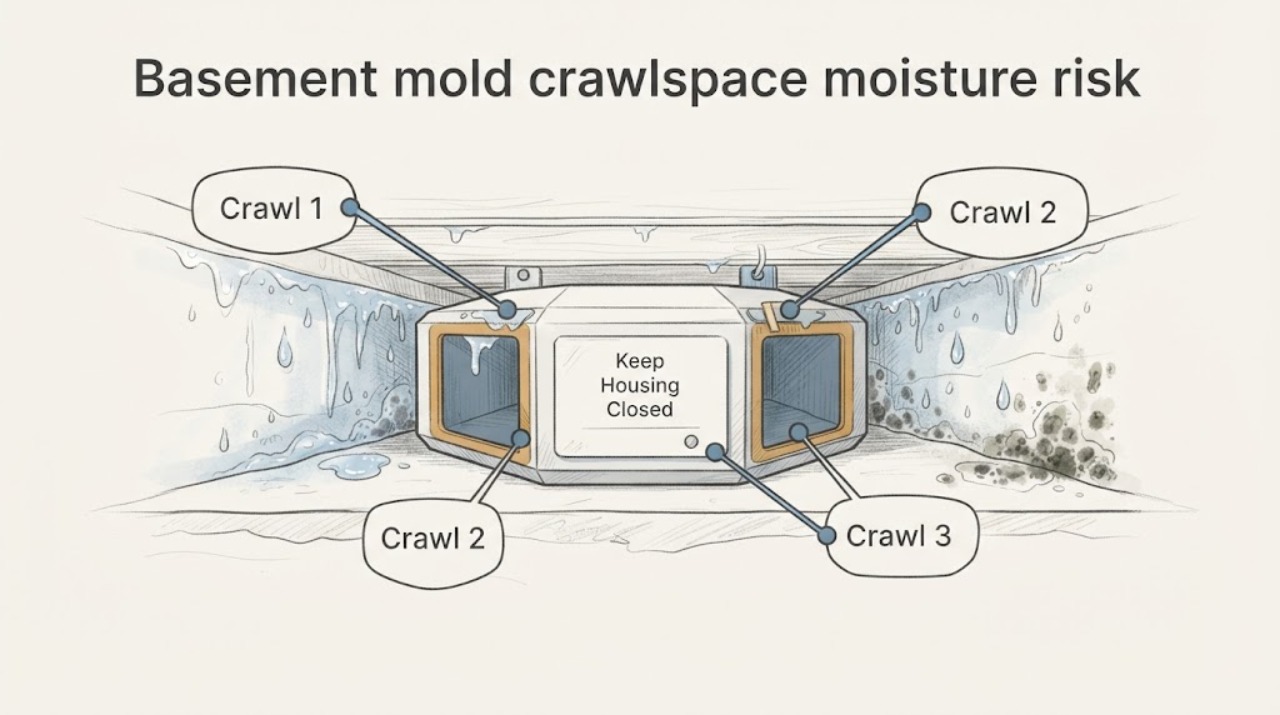
Basement mold crawlspace moisture risk condensation: What to Check and What to Do Next
Condensation and moisture risk around a basement crawlspace can support hidden mold and material damage. From accessible areas, observe condensation, standing water, damp insulation, soil moisture, vents, pipes, and odors without entering the crawlspace or disturbing materials.
-
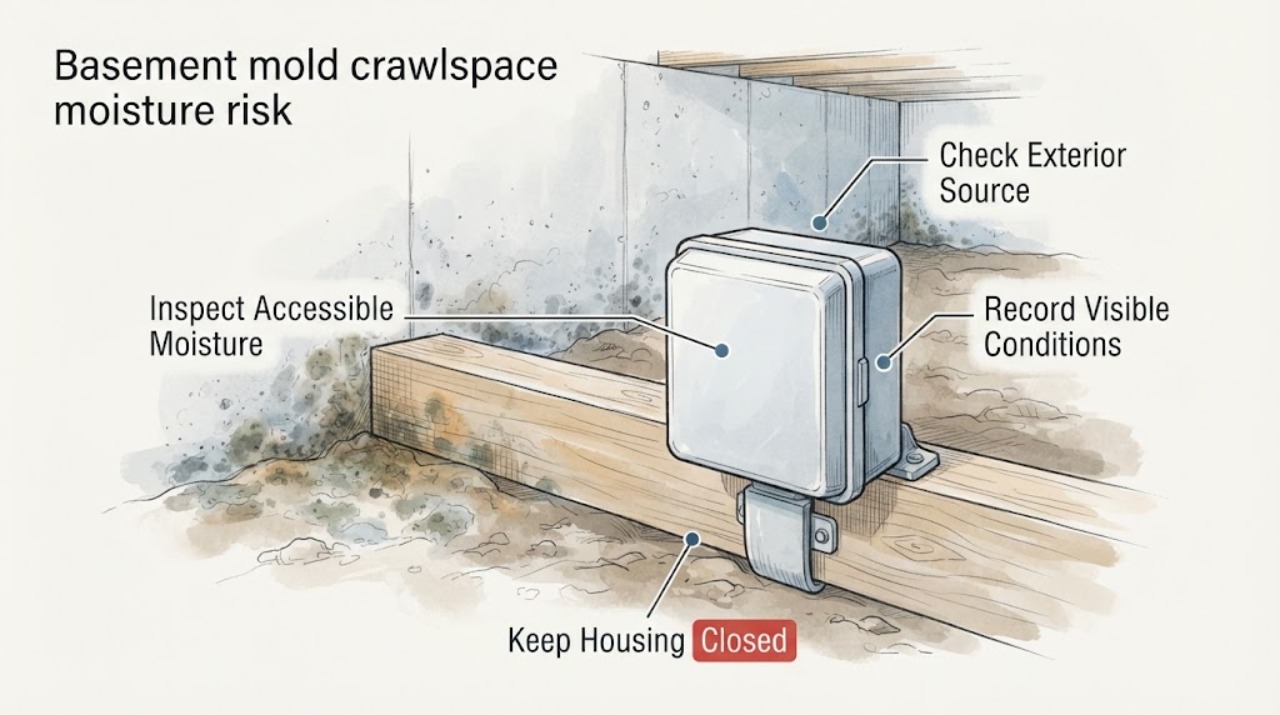
Basement mold crawlspace moisture risk high humidity: What to Check and What to Do Next
For basement mold in a crawlspace when high humidity is suspected, start from a safe standing position or doorway: record humidity if a gauge is already available, look for condensation, standing water, wet soil, staining, or visible growth, and note when it appears. Do not enter a crawlspace, disturb mold or insulation, mix cleaners, or use a ladder.
-
Basement mold crawlspace moisture risk musty odor: What to Check and What to Do Next
For basement mold with crawlspace moisture and a musty odor, begin from a dry, accessible position: record when the odor is strongest, whether it follows rain or humidity, and whether you can safely see dampness, staining, condensation, or mold-like growth at the basement boundary. A musty odor can point toward moisture or affected materials but does not prove mold or locate the source.
-
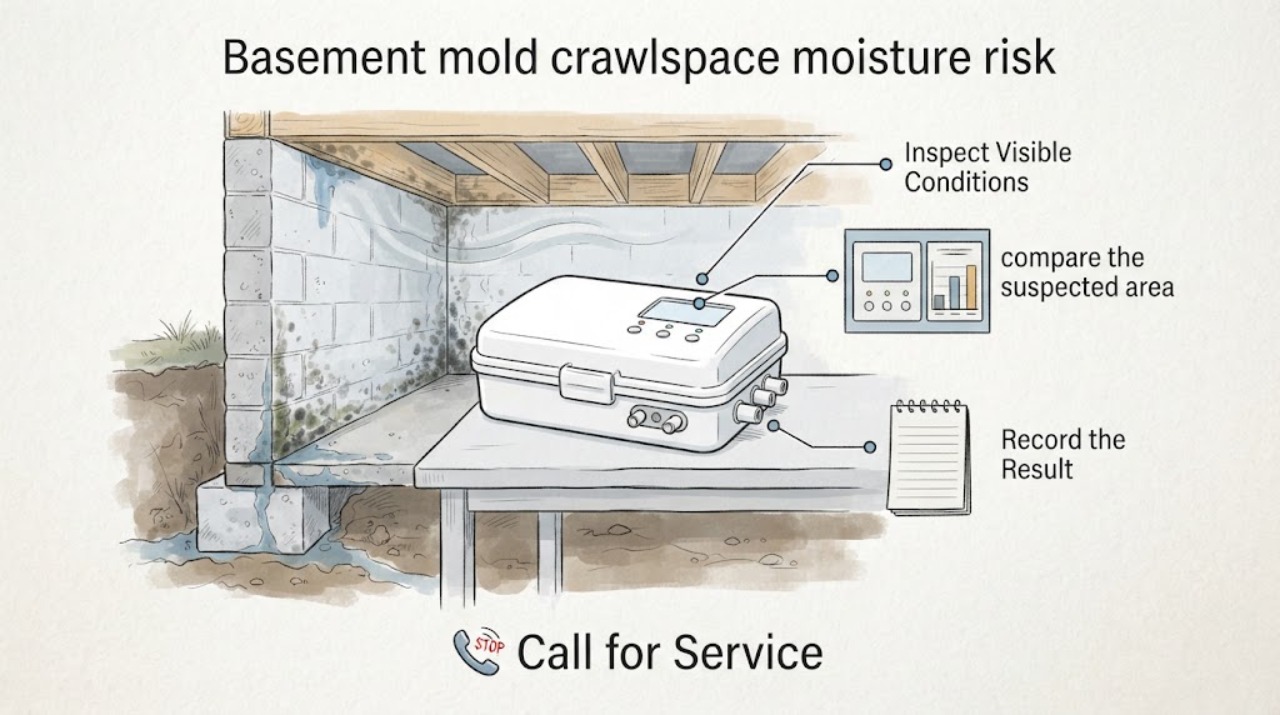
Basement mold crawlspace moisture risk: What to Check and What to Do Next
Treat a damp basement or crawlspace smell, visible growth, staining, or recurring humidity as a moisture problem first. Observe only from accessible dry areas: look for water entry, condensation, stains, peeling finishes, damp odors, and changes after rain without entering an unsafe crawlspace, touching mold, disturbing materials, or mixing cleaners.
-
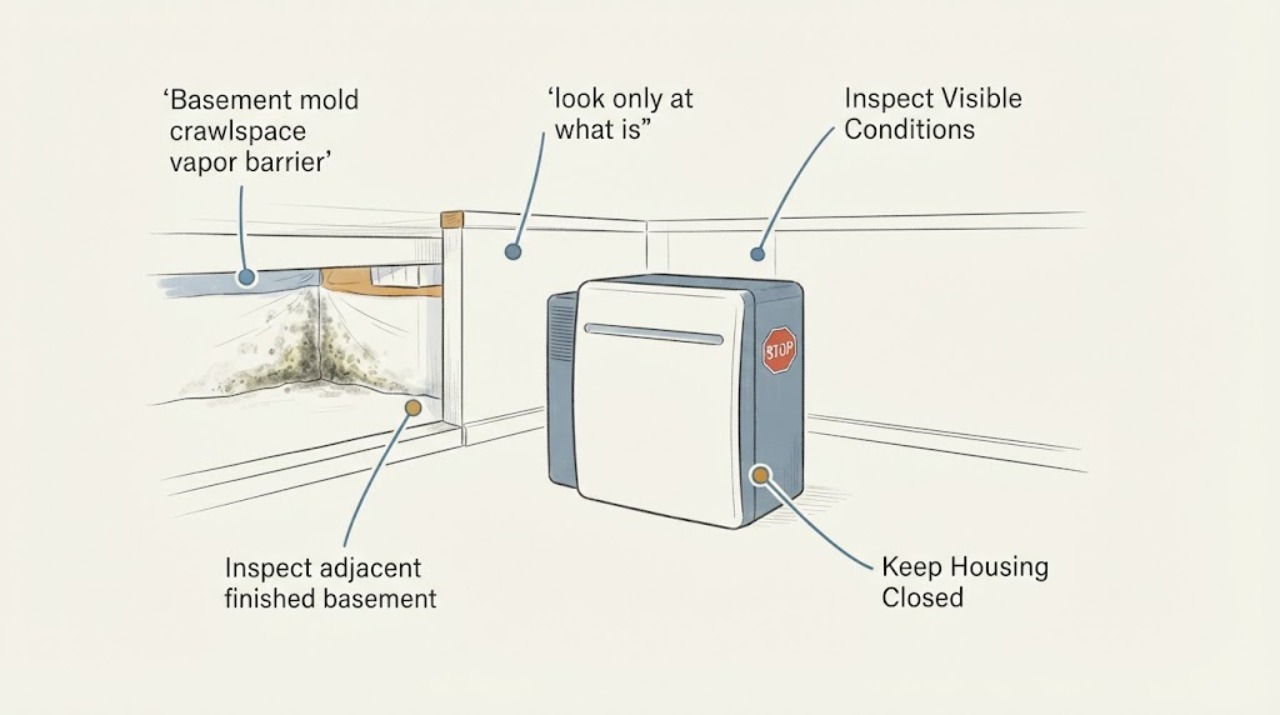
Basement mold crawlspace vapor barrier moisture risk: What to Check and What to Do Next
Do not enter a crawlspace or disturb a vapor barrier to investigate moisture or mold. From the entrance and from finished basement or living areas, document visible water, persistent dampness, musty odor, condensation, staining, and changes after rain or plumbing events.
-
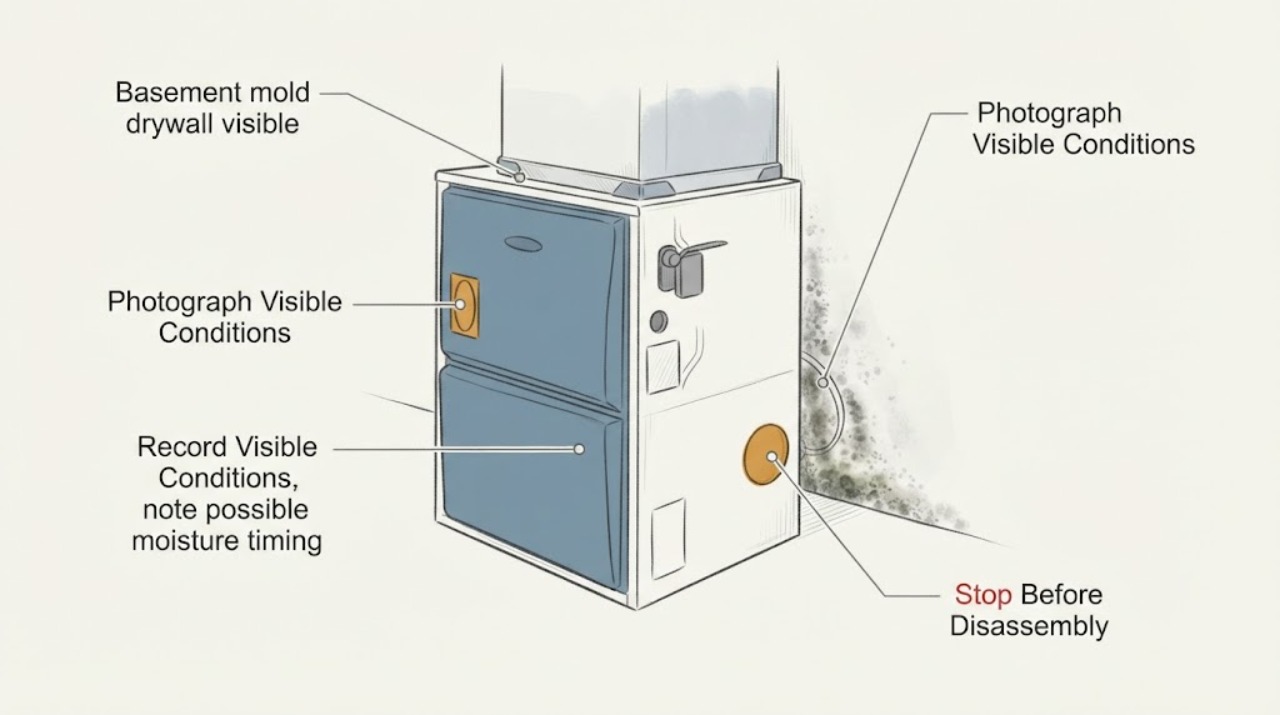
Basement mold drywall visible: What to Check and What to Do Next
Visible mold on basement drywall is a professional-remediation and moisture-source problem, not a bleach or paint-over project. From a dry, safe position, document the location, approximate spread, moisture timing, drywall swelling or sagging, nearby utilities, and whether the basement connects to HVAC or occupied rooms.
-
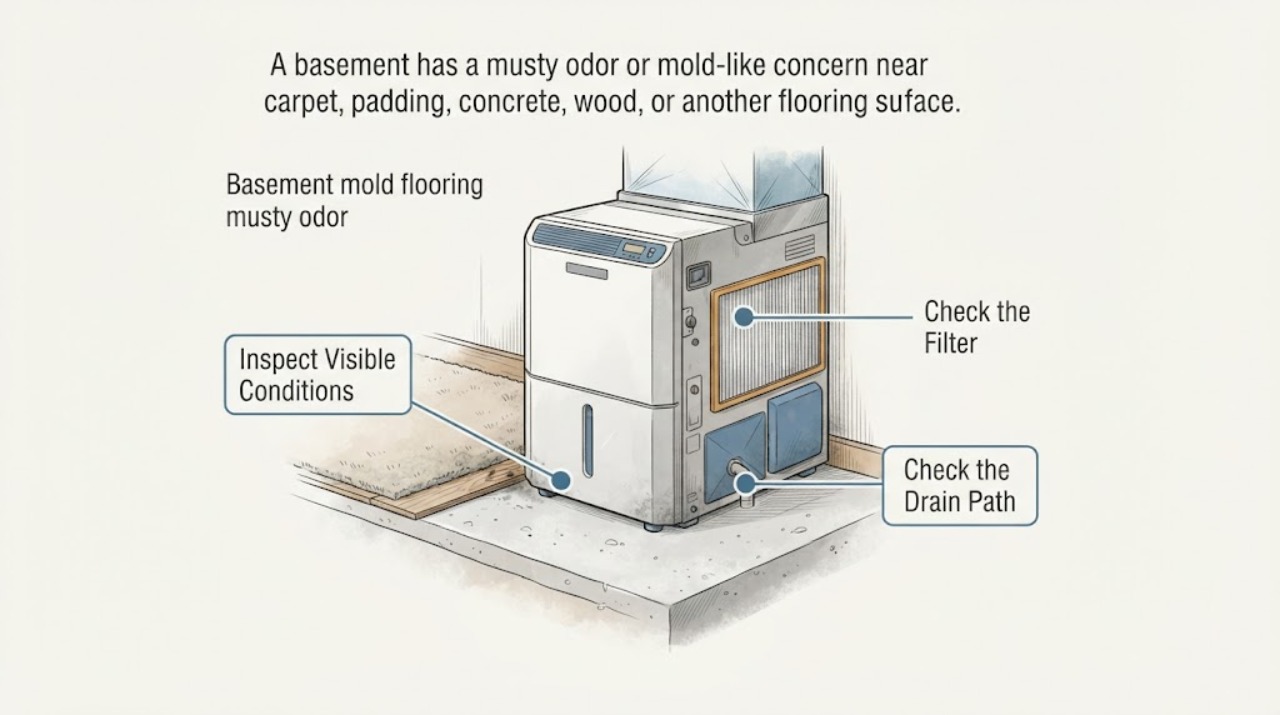
Basement mold flooring musty odor: What to Check and What to Do Next
A musty basement odor near flooring is a moisture-investigation problem, not a cue to lift the floor or spray it. From a safe, well-lit position, record where the odor is strongest, whether flooring looks stained, swollen, soft, damp, or detached, and whether the pattern follows rain, a leak, condensation, or a recent spill.
-
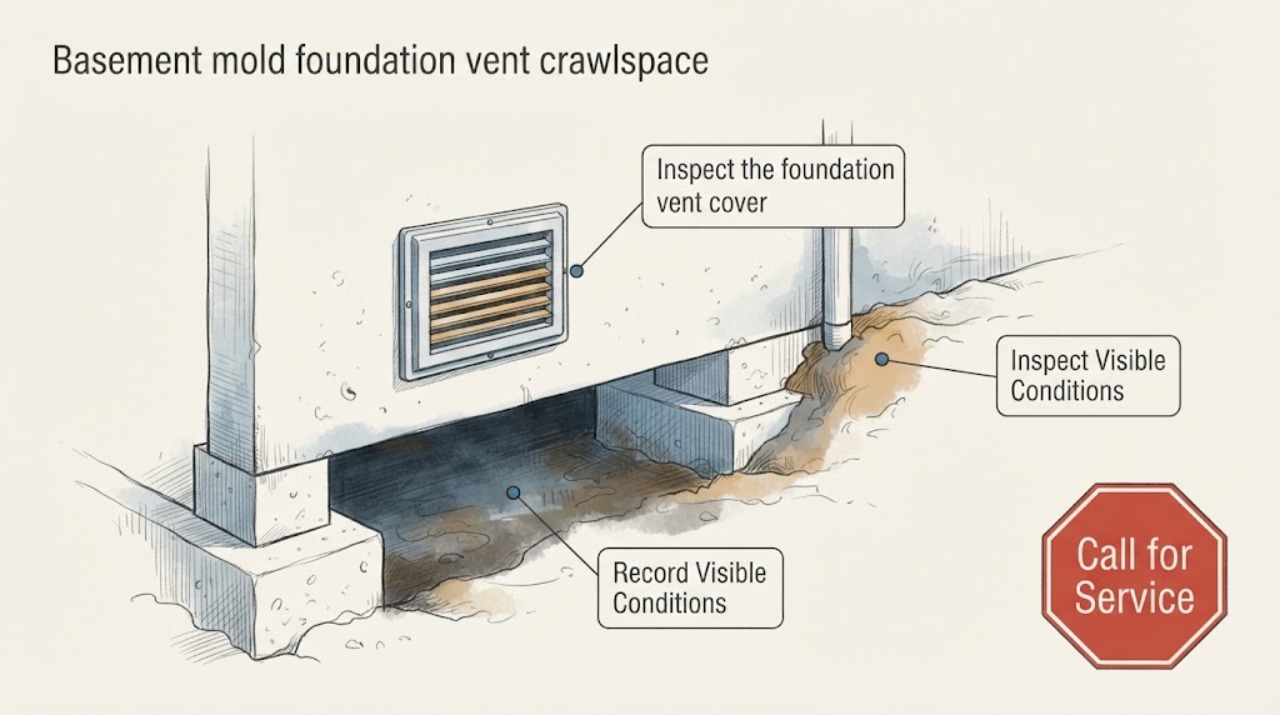
Basement mold foundation vent crawlspace moisture risk: What to Check and What to Do Next
A damp or moldy basement near a foundation vent is a moisture-investigation problem, not a reason to enter the crawlspace or simply close the vent. Moisture can come from rain, grading, groundwater, plumbing, condensation, or humid air moving through the vent, and hidden growth may be present below the floor or behind finishes.
-
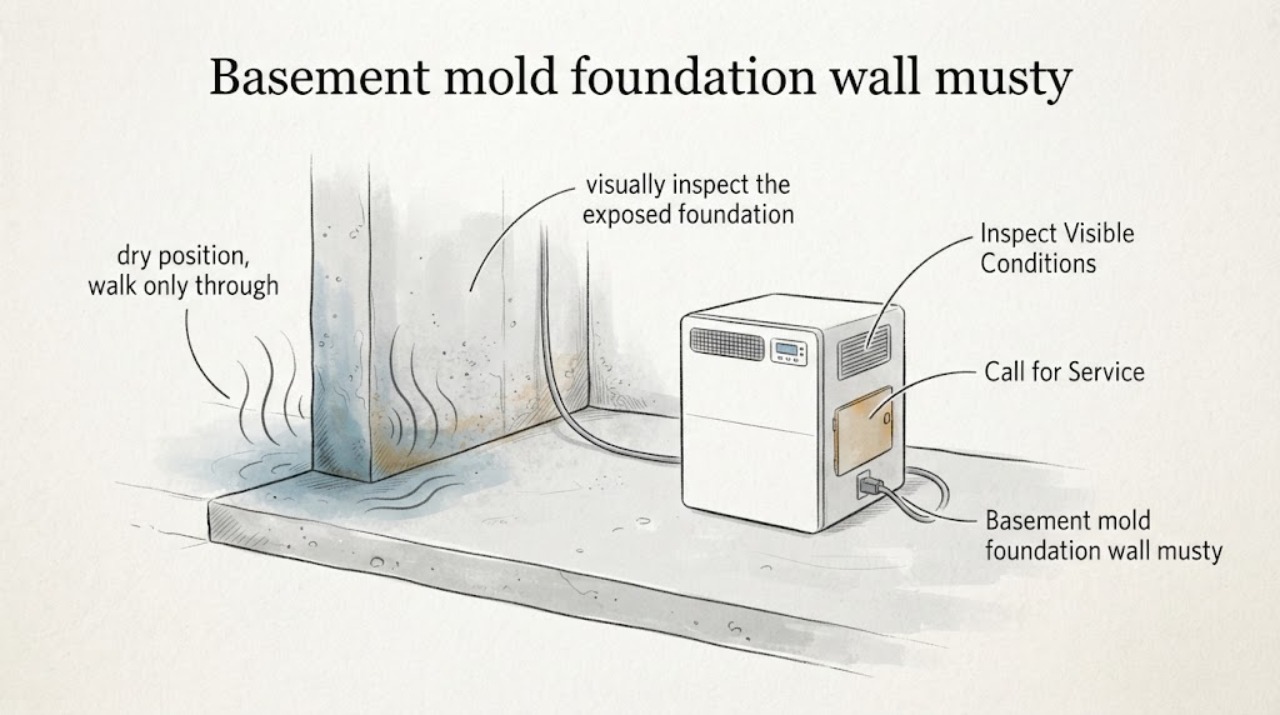
Basement mold foundation wall musty odor: What to Check and What to Do Next
A musty odor near a basement foundation wall is a reason to investigate moisture and possible hidden mold, not to spray or open the wall. From a safe, dry position, map where the odor is strongest, look for staining, condensation, dampness, efflorescence, or soft-looking finishes, and compare the pattern after rain or snowmelt.
-
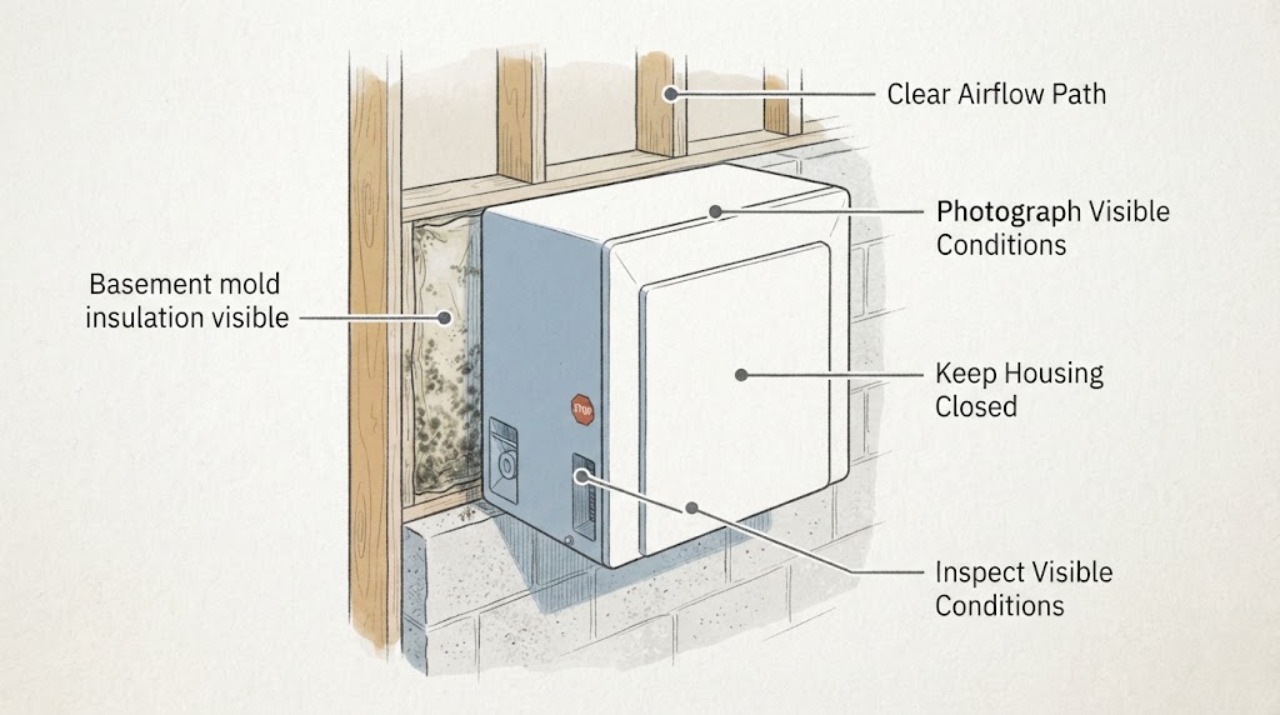
Basement mold insulation visible: What to Check and What to Do Next
Visible mold on basement insulation should be treated as a professional-remediation issue, not a bleach or scrubbing project. From a safe position, document where the growth is, whether insulation looks wet or disturbed, what moisture event may have preceded it, and whether air-handling equipment or occupied rooms could be affected.
-
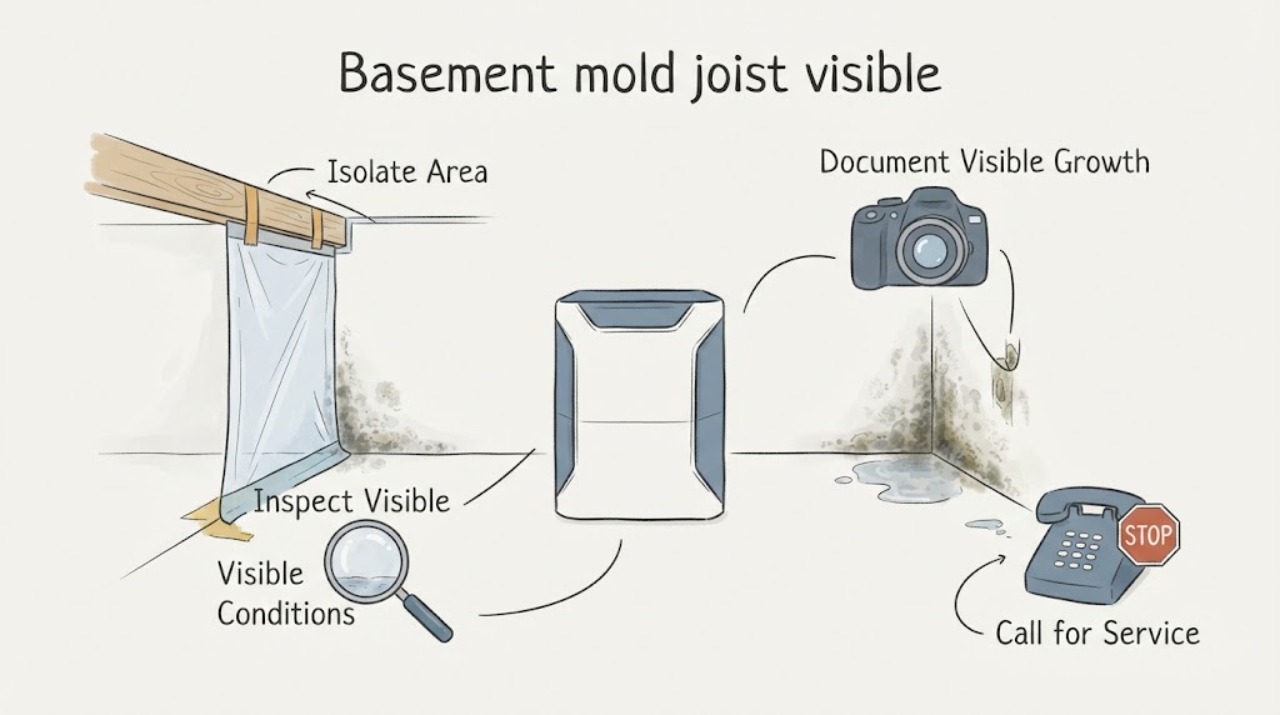
Basement mold joist visible: What to Check and What to Do Next
Visible mold on a basement joist should be treated as a moisture and building-condition problem, not a bleach or scraping project. From a safe, dry location, isolate the area, photograph the visible growth and surrounding moisture signs, and record whether the joist looks soft, cracked, sagging or otherwise damaged.
-
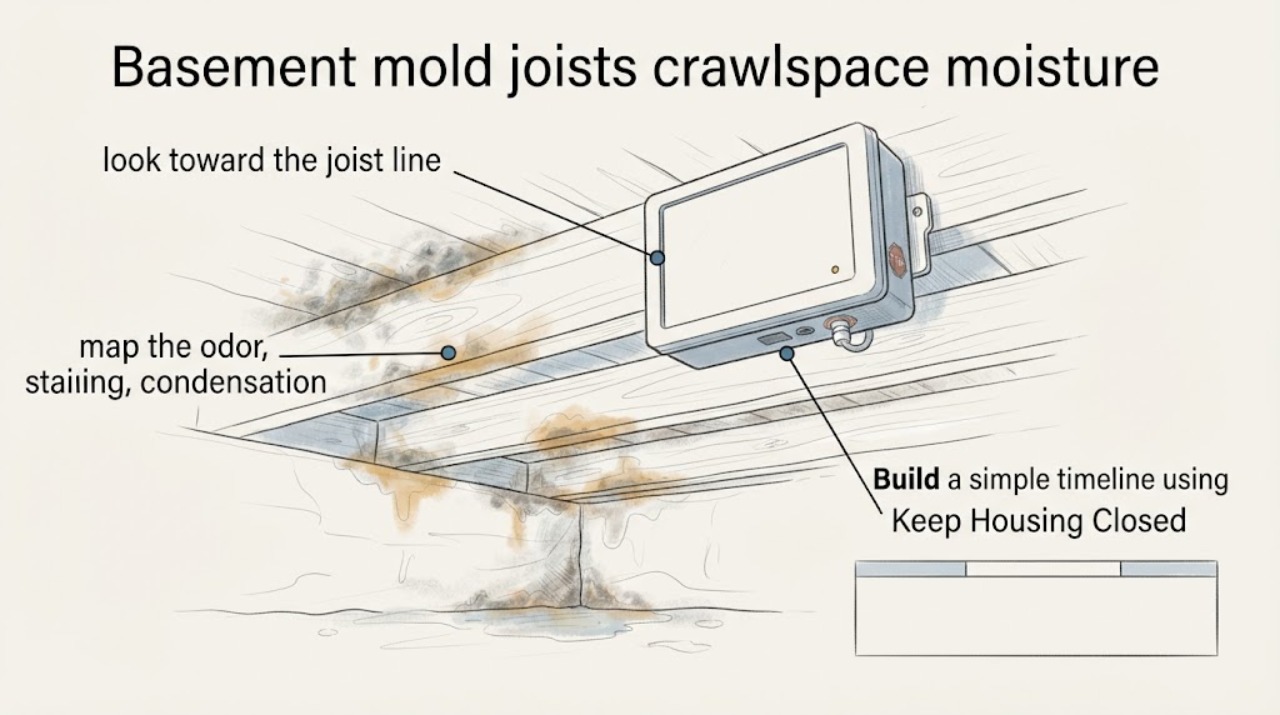
Basement mold joists crawlspace moisture risk: What to Check and What to Do Next
Do not enter the crawlspace or disturb moldy joists to diagnose this condition. From a dry, safe area, document where the musty odor, staining, condensation, or visible growth appears and whether it follows rain, plumbing use, or seasonal humidity.
-
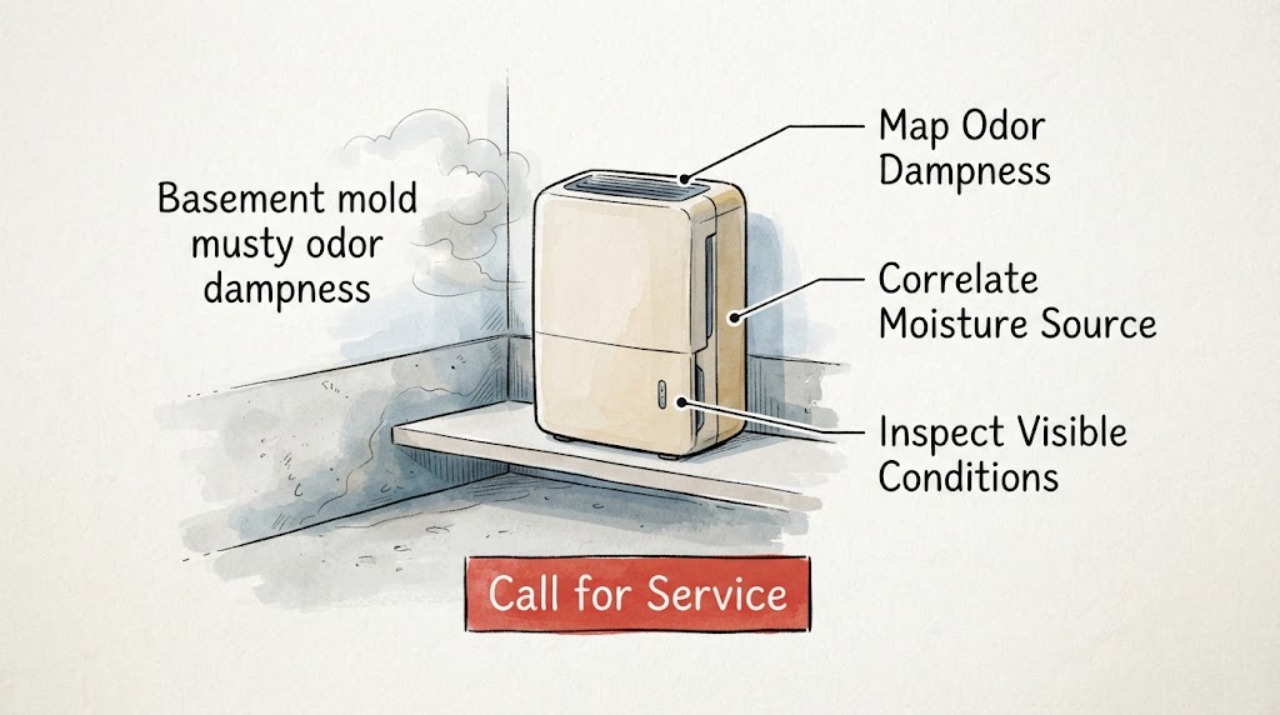
Basement mold musty odor dampness: What to Check and What to Do Next
A musty odor and damp basement suggest a moisture problem that may support mold growth, but odor alone cannot locate or identify the source. From safe accessible areas, map the smell and visible dampness, check timing after rain or plumbing events, note condensation and ventilation, and photograph visible growth without disturbing it.
-
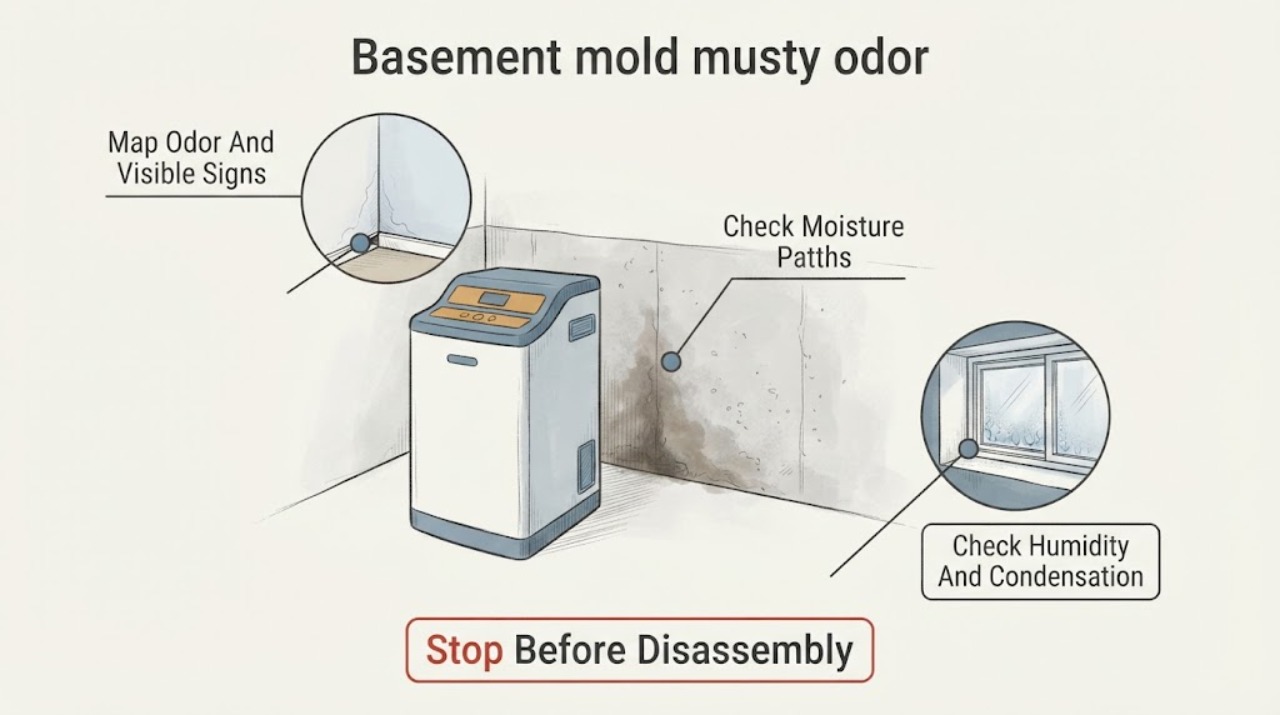
Basement mold musty odor: What to Check and What to Do Next
A persistent musty smell in a basement is a moisture warning, not a problem that an air freshener can diagnose. First map where the odor is strongest and look for visible water, condensation, staining, or damp materials without opening walls or disturbing suspected growth.
-
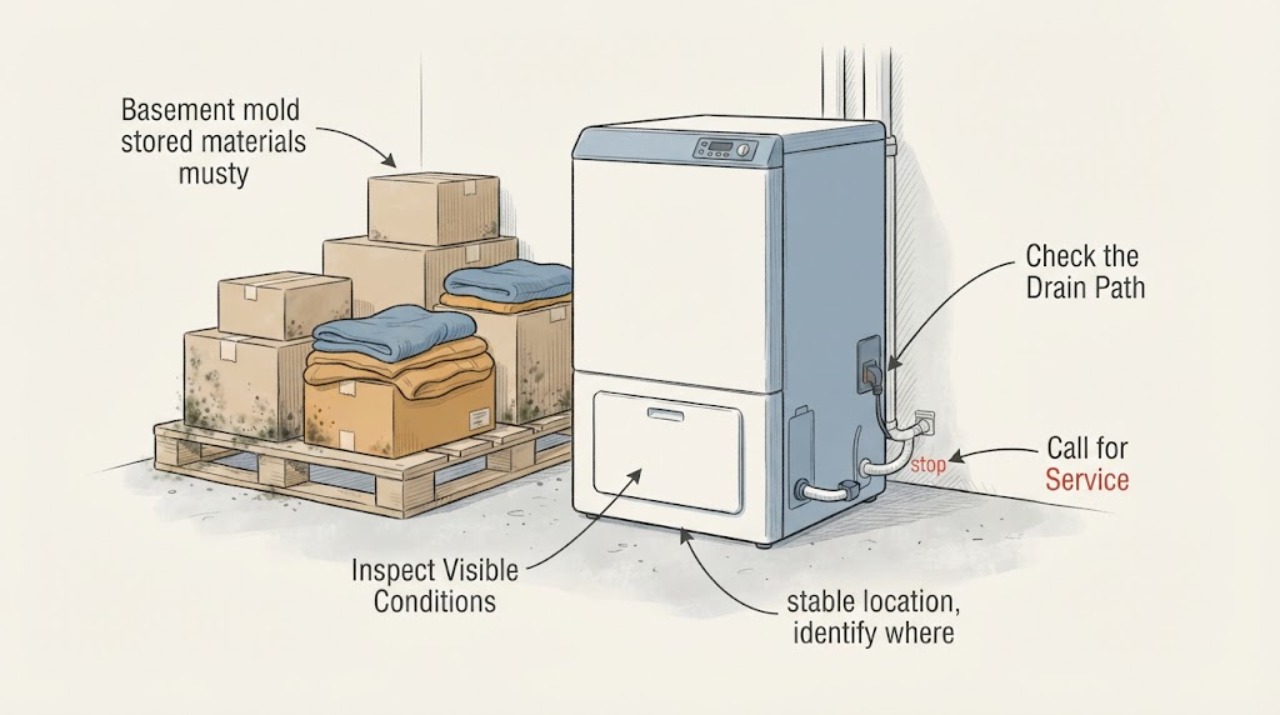
Basement mold stored materials musty odor: What to Check and What to Do Next
A musty odor around stored basement materials is a moisture and exposure warning, not a reason to move boxes or clean mold yourself. From a dry, safe location, map where the odor is strongest, note which materials are stored there, look for visible moisture or mold-like growth without disturbing anything, and compare the odor with weather or humidity.
-
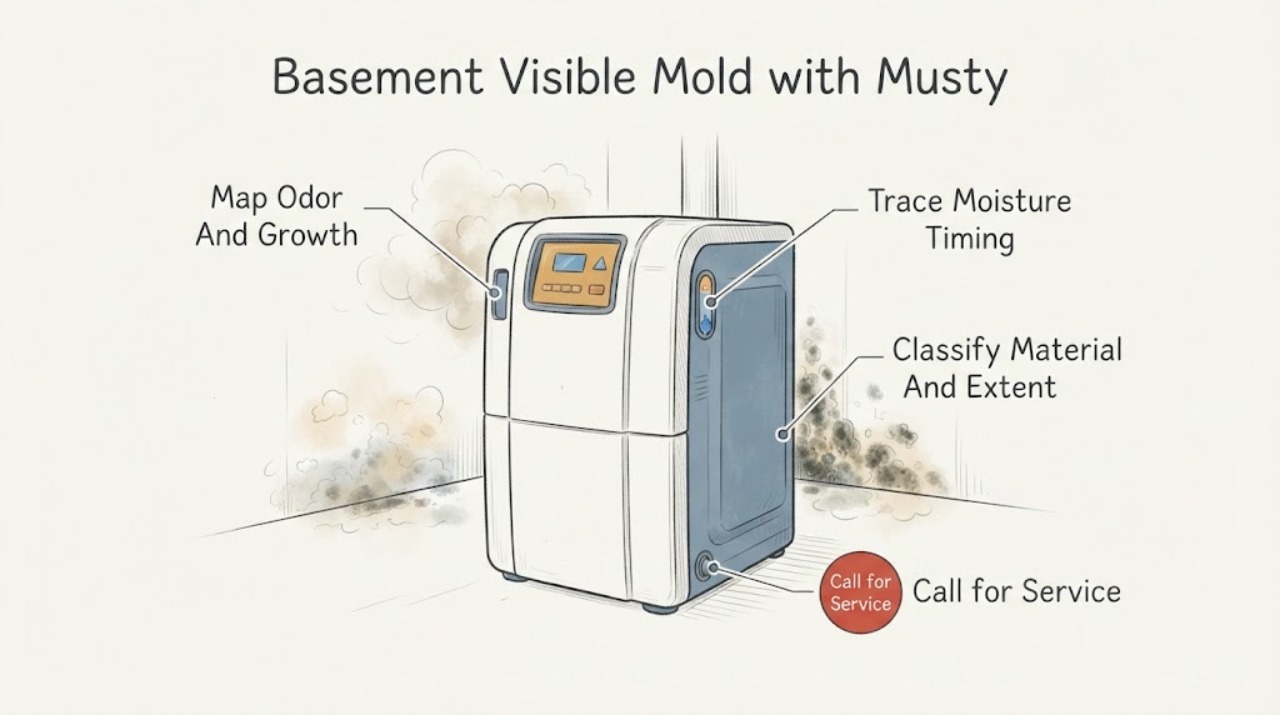
Basement Visible Mold with Musty Odor: Find the Moisture Source and What to Do Next
Visible basement mold together with a musty odor should be treated as a moisture-source and potential hidden-growth problem, not as a color-identification problem. From a safe, dry location, document where the growth is, whether the odor is local or travels through the house, what materials are affected, and whether the pattern follows rain, plumbing use, or HVAC operation.
-
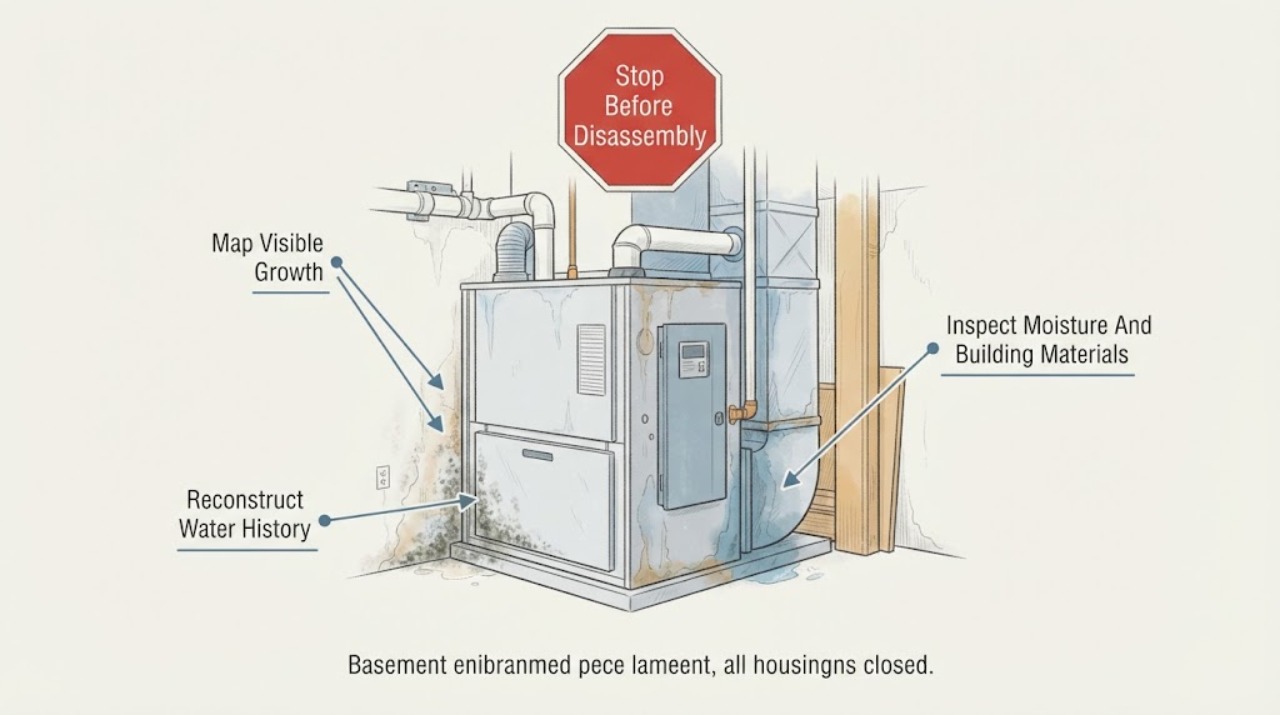
Basement mold visible water history: What to Check and What to Do Next
Visible basement mold with a history of leaks, seepage, condensation, or flooding should be treated as a moisture-control problem, not a color-identification exercise. From outside the affected area, document the location, approximate extent, water source, recurrence, dampness, odor, and materials involved.
-
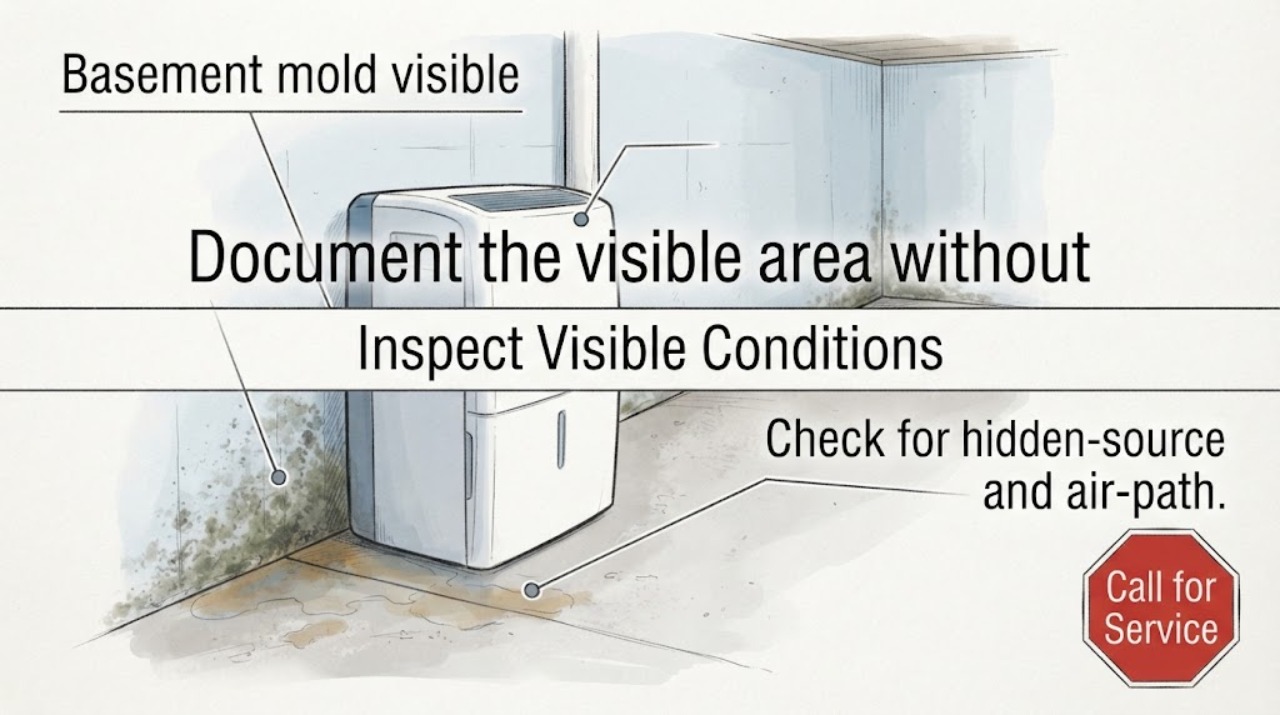
Basement mold visible: What to Check and What to Do Next
Visible mold in a basement is a moisture and exposure problem, not a spot to scrub, paint over, or disturb before the situation is assessed. From a safe position, document where it is, whether the area is expanding, what materials are affected, and whether there is active water, a musty odor, or an HVAC intake nearby.
-
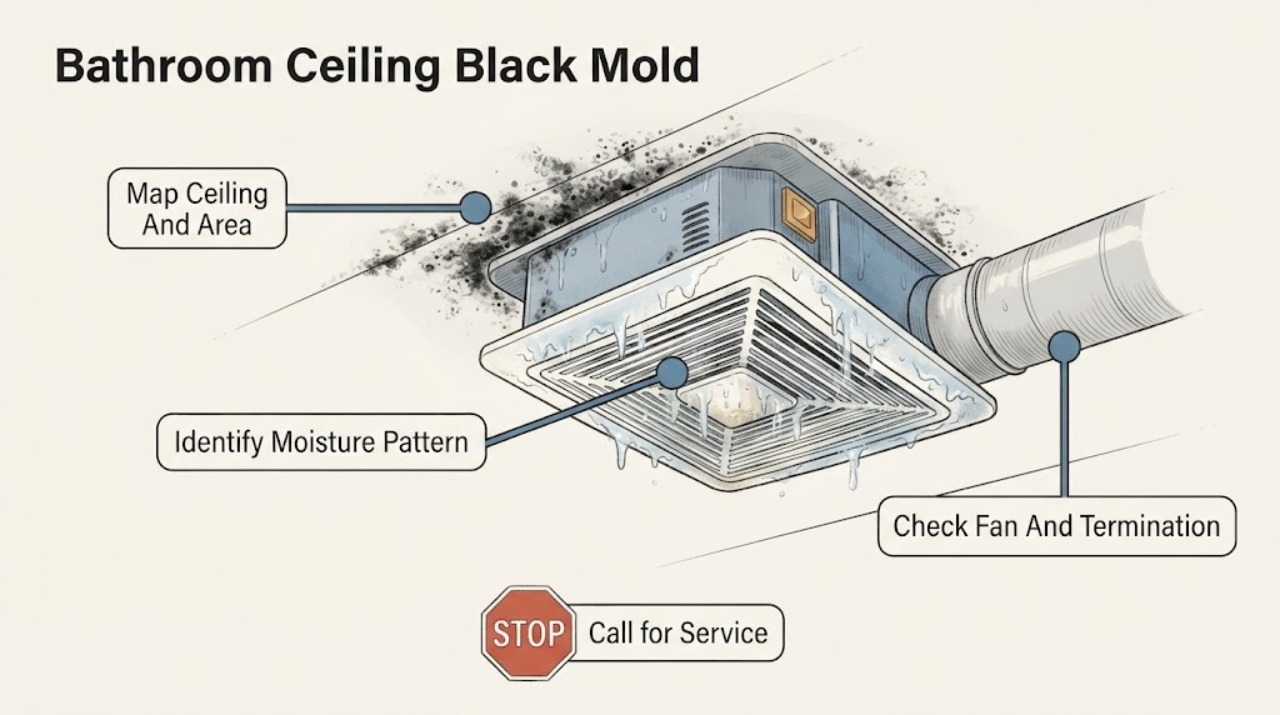
Bathroom Ceiling Black Mold: Exhaust Fan CFM and Safe Remediation
Dark growth on a bathroom ceiling should be treated as visible mold-like growth and a moisture-control problem, not identified by color alone. Find and correct the moisture source, verify that the exhaust fan actually vents outdoors, and size replacement ventilation from the bathroom volume and the installed duct resistance rather than choosing a fan by its box rating.
-
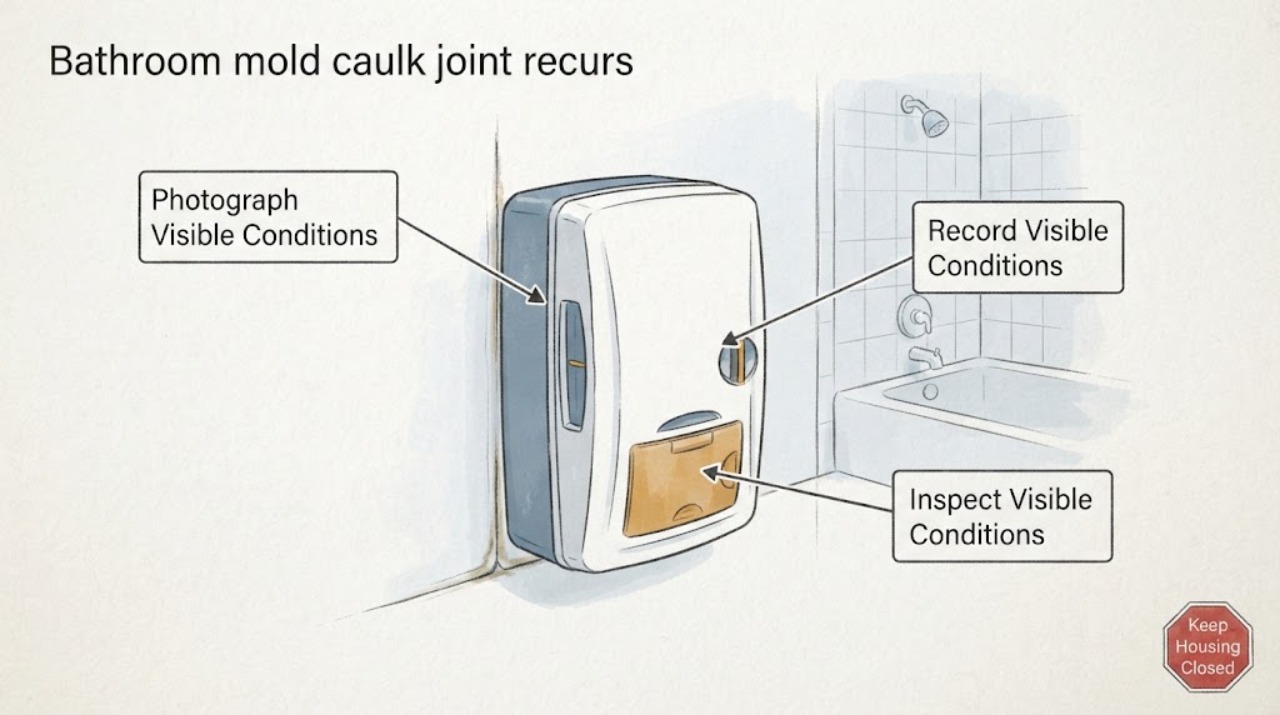
Bathroom mold caulk joint recurs after cleaning: What to Check and What to Do Next
Mold that returns at a bathroom caulk joint after cleaning usually means moisture is still reaching the joint, the ventilation is not removing enough moisture, or growth extends into a porous or concealed material. Do not keep painting or caulking over it, mix cleaning products, scrape or sample the area, open the wall, or treat this as solved by a surface wipe.
-
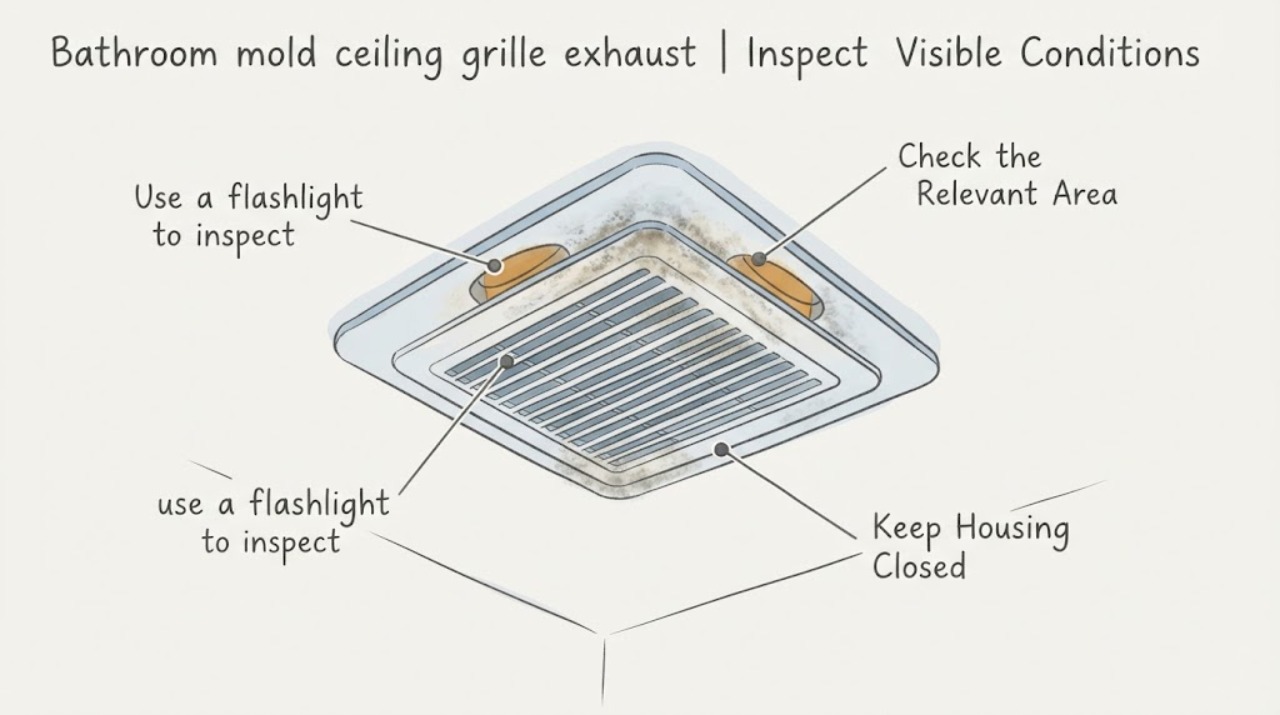
Bathroom mold ceiling grille exhaust insufficient: What to Check and What to Do Next
If mold or mildew keeps returning near a bathroom ceiling grille and the exhaust seems weak, first determine whether the fan starts, whether air movement is actually noticeable from the room, and whether moisture remains on the ceiling after normal bathing. A grille that looks clean does not prove that the fan exhausts outdoors or that the duct path is clear.
-
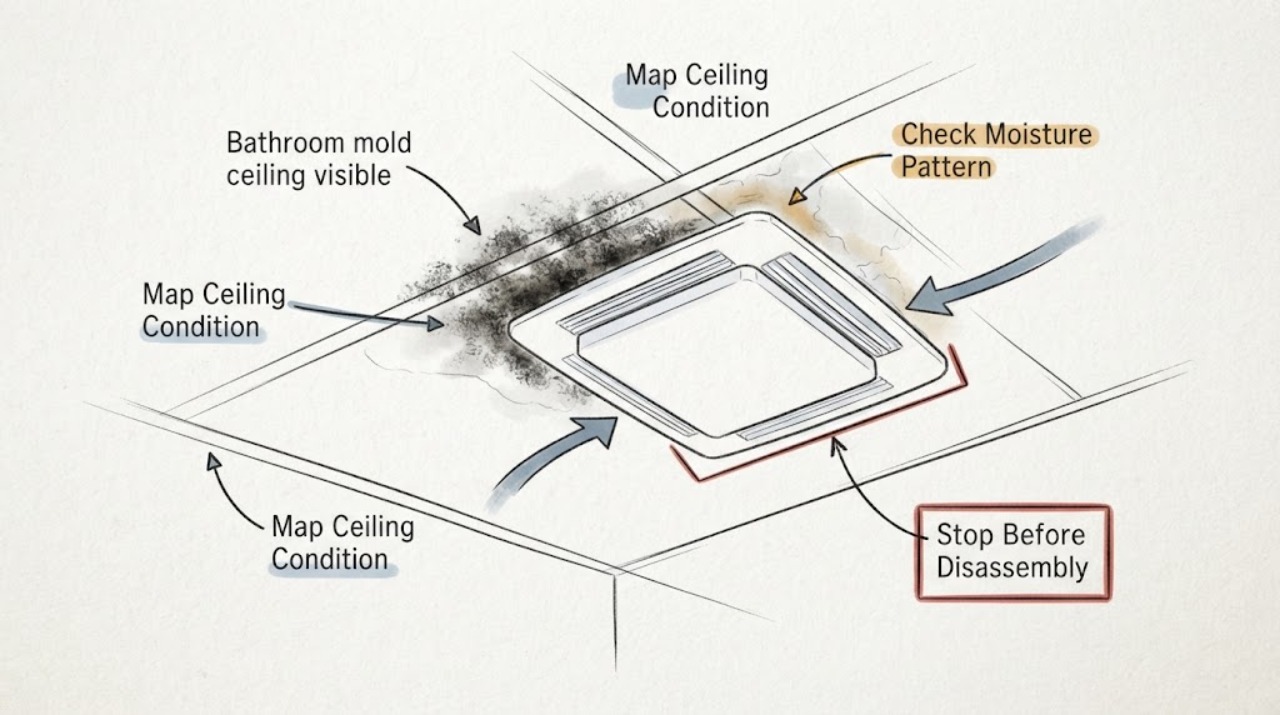
Bathroom mold ceiling visible: What to Check and What to Do Next
Visible mold or mildew on a bathroom ceiling is a moisture signal, not just a surface-color problem. From the floor or doorway, document whether the patch is actively wet, soft or sagging, spreading, or concentrated around a shower, vent, or light.
-
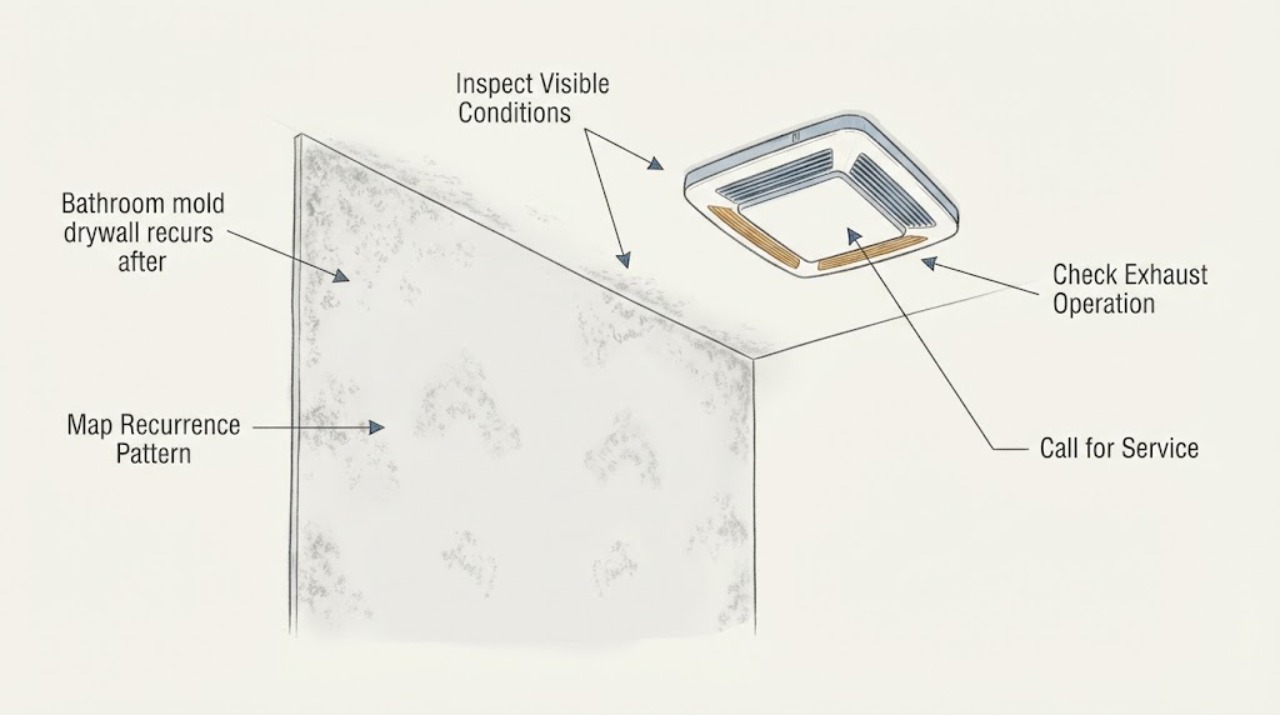
Bathroom mold drywall recurs after cleaning: What to Check and What to Do Next
Mold that returns on bathroom drywall usually means the moisture condition was not corrected, the drywall or cavity stayed damp, or condensation and ventilation remain uncontrolled. From a safe position, record when and where it returns, look for plumbing or shower moisture, observe whether the exhaust fan actually moves air outdoors, and note soft, swollen, bubbling, stained, or musty drywall.
-
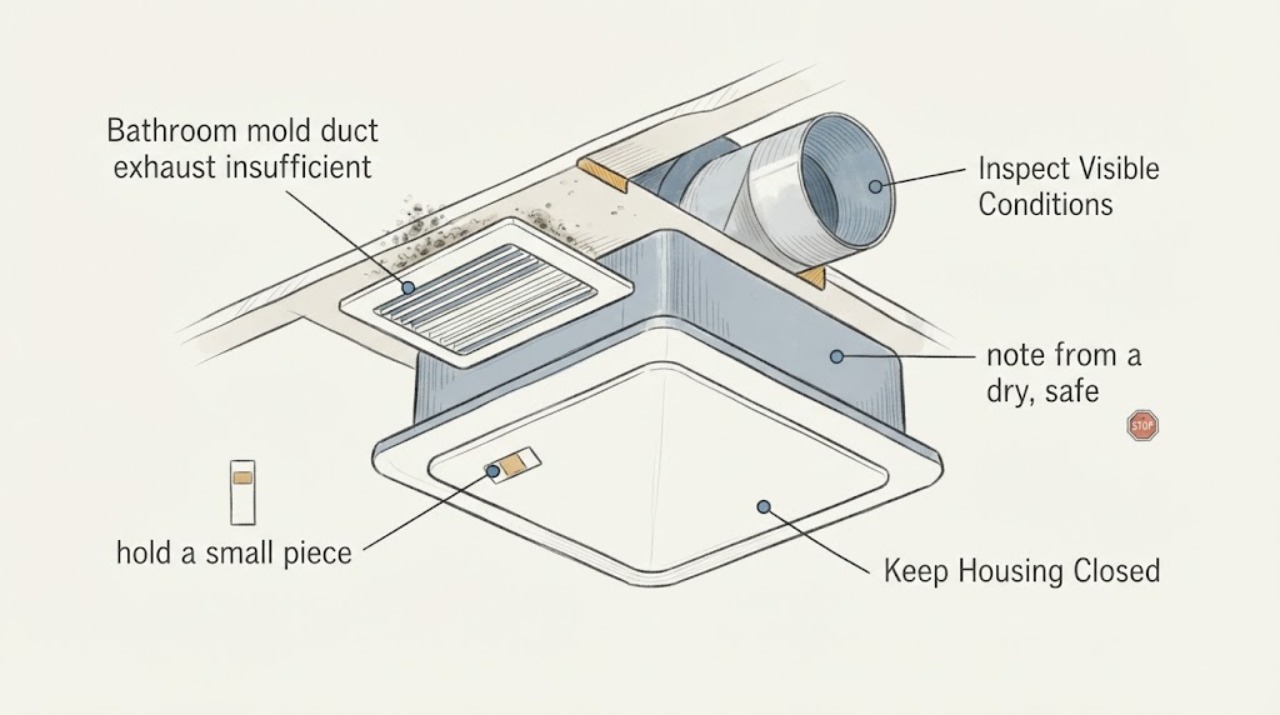
Bathroom mold duct exhaust insufficient: What to Check and What to Do Next
Treat weak bathroom exhaust and recurring mold as a moisture-control problem that needs observation first and professional assessment when it persists. From the room floor, note whether the fan starts, whether airflow is detectable without touching the grille, how long condensation remains after a shower, and whether the exterior outlet appears to discharge air when viewed safely from ground level.
-
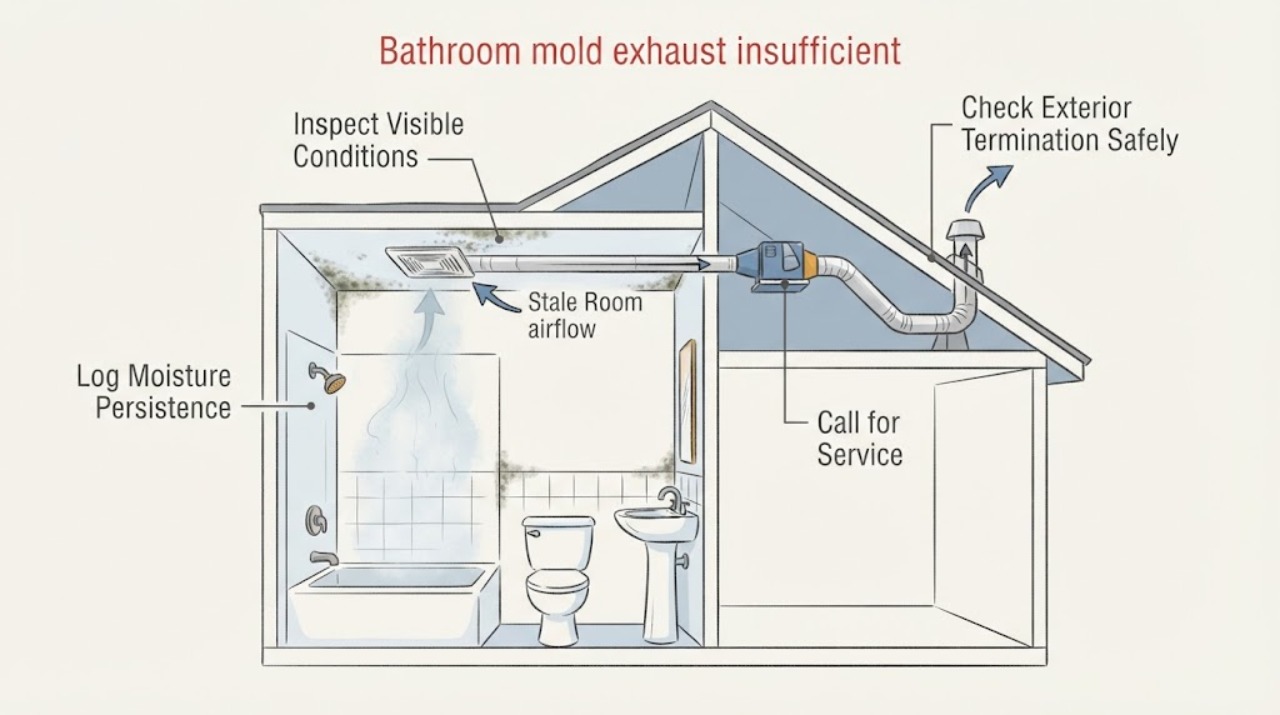
Bathroom mold exhaust insufficient: What to Check and What to Do Next
Treat recurring bathroom mold or condensation as a moisture-control problem, not simply a noisy fan problem. From a safe room-level position, record whether the fan starts, whether it produces meaningful air movement, whether moisture remains on surfaces after bathing, and whether the fan is supposed to discharge outdoors.
-
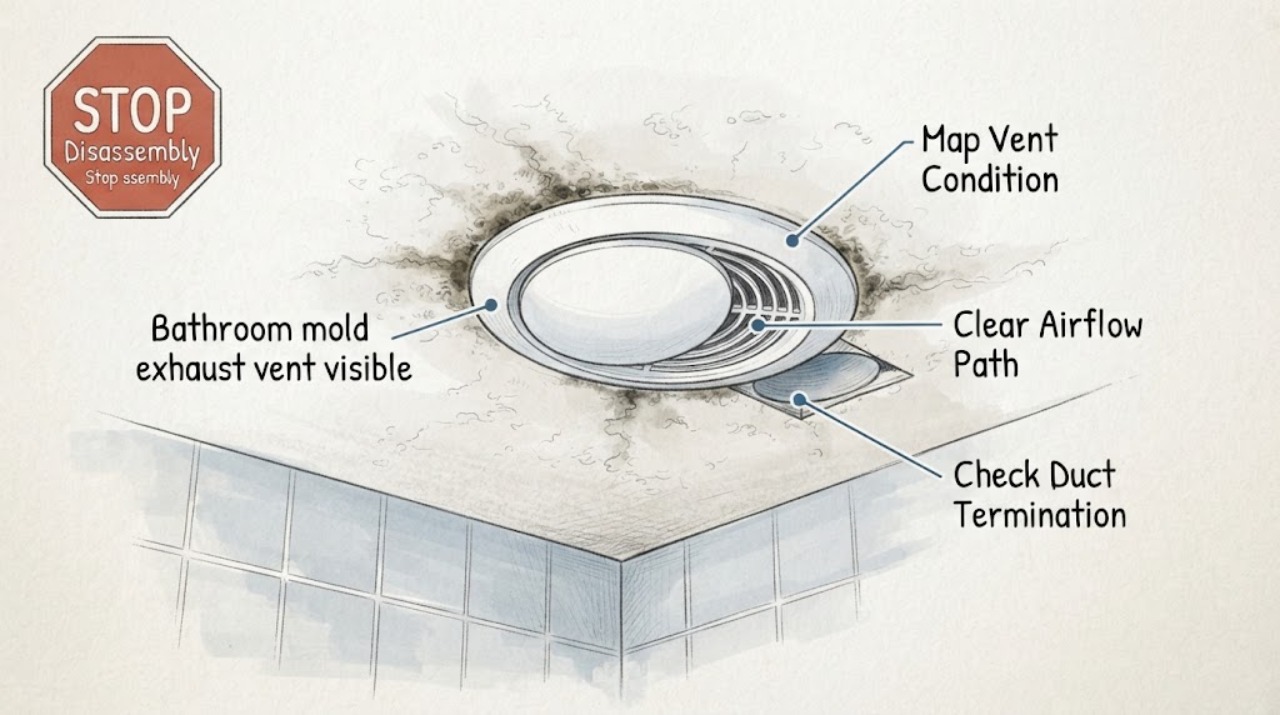
Bathroom mold exhaust vent visible: What to Check and What to Do Next
Visible mold on or around a bathroom exhaust vent usually means moisture is reaching the grille, ceiling, or duct area faster than it is being removed. From the floor, document whether the patch is dry or wet, whether the fan actually draws air, whether the duct appears to exhaust outdoors, and whether humidity or the patch returns after showers.
-
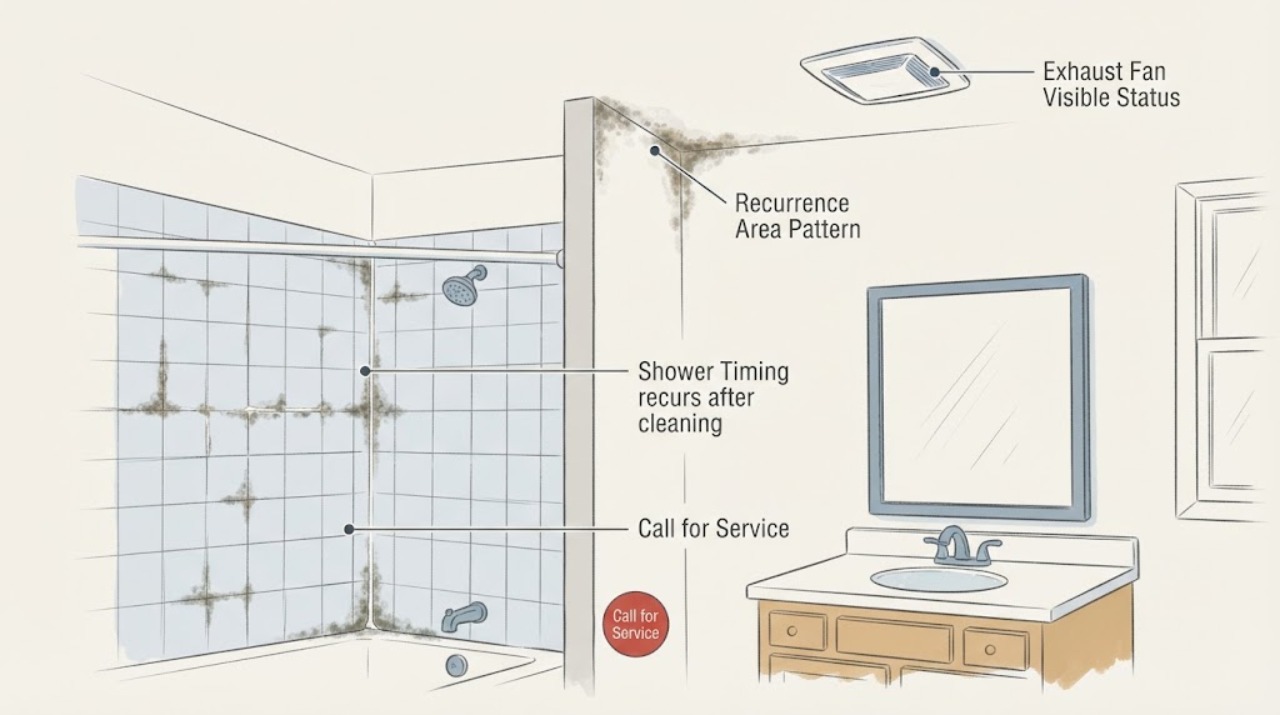
Bathroom mold recurs after cleaning: What to Check and What to Do Next
Mold that returns after cleaning usually means the moisture source or the bathroom's drying conditions were not resolved, not that the surface simply needed a stronger chemical. From a safe position, record where it returns, how quickly it comes back, whether condensation or dampness follows showers, and whether the exhaust fan appears to run and vent outdoors.
-
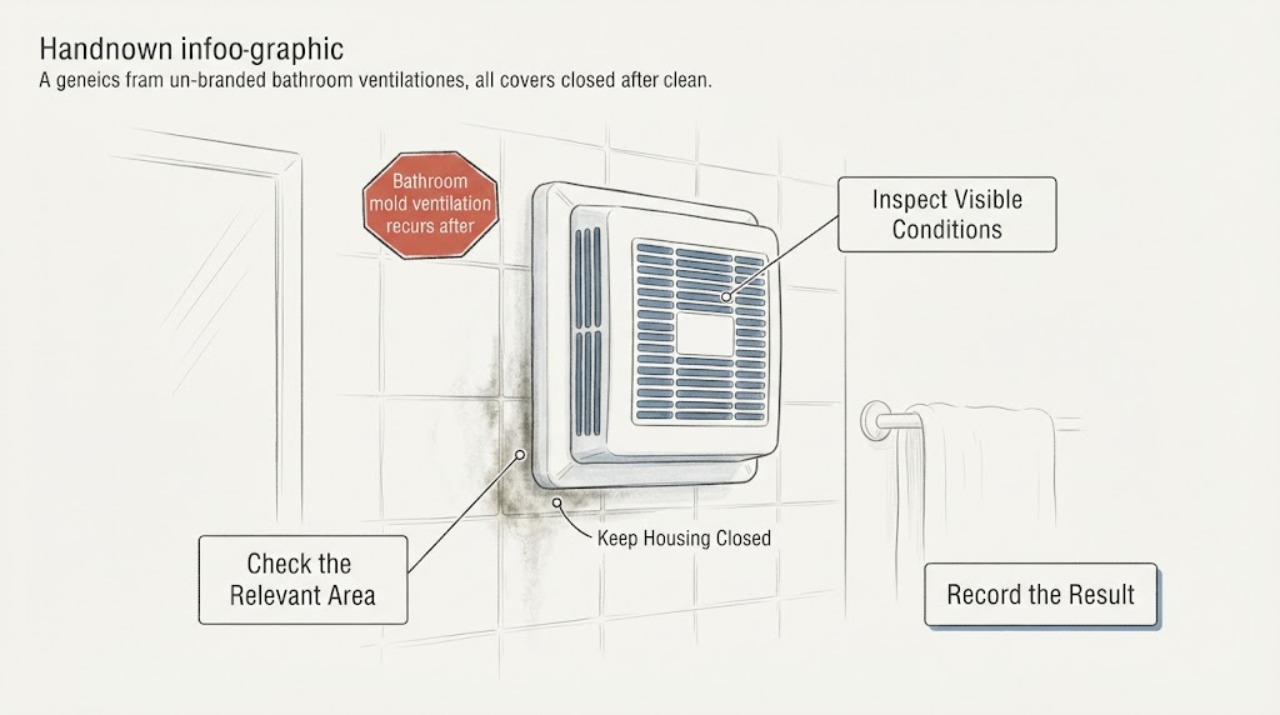
Bathroom mold ventilation recurs after cleaning: What to Check and What to Do Next
Mold that returns after cleaning usually means moisture or a ventilation pathway remains unresolved; cleaning alone does not identify the source. From a safe position, observe whether the bathroom fan actually runs, whether air is exhausted outdoors rather than into an attic or cavity, how quickly visible condensation and humidity settle after a shower, and whether a leak or wet surface remains.
-
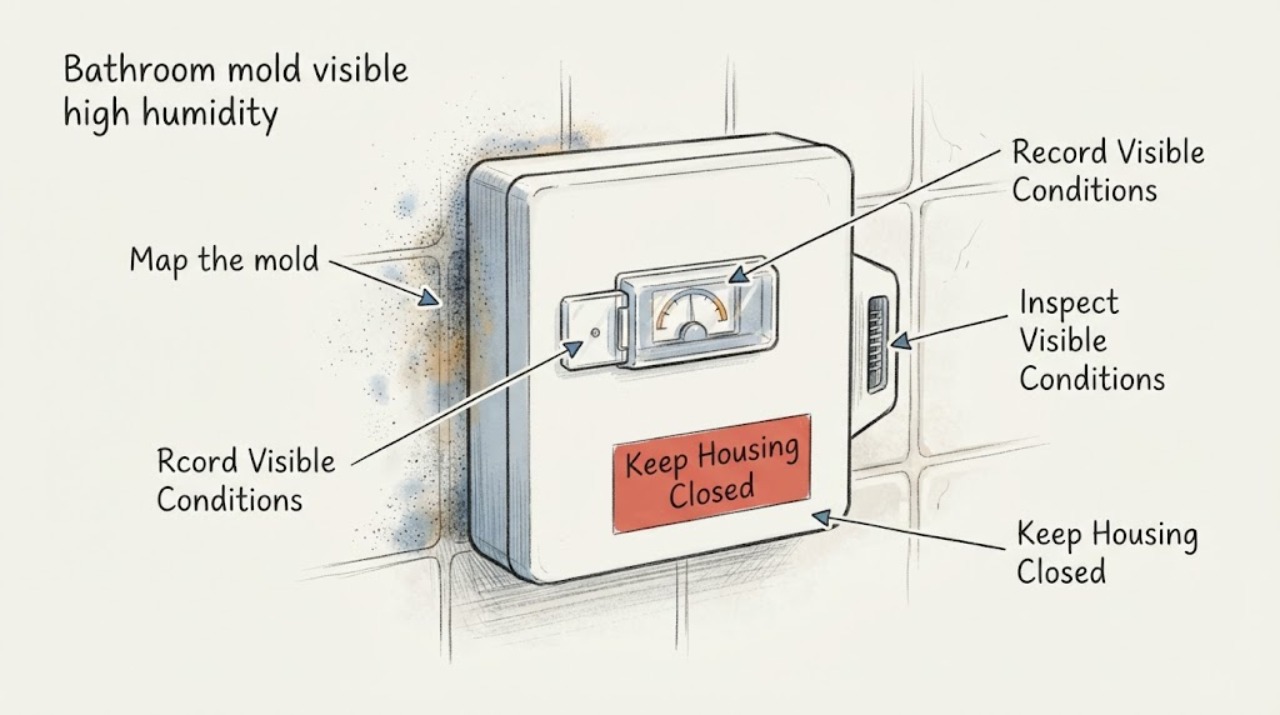
Bathroom mold visible high humidity: What to Check and What to Do Next
When visible bathroom mold appears with high humidity, first determine whether it is limited to condensation-prone surfaces after showers or whether there are signs of active leaks or hidden moisture. Record humidity, condensation, how the room dries after use, whether the exhaust fan vents outside, and whether staining, swelling, softness, or a musty odor extends beyond the shower area.
-
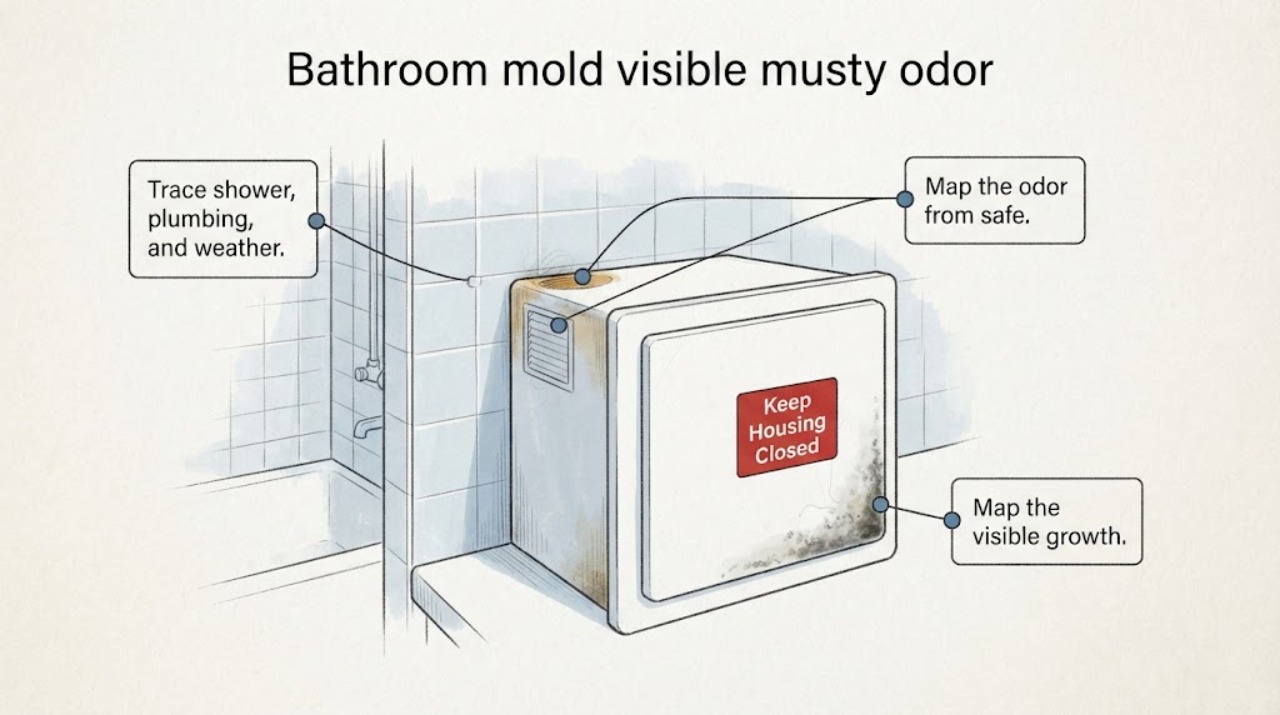
Bathroom mold visible musty odor: What to Check and What to Do Next
A musty odor alongside visible bathroom mold is a location-and-moisture investigation, not proof of a particular mold type or contamination. First record where the odor is strongest, when it appears, how far visible growth extends, and whether shower condensation, plumbing moisture, failed caulk or grout, or a damp porous material is present.
-
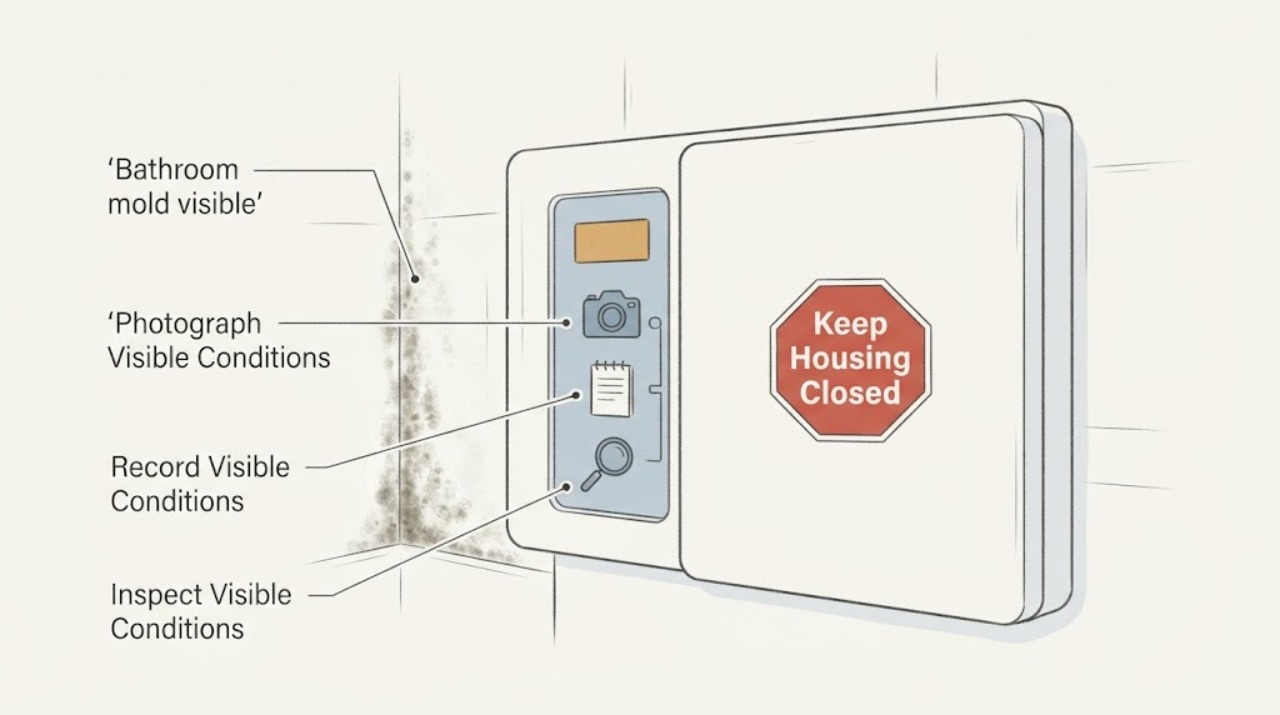
Bathroom mold visible: What to Check and What to Do Next
Visible bathroom mold is a moisture and exposure problem, not a color-identification problem. From the doorway or another safe position, document its size, location, surface, recurrence, nearby dampness, and any occupant concerns.
-
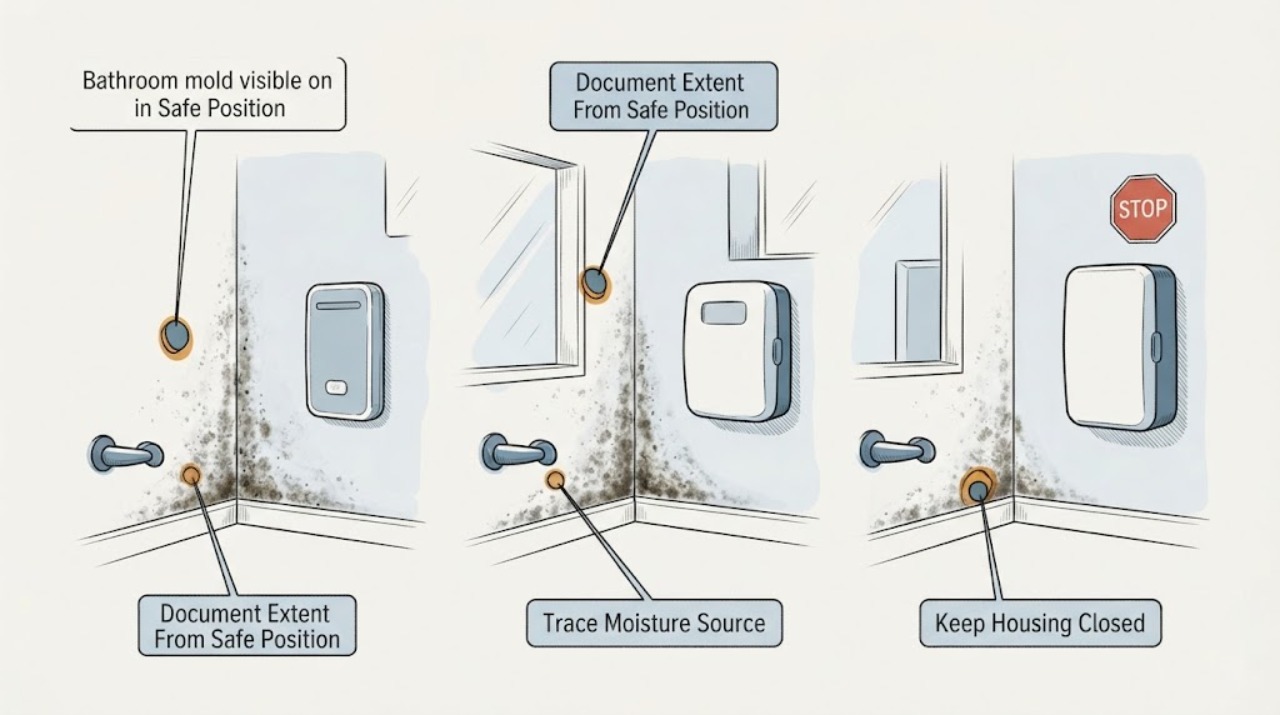
Bathroom mold visible on a wall surface: What to Check and What to Do Next
Do not scrub, sand, paint, caulk, or spray the visible bathroom mold before you understand its extent and moisture source. From a doorway or other safe position, photograph the area, note whether it is on tile or another hard surface versus painted drywall or another porous material, and look for condensation, plumbing, shower, roof, or wall leaks without opening the wall.
-
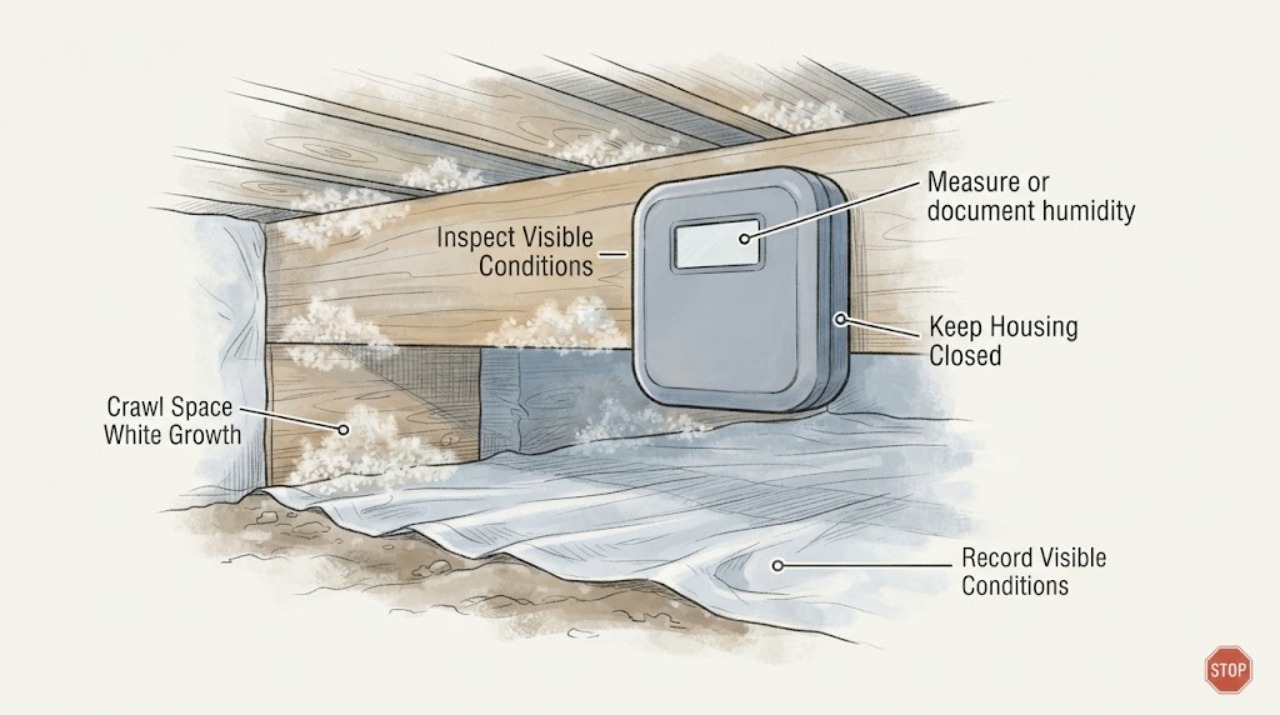
Crawl Space White Growth With High Humidity: What to Check Before Adding a Vapor Barrier
White growth in a crawl space is not enough to identify mold: EPA notes that white, soluble fibrous material on crawl-space soil may be alkaline salts, while mold can also grow in damp, dark spaces. From the access opening, document the material, humidity, exposed or damaged ground cover, standing water, plumbing leaks, and damp insulation without crawling in or disturbing anything.
-
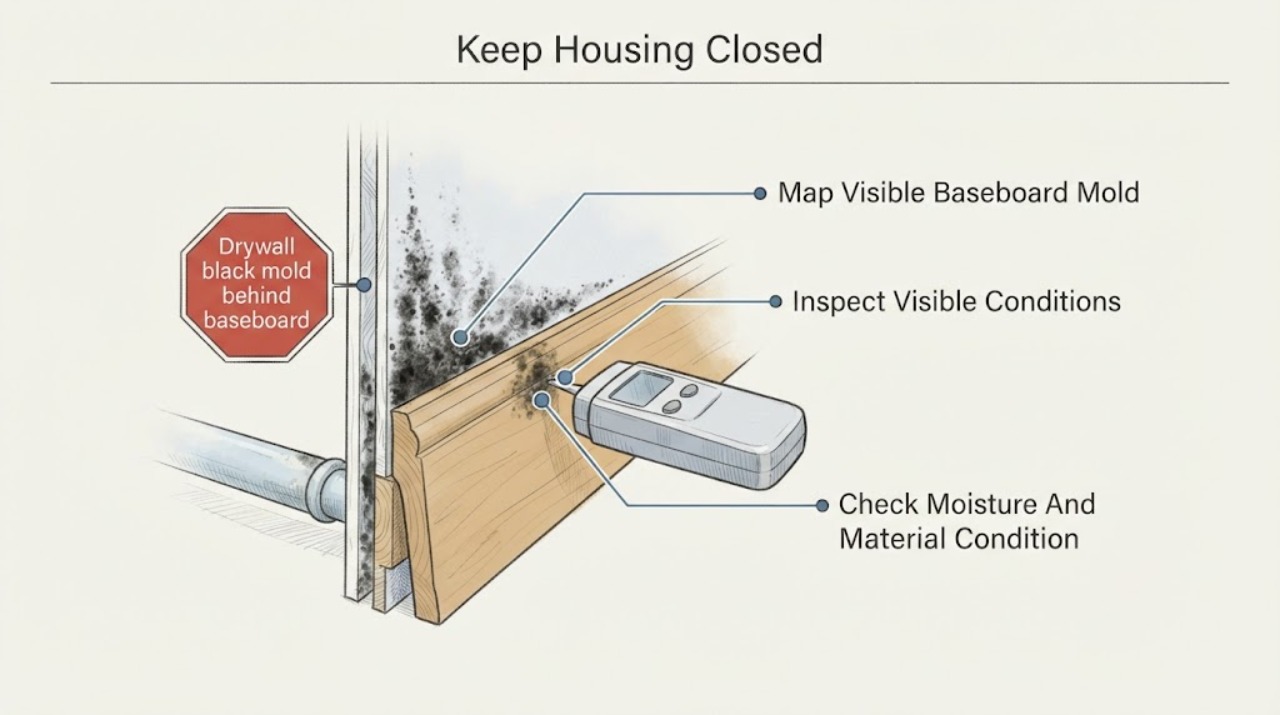
Drywall black mold behind baseboard with a hidden pipe leak
Black-looking growth on drywall does not identify a mold species or prove that it is more toxic; color is not a safe diagnostic. With a suspected pipe leak behind a baseboard, do not pull the baseboard, cut the drywall, scrape the growth, or drill to look behind it.
-
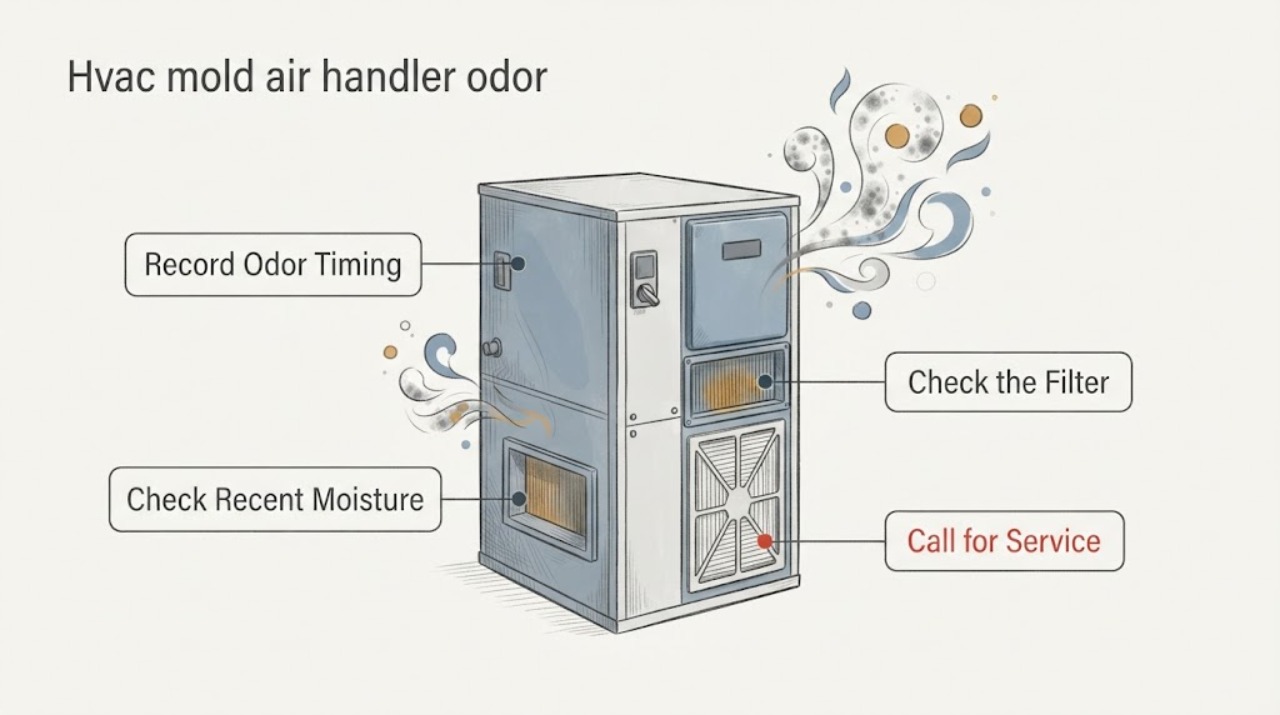
Hvac mold air handler odor from: What to Check and What to Do Next
A musty odor that appears when the air handler runs is a clue, not proof of mold. Note whether the smell comes from one vent or the return, whether it is present when the system is off, and whether there has been condensation, a leak, or visible growth near the unit. If mold is suspected inside the air handler, duct, insulation, or drain-pan area, stop using the system and arrange qualified HVAC/mold assessment; do not open the cabinet or spray into the system.
-
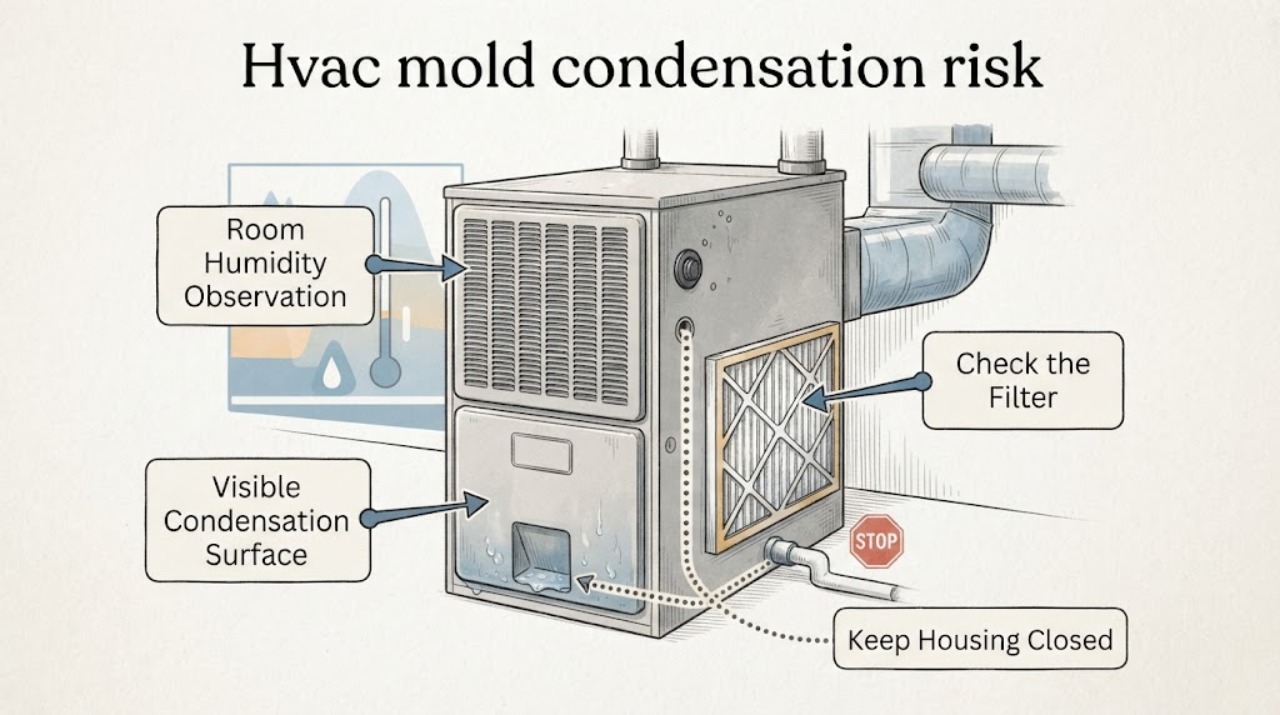
Hvac mold condensation risk: What to Check and What to Do Next
Keep this investigation observational. Record indoor humidity with a normal room humidity meter, look for condensation or dampness on visible grilles and nearby surfaces, inspect only the ordinary user-accessible filter location, and note musty odor or visible growth without touching or disturbing it.
-
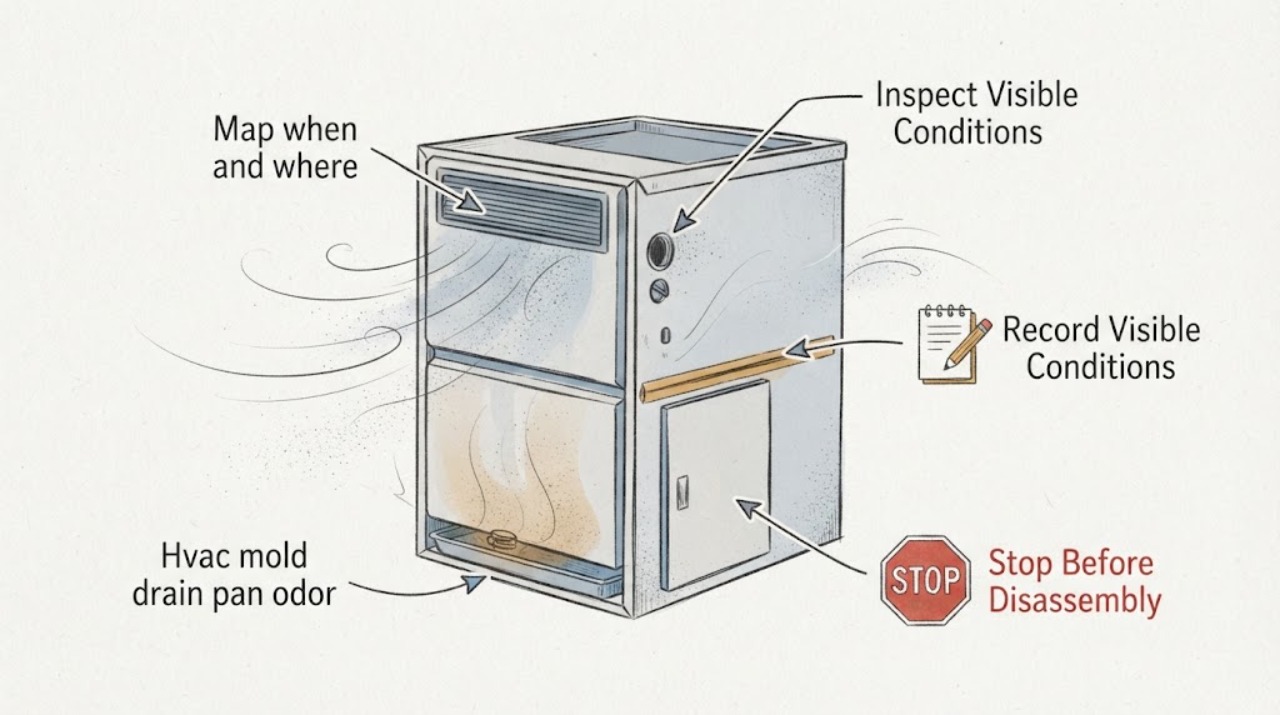
Hvac mold drain pan odor from: What to Check and What to Do Next
A musty odor that starts when the HVAC fan runs can come from moisture or microbial growth near a condensate drain pan, coil, filter, or duct. Treat this as an inspection problem, not a DIY duct-cleaning job: record when and where the odor appears, inspect only areas already visible without opening the equipment, and arrange qualified HVAC/mold assessment when there is standing water, visible growth, wet insulation, or an odor that persists.
-
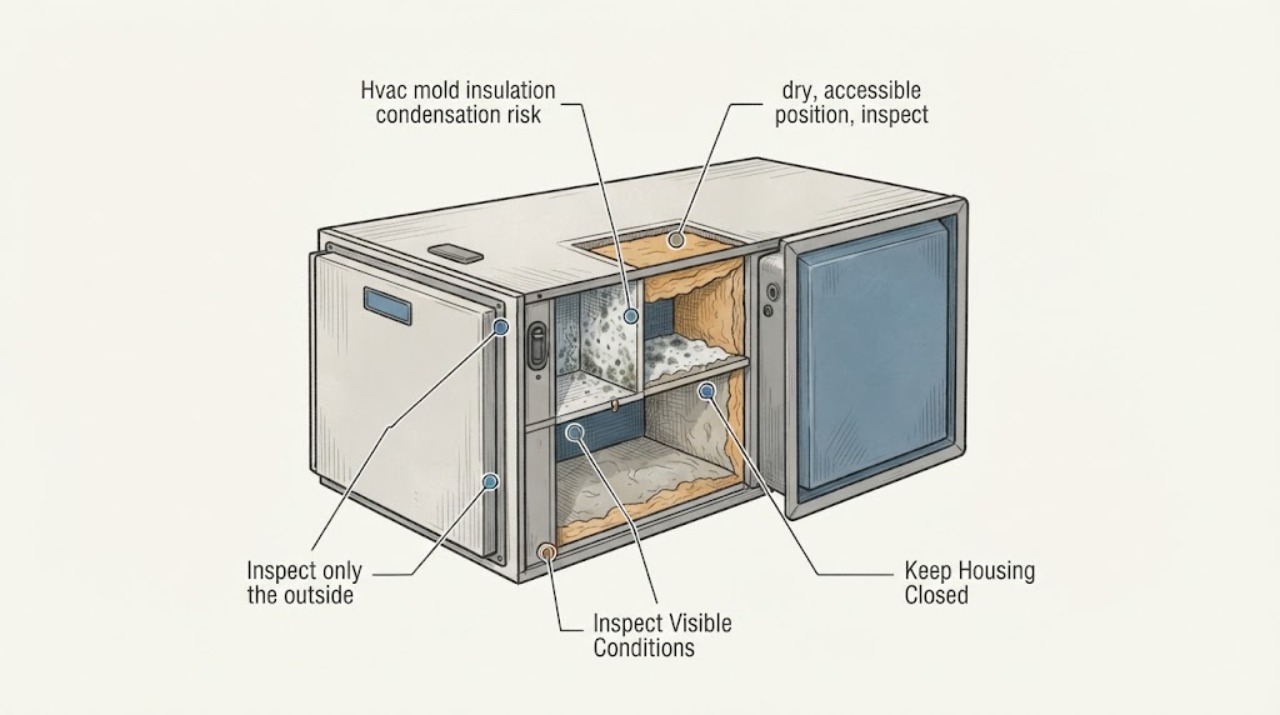
Hvac mold insulation condensation risk: What to Check and What to Do Next
Condensation, damp insulation, or a musty odor around an air handler or duct is a moisture-control problem first and a mold-cleanup question second. From a safe, visible location, document where the moisture appears, whether a drain pan is holding water, the condition of the exterior insulation, the room humidity, and whether the odor changes when the system operates.
-
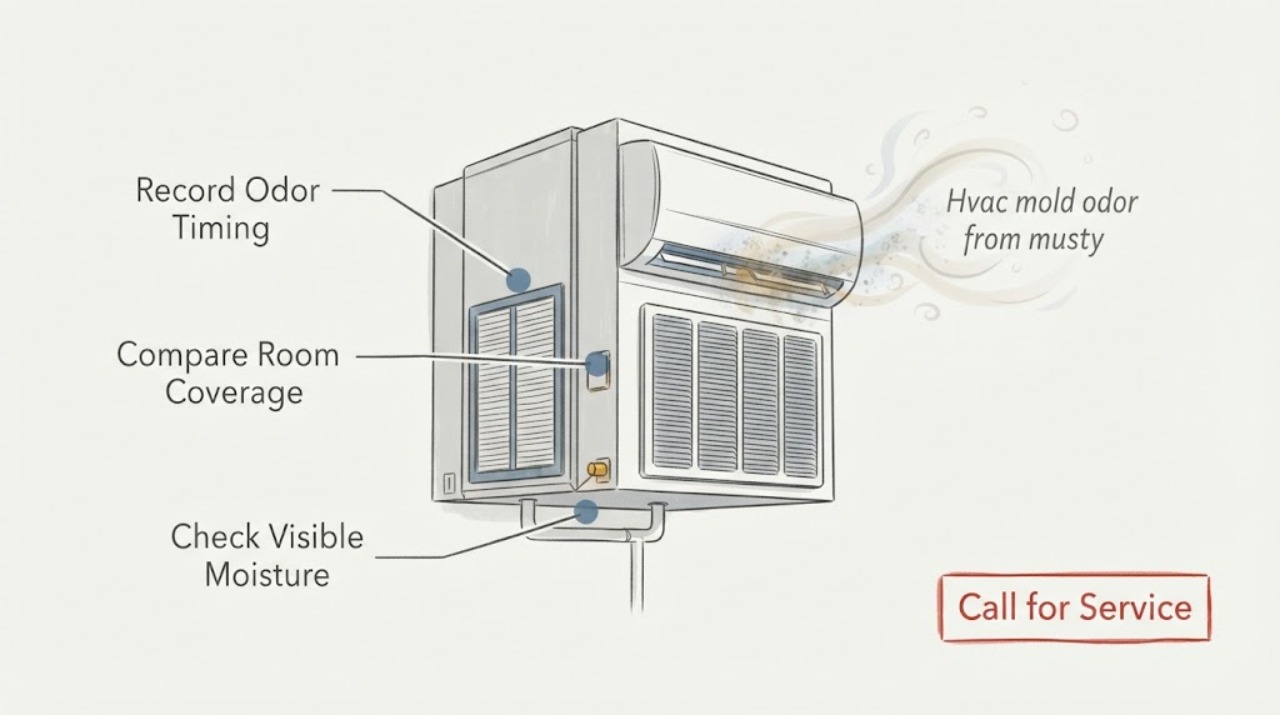
Hvac mold odor from musty air: What to Check and What to Do Next
A musty smell does not by itself prove mold or prove that the HVAC system is the source. First note whether the odor appears only when heating or cooling runs, whether it comes from one room or several vents, and whether you can see condensation, water, staining, or a wet filter or return area.
-
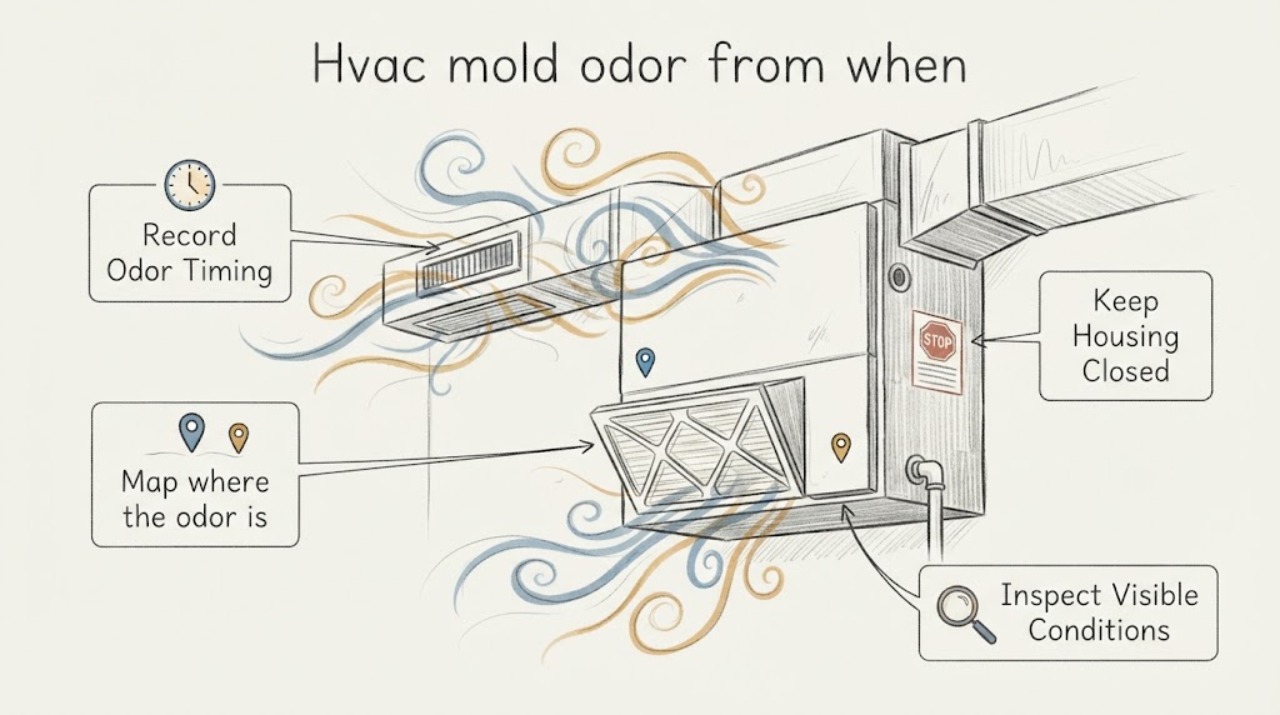
Hvac mold odor from when running: What to Check and What to Do Next
An odor that appears when HVAC starts or runs is a timing clue, not proof that the HVAC system contains mold. First record whether the smell occurs only during a call for heating or cooling, whether it starts at one supply vent or reaches several rooms, and whether it fades after the system stops.
-
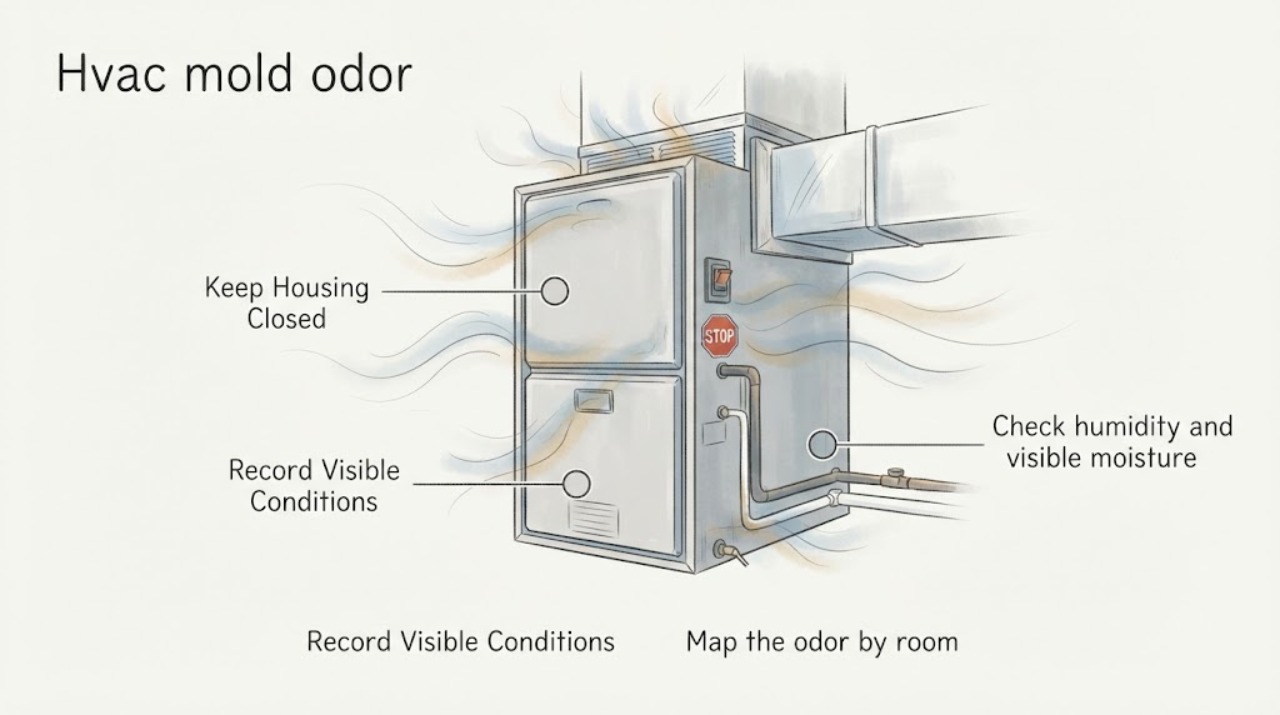
Hvac mold odor from: What to Check and What to Do Next
A musty odor that appears when heating or cooling starts suggests a moisture or contamination problem somewhere in the HVAC airflow path, but smell alone cannot identify the location or prove what the material is. Note when the odor starts, which rooms and vents are affected, indoor humidity, the visible filter condition, and any accessible moisture or condensation.
-
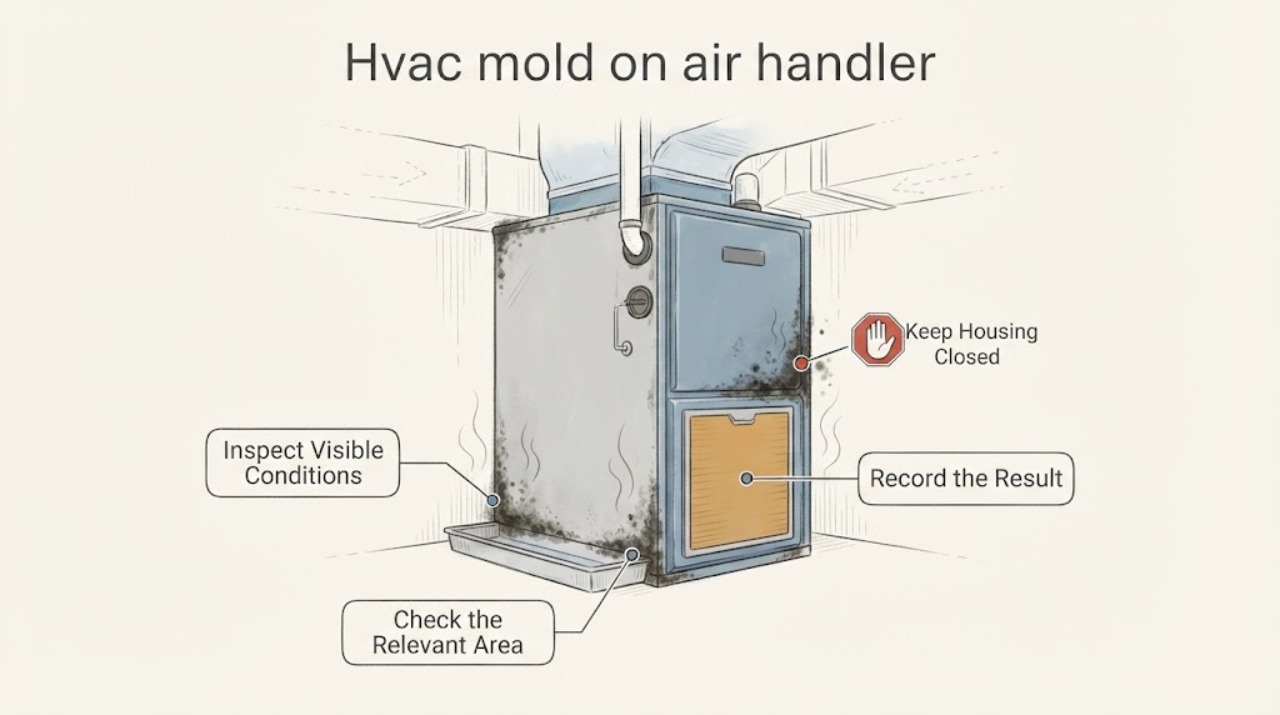
Hvac mold on air handler: What to Check and What to Do Next
Do not run an air handler that you know or reasonably suspect is contaminated with mold, because airflow can distribute particles through the served space. From a safe location, document only what is already visible on the exterior, around accessible condensate or drain areas, at nearby supply or return grilles, and in the owner-facing thermostat or control display.
-
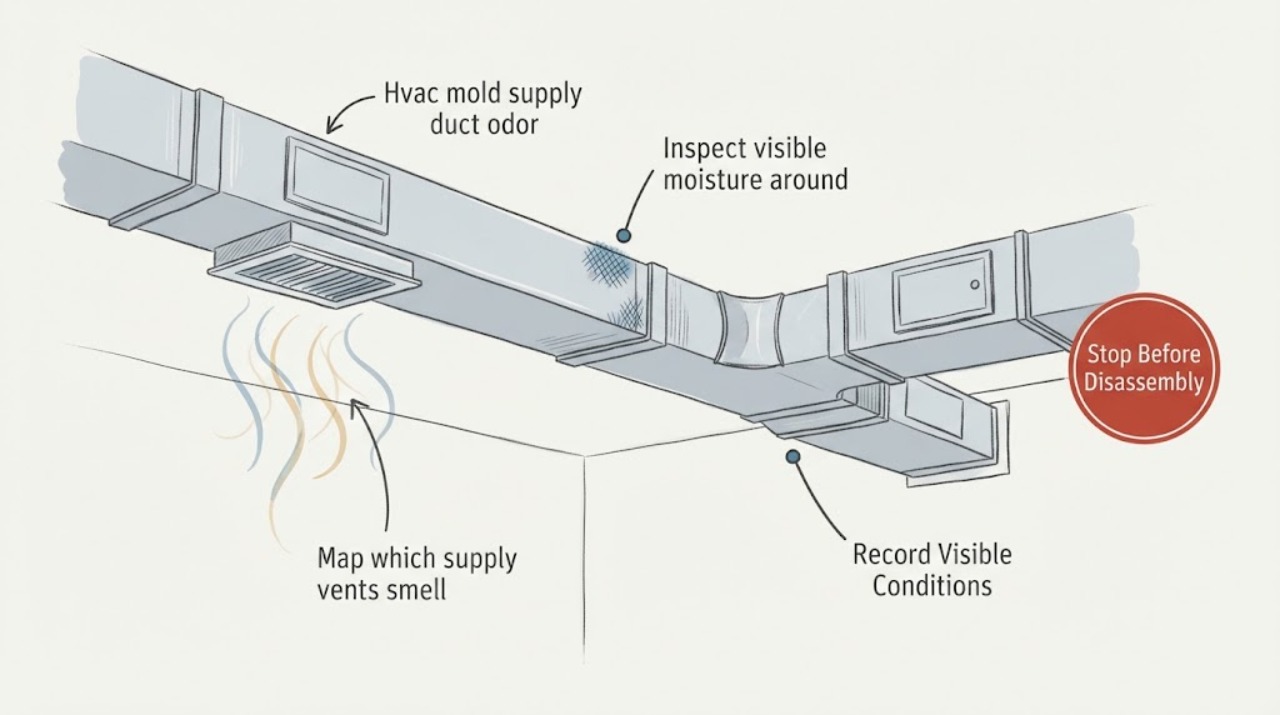
Hvac mold supply duct odor from: What to Check and What to Do Next
A musty smell from one or more supply vents can reflect moisture or contamination in a supply duct, the air-handler components feeding it, or nearby building materials. Map which vents smell and when the fan runs, inspect only visible grilles and surrounding surfaces, and arrange qualified HVAC/mold assessment when the odor repeats, moisture is present, growth is visible, or the system may be distributing material.
-
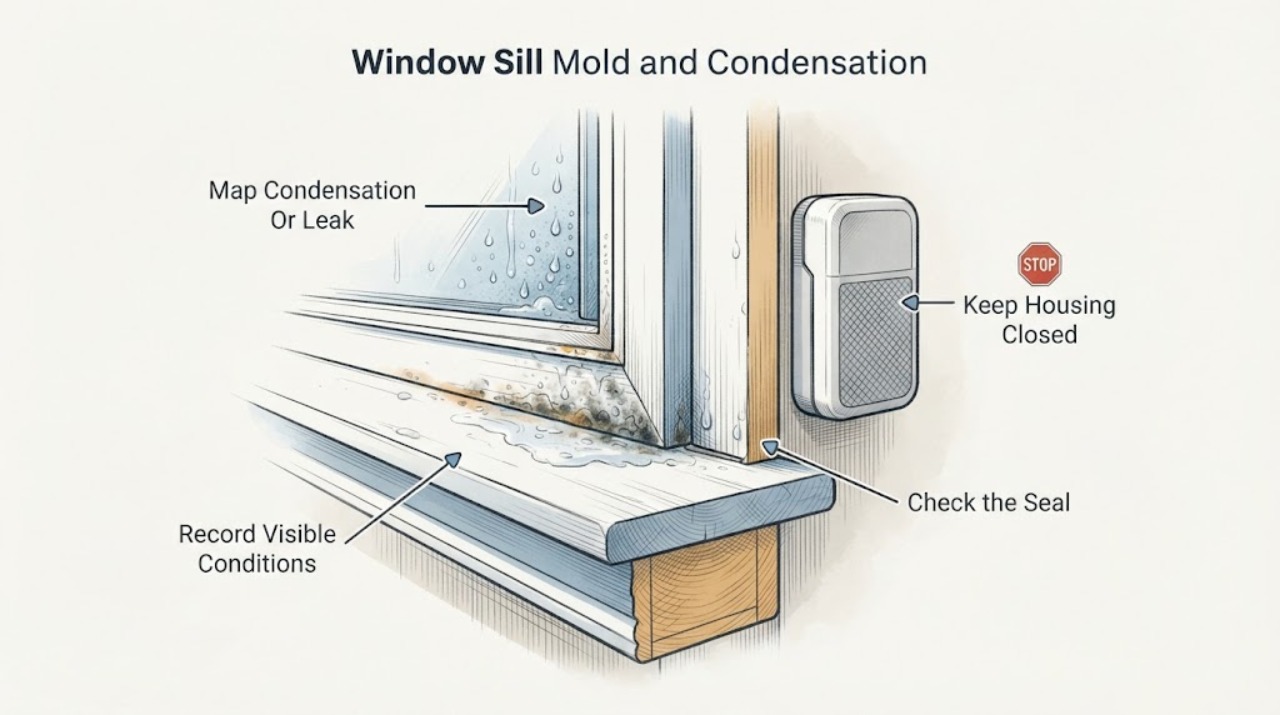
Window Sill Mold and Condensation: Thermal Bridging and Seal Restoration
Mold on a window sill is a moisture problem first, not a color-identification problem. From a safe position, document whether water appears as repeatable interior condensation at a cold edge or as streaking, seepage, swelling, or staining that could indicate a failed seal or flashing.