
On this page
Start here
Quick answer
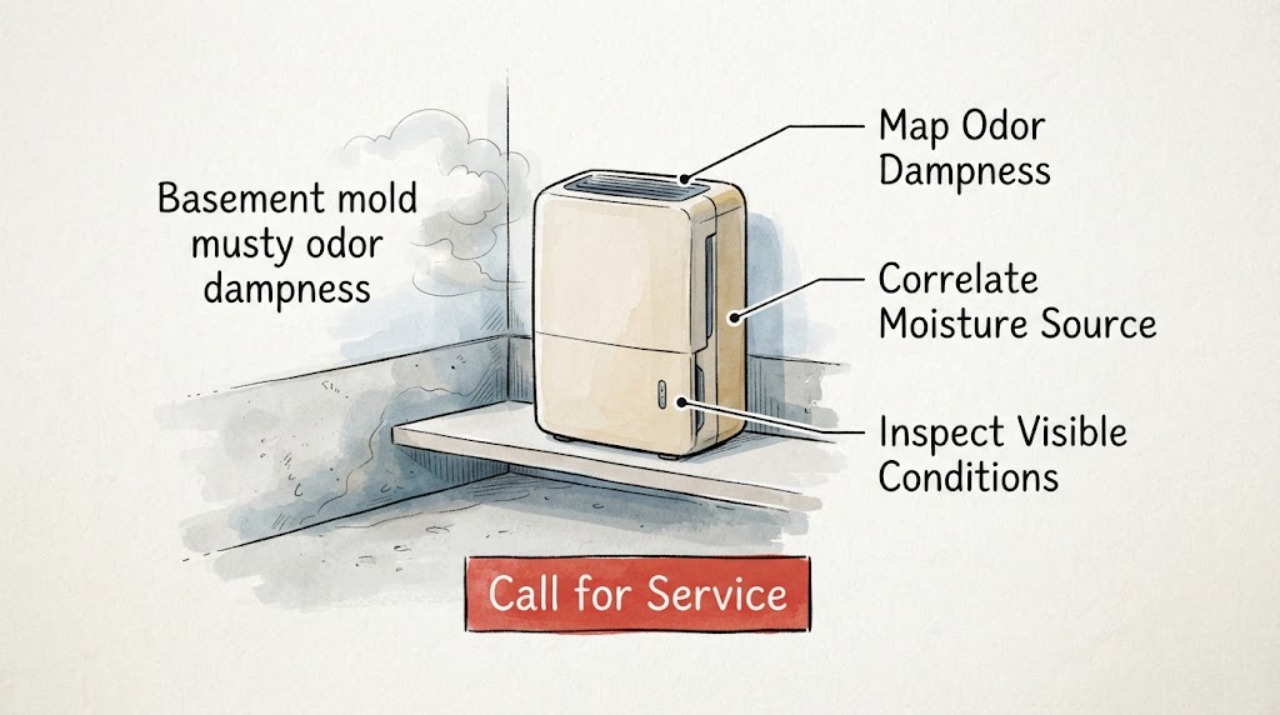
A musty odor and damp basement suggest a moisture problem that may support mold growth, but odor alone cannot locate or identify the source. From safe accessible areas, map the smell and visible dampness, check timing after rain or plumbing events, note condensation and ventilation, and photograph visible growth without disturbing it. Do not scrape, cut, bleach, mix chemicals, or enter a contaminated or unsafe area; arrange professional moisture and mold assessment, especially for extensive damage or health concerns.
Before you begin
Safety first
- This article provides observation-only guidance. Professionals handle moisture mapping, containment, material decisions, demolition, cleanup, and source repair.
Work through in order
Diagnostic checks
Use only checks that match the exact appliance or system and its official guide.
-
Check 1
From safe accessible positions, map where the musty odor is strongest and photograph visible dampness, staining, peeling, or growth; do not touch or scrape suspect material.
Expected result: Odor may be localized near a wall, floor, drain, stored items, HVAC area, or broadly distributed, with or without visible growth.
Next step: Keep people away from damaged materials and give the map to a mold and moisture professional.
Stop if: Stop for extensive growth, sewage or contaminated water, structural damage, unsafe air, or health symptoms.
Why this matters
Why: Location helps target moisture investigation, but a visible surface or odor does not establish hidden extent or species.
-
Check 2
Record whether odor or dampness changes after rain, snow melt, plumbing use, condensation, HVAC operation, or a spill; do not open walls, floors, or stored materials to search.
Expected result: The symptom may follow exterior weather, a plumbing event, seasonal humidity, or remain constant.
Next step: Share the timeline and limit the suspected water source where safe while arranging assessment.
Stop if: Do not run a water test, disturb hidden areas, or move contaminated porous materials.
Why this matters
Why: Timing narrows seepage, plumbing, condensation, or ventilation paths, but moisture can travel and remain hidden.
-
Check 3
Note visible condensation on pipes, windows, walls, or ducts and whether the basement ventilation or dehumidification appears to operate normally; do not dismantle equipment.
Expected result: Condensation may be present, absent, seasonal, or inaccessible for safe viewing.
Next step: Document the observation and ask for moisture, humidity, and ventilation evaluation.
Stop if: Stop around electrical equipment, active leaks, mold-like debris, or unsafe mechanical areas.
Why this matters
Why: Condensation and high humidity can sustain odor and growth even without a plumbing leak; equipment condition needs professional confirmation.
-
Check 4
Collect prior flooding, seepage, plumbing, HVAC, cleanup, renovation, and material records and note any occupants’ symptoms; do not begin demolition or chemical treatment.
Expected result: History may reveal recurrence, a recent leak, prior cleanup without source repair, or no clear event.
Next step: Provide records and photos to the remediation and moisture professional.
Stop if: Do not enter or clean an area that is contaminated, unstable, or causing symptoms.
Why this matters
Why: Recurrence or extensive history raises the need for a planned professional scope rather than a surface cleaning.
Use your observations
Decision map
Find the observation that best matches what you see, then follow the next safe action.
-
PATH 01Safety boundary
What you see
Is visible growth extensive, recurring, or associated with substantial water damage?
Do this next
Keep occupants away and arrange professional mold and moisture assessment before disturbing materials.
Why this path and its safety boundary
Safety stop: Do not scrape, cut, or demolish suspect material.
-
PATH 02Safety boundary
What you see
Is there active seepage, a plumbing leak, condensation, or wet material?
Do this next
Address the source through qualified service and document the affected area before cleanup.
Why this path and its safety boundary
Safety stop: Do not cover, paint, or seal damp or suspect growth.
-
PATH 03Safety boundary
What you see
Does anyone have symptoms they associate with the basement, or is the area unsafe to occupy?
Do this next
Leave the affected area and consult a health professional while arranging qualified assessment.
Why this path and its safety boundary
Safety stop: Do not continue exposure to an unsafe area for testing.
-
PATH 04Safety boundary
What you see
Is the source or prior cleanup history unknown?
Do this next
Request a broad moisture and mold assessment before buying cleaners or equipment.
Why this path and its safety boundary
Safety stop: Do not mix chemicals or perform structural demolition.
Helpful context
Understand the symptom
Odor is a moisture clue
EPA says a moldy odor suggests mold growth should be investigated and emphasizes controlling moisture. A damp basement can also reflect seepage, plumbing, condensation, or ventilation problems, so cleanup without source control may allow recurrence.
Observe without disturbing suspect material
Use safe visual documentation, record where odor is strongest, and keep occupants away from damaged porous materials. A remediation professional can determine moisture extent and a suitable containment and cleanup scope.
Only after diagnosis
Potential parts
- humidity-meter
Consider this category only for safe ambient screening while a professional investigates the moisture source.
Readings are informational and do not replace moisture mapping or mold assessment. - moisture-meter
Consider this category only when a professional confirms non-invasive screening is safe and useful.
Readings vary by material and cannot establish hidden mold extent or remediation scope. - dehumidifier
Consider this category after the water source and safe operating conditions are assessed; humidity control cannot replace leak repair.
Confirm drainage, electrical safety, capacity, and placement for the space; follow manufacturer instructions.
When checks do not resolve it
Need a professional?
Arrange professional moisture and mold assessment for a musty, damp basement, especially recurring odor, visible growth, active water, extensive damage, contaminated water, hidden-area suspicion, or health concerns.
Safety scope: This article provides observation-only guidance. Professionals handle moisture mapping, containment, material decisions, demolition, cleanup, and source repair.
Have this ready
- Odor and dampness map with dated photos
- Rain, plumbing, condensation, HVAC, and seasonal timing
- Visible material, staining, and stored-item observations
- Prior flooding, repairs, cleanup, and renovation history
- Access, occupancy, contamination, and health concerns
Common questions
FAQ
Does a musty smell prove there is visible mold?
No. EPA treats musty odor as a clue that should be investigated. Moisture can be hidden in walls, floors, stored items, or other materials.
Should I bleach the basement mold?
Do not scrape, mix chemicals, or begin cleanup without assessing the source, extent, safety, and material condition. Arrange qualified help for recurring or extensive dampness or growth.
What should I document?
Map odor and dampness, take dated photos, record weather and plumbing timing, note condensation and ventilation, and collect prior flood, repair, and cleanup history.
When should I leave the basement?
Leave and seek professional assessment for unsafe air, extensive growth, contaminated water, structural damage, active leaks, or symptoms associated with the area.
Read the exact guide
Official sources
- What does mold smell like?U.S. Environmental Protection Agency · Supports treating musty odor as an investigation clue and fixing moisture before cleanup.
- Remodeling Your Home and Indoor Air QualityU.S. Environmental Protection Agency · Supports checking basement leaks and correcting moisture problems before further work.
Community feedback
Share a repair observation
Share a plain-text repair observation. Accepted observations are published automatically; this page may take a moment to update.