
On this page
Start here
Quick answer
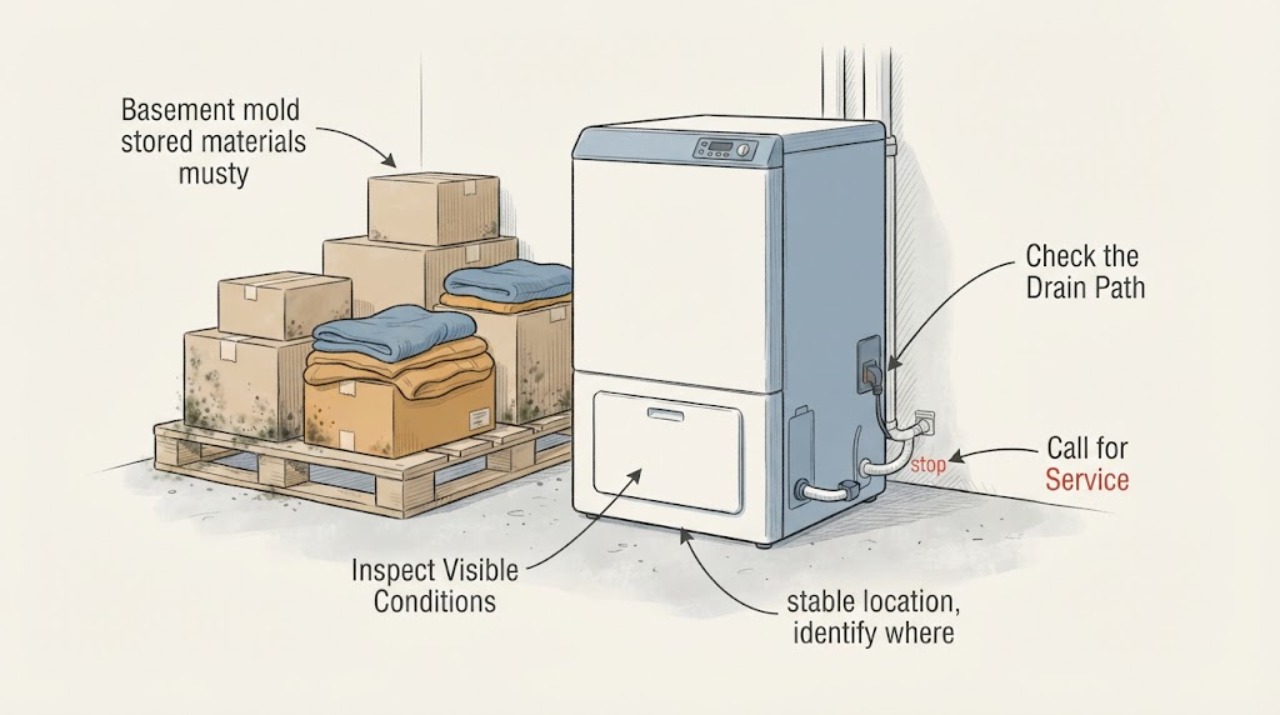
A musty odor around stored basement materials is a moisture and exposure warning, not a reason to move boxes or clean mold yourself. From a dry, safe location, map where the odor is strongest, note which materials are stored there, look for visible moisture or mold-like growth without disturbing anything, and compare the odor with weather or humidity. Keep people away from damp or contaminated materials, especially if anyone has breathing symptoms. Standing water, sewage or other contaminated water, widespread mold, hidden damage, or wet electrical equipment calls for prompt qualified water-damage or mold assessment.
Work through in order
Diagnostic checks
Use only checks that match the exact appliance or system and its official guide.
-
Check 1
From the basement entrance or another dry, stable location, identify where the odor is strongest without moving stored materials. Note whether it is concentrated near a wall, floor edge, drain, window, utility area, or one stack of boxes.
Expected result: An odor limited to one stack or corner differs from a smell spread across the basement or strongest near a wall, floor, drain, or utility area.
Next step: Record the locations and take photographs from a safe distance. Leave stacks and surfaces undisturbed for the professional assessment.
Stop if: Stop if reaching the area requires stepping into water, crossing unstable flooring, moving a stack, or approaching wet electrical equipment.
Why this matters
Why: The odor map helps a professional prioritize a moisture path or stored-material assessment, but it cannot prove that the nearest item is the source.
-
Check 2
Look at the already visible faces and edges of stored materials without opening boxes, lifting containers, or disturbing a stack. Record dampness, staining, swollen cardboard, fuzzy or discolored growth, warping, corrosion, or a material that appears to have collapsed.
Expected result: A dry, intact exterior is different from damp or collapsed cardboard, visible mold-like growth, water lines, softened wood, rust, or damage spreading between stored items and the floor or wall.
Next step: Keep the materials in place, isolate the area from occupants and pets, and report the material categories and visible condition to a qualified professional.
Stop if: Stop immediately if material is crumbling, airborne dust appears, visible growth is disturbed, or a stack looks unstable.
Why this matters
Why: Material type and visible condition help determine whether a professional must assess porous contents, the surrounding building, or both; appearance cannot establish safe handling.
-
Check 3
From a safe position, observe accessible basement surfaces around the stored materials: floor, wall, foundation edge, ceiling below plumbing, windows, and exposed equipment. Look for condensation, efflorescence, water marks, active seepage, or a recurring damp zone without touching or probing it.
Expected result: A dry surface with an old mark differs from active seepage, condensation, a persistent damp area, or moisture that follows a wall, floor, pipe, window, or recent weather event.
Next step: Photograph the visible pattern and record whether it follows rain, snowmelt, plumbing use, or humid weather. Request water-source and moisture assessment before any cleanup or replacement decision.
Stop if: Stop for standing water, sewage-like water, active flow, a soft or collapsing surface, or any moisture near energized electrical equipment.
Why this matters
Why: The surrounding moisture pattern can point toward a building or plumbing source and helps prevent treating stored goods while leaving the source unresolved.
-
Check 4
Compare the odor and visible moisture with recent weather, basement humidity, heating or cooling changes, a plumbing event, or a prior flood. Note whether the smell returns after a dry period or grows stronger when the basement is closed.
Expected result: A smell that follows rain or humidity suggests a moisture-related pattern; a persistent odor during dry weather may indicate retained moisture or hidden growth. A change after a plumbing event needs a different source investigation.
Next step: Keep a dated log and provide it with photographs to the mold or water-damage professional. Do not use odor alone to decide that materials are safe to move.
Stop if: Stop if the odor is accompanied by breathing symptoms, eye irritation, visible airborne dust, strong chemical or sewage odor, or any need to disturb materials.
Why this matters
Why: Timing distinguishes a recurring moisture source from an old isolated event, but it does not identify the material or location that must be removed.
-
Check 5
Assess the occupant and equipment context from outside the affected area: note breathing or allergy symptoms, children or sensitive occupants, standing water, contaminated materials, and nearby electrical panels, outlets, appliances, or cords. Do not touch wet equipment or enter a hazardous zone.
Expected result: No symptoms or electrical involvement is different from breathing complaints, widespread contamination, or water near electrical equipment, each of which raises the urgency and changes the professional scope.
Next step: Keep occupants and pets away and tell the professional about symptoms, water type, material extent, and electrical proximity. Seek medical guidance for health concerns.
Stop if: Stop all observation for breathing difficulty, extensive visible mold, standing or contaminated water, sparks, smoke, shock, or wet electrical equipment.
Why this matters
Why: Health and electrical context determine whether the area should be isolated immediately and whether health, restoration, and electrical professionals need to coordinate.
Use your observations
Decision map
Find the observation that best matches what you see, then follow the next safe action.
-
PATH 01Safety boundary
What you see
Standing water, active seepage, sewage or other contaminated water, or water near electrical equipment is present.
Do this next
Keep people and pets out of the area and request urgent water-damage and, when needed, electrical assessment. Use emergency services for immediate electrical fire or life safety danger.
Why this path and its safety boundary
Safety stop: Do not enter standing water, touch wet electrical equipment, move stored items, or attempt to pump or clean contaminated water.
-
PATH 02Safety boundary
What you see
Stored materials are visibly moldy, damp, collapsed, widespread, or likely to release dust when disturbed.
Do this next
Isolate the area and arrange qualified mold or water-damage assessment to determine safe handling, drying, cleaning, or disposal.
Why this path and its safety boundary
Safety stop: Do not lift, shake, open, scrape, sample, spray, or discard the materials as a do-it-yourself cleanup.
-
PATH 03Safety boundary
What you see
The odor is persistent or recurring, but no visible source is present.
Do this next
Provide a dated odor and weather log and request experienced moisture and hidden-mold investigation; hidden areas may require professional equipment and careful access.
Why this path and its safety boundary
Safety stop: Do not move stacks, open cavities, drill, remove finishes, or run equipment suspected of spreading contamination.
-
PATH 04Safety boundary
What you see
The odor is localized, materials look dry and intact, and no water, growth, symptoms, or electrical concern is visible.
Do this next
Continue safe dated observation and schedule assessment if the odor persists; address any recurrence rather than masking it.
Why this path and its safety boundary
Safety stop: Escalate if the odor spreads or returns, materials change, moisture appears, or anyone develops symptoms.
Helpful context
Understand the symptom
A musty smell can indicate current or past moisture, but odor alone cannot identify the source, species, or extent of mold. Stored cardboard, paper, fabric, wood, and other porous materials can retain moisture and conceal damage. The safest first record is location, material type, visible condition, and timing—not moving or opening the stored items.
Keep this assessment observation-only. Do not lift, shake, open, scrape, sample, spray, or discard suspect material. Do not disturb a stack to inspect behind it. If the basement is wet, contaminated, poorly ventilated, or near electrical equipment, keep out and arrange professional help.
EPA guidance identifies musty odors and known water problems as reasons to investigate possible hidden mold, and notes that disturbing a hidden growth area can spread spores. Moisture control and fixing the source come before deciding whether stored materials can be dried, cleaned, or replaced.
A useful service handoff records the odor location, whether it changes after rain or humid weather, the material categories involved, any visible staining or condensation, the history of leaks or flooding, and whether anyone has symptoms. Treat uncertain observations as unknown rather than guessing.
Only after diagnosis
Potential parts
- humidity-meter
Consider this category only as a non-destructive monitoring aid after a professional confirms that normal room-level humidity tracking is useful for the suspected moisture pattern.
Readings describe room conditions and do not establish that stored materials or hidden cavities are dry; follow the professional's interpretation. - moisture-meter
Consider this category only when an experienced assessor selects a suitable non-destructive method for the building material and suspected hidden moisture.
Material, instrument, surface, and calibration affect readings; do not insert probes into or disturb suspect stored materials. - dehumidifier
Consider this only after the water source, electrical safety, and equipment placement are assessed and a professional confirms that humidity control is appropriate.
Capacity, drainage, electrical protection, and placement depend on the basement and moisture source; it cannot replace source repair or mold assessment.
When checks do not resolve it
Need a professional?
Arrange mold or water-damage assessment for persistent musty odor, visible growth, damp or collapsed stored materials, hidden moisture, or extensive damage. Request urgent help for standing water, sewage or contaminated water, breathing symptoms, widespread mold, or wet electrical equipment; add qualified electrical service when needed.
Have this ready
- Provide odor locations, material categories, dated photos, visible condition, weather and humidity timing, leak or flood history, water type, extent, occupant symptoms, and nearby electrical equipment. Explain that no materials were moved, disturbed, sampled, sprayed, or discarded.
Common questions
FAQ
Should I move the boxes to find the musty smell?
No. Observe the odor location and visible outer condition from a safe, dry position. Moving or opening stored materials can disturb mold, release dust, or destabilize a stack; arrange professional assessment.
Does a musty smell prove that stored items have mold?
No. It suggests current or past moisture and possible hidden growth, but it does not identify the source, extent, or safe handling method. Record the pattern and timing for a qualified assessment.
Can I spray or wipe the stored materials?
Do not spray, scrape, sample, or clean suspect materials as part of this observation-only workflow. A professional should determine whether materials can be safely dried, cleaned, or need controlled handling or disposal.
When is a basement musty odor urgent?
Escalate promptly for standing water, sewage or contaminated water, widespread visible mold, materials that crumble or release dust, breathing symptoms, active seepage, or water near electrical equipment. Keep people and pets away.
Read the exact guide
Official sources
- A Brief Guide to Mold, Moisture and Your HomeU.S. Environmental Protection Agency · Supports fixing the water problem, drying affected areas, escalating extensive or contaminated damage, and treating odor or hidden growth as reasons for careful professional assessment.
- Mold Cleanup in Your HomeU.S. Environmental Protection Agency · Supports professional escalation for extensive water damage, contaminated water, possible HVAC spread, and porous materials that cannot be safely cleaned by assumption.
- Mold Course Chapter 3: Finding Mold and MoistureU.S. Environmental Protection Agency · Supports noting musty odors and water history, recognizing hidden mold around building materials, and using experienced professionals when investigation could disturb growth.
Community feedback
Share a repair observation
Share a plain-text repair observation. Accepted observations are published automatically; this page may take a moment to update.