
On this page
Start here
Quick answer
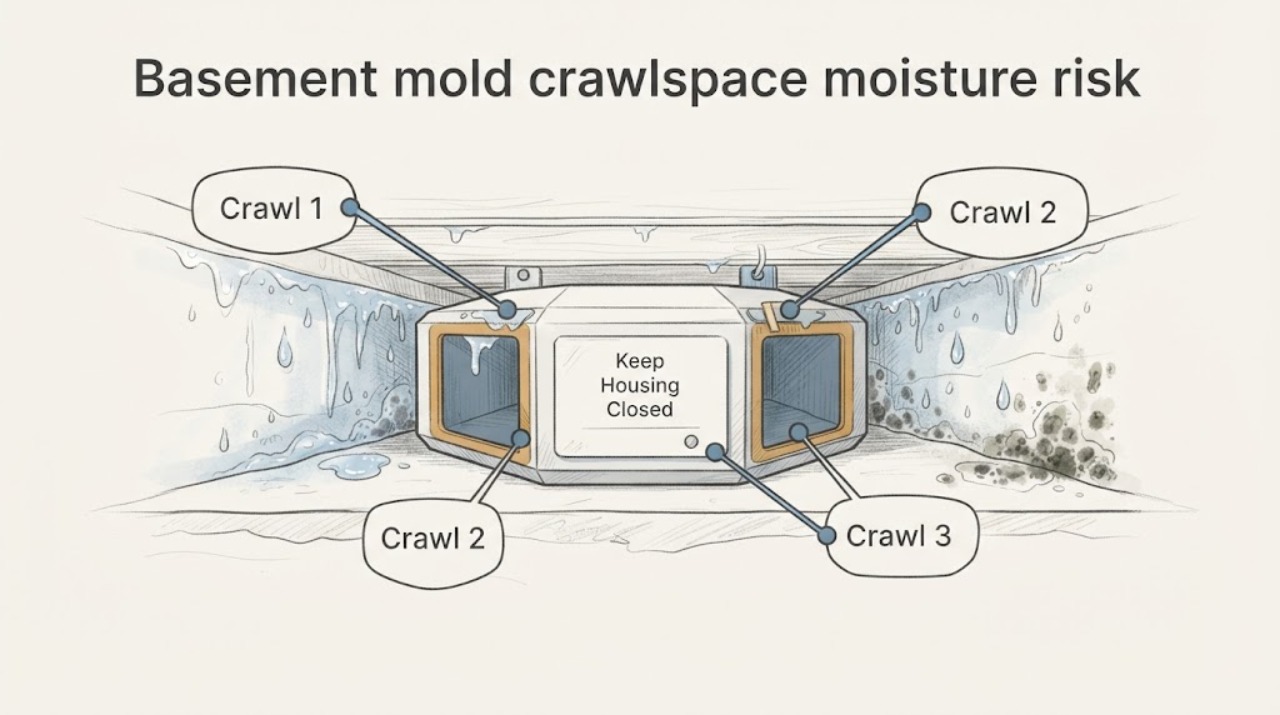
Condensation and moisture risk around a basement crawlspace can support hidden mold and material damage. From accessible areas, observe condensation, standing water, damp insulation, soil moisture, vents, pipes, and odors without entering the crawlspace or disturbing materials. Keep the hatch area controlled, do not mix chemicals or start DIY remediation, and arrange professional moisture or mold assessment when condensation persists, access is unsafe, or growth may be hidden.
Before you begin
Safety first
- Observation only; no crawlspace entry, chemical cleanup, digging, or structural opening.
Work through in order
Diagnostic checks
Use only checks that match the exact appliance or system and its official guide.
-
Check 1
From the basement side of the access point, visually inspect the hatch, nearby joists, pipes, walls, and floor edge without entering or reaching into the crawlspace.
Expected result: Note condensation, staining, dampness, odor, visible growth, pooled water, or damaged insulation.
Next step: Photograph and map observations for a mold or moisture professional.
Stop if: Do not enter, crawl, or disturb insulation or suspected growth.
Why this matters
Why: Moisture or odor supports professional assessment; no visible sign at the hatch does not clear concealed areas.
-
Check 2
Observe accessible humidity or dehumidifier indicators outside the crawlspace and note weather or condensation timing without moving equipment into the space.
Expected result: Record recurring condensation, high humidity indication, full drain container, or no reading.
Next step: Give the timeline to the professional and keep the area ventilated only through normal safe operation.
Stop if: Stop near water and electrical equipment or if equipment is damaged.
Why this matters
Why: A pattern supports moisture-control planning but does not identify the source or cleanup scope.
-
Check 3
Check visible exterior drainage, downspouts, foundation edges, and plumbing routes from safe ground without digging or opening the foundation.
Expected result: Note runoff toward the foundation, wet soil, leaks, condensation on pipes, or no visible exterior source.
Next step: Include the observations in a professional moisture-control plan.
Stop if: Do not dig, cut, or open walls or foundation.
Why this matters
Why: Exterior or plumbing moisture can contribute to crawlspace risk; no source means concealed pathways remain possible.
Use your observations
Decision map
Find the observation that best matches what you see, then follow the next safe action.
-
PATH 01Next step
What you see
The crawlspace is tight, contaminated, wet, or requires entry to investigate.
Do this next
Keep the access controlled and request professional assessment; do not enter.
-
PATH 02Next step
What you see
Condensation, pooled water, damp materials, or recurring odor is present.
Do this next
Arrange prompt moisture and mold inspection and correct the water source professionally.
-
PATH 03Next step
What you see
Visible growth or damaged insulation is seen from outside the access point.
Do this next
Do not disturb it; seek experienced cleanup/restoration guidance.
Helpful context
Understand the symptom
EPA describes crawlspaces as common sites of hidden mold when humidity is high, especially with bare earth or water entry, and notes that moisture can migrate into other building areas. Safe observations can map risk but cannot clear a crawlspace.
Safety boundary
Stop conditions
- No crawlspace entry, mold remediation DIY, bleach mixing, digging, or structural opening.
- Stop for standing water, electrical hazards, unsafe access, or suspected contaminated materials.
Only after diagnosis
Potential parts
- humidity meter
Useful for accessible trend logging alongside professional assessment; it does not clear hidden mold.
Interpret trends rather than a universal pass/fail value. - moisture meter
A professional may compare accessible materials after locating the moisture path.
Use method appropriate to each material. - crawlspace-dehumidifier
Only after water entry, drainage, electrical safety, and capacity are assessed.
A dehumidifier does not replace source correction or remediation.
When checks do not resolve it
Need a professional?
Call mold/moisture service for persistent condensation, standing water, odor, visible growth, damp insulation, unsafe access, or suspected hidden damage.
Safety scope: Observation only; no crawlspace entry, chemical cleanup, digging, or structural opening.
Common questions
FAQ
Can I crawl in briefly to check for mold?
No. Tight or damp crawlspaces can contain hidden hazards; use a professional assessment.
Does a dehumidifier fix crawlspace moisture?
It may support control after assessment, but drainage, water entry, and hidden damage still need attention.
Read the exact guide
Official sources
- Mold Course Chapter 2: Why and Where Mold GrowsU.S. Environmental Protection Agency · Supports observing crawlspace moisture risks, keeping condensation and water sources under review, and using professional assessment for hidden conditions.
Community feedback
Share a repair observation
Share a plain-text repair observation. Accepted observations are published automatically; this page may take a moment to update.