
On this page
Start here
Quick answer
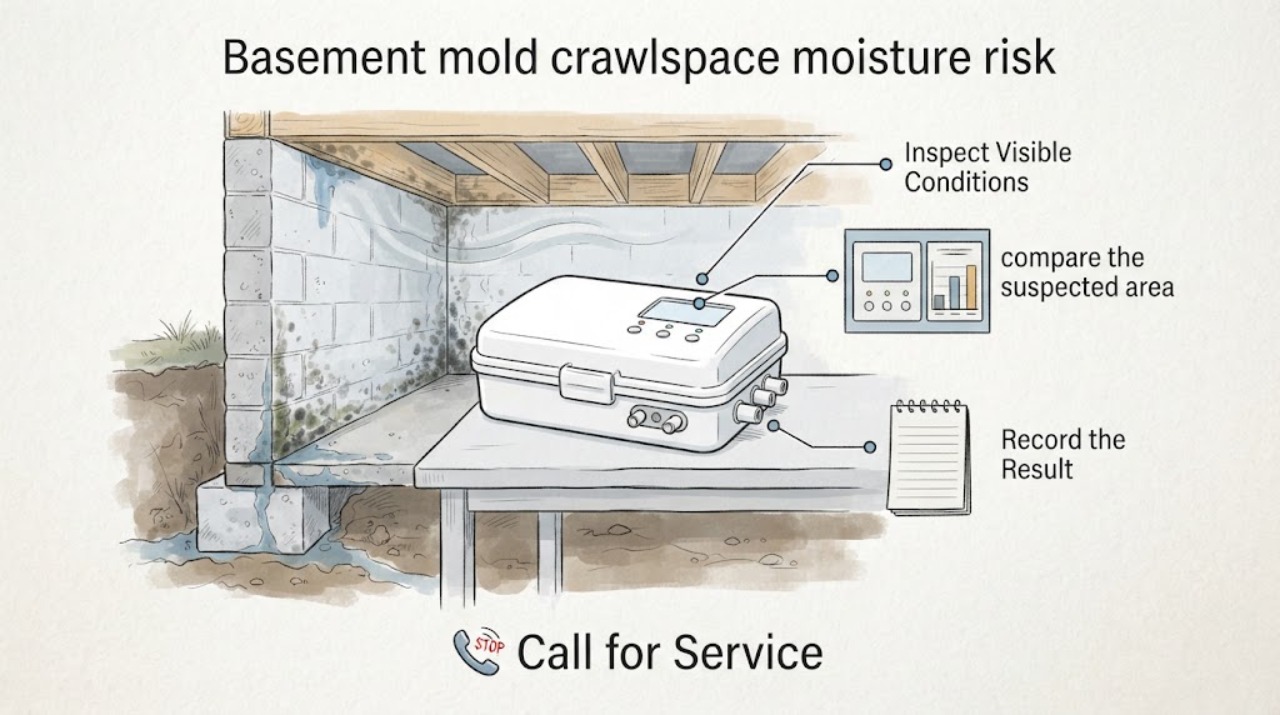
Treat a damp basement or crawlspace smell, visible growth, staining, or recurring humidity as a moisture problem first. Observe only from accessible dry areas: look for water entry, condensation, stains, peeling finishes, damp odors, and changes after rain without entering an unsafe crawlspace, touching mold, disturbing materials, or mixing cleaners. Keep children, pets, and people with asthma, chronic lung disease, allergies, or immune suppression away from suspected mold. Arrange qualified moisture and mold assessment when the source is hidden, the affected area is extensive or recurring, water damage is significant, or anyone has symptoms; urgent service is appropriate for active water entry, electrical exposure, structural damage, or unsafe air.
Work through in order
Diagnostic checks
Use only checks that match the exact appliance or system and its official guide.
-
Check 1
From an accessible, dry basement or living area, look at walls, floors, ceilings, exposed finishes, and around utility penetrations without touching or scraping suspected mold.
Expected result: Record visible spots or films, discoloration, peeling paint, damp materials, condensation, salt-like deposits, water stains, or a musty odor, and note the room or surface location.
Next step: Photograph the area from a safe position, keep people away, and arrange qualified moisture and mold assessment rather than disturbing the material.
Stop if: Stop observing if the surface is wet, crumbly, unstable, near electrical equipment, or likely to release dust when approached.
Why this matters
Why: A visible or odor pattern confirms that moisture investigation is needed but does not identify the source, the extent behind a finish, or whether the material can be safely cleaned.
-
Check 2
From a safe accessible position, compare the suspected area with a dry neighboring area and note how the odor or visible moisture changes after rain, snowmelt, plumbing use, or humid weather.
Expected result: Record whether moisture appears at a foundation wall, floor edge, pipe or duct penetration, ceiling, window, or another location, and whether the pattern is new, recurring, or spreading.
Next step: Keep a dated photo and event log and provide it to the remediation or building professional; do not open walls, floors, or ceilings to trace the path.
Stop if: Stop and escalate if water is active, the floor or wall is failing, the odor is strong and worsening, or the route would require crawlspace entry.
Why this matters
Why: A pattern tied to weather or a plumbing event can help a professional prioritize exterior drainage, groundwater, condensation, or plumbing investigation; it is not proof of the exact source.
-
Check 3
From outside and on stable dry ground, observe the foundation, downspout discharge, grading, window wells, and other visible water paths without excavation or entry beneath the house.
Expected result: Note water collecting against the foundation, a downspout discharging beside the wall, saturated soil, a damaged window-well cover, or a visible crack or seepage mark; do not dig, seal, or redirect a system as a guess.
Next step: Photograph the location and request a qualified moisture-source assessment; keep the basement or crawlspace area controlled until the cause is understood.
Stop if: Stop if ground conditions are unstable, water is near electrical equipment, a foundation appears to move, or observation would require entering the crawlspace.
Why this matters
Why: Exterior water evidence can point toward a source that must be corrected before mold remediation, while a clear exterior view does not rule out hidden plumbing or condensation.
-
Check 4
Check the accessible room's air and occupant response without disturbing materials, and record any visible humidity display or safe-to-read environmental reading if already installed.
Expected result: Note persistent dampness, condensation on cold surfaces, a recurring musty odor, worsening symptoms, or a reading that is unusually high relative to the home's normal record; do not treat one reading as a mold test.
Next step: Ventilate or condition the space only if the equipment can be used safely without spreading contaminated air, and arrange professional assessment for recurring moisture or health concerns.
Stop if: Stop and leave the affected area if anyone develops breathing difficulty, wheezing, severe irritation, dizziness, or other concerning symptoms.
Why this matters
Why: Persistent humid conditions can support mold growth, while symptoms or a worsening odor may require reducing exposure and professional evaluation rather than more inspection.
-
Check 5
Review the accessible history of leaks, floods, plumbing work, foundation seepage, prior cleanup, and occupancy or health concerns without opening the structure or handling contaminated items.
Expected result: Record when the odor or visible change began, whether it followed a water event, whether earlier cleanup returned, and whether anyone in the home is medically vulnerable to mold exposure.
Next step: Give the timeline and occupant information to a qualified remediation or building professional and keep vulnerable people out of the affected area.
Stop if: Stop all inspection if it would require entering a confined or unsafe area, moving moldy contents, demolition, or direct contact with contaminated material.
Why this matters
Why: Recurring growth after cleanup suggests that the moisture source or hidden material condition remains unresolved; vulnerable occupants change the safe exposure boundary.
Use your observations
Decision map
Find the observation that best matches what you see, then follow the next safe action.
-
PATH 01Next step
What you see
There is active water entry, a worsening leak, electrical exposure, a failing wall or floor, or another immediate building hazard.
Do this next
Leave the unsafe area, keep people away, and use qualified emergency, plumbing, electrical, building, or moisture-response service as the hazard requires.
-
PATH 02Next step
What you see
Visible mold or a strong musty odor is present but the source is hidden, recurring, extensive, or associated with wet building materials.
Do this next
Keep the area controlled and arrange qualified mold and moisture assessment; do not disturb the material, demolish finishes, or attempt DIY remediation.
-
PATH 03Next step
What you see
The moisture pattern follows rain, snowmelt, foundation seepage, or exterior drainage evidence.
Do this next
Provide the exterior photos and event log to a qualified professional who can identify and correct the water source before remediation.
-
PATH 04Next step
What you see
The pattern follows plumbing use, condensation, or indoor humidity with no obvious exterior entry.
Do this next
Arrange appropriate plumbing, building-envelope, HVAC, or moisture assessment and do not open walls or mix cleaning chemicals to chase the source.
-
PATH 05Next step
What you see
A person in the home has breathing difficulty, severe irritation, or is medically vulnerable to mold exposure.
Do this next
Move that person away from the suspected area and seek appropriate medical or emergency guidance; keep the area closed until a qualified professional evaluates it.
Helpful context
Understand the symptom
Mold risk begins with moisture
Mold grows where materials stay damp, including around leaks, basement seepage, condensation, and flood damage. A smell or patch on a finished wall does not identify whether the source is plumbing, groundwater, rain, humidity, or air movement from below the house. The useful first record is a safe moisture and location pattern, not a cleanup attempt.
Stay in accessible dry areas
Look from the basement or living area, a dry utility area, or outside at the foundation and drainage where you can stand safely. Do not crawl under the house, disturb insulation or soil, brush mold, scrape surfaces, or open a concealed assembly just to see farther. A trained professional can set exposure controls and inspect hidden conditions.
Protect people while arranging help
Mold cleanup can create airborne exposure and injury risks, and some people are more vulnerable to health effects. Keep the area closed off when possible and avoid fans that spread air from a suspected mold area into living spaces. Do not use bleach as a routine answer or combine bleach with ammonia or other cleaning products; unresolved moisture will continue to drive the problem.
Only after diagnosis
Potential parts
- humidity-meter
Consider only a basic display meter for documenting accessible room conditions; it cannot identify hidden mold, a moisture source, or a safe cleanup scope.
Readings vary by location and instrument; use them as context for a professional assessment, not as a mold clearance result. - moisture-meter
Consider only for a trained professional or safe, accessible finished surface after moisture evidence is observed; do not use pins or probes on suspected mold or concealed assemblies.
Material, depth, calibration, and surface conditions affect readings; a meter does not replace source tracing or remediation planning. - crawlspace-dehumidifier
Consider only after a professional confirms that moisture source control, drainage, electrical capacity, discharge, and the crawlspace conditions support dehumidification.
A dehumidifier cannot substitute for leak repair, drainage correction, safe access, or mold remediation, and the system must be selected for the actual space and installation conditions.
When checks do not resolve it
Need a professional?
Arrange qualified mold and moisture service for recurring dampness, visible growth, persistent odor, wet or hidden materials, significant water damage, vulnerable occupants, or any condition requiring crawlspace or structural access.
Have this ready
- Provide dated photos from safe areas, room and surface locations, rainfall or plumbing timing, odor and humidity pattern, exterior drainage observations, prior cleanup history, and occupant health or access constraints.
Common questions
FAQ
Can I crawl under the house to inspect the mold myself?
Not if the crawlspace is confined, wet, unstable, contaminated, poorly ventilated, or otherwise unsafe. Observe from accessible dry areas and have a qualified professional assess concealed conditions with appropriate controls.
Should I spray bleach on the visible mold?
Do not treat bleach as a routine answer, and never mix bleach with ammonia or another cleaner. Source control and safe remediation matter, and disturbing mold can increase exposure; obtain professional guidance for recurring, hidden, extensive, or health-sensitive conditions.
Why does mold return after cleaning?
Moisture may still be entering from plumbing, groundwater, rain, condensation, or humidity, or affected materials may remain hidden. Document the recurrence and arrange source and remediation assessment rather than repeatedly cleaning the surface.
Read the exact guide
Official sources
- Mold and Your HomeU.S. Environmental Protection Agency · EPA identifies leaks, basement seepage, and condensation as moisture sources that can encourage mold growth, supporting source-focused observation without DIY remediation.
- Mold Clean Up Guidelines and RecommendationsCenters for Disease Control and Prevention · CDC states that mold cleanup can create health and injury risks, identifies people who should not participate, and describes exposure-reduction boundaries; this article keeps the homeowner in observation-only scope.
- Mold RemediationOccupational Safety and Health Administration · OSHA describes this activity sheet as guidance for trained response and recovery workers and notes that remediation can involve airborne spores, wet materials, and construction-like removal; it supports professional escalation rather than homeowner demolition.
- Should I use bleach to clean up mold?U.S. Environmental Protection Agency · EPA does not recommend biocides as routine mold cleanup and warns never to mix bleach with ammonia or other cleaning solutions; the article therefore avoids chemical-remediation instructions.
Community feedback
Share a repair observation
Share a plain-text repair observation. Accepted observations are published automatically; this page may take a moment to update.