
On this page
Start here
Quick answer
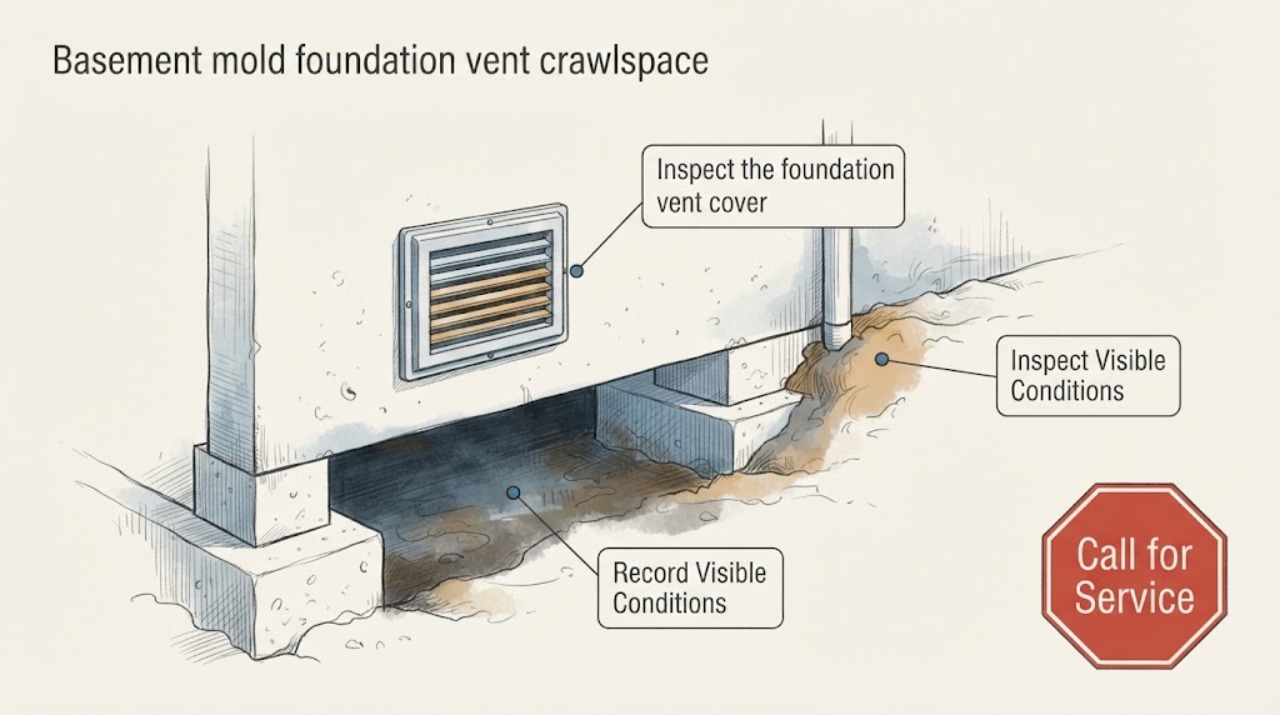
A damp or moldy basement near a foundation vent is a moisture-investigation problem, not a reason to enter the crawlspace or simply close the vent. Moisture can come from rain, grading, groundwater, plumbing, condensation, or humid air moving through the vent, and hidden growth may be present below the floor or behind finishes. From the basement doorway and ground level outside, document visible water, condensation, musty odor, vent condition, drainage, and spread. Keep people out of the crawlspace, do not disturb mold or mix chemicals, and arrange a high-priority professional moisture and mold assessment.
Work through in order
Diagnostic checks
Use only checks that match the exact appliance or system and its official guide.
-
Check 1
From the basement doorway or another dry, stable location, view the area near the foundation vent and record visible mold-like growth, wet spots, staining, condensation, peeling finishes, musty odor, or water on the floor without entering the crawlspace or touching materials.
Expected result: Note whether the sign is limited to the vent zone or extends along the wall, floor edge, insulation, stored materials, or adjacent rooms, and whether the odor or dampness is current.
Next step: Photograph the visible pattern from the safe side of the access and request a professional mold and moisture assessment before any cleaning, covering, or ventilation change.
Stop if: Stop immediately if the floor is wet, sewage or flood water is present, the access is unstable, breathing symptoms occur, or electrical equipment is damp; isolate the area and seek urgent qualified help.
Why this matters
Why: A localized vent-area pattern may point to air or rain entry, while broad or persistent signs suggest a larger moisture pathway or concealed impact. Appearance and odor cannot establish the extent or type of mold.
-
Check 2
From ground level outside, inspect the foundation vent cover, surrounding wall, grade, downspouts, roof-drain discharge, and nearby irrigation or vegetation without climbing, digging, removing the vent, or reaching into the opening.
Expected result: Record whether the vent is visibly blocked, damaged, screened, open, stained, or surrounded by pooling water, and whether the ground appears to direct water toward the foundation.
Next step: Take wide and close photos, note recent rain or irrigation, and give them to the moisture professional; do not grade soil, excavate, seal the vent, or apply a coating as a diagnostic experiment.
Stop if: Stop if the ground is unstable, standing water surrounds the foundation, the vent is close to utility equipment, or inspection would require a ladder or contact with contaminated material; keep clear and call a professional.
Why this matters
Why: A damaged vent or water directed toward the foundation is a useful exterior lead, but vent appearance alone does not show crawlspace humidity, water-table conditions, or hidden mold.
-
Check 3
Observe basement air and surfaces from the occupied side of the building, noting condensation on cool walls or pipes, persistent dampness, humidity discomfort, and whether the foundation vent area changes after weather or seasonal temperature shifts.
Expected result: Log the date, weather, indoor conditions, odor, condensation, and visible changes without treating a single consumer humidity reading as a mold or building diagnosis.
Next step: Share the log with the professional and ask for a building-envelope, drainage, plumbing, and crawlspace moisture review; do not run a fan into the access or alter vent operation to chase a reading.
Stop if: Stop if occupants develop breathing or irritation symptoms, the odor spreads into living areas, or visible growth is extensive; leave the affected area and arrange prompt professional evaluation.
Why this matters
Why: Condensation and weather-linked changes can distinguish air moisture from bulk water clues, while a persistent pattern suggests that the moisture source has not been controlled. The cause may still be below the floor or inside a wall.
-
Check 4
Check the basement access area and visible foundation surfaces for signs that moisture or mold may be entering the living space, including odor movement, staining, damp finishes, or growth near cracks and penetrations, without opening finishes or moving contents.
Expected result: Note whether the signs are above the floor, below a vent, beside plumbing, near a sump or drain, or associated with a recent leak, flood, or prolonged damp period.
Next step: Restrict access, avoid disturbing materials, and request professional assessment of both the crawlspace and the basement side before painting, covering, or replacing finishes.
Stop if: Stop if drywall, insulation, flooring, or other porous materials are visibly moldy or water-damaged, or if a ceiling, wall, or floor appears unstable; do not disturb it and call a qualified professional.
Why this matters
Why: A connection between the vent zone and occupied space raises the priority for containment and source control; a dry surface does not rule out concealed moisture or prior damage.
-
Check 5
Prepare a professional handoff with vent photos, basement photos, dates, weather and leak history, odor and condensation notes, occupant symptoms if volunteered, and the exact areas that were not entered or disturbed.
Expected result: Check that the record separates what was seen from assumptions about the crawlspace, mold species, structural condition, or air quality, and identifies any water, sewage, electrical, or access hazard.
Next step: Schedule a high-priority mold and moisture inspection and ask the provider to coordinate drainage, foundation, plumbing, HVAC, or structural specialists when the evidence points beyond surface growth.
Stop if: Do not continue self-assessment when professional access, sampling, removal, drying, or remediation is needed; leave the area isolated until the scope is set.
Why this matters
Why: A clear boundary and history help the professional plan safe access, moisture mapping, containment, and any needed structural or environmental follow-up without an unsafe homeowner inspection.
Use your observations
Decision map
Find the observation that best matches what you see, then follow the next safe action.
-
PATH 01Next step
What you see
There is current water, sewage, flood contamination, widespread visible growth, or damp electrical equipment near the basement or vent.
Do this next
Keep people and pets out, do not enter or disturb the crawlspace, and seek urgent qualified water, electrical, and mold professionals as the situation requires.
-
PATH 02Next step
What you see
The vent or foundation area shows staining, pooling, damaged screening, or drainage toward the wall, but no active interior water is visible.
Do this next
Document the exterior pattern and request a professional drainage and crawlspace moisture assessment; do not seal, remove, or alter the vent as a trial.
-
PATH 03Next step
What you see
The basement has persistent musty odor, condensation, or visible growth with no obvious exterior source.
Do this next
Arrange professional mold and moisture inspection of accessible basement surfaces and the crawlspace without homeowner entry, scraping, sampling, or chemical treatment.
-
PATH 04Next step
What you see
The area is dry today but has a repeated seasonal or weather-linked history.
Do this next
Keep a dated photo and weather log and book an assessment before the next wet period; a dry snapshot does not clear concealed materials.
-
PATH 05Next step
What you see
A child, pet, or occupant with respiratory sensitivity may reach or be affected by the area.
Do this next
Restrict access and use professional guidance for containment and remediation decisions; do not rely on odor, color, or a home air test to set safe exposure limits.
Helpful context
Understand the symptom
Why a foundation vent is not the whole diagnosis
A vent opening is one part of a crawlspace moisture system. Soil, groundwater, roof drainage, plumbing, condensation, air movement, and the condition of the foundation can all contribute to damp materials. A vent that looks blocked or open does not reveal the moisture level below the floor, whether a vapor barrier is present, or whether framing, insulation, wiring, or other materials are affected. A professional needs the full pattern before changing ventilation or sealing anything.
Stay outside the crawlspace
Use a stable floor position at the basement access and a ground-level position outside. Keep the access closed or guarded, keep children and pets away, and use photos and notes rather than contact. Do not enter the crawlspace, move stored items, disturb suspected mold, open walls, drill the foundation, seal a vent as a test, or mix bleach or other chemicals.
Only after diagnosis
Potential parts
- humidity-meter
Consider a humidity meter only as a supplemental record for occupied basement conditions while arranging professional assessment; a reading cannot determine hidden mold, source, or safe remediation scope.
Use a basic room-side device without entering the crawlspace or placing it on contaminated material, and share its dates and context with the professional. - moisture-meter
Consider moisture mapping only when a qualified professional selects a suitable non-destructive method; it may locate a wet area but cannot identify mold species or replace a full building assessment.
Confirm suitability for the wall, floor, insulation, and finish before use; do not probe, drill, or open the foundation, wall, or crawlspace. - crawlspace-dehumidifier
Consider dehumidification only after the water source, combustion safety, drainage, ventilation strategy, and equipment placement have been assessed; it is not a substitute for mold containment or repairs.
Have a qualified professional confirm capacity, drainage, electrical supply, and placement for the specific crawlspace; do not enter or install equipment in the space yourself.
When checks do not resolve it
Need a professional?
Call a qualified mold and moisture professional promptly for persistent musty odor, visible growth, recurring condensation, foundation-vent water signs, or any damp crawlspace concern. Escalate urgently for flood or sewage water, wet electrical equipment, unstable floors or walls, widespread growth, or occupant breathing symptoms.
Common questions
FAQ
Should I close or seal the foundation vent when I see basement mold?
Not as a test. Vent changes can interact with soil moisture, drainage, humidity, combustion equipment, and the rest of the crawlspace design. Have a professional assess the whole moisture system first.
Can I enter the crawlspace to see how much mold there is?
No. Keep this inspection to the basement access and ground-level exterior. Crawlspace entry, material disturbance, and remediation need qualified assessment and appropriate controls.
Does a musty smell prove that mold is in the foundation vent?
No. Odor is a useful warning that moisture or growth may be present, but it cannot locate the source or establish extent. Record when and where it occurs and arrange professional assessment.
What should I document before the mold and moisture visit?
Take safe-side photos of the vent, foundation, basement access, stains, condensation, and drainage; record dates, weather, leak history, odor, visible growth, and any access, water, electrical, or occupant-symptom concern.
Read the exact guide
Official sources
- Mold and Your HomeU.S. Environmental Protection Agency · Used to frame safe observation of basement moisture pathways; source-specific cleanup and remediation decisions remain professional matters here.
- Mold Course Chapter 2: Why and Where Mold GrowsU.S. Environmental Protection Agency · General building and homeowner observation context for a damp basement or foundation-vent concern; not a do-it-yourself remediation procedure.
- Mold, Testing, and RemediationNational Institute for Occupational Safety and Health · Supports the article’s observation-only and professional-escalation boundary; it does not authorize homeowner entry or disturbance of suspected mold.
- Guide to Closing and Conditioning Ventilated CrawlspacesU.S. Department of Energy, Building America Program · Used to explain why vent changes require a whole-crawlspace assessment and should not be tested by a homeowner; local design and code conditions vary.
Community feedback
Share a repair observation
Share a plain-text repair observation. Accepted observations are published automatically; this page may take a moment to update.