
Repair problem
Crawlspace Moisture Mold Risk Troubleshooting Guides
Published FixGraph guidance for diagnosing and responding to crawlspace moisture mold risk.
Matching published guides
Choose a guide that matches the service, equipment, and conditions you are seeing.
-
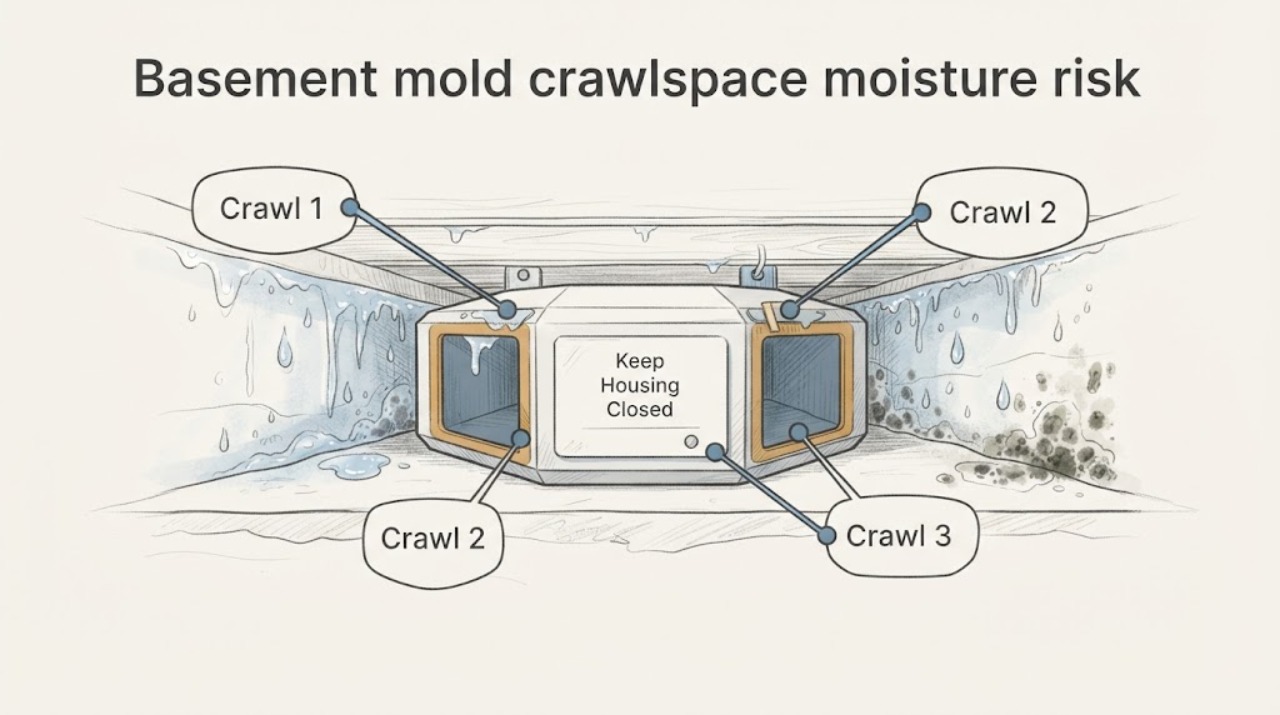
Basement mold crawlspace moisture risk condensation: What to Check and What to Do Next
Condensation and moisture risk around a basement crawlspace can support hidden mold and material damage. From accessible areas, observe condensation, standing water, damp insulation, soil moisture, vents, pipes, and odors without entering the crawlspace or disturbing materials.
-
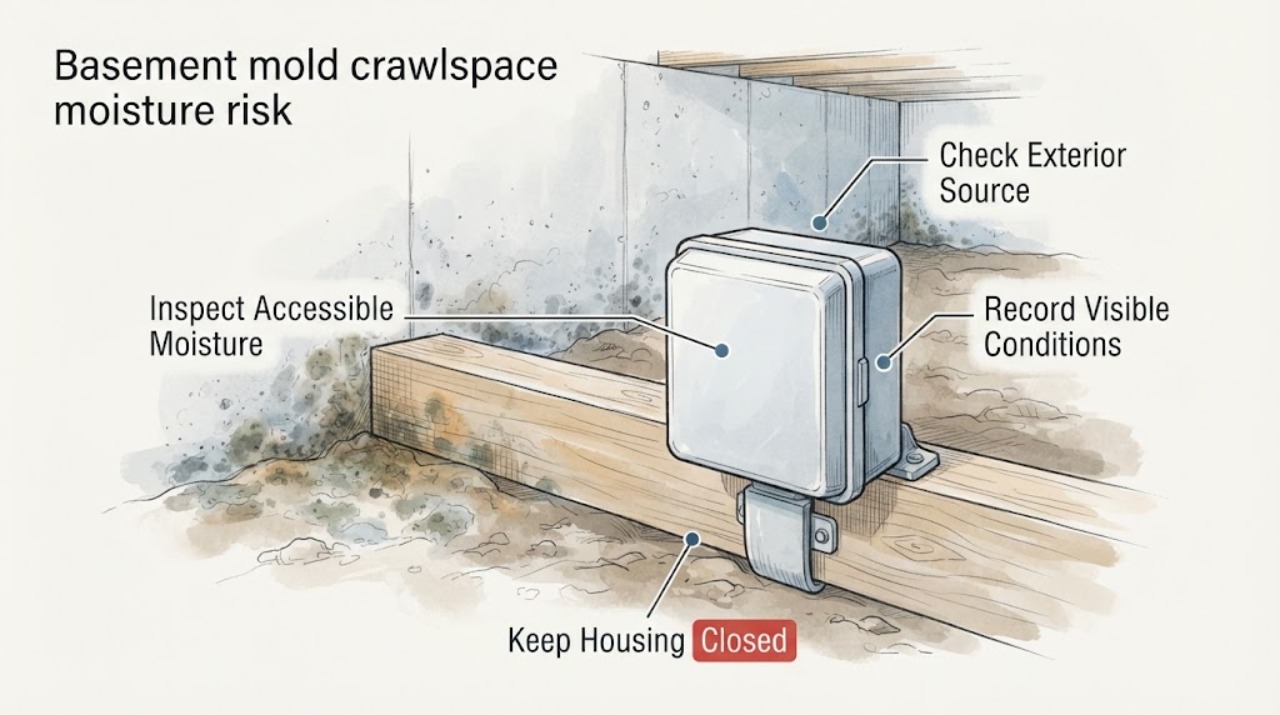
Basement mold crawlspace moisture risk high humidity: What to Check and What to Do Next
For basement mold in a crawlspace when high humidity is suspected, start from a safe standing position or doorway: record humidity if a gauge is already available, look for condensation, standing water, wet soil, staining, or visible growth, and note when it appears. Do not enter a crawlspace, disturb mold or insulation, mix cleaners, or use a ladder.
-
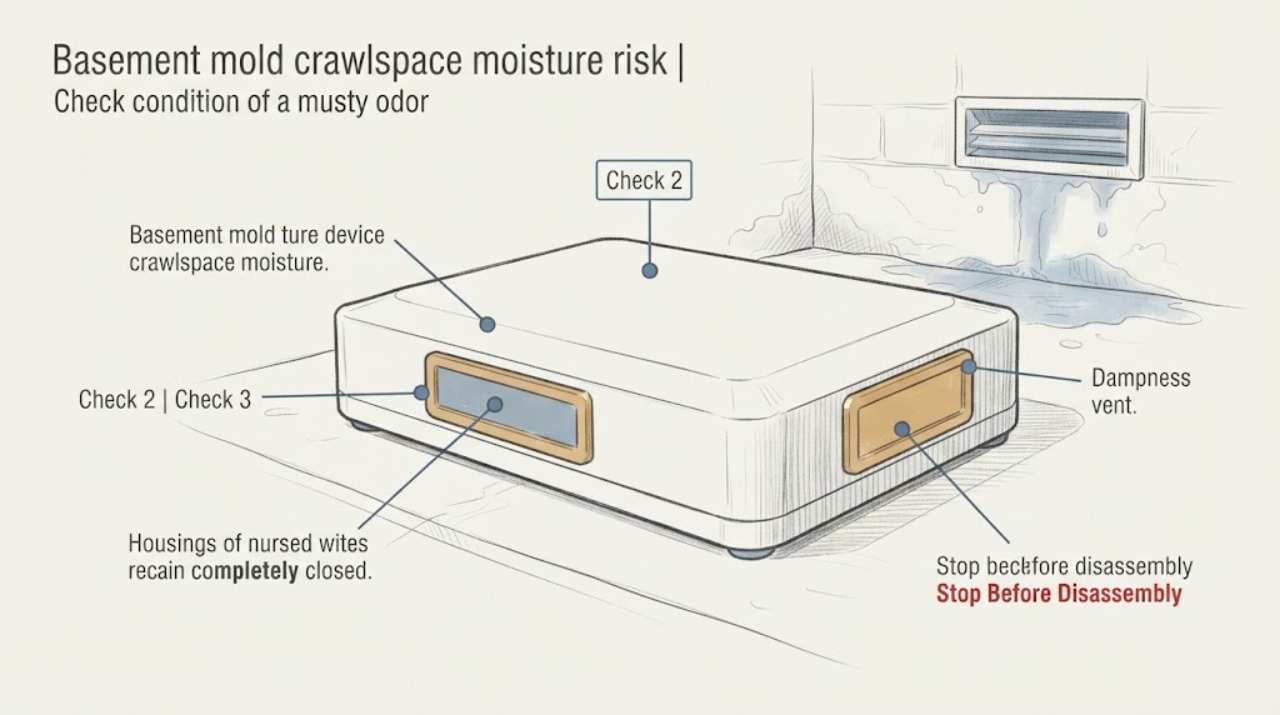
Basement mold crawlspace moisture risk musty odor: What to Check and What to Do Next
For basement mold with crawlspace moisture and a musty odor, begin from a dry, accessible position: record when the odor is strongest, whether it follows rain or humidity, and whether you can safely see dampness, staining, condensation, or mold-like growth at the basement boundary. A musty odor can point toward moisture or affected materials but does not prove mold or locate the source.
-
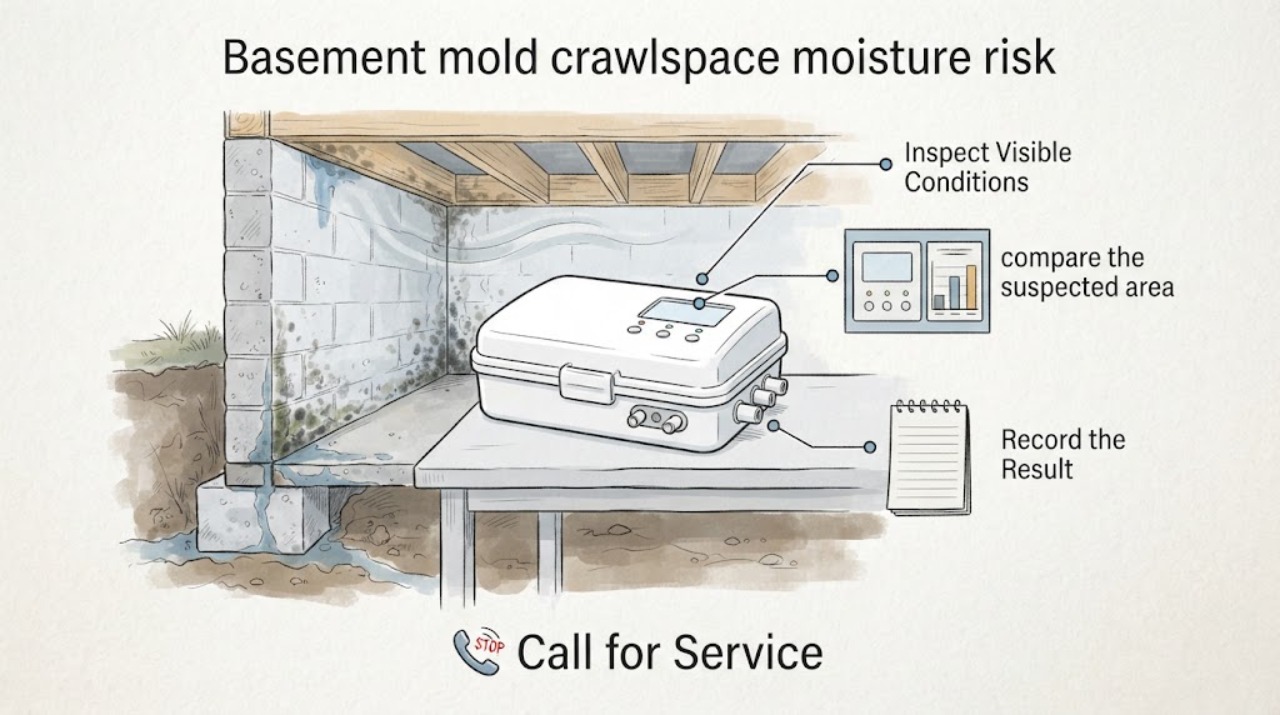
Basement mold crawlspace moisture risk: What to Check and What to Do Next
Treat a damp basement or crawlspace smell, visible growth, staining, or recurring humidity as a moisture problem first. Observe only from accessible dry areas: look for water entry, condensation, stains, peeling finishes, damp odors, and changes after rain without entering an unsafe crawlspace, touching mold, disturbing materials, or mixing cleaners.
-
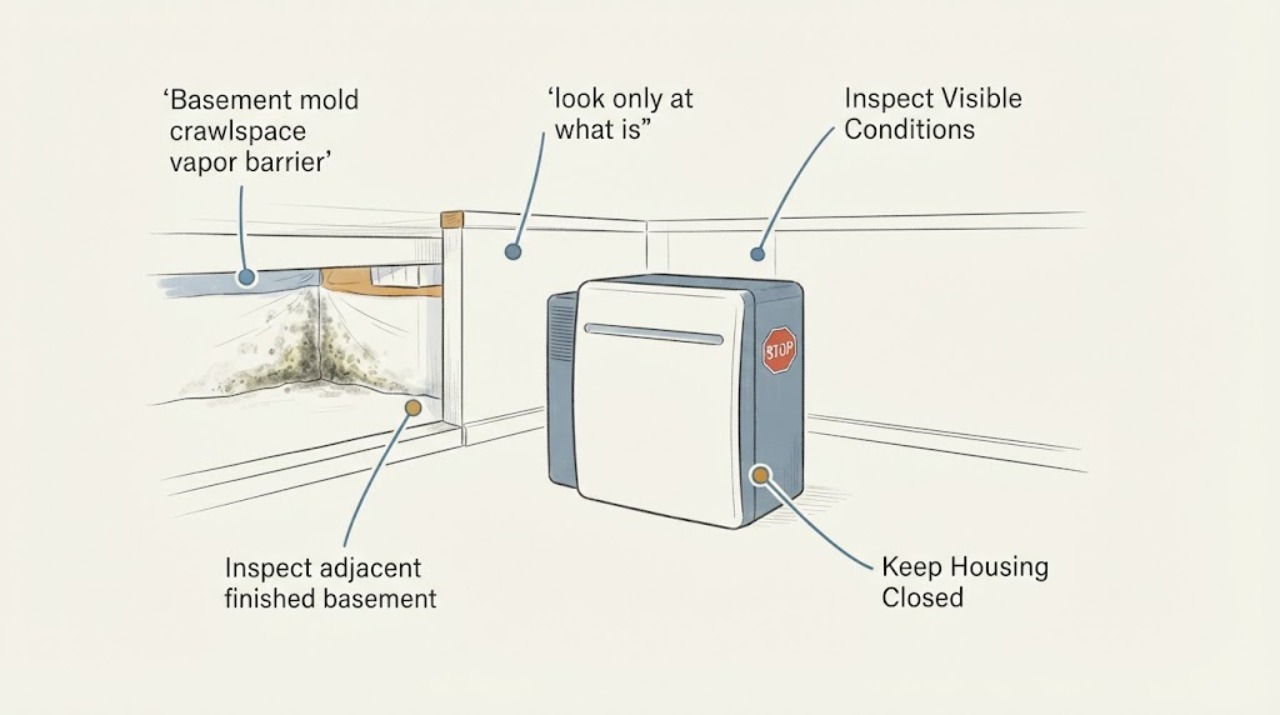
Basement mold crawlspace vapor barrier moisture risk: What to Check and What to Do Next
Do not enter a crawlspace or disturb a vapor barrier to investigate moisture or mold. From the entrance and from finished basement or living areas, document visible water, persistent dampness, musty odor, condensation, staining, and changes after rain or plumbing events.
-
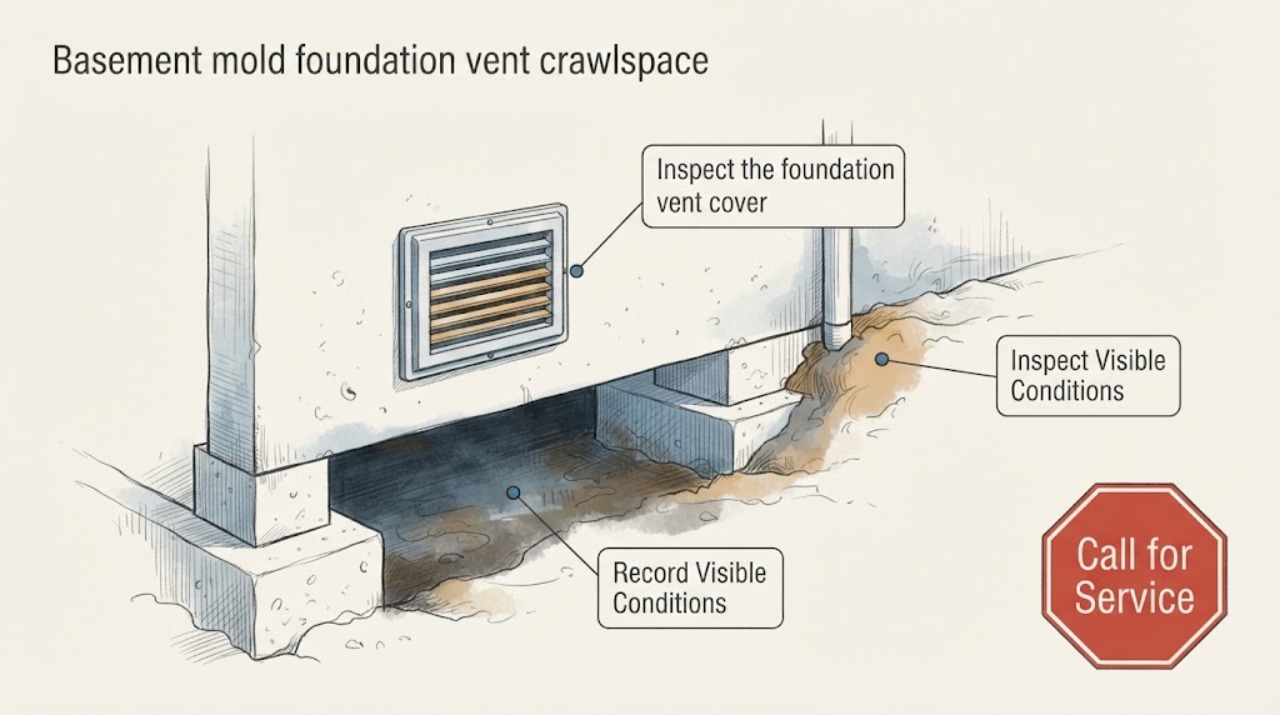
Basement mold foundation vent crawlspace moisture risk: What to Check and What to Do Next
A damp or moldy basement near a foundation vent is a moisture-investigation problem, not a reason to enter the crawlspace or simply close the vent. Moisture can come from rain, grading, groundwater, plumbing, condensation, or humid air moving through the vent, and hidden growth may be present below the floor or behind finishes.
-
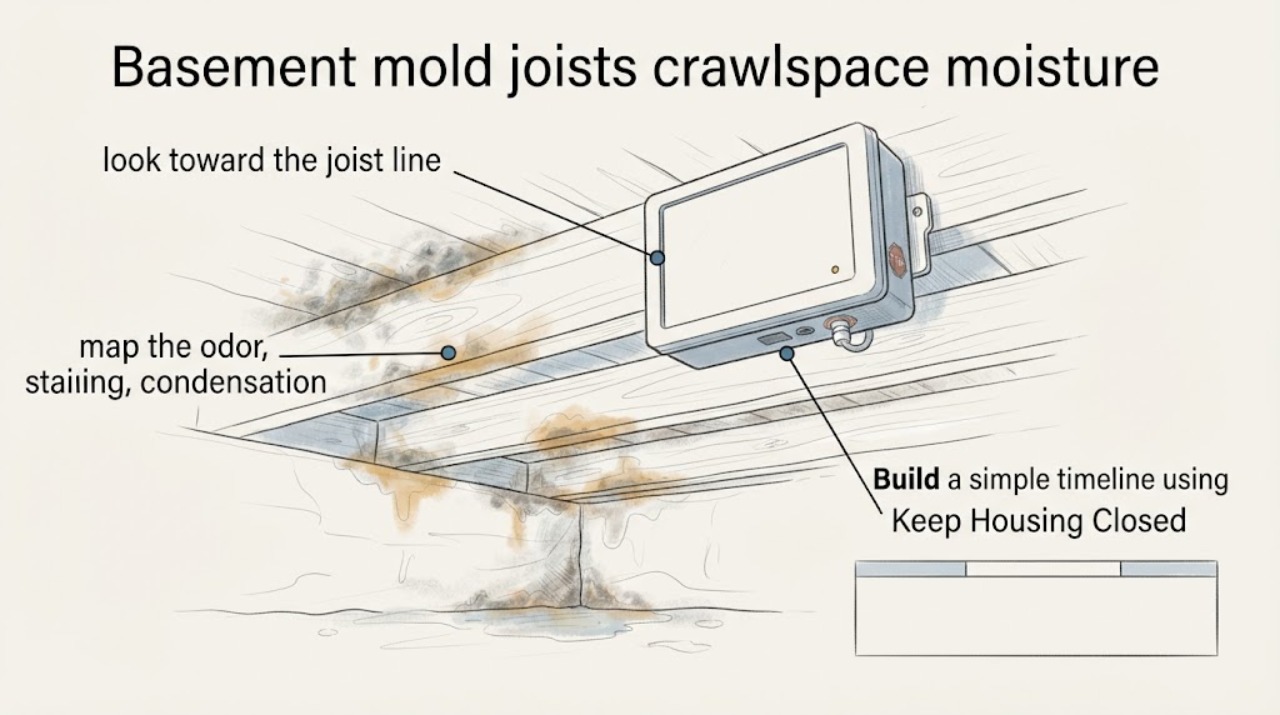
Basement mold joists crawlspace moisture risk: What to Check and What to Do Next
Do not enter the crawlspace or disturb moldy joists to diagnose this condition. From a dry, safe area, document where the musty odor, staining, condensation, or visible growth appears and whether it follows rain, plumbing use, or seasonal humidity.