
On this page
Start here
Quick answer
For basement mold with crawlspace moisture and a musty odor, begin from a dry, accessible position: record when the odor is strongest, whether it follows rain or humidity, and whether you can safely see dampness, staining, condensation, or mold-like growth at the basement boundary. A musty odor can point toward moisture or affected materials but does not prove mold or locate the source. Do not enter the crawlspace, touch or sample materials, lift insulation, open surfaces, or mix chemicals. Keep people and pets clear of affected areas and arrange qualified mold-remediation and moisture-source assessment, urgently if there is active water, sewage, structural instability, exposed wiring, or a health or contamination concern.
Before you begin
Safety first
- Observation from a dry, accessible position only; no crawlspace entry, material disturbance, sampling, chemical cleaning, elevated work, or contact with water near electricity.
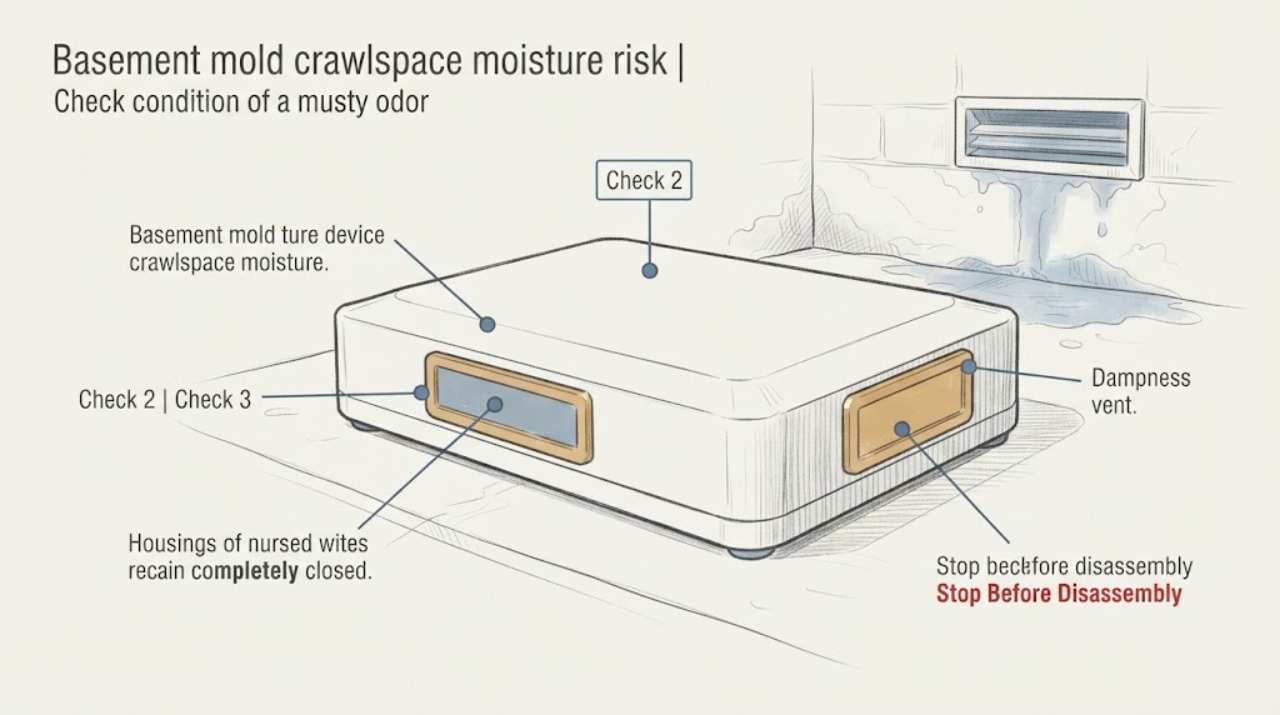
Work through in order
Diagnostic checks
Use only checks that match the exact appliance or system and its official guide.
-
Check 1
From the occupied basement or another dry, accessible position, note when the musty odor is strongest and whether it follows rain, thawing, HVAC use, or a change in ventilation; do not enter the crawlspace or enclosed area.
Expected result: The odor may be absent, intermittent, strongest near a floor or vent, or present throughout the basement; record the pattern without disturbing materials.
Next step: Photograph only visible conditions from the safe area and give the timing and weather pattern to a qualified mold and moisture inspector.
Stop if: Stop and leave the area if the odor is accompanied by sewage, fuel, smoke, exposed wiring, structural movement, or suspected wildlife or contamination.
Why this matters
Why: An odor that tracks moisture or airflow makes a crawlspace moisture source more plausible, but smell alone cannot confirm mold or locate the source.
-
Check 2
Inspect only visible basement edges, access doors, vents, and utility-adjacent surfaces for condensation, staining, dampness, efflorescence, damaged insulation, or water entry; do not open walls or flooring.
Expected result: The area may be dry and intact, show old staining, show current dampness, or have active seepage; distinguish what is visible from what is inferred.
Next step: Record where the visible condition begins and request an inspection that covers the crawlspace boundary, drainage, ventilation, and affected materials.
Stop if: Stop before lifting insulation, moving stored items in a contaminated area, touching wet electrical equipment, or approaching unstable material.
Why this matters
Why: A damp surface or water path supports a moisture-control priority, while a dry visible surface does not rule out concealed crawlspace moisture.
-
Check 3
If a humidity or moisture meter is already available, use it only in the occupied, accessible area and record trends rather than treating one reading as a diagnosis; do not take measurements in the crawlspace.
Expected result: Readings may be stable, elevated after weather, different near an exterior wall, or unavailable; record the instrument location and limitations.
Next step: Share the dates, locations, weather, and readings with the inspector; do not buy treatment equipment or remove materials based on the reading alone.
Stop if: Stop if taking a reading would require entering the crawlspace, opening a panel, moving contaminated material, or contacting water near electricity.
Why this matters
Why: A persistent change in accessible-area moisture can help a professional correlate the musty odor with conditions, but it cannot identify mold species or prove that a treatment will work.
-
Check 4
Photograph any visible mold-like growth, damaged wood, insulation, or surface discoloration from a safe distance without touching, scraping, sampling, or cleaning it.
Expected result: The finding may be isolated, widespread, dry-looking, damp, recurring, or hidden from the safe viewing position.
Next step: Keep people and pets away from the affected area and request qualified mold-remediation and moisture-source assessment.
Stop if: Stop immediately for respiratory or other health concerns, active water, sewage, unstable materials, or any need to disturb contaminated surfaces.
Why this matters
Why: Visible growth or damaged materials can expand the work beyond odor control, but appearance alone cannot identify the material or determine the safe remediation method.
Use your observations
Decision map
Find the observation that best matches what you see, then follow the next safe action.
-
PATH 01Next step
What you see
Musty odor is strongest after rain or high humidity and visible dampness, staining, condensation, or water entry is present.
Do this next
Keep the affected area out of use as appropriate and arrange a qualified inspection focused on moisture entry, drainage, ventilation, and the crawlspace boundary.
-
PATH 02Next step
What you see
Mold-like growth, damaged insulation or wood, or a widespread persistent odor is visible from a safe position.
Do this next
Do not touch or clean the material; keep people and pets clear and request qualified mold-remediation and moisture-source assessment.
-
PATH 03Next step
What you see
The odor is intermittent or no visible moisture is accessible, but the pattern continues.
Do this next
Use the timeline, safe photos, and accessible-area readings for a professional investigation; do not enter the crawlspace or open surfaces to search.
-
PATH 04Next step
What you see
There is sewage, active flooding, smoke, fuel or gas odor, exposed wiring, structural instability, suspected wildlife contact, or a health or contamination emergency.
Do this next
Leave the area, keep others away without approaching the hazard, and contact emergency or appropriately qualified help.
Helpful context
Understand the symptom
A musty odor is a clue, not a diagnosis. In a basement or crawlspace, moisture can affect wood, insulation, and other materials while odor moves into occupied rooms. Start from a dry, accessible position and record the odor pattern, visible moisture, and timing without entering or disturbing the crawlspace.
Do not enter the crawlspace, touch mold-like growth, sample materials, lift insulation, open walls, or mix cleaning chemicals. Keep people and pets away from damp or contaminated areas, and use qualified mold-remediation and moisture-control professionals when the source or health boundary is uncertain.
Safety boundary
Stop conditions
- Stop at active water, sewage, smoke, fuel or gas odor, exposed utilities, structural instability, suspected wildlife contact, or health or contamination concerns.
- Do not enter the crawlspace, lift insulation, open walls, sample or scrape materials, mix chemicals, or perform elevated or live work.
- Keep people and pets clear and use qualified mold-remediation and moisture-control service when the source or material is uncertain.
Only after diagnosis
Potential parts
- humidity meter
Consider this category only when a professional or a safe monitoring plan calls for tracking accessible-area humidity around the odor pattern.
Use only in an accessible occupied area and confirm the instrument's intended use; it does not diagnose mold or replace professional assessment. - moisture meter
Consider this category only after the safe inspection scope is established and a professional confirms that readings will inform the moisture investigation.
Confirm the material, surface, and intended measurement method; do not use it to justify entering or disturbing the crawlspace. - crawlspace dehumidifier
Consider this category only after the moisture source, safe placement, capacity, and discharge path are assessed; it is not a substitute for source correction or remediation.
Sizing, drainage, electrical requirements, placement, and local conditions require professional confirmation before selection.
When checks do not resolve it
Need a professional?
Arrange qualified mold-remediation and moisture-source assessment when musty odor persists or recurs, visible dampness or mold-like growth is present, the source is concealed, or the condition affects occupied rooms. Seek urgent help for sewage, active flooding, structural instability, exposed wiring, smoke or fuel odor, suspected wildlife contact, or health or contamination concerns.
Safety scope: Observation from a dry, accessible position only; no crawlspace entry, material disturbance, sampling, chemical cleaning, elevated work, or contact with water near electricity.
Common questions
FAQ
Does a musty odor prove there is mold in the crawlspace?
No. A musty odor can reflect moisture, airflow, damp materials, or another source. Use safe observations to document the pattern, then have the source and materials assessed professionally.
What should I record before calling?
Record when the odor is strongest, recent rain or humidity, visible staining or dampness, safe photos, accessible-area readings, and any health or contamination concern. Do not enter or disturb the crawlspace.
When should I stop checking?
Stop for sewage, active water, smoke, fuel or gas odor, exposed wiring, structural instability, suspected wildlife contact, respiratory concerns, or any need to enter or disturb contaminated material.
Read the exact guide
Official sources
- A Brief Guide to Mold, Moisture and Your HomeU.S. Environmental Protection Agency · Official moisture-control and mold-safety guidance for observing basement conditions, avoiding disturbance, and escalating when the source or material is uncertain.
Community feedback
Share a repair observation
Share a plain-text repair observation. Accepted observations are published automatically; this page may take a moment to update.