
On this page
Start here
Quick answer
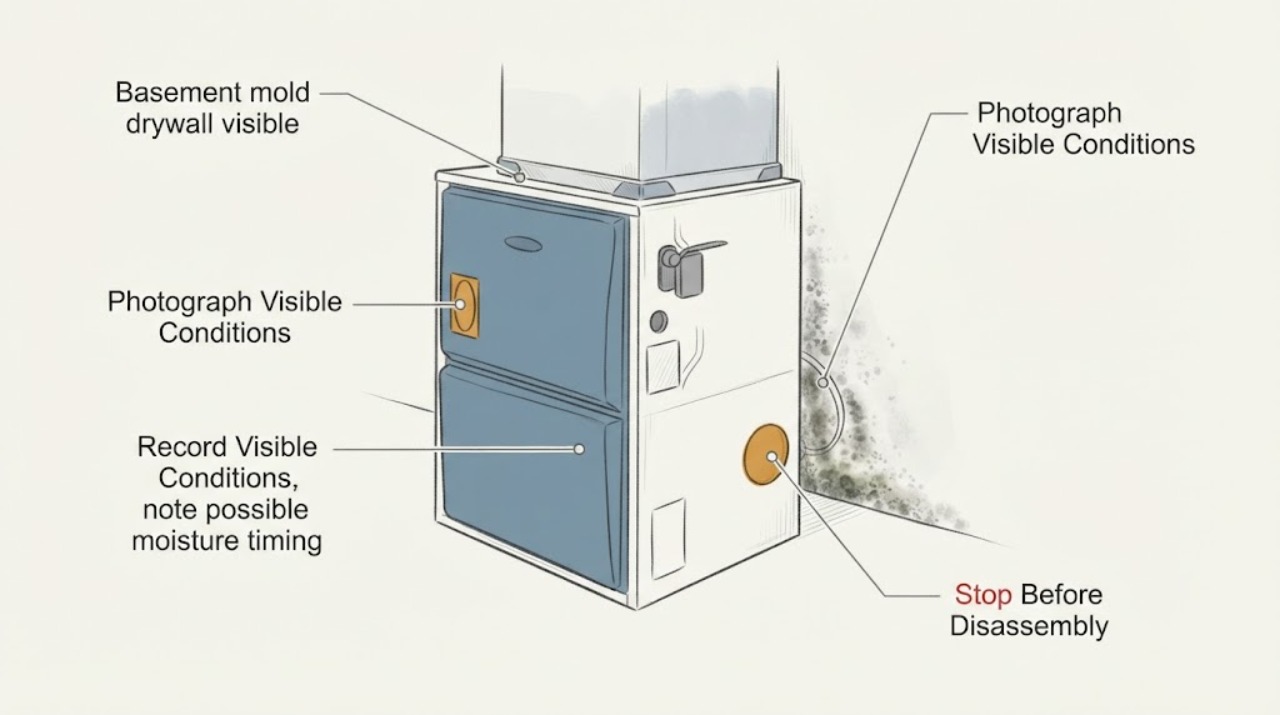
Visible mold on basement drywall is a professional-remediation and moisture-source problem, not a bleach or paint-over project. From a dry, safe position, document the location, approximate spread, moisture timing, drywall swelling or sagging, nearby utilities, and whether the basement connects to HVAC or occupied rooms. Keep people and belongings away, do not disturb or sample the drywall, do not mix chemicals, and do not cut or demolish the wall. Arrange an experienced mold and water-damage professional; escalate urgently for sewage or flood contamination, active water, electrical danger, structural instability, or breathing symptoms.
Work through in order
Diagnostic checks
Use only checks that match the exact appliance or system and its official guide.
-
Check 1
From a dry, well-lit position outside the affected area, photograph and describe where the visible growth is on the drywall: wall or ceiling, corner or flat field, around a window or pipe, near the floor, and whether it is one patch or several.
Expected result: A localized patch, a repeating pattern, growth at the floor line, or growth near a penetration provides different clues about seepage, condensation, or a leak.
Next step: Keep the area isolated and give the location map and photographs to a mold-remediation professional for a non-destructive assessment.
Stop if: Stop if reaching the area would require entering standing water, touching the material, moving stored items, climbing, or approaching energized equipment.
Why this matters
Why: Location is a clue to the moisture path, not a diagnosis. Do not open the wall to look behind it.
-
Check 2
Without touching the drywall, record whether it looks dry, damp, stained, bubbled, soft, sagging, delaminated, or recently wet, and when the condition was first noticed.
Expected result: Active dampness, recurring staining, bubbling, softening, or sagging is more urgent than a dry discoloration with no known recent water event.
Next step: Stop using the room as a storage or living area, keep people away, and request prompt water-damage and mold assessment. Do not dry, seal, or paint the wall yourself.
Stop if: Stop immediately for sagging or unstable drywall, active dripping, a spreading wet area, or any possibility that the wall or ceiling could release material.
Why this matters
Why: The condition may indicate continuing water intrusion or damaged porous material; visible color does not identify a species or safe cleaning method.
-
Check 3
From a safe position, note possible moisture timing and sources: rain, snowmelt, plumbing use, condensation, a dehumidifier event, HVAC operation, or a prior flood. Look only for visible water paths, damp floors, or condensation and do not operate or open equipment.
Expected result: A weather-linked pattern differs from a plumbing-use pattern, while persistent dampness or an unknown source means the moisture cause remains unresolved.
Next step: Record the timing and visible source clues for the remediator and the appropriate water or building professional. Keep the area undisturbed until assessed.
Stop if: Stop if water is active, contaminated, near electrical equipment, or if investigating would require moving drywall, insulation, utilities, or stored materials.
Why this matters
Why: Mold can recur if the moisture source is not controlled, but tracing a concealed leak or opening a wall is professional work.
-
Check 4
Look from a safe distance for the approximate visible area and whether growth or odor extends to adjacent drywall, flooring, stored materials, vents, or connected rooms; do not move objects or follow the odor into concealed spaces.
Expected result: A small visible area with no adjacent signs differs from widespread growth, a musty odor beyond the visible patch, or material near an HVAC return or supply.
Next step: Close the room or restrict access as practical and tell the professional about adjacent signs and HVAC proximity. Do not run a suspected contaminated HVAC system to test airflow.
Stop if: Stop and leave the area if odor or airborne irritation increases, the HVAC system may be contaminated, or anyone develops breathing or other symptoms.
Why this matters
Why: Extent and HVAC proximity affect containment and professional scope. A visible patch does not establish that the problem is limited to that patch.
-
Check 5
Record exposure and safety context without entering the affected zone: whether children, pets, sensitive occupants, or anyone with asthma has been exposed; whether sewage or flood water was involved; and whether any electrical equipment is wet.
Expected result: Health symptoms, sensitive occupants, contaminated water, or wet electrical equipment increases urgency and changes who should handle the site.
Next step: Keep occupants out, seek medical advice for symptoms, and contact the appropriate remediation or emergency professional. Do not touch, clean, or de-energize wet electrical equipment yourself.
Stop if: Stop all inspection and leave if there is a health emergency, sewage, active flooding, electrical arcing, smoke, or structural danger.
Why this matters
Why: Exposure and contamination risks cannot be reduced by cosmetic treatment, and wet electrical conditions add a separate hazard.
Use your observations
Decision map
Find the observation that best matches what you see, then follow the next safe action.
-
PATH 01Next step
What you see
Visible growth is on porous drywall or the area is widespread, recurring, wet, or connected to hidden spaces
Do this next
Use professional mold and water-damage assessment. Keep the material undisturbed; do not cut, remove, spray, or paint it.
-
PATH 02Next step
What you see
The moisture source is active, unknown, sewage-related, or associated with flood water
Do this next
Keep people out and arrange urgent water-damage and remediation help. Do not enter contaminated water or attempt source tracing through the wall.
-
PATH 03Next step
What you see
Mold or odor may involve an HVAC intake, duct, or connected occupied room
Do this next
Do not run a suspected contaminated HVAC system to distribute air. Tell the remediator and HVAC professional what was observed.
-
PATH 04Next step
What you see
Drywall is sagging, unstable, near wet electrical equipment, or anyone has breathing or other health symptoms
Do this next
Leave or isolate the area and escalate urgently to the appropriate emergency, electrical, medical, or remediation professional.
Helpful context
Understand the symptom
Drywall is porous, so visible growth can involve the paper face, the cavity side, or material behind the wall. A surface appearance cannot tell you whether the source is seepage, a plumbing leak, condensation, a prior flood, or contaminated water. The first useful decision is to preserve the scene and identify the moisture and exposure context for a professional assessment.
Keep this workflow observation-only. Do not brush, scrape, wipe, vacuum, spray, paint, caulk, drill, cut, remove drywall, mix bleach with anything, or collect a sample. Do not enter standing water or touch wet electrical equipment. Isolate the area from people and pets without disturbing the material.
EPA states that moisture control is central to mold control, that porous moldy materials may need professional assessment or replacement, and that disturbing suspected hidden mold requires caution. EPA also advises consulting experienced professionals when damage is extensive, contaminated, connected to HVAC, or associated with health concerns.
Photograph from a safe distance, note dates and weather or leak events, and give the record to the remediator. The goal is to identify and control the moisture source and plan containment and material handling without spreading contamination.
Only after diagnosis
Potential parts
- humidity-meter
Consider this only as a non-invasive monitoring aid after a professional has made the area safe and identified what readings are useful.
A humidity reading does not diagnose wall moisture, hidden growth, or the source of a leak, and it does not replace professional assessment. - dehumidifier
Consider this only as part of a professional moisture-control plan after active leaks, contaminated water, and electrical safety have been addressed.
Select capacity and drainage setup for the space and conditions; do not use a dehumidifier as permission to disturb or remediate moldy drywall. - HEPA-air-purifier
Consider this only for a professional's exposure-control plan; it does not remove mold from drywall or correct moisture.
Confirm the unit is appropriate for the room and safe electrical conditions, and keep it outside any wet or contaminated area unless directed otherwise.
When checks do not resolve it
Need a professional?
Arrange mold-remediation and moisture-source assessment as soon as visible mold appears on basement drywall. Use emergency help for active flooding, electrical danger, structural instability, or a health emergency.
Have this ready
- Safe-distance photographs and approximate location and spread
- Drywall condition, visible moisture, odor, staining, swelling, sagging, and first-noticed date
- Weather, plumbing, condensation, flood, or sewage timing and any suspected source
- HVAC proximity, connected rooms, occupant symptoms, sensitive occupants, and wet electrical equipment
Common questions
FAQ
Can I wipe or bleach visible mold on basement drywall?
Do not disturb this drywall or mix chemicals. Porous material and the moisture source need professional assessment, especially when the area is recurring, wet, widespread, contaminated, or near HVAC.
Should I cut out the moldy drywall?
No. Cutting or removing the wall can spread contamination and may encounter hidden utilities or structural conditions. Keep the area isolated and arrange professional remediation.
Do I need a mold test before calling someone?
Visible growth is already a reason to document the area and address moisture. Do not scrape or sample it yourself; ask a qualified professional whether any assessment or sampling is appropriate.
When is basement drywall mold urgent?
Escalate urgently for active water, sewage or flood contamination, wet electrical equipment, sagging or unstable drywall, suspected HVAC contamination, widespread growth, or breathing symptoms.
Read the exact guide
Official sources
- A Brief Guide to Mold, Moisture and Your HomeU.S. Environmental Protection Agency · Visible basement drywall mold and moisture-source assessment
- Mold Frequently Asked QuestionsU.S. Environmental Protection Agency · Public guidance boundary for visible mold, sampling, cleanup, and health escalation
- Mold and Your HomeU.S. Environmental Protection Agency · Safe observation of basement seepage, condensation, and moisture patterns
Community feedback
Share a repair observation
Share a plain-text repair observation. Accepted observations are published automatically; this page may take a moment to update.