
On this page
Start here
Quick answer
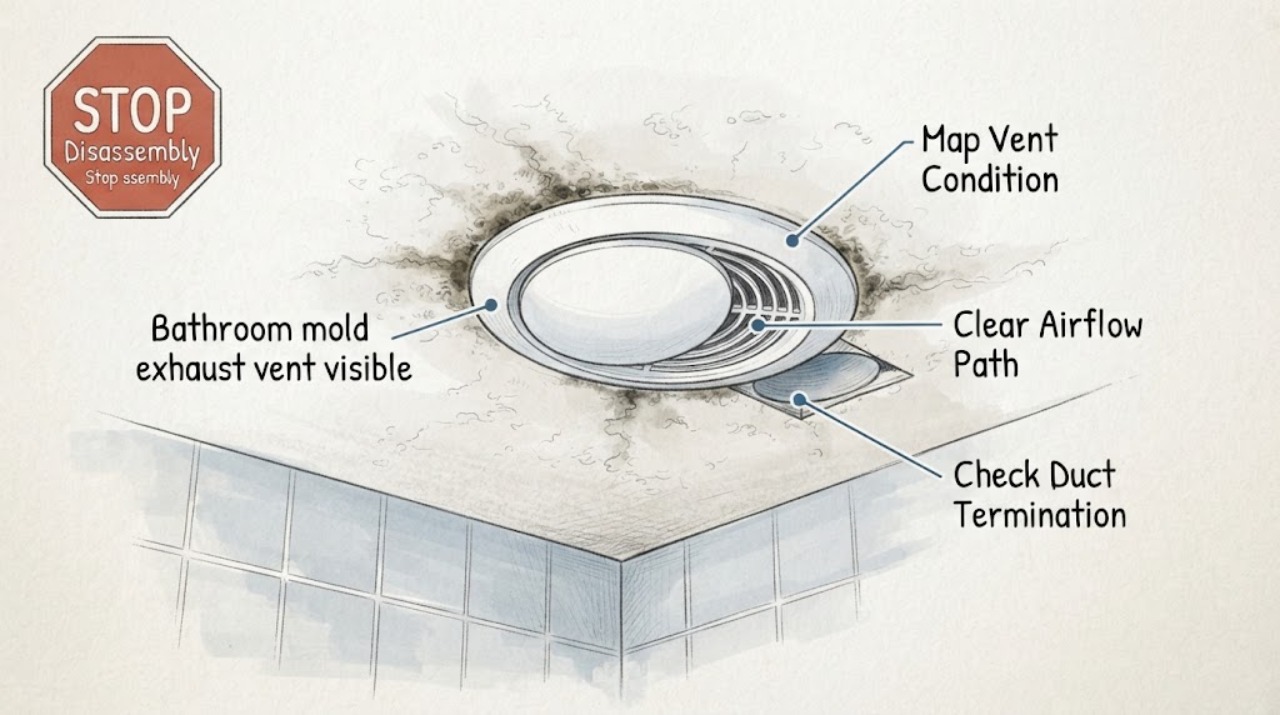
Visible mold on or around a bathroom exhaust vent usually means moisture is reaching the grille, ceiling, or duct area faster than it is being removed. From the floor, document whether the patch is dry or wet, whether the fan actually draws air, whether the duct appears to exhaust outdoors, and whether humidity or the patch returns after showers. Do not remove the grille, scrape the mold, reach into the fan, or open the ceiling. Stop and arrange qualified mold or building help for wet or sagging material, suspected hidden growth, a fan or wiring hazard, persistent recurrence, widespread mold, or anyone with asthma, COPD, immune suppression, or serious mold sensitivity.
Work through in order
Diagnostic checks
Use only checks that match the exact appliance or system and its official guide.
-
Check 1
From the bathroom doorway or floor, photograph the exhaust grille and surrounding ceiling. Note whether the growth is on the grille, the ceiling immediately around it, or farther across the ceiling, and whether there are drops, a water ring, peeling paint, bubbling, softness, or sagging.
Expected result: The area is dry and firm; the grille or ceiling is damp; the ceiling is soft, peeling, or sagging; or the patch extends well beyond the vent.
Next step: If the ceiling is wet, unstable, spreading, or near a wet electrical fixture, stop and use the professional branch. If dry and stable, continue with the safe fan and humidity observations without disturbing the grille.
Stop if: The ceiling moves or sags, water is dripping, material is falling, or the fan or nearby fixture is wet.
Why this matters
Why: A dry spot limited to the grille can follow condensation or dust held at the opening, but it does not prove the duct is healthy. Dampness, unstable material, or a broad patch raises concern for retained moisture, a leak, or hidden contamination above the ceiling.
-
Check 2
With the room dry and the switch safe to use, turn the exhaust fan on from its normal wall control and observe from the floor whether the grille draws a lightweight tissue edge or otherwise moves air. Note whether the sound is normal, weak, rattling, or absent; do not remove the grille or reach into the fan.
Expected result: Yes: the fan runs and draws air; no: it is silent, weak, or rattling; or the vent or ceiling is wet.
Next step: If airflow is weak or absent, arrange a qualified ventilation or building assessment and leave the fan intact. If it draws air normally, continue by checking where the air appears to go and recording humidity.
Stop if: The switch, fan, or nearby light is wet, sparks, smells burned, or behaves unusually.
Why this matters
Why: Noise alone is not proof of adequate exhaust. Weak or absent draw supports a fan, grille, or duct problem. Wetness at the vent adds a moisture and possible electrical concern that should not be tested further by the occupant.
-
Check 3
From the ground and without entering an attic or opening a wall, check any existing exterior vent view that is safely accessible from grade or a normal window. Compare the fan's indoor airflow with whether the exterior flap opens or air can be felt outside while the fan runs; do not climb, remove siding, or disconnect ductwork.
Expected result: A matching exterior outlet is visible and opens; no outlet can be identified; the outlet appears to discharge into an attic or enclosed space; or the exterior flap is blocked, damaged, or never moves.
Next step: Record what is visible and ask a qualified ventilation or building professional to verify the duct route and termination. Do not attempt to reroute, seal, or clean the duct from a ladder or attic.
Why this matters
Why: A fan should exhaust moisture outdoors; a motor can run while a duct is disconnected, blocked, or terminating in an enclosed space. An unknown, blocked, or indoor termination leaves the moisture path unresolved and can explain recurring mold at the ceiling.
-
Check 4
Place a hygrometer in a dry location away from shower spray and record room humidity before bathing and again after bathing on several occasions, noting whether the fan was used and whether condensation remains on the ceiling or mirror. Do not climb to place the instrument near the vent.
Expected result: Humidity repeatedly remains above 60% or stays elevated after bathing; readings are generally below 60%; or no reliable readings are available.
Next step: Include the readings and shower timing in a ventilation or mold assessment request. Do not treat a lower reading as permission to scrape, paint, or remove the mold at the vent.
Why this matters
Why: Persistent high humidity supports a moisture-control or ventilation problem and can help explain recurrence. A lower room reading does not rule out a cold-surface condensation issue, a duct defect, or a leak above the ceiling.
-
Check 5
If available and safe from the floor, use a non-invasive moisture meter on an intact area near the vent and compare it with a similar, apparently dry ceiling area, following the meter instructions. Do not pierce, drill, or probe the ceiling and do not take readings near wet electrical equipment.
Expected result: The area near the vent reads clearly higher; readings are similar; or the finish prevents a reliable reading.
Next step: Record the reading and comparison context for the professional assessing the vent and ceiling. Stop if obtaining the reading would require a ladder, contact with the mold, or contact with a wet fixture.
Why this matters
Why: A higher comparison supports retained moisture, but a consumer meter cannot show how far moisture extends above the ceiling or identify the source. Similar or unreliable readings do not prove the cavity is dry.
-
Check 6
Keep a simple dated log of whether the patch returns after showers, whether the room develops a musty odor, and whether the patch changes after the fan is used. Photograph changes from the floor rather than wiping or covering the area.
Expected result: The patch repeatedly returns after showers; it grows or spreads regardless of shower use; the odor persists; or the area remains unchanged and dry.
Next step: Give the log to a qualified mold-remediation or building professional and have the moisture source assessed before cosmetic repair.
Why this matters
Why: Shower-linked recurrence supports unresolved moisture removal or condensation. Growth independent of showering, persistent odor, or spread raises concern for a leak or hidden moisture. No visible change over a short observation period does not rule out hidden growth.
Use your observations
Decision map
Find the observation that best matches what you see, then follow the next safe action.
-
PATH 01Next step
What you see
Water is dripping, the grille or nearby light is wet, the ceiling is soft or sagging, or the fan or switch behaves unusually.
Do this next
Stop using the fan and the affected fixture if doing so is safe without touching wet equipment, keep people out, and arrange prompt qualified building/mold and electrical help as indicated.
Why this path and its safety boundary
Why it matters: The situation may involve an active leak, unstable ceiling material, or an electrical hazard.
-
PATH 02Next step
What you see
The fan is silent, weak, rattling, or moves little air even though the switch is on.
Do this next
Arrange a qualified ventilation assessment, report the exact sound and airflow observation, and do not remove the grille or work on wiring.
Why this path and its safety boundary
Why it matters: A failed fan, dirty or blocked grille, disconnected duct, or duct restriction is possible; sound alone cannot distinguish these causes.
-
PATH 03Next step
What you see
No exterior termination can be safely identified, the outlet is blocked or damaged, or the duct appears to discharge into an attic or another enclosed space.
Do this next
Have the duct route and termination verified and corrected by a qualified professional; do not climb into an attic or reroute it yourself.
Why this path and its safety boundary
Why it matters: Moisture may be staying in the building rather than being exhausted outdoors, which can support recurring mold near the vent.
-
PATH 04Next step
What you see
Humidity remains high after bathing or the vent-area patch repeatedly returns after showers despite apparent fan operation.
Do this next
Provide the humidity and recurrence log to a mold-remediation or ventilation professional and arrange source assessment before cleaning or repainting.
Why this path and its safety boundary
Why it matters: The room may not be drying adequately, or the visible patch may be connected to a hidden ceiling or duct moisture problem.
-
PATH 05Next step
What you see
The patch is widespread, spreading, musty, likely hidden above the ceiling, or an occupant has asthma, COPD, immune suppression, or serious mold sensitivity.
Do this next
Keep the room out of use as practical and arrange qualified mold-remediation or building help. Provide photos, fan observations, humidity readings, and recurrence timing.
Why this path and its safety boundary
Why it matters: Disturbing the vent or ceiling could increase exposure, and vulnerable occupants should not perform mold cleanup.
-
PATH 06Next step
What you see
The patch is small, dry, and stable, the fan draws air, and no wetness or electrical concern is visible.
Do this next
Keep the area undisturbed, continue the humidity and recurrence log, and arrange an assessment if it returns, spreads, smells musty, or the moisture path cannot be explained.
Why this path and its safety boundary
Why it matters: A major immediate hazard is not visible, but condensation, duct routing, or hidden moisture may still be causing the mold.
Helpful context
Understand the symptom
What mold around an exhaust vent can indicate
A bathroom fan can make noise while moving too little air, and a duct can move air without exhausting it outdoors. Condensation, a blocked or poorly routed duct, a failed fan, high room humidity, or a roof or plumbing leak can all leave moisture at the ceiling opening. The visible patch does not identify the mold type or reveal how much may be above the ceiling.
Keep the checks at floor level
Do not climb to reach the vent, remove its grille, insert tools or hands, scrape or brush the growth, or cut into the ceiling. Do not touch a wet switch, light, fan housing, or wiring. People with asthma, COPD, immune suppression, or significant mold sensitivity should stay out of the affected room and should not clean it.
The useful next decision
A dry, stable spot with a fan that visibly moves air still needs a moisture check if it returns. A wet, spreading, soft, sagging, or musty area suggests a building or duct problem, not a cosmetic grille problem. Give a professional dated photos, fan behavior, humidity readings, shower timing, and any evidence about where the duct terminates.
Safety boundary
Stop conditions
- Water dripping or a wet grille, ceiling, light, switch, fan, or wiring
- Soft, peeling, swollen, or sagging ceiling material
- Silent, rattling, weak, or unsafe fan operation
- An exterior duct termination cannot be identified or appears to discharge indoors
- Recurring, spreading, widespread, hidden, or musty mold
- An occupant has asthma, COPD, immune suppression, or serious mold sensitivity
- Inspection would require a ladder, attic entry, grille removal, ceiling opening, or contact with mold
Only after diagnosis
Potential parts
- humidity meter
Consider this only if repeated room readings are needed to document a suspected ventilation or condensation problem around the bathroom vent.
Use the device only as an observation aid and follow its placement instructions; it does not diagnose mold or prove a duct is exhausting outdoors. - bathroom exhaust fan
Consider this only after a qualified inspection confirms a faulty fan and rules out a blocked, disconnected, or incorrectly terminated duct.
Confirm housing dimensions, electrical requirements, duct connection, and installation requirements with the specific model and a qualified installer before ordering. - moisture meter
Consider this only as a safe comparison aid when the ceiling finish and location allow it; one reading cannot locate hidden moisture above the vent.
Follow the meter's material and finish limitations and never pierce, drill, or open the ceiling to obtain a reading.
When checks do not resolve it
Need a professional?
Call promptly for wet or sagging ceiling material, water near a light or fan, a silent or weak fan, an unknown or indoor duct termination, persistent odor, suspected hidden mold, widespread growth, or a high-risk occupant.
Have this ready
- Provide dated photos, whether growth is on the grille or ceiling, fan sound and airflow observations, any safely visible exterior termination, humidity readings, shower timing, recurrence history, and nearby electrical concerns.
Common questions
FAQ
Does a bathroom fan running mean it is working correctly?
No. The motor can make noise while the fan moves too little air, the duct is blocked or disconnected, or the duct terminates indoors. Observe airflow from the floor and have the duct route checked if mold returns.
Can I remove the exhaust grille and clean the mold?
Not as the first step for visible mold around the vent. Removing the grille can disturb growth or expose electrical parts and will not resolve a leak, condensation, or duct problem. Document the condition and arrange qualified assessment.
Why does mold keep returning around the bathroom exhaust vent?
Common possibilities include high humidity, condensation on a cool ceiling, inadequate airflow, a blocked or poorly routed duct, or hidden moisture above the ceiling. A recurrence log and humidity readings can help a professional separate these possibilities.
When should I call a professional for mold near a bathroom vent?
Call promptly for wet or sagging material, water near a light or fan, a silent or weak fan, an unknown or indoor duct termination, recurring or spreading mold, a persistent musty odor, suspected hidden growth, or an occupant with asthma, COPD, immune suppression, or serious mold sensitivity.
Read the exact guide
Official sources
- Remodeling Your Home and Indoor Air QualityU.S. Environmental Protection Agency · Supports checking whether the bathroom fan actually exhausts sufficient air outdoors and treating moisture at the vent as a building-air-quality issue.
- A Brief Guide to Mold, Moisture and Your HomeU.S. Environmental Protection Agency · Supports treating recurring vent-area mold as a moisture-source problem and escalating when hidden mold or extensive growth is suspected.
- Mold, Testing, and RemediationNational Institute for Occupational Safety and Health, CDC · Supports using visual condition, odor, moisture history, and professional evaluation rather than trying to identify mold by color or routine air sampling.
- Biological Contaminants and Indoor Air QualityU.S. Environmental Protection Agency · Supports the airflow, humidity, condensation, and no-disturbance branches for mold visible at a bathroom exhaust vent.
- Mold Clean Up Guidelines and RecommendationsCenters for Disease Control and Prevention · Supports keeping higher-risk occupants away from a moldy vent and not turning an observational check into an unsupervised cleanup.
Community feedback
Share a repair observation
Share a plain-text repair observation. Accepted observations are published automatically; this page may take a moment to update.