
On this page
Start here
Quick answer
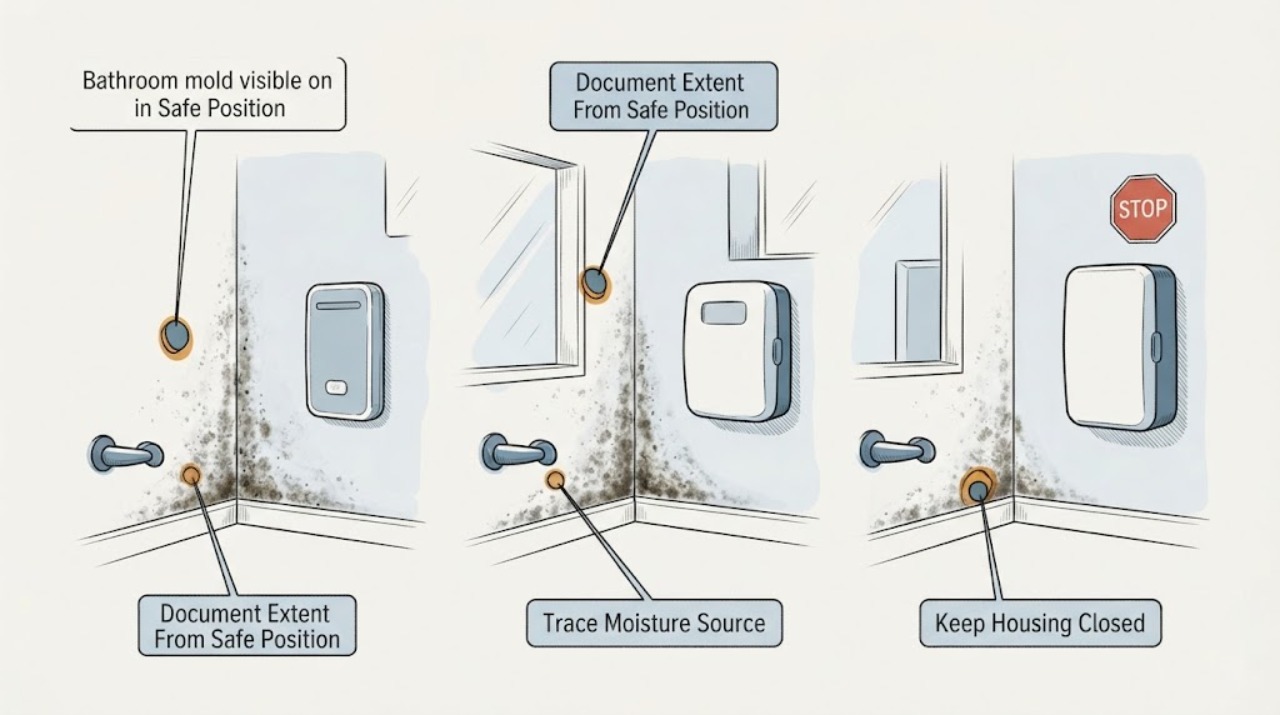
Do not scrub, sand, paint, caulk, or spray the visible bathroom mold before you understand its extent and moisture source. From a doorway or other safe position, photograph the area, note whether it is on tile or another hard surface versus painted drywall or another porous material, and look for condensation, plumbing, shower, roof, or wall leaks without opening the wall. Keep the room ventilated according to the bathroom-fan instructions and keep people with asthma, allergies, immune suppression, or lung disease away from the area. Arrange professional mold inspection or remediation for extensive growth, recurring or hidden moisture, porous wall damage, contaminated water, HVAC involvement, or health concerns.
Work through in order
Diagnostic checks
Use only checks that match the exact appliance or system and its official guide.
-
Check 1
From a doorway or other stable position, photograph the whole wall and the visible patch without touching, brushing, scraping, or moving furnishings into it. Note whether growth is a small isolated spot, a spreading patch, a line along a corner, or present in more than one bathroom surface or room.
Expected result: A small isolated surface mark differs from a broad patch, recurring edge, multiple locations, water-damaged wall, or growth that cannot be viewed without moving materials.
Next step: Keep the photos and a simple location sketch for the inspector. Do not estimate the mold type from its color or begin a surface treatment to make the photo look better.
Stop if: Stop if documenting the area requires entering standing water, moving a heavy appliance, climbing, opening a wall, or disturbing growth or damaged materials.
Why this matters
Why: Extent and access change the cleanup decision. A visible patch may be connected to hidden moisture, and size alone does not rule out a professional assessment when water damage, porous material, or health concerns are present.
-
Check 2
Without peeling, scraping, or removing the finish, identify the visible surface as tile, glass, metal, sealed trim, painted wallboard, ceiling material, wood, or another porous material. Look for bubbling paint, soft or swollen areas, crumbling joint compound, delaminated trim, or staining around the patch.
Expected result: Mold on an intact, cleanable-looking hard surface differs from growth on porous wallboard, ceiling material, wood, wallpaper, or a surface that is soft, swollen, bubbling, or crumbling.
Next step: Photograph the finish and damage signs, keep the area undisturbed, and request a mold or water-damage assessment when the material is porous, soft, or visibly deteriorated.
Stop if: Stop if the surface flakes, collapses, releases dust, is wet to the touch, or would require cutting, peeling, or removing trim to inspect.
Why this matters
Why: Porous or damaged materials can hold growth below the visible face and may not be safely restored by surface wiping. Surface condition is a professional-scope clue, not permission to remove the material.
-
Check 3
From accessible dry areas, look for condensation, a wet ceiling or corner, staining below a pipe or fixture, failed caulk or grout, shower splash, a plumbing leak, or moisture that returns after the bathroom is used. Do not open the wall, remove fixtures, or run water solely to reproduce a suspected leak.
Expected result: A dry wall with only post-shower condensation differs from a recurring damp spot, active drip, staining that grows, a soft wall, or moisture tied to a pipe, roof, shower, or adjoining room.
Next step: Record the timing and nearby fixture or room, photograph stains from a dry position, and report active leaks or water damage to maintenance or a qualified trade. Keep the wall exposed for inspection rather than covering it.
Stop if: Stop if water is active, the wall is soft or bulging, a ceiling is sagging, electricity is nearby, or locating the source requires opening finishes or entering a wet area.
Why this matters
Why: Mold will return while the moisture source remains. A hidden or active leak can damage the wall and needs plumbing, building, or roofing attention in addition to mold assessment.
-
Check 4
Observe the bathroom exhaust fan from the room entrance during and after an ordinary shower only if the area is otherwise safe; note whether it runs, vents to the outside according to the home documentation, and clears visible condensation. If a humidity meter is already available, record the reading and time without installing or opening equipment.
Expected result: Condensation that clears with normal ventilation differs from persistent fogging, damp surfaces, a fan that does not operate, or a room that remains humid long after use.
Next step: Follow the fan manufacturer's operating and maintenance instructions, keep the record for the inspector, and arrange building or electrical service for a failed or inaccessible fan rather than opening it.
Stop if: Stop if the fan smells hot, sparks, rattles dangerously, has visible water or mold inside, or would require a ladder, grille removal, wiring work, or duct access.
Why this matters
Why: Poor ventilation or high humidity can support recurring surface mold, but a fan observation does not rule out a hidden leak or wet wall cavity.
-
Check 5
Review whether anyone in the home has asthma, allergies, immune suppression, chronic lung disease, or symptoms that worsen around the bathroom, and whether the bathroom shares air or moisture with other rooms. Note musty odor, growth near an HVAC intake, repeated return after prior cleaning, or reports from adjoining units.
Expected result: A single visible patch with no sensitive occupants differs from symptoms, sensitive occupants, HVAC proximity, recurring growth, or signs that moisture crosses rooms or units.
Next step: Keep sensitive occupants out, do not run a suspected contaminated HVAC system, and request professional mold and moisture assessment. Seek medical advice for health symptoms.
Stop if: Stop all inspection or cleanup for breathing difficulty, severe irritation, suspected HVAC contamination, sewage or contaminated water, extensive growth, or hidden-wall involvement.
Why this matters
Why: Health and building scope can make a seemingly small patch unsuitable for user cleanup. HVAC or shared-wall involvement can spread contamination or require coordinated inspection.
Use your observations
Decision map
Find the observation that best matches what you see, then follow the next safe action.
-
PATH 01Next step
What you see
The visible spot appears limited to an intact hard surface, the area is dry, no hidden moisture clue is present, and no sensitive occupant or HVAC concern exists.
Do this next
Keep it documented and follow official product and surface instructions if a qualified adult later performs any low-risk cleaning. Do not paint or caulk over it, and escalate if it returns or expands.
-
PATH 02Next step
What you see
Mold is on painted wallboard, ceiling material, wood, wallpaper, or a surface that is soft, swollen, bubbling, crumbling, or water-damaged.
Do this next
Do not scrape, cut, peel, or seal the material. Keep the area undisturbed and arrange professional mold and moisture assessment.
-
PATH 03Next step
What you see
The wall is damp, staining grows, condensation persists, a fixture or pipe leaks, or the moisture source cannot be seen safely.
Do this next
Report the water source to qualified maintenance, plumbing, roofing, or building personnel and request mold assessment. Do not cover the wall or open the finish.
-
PATH 04Next step
What you see
Growth is extensive, returns after prior cleaning, appears in more than one area, or water damage is substantial.
Do this next
Stop DIY remediation and arrange an experienced mold-remediation professional. Provide the photos, timing, prior work, moisture observations, and affected rooms.
-
PATH 05Next step
What you see
A sensitive occupant has symptoms, mold is near an HVAC intake, the HVAC system may be contaminated, or sewage or contaminated water is involved.
Do this next
Keep people out of the area, avoid operating a suspected contaminated HVAC system, and seek professional remediation and appropriate health or emergency guidance.
Helpful context
Understand the symptom
Visible mold is a moisture clue, not a surface-only diagnosis
Bathroom mold can follow shower humidity, condensation on a cold wall, a plumbing leak, failed caulk or grout, or water behind a wall finish. A cleaned-looking patch can return if the moisture source remains. The safest first task is to document what is visible and how the wall behaves; do not disturb the growth or assume its type from color.
Keep occupants and the wall protected
Do not disturb visible growth while deciding the next step. Keep children and pets away, and do not ask a person with asthma, allergies, immune suppression, or underlying lung disease to inspect or clean it. Do not enclose, paint, or caulk a wall that is wet or visibly moldy, and do not open a wall or run a possibly contaminated HVAC system.
Safety boundary
Stop conditions
- Do not mix cleaning products, use a bleach recipe, sand or scrape mold, remove wall materials, or paint or caulk over wet or visibly moldy surfaces.
- Stop for active leaks, soft or bulging walls, sagging ceilings, sewage or contaminated water, suspected HVAC contamination, electrical or fan hazards, or any need to open the wall.
- Keep children, pets, and people with asthma, allergies, immune suppression, chronic lung disease, or mold-related symptoms away from the area.
- Use an experienced mold-remediation professional for extensive, recurring, hidden, porous-material, multi-room, or water-damage cases; seek health advice for symptoms.
Only after diagnosis
Potential parts
- humidity meter
Consider this only as an observation aid when persistent condensation or humidity is suspected; a reading cannot locate hidden moisture or replace inspection.
Use according to the instrument instructions and keep it away from water; do not treat a reading as proof that a wall is dry or safe. - bathroom exhaust fan
Consider this only if a qualified inspection confirms the existing fan is failed or inadequate and a replacement is appropriate for the bathroom and duct path.
Confirm the existing opening, electrical requirements, duct route, exterior termination, and manufacturer fit information; installation may require qualified electrical or building work. - moisture meter
Consider this only as a screening aid after a professional or qualified inspector recommends it for comparing wall areas; it does not diagnose mold or replace opening inspection.
Follow instrument instructions and treat readings as relative clues because wall materials, finishes, and calibration affect results.
When checks do not resolve it
Need a professional?
Call an experienced mold-remediation professional when visible bathroom mold is extensive, recurring, on porous or damaged wall material, associated with active or hidden moisture, near an HVAC intake, caused by sewage or contaminated water, present in several rooms or units, or affecting a sensitive occupant. Also report plumbing, roof, ventilation, or structural moisture problems to the appropriate qualified trade. Provide photos, surface type, location, timing, moisture observations, ventilation notes, prior cleaning, and health or building-scope concerns.
Common questions
FAQ
Can I just scrub or paint over visible bathroom mold?
Do not paint or caulk over wet or visibly moldy material, and do not start scrubbing before you understand the surface and moisture source. Photograph and assess from a safe position; porous, damaged, recurring, or extensive growth needs professional scope.
Does the color of bathroom mold tell me what type it is?
No. Color is not a safe identification method. Record the location, surface type, extent, moisture clues, and recurrence, and let a qualified professional decide whether testing or remediation is appropriate.
Why does mold keep returning on the bathroom wall?
Recurring mold usually means the moisture condition remains: shower humidity, condensation, plumbing or building leaks, poor ventilation, or moisture behind the finish. Observe when the wall becomes damp and report the source rather than repeatedly covering the patch.
Should I use bleach or another cleaner on bathroom mold?
Do not mix bleach with ammonia or any other cleaner, and do not improvise a chemical treatment. Product and surface guidance vary; keep people away and arrange professional help for porous, extensive, recurring, contaminated-water, or health-risk cases.
When should I call a mold-remediation professional?
Call for extensive or recurring growth, porous or damaged walls, active or hidden moisture, HVAC involvement, sewage or contaminated water, multiple rooms or units, or a sensitive occupant with symptoms. Share photos, surface and moisture observations, ventilation notes, and prior work.
Read the exact guide
Official sources
- Biological Contaminants and Indoor Air QualityU.S. Environmental Protection Agency · Government indoor-air guidance used for bathroom moisture and ventilation observations; building-specific HVAC and remediation decisions require qualified assessment.
- Mold Clean Up Guidelines and RecommendationsCenters for Disease Control and Prevention · Government health guidance used to keep sensitive occupants away and prevent unsafe chemical or exposure practices; it does not replace professional site assessment.
- Mold Cleanup in Your HomeU.S. Environmental Protection Agency · Government guidance used for bathroom wall-mold scope and stop conditions; exact building materials, water source, and occupant circumstances govern professional recommendations.
Community feedback
Share a repair observation
Share a plain-text repair observation. Accepted observations are published automatically; this page may take a moment to update.