
Repair problem
Bathroom Visible Mold Troubleshooting Guides
Published FixGraph guidance for diagnosing and responding to bathroom visible mold.
Matching published guides
Choose a guide that matches the service, equipment, and conditions you are seeing.
-
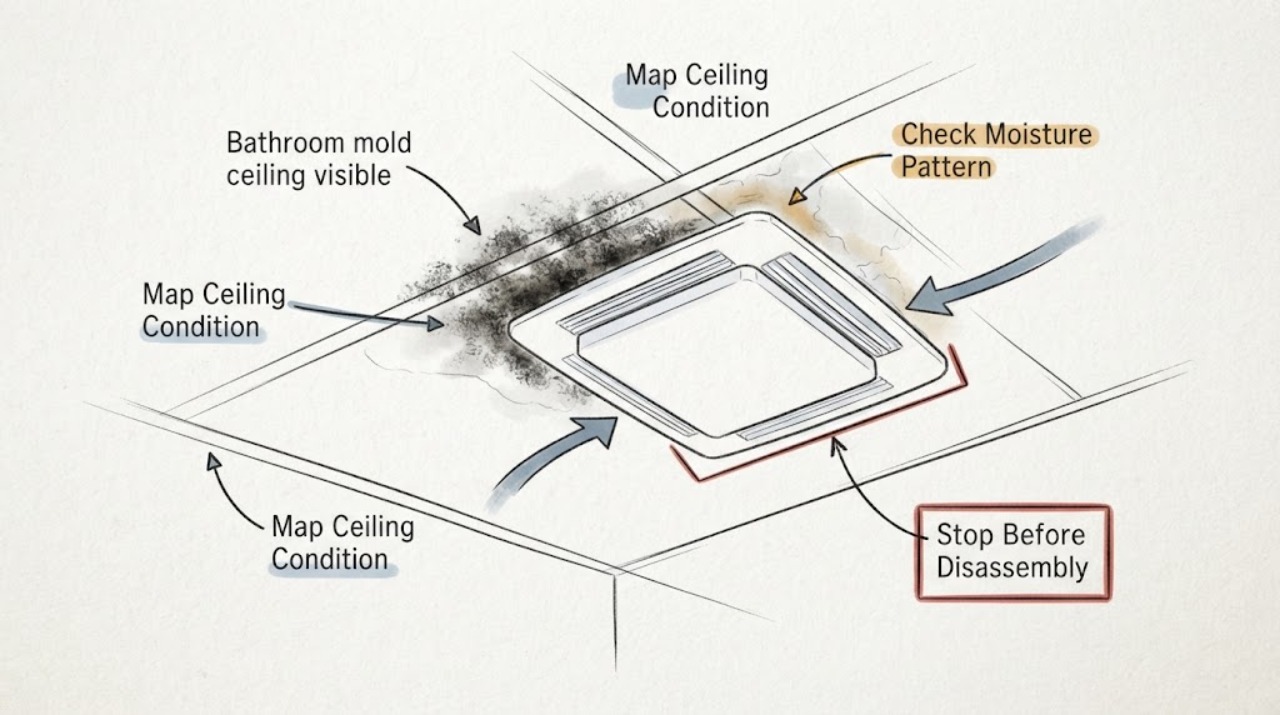
Bathroom mold ceiling visible: What to Check and What to Do Next
Visible mold or mildew on a bathroom ceiling is a moisture signal, not just a surface-color problem. From the floor or doorway, document whether the patch is actively wet, soft or sagging, spreading, or concentrated around a shower, vent, or light.
-
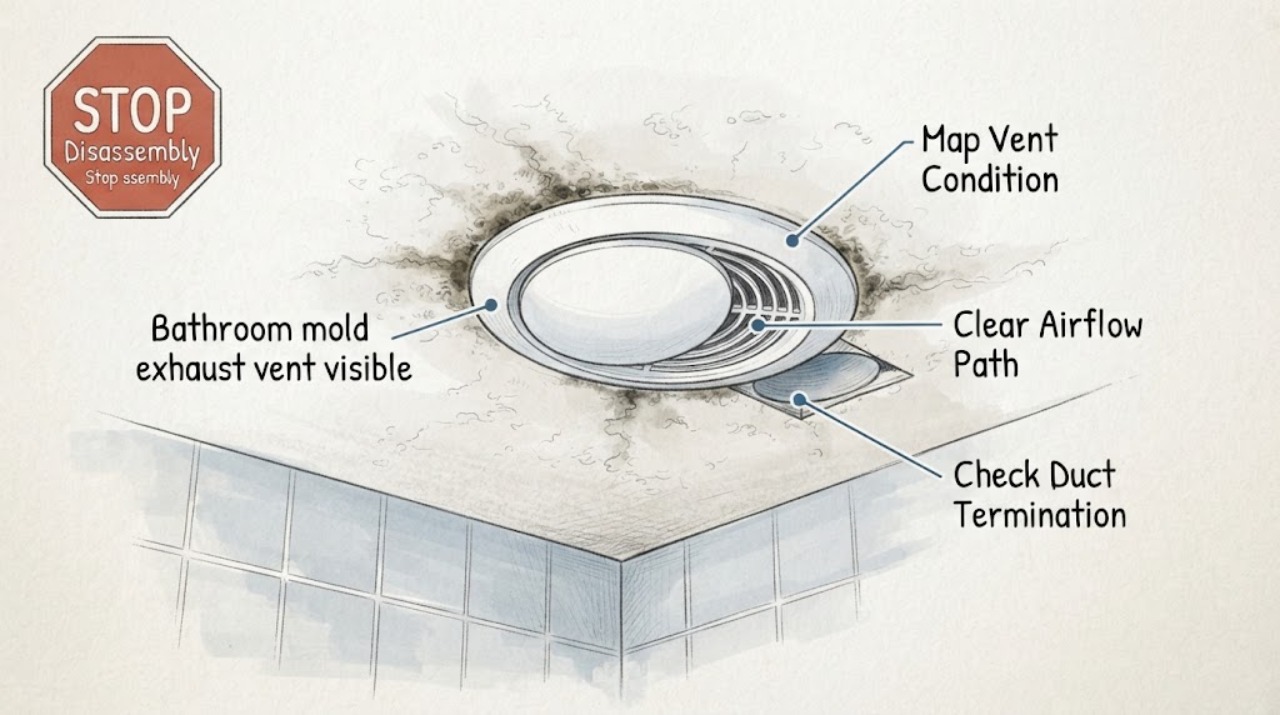
Bathroom mold exhaust vent visible: What to Check and What to Do Next
Visible mold on or around a bathroom exhaust vent usually means moisture is reaching the grille, ceiling, or duct area faster than it is being removed. From the floor, document whether the patch is dry or wet, whether the fan actually draws air, whether the duct appears to exhaust outdoors, and whether humidity or the patch returns after showers.
-
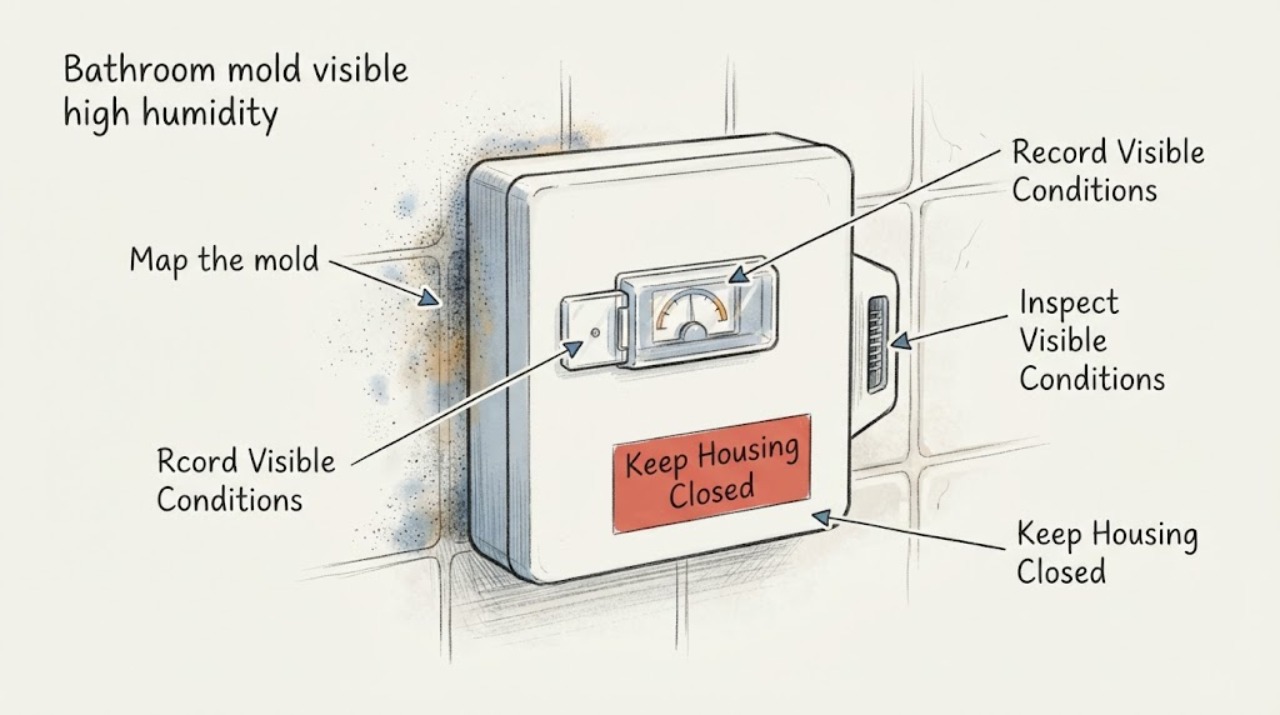
Bathroom mold visible high humidity: What to Check and What to Do Next
When visible bathroom mold appears with high humidity, first determine whether it is limited to condensation-prone surfaces after showers or whether there are signs of active leaks or hidden moisture. Record humidity, condensation, how the room dries after use, whether the exhaust fan vents outside, and whether staining, swelling, softness, or a musty odor extends beyond the shower area.
-
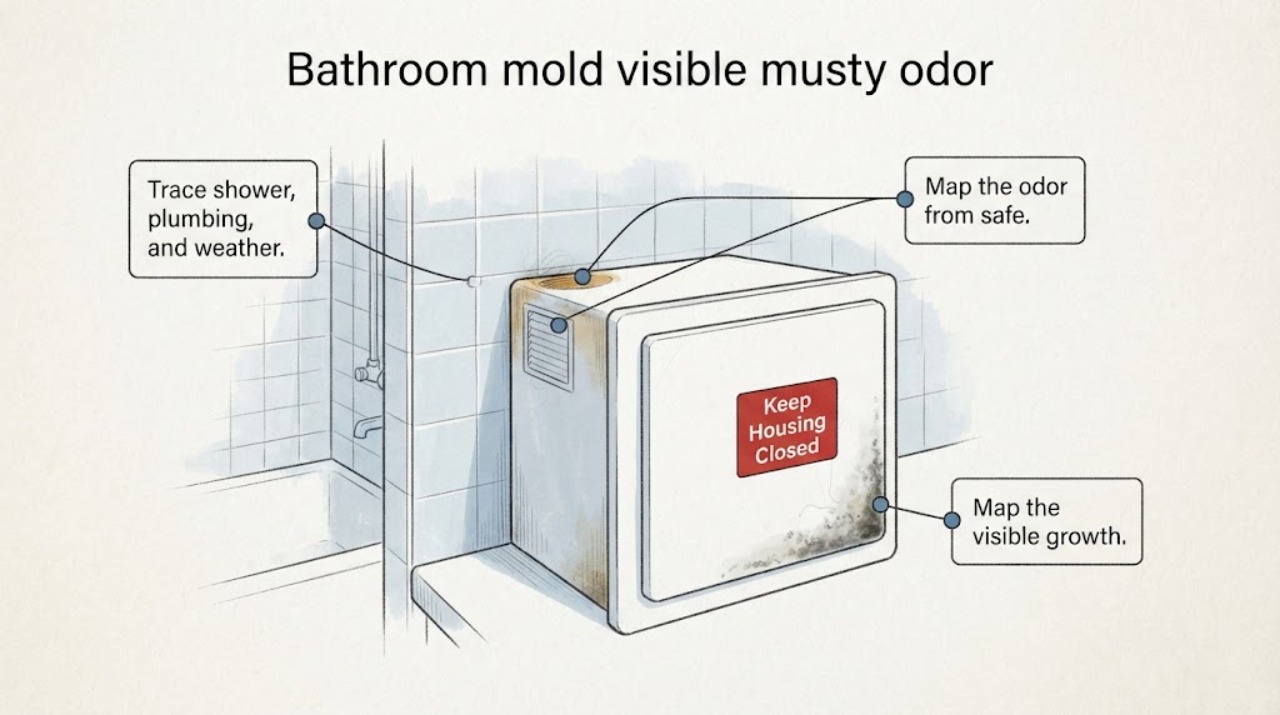
Bathroom mold visible musty odor: What to Check and What to Do Next
A musty odor alongside visible bathroom mold is a location-and-moisture investigation, not proof of a particular mold type or contamination. First record where the odor is strongest, when it appears, how far visible growth extends, and whether shower condensation, plumbing moisture, failed caulk or grout, or a damp porous material is present.
-
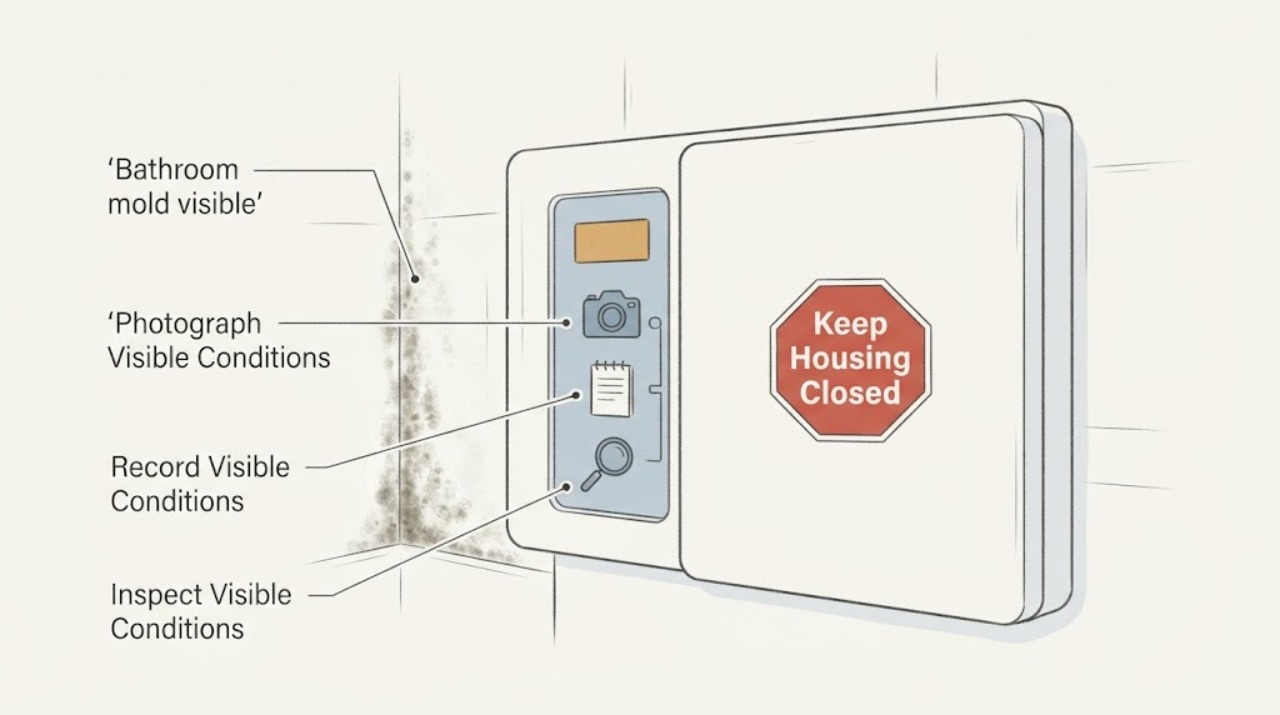
Bathroom mold visible: What to Check and What to Do Next
Visible bathroom mold is a moisture and exposure problem, not a color-identification problem. From the doorway or another safe position, document its size, location, surface, recurrence, nearby dampness, and any occupant concerns.
-
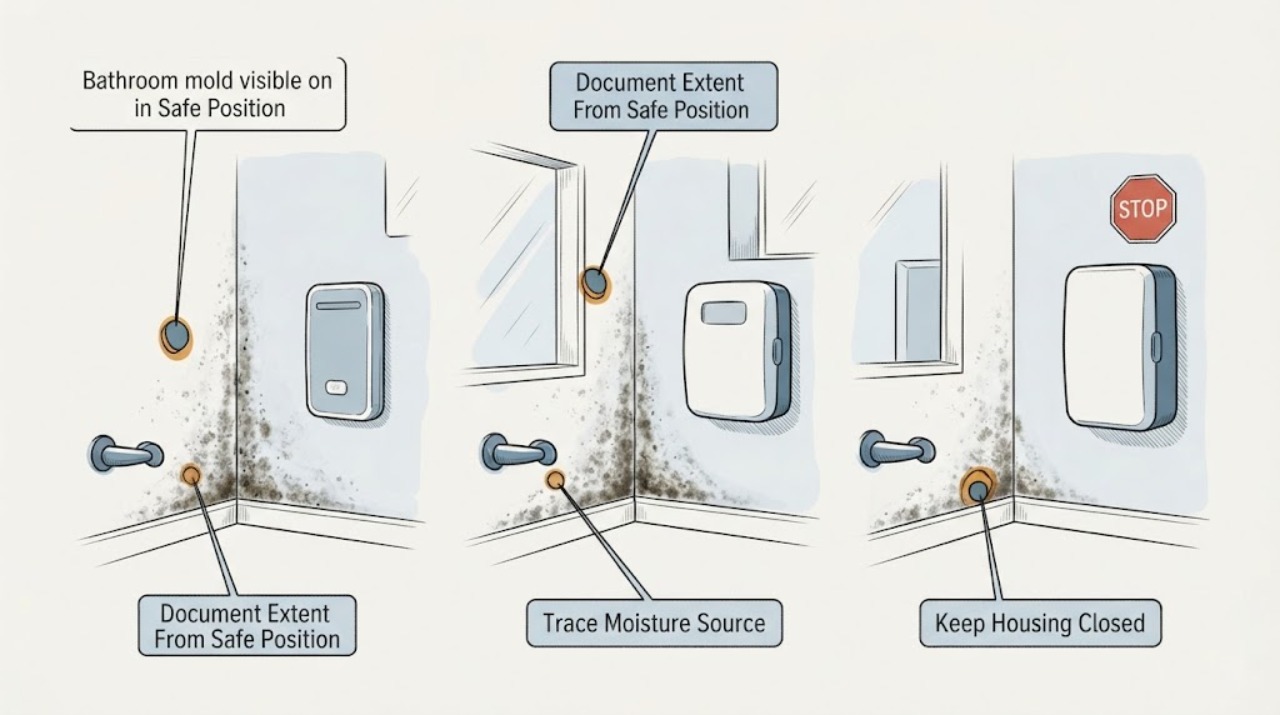
Bathroom mold visible on a wall surface: What to Check and What to Do Next
Do not scrub, sand, paint, caulk, or spray the visible bathroom mold before you understand its extent and moisture source. From a doorway or other safe position, photograph the area, note whether it is on tile or another hard surface versus painted drywall or another porous material, and look for condensation, plumbing, shower, roof, or wall leaks without opening the wall.