
On this page
Start here
Quick answer
Treat a gurgling, slow kitchen sink as a drain-and-airflow symptom, not proof of one failed part. First note whether only this sink is slow, whether the dishwasher or another fixture triggers the sound, and whether there is sewage odor, backup, or water under the cabinet. From a dry standing position, inspect the visible P-trap and connections for a leak or loss of the water seal; do not open a pipe containing sewage without gloves, eye protection, and a way to contain the water. If the sink and other fixtures gurgle or back up together, stop using water and arrange a plumbing inspection because the restriction may be downstream or in the vent system. A roof vent should be checked only from the ground for an obvious leaf, snow, ice, or nest blockage—do not climb onto the roof or insert tools. Never pour fats, oils, grease, or contaminated trap waste down the drain. Persistent gurgling, sewer-gas odor, a dry trap that returns dry, sewage backup, or any hidden vent or branch-line fault needs a qualified plumber.
Work through in order
Diagnostic checks
Use only checks that match the exact appliance or system and its official guide.
-
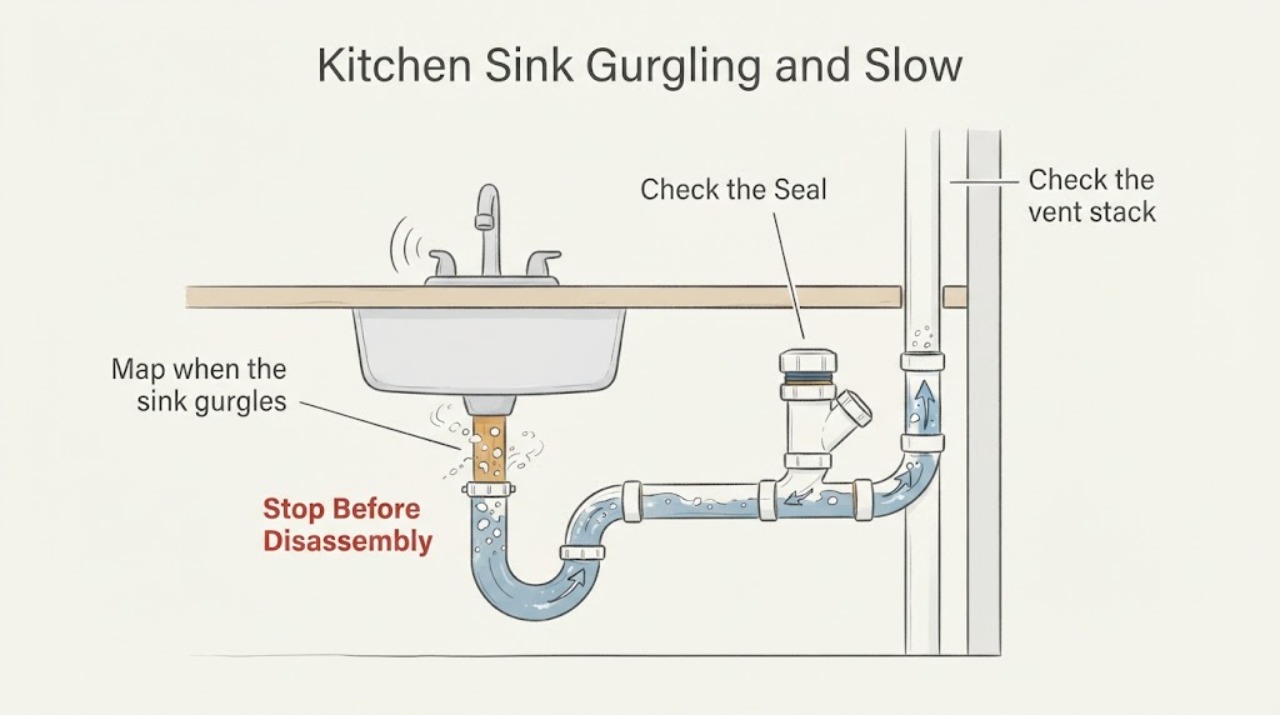
Map when the sink gurgles and slows
From a dry, stable position, observe one normal drain event without adding chemicals or forcing the stopper. Note whether the kitchen sink alone is slow, whether the sound starts when the dishwasher or another fixture drains, whether water rises or backs up, and whether sewer odor is present.
Expected result: Only this sink is slow; several fixtures respond together; water backs up; or a gurgle is accompanied by sewer odor or a dry trap.
Next step: For a single, dry, no-odor symptom continue with the visible trap check. For multiple fixtures, backup, or sewer odor, stop using water and arrange a plumbing or sewer inspection.
Stop if: Stop immediately for sewage backup, contaminated splash, strong persistent sewer odor, water near electrical equipment, or an unsafe wet cabinet.
Why this matters
Why: A single-fixture pattern keeps a local trap or branch restriction in consideration. A multi-fixture, backup, or odor pattern makes a shared branch, main sewer, or vent-pressure issue more likely and raises the hygiene risk.
-
Inspect the visible P-trap and water seal
Wear waterproof gloves and eye protection. Look under the sink without opening the pipe: identify the U-shaped P-trap, check that its joints are dry and intact, and determine whether it appears to hold water. Keep a tray or absorbent material ready for a small clean-water drip, and keep food-contact items away from the cabinet.
Expected result: The trap is intact and dry outside, a joint is leaking, the trap appears dry, or water is contaminated or backing up.
Next step: If the visible trap is intact and the area is clean, continue to the safe vent check. If a joint leaks, the trap repeatedly dries, or contaminated water is present, stop using the fixture and arrange service; do not open the trap without a contained, sanitary procedure.
Stop if: Stop for sewage, strong odor, a cracked pipe, uncontrolled leakage, inability to contain water, or any need to disassemble a contaminated trap.
Why this matters
Why: A P-trap is intended to hold water as a sewer-gas seal. An external leak can admit air or water, while a dry trap can permit sewer gas; contaminated or backed-up water is not a routine cleaning condition.
-
Check the vent stack from the ground
If the roof vent is visible from ground level, inspect it visually for an obvious leaf, snow, ice, nest, or other blockage. Do not climb the roof, remove a cap, insert a tool, or use water pressure to clear it.
Expected result: A visible blockage is present; the vent is not visible; or no blockage is seen but gurgling continues, especially when another fixture drains.
Next step: If a blockage is safely observable from the ground, document it and arrange qualified clearing. If none is visible or the symptom persists, keep the fixture use minimal and request a plumbing inspection rather than attempting roof access.
Stop if: Stop for unsafe roof conditions, sewer odor, backup, or any plan to insert tools or chemicals into the vent.
Why this matters
Why: Plumbing vents supply airflow that helps water move through drain lines. A visible blockage can affect flow, but an unobstructed appearance does not rule out an internal, undersized, shared, or incorrectly installed vent.
-
Prevent grease and trap-seal recurrence
Keep fats, oils, grease, food solids, and waste removed from any grease device out of the drain. If the P-trap is merely dry with no backup, run clean water briefly to restore the water seal, then wash hands and disinfect hard surfaces; do not use this step to push through a slow or contaminated line.
Expected result: The sink drains without backup and the trap retains clean water with no odor, or gurgling, odor, slow drainage, or dryness returns.
Next step: If the sink remains normal and odor-free, continue routine disposal and monitoring. If the symptom returns, stop adding water or waste and arrange a plumbing inspection.
Stop if: Stop for contaminated water, sewer odor, a backup, or any instruction that would pour grease, trap waste, or chemical cleaner into the drain.
Why this matters
Why: Keeping grease and solids out reduces a common source of downstream obstruction. A trap that will not retain water or a recurring symptom suggests a leak, siphoning, vent, or drain-line problem that prevention alone will not fix.
-
Escalate a shared or persistent restriction
Compare the kitchen sink with nearby fixtures without creating a large discharge: note whether toilets, floor drains, or another sink gurgles or slows, whether water backs up, and whether the issue began after municipal sewer work or a plumbing alteration. Stop using water if more than one fixture is affected.
Expected result: Several fixtures are slow or gurgling, sewage backs up, the symptom returns after a local check, or only the kitchen sink remains mildly slow with no odor or backup.
Next step: For a shared, backed-up, odorous, or recurrent pattern, arrange qualified plumbing or sewer inspection and provide the symptom map. For a mild isolated pattern, use only the exact, sanitary checks permitted by the fixture setup and stop if it does not improve.
Stop if: Stop immediately for sewage backup, strong sewer gas, contaminated water, rapid level rise, or any need to snake or dismantle a line without proper equipment and hygiene controls.
Why this matters
Why: A shared pattern is more consistent with a branch, main sewer, or venting condition than a removable sink-trap obstruction. A persistent single-fixture symptom still may involve a concealed branch restriction.
Use your observations
Decision map
Find the observation that best matches what you see, then follow the next safe action.
-
PATH 01Next step
What you see
Only the kitchen sink drains slowly, there is no sewage odor or backup, and the visible P-trap and joints are intact.
Do this next
Keep grease and solids out of the drain, use only a sanitary, model-appropriate local cleaning method, and arrange service if the sink remains slow or begins to gurgle with other fixtures.
Why this path and its safety boundary
Why it matters: A localized strainer, trap, or branch restriction remains more likely than a whole-building vent or main-sewer problem, but the visible check cannot prove the blockage location.
-
PATH 02Next step
What you see
The kitchen sink gurgles when a dishwasher, toilet, or another fixture drains, or multiple fixtures are slow together.
Do this next
Stop using water if drainage is worsening, do not climb the roof or open concealed plumbing, and arrange a qualified plumbing inspection with the timing and affected fixtures recorded.
Why this path and its safety boundary
Why it matters: A shared branch, main sewer, or vent-pressure problem is more likely than a sink-only trap issue; inadequate venting can persist even when no roof blockage is visible.
-
PATH 03Next step
What you see
The P-trap appears dry, the sink has persistent sewer odor, or water has been siphoned or backed out of the trap.
Do this next
If there is no backup, restore clean water only as a temporary seal and monitor. If odor returns, the trap dries again, or any sewage is present, stop using the fixture and arrange service.
Why this path and its safety boundary
Why it matters: The trap's water seal may be lost, allowing sewer gas into the building; a venting or drainage-pressure problem may be causing the loss.
-
PATH 04Next step
What you see
Sewage or contaminated water backs up into the kitchen sink, cabinet, floor, or another fixture, or the water level rises rapidly.
Do this next
Stop using water, keep people and food away from the contaminated area, avoid contact and chemical cleaners, and contact the responsible sewer utility or qualified plumber for inspection and cleanup guidance.
Why this path and its safety boundary
Why it matters: This is a sanitation and possible main-line emergency, not a routine P-trap cleaning task.
Helpful context
Understand the symptom
Use the pattern to separate trap, branch, and vent clues
A single kitchen sink that drains slowly from the start points more toward a local strainer, trap, or branch restriction. Gurgling when a dishwasher drains, another fixture is flushed, or several fixtures are used together raises the possibility of a shared branch or vent-pressure problem. Sewer odor, a dry trap, water under the cabinet, or backup changes the safety boundary: protect the room from contaminated water and stop using the affected fixtures until the source is assessed.
Inspect the visible P-trap without compromising hygiene
The P-trap is the U-shaped pipe under the sink. It should retain a water seal and have dry, intact joints on the outside. Put on waterproof gloves and eye protection before touching a wet cabinet, keep food and cleaning cloths away from the area, and place a contained tray beneath any suspected drip. Do not open the trap if sewage is backing up, the water is contaminated, or you cannot contain the discharge. Never mix drain chemicals or use them before a plumber may need to open the line.
Check the vent only from a safe position
Roof vents, also called vent stacks or exhaust vents, let air move in and out of the plumbing system. A homeowner-level check is visual and ground-based: look for an obvious leaf, snow, ice, or nest blockage if the vent is visible from a safe location. Do not climb a wet or steep roof, insert a rod or hose, or remove a vent cap. If gurgling continues after the visible trap area is intact, the vent may be blocked, undersized, incorrectly installed, or shared with another fixture; those conditions require a plumbing inspection.
Protect the drain and the household water system
Scrape food and grease into the trash instead of washing it into the kitchen sink. Do not pour fats, oils, grease, or waste removed from a trap down any drain. If the P-trap is dry and there is no backup, restoring a small amount of clean water can restore its odor seal; if it dries again or sewer odor remains, stop and arrange service rather than masking the symptom. Wash hands and disinfect hard surfaces after any contact with drain water, and keep contaminated water away from food-preparation surfaces.
Know when a slow gurgling sink is a system problem
If multiple fixtures are slow, water backs up into the sink, toilets or drains gurgle at the same time, sewer odor persists, or the sink becomes slow again after a local check, stop using water and call a qualified plumber or the responsible sewer utility. A local trap check cannot establish the condition of the branch line, main sewer, or concealed vent. Record which fixtures were running, where water or odor appeared, and whether the problem began after a plumbing or sewer event.
When checks do not resolve it
Need a professional?
The sink backs up with sewage, the water level rises rapidly, or contaminated water reaches the cabinet or floor., The kitchen sink and another fixture gurgle or slow together, or the symptom returns after an isolated local check., The P-trap leaks, repeatedly dries, smells of sewer gas, or cannot be inspected without opening a contaminated line., The likely fault is in a roof vent, concealed branch, main sewer, or any area requiring roof access or specialized equipment.
Have this ready
- Which fixture was running when the kitchen sink gurgled and whether the dishwasher, toilets, or other drains are affected.
- Whether there is sewage odor, backup, water under the sink, a dry trap, or a visible vent blockage.
- Photos from a clean, dry standing position and a record of any recent plumbing alteration or municipal sewer work.
Common questions
FAQ
Why does my kitchen sink gurgle and drain slowly?
The combination can come from a local trap or branch restriction, a shared downstream blockage, or inadequate vent airflow. The timing matters: a sink-only symptom differs from gurgling when a dishwasher or another fixture drains.
What does the P-trap do under a kitchen sink?
The U-shaped P-trap holds water as a seal against sewer gas. A dry trap, recurring odor, or a trap that loses water can indicate siphoning, venting, leakage, or another drainage problem.
Can I inspect the roof vent myself?
Only make a visual check from the ground or another safe location. Do not climb a wet or steep roof, remove a cap, or insert tools. A vent that looks clear can still have an internal or design problem requiring a plumber.
Should I pour grease or trap waste down the sink to clear it?
No. Keep fats, oils, grease, food solids, and waste removed from any grease device out of drains. Seal grease waste for solid-waste disposal and arrange service when the sink is slow, gurgling, backed up, or contaminated.
Read the exact guide
Official sources
- Sewer System CleaningCity of Snoqualmie, Washington · Supports the relationship between pressure changes, venting, gurgling, P-trap water-seal loss, sewer-gas intrusion, and the recommendation for a professional inspection when household drains are slow or gurgle. It does not replace local code or diagnose a specific property.
- Safety and maintenance tipsCity of Minneapolis · Directly supports the P-trap water seal, sewer-gas prevention, roof-vent purpose and visual blockage checks, gurgling/flow effects of blocked drains, and keeping fats, oils, and grease out of drains. It does not diagnose a particular home's concealed plumbing.
- How to properly clean a grease trap under the sinkRound Mountain Water and Sanitation District · Supports hygiene precautions and the specific instruction not to pour fats, oils, grease, or removed grease-trap waste into drains. A hydromechanical grease interceptor is not the same as every household P-trap; do not infer that every kitchen sink has one.
- Sewer EmergenciesLower Paxton Township, Pennsylvania · Supports distinguishing slow drains/backups from odors, checking the trap and roof vent for sewer-gas concerns, and escalating when a mainline or property-side problem may be involved. It does not prescribe a universal kitchen-sink repair.
Community feedback
Share a repair observation
Share a plain-text repair observation. Accepted observations are published automatically; this page may take a moment to update.