
Repair service
Plumbing Guides
Browse published Plumbing guidance by system, equipment, or component, then choose the article that matches your problem.
Browse by system or equipment
Start with the Plumbing system you are working on.
- Sinks Guidance for sink leaks, clogs, drainage, fittings, and installation questions. 101 guides
- Faucets Faucet guidance for leaks, low flow, handles, cartridges, and aerators. 90 guides
- Showers Troubleshooting for shower flow, temperature, drains, valves, and leaks. 88 guides
- Toilets Guides for toilet flushing, filling, running water, leaks, and clogs. 82 guides
- Water Heaters Water-heater guidance for temperature, pressure, leaks, controls, and recovery. 70 guides
- Drains Drain guidance for slow flow, blockages, odors, traps, and safe clearing steps. 42 guides
- Pipes Guidance for pipe leaks, noise, freezing, fittings, and water-pressure concerns. 41 guides
- Valves Valve guidance for shutoffs, leaks, flow control, and replacement decisions. 13 guides
- Sump Pumps Sump-pump guidance for power, switches, discharge, cycling, and drainage. 6 guides
Other published guides
These guides do not yet belong to one of the established categories above.
-
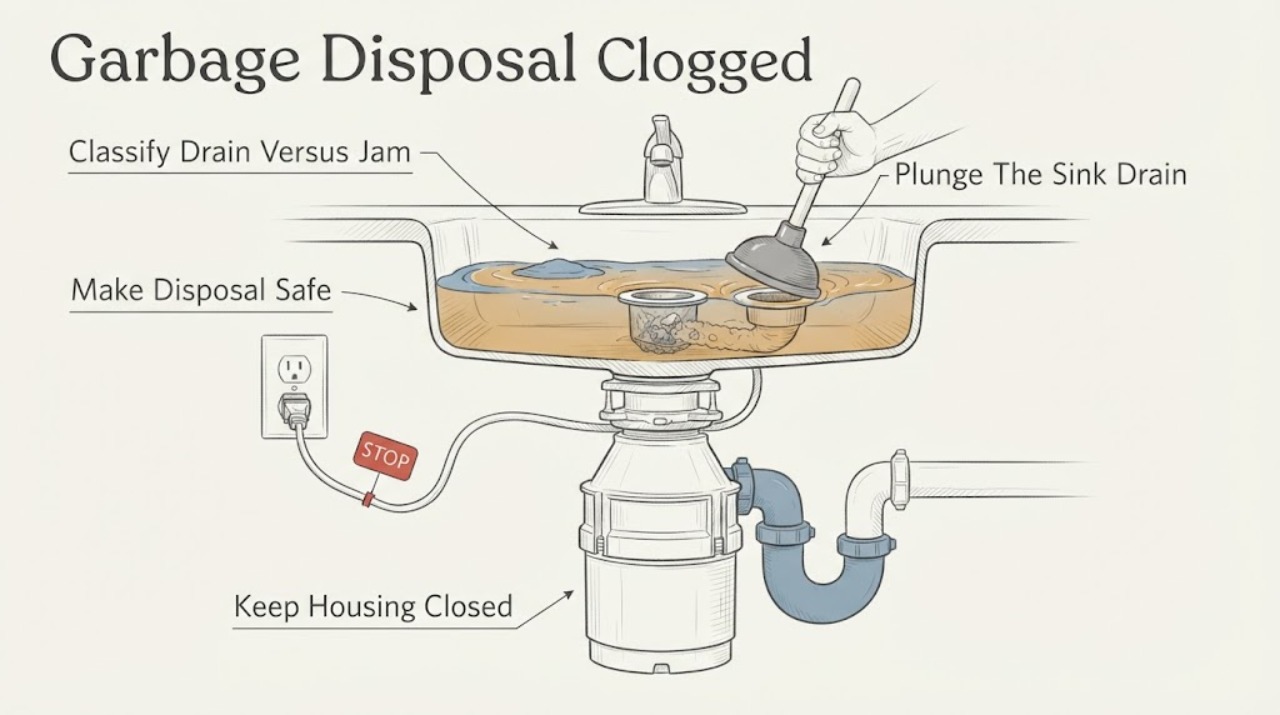
Garbage Disposal Clogged: Safe Checks Before Calling a Plumber
A garbage disposal that is clogged may have food left in the chamber, a jammed turntable, or a blockage farther down the sink drain. Do not put a hand or fingers into the disposal, and do not pour chemical drain cleaner into it.
-
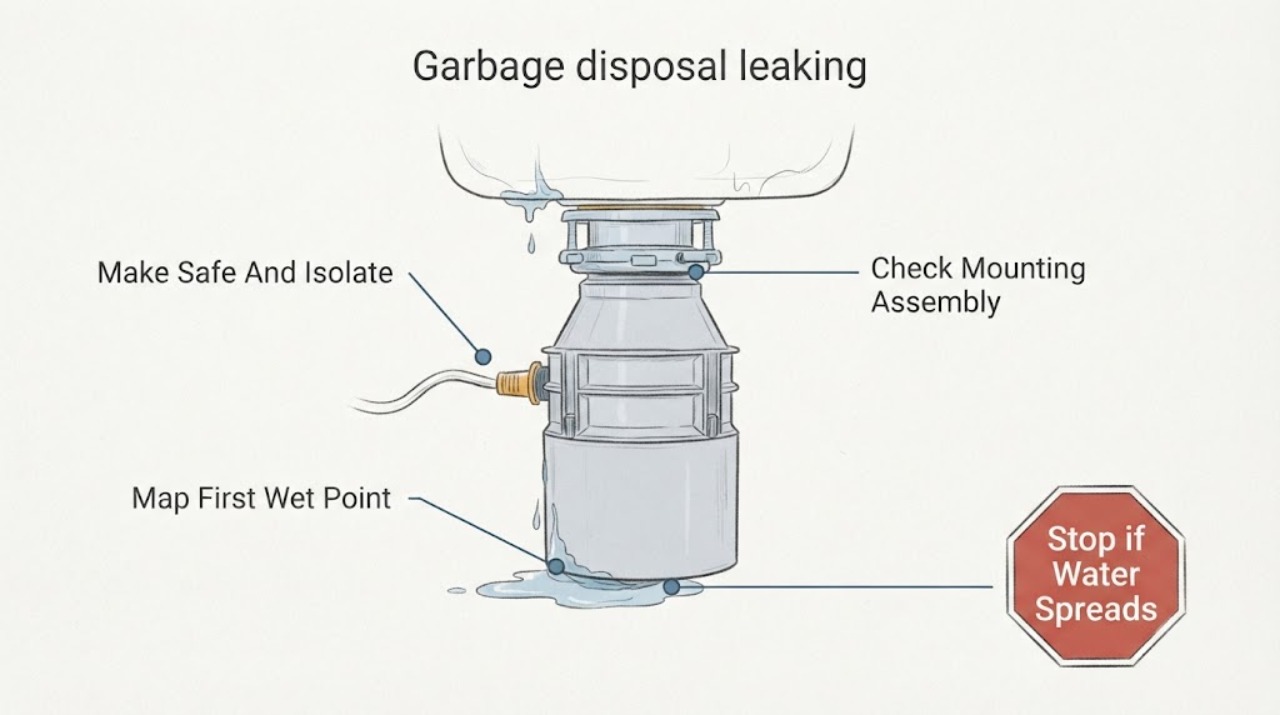
Garbage disposal leaking: find the first wet point before repairing it
A leaking garbage disposal should be traced to its first wet point before any repair: the common paths are the sink-side mounting assembly, dishwasher inlet, discharge gasket or elbow, adjacent plumbing, or a leak through the disposal body or motor joint.
-
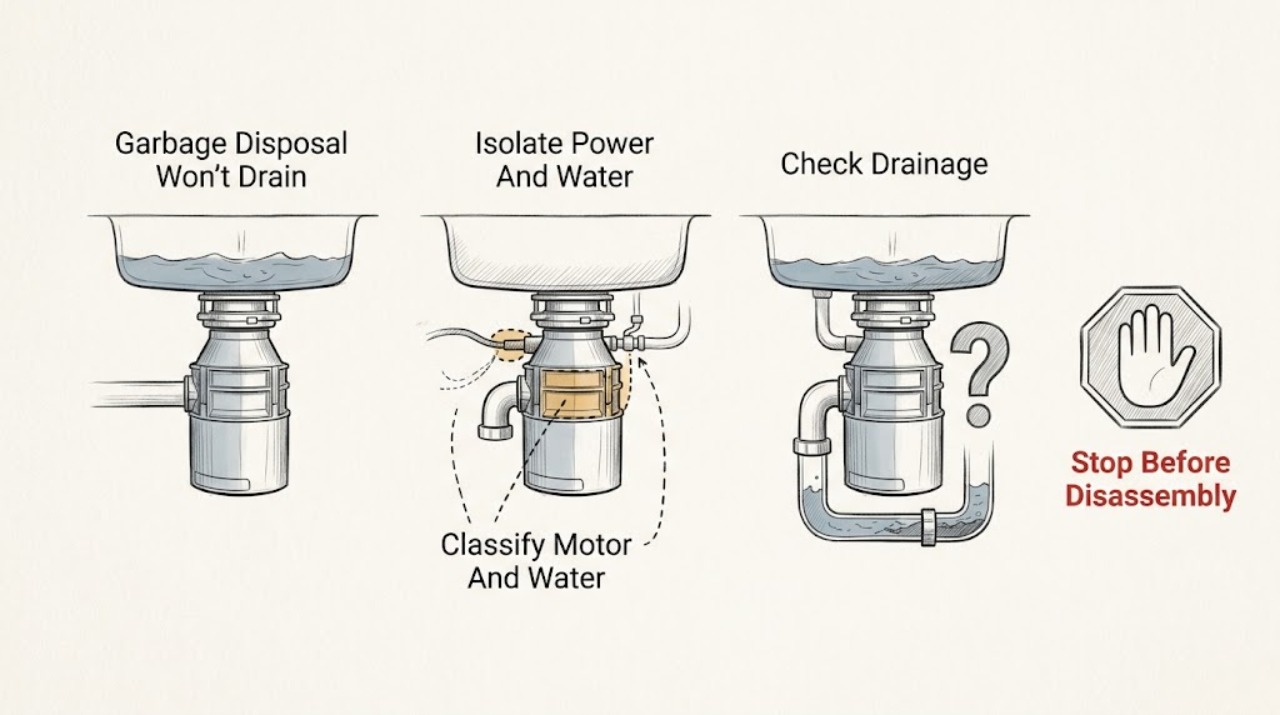
Garbage Disposal Won't Drain: Clear the Drain Line Safely
Start by turning the wall switch OFF and disconnecting power at the accessible plug or service switch; never put a hand into a disposal. If the disposal runs and the sink water swirls but does not leave, the likely focus is the drain line, P-trap, wall connection, or a shared double-sink path.
-
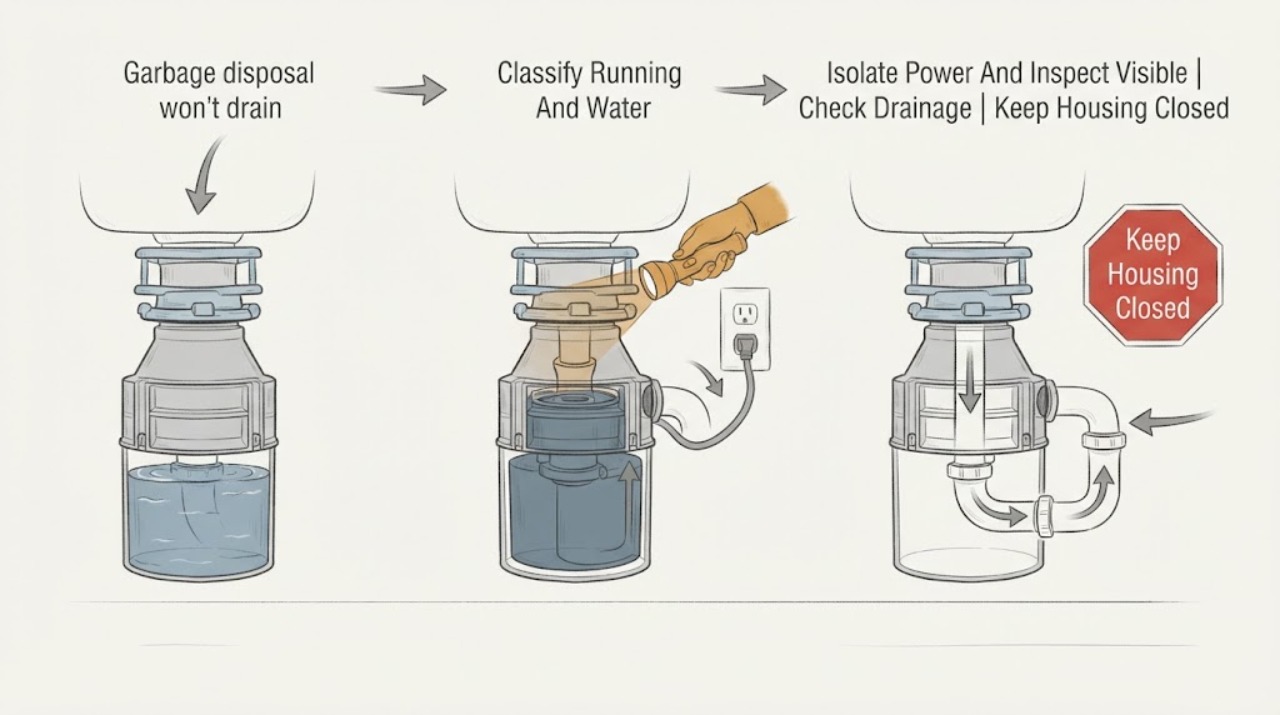
Garbage disposal won't drain: identify a drain clog before treating a jam
A garbage disposal that will not drain can have a clogged drain path, a jam that prevents the motor from moving the grinding plate, or an electrical fault that means the disposal is not actually running. First observe whether the motor runs and whether water swirls, then shut off power completely before looking for visible objects.
-
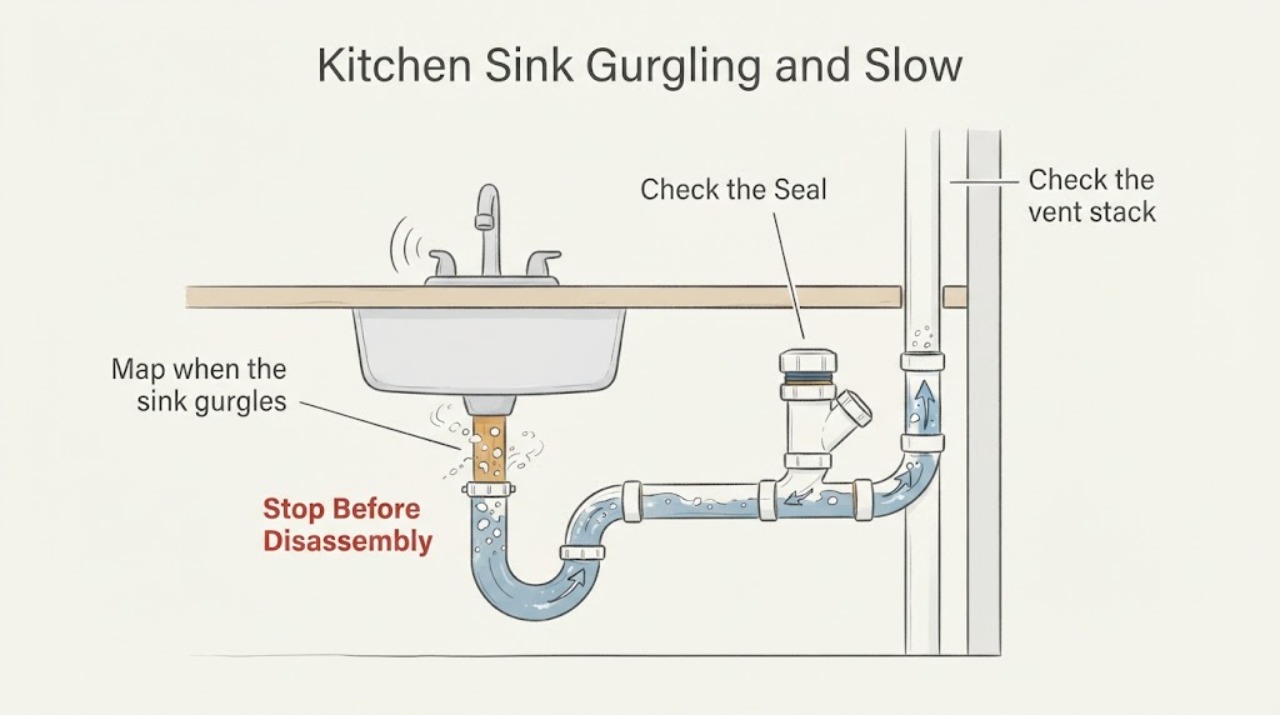
Kitchen Sink Gurgling and Slow Draining: Vent Stack and Trap Inspection
Treat a gurgling, slow kitchen sink as a drain-and-airflow symptom, not proof of one failed part. First note whether only this sink is slow, whether the dishwasher or another fixture triggers the sound, and whether there is sewage odor, backup, or water under the cabinet.
-
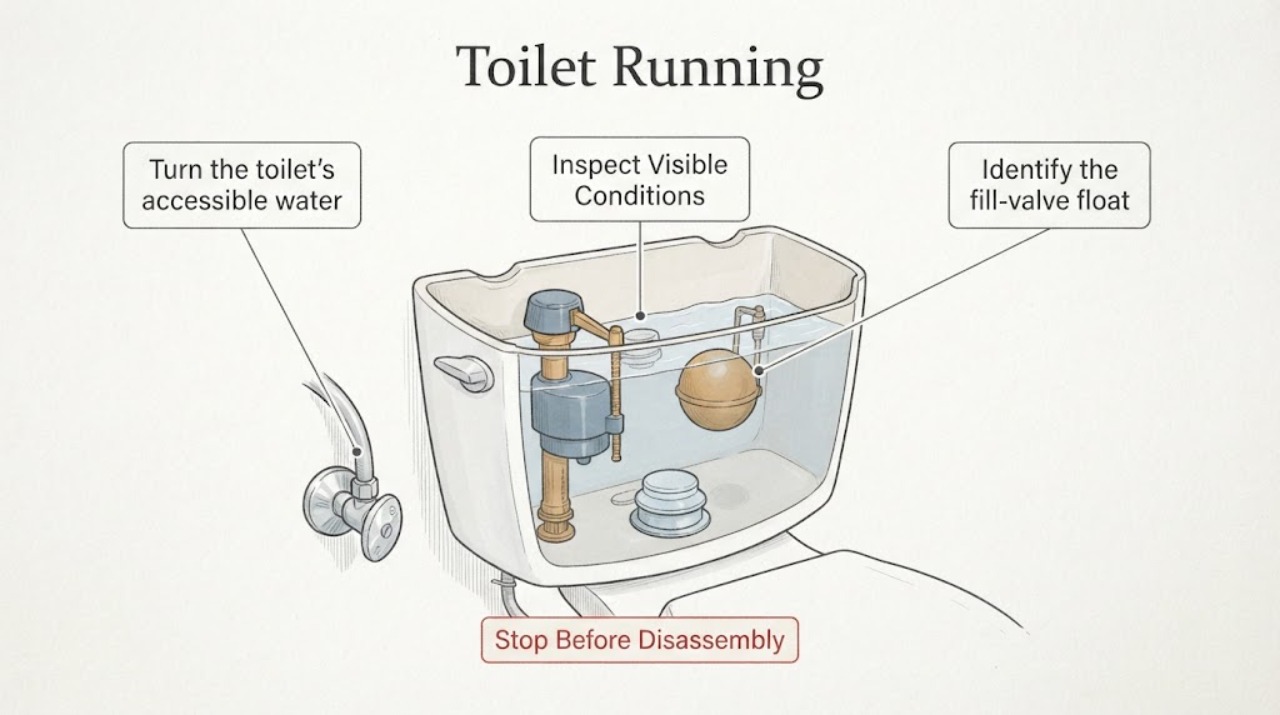
Kohler Toilet Running: Check the Fill Valve Safely
If a Kohler toilet is running continuously, turn the toilet's water supply stop clockwise only until the flow stops, without forcing a stiff or brittle valve. Then identify whether water is leaking from the tank into the bowl, spilling into the overflow, or failing to shut off at the fill valve.
-
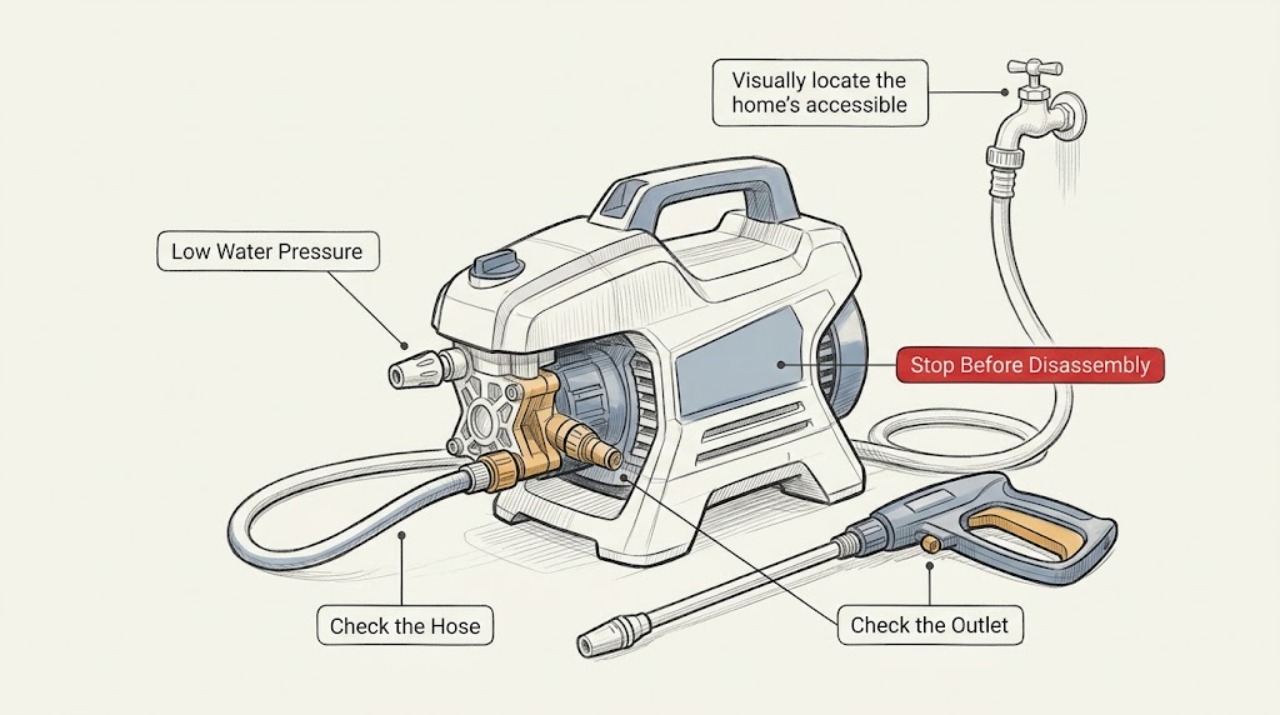
Low Water Pressure in the Home: What to Check
Start by deciding whether the problem is low pressure or low flow: compare several faucets, hot versus cold, and an outdoor hose connection if one is available. A single weak fixture often has a blocked screen or local valve, while weak flow everywhere points to a partly closed main valve, leak, pressure regulator, filter or softener restriction, or a utility disruption.
-
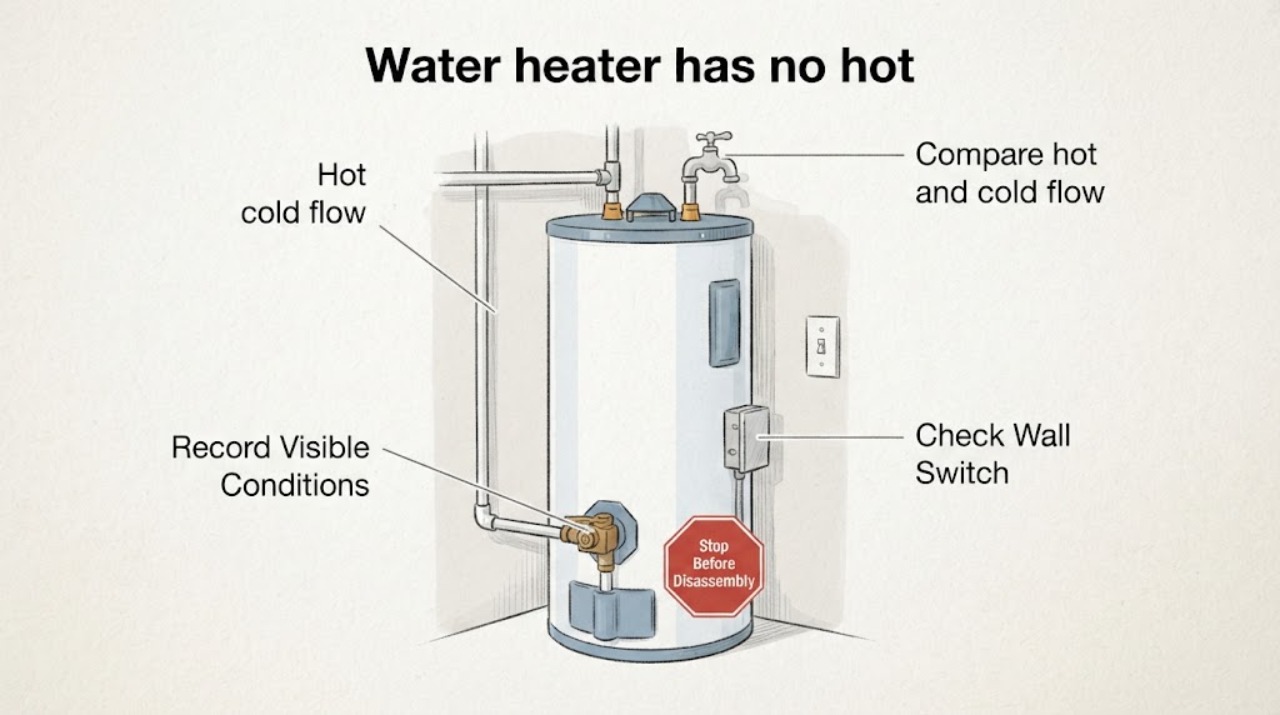
Rheem water heater has no hot water: safe checks by model type
First determine whether no hot water affects one fixture or the whole home, and whether the Rheem unit is a storage tank, tankless, gas, electric, or heat-pump model. Check hot versus cold flow and the model display from a safe position.
-
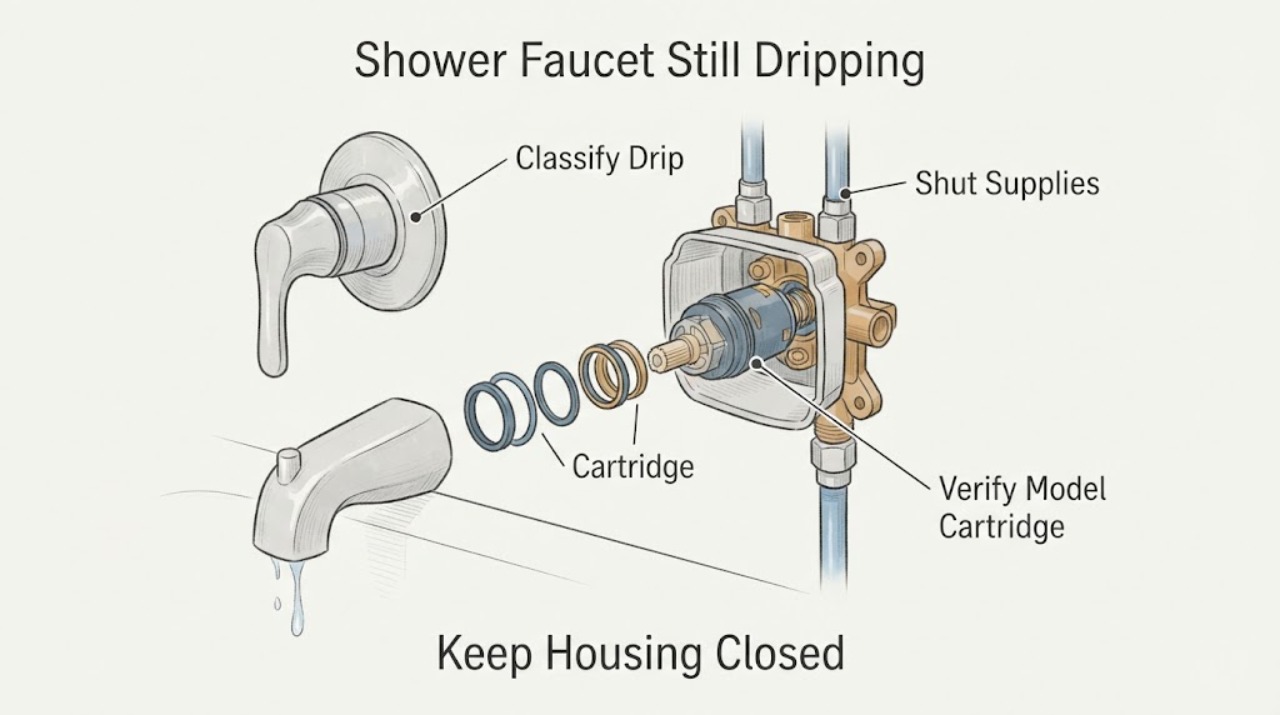
Shower Faucet Still Dripping from the Spout After Cartridge Replacement
First separate a few drops that drain from the spout after use from a drip that continues while the handle is off. If the drip is continuous, shut off the water supplies before opening the valve and confirm the replacement cartridge is the exact one for the faucet and valve.
-
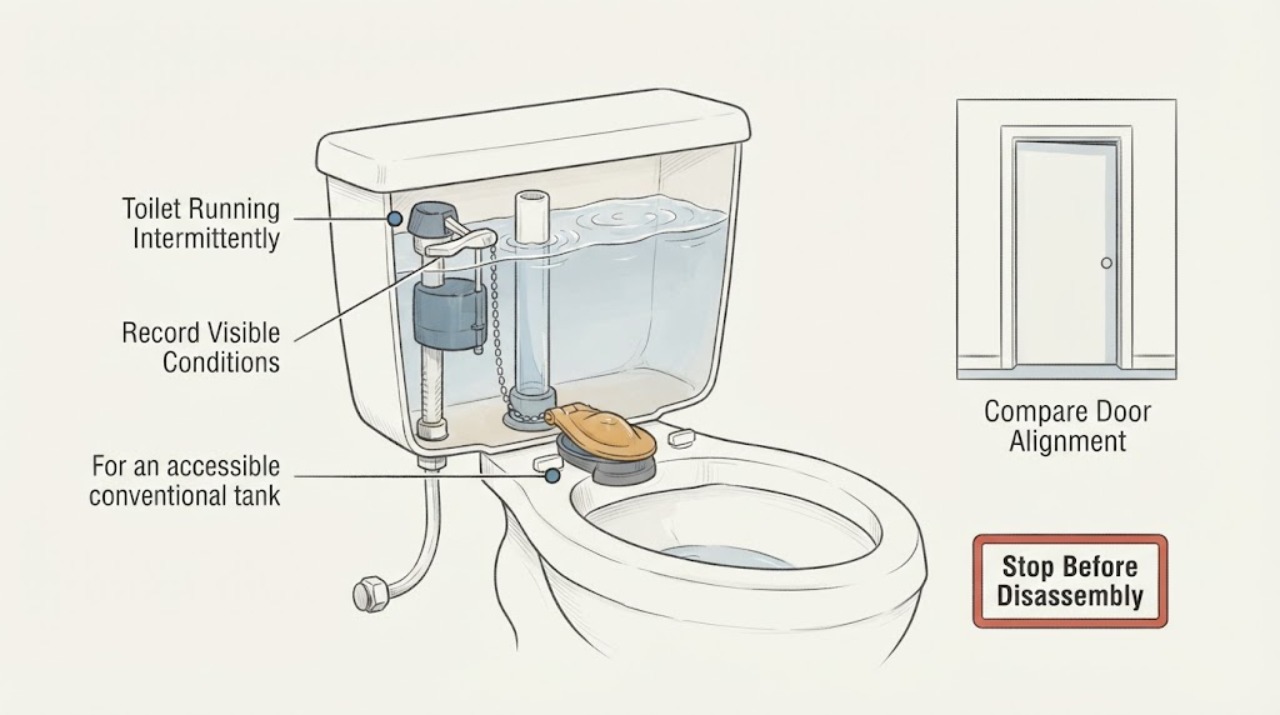
Toilet Running Intermittently: Ghost Flushing and Flapper Seal Diagnosis
An intermittent running or ghost-flushing toilet usually has water escaping from the tank into the bowl, so the fill valve turns on to restore the tank level. Start by listening for the refill sound, then use a food-coloring or dye test without flushing: color appearing in the bowl confirms a tank-to-bowl leak, commonly at the flapper or canister seal.
-
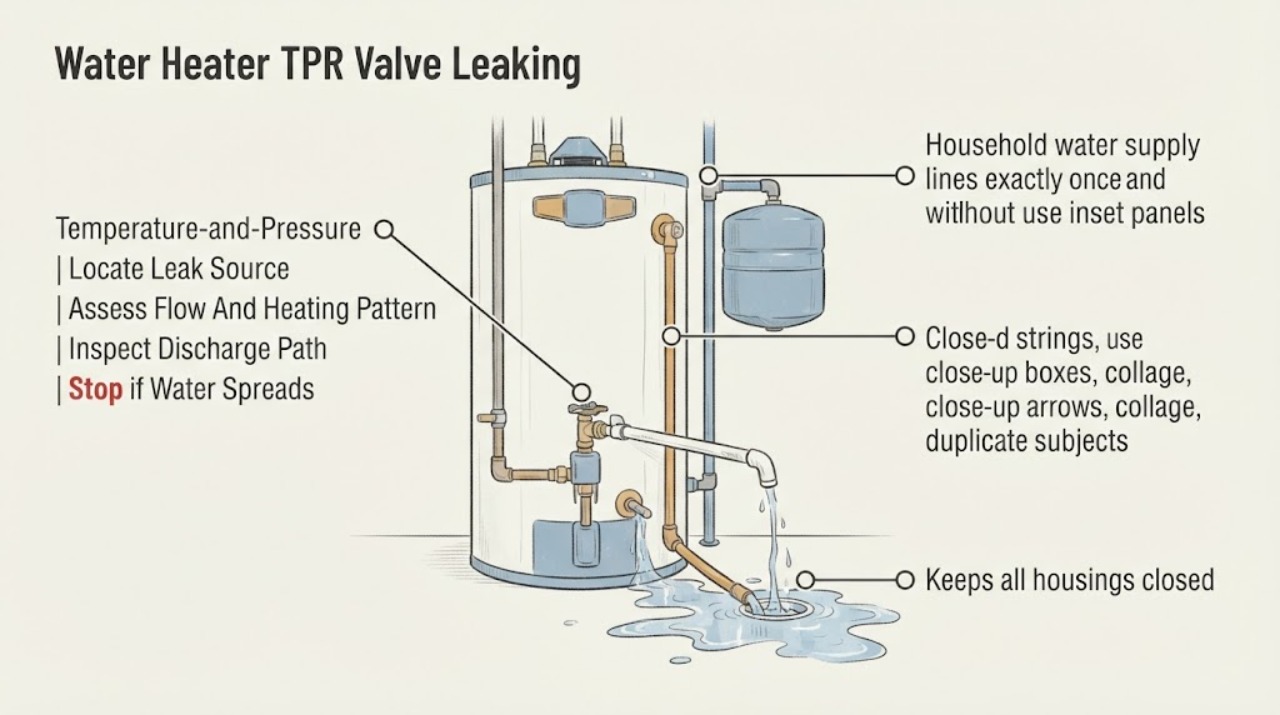
Water Heater TPR Valve Leaking: Trace the Discharge Safely
A leaking water-heater TPR (also called T&P) valve is a safety signal, not a normal faucet leak. First determine whether water is coming from the discharge-pipe outlet, the valve's threaded connection, another fitting, or the tank, and whether it is a small intermittent drip or a continuous or large flow.