
On this page
Start here
Quick answer
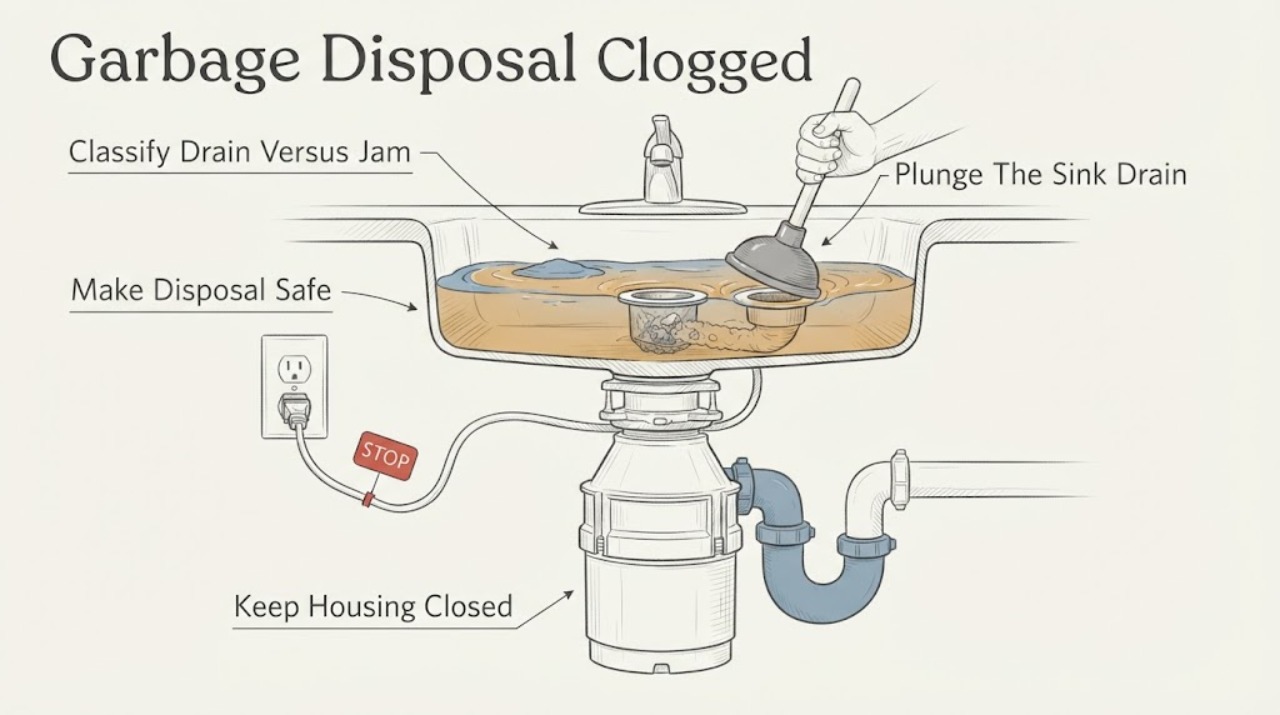
A garbage disposal that is clogged may have food left in the chamber, a jammed turntable, or a blockage farther down the sink drain. Do not put a hand or fingers into the disposal, and do not pour chemical drain cleaner into it. If the disposal is not running, keep its switch off and disconnect power according to the model before inspecting anything; remove only visible objects with long-handled tongs, never by hand. For a sink that is safe to plunge, block the other basin of a double sink, add a shallow amount of water, and use a plunger with slow downward and firm upward strokes. If the clog is deep, the disposal jams again, the unit leaks, power or wiring is involved, or the sink will not clear, stop and contact a qualified plumber or service professional.
Before you begin
Safety first
- User checks are limited to switch-off/power isolation appropriate to the model, external observation, safe visible-object removal with long-handled tongs, and gentle sink plunging when no chemical cleaner is present. Do not put hands into the disposal, operate a jammed unit, open the appliance or electrical box, loosen plumbing fittings, probe wiring, bypass safety devices, or use chemical drain cleaner.
Work through in order
Diagnostic checks
Use only checks that match the exact appliance or system and its official guide.
-
Check 1
From a dry, stable position, note the water level in each sink bowl and the disposal's normal symptom without putting anything into the opening. If the disposal is already running normally and water swirls but does not leave the sink, treat this as a possible drain-line clog; if it is silent, only hums, or stops during a cycle, treat it as a possible jam or power/appliance problem instead. Do not switch on a unit that is stalled, making an abnormal sound, or has an object visible.
Expected result: Water backs up while the motor runs, water moves between bowls, the motor is silent, the motor hums without grinding, or the unit stops under load.
Next step: Use the drain-clearing branch only when the disposal is not actively jammed. Use the power-off jam branch for a stopped or humming unit, and arrange service if the symptom cannot be classified safely.
Stop if: Stop immediately if there is smoke, a burning smell, sparking, exposed wiring, a leak onto electrical parts, or a disposal that starts unexpectedly; leave the area clear and obtain qualified electrical or plumbing help.
Why this matters
Why: A running motor with backed-up water points toward the sink drain, trap, or discharge path. A silent or humming unit can have a jam, overload, switch, or internal fault, so plunging alone may not address it.
-
Check 2
If the disposal is stopped or an object may be present, switch it off and disconnect power in the manner appropriate to the model—unplug it when it has a plug, or use the circuit breaker when it is hardwired. Keep the switch off, wait for all motion to stop, and use a flashlight only from above; do not insert a hand, finger, or ordinary utensil. If an object is plainly visible and reachable, remove it with long-handled tongs only after power is disconnected.
Expected result: Power is positively off and the chamber is empty, a visible object can be removed without reaching into the chamber, or power cannot be positively isolated.
Next step: Proceed to gentle plunging only when the concern is a drain blockage and no jammed object remains. If the turntable is fixed, power cannot be isolated, or the unit leaks, stop and call qualified service.
Stop if: Never put any part of the body into the disposal, never work on live wiring, and never remove a hard-to-reach object by improvising a tool or dismantling the unit.
Why this matters
Why: Positive power isolation makes a visual check safer, but it does not make the cutting parts safe to touch. If power isolation or object removal would require opening wiring, reaching deeply, or forcing a part, the cause is not a routine drain check.
-
Check 3
For a drain clog with the disposal not jammed, remove excess standing water only if it can be done safely. On a double sink, seal the other basin with a stopper or drain plug. Add enough water to make a seal over the disposal opening, place a sink plunger over that opening, press down slowly, then pull up firmly several times. Keep hands away from the disposal opening and stop if water or debris splashes unexpectedly.
Expected result: The water level drops, the drain clears only partially, water shifts into the other bowl, or repeated gentle plunging produces no change.
Next step: If the sink clears, run a moderate flow of cold water briefly and observe for normal drainage. If it only partly clears, returns, or does not respond, stop plunging and have a qualified plumber assess the trap or drain line.
Stop if: Do not use caustic or chemical drain cleaner, boiling water, compressed-air devices, or force that could damage the disposal or plumbing. Stop if a leak appears or the sink water may contain chemical cleaner.
Why this matters
Why: A drop in water level suggests the blockage moved. Water shifting between bowls means the second opening was not sealed or the shared drain remains obstructed. No change suggests a deeper or tighter blockage rather than a reason to use more force or chemicals.
-
Check 4
After a clog appears to move, run only a moderate flow of cold water and watch the sink, disposal flange, discharge connection, and cabinet below for drainage and leaks. Do not run the unit if it is still humming, repeatedly stopping, vibrating unusually, or leaking. Keep grease and fat out of the disposal and drain.
Expected result: Water drains steadily with no leak, water drains slowly or backs up again, the disposal jams again, or water appears under the sink.
Next step: Document what changed and monitor the next normal use if drainage is restored. For recurrence, unusual noise, persistent jamming, or a leak, leave the disposal off and contact a qualified plumber or appliance service professional.
Stop if: Do not tighten or remove discharge fittings, open the disposal, reset repeatedly, or continue operating with a leak, smoke, burning odor, or abnormal noise.
Why this matters
Why: Steady drainage without a leak supports a temporary obstruction that moved. Recurrence, slow drainage, a new jam, or a leak indicates an unresolved drain, foreign-object, installation, or appliance problem; external observation cannot identify the failed component.
-
Check 5
Decide whether the safe drain check restored normal drainage and whether the disposal remains mechanically and electrically normal. Record the model, whether the unit was running, whether water swirled or moved between bowls, what the sink did after plunging, and any object, leak, noise, odor, or recent installation change.
Expected result: The clog remains or returns, the obstruction seems farther down the drain, the motor will not run or hums, the disposal leaks, or there are electrical warning signs; alternatively, the sink drains normally and the unit operates normally.
Next step: Leave the disposal off. For a deep or recurring drain blockage, call a qualified plumber; for a jammed appliance, leak, or electrical symptom, call qualified appliance/electrical service. If there is smoke, sparking, burning odor, exposed wiring, or water at electrical parts, keep clear and seek urgent professional help.
Stop if: Do not remove the disposal, loosen plumbing or electrical connections, probe terminals, bypass a switch or overload device, or use a chemical cleaner to force a result.
Why this matters
Why: A persistent or deep clog requires plumbing diagnosis, while a jam, leak, or electrical symptom may require appliance or electrical diagnosis. A temporary improvement does not prove a hidden obstruction or damaged component is gone.
Use your observations
Decision map
Find the observation that best matches what you see, then follow the next safe action.
-
PATH 01Next step
What you see
The disposal runs normally but water swirls, backs up, or does not leave the sink.
Do this next
Treat it as a possible sink drain, trap, or discharge-line clog: seal the other bowl if present and try gentle plunging. Call a qualified plumber if it does not clear or the clog is deep.
-
PATH 02Next step
What you see
The disposal is silent, hums without grinding, stops, or has an object visible.
Do this next
Keep the switch off, disconnect power according to the model, and stop before reaching or dismantling. A qualified service professional can address a jam, overload, switch, wiring, or internal fault.
-
PATH 03Next step
What you see
The water level drops and remains clear after a gentle plunge.
Do this next
Run a moderate flow of cold water briefly and observe the cabinet and drain connections for leakage; stop using the disposal if drainage slows, noise changes, or a leak appears.
-
PATH 04Next step
What you see
The sink remains backed up, clears only partly, or clogs again soon.
Do this next
Stop plunging and arrange qualified plumbing service for the trap or downstream drain. Do not add chemical cleaner or open plumbing fittings as a workaround.
-
PATH 05Next step
What you see
There is water under the sink, repeated jamming, unusual noise, smoke, burning odor, or an electrical concern.
Do this next
Leave the disposal off and keep clear. Use urgent qualified help for smoke, sparking, burning odor, exposed wiring, or water at electrical components; otherwise arrange plumbing or appliance service.
Helpful context
Understand the symptom
First separate a drain clog from a disposal jam
A clogged disposal is not always a failed motor. InSinkErator distinguishes a drain-line clog from a disposal that is not running or is jammed: water may swirl while the unit runs, while a silent or humming unit needs a different path. A double-bowl sink can also let water move between bowls, so block the unused opening before plunging. The checks below keep the user on the accessible plumbing side and stop before electrical or internal work.
Why chemicals and hands are not a shortcut
Manufacturer safety instructions warn against putting hands or fingers into a disposal and against caustic or chemical drain cleaners. A chemical left in backed-up water can splash during later work and can corrode metal parts. If an object is visible after power is disconnected, use long-handled tongs; if it is not easily reachable, leave it in place and call for service.
When the blockage is beyond the disposal
A cleared chamber does not prove that the trap or drain line is open. If plunging does not restore drainage, if the clog returns quickly, or if the obstruction appears farther down the plumbing, the next step is a qualified plumber. Leaks, a disposal that repeatedly jams, or any need to open wiring or electrical parts also move the job outside ordinary user checks.
When checks do not resolve it
Need a professional?
Call a qualified plumber when the sink remains clogged, the blockage appears in the trap or downstream line, or the clog returns. Call qualified appliance or electrical service for a disposal that hums, will not start, jams repeatedly, leaks, or has a wiring or switch symptom. Treat smoke, sparking, burning odor, exposed wiring, or water contacting electrical parts as urgent and keep the unit off.
Safety scope: User checks are limited to switch-off/power isolation appropriate to the model, external observation, safe visible-object removal with long-handled tongs, and gentle sink plunging when no chemical cleaner is present. Do not put hands into the disposal, operate a jammed unit, open the appliance or electrical box, loosen plumbing fittings, probe wiring, bypass safety devices, or use chemical drain cleaner.
Have this ready
- Provide the disposal make and model if visible without disassembly, whether it runs or hums, water level and bowl behavior, the result of gentle plunging, any visible object, leak location, abnormal sound or odor, and recent installation or plumbing changes. Tell the professional if chemical cleaner may already be in the sink.
Common questions
FAQ
Is a clogged garbage disposal always a problem with the disposal motor?
No. If the motor runs and water swirls or backs up, the obstruction may be in the sink drain, trap, or discharge line. A silent or humming unit follows a jam or appliance/power path and should stay off until it is safely assessed.
Can I put my hand into the garbage disposal to clear a clog?
No. Keep hands and fingers out even when the switch is off. After power is positively disconnected, only a plainly visible, reachable object should be removed with long-handled tongs; otherwise call service.
Should I use chemical drain cleaner in a garbage disposal?
No. Manufacturer instructions warn that caustic or chemical drain cleaners can corrode disposal parts. Use a safe, gentle plunger check when appropriate, and tell the plumber if chemical cleaner has already been added.
What if plunging does not clear the disposal clog?
Stop rather than adding force or chemicals. A blockage farther down the plumbing, a trap obstruction, or an appliance fault may need qualified plumbing or appliance service, especially if the clog returns or the unit leaks.
What should I do if the disposal is humming or jams again?
Keep it off and disconnect power according to the model. Do not reach in, repeatedly reset it, or dismantle it. Arrange qualified service if the turntable remains stuck, the jam returns, or there is unusual noise, odor, heat, or leakage.
Read the exact guide
Official sources
- Fixing a Clogged Garbage DisposalInSinkErator · Manufacturer guidance for identifying a disposal drain clog and using a sink plunger; exact controls and model behavior vary.
- Disposer Will Not DrainGE Appliances · Manufacturer support example for disposer drainage symptoms; the exact model manual controls.
- INS10663.inddMoen · Moen disposal instruction sheet used for general safety boundaries; follow the exact model manual for a different unit.
Community feedback
Share a repair observation
Share a plain-text repair observation. Accepted observations are published automatically; this page may take a moment to update.