
Repair problem
Clogged Troubleshooting Guides
Published FixGraph guidance for diagnosing and responding to clogged.
Matching published guides
Choose a guide that matches the service, equipment, and conditions you are seeing.
-
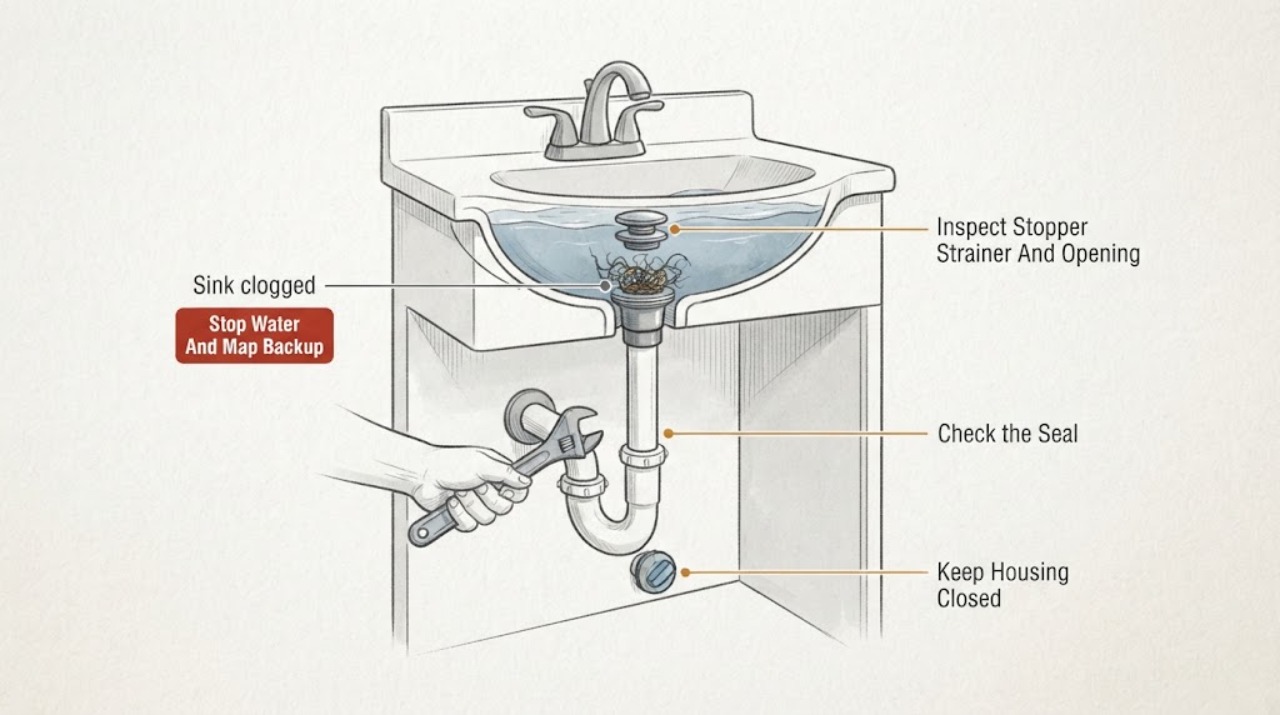
American standard sink clogged: What to Check and What to Do Next
Stop adding water and identify whether only the American Standard sink is slow or whether nearby fixtures also back up. If the bowl is safe to handle, remove the stopper or strainer and clear only visible hair, food, or soap without pushing it farther into the drain.
-
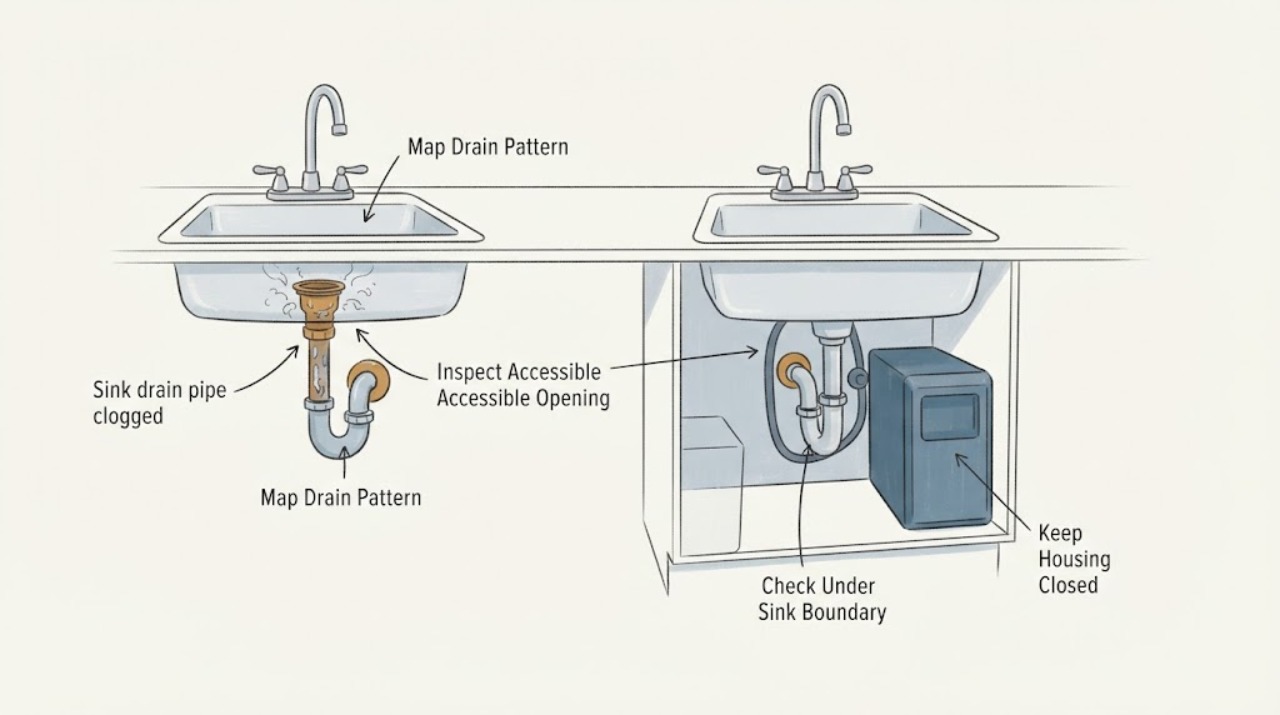
American Standard sink drain pipe clogged: What to Check and What to Do Next
An American Standard sink that holds water may be blocked at the stopper or strainer, the short tailpiece or trap below the basin, or farther downstream in the wall drain. First stop adding water, remove only the accessible stopper or strainer as the sink design allows, and compare this sink with other fixtures.
-
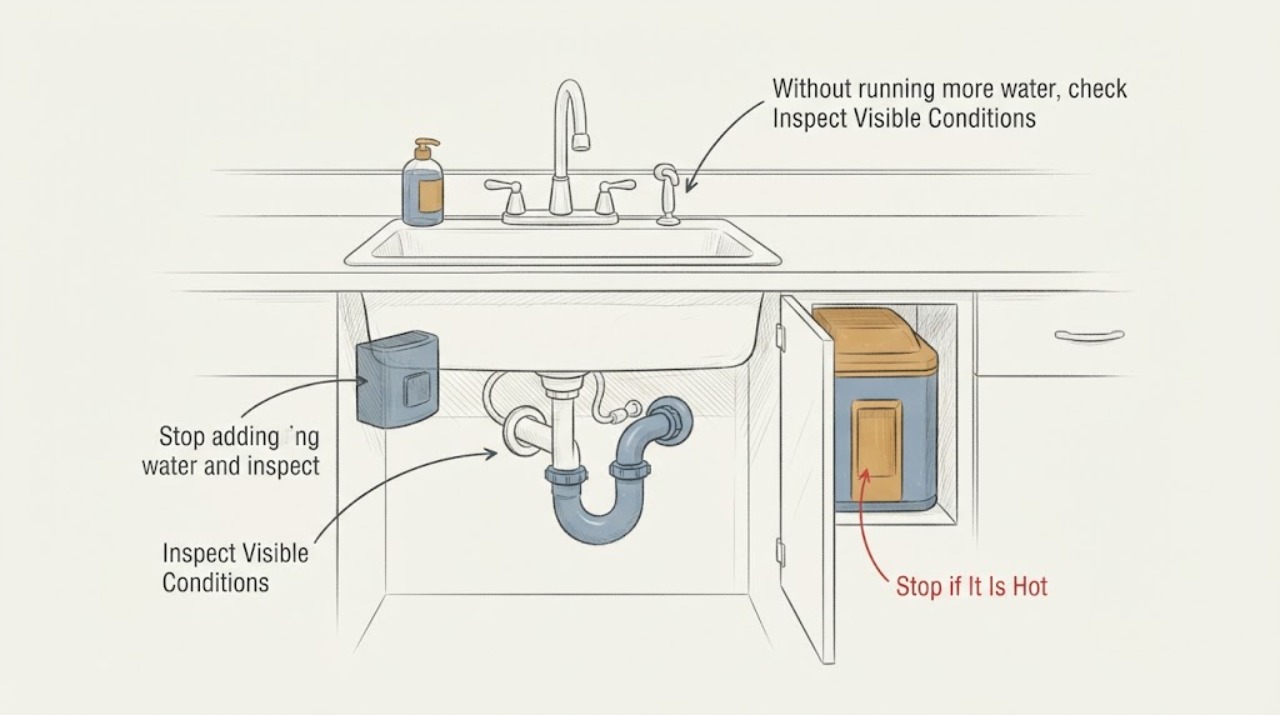
American standard sink p trap clogged: What to Check and What to Do Next
If an American Standard sink is slow or blocked and the P-trap appears to be involved, stop adding water and inspect only from the outside first. Note standing water, a wet or corroded trap, and whether another fixture also backs up.
-
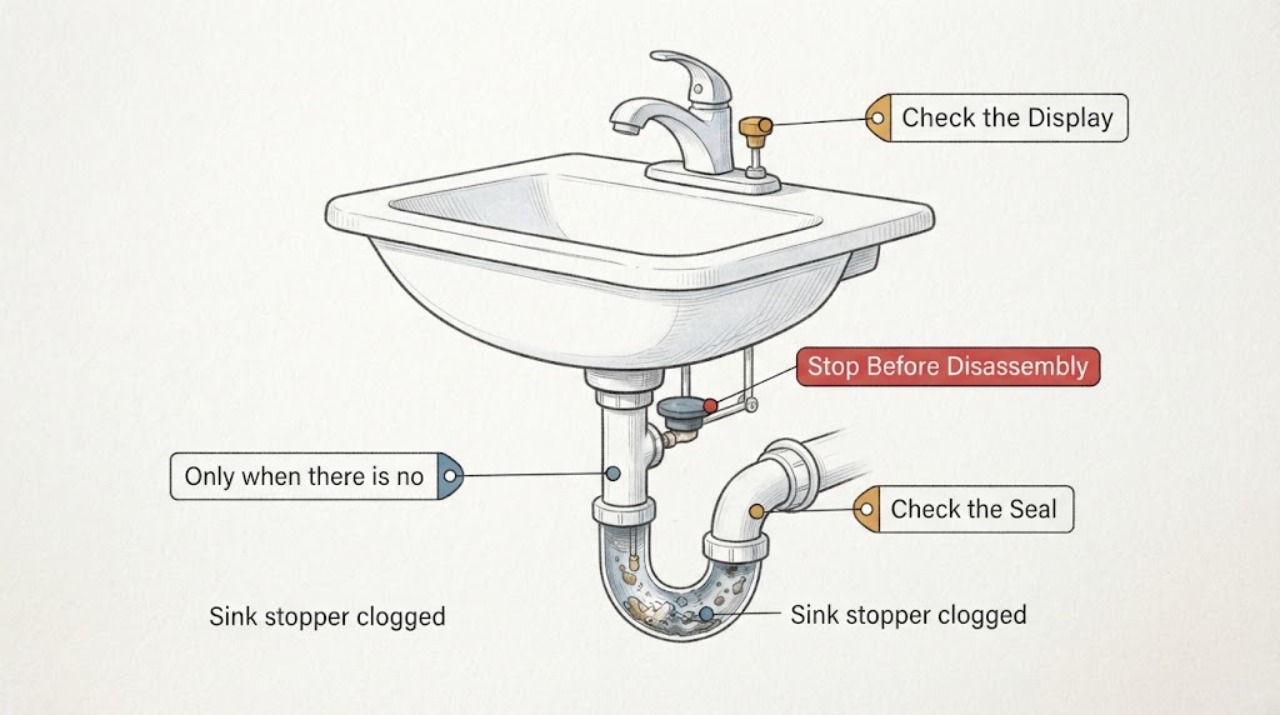
American Standard sink stopper clogged: What to Check and What to Do Next
A clogged American Standard sink stopper is often a debris restriction around the stopper head or drain opening, but a blockage farther down the trap or branch drain can feel the same. First stop adding water and identify whether the stopper is stuck down, lifts but drains slowly, or lifts normally while the basin remains full.
-
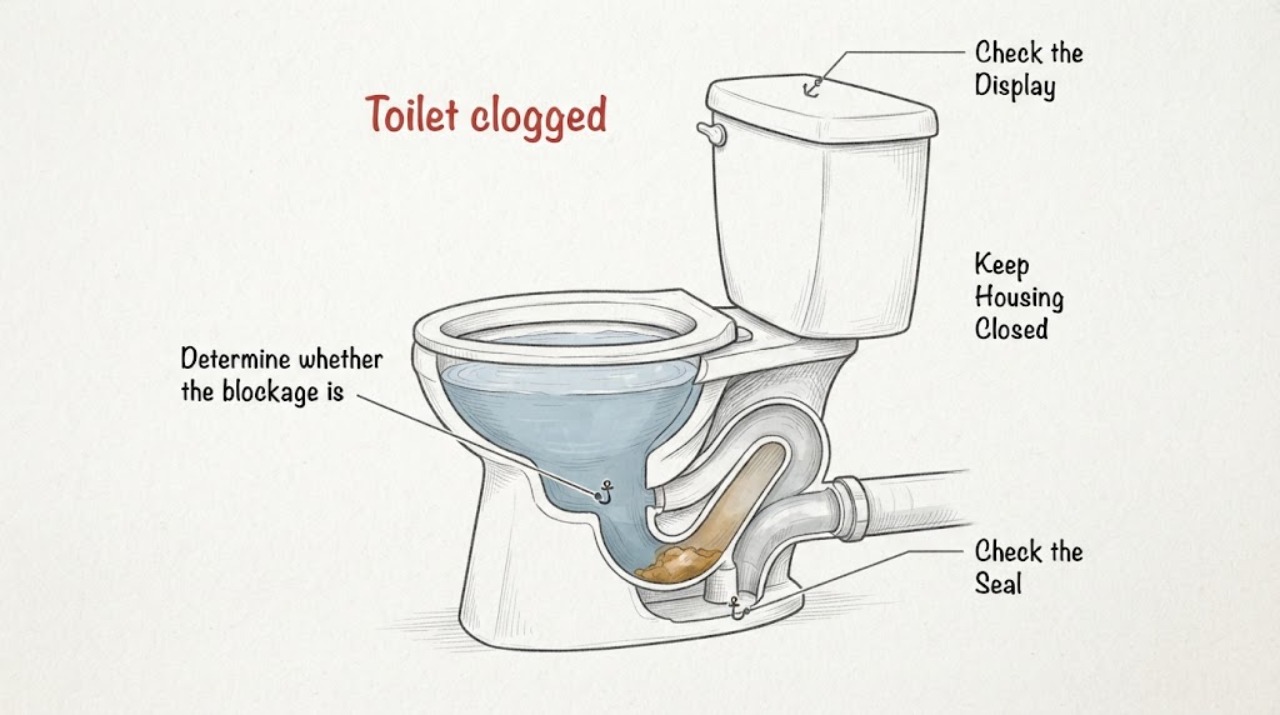
American Standard toilet clogged: What to Check and What to Do Next
For a clogged American Standard toilet, stop flushing and turn off the toilet's water supply before the bowl reaches the rim. Protect the floor, then use a toilet plunger with its cup fully covering the outlet and make controlled strokes; American Standard says the bowl should begin to drain before one normal flush is used to check the result.
-
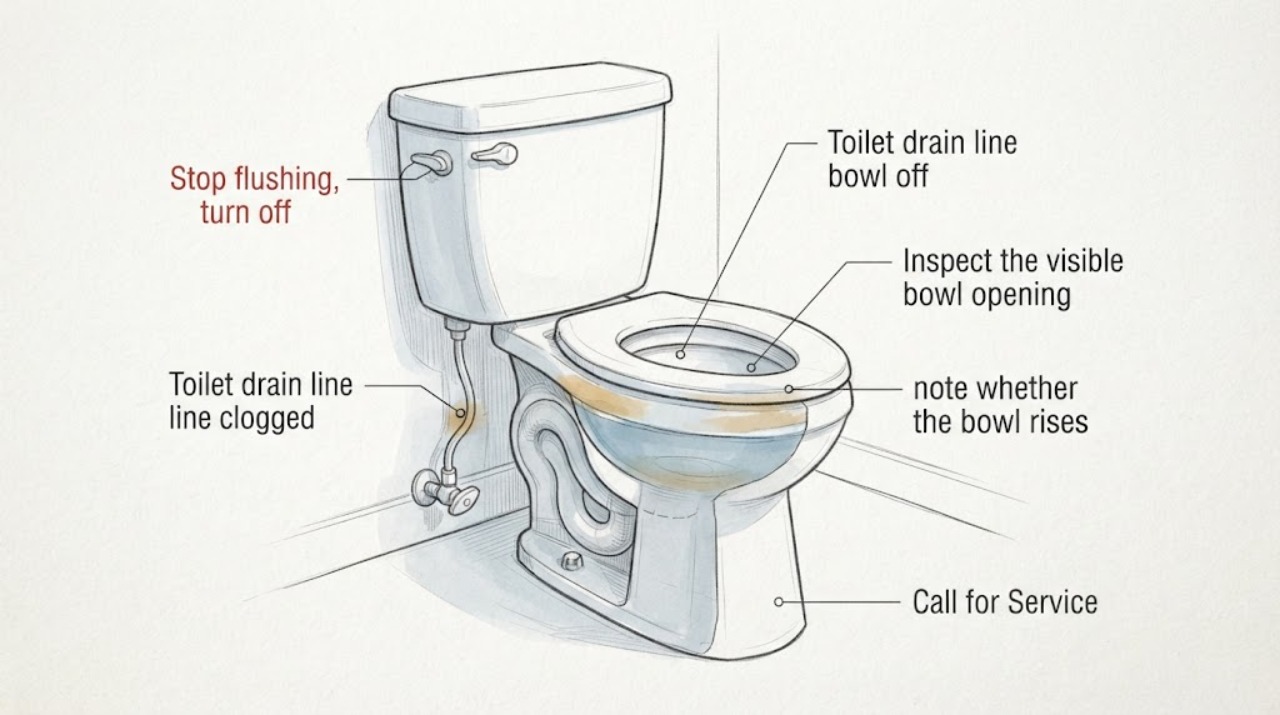
American standard toilet drain line clogged: What to Check and What to Do Next
For a clogged American Standard toilet drain line, stop flushing first and turn off the toilet's water supply so the bowl cannot overflow. Cover the floor, use a toilet plunger whose cup seals over the trapway, and judge the result by whether the bowl level drops and a single retest restores a normal flush.
-
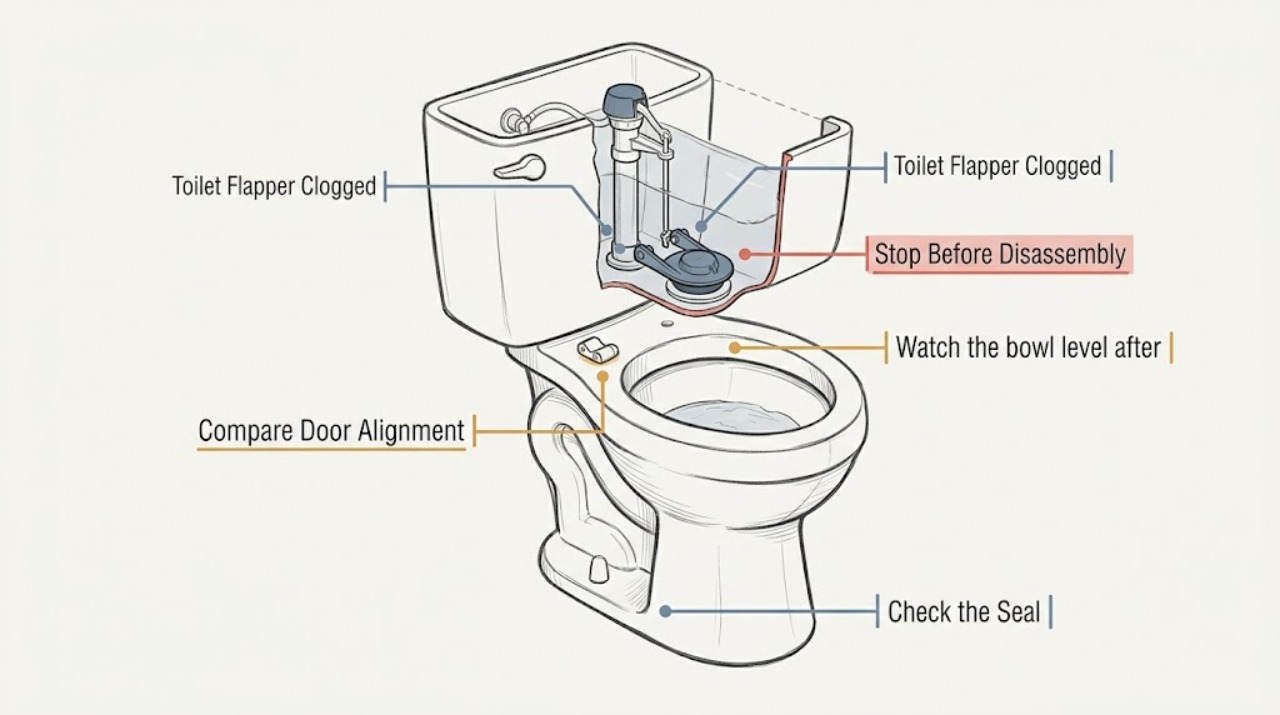
American Standard Toilet Flapper Clogged: What to Check and What to Do Next
A flapper can be held open by a loose chain, debris, or a misshapen seal, but a toilet that will not drain may instead have a bowl or trapway clog. If the bowl water is rising, stop flushing and close the toilet supply valve first.
-
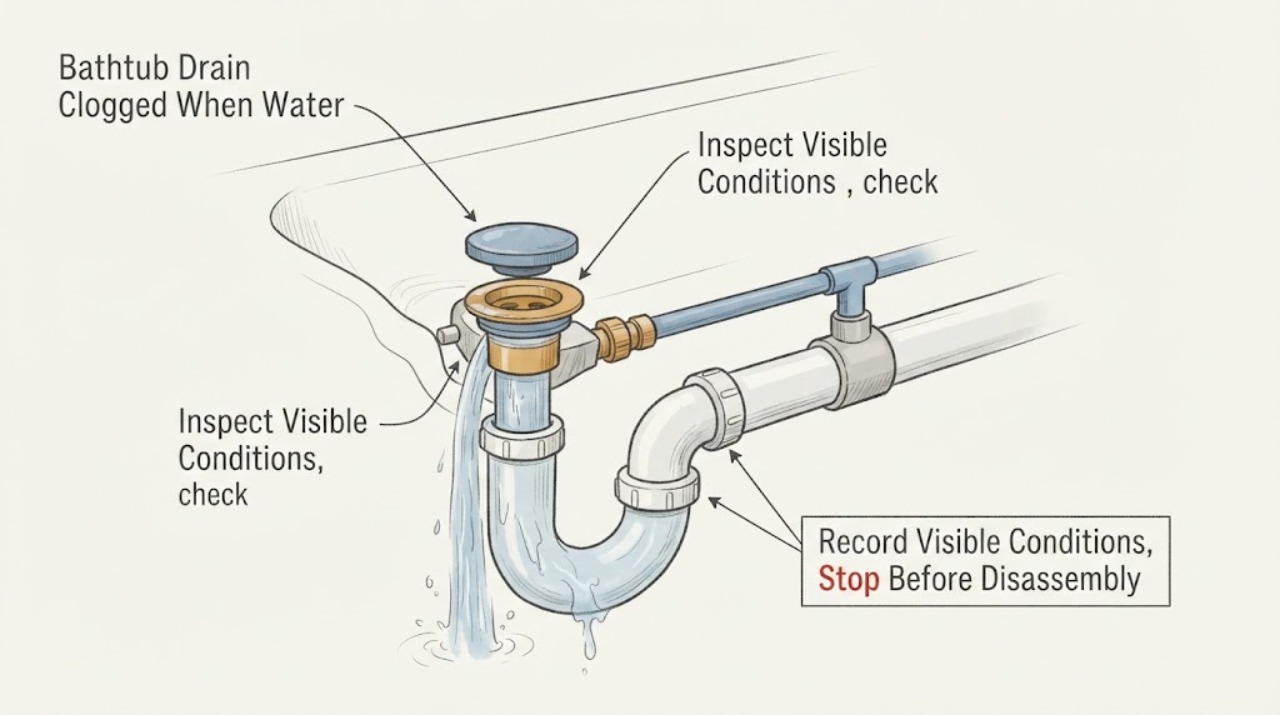
Bathtub Drain Clogged When Water Goes Down the Tub Drain
Stop adding water and first determine whether the bathtub is slow, backing up, or causing another fixture to rise. A tub-only slow drain often starts at the visible stopper or hair and soap buildup; water rising in a sink, toilet, or another tub points toward a shared branch or main drain and needs a plumber sooner.
-
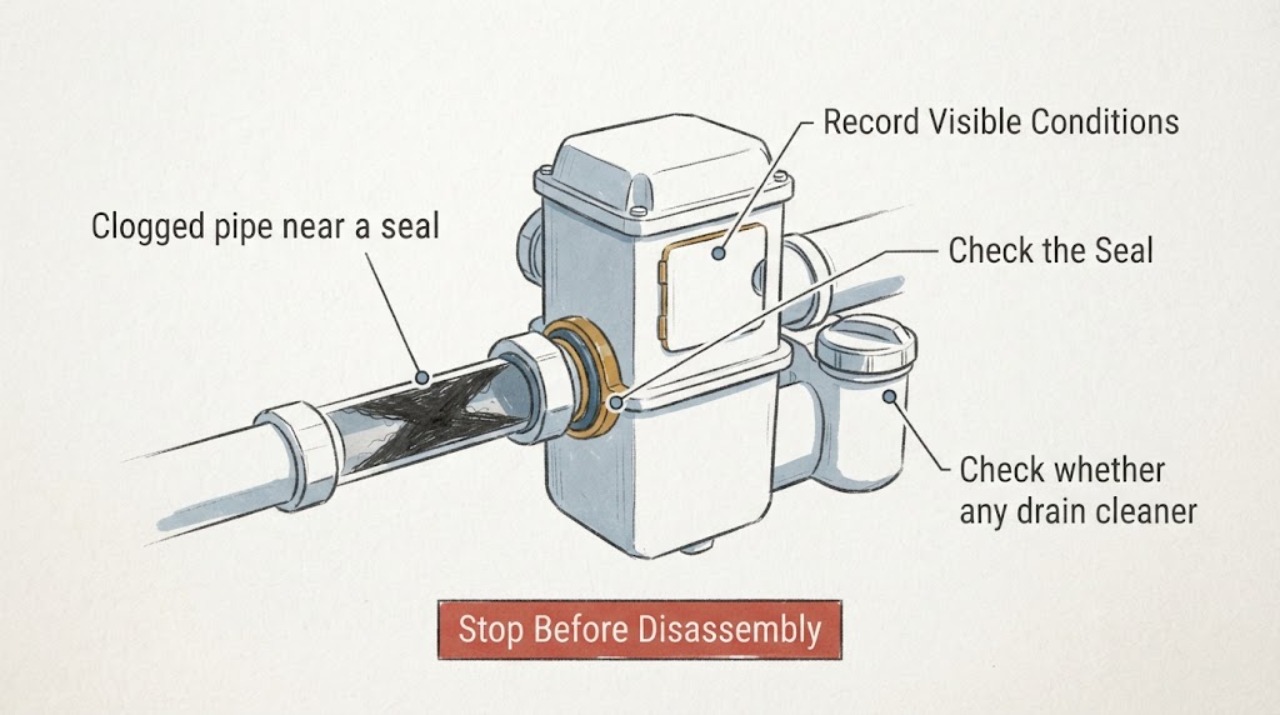
Clogged pipe near a seal: separate the blockage from the leak
A pipe that seems clogged near a seal may have two different faults: restricted flow, a leaking or deformed joint seal, or both. First establish whether flow is slow or completely stopped and whether the problem is isolated to one fixture.
-
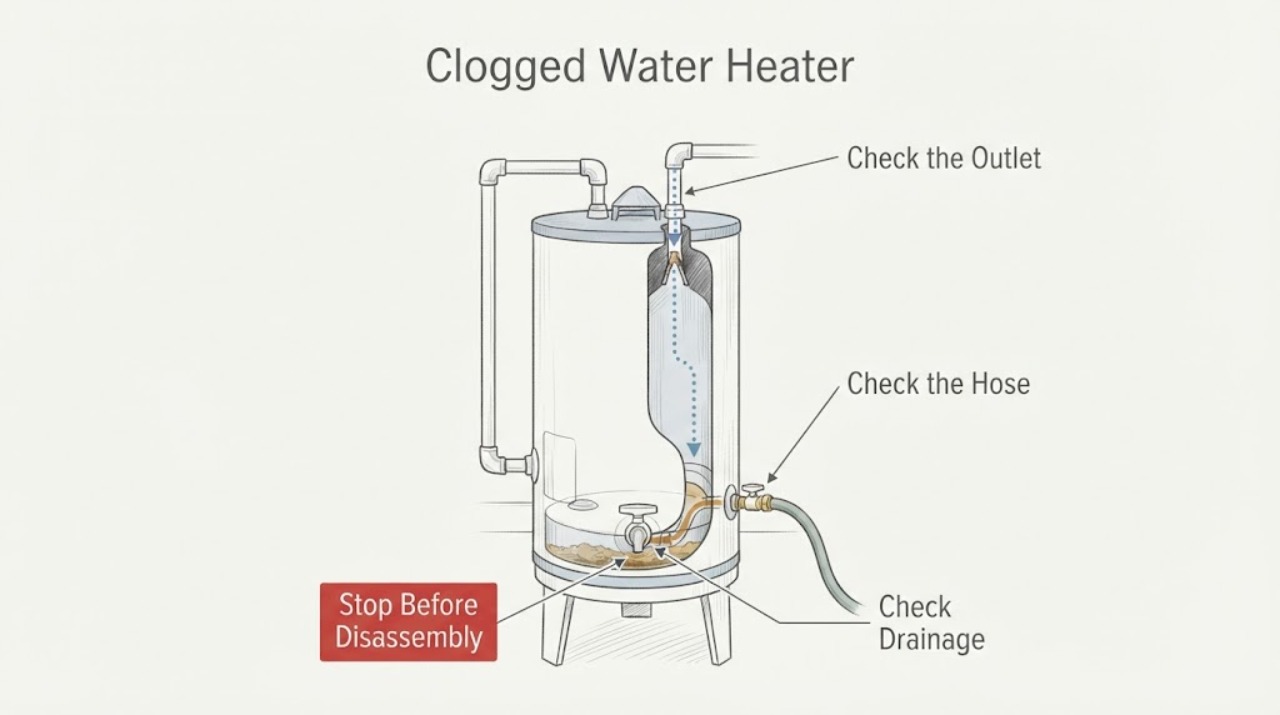
Clogged Water Heater: Safe Checks for Low Flow and Sediment
A water heater that seems clogged may have sediment blocking a storage-tank drain valve, a restricted hot-water outlet or shutoff valve, or debris in a tankless inlet filter. First compare hot and cold flow at more than one fixture and look for leaks, hot discharge, or gas or electrical warning signs without opening the heater.
-
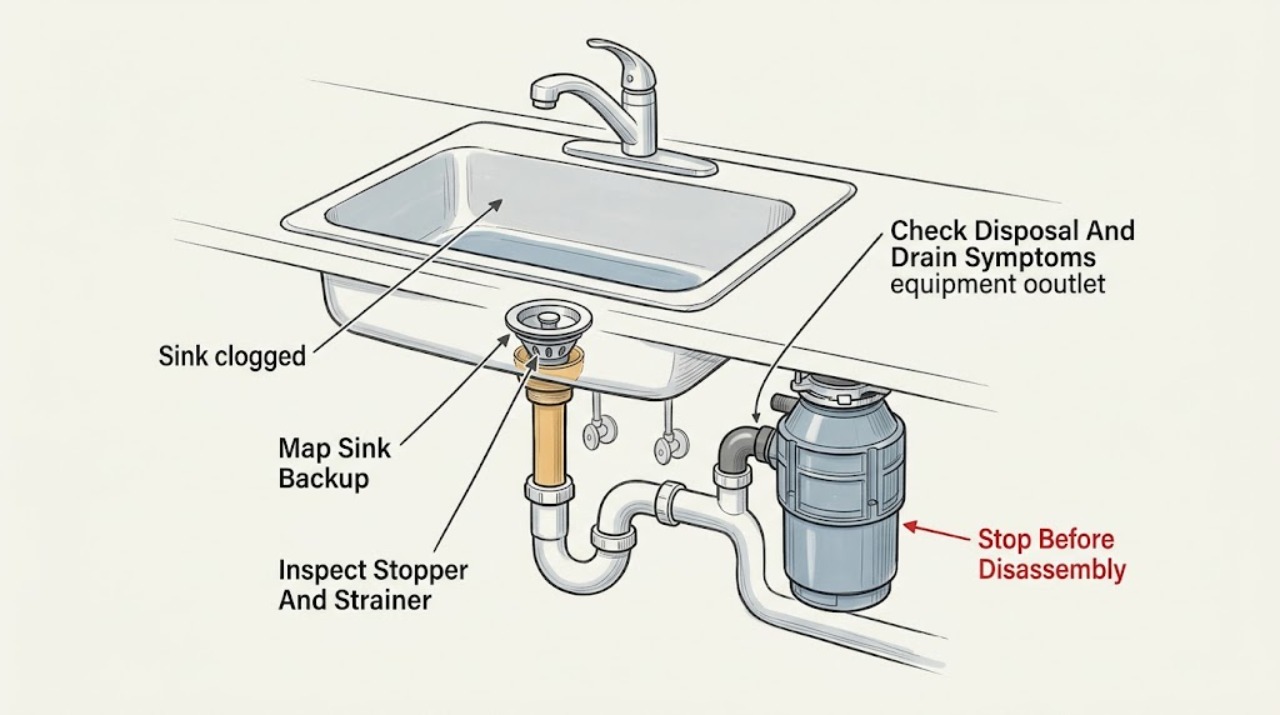
Delta sink clogged: What to Check and What to Do Next
For a clogged Delta sink, first stop adding water and identify whether the water is standing in one bowl, both bowls, or also backing up in another fixture. Remove visible debris from the strainer or stopper only from above; do not reach into a garbage disposal or use chemical drain cleaner.
-
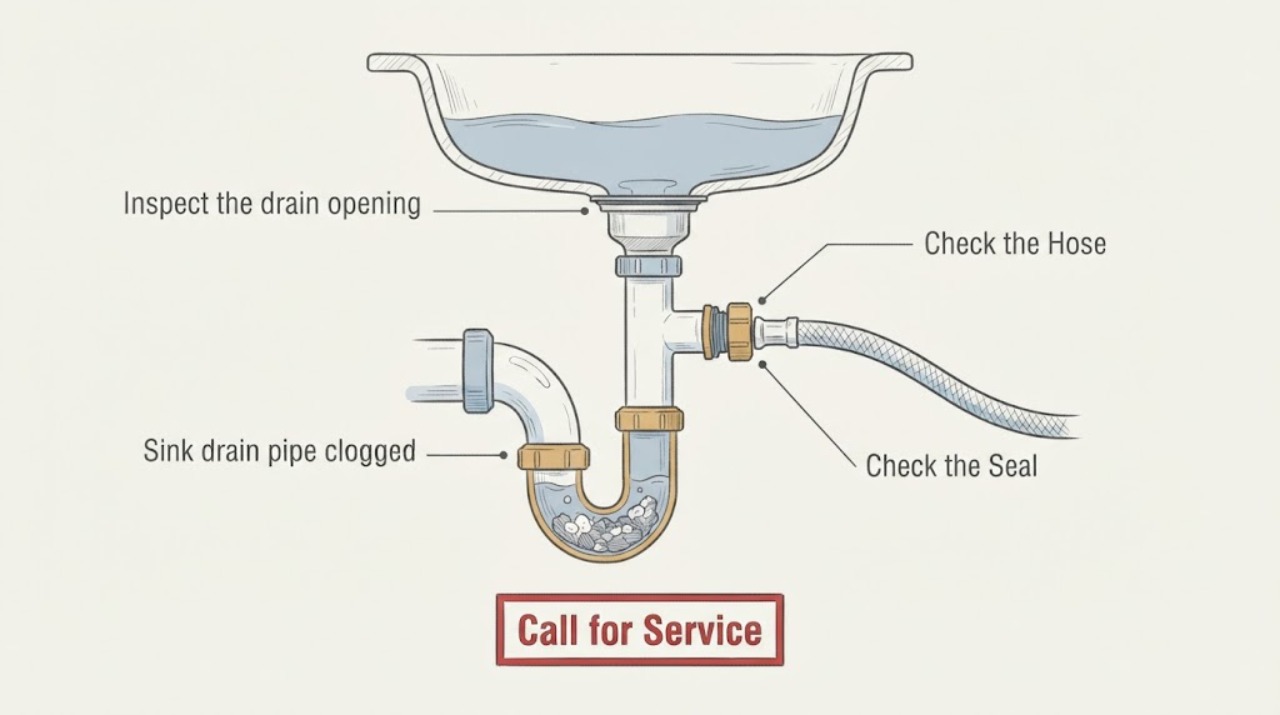
Delta sink drain pipe clogged: What to Check and What to Do Next
A clogged Delta sink drain is usually cleared by working from the opening toward the P-trap and downstream pipe, but first confirm that the symptom is a drain blockage rather than a supply leak. Dry the cabinet, inspect the stopper and drain opening, then use a properly sealed sink plunger if no chemical cleaner is present.
-
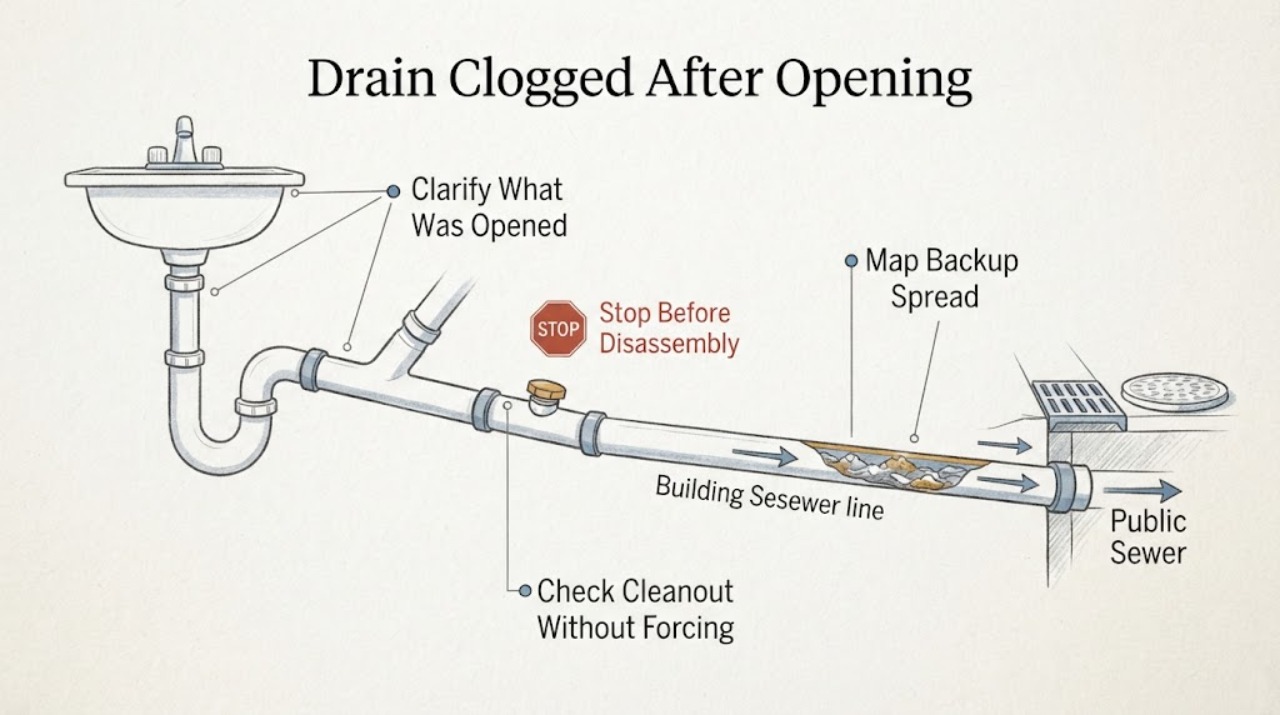
Drain Clogged After Opening: Locate the Blockage Before Adding More Water
If a drain backs up or stays clogged after something was opened, first clarify what opening changed: a faucet or tap was turned on, a trap or cleanout cap was loosened, or an access cover was removed. Stop adding water and record which fixture receives the backup, whether other fixtures are slow, and whether dirty water rises at the cleanout or floor drain.
-
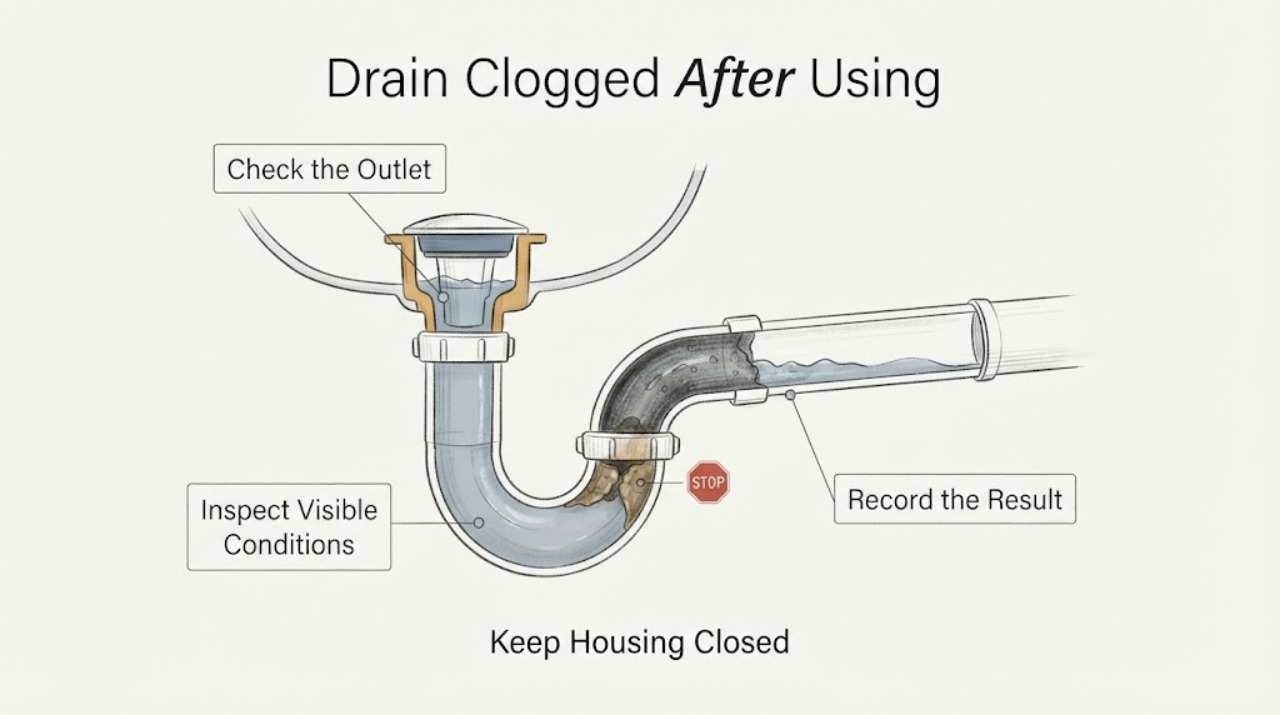
Drain Clogged After Using a Stopper: Check the Seal Before Calling a Plumber
If a drain became slow or stopped only after a stopper was installed or used, first separate a stopper/seal problem from a true pipe blockage. Stop adding water, remove only the visible stopper or strainer when safe, and check whether the opening is blocked by hair, debris, a displaced gasket, or a stopper linkage that is not fully open.
-
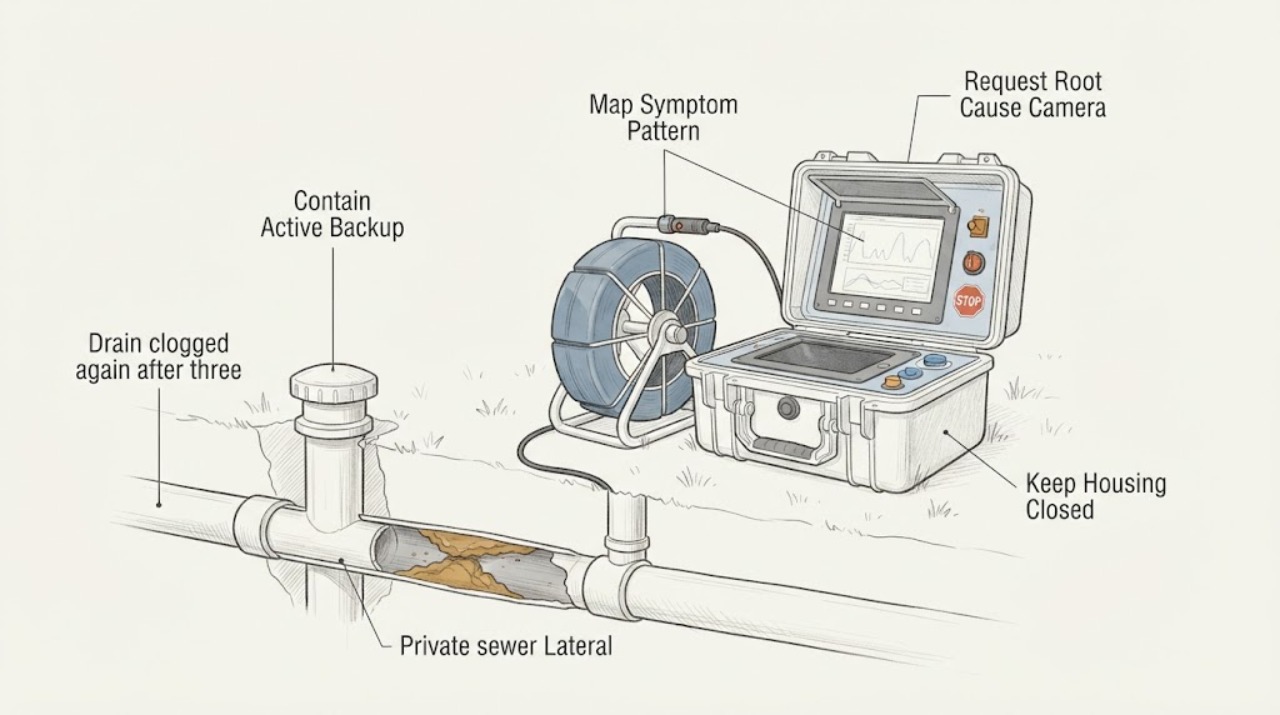
Drain clogged again after three hydro-jets in six months: what to do next
A drain that has needed three professional hydro-jets in six months needs a cause-and-location diagnosis, not an automatic fourth cleaning. Stop and document the pattern, reduce water use if wastewater is backing up, and ask a qualified plumber or the sewer utility to determine whether the problem is one fixture, a private lateral, or the public main.
-
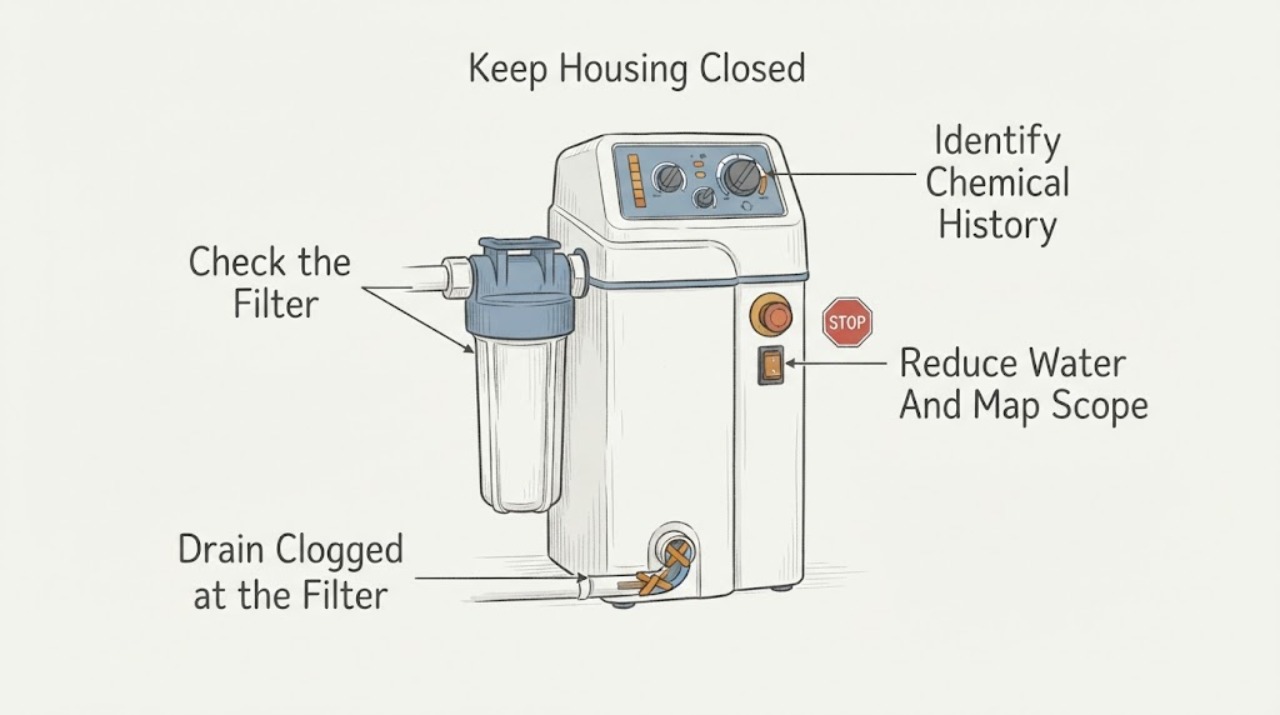
Drain Clogged at the Filter: Isolate the Blockage and Clear It Safely
When a drain is clogged at its filter or strainer, stop adding water first, protect the area from contaminated wastewater, and identify whether the blockage is only at the opening or deeper in the trap or line. With ordinary safe access, remove hair, food, lint, and other debris from the filter or strainer and rinse the part away from the drain.
-
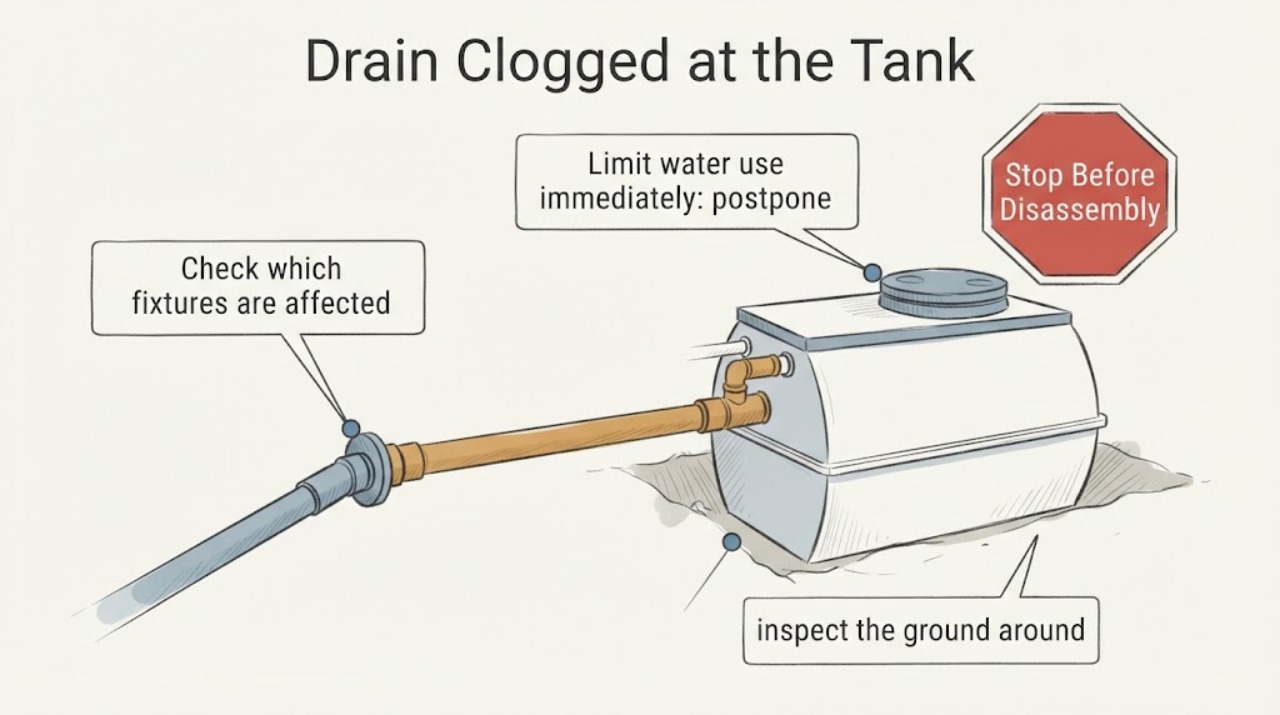
Drain Clogged at the Tank: Safe Septic Checks Before Calling for Help
If a drain is clogged and the home uses a septic tank, first determine whether one fixture is affected or several drains are slow or backing up. Reduce water use and keep people and pets away from sewage.
-
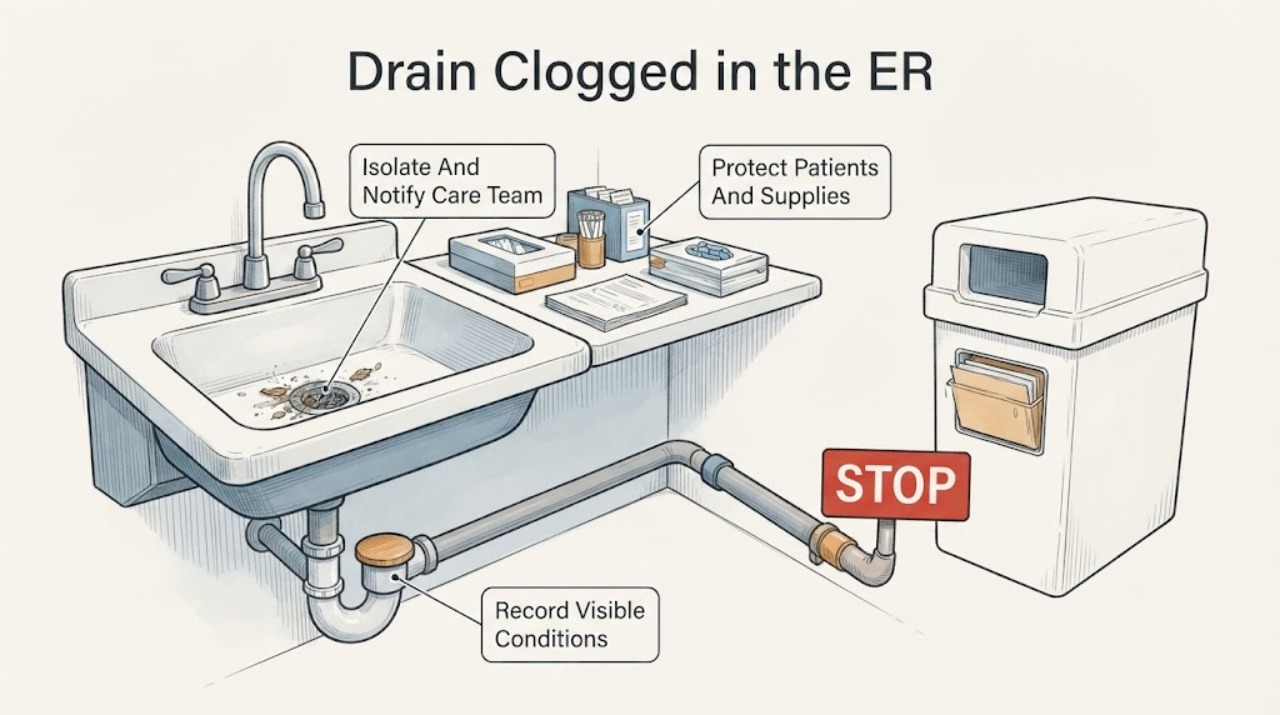
Drain Clogged in the ER: Isolate the Area and Escalate Safely
A clogged drain in an emergency room is an institutional water, sanitation and infection-control event, not a household drain-clearing job. Stop using the affected sink, toilet, hopper or drain; keep patients, staff, medications, sterile supplies and equipment away from splash or standing water; and notify the charge nurse or department lead, Facilities, Environmental Services and Infection Prevention through the facility's incident route.
-
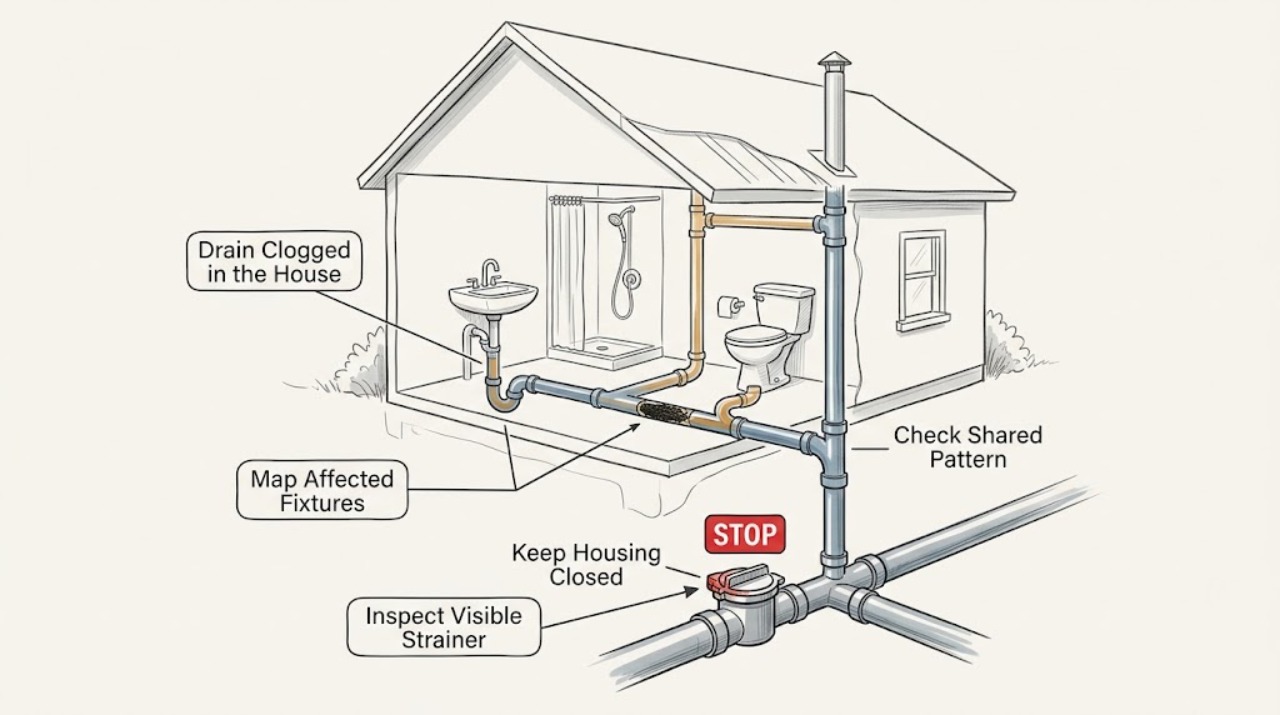
Drain Clogged in the House: Find the Blockage and Choose a Safe Next Step
Start by limiting water use and checking whether one fixture is slow or several fixtures are affected. A single sink, tub, or shower drain usually points to the nearby strainer, trap, or branch line; gurgling, floor-drain water, or several fixtures backing up points farther downstream.
-
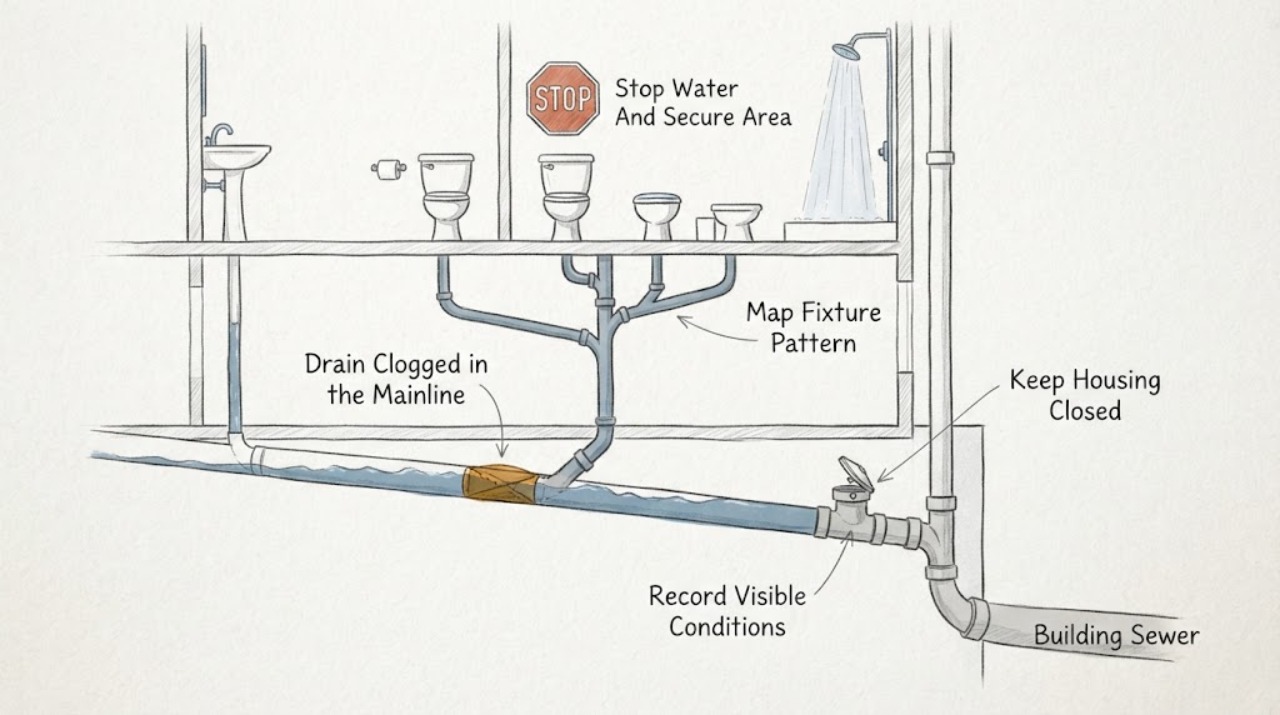
Drain Clogged in the Mainline: Stop Water Use and Locate the Safe Service Path
A suspected mainline drain clog is a whole-building wastewater problem until proven otherwise. Stop using water immediately: do not flush toilets or run sinks, showers, laundry, or other fixtures.
-
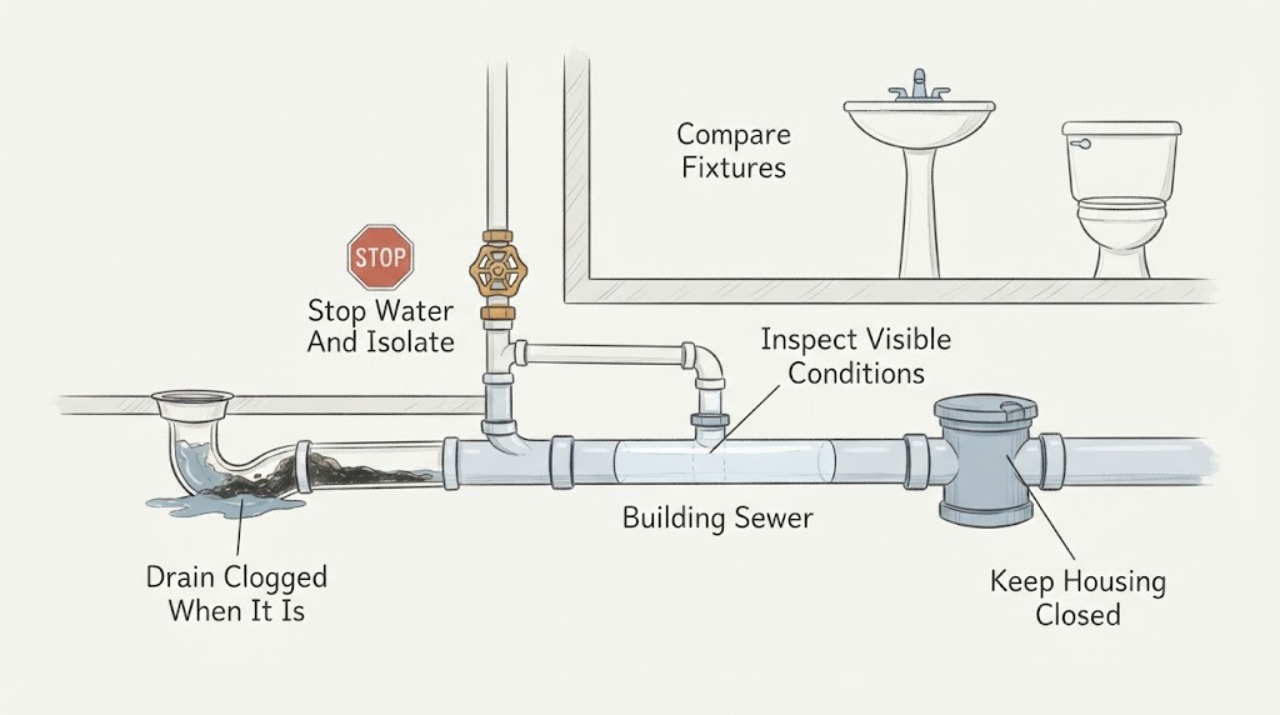
Drain Clogged When It Is the Only Option Here: Safe Triage Before a Plumber Arrives
If this clogged drain is the only available outlet or wastewater route in the situation, do not try to force water through it or improvise a second route. Stop using the drain and all connected water fixtures, then determine whether the problem is limited to this opening or also affects other fixtures.
-
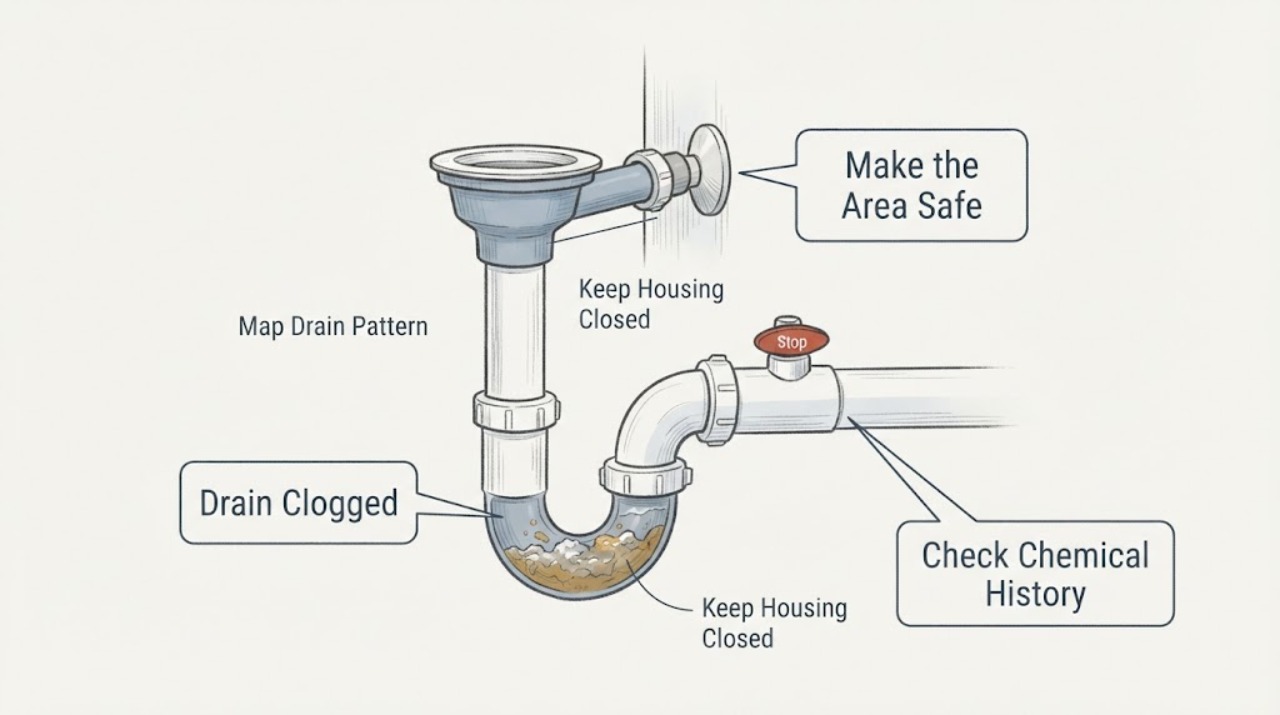
Drain Clogged: Tell a P-Trap Blockage From a Deeper Plumbing Problem
A slow or blocked sink drain can be local to the visible fixture and P-trap, or it can be farther downstream in the branch drain, vent, or sewer connection. First stop adding water, protect yourself from wastewater, and compare this fixture with nearby drains.
-
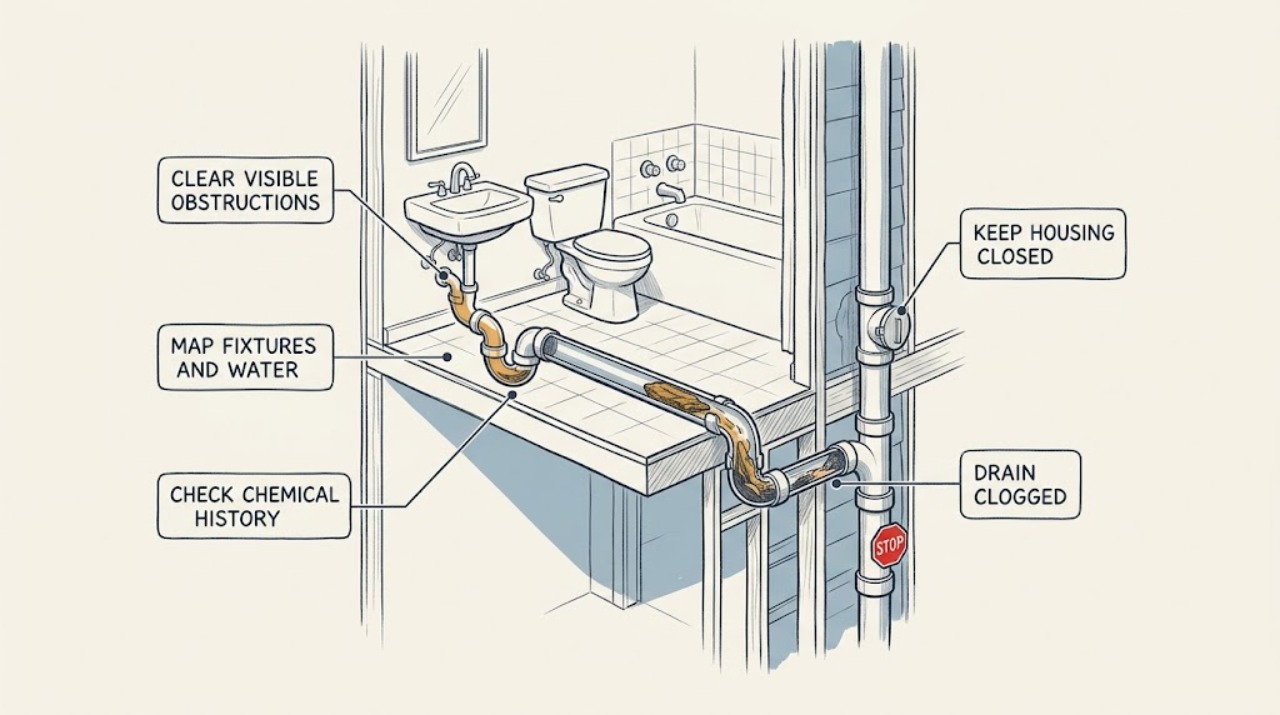
Drain Clogged
Stop adding water and first determine whether one upstairs fixture is blocked or several fixtures are backing up. Remove only a visible stopper or hair if the water is ordinary wastewater and no chemical cleaner has been used; then try the correct plunger with the nearby overflow or other openings sealed.
-
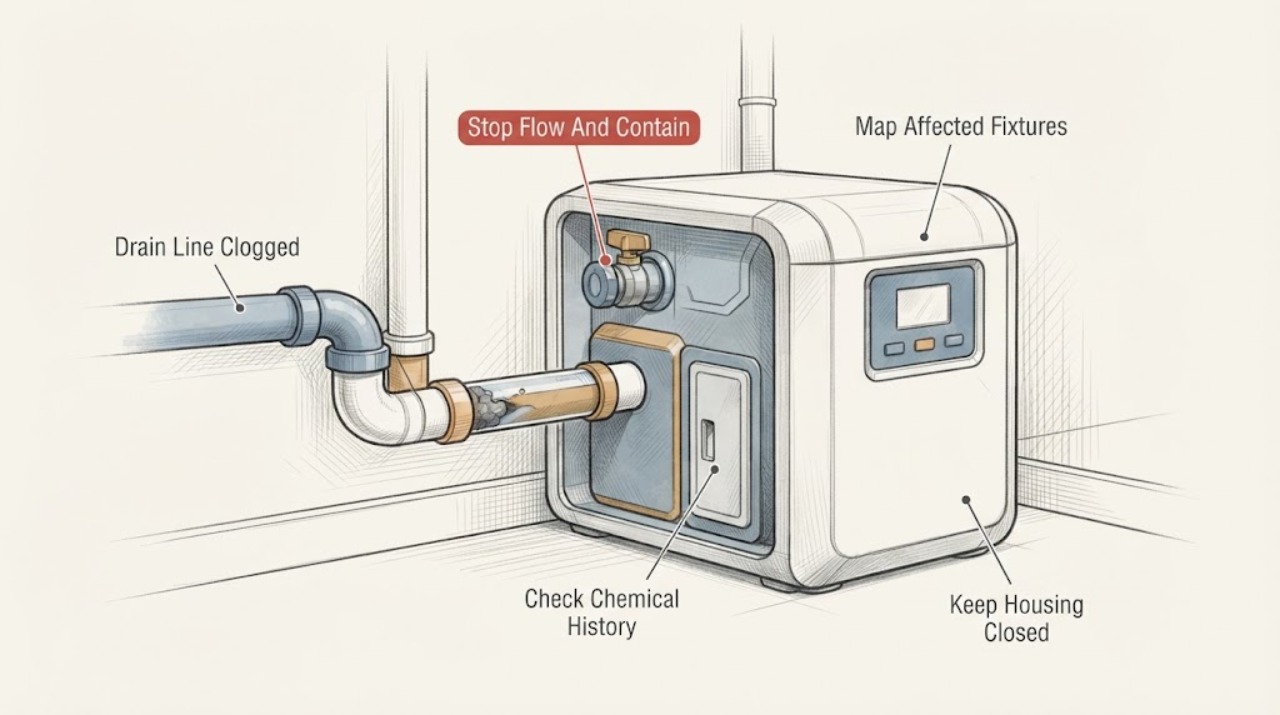
Drain Line Clogged: Isolate the Blockage Without Flooding or Mixing Chemicals
Stop adding water and first determine whether one fixture is slow or several fixtures back up together. Keep wastewater contained, inspect only the visible drain opening, and use a suitable plunger only when no drain chemical has been added and there is no standing sewage or electrical hazard.
-
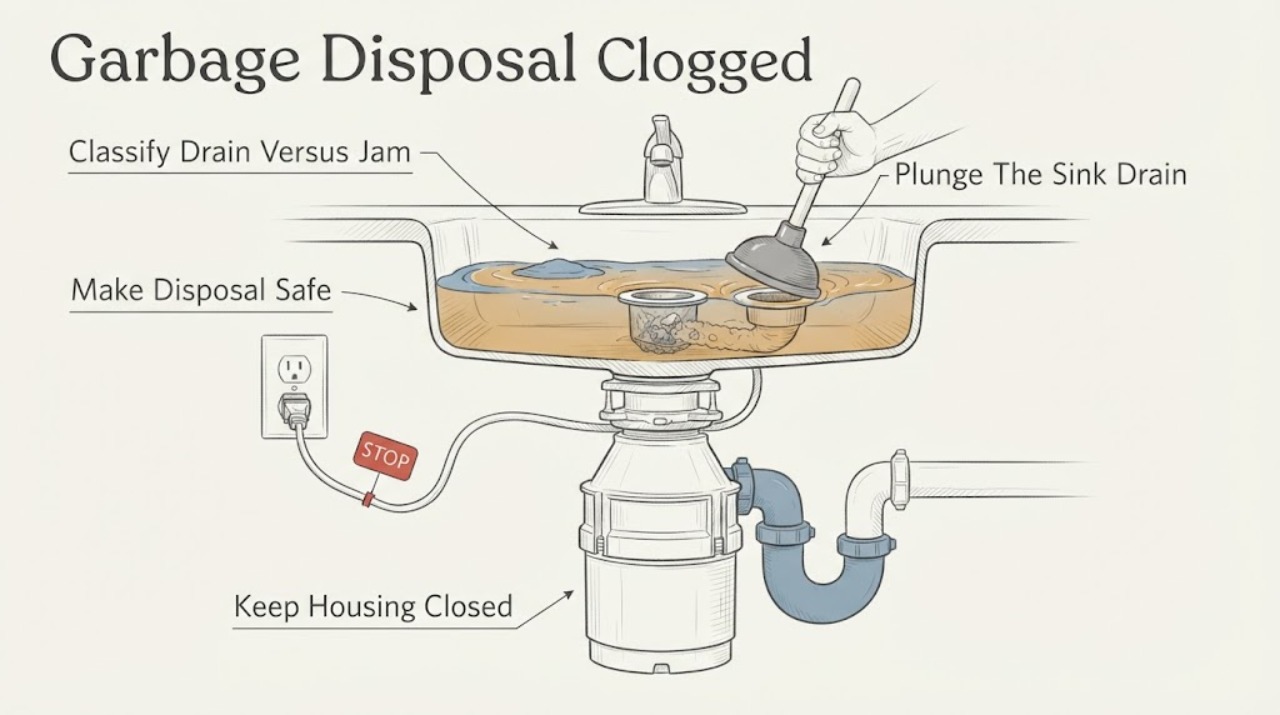
Garbage Disposal Clogged: Safe Checks Before Calling a Plumber
A garbage disposal that is clogged may have food left in the chamber, a jammed turntable, or a blockage farther down the sink drain. Do not put a hand or fingers into the disposal, and do not pour chemical drain cleaner into it.
-
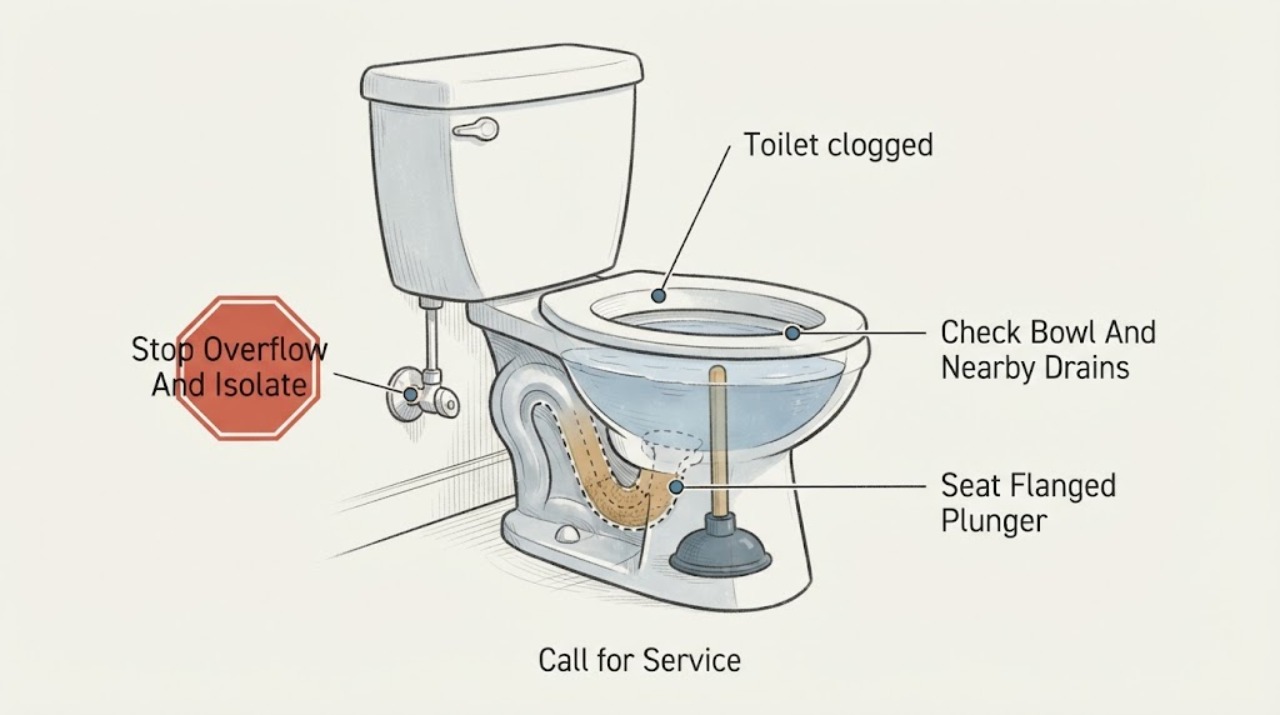
Glacier Bay toilet clogged: What to Check and What to Do Next
Stop flushing as soon as the bowl level rises. Close the accessible toilet supply valve only if it operates normally, protect the floor, and use a toilet flange plunger with enough water to cover its cup.
-
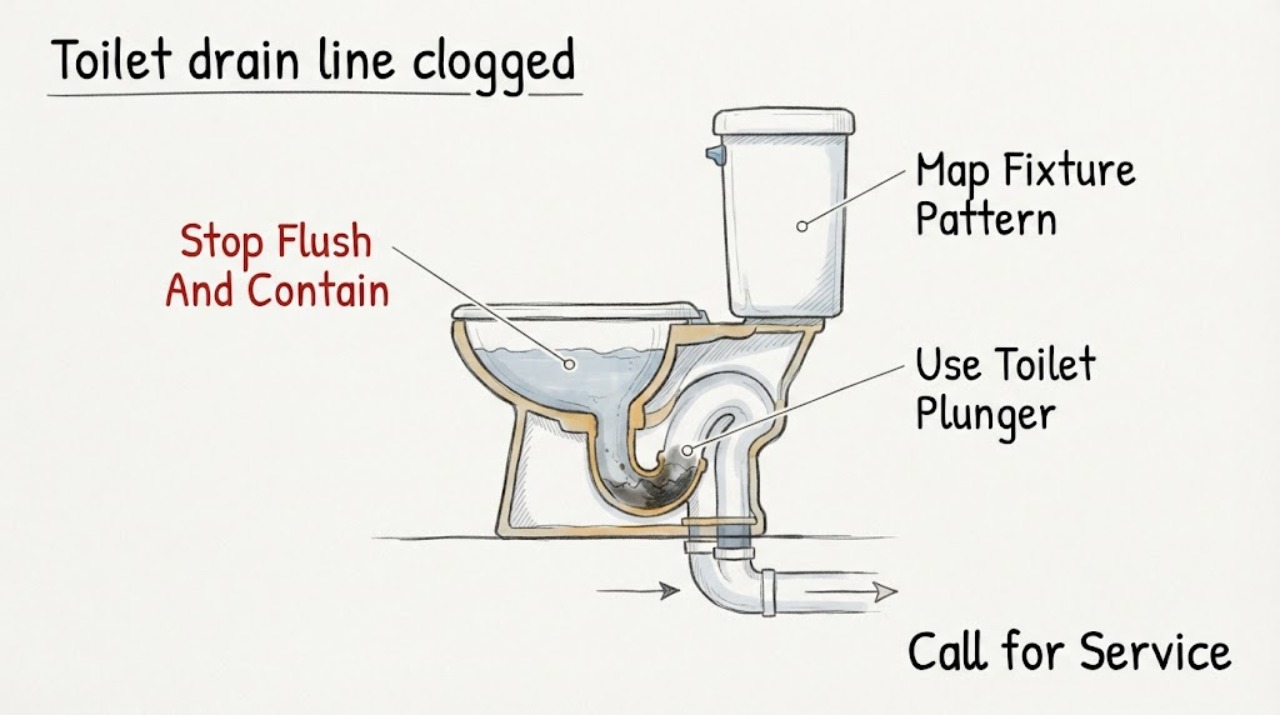
Glacier Bay toilet drain line clogged: What to Check and What to Do Next
Stop flushing a Glacier Bay toilet when the bowl rises, and close the toilet's accessible shutoff valve if it moves normally and the bowl may overflow. First determine whether the blockage is in this toilet's trap or farther along the drain line: check whether other fixtures drain normally and whether they gurgle or back up when the toilet is used.
-
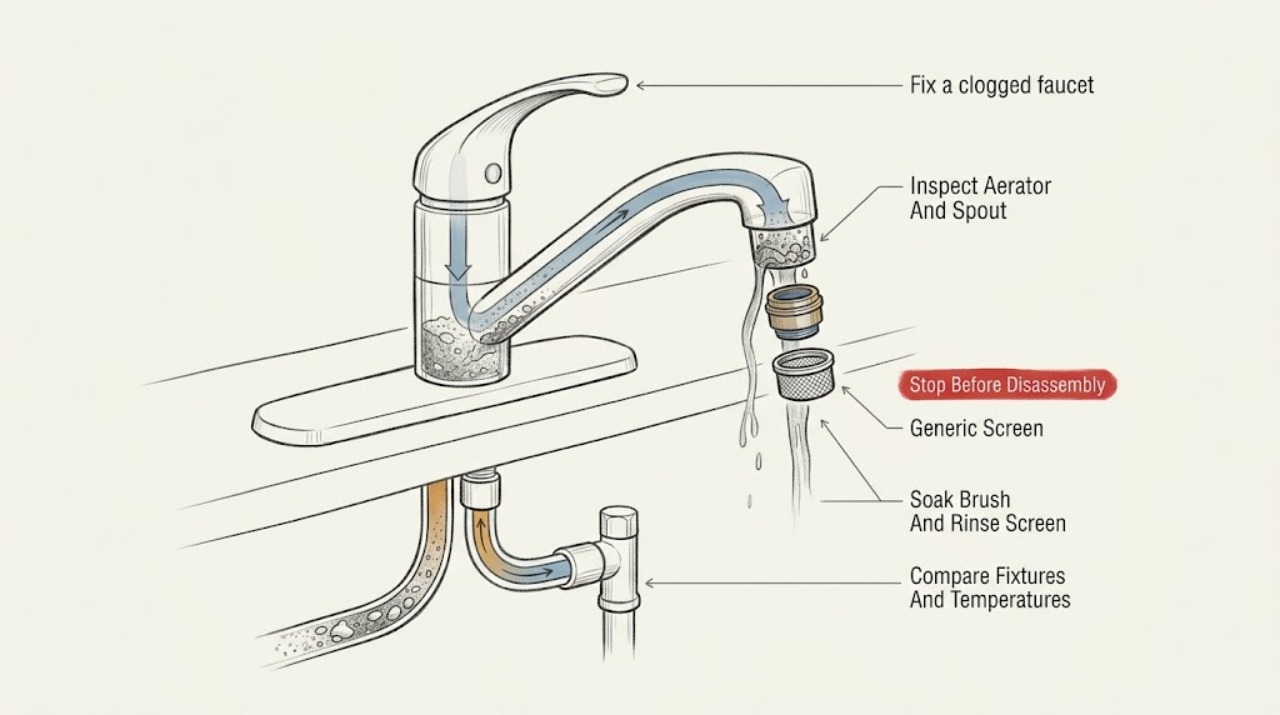
How to fix a clogged faucet: Check the aerator and water supply safely
A faucet that has weak or uneven flow is often restricted at the small screen, or aerator, on the end of the spout. First compare this faucet with the other faucets and compare hot with cold: a problem at one faucet points toward its aerator or local plumbing, while reduced flow everywhere points toward a valve, filter, pressure, leak, or supply problem.
-
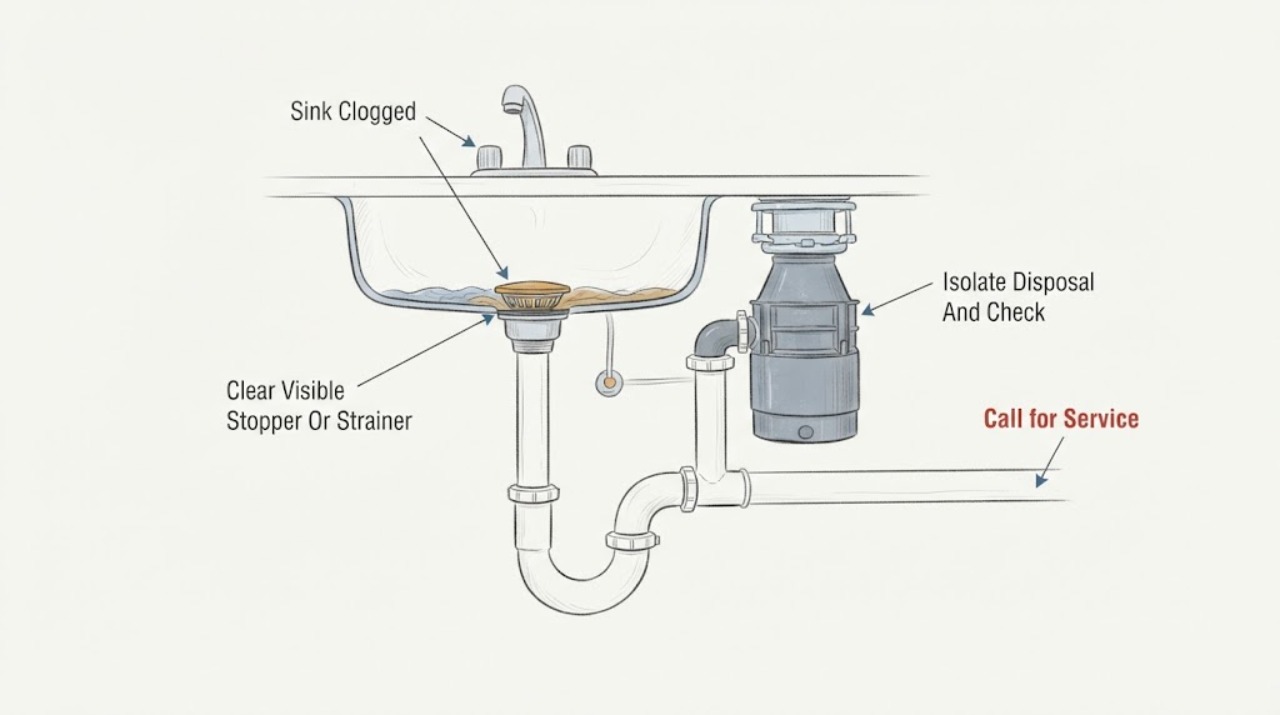
Kohler Sink Clogged: What to Check and What to Do Next
A clogged Kohler sink is usually blocked at the stopper or strainer, the trap, a disposal connection, or farther downstream. First stop adding water and identify whether the basin is fully blocked or only slow, whether one bowl or both bowls are affected, whether a disposal is installed, and whether other fixtures also back up.
-
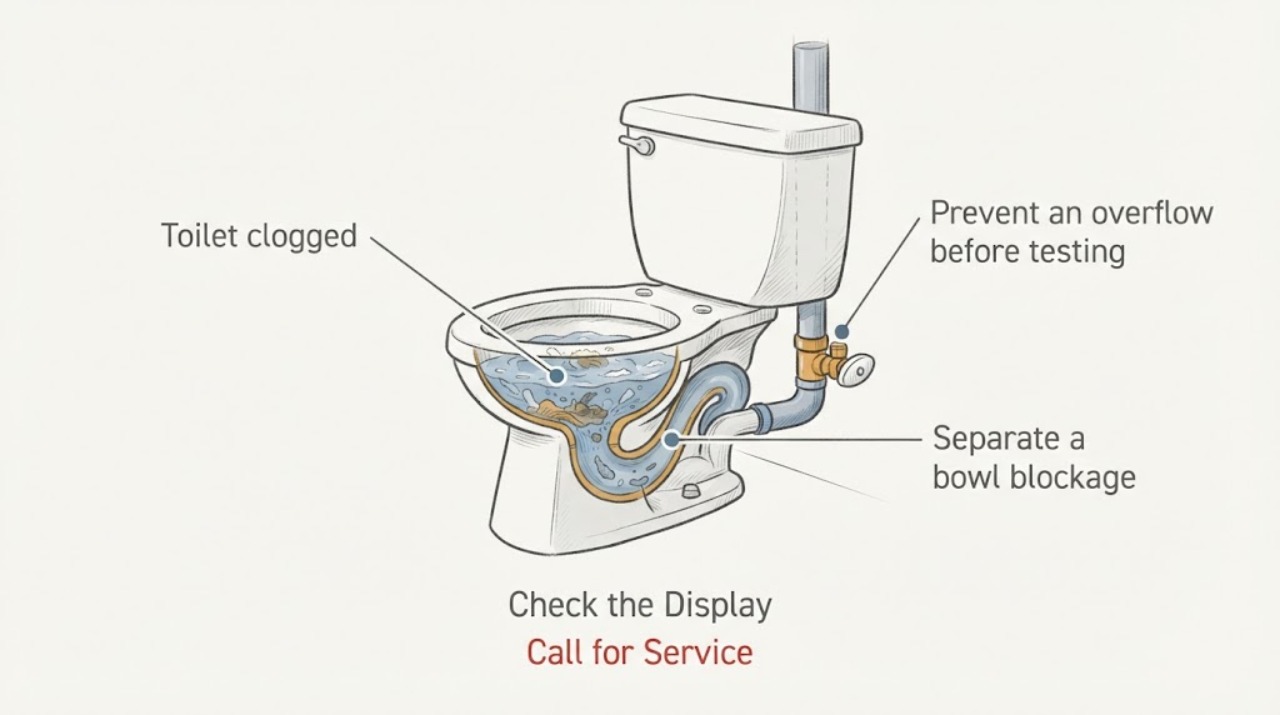
Kohler toilet clogged: What to Check and What to Do Next
If a Kohler toilet is clogged, stop flushing while the bowl is high and close the nearby supply stop if water is still entering. A single slow or non-draining bowl often points to a bowl or trapway blockage, so a toilet plunger is the appropriate first low-risk check; use a toilet auger only when the exact model instructions and your access make that safe.
-
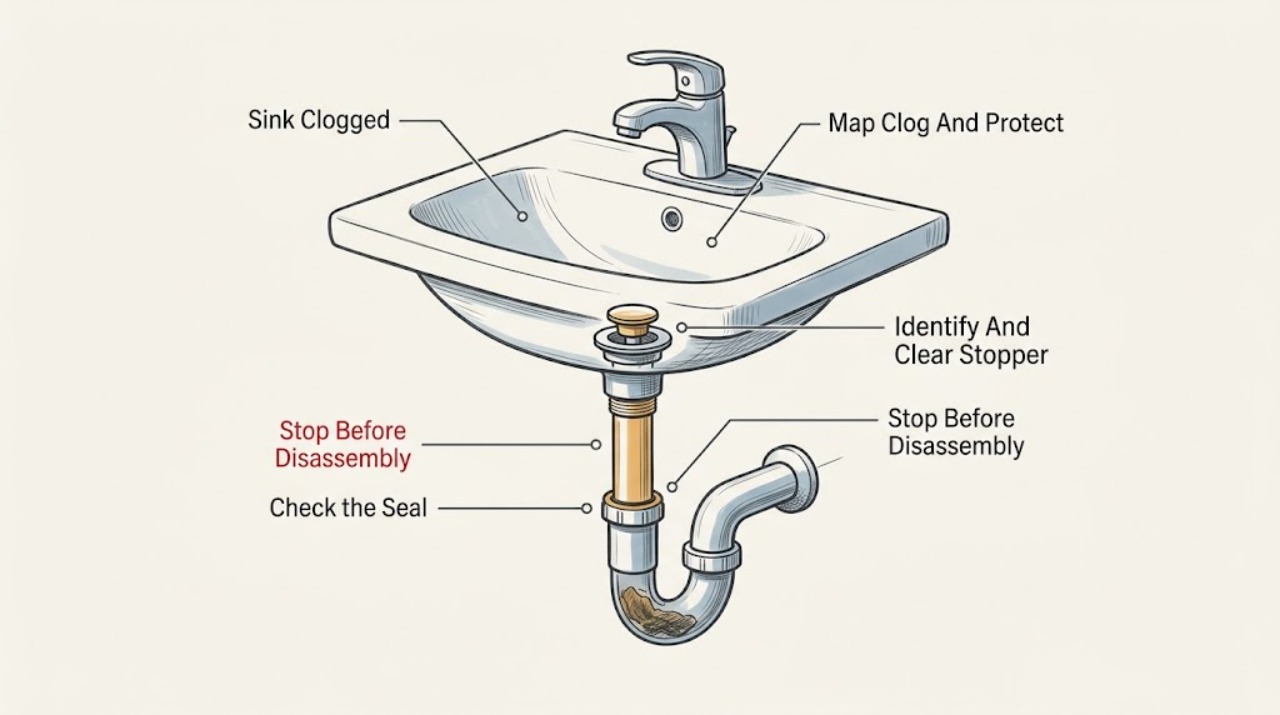
Moen Sink Clogged: What to Check and What to Do Next
A clogged Moen sink is usually a local obstruction at the stopper, strainer, or nearby drain, but a backup in more than one fixture can indicate a larger branch or main-line problem. First stop adding water and determine whether only this basin is affected.
-
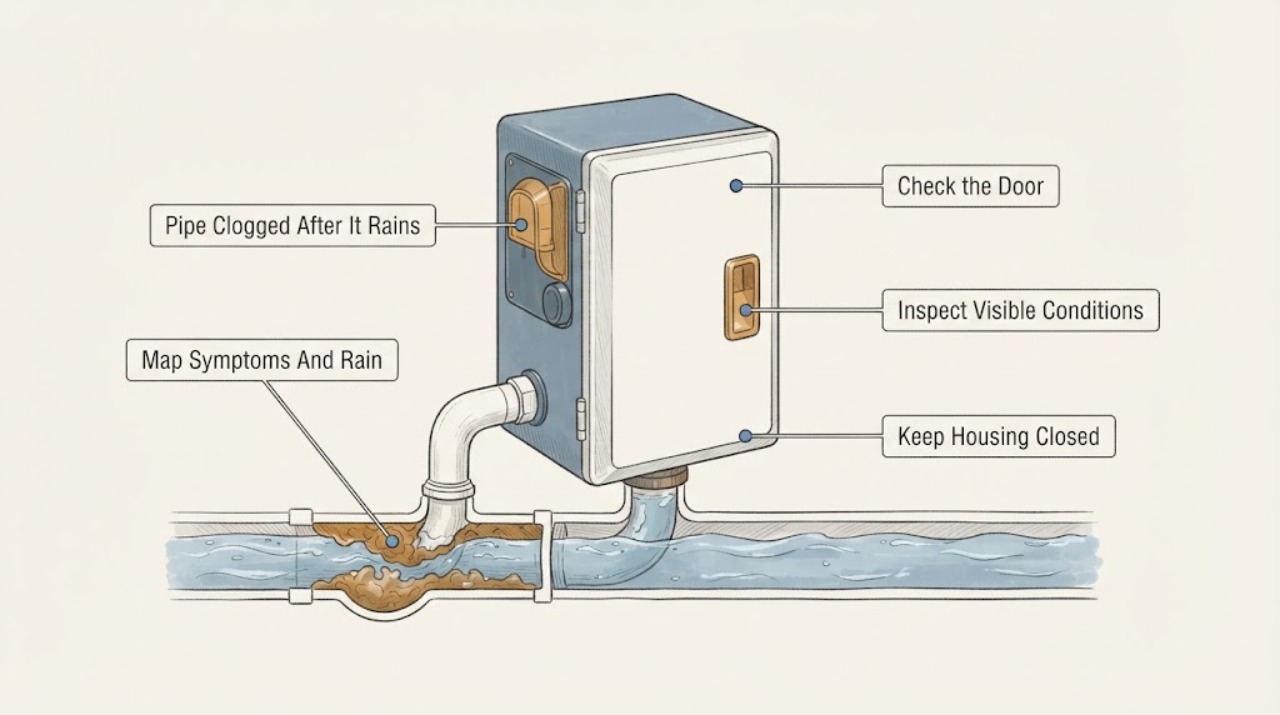
Pipe Clogged After It Rains for the Second Time: Separate a Local Blockage from Sewer Backup
A pipe that clogs again after the second rain may have a partial blockage that only becomes apparent during high flow, a private lateral or low-point restriction, or rainwater entering an overloaded or defective sewer system. First stay out of floodwater and record whether one indoor fixture, several low fixtures, the yard, or the street is affected.
-
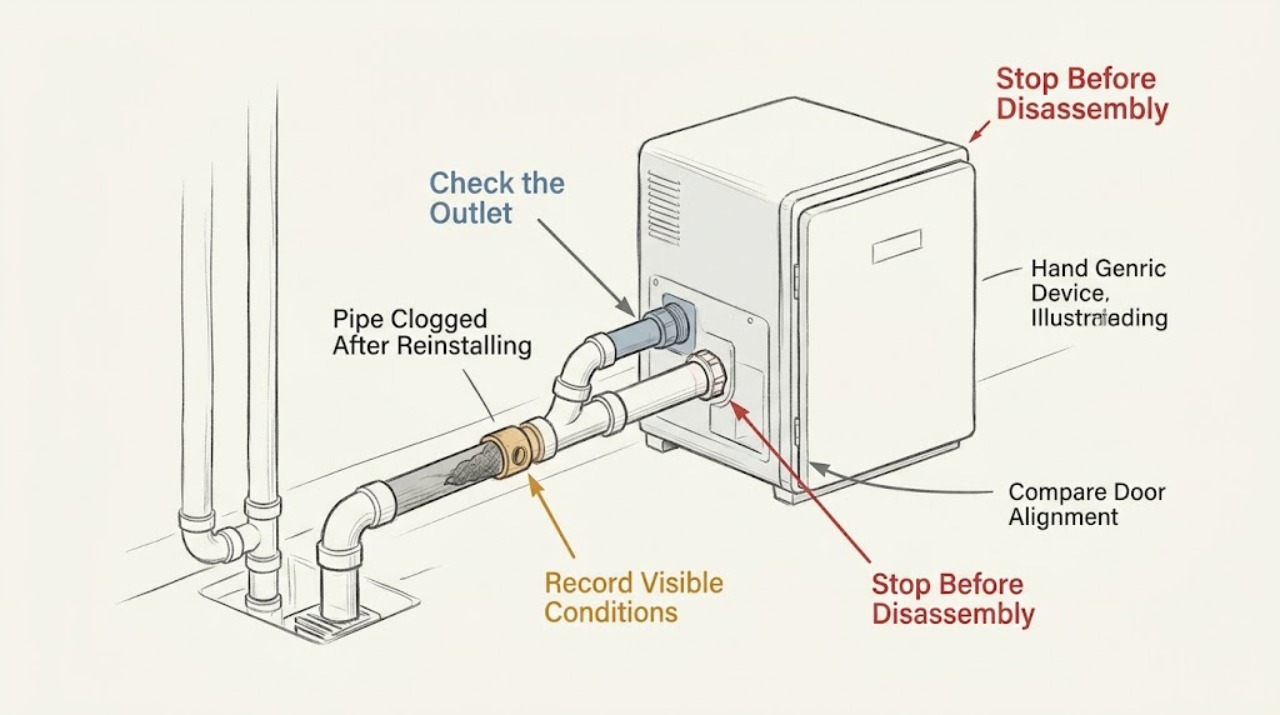
Pipe Clogged After Reinstalling the Pipes: Check the Reassembly Safely
A pipe that clogs immediately after the pipes were reinstalled should be treated first as a reassembly or geometry problem, not automatically as a deep blockage. A reversed or misaligned fitting, displaced gasket, sealant or debris in the bore, a sag or incorrect slope, a blocked vent, or a downstream obstruction can all change the result.
-
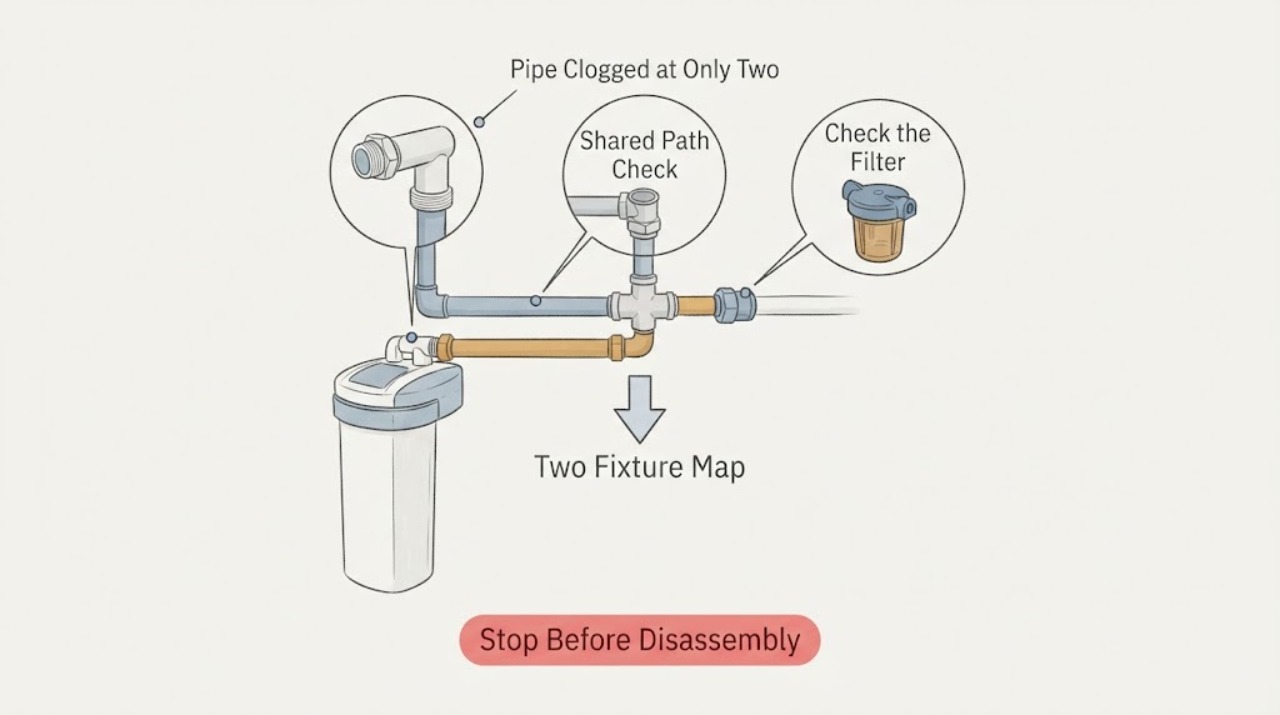
Pipe Clogged at Only Two Fixtures: Find the Shared Blockage Safely
When a clog affects exactly two fixtures, compare their locations and symptoms before opening any pipe. If the fixtures are close together or share a branch, the restriction may be in that branch or in one shared strainer, trap, or accessible filter; if other fixtures drain normally, a whole-building main blockage is less likely.
-
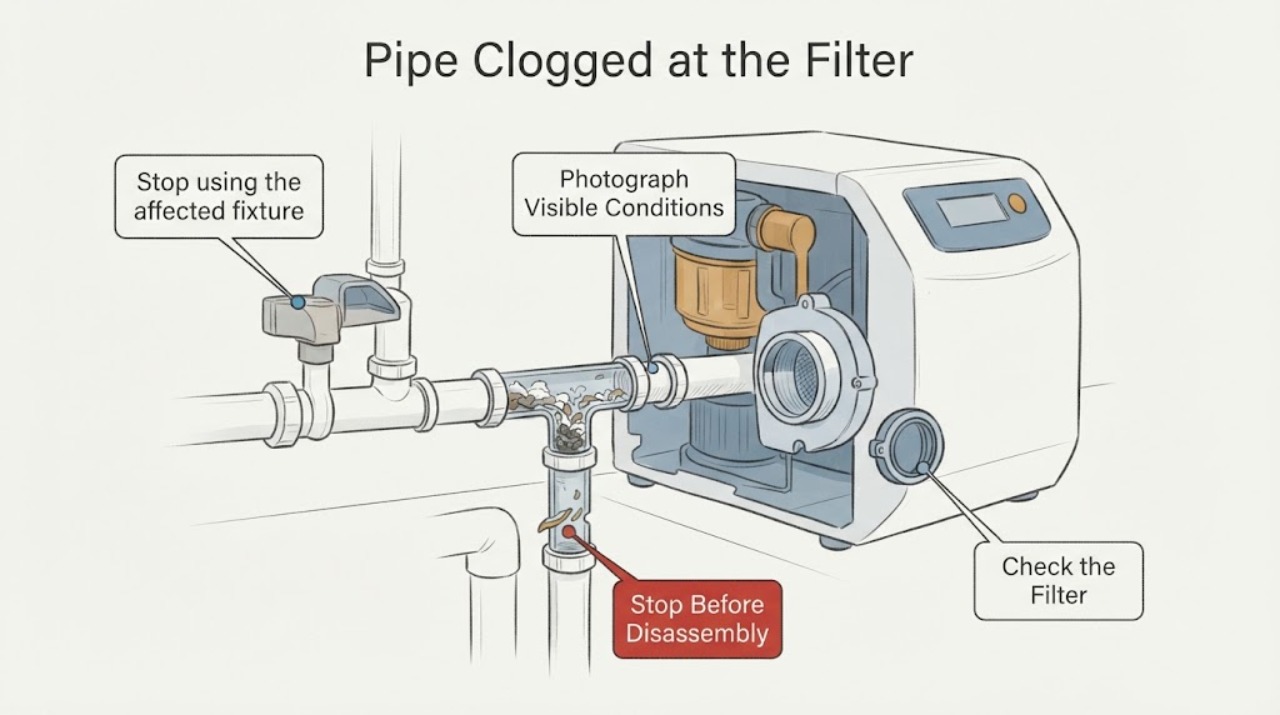
Pipe Clogged at the Filter: Safe Plumbing Triage
First establish what “filter” means: an accessible strainer or screen, a filter in an appliance or water system, or an upstream part that is not meant for homeowner removal. A single slow fixture usually points to a local restriction; several slow fixtures, gurgling, or wastewater at a low drain can indicate a larger sewer or main-line problem.
-
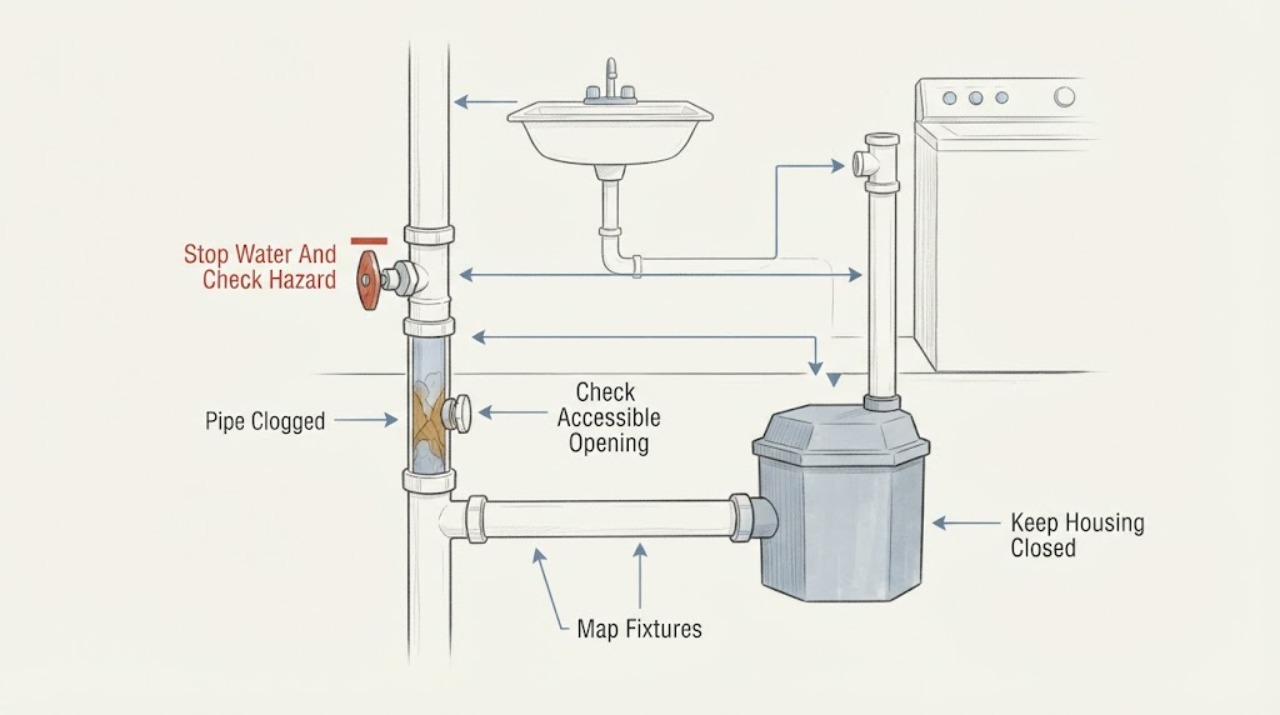
Pipe Clogged: Safe Checks and What to Do Next
If a household drain pipe is clogged, stop adding water and first determine whether one fixture is slow or several fixtures are backing up. For a single sink, tub, or utility drain with no chemical already added, remove accessible debris and use the correct plunger while covering an overflow opening.
-
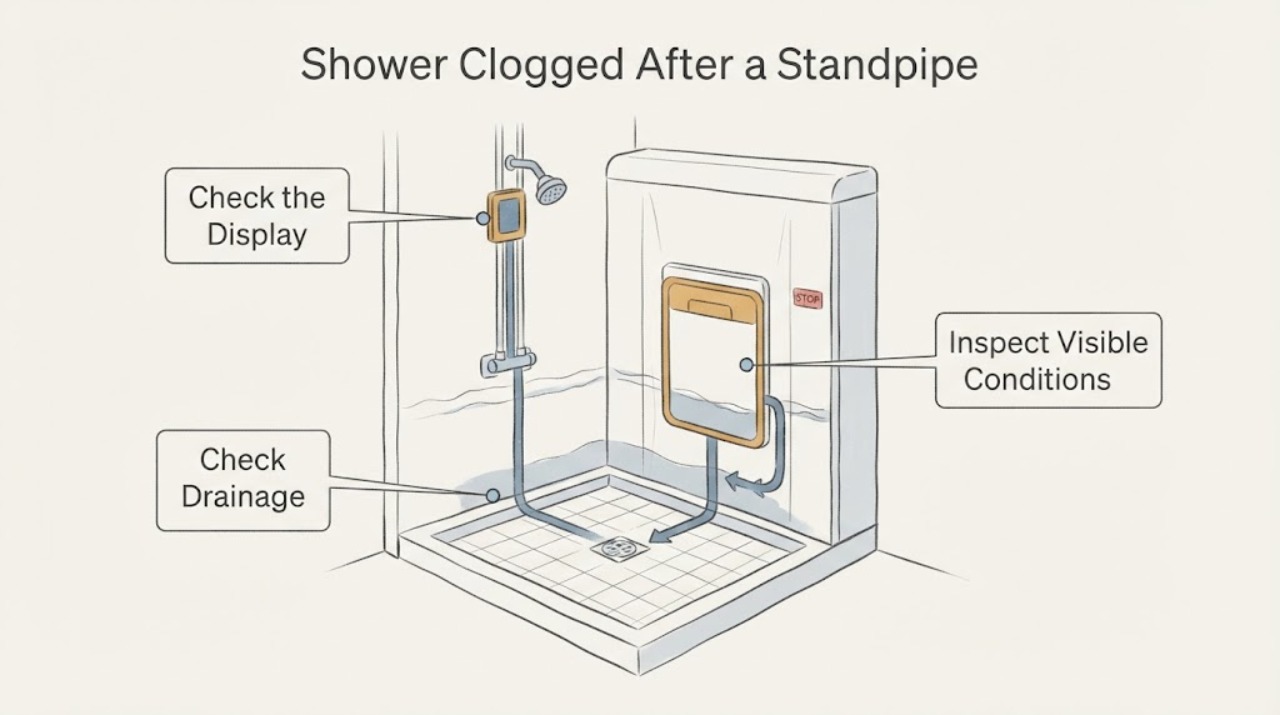
Shower Clogged After a Standpipe Overflow: What an Upstairs Toilet Flush Reveals
A standpipe overflow that eventually drains, followed by slow shower drainage or a rise when an upstairs toilet is flushed, points beyond a simple shower-hair clog: the fixtures may share a restricted branch, building drain, venting problem, private sewer lateral, or a municipal main. Stop flushing, showering, washing, and sending other water down the drains until the line is assessed; another flush can recreate the overflow.
-
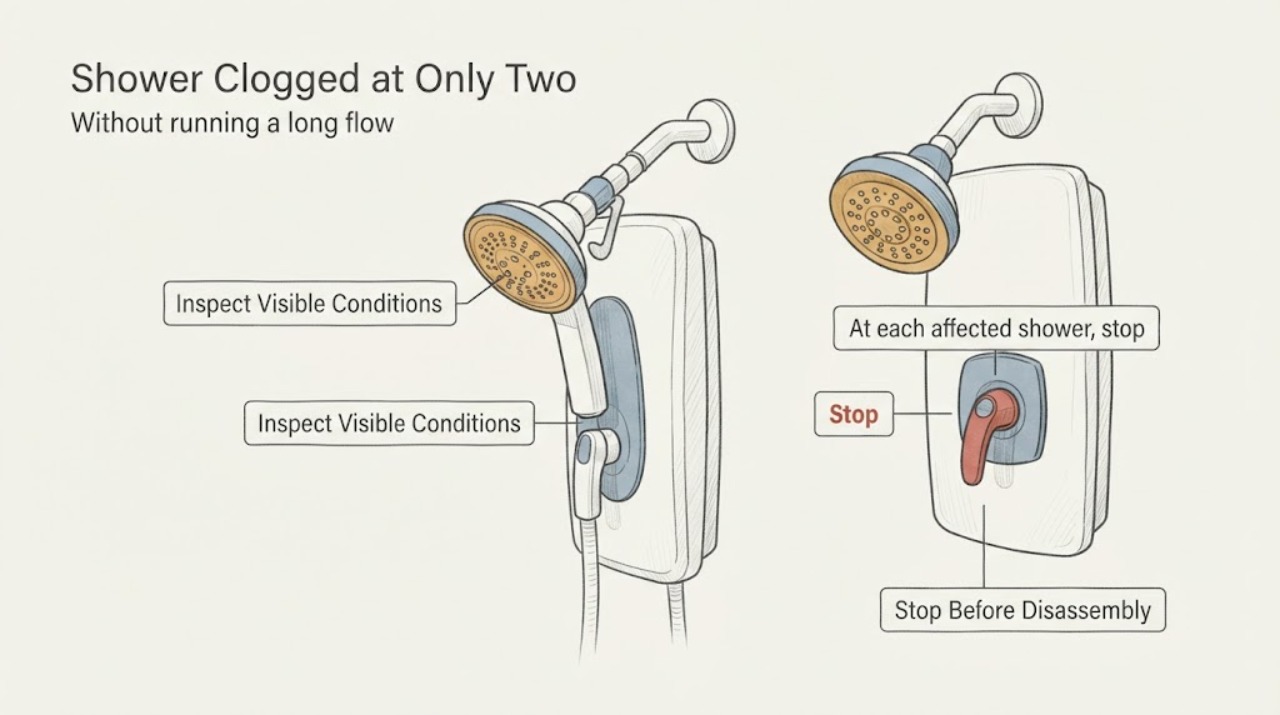
Shower Clogged at Only Two Fixtures: Find the Shared Drain Blockage
When clogging affects only two shower fixtures, first confirm that both have standing water or slow drainage rather than a weak shower spray. Two affected fixtures with normal drainage elsewhere often share a branch drain or vent, while a backup or gurgling across several areas points farther downstream toward a building drain or sewer line.
-
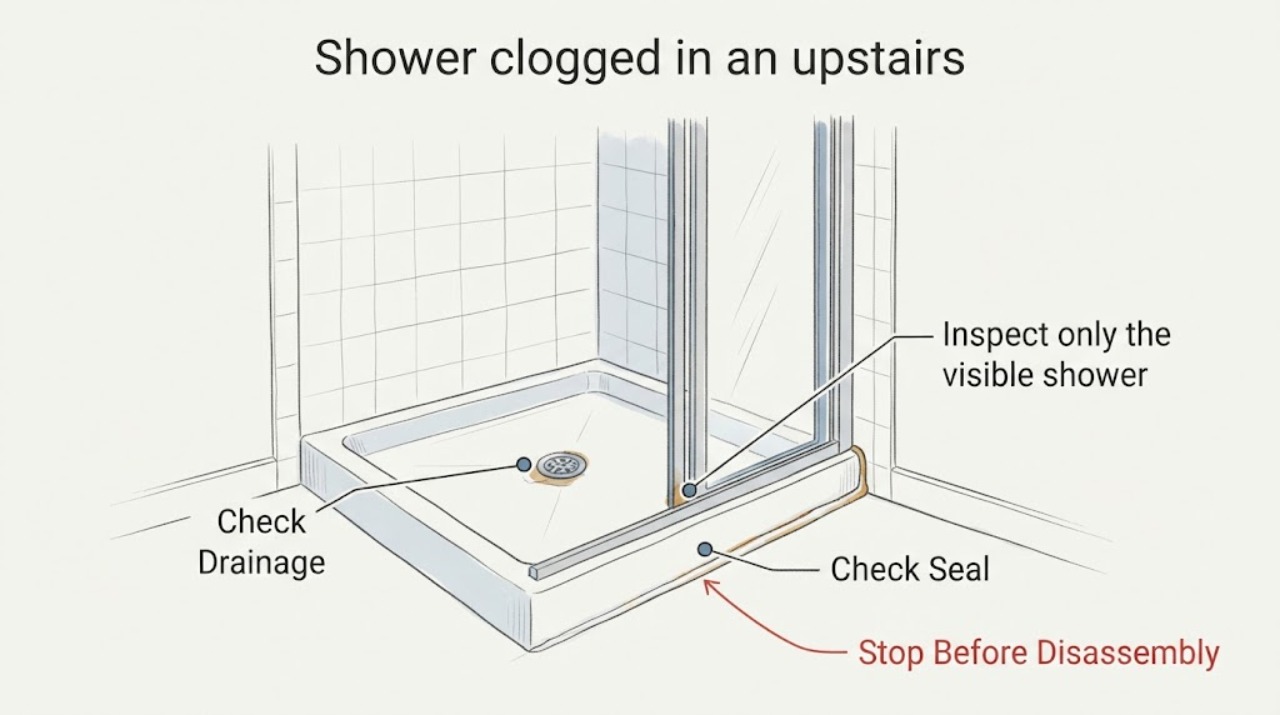
Shower clogged in an upstairs bathroom: safe checks
Stop adding water to the upstairs shower and determine whether only the shower is slow or whether the sink, tub, toilet, or another drain is also backing up. A single shower commonly points to the strainer, trap, or branch; several fixtures, gurgling, sewage odor, or water rising elsewhere points toward a shared branch, vent, stack, or sewer restriction.
-
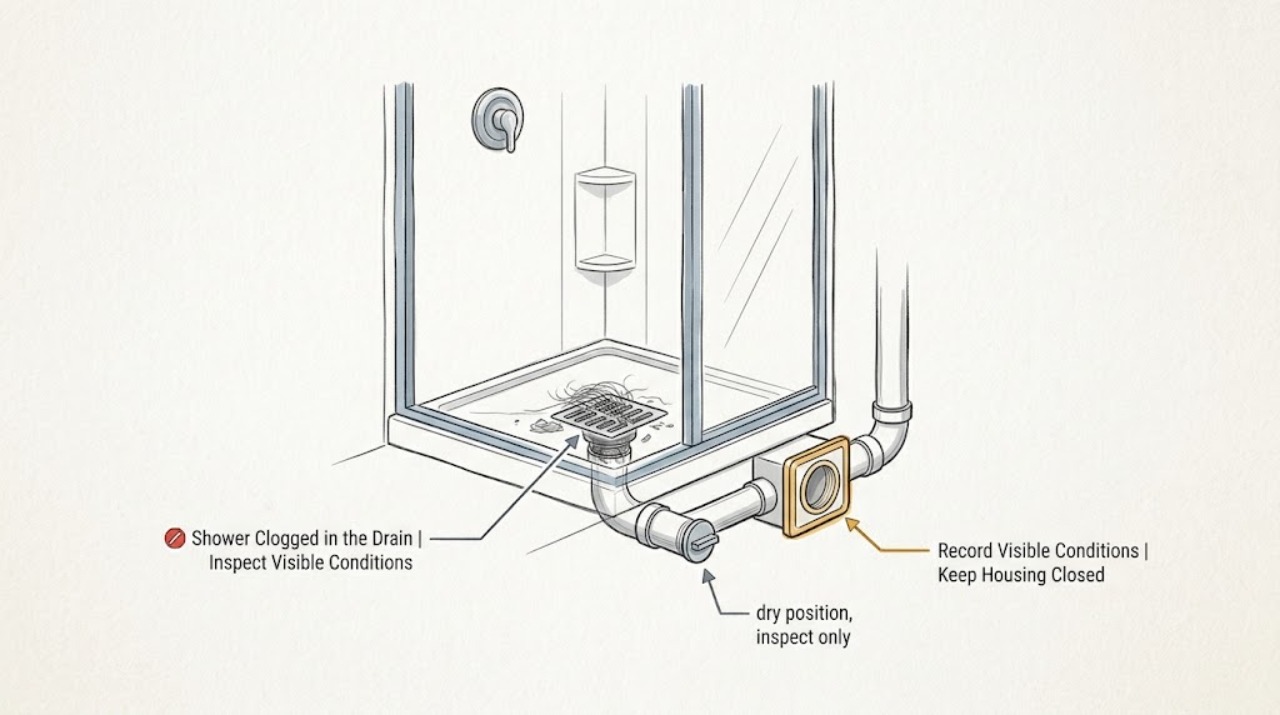
Shower Clogged in the Drain: Start at the Strainer, Then Rule Out a Shared Line
If water is slow only at the shower, start with the visible strainer and hair or soap at the drain opening, but do not assume that is the whole blockage. If the shower backs up when another fixture drains, several fixtures are slow, a toilet gurgles, or wastewater appears at a lower drain, the restriction may be in the shower trap, a shared branch, the building drain, the private sewer lateral, or the public main.
-
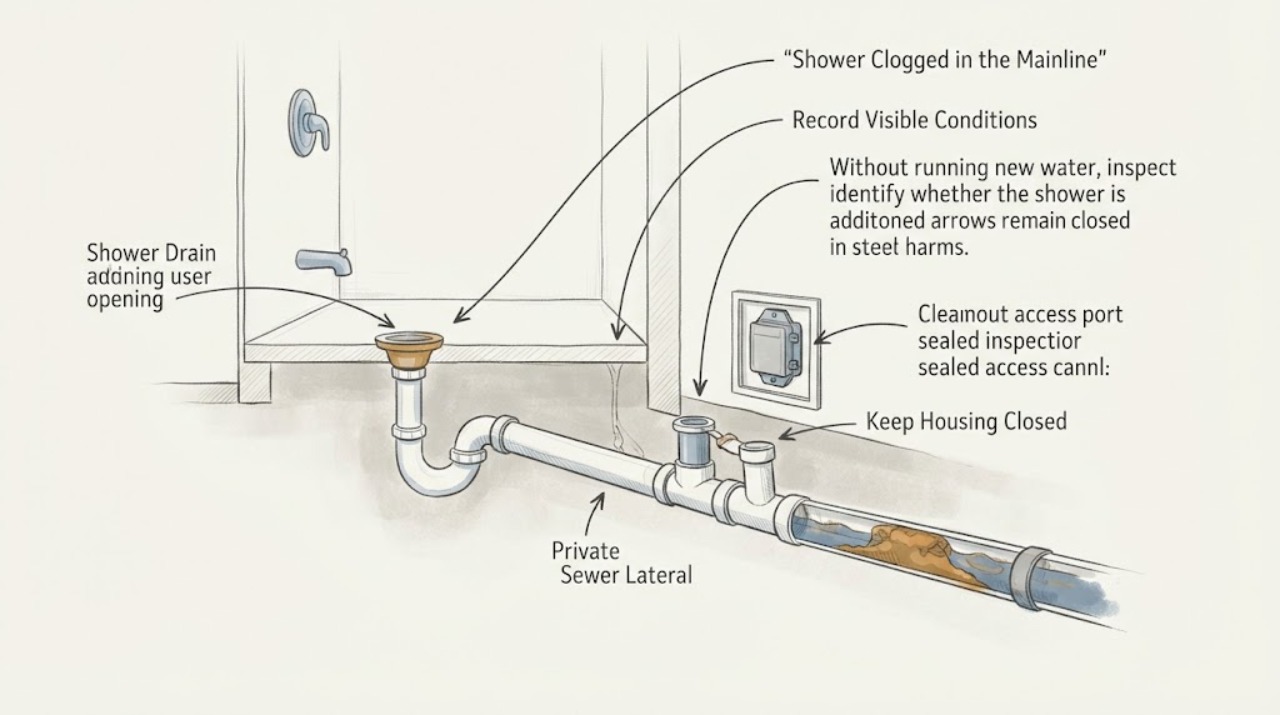
Shower Clogged in the Mainline: Recognize a Sewer Blockage Safely
A shower that backs up because of a suspected mainline clog is a whole-drainage problem, not just hair at the shower grate. Stop using water, note whether toilets, sinks, laundry, or other low fixtures are also slow or backing up, and keep people and pets away from wastewater.
-
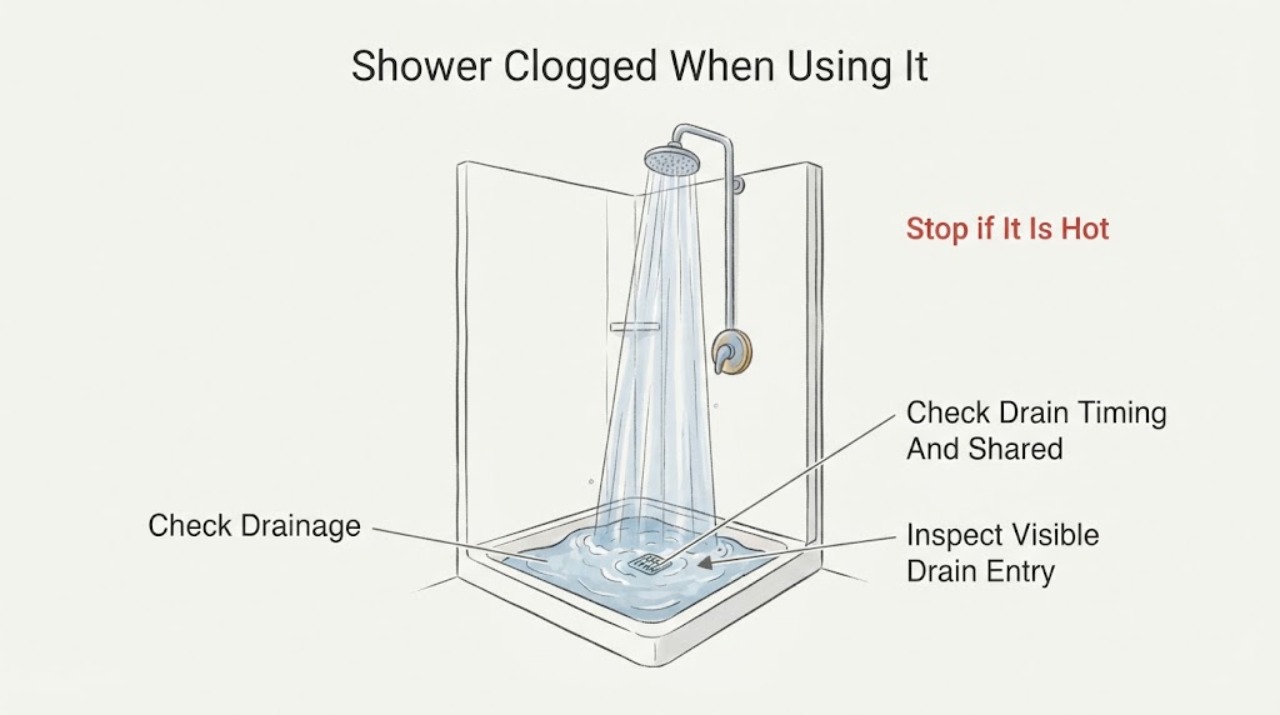
Shower Clogged When Using It: Separate Spray Flow From Drain Blockage
If the shower seems clogged only when it is running, first decide whether water cannot leave the shower or cannot arrive at the showerhead. Weak or uneven spray with little pooling points to showerhead scale, an inlet screen, diverter, valve, or supply problem.
-
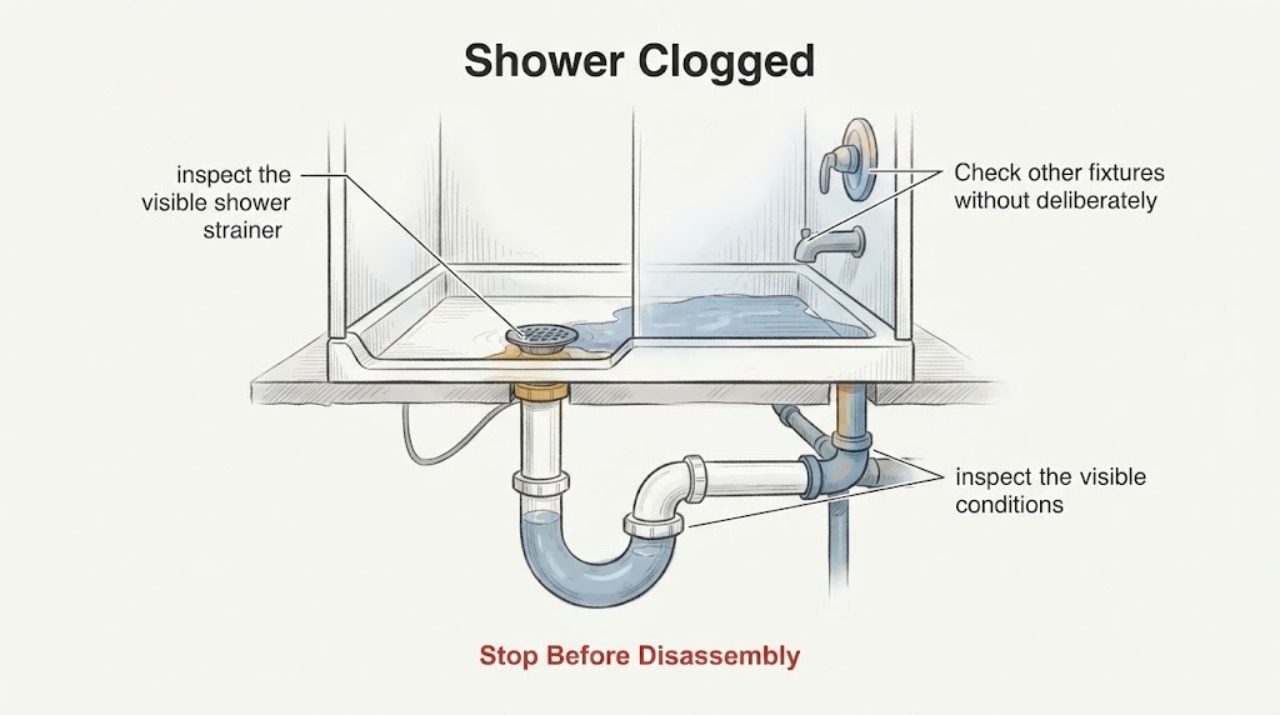
Shower Clogged: Check the Strainer, P-Trap, and Branch Safely
A clogged shower is often near the drain strainer or the short trap/branch serving that fixture, but the symptom does not prove that the P-trap is the blockage. Stop adding water, remove only visible hair or soap from an accessible strainer, and check whether other fixtures drain normally.
-
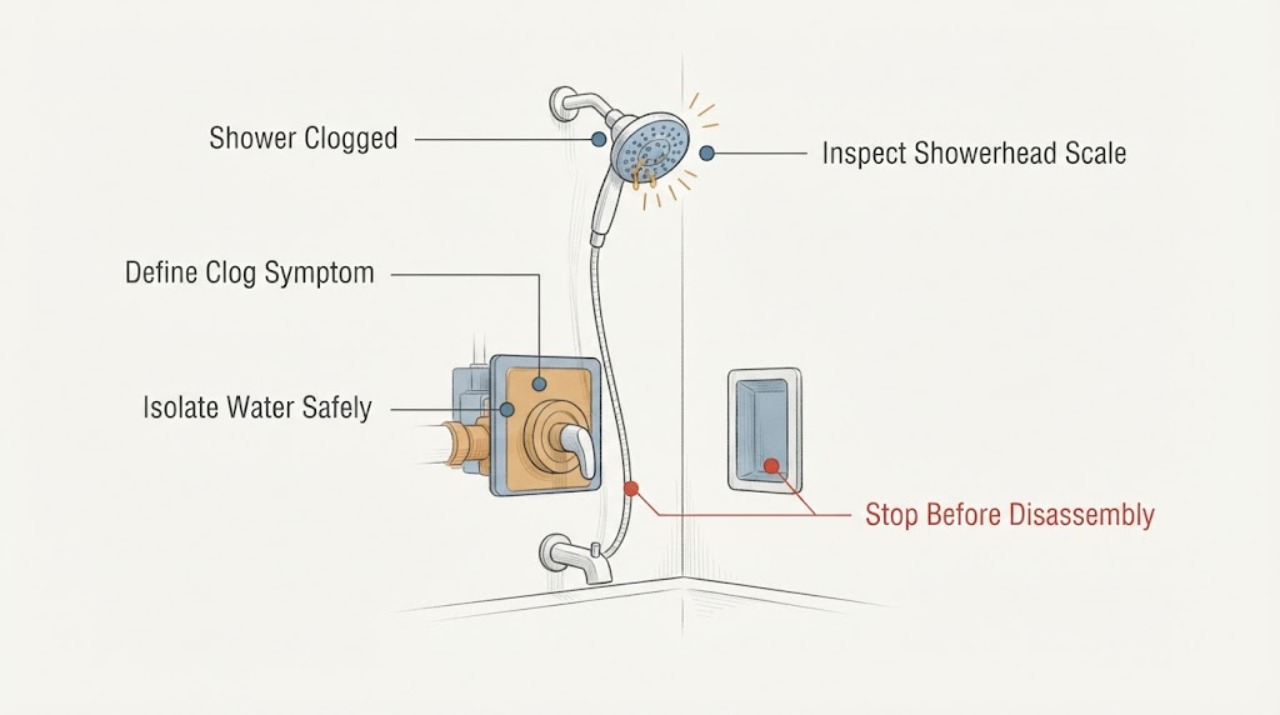
Shower Clogged: Check the Showerhead, Drain, and Upstream Tank Safely
A shower can seem clogged because the showerhead is scaled, the tub or shower drain is blocked, the diverter is not routing water correctly, or an upstream tank or water-heater supply issue is reducing hot-side flow. “Tank” is not a standard part inside every shower: treat it as an upstream storage or water-heater component only when the symptoms affect the hot side or several fixtures.
-
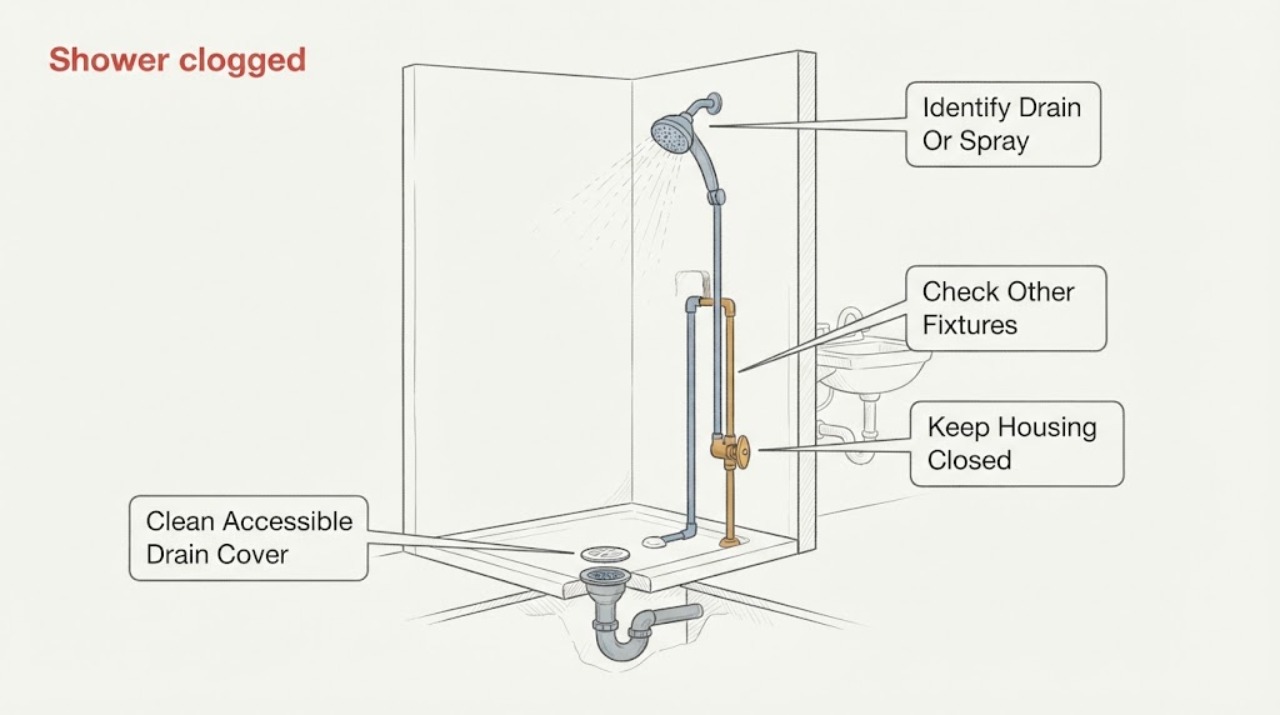
Shower clogged: Tell a blocked drain from a clogged showerhead
First decide whether the shower floor is filling with water or the showerhead is spraying weakly. A slow or standing shower drain is commonly a hair-and-soap blockage at the strainer or nearby drain path: safely remove and clean an accessible cover, lift out visible debris without pushing it deeper, and retest with a small amount of water.
-
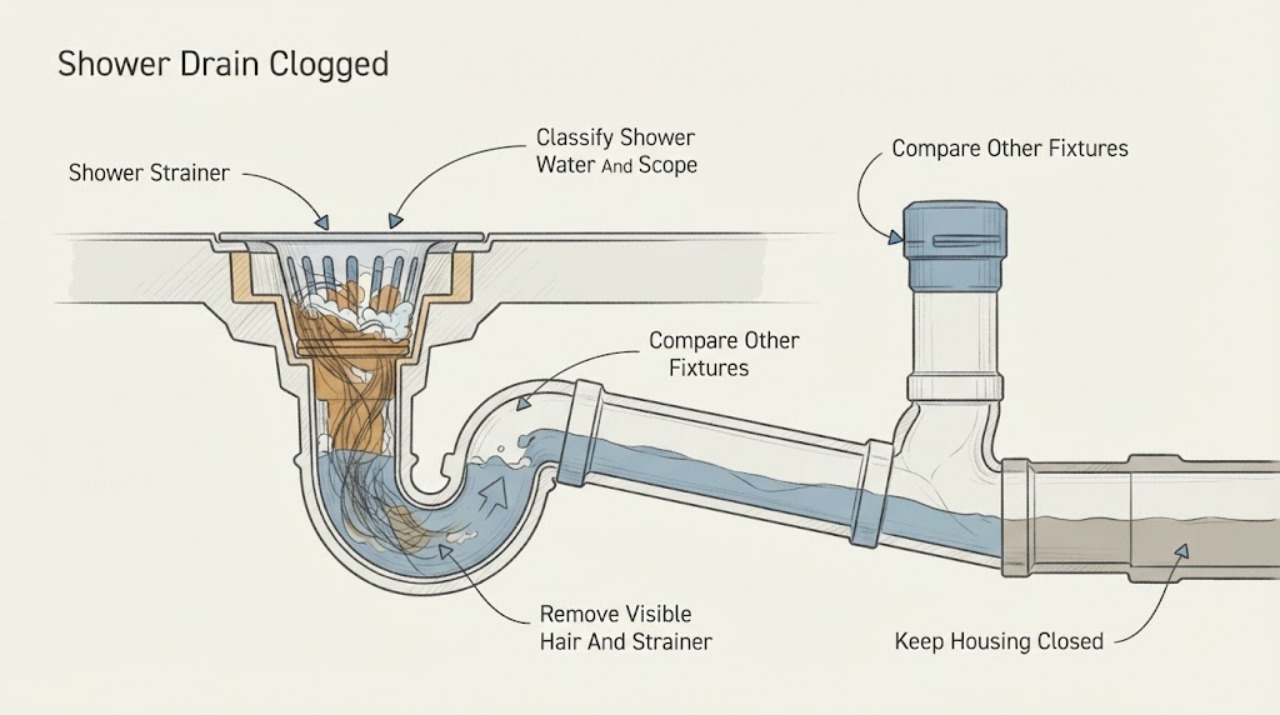
Shower Drain Clogged: Clear Hair Safely and Know When to Call a Plumber
Stop the shower and first identify whether water is only slow, pooled shallowly in the tray, rising from another drain, or contaminated and backing up. For a single shower with clear shallow water, remove the strainer if it lifts without force, pull out visible hair and soap, and use a plunger only with enough water to cover its cup and with any nearby overflow opening sealed.
-
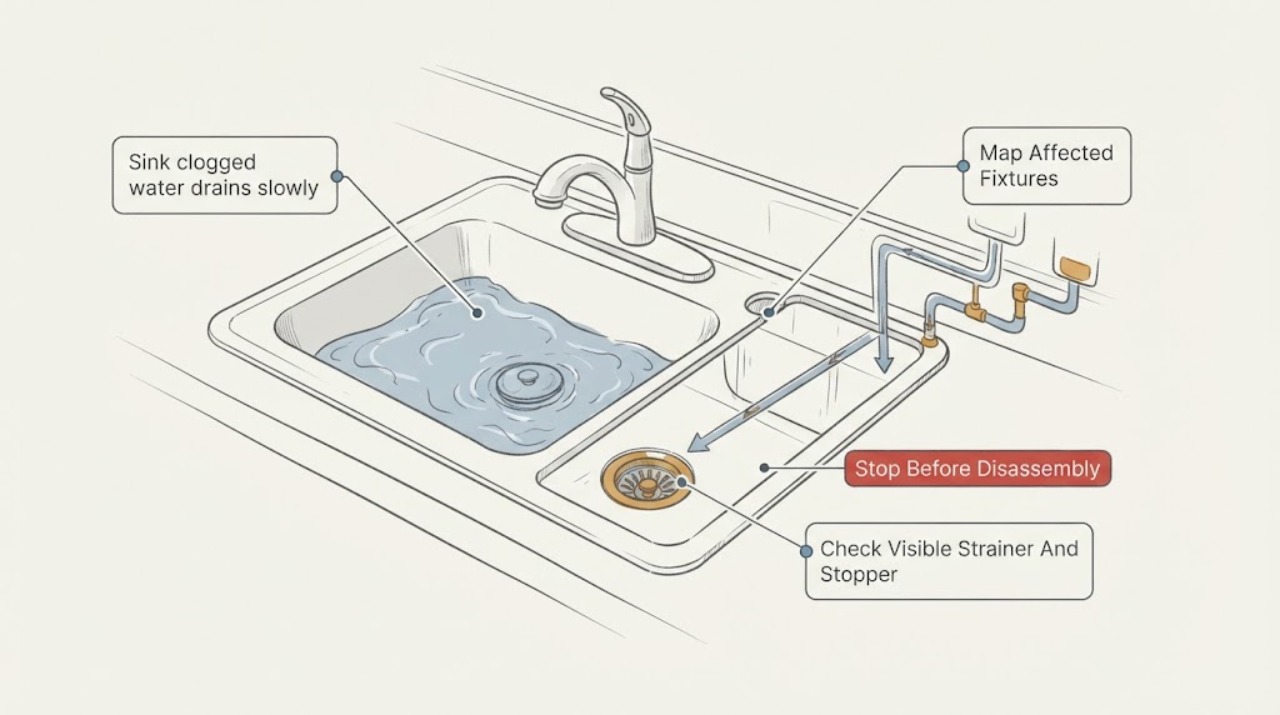
Sink clogged water drains slowly or not at all: What to Check and What to Do Next
If a sink drains slowly or not at all, first determine whether the blockage is limited to the sink or whether other fixtures are backing up. Remove only visible debris at the strainer or stopper, then use a correctly sized sink plunger with enough water to seal the drain if no chemical cleaner has been used.
-
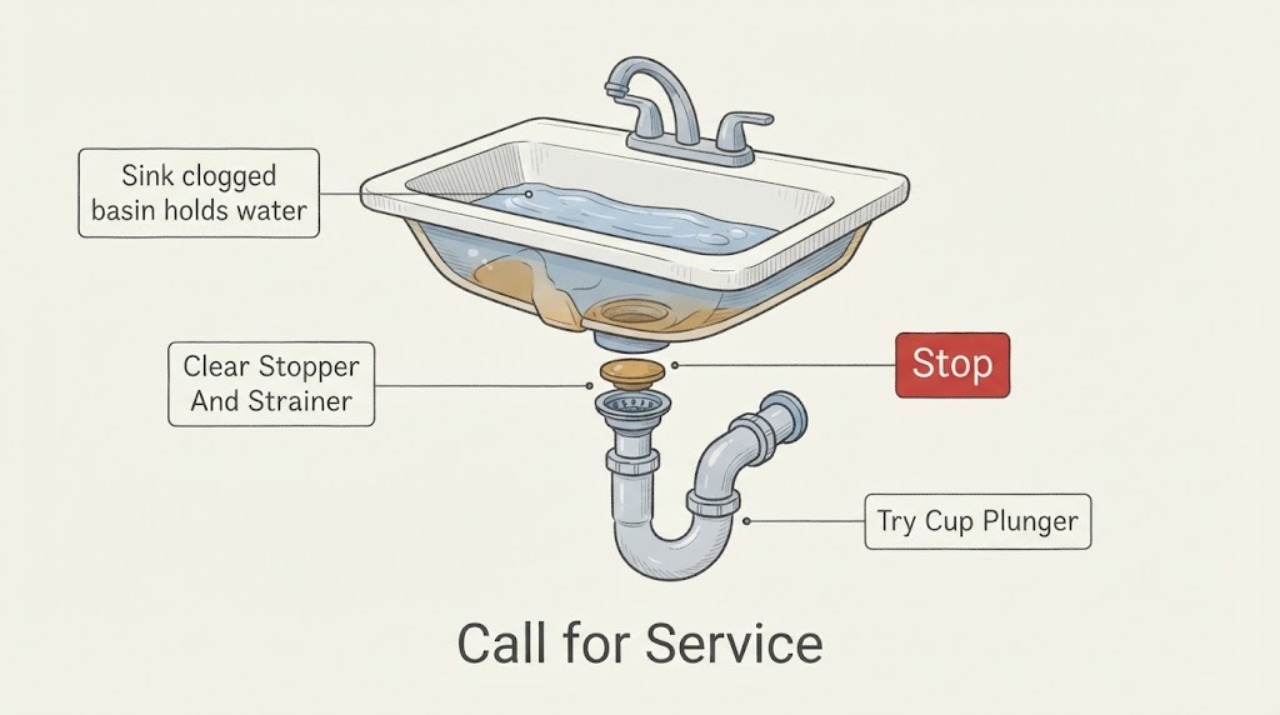
Sink clogged basin holds water: What to Check and What to Do Next
A sink basin that holds water usually has a restriction at the stopper or strainer, in the trap, or farther along the drain branch. First stop adding water, remove only an accessible stopper or strainer, and lift out visible debris.