
On this page
Start here
Quick answer
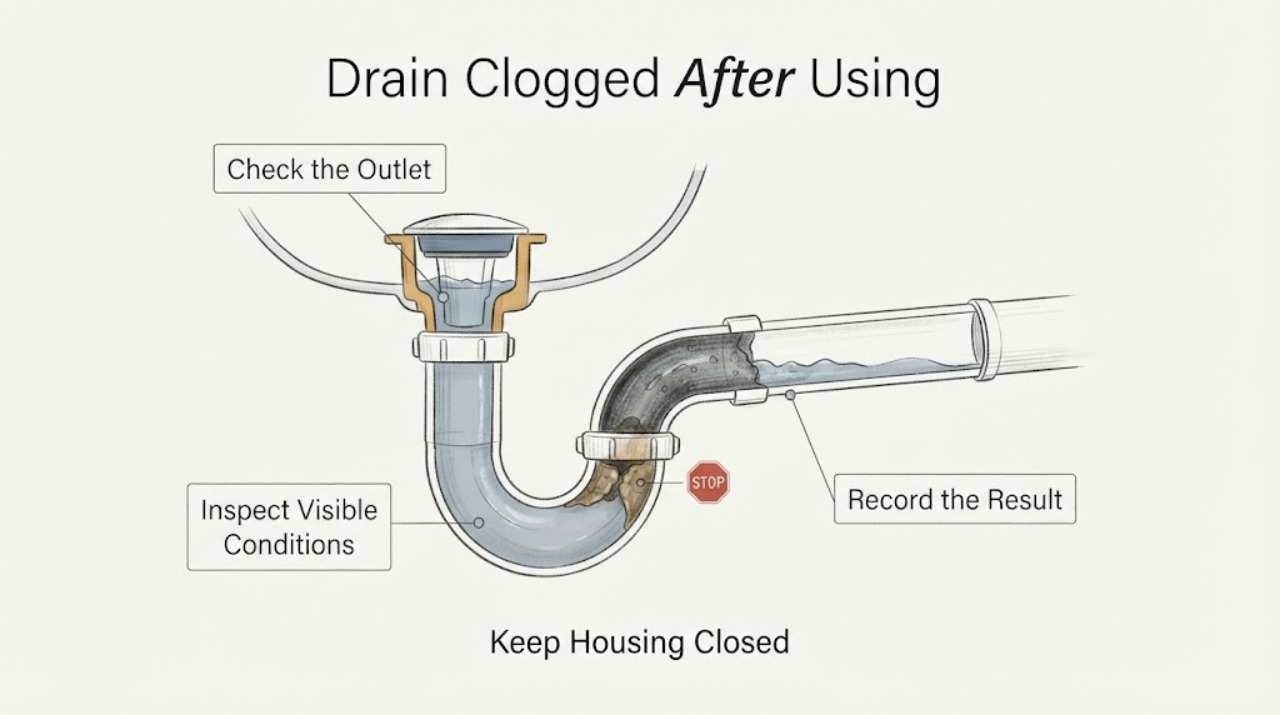
If a drain became slow or stopped only after a stopper was installed or used, first separate a stopper/seal problem from a true pipe blockage. Stop adding water, remove only the visible stopper or strainer when safe, and check whether the opening is blocked by hair, debris, a displaced gasket, or a stopper linkage that is not fully open. If the opening is clear, use a correctly sealed plunger only when no corrosive drain chemical is present. Test the result at that fixture and at nearby fixtures: one fixture that remains slow points toward its trap or branch, while several fixtures backing up points farther downstream. Do not mix or add drain chemicals, and stop for sewage, overflow, contaminated water, a chemical already in the line, or any electrical equipment near water; call a plumber when the blockage is deep, recurring, inaccessible, or affects multiple fixtures.
Work through in order
Diagnostic checks
Use only checks that match the exact appliance or system and its official guide.
-
Check 1
Stop adding water to the affected fixture and check for immediate hazards: overflowing or sewage-contaminated water, a strong chemical odor or recent drain-cleaner use, water near an outlet or appliance, or an inaccessible shutoff.
Expected result: There is an overflow, sewage, chemical residue/fume, water near electrical equipment, or another unsafe condition.
Next step: Keep people away, avoid contact and electrical equipment near water, ventilate only from a safe position, and contact the appropriate emergency, poison, utility, or plumbing service. Tell the plumber about any chemical and do not mix products.
Stop if: Stop immediately for sewage, caustic chemical, fumes, skin/eye exposure, water near energized equipment, uncontrolled overflow, or inability to isolate the hazard.
Why this matters
Why: The priority is contamination, chemical, slip, or electrical safety, not more plunging or stopper adjustment.
-
Check 2
With the fixture safe and water level controlled, open the stopper exactly as the fixture allows and inspect only the visible opening, strainer, stopper head, gasket, and linkage. Look for a stopper that is still partly closed, seated crookedly, or carrying hair, soap, food, or other debris.
Expected result: Flow improves when the stopper is fully open or visible debris is removed, or the opening remains slow despite a clear and open stopper.
Next step: Reassemble only the visible stopper parts without forcing them and run a small amount of clean water once. If the opening remains slow, continue to the plunger and multi-fixture checks; do not dismantle the trap unless you know the fixture procedure and can contain the water safely.
Stop if: Stop for a seized or broken stopper, sharp fragments, chemical residue, contaminated water, a leaking fitting, or any need to remove hidden plumbing.
Why this matters
Why: Improvement supports a stopper/seal or opening obstruction; no improvement makes a trap or deeper line blockage more likely.
-
Check 3
Check the stopper's mechanical travel without forcing it: move the control through its normal open/closed range and observe whether the stopper lifts or swings clear, whether the drain cover stays seated, and whether flow changes immediately.
Expected result: The control moves but the stopper does not open fully, the stopper drops back into the opening, or water drains normally when the stopper is held clear.
Next step: Leave the stopper in the documented open position and arrange a plumber if the mechanism will not hold, leaks, or needs hidden linkage adjustment. Do not force a knob, rod, or lift mechanism under the fixture.
Stop if: Stop for broken hardware, a loose drain body, leakage below the fixture, or any need to work inside a wall or sealed fitting.
Why this matters
Why: A linkage, gasket, or stopper alignment can be restricting flow and may not be a pipe clog.
-
Check 4
If no drain-cleaner chemical is present and the stopper opening is clear, place the correct plunger over the drain opening with enough water to seal the cup, cover an overflow opening when the fixture has one, and use controlled strokes without excessive force.
Expected result: The water level drops and the fixture drains normally, drains briefly then slows again, or does not move at all.
Next step: Flush with clean water only after flow is restored. If it remains blocked or quickly recurs, stop adding water and arrange plumbing service; do not escalate force or switch to chemicals.
Stop if: Stop for splashback, chemical residue, sewage, a cracked fixture, a seal that cannot be made safely, or water approaching electrical equipment.
Why this matters
Why: A change after a proper seal supports a nearby removable blockage; no movement or rapid recurrence suggests a deeper, compacted, vent, trap, or branch-line issue.
-
Check 5
Use a small, controlled amount of clean water to compare the affected drain with nearby fixtures, without running appliances or repeatedly flushing. Note whether only this opening is slow, whether the stopper fixture and its overflow both react, or whether several fixtures back up or gurgle together.
Expected result: Only the stopper fixture is affected, or two or more fixtures share slow drainage, backup, or gurgling.
Next step: For multiple fixtures, discontinue use of the affected plumbing and call a plumber. For one fixture, service the visible stopper/trap/branch as appropriate; do not open a cleanout or sealed line without the right procedure.
Stop if: Stop for rising sewage, overflow, foul contamination, a wet electrical area, or any line that cannot be safely isolated.
Why this matters
Why: A single affected fixture points toward its stopper, trap, or branch; multiple fixtures make a downstream building drain or sewer blockage more likely.
-
Check 6
Inspect only visible, accessible areas below or around the fixture for a leak, standing water, a loose trap, or a stopper seal that drips when the drain is used. Do not loosen a connection if corrosive product may be in the line or if you cannot contain and safely dispose of the water.
Expected result: Water leaks below the fixture, the trap is visibly loose/damaged, or the plumbing appears dry and intact.
Next step: Stop using the fixture and arrange a plumber for a leak, damaged trap, or inaccessible connection. Keep the area dry and protect nearby electrical equipment.
Stop if: Stop for chemical-contaminated water, sewage, a leak near electrical equipment, cracked piping, or any need to cut or open a concealed line.
Why this matters
Why: A leak or damaged trap can create a separate repair and contamination problem; a dry exterior keeps the blockage decision focused on flow path and fixture behavior.
-
Check 7
If the drain remains blocked after the visible stopper check and one safe plunger attempt, use no additional chemicals and arrange a plumber to locate the obstruction. Provide the fixture type, stopper position, affected fixtures, water level, and every product used in the drain.
Expected result: A plumber can access the blockage safely, or the blockage is recurring, deep, inaccessible, or affects multiple fixtures.
Next step: Keep the affected fixtures out of use until service. Follow local disposal guidance for any leftover chemical product and never mix or pour hazardous waste down the drain.
Stop if: Do not use a powered auger, remove concealed piping, open a contaminated cleanout, or continue if chemical exposure or overflow is possible.
Why this matters
Why: The problem has moved beyond a simple stopper or opening check and may require a trap, branch, cleanout, vent, or sewer-line diagnosis.
Use your observations
Decision map
Find the observation that best matches what you see, then follow the next safe action.
-
PATH 01Next step
What you see
Flow returns when the stopper is fully open or held clear, and no other fixture is affected
Do this next
Clean and reseat only the visible stopper parts allowed by the fixture design; arrange service if the mechanism will not hold or leaks.
Why this path and its safety boundary
Why it matters: Stopper, seal, linkage, or visible opening debris is more likely than a deep line clog
-
PATH 02Next step
What you see
The stopper is open and clear but a properly sealed plunger does not restore flow
Do this next
Stop adding water and arrange plumbing service; do not add chemical cleaner or use escalating force.
Why this path and its safety boundary
Why it matters: A trap, branch, vent, or deeper blockage is more likely
-
PATH 03Next step
What you see
Several fixtures back up, gurgle, or drain slowly together
Do this next
Discontinue use of the affected plumbing and call a plumber to locate the shared line blockage.
Why this path and its safety boundary
Why it matters: The obstruction is likely downstream of the individual stopper fixture
-
PATH 04Next step
What you see
Drain cleaner or another chemical has already been poured into the blocked drain
Do this next
Do not mix products, plunge, or dismantle the line without professional guidance. Tell the plumber the product and approximate time used; seek poison guidance for exposure.
Why this path and its safety boundary
Why it matters: Chemical exposure and splashback risk changes the safe procedure
-
PATH 05Next step
What you see
Sewage, uncontrolled overflow, contaminated water, or water near electrical equipment is present
Do this next
Stop using the fixtures, keep people away, isolate hazards only when safe, and arrange appropriate emergency or professional help.
Why this path and its safety boundary
Why it matters: Immediate contamination or electrical safety boundary
-
PATH 06Next step
What you see
The stopper mechanism is broken, seized, leaking, or requires hidden linkage or concealed-pipe access
Do this next
Leave the fixture out of use and arrange a plumber; do not force hardware or open a concealed connection.
Why this path and its safety boundary
Why it matters: The repair is no longer a safe visible-cleaning task
Helpful context
Understand the symptom
Why a stopper can look like a clog
A drain stopper changes the opening's flow area and can leave a seal, linkage, hair, or debris directly under the stopper. If the stopper is only partly open, water may move slowly even when the pipe beyond it is clear. A true clog can also become apparent after a stopper is moved because the flow rate or water level changes. The first decision is therefore whether flow improves when the visible stopper mechanism is fully open.
Use the number of affected fixtures as evidence
The City of Tampa advises reducing water use on a blocked or stubborn drain to limit overflow damage and notes that a nearby opening is more likely to respond to a plunger than a blockage farther in the line. If a sink, tub, shower, or toilet backs up at the same time, stop using those fixtures and arrange plumbing service rather than repeatedly plunging one opening.
Chemical safety matters after a failed unclogging attempt
Do not pour a second cleaner into a drain, mix products, or use a plunger over standing water that may contain a corrosive opener. EPA identifies household hazardous products as capable of causing injury or reacting when mixed, and MedlinePlus warns that drain openers can cause serious burns from contact, fumes, or splashes. Tell a plumber exactly what product was used and when.
Only after diagnosis
Potential parts
- drain stopper or stopper linkage
Consider only if the visible stopper will not open fully, stay open, seal, or move correctly and the fixture-specific diagnosis identifies the mechanism as the cause.
Confirm the fixture drain design and dimensions before selecting any stopper or linkage component. - drain strainer or gasket
Consider only if a damaged or displaced visible strainer/gasket restricts flow or leaks after the stopper condition is corrected.
Verify the fixture type and connection dimensions; do not replace a part to treat a deeper line blockage. - trap or drain-line component
Consider only after a plumber locates a trap or branch-line obstruction or damaged component beyond the stopper opening.
Concealed and drain-line components require site-specific diagnosis and applicable local plumbing requirements.
Common questions
FAQ
Can a drain stopper itself cause slow drainage?
Yes. A partly closed stopper, displaced gasket, linkage problem, or hair and debris directly under the stopper can restrict the opening. Open and inspect only visible parts first; if flow does not improve, a deeper blockage is possible.
Should I pour drain cleaner into a clogged drain after using a stopper?
Do not mix or keep adding chemicals. EPA warns about household hazardous products and recommends physical clearing options, while MedlinePlus documents serious injury risks from drain openers. Tell a plumber if any product was already used.
How do I tell whether the clog is deeper in the plumbing?
If opening the stopper and one safe plunger attempt do not restore flow, or if several fixtures back up or gurgle together, the obstruction may be in a trap, branch, or shared downstream line. Stop adding water and arrange plumbing service.
Can I plunge a drain that has standing water?
Only when the water is clean and no corrosive drain product is present, and only with a safe seal and controlled strokes. Do not plunge chemical-contaminated water or sewage; get professional or poison-safety guidance.
When should I call a plumber for a stopper-related clog?
Call when the visible stopper does not restore flow, the clog recurs, multiple fixtures are affected, there is a leak or sewage, chemicals are involved, or clearing the line would require concealed plumbing, force, or powered equipment.
Read the exact guide
Official sources
- Drain opener poisoningMedlinePlus, U.S. National Library of Medicine · General medical safety information; use local emergency or poison-control guidance for an exposure.
- Prevent Blocked DrainsCity of Tampa · General residential drainage guidance; local plumbing conditions and codes apply.
- Household Hazardous Waste (HHW)U.S. Environmental Protection Agency · General U.S. household hazardous-waste guidance; follow product labels and local disposal rules.
- Guidelines for Cleaning Safely After a DisasterCenters for Disease Control and Prevention · General public-safety guidance; local emergency and electrical instructions apply.
Community feedback
Share a repair observation
Share a plain-text repair observation. Accepted observations are published automatically; this page may take a moment to update.