
On this page
Start here
Quick answer
When a drain is clogged at its filter or strainer, stop adding water first, protect the area from contaminated wastewater, and identify whether the blockage is only at the opening or deeper in the trap or line. With ordinary safe access, remove hair, food, lint, and other debris from the filter or strainer and rinse the part away from the drain. If the opening is clear, use a suitable plunger only when no chemical opener is present; never mix cleaners or plunge over unknown chemical residue. A single fixture that remains blocked after safe filter care needs a plumber, and multiple slow fixtures, sewage backup, a full cleanout, or water returning through another fixture may indicate a private sewer or main-line obstruction. Stop for sewage contact, flooding, chemical fumes, a chemical-treated drain, damaged piping, or any need to open concealed plumbing.
Before you begin
Safety first
- This guide permits only stopping water use, ordinary-access filter care, and a cautious mechanical check on an untreated isolated drain. Do not mix cleaners, plunge over chemical residue, open a concealed or pressurized cleanout, dismantle a trap with standing sewage, use powered equipment, or enter a confined space.
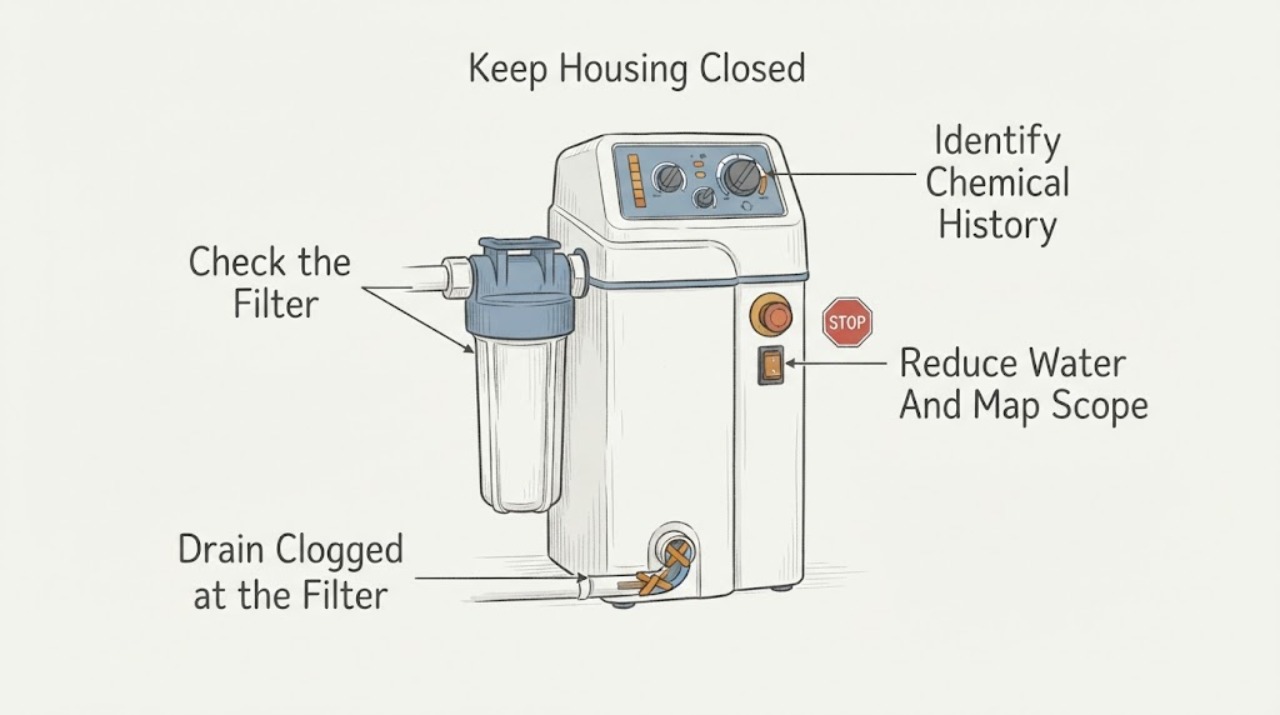
Work through in order
Diagnostic checks
Use only checks that match the exact appliance or system and its official guide.
-
Check 1
Stop using the affected fixture and nearby fixtures that discharge into the same plumbing path; from a dry, safe position, map which drains are slow or backed up.
Expected result: Record whether only one sink, shower, tub, or floor drain is affected, whether multiple fixtures are slow, whether wastewater rises elsewhere, and whether the blockage appeared after a large discharge.
Next step: Keep water use to a minimum and continue only with safe filter inspection when the problem is isolated; arrange plumbing service promptly for multiple fixtures or sewage backup.
Stop if: Stop for rising sewage, flooding, contaminated water near electrical equipment, strong fumes, or any need to walk through wastewater.
Why this matters
Why: One affected fixture supports an opening, trap, or branch-line check. Multiple fixtures, a floor-drain backup, or water returning through another fixture suggests a larger private or main-line obstruction and raises overflow risk.
-
Check 2
Before touching the filter or using any mechanical method, determine whether drain opener, bleach, acid, caustic cleaner, or another chemical was poured into the blocked drain recently.
Expected result: Record the product name if known, when it was used, whether the drain is completely stopped, whether fumes or heat are present, and whether another cleaner may have been added.
Next step: Do not add another product, mix chemicals, plunge, snake, or open the trap when chemical history is present or uncertain; ventilate from a safe location and tell the plumber exactly what was used.
Stop if: Leave the area and seek urgent poison or medical guidance for fumes, eye or skin contact, breathing trouble, swallowing, heat, or a chemical odor; do not attempt neutralization.
Why this matters
Why: An untreated drain can be considered for a cautious mechanical method suited to the fixture. A chemical-treated or unknown-residue drain can burn skin and eyes or splash during filter removal and plunging, so the safe next step is qualified plumbing or poison-safety advice.
-
Check 3
For an isolated, untreated blockage, place a container or towel below the opening, remove only the filter, strainer, or drain cover designed for ordinary access, and lift visible debris out rather than pushing it down the pipe.
Expected result: Note whether the filter is covered with hair, food, lint, soap residue, or another solid; whether the part is intact; and whether water level changes after the debris is removed.
Next step: Rinse the filter away from the drain, reinstall it squarely, and observe flow with only a small amount of clean water; arrange service if the opening does not drain or the filter cannot be safely removed.
Stop if: Stop for sewage contact, sharp or broken metal, a filter held by screws or concealed fittings, chemical history, or any need to insert a hand or tool into standing wastewater.
Why this matters
Why: A loaded filter with improving flow identifies a near-opening blockage. A clean or damaged filter with standing water suggests a deeper obstruction, a failed or displaced component, or a line issue that should not be forced from the opening.
-
Check 4
After the filter is clean and securely seated, add only a small amount of clean water while watching the opening and any nearby connected fixture from a safe, dry position.
Expected result: Record whether water drains freely, drains slowly, remains at the opening, gurgles, or returns through another fixture; stop before the fixture can overflow.
Next step: Use a suitable plunger only for an untreated, isolated drain and only when the fixture setup permits it; otherwise arrange plumbing service rather than adding more water.
Stop if: Stop for backflow, sewage, overflow, a chemical-treated drain, damaged seals, or water near electrical equipment.
Why this matters
Why: Free flow after filter cleaning supports a near-opening clog. Slow or absent flow with a clean filter supports the trap or branch line. Gurgling or return flow across fixtures can indicate a vent or larger-line problem that requires plumbing assessment.
-
Check 5
If the drain is untreated, isolated, and only mildly blocked, use a correctly sized plunger with the fixture's overflow opening covered when applicable; stop if the filter or cover would need to be forced or removed beyond ordinary access.
Expected result: Note whether water level falls and stays down, briefly improves then returns, or does not change; watch for leaks at the opening, trap, or nearby joints.
Next step: Remove the lifted debris from the fixture, reinstall the filter, and test with a small amount of clean water; call a plumber when the result is temporary or absent.
Stop if: Never plunge after chemical opener use or unknown residue, never mix cleaners, and stop for splashing, sewage, damaged piping, a loose trap, or rising water.
Why this matters
Why: A stable improvement supports a local blockage that has released. No improvement, recurring backup, a leak, or a blockage beyond the opening means the obstruction needs a plumber's method and may be in the trap, branch, or sewer line.
-
Check 6
Prepare a plumbing-service record without opening a concealed trap or sewage-filled cleanout: identify the fixture, filter type, affected fixtures, water level, chemical history, and what safe filter or plunger check changed.
Expected result: Record photos from a dry position, the time the blockage began, items found at the filter, whether flow returned, and whether wastewater appeared at a floor drain or another fixture.
Next step: Keep fixtures out of use and arrange qualified plumbing service; ask the plumber to check whether the obstruction is in private piping or the public main where local utility procedures apply.
Stop if: Do not remove a sealed cleanout cap under pressure, enter a confined space, use powered equipment, or work around sewage or chemical residue.
Why this matters
Why: A precise scope record helps the plumber choose between a local filter or trap clearing, branch-line work, or a sewer-line assessment. A cleanout full of wastewater or a blockage near the property connection is not an ordinary filter-cleaning task.
Use your observations
Decision map
Find the observation that best matches what you see, then follow the next safe action.
-
PATH 01Next step
What you see
The accessible filter is packed with hair, food, lint, or other solids and flow improves after removal.
Do this next
Keep the debris out of the drain, rinse and reseat the filter, and recheck with a small amount of clean water. Continue routine filter cleaning to prevent recurrence.
-
PATH 02Next step
What you see
The filter is clean or the drain remains blocked after safe filter care.
Do this next
Stop adding water and arrange plumbing service for the trap or branch line; do not push debris deeper or open concealed plumbing.
-
PATH 03Next step
What you see
The blockage is isolated, untreated, and the fixture permits a plunger without forcing the filter or cover.
Do this next
Use a suitable plunger cautiously and stop if there is no stable improvement, a leak, backflow, or splashing. Never use it over chemical residue.
-
PATH 04Next step
What you see
Drain opener or unknown cleaner was used, or fumes, heat, or chemical splashes are present.
Do this next
Do not add chemicals, plunge, remove the filter, or open the trap. Leave the area if fumes are present and contact qualified plumbing and poison-safety support as appropriate.
-
PATH 05Next step
What you see
Several fixtures are slow, wastewater backs up through another fixture, or a floor drain rises.
Do this next
Stop using water throughout the affected area and arrange plumbing or sewer-line assessment; the obstruction is unlikely to be limited to the opening filter.
-
PATH 06Next step
What you see
Water or sewage is overflowing, the filter or piping is damaged, or a cleanout is full or under pressure.
Do this next
Keep people and pets away, stop water use, and request urgent qualified plumbing service. Do not remove a pressurized cap or work in contaminated or confined spaces.
Helpful context
Understand the symptom
A filter clog is different from a deeper drain obstruction
A filter or strainer at the opening catches hair, food, lint, and other solids before they enter the trap. If water improves as soon as visible material is removed, the obstruction was near the opening. If the filter is clean but water remains high, the clog may be in the trap or branch line. When several fixtures slow together or wastewater rises through another fixture, stop using the connected fixtures and treat the problem as a possible larger-line obstruction.
Keep contaminated water and drain chemicals under control
Reduce the water entering a blocked line so a backup does not overflow. Wear gloves for contact with standing wastewater and wash hands afterward. Do not pour grease, solvents, household chemicals, or drain opener into the line. Poison Control warns that many liquid drain cleaners are corrosive and can splash back from a completely blocked drain; never mix products or use a plunger over a drain that may contain chemical residue.
Use the filter as a diagnostic checkpoint, not a reason to force the pipe
Remove only a filter, strainer, or cover designed for ordinary access. Note what it caught, keep the debris out of the drain, and reinstall the part without forcing it. Do not poke through the filter with a sharp object, push solids farther into a trap, open a cleanout full of sewage, or disassemble a trap after chemical treatment. A plumber can select a mechanical clearing method and inspect the line when the filter is not the true obstruction.
Only after diagnosis
Potential parts
- drain filter or strainer
Consider this category only if the existing filter or strainer is cracked, missing, warped, or cannot retain debris after the blockage is cleared.
Confirm the fixture type, opening dimensions, retaining method, and local plumbing requirements before ordering; the part must not reduce the intended drain opening. - trap seal or accessible drain fitting
Consider this category only after a qualified plumber confirms that an accessible trap seal or fitting is damaged and is the source of the obstruction or leak.
Confirm pipe material, dimensions, fixture type, access, and applicable code with the plumber; do not select a fitting from the symptom alone.
When checks do not resolve it
Need a professional?
Arrange qualified plumbing service when the filter is clean but the drain remains blocked, flow returns after a temporary improvement, the blockage is beyond ordinary access, a trap or cleanout must be opened, or multiple fixtures are affected. Stop immediately for sewage, flooding, chemical residue or fumes, splashing, damaged piping, a pressurized cleanout, or any need to enter a confined space.
Safety scope: This guide permits only stopping water use, ordinary-access filter care, and a cautious mechanical check on an untreated isolated drain. Do not mix cleaners, plunge over chemical residue, open a concealed or pressurized cleanout, dismantle a trap with standing sewage, use powered equipment, or enter a confined space.
Common questions
FAQ
Should I remove the filter when a drain is clogged?
Only remove a filter, strainer, or cover intended for ordinary access, and only when the drain is untreated and there is no sewage or unsafe standing water. Lift debris out, keep it out of the drain, and stop if the part is fastened, damaged, or chemically contaminated.
Can I use a plunger after pouring drain cleaner?
No. Unknown or chemical-treated residue can splash and cause burns. Do not add another cleaner or attempt to neutralize it; keep people away, ventilate from a safe position, and tell the plumber what product was used.
Why are several drains backing up at once?
Several slow fixtures, wastewater returning through another fixture, or a rising floor drain can indicate a branch, private sewer service, or main-line obstruction rather than a filter clog. Stop using water and arrange plumbing or sewer assessment.
What should I do if the filter is clean but the drain is still blocked?
Stop adding water and arrange qualified plumbing service. The obstruction may be in the trap or deeper line, and opening concealed or sewage-filled plumbing or using powered equipment is outside this safe filter check.
Read the exact guide
Official sources
- How to Care for Your Septic SystemUS Environmental Protection Agency · Supports reducing chemical drain opener use, mechanical alternatives, and keeping grease and harmful waste out of drains.
- Household Hazardous Waste (HHW)US Environmental Protection Agency · Supports not mixing leftover hazardous products and seeking local disposal instructions instead of sending them down drains.
- Caution with caustics: Tips for preventing chemical burnsPoison Control · Supports stopping for chemical residue and keeping caustic products in original, closed containers away from people and pets.
- Prevent Blocked DrainsCity of Tampa · Supports reducing water use, using a plunger for minor near-opening blockages, and escalating deeper or multi-fixture obstructions.
- Sanitary Sewer MaintenanceCity of South St. Paul · Supports distinguishing one affected fixture from multiple slow fixtures or floor-drain backup and involving utility or licensed plumbing service.
- What’s in drain cleaner and what happens if you drink it?Poison Control · Supports the no-mixing, no-plunging-over-residue, protective-equipment, and exposure stop conditions.
Community feedback
Share a repair observation
Share a plain-text repair observation. Accepted observations are published automatically; this page may take a moment to update.