
On this page
Start here
Quick answer
Start by limiting water use and checking whether one fixture is slow or several fixtures are affected. A single sink, tub, or shower drain usually points to the nearby strainer, trap, or branch line; gurgling, floor-drain water, or several fixtures backing up points farther downstream. If sewage is backing up, water is near electrical equipment, or the blockage follows chemical drain cleaner, stop using the drains and call a plumber. For an ordinary, localized clog with no chemical in the line, remove only a visible strainer obstruction and try a suitable plunger without mixing products. Do not pour hazardous cleaners into the drain, mix chemicals, force a concealed cleanout, or keep adding water when the level is rising.
Before you begin
Safety first
- Do not mix cleaners, plunge or open a chemically treated line, enter contaminated water, use electrical equipment in water, force a fitting or cleanout, search for a hidden blockage by opening walls, or keep adding water when the level is rising.
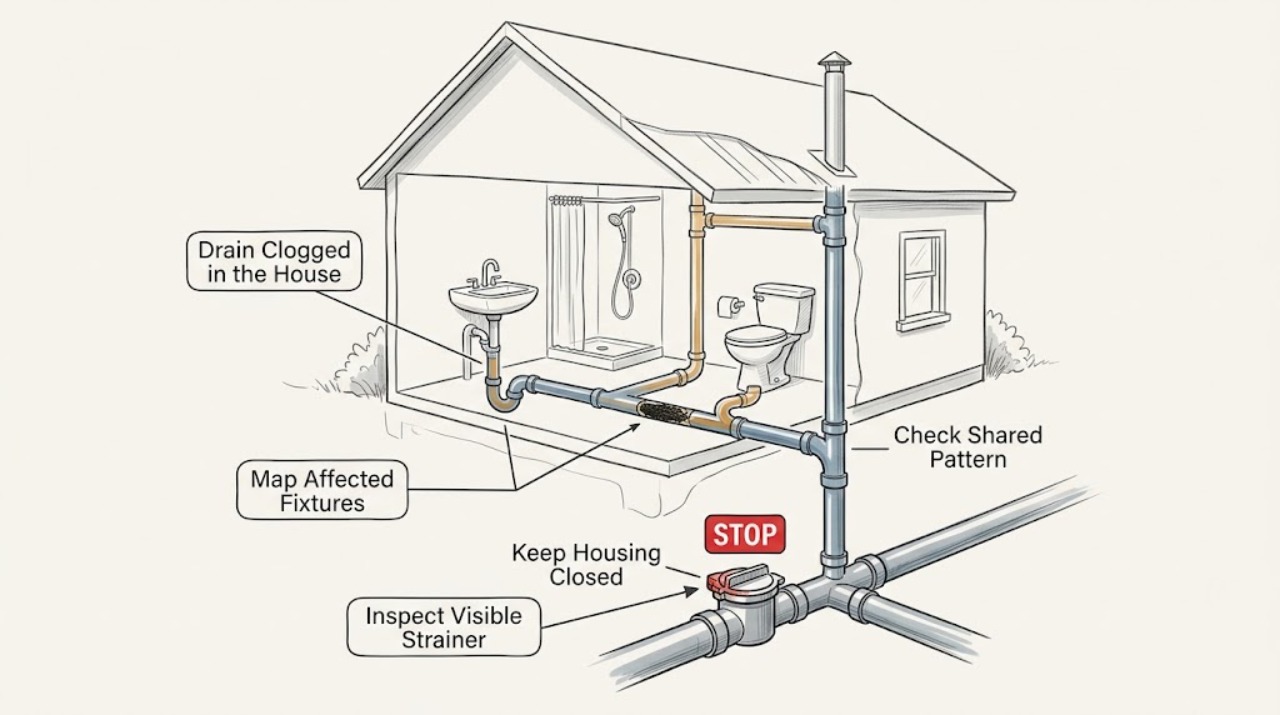
Work through in order
Diagnostic checks
Use only checks that match the exact appliance or system and its official guide.
-
Check 1
Stop adding water and check the nearest sink, tub, shower, toilet, and floor drain from a dry, safe position; note the fixture, room, and time at which flow slows or reverses.
Expected result: Classify the issue as one fixture only, several fixtures in one room, multiple rooms, a floor drain, or sewage coming up when no water is being used; note gurgling or unusual sewer odour.
Next step: Limit water use and continue only with the branch that matches the scope; call a plumber promptly for a multi-fixture backup or rising wastewater.
Stop if: Stop for sewage, rapidly rising water, contaminated floodwater, water near electrical equipment, strong sewer gas, or any need to enter standing water.
Why this matters
Why: One fixture supports a nearby strainer, trap, or branch-line check. Several fixtures, a floor drain, or a backup without current water use points farther downstream toward a shared drain or sewer line.
-
Check 2
Ask whether nearby homes or neighboring units have the same slow drains or backup, and observe whether the problem changes when no fixture in the house is using water; do not flush or run appliances to provoke a backup.
Expected result: Record an isolated house problem, a shared-building pattern, a neighborhood pattern, or a backup that continues despite no water use.
Next step: For a shared or public-line pattern, contact the building manager or local sewer authority and arrange a plumber; for an isolated fixture, use only the safe visible checks below.
Stop if: Do not keep using toilets, sinks, laundry, or dishwashers when wastewater is rising or backing up.
Why this matters
Why: A shared pattern or continued backup without household use raises the likelihood of a common sewer or building-line blockage. An isolated fixture keeps the immediate trap or branch line in scope.
-
Check 3
For one localized, non-sewage clog, remove only the visible drain cover or strainer if it lifts without force and inspect for hair, food, grease, or a reachable object; use gloves and keep the opening from splashing.
Expected result: Record a visible obstruction that can be removed safely, a clean opening with slow flow, a damaged cover, or an opening that contains standing contaminated water or an unknown chemical.
Next step: Remove only the loose visible material, replace the cover, and reassess without adding large amounts of water; arrange service if flow does not improve.
Stop if: Do not reach into sewage, use bare hands, force a cover, or continue after a chemical drain product has been used.
Why this matters
Why: A removable surface obstruction can explain a localized slow drain. A clean opening, a recurring clog, or standing contaminated or chemically treated water points to a deeper blockage or a hazard that needs professional handling.
-
Check 4
Only for an ordinary single-fixture clog with no sewage overflow and no drain chemical in the line, use a suitable plunger with enough water to seal the cup and controlled strokes; stop if resistance is abnormal or water rises elsewhere.
Expected result: Observe whether water drains freely, remains slow, rises in another fixture, splashes contaminated water, or releases an unexpected chemical smell.
Next step: If flow does not improve after a careful attempt, stop adding water and arrange plumbing service; tell the plumber whether any chemical product was used.
Stop if: Never plunge a line containing an unknown drain chemical, sewage backup, broken fixture, or water near electrical equipment; do not use compressed air or excessive force.
Why this matters
Why: Improved flow supports a localized obstruction. No improvement, movement in another fixture, or a chemical reaction indicates a deeper or unsafe condition rather than permission to increase force.
-
Check 5
If the clog is isolated to a sink and the P-trap is visibly accessible under the sink cabinet, first confirm that no corrosive or foaming product has been used; only then inspect for a loose blockage using the fixture's normal shutoff and a container, without opening a wall or forcing a fitting.
Expected result: Record a reachable trap obstruction, a trap that is clear, a seized or corroded fitting, a leak, or liquid that may contain drain cleaner.
Next step: Stop and arrange service if the trap does not separate by ordinary hand-safe access, if a leak begins, or if any chemical may be present; never pour a second product into the line.
Stop if: Do not open a trap with chemical residue, sewage, high standing water, corroded fittings, or water near electrical equipment; do not use force or a torch.
Why this matters
Why: A reachable trap blockage can explain one sink's symptoms. A clear or damaged trap, an inaccessible fitting, or chemical residue moves the problem beyond a safe household check and needs a plumber.
-
Check 6
Check whether anyone has already poured drain opener, bleach, acid, solvent, or another cleaner into the blocked line; keep the original container and label available and do not add another substance.
Expected result: Record no chemical use, a known product used according to its label, an unknown product, mixed products, fumes, heat, splashing, or skin or eye exposure.
Next step: Stop all drain work, ventilate only when safe, keep people away, follow the product label and local hazardous-waste or emergency guidance, and tell the plumber exactly what was used.
Stop if: Do not mix products, add vinegar or another cleaner, touch splashes, or lean over fumes. Seek urgent medical or emergency help for breathing difficulty, burns, eye exposure, or ingestion.
Why this matters
Why: EPA warns that hazardous household products can react, injure people, contaminate wastewater systems, and should not be poured down drains or mixed. A chemically treated clog is not suitable for routine plunging or trap opening.
-
Check 7
If wastewater is backing up, stop all household water use, keep people and pets away, and from a dry position isolate nearby electrical equipment only when it can be done without entering water; do not try to push sewage back through a drain.
Expected result: Record whether the flow stops, continues without water use, reaches electrical equipment, spreads to other fixtures, or leaves contaminated surfaces.
Next step: Call a plumber first for a home backup and follow local sewer-authority reporting guidance; use protective cleanup or a cleanup professional only after the source is controlled.
Stop if: Do not use electrical equipment while standing in water, touch contaminated water with bare skin, eat exposed food, or continue DIY clearing during a backup.
Why this matters
Why: Sewage can carry pathogens and cause property damage, while water near electricity creates a shock hazard. Continued flow without household use suggests a shared or main-line problem and requires urgent plumbing or utility response.
Use your observations
Decision map
Find the observation that best matches what you see, then follow the next safe action.
-
PATH 01Next step
What you see
Sewage is backing up, water is rising near electrical equipment, or a contaminated area is unsafe to enter.
Do this next
Stop all water use, keep people and pets away, isolate power only from a dry safe position, and call a plumber or appropriate local emergency service. Do not continue DIY clearing or use electrical equipment in water.
-
PATH 02Next step
What you see
Drain cleaner or another hazardous chemical is in the line, the product is unknown, products were mixed, or fumes or burns are present.
Do this next
Do not plunge, open the trap, or add another product. Keep the label, move away from fumes, follow local emergency or poison guidance for exposure, and tell the plumber what was used.
-
PATH 03Next step
What you see
Only one fixture is slow or blocked, there is no sewage backup, and no chemical product was used.
Do this next
Inspect the visible strainer, then try one careful plunger attempt. If the fixture stays slow or the clog returns, arrange a plumber rather than escalating force.
-
PATH 04Next step
What you see
Several fixtures, a floor drain, or multiple rooms are affected.
Do this next
Stop adding water and call a plumber to locate the branch, building, or sewer-line blockage. Do not flush or run appliances to test the system.
-
PATH 05Next step
What you see
Neighbors or another unit have the same symptoms, or wastewater rises even when the house uses no water.
Do this next
Treat the issue as a shared or main-line concern: contact the building manager or local sewer authority and arrange plumbing service while minimizing all water use.
-
PATH 06Next step
What you see
The clog is isolated to a sink and the accessible P-trap is clear of chemicals, sewage, corrosion, and unsafe standing water.
Do this next
A careful trap inspection may be appropriate only if fittings release without force and the area can be kept dry; stop for a leak or seized fitting and call a plumber.
-
PATH 07Next step
What you see
A loose obstruction is visible at a strainer or drain cover and the water is not contaminated or chemically treated.
Do this next
Remove only the loose visible material with gloves, replace the cover, and reassess. A deeper or recurring clog needs a plumber.
-
PATH 08Next step
What you see
Flow improves only briefly, the same drain clogs repeatedly, or gurgling and sewer odour return.
Do this next
Arrange plumbing service to inspect the branch, trap, vent, or sewer line; reduce grease, wipes, and other blockage-forming material entering the system.
Helpful context
Understand the symptom
Locate the clog before trying to clear it
One slow fixture and a house-wide backup are different jobs. Check nearby sinks, tubs, toilets, and floor drains without adding more water. If neighbors have the same problem or several fixtures react together, the blockage may be in a shared or public sewer rather than the visible fixture.
Use mechanical methods only when the line is safe to handle
EPA's household hazardous-waste guidance lists a plunger or plumber's snake as a drain-cleaner alternative. A plunger is reasonable only for an ordinary, localized clog when no corrosive product has been used and there is no sewage overflow. Do not combine a plunger, snake, or trap work with unknown chemicals already in the line.
Protect the house from sewage and sewer gas
A dry P-trap helps block sewer gas, while a clogged floor drain can bring water or sewage onto the floor. Keep people and pets away from wastewater, avoid electrical equipment while standing in water, and call a plumber when a backup or repeated blockage exceeds a fixture-level check.
Only after diagnosis
Potential parts
- drain strainer or stopper
Consider only if the visible strainer or stopper is damaged, missing, or unable to retain debris after the blockage is cleared.
Match the fixture opening and local plumbing configuration; a replacement does not address a deeper branch or sewer blockage. - sink P-trap or trap washers
Consider only when an accessible sink trap is cracked, leaking, corroded, or unable to reseal after a qualified or safe inspection.
Confirm the pipe size, material, fixture layout, and local code with a plumber before fitting. - cleanout cap or backflow prevention device
Consider only after plumbing service identifies a damaged cleanout or confirms that a properly selected backflow device is appropriate for the building and sewer conditions.
Do not open a pressurized or sewage-filled cleanout or install a backflow device without a qualified assessment and local authority requirements.
When checks do not resolve it
Need a professional?
Call a plumber for sewage backup, several affected fixtures, a floor drain overflow, a recurring clog, a clog that does not respond to one safe mechanical attempt, a leak or damaged trap, an inaccessible line, or any line containing drain chemicals. Contact the building manager or local sewer authority when neighbors or multiple units are affected.
Safety scope: Do not mix cleaners, plunge or open a chemically treated line, enter contaminated water, use electrical equipment in water, force a fitting or cleanout, search for a hidden blockage by opening walls, or keep adding water when the level is rising.
Common questions
FAQ
How can I tell whether one drain or the house sewer line is clogged?
Check several fixtures without adding water. One slow drain points toward its strainer, trap, or branch. Several fixtures, a floor drain, gurgling, or wastewater rising when no water is used points farther downstream and needs prompt plumbing service.
Can I use drain cleaner on a clogged house drain?
Do not mix products or pour hazardous cleaner into a blocked line. EPA advises managing hazardous household products carefully and lists a plunger or plumber's snake as a drain-cleaner alternative. If a chemical is already in the line, stop DIY clearing and tell the plumber what it was.
Is it safe to open the sink P-trap?
Only consider an accessible sink trap when the clog is localized, no chemical or sewage is present, fittings release without force, and the area can stay dry. Stop for corrosion, leaks, unknown liquid, or water near electrical equipment and call a plumber.
What should I do if sewage backs up into the house?
Stop all water use, keep people and pets away, avoid electrical equipment in water, and call a plumber first. Treat sewage as contaminated and use qualified cleanup help or the applicable local public-health guidance before reoccupying the affected area.
Read the exact guide
Official sources
- Household Hazardous Waste (HHW)U.S. Environmental Protection Agency · Household hazardous-product handling, disposal, chemical-mixing warnings, and safer drain-clearing alternatives
- Safety and maintenance tipsCity of Minneapolis · Residential P-trap, vent, floor-drain clog symptoms, sewer-gas prevention, and grease prevention
- Drain cleaner poisoningMedlinePlus, U.S. National Library of Medicine · Health hazards and immediate-response boundaries for drain-cleaner exposure
- What to Do After a Sewer BackupCity of Portland Environmental Services · Home sewer-backup response, plumber-first escalation, contaminated-water precautions, and prevention
- Sanitary Sewer Overflow (SSO) Frequent QuestionsU.S. Environmental Protection Agency · Sewer blockage causes, multi-property overflow patterns, public-health risks, and prevention
Community feedback
Share a repair observation
Share a plain-text repair observation. Accepted observations are published automatically; this page may take a moment to update.