
On this page
Start here
Quick answer
A sink basin that holds water usually has a restriction at the stopper or strainer, in the trap, or farther along the drain branch. First stop adding water, remove only an accessible stopper or strainer, and lift out visible debris. If the drain is free of chemicals and the sink design permits it, a properly sealed cup plunger can be tried; stop if water backs up elsewhere, the clog does not improve, a garbage disposal is involved, or a leak appears under the sink. Do not mix drain products, plunge after a chemical cleaner may be present, force fittings, or open a trap without a plan to contain the water. Persistent, recurring, multi-fixture, foul-smelling, or contaminated backup needs qualified plumbing service.
Before you begin
Safety first
- This article supports ordinary-access observation, removal of accessible debris, one controlled cup-plunger attempt when no chemical is present, and leak observation with a tray. A qualified plumber should handle trap removal, branch or wall piping, pressurized clearing, contaminated water, chemical residue, and disposal work.
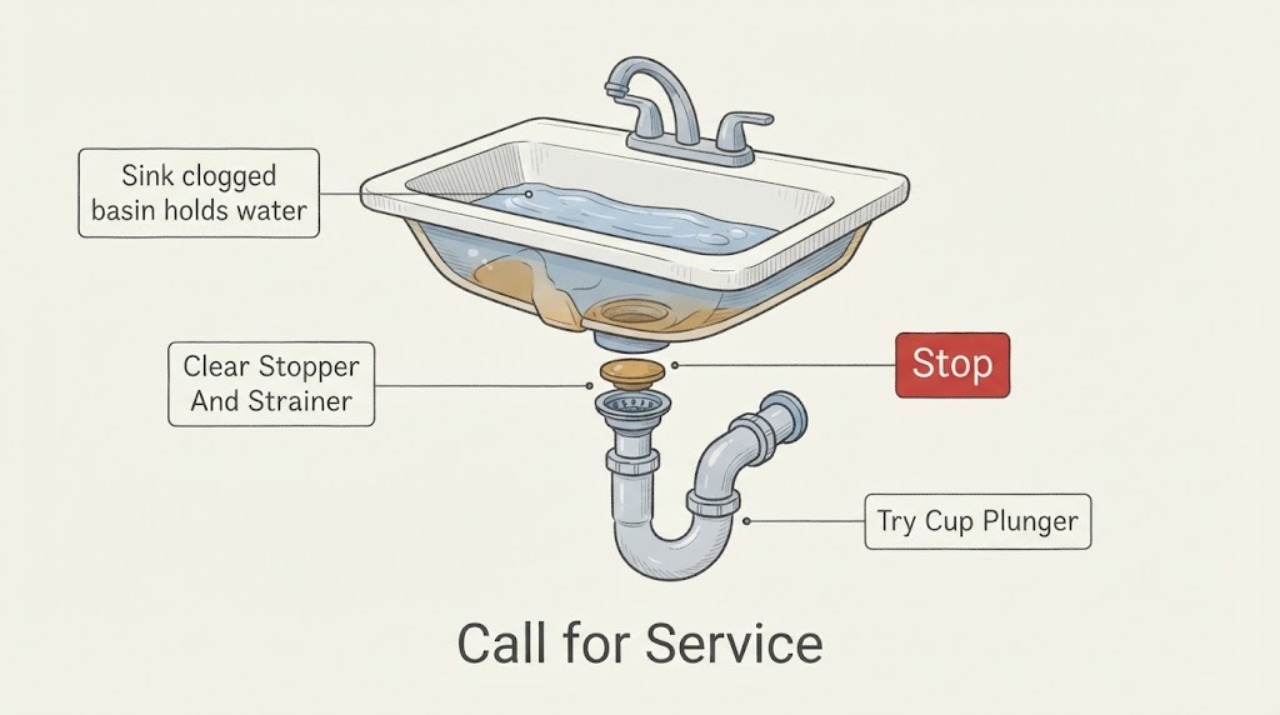
Work through in order
Diagnostic checks
Use only checks that match the exact appliance or system and its official guide.
-
Check 1
Stop adding water and observe the basin, stopper, second bowl if present, garbage disposal opening if applicable, and nearby fixtures without reaching into contaminated water.
Expected result: Record whether the basin is fully blocked, slowly draining, overflowing into a second bowl, backing up when another fixture runs, or accompanied by odor or discolored water.
Next step: Keep the sink and affected fixtures unused while checking the opening; arrange plumbing service rather than adding test water for a cross-fixture or contaminated backup.
Stop if: Stop immediately for sewage-like water, foul odor, water spreading into cabinets or floors, an active leak, or a garbage disposal that is unsafe to access.
Why this matters
Why: A single sink with no cross-fixture symptom supports a local stopper, strainer, trap, or branch check. A second fixture that backs up or drains slowly makes a shared downstream restriction more likely.
-
Check 2
Wear gloves, remove only the sink stopper or strainer that is designed to lift out or release with ordinary access, and remove visible food, hair, grease residue, or other debris without pushing it into the drain.
Expected result: The opening may contain a visible wad or object, the stopper may be dirty or mis-seated, the strainer may be clear, or the part may be stuck, corroded, or damaged.
Next step: Clean and reseat an intact stopper or strainer, keep removed debris out of the drain, and proceed to a controlled mechanical check only if no chemical cleaner is present.
Stop if: Stop for a stuck or sharp part, glass or metal in the basin, chemical residue, contaminated water, or any need to dismantle the drain body.
Why this matters
Why: Debris at the opening can explain a local basin blockage. A clear opening or damaged mechanism shifts attention toward the trap or downstream pipe and does not justify forcing the assembly.
-
Check 3
Only when the sink contains no drain-cleaner product and a cup plunger can seal the opening, add or retain enough clean water to cover the cup, block an overflow opening or second-bowl opening with a removable wet cloth, and make controlled up-and-down strokes.
Expected result: The basin may begin draining, remain full, rise in another bowl, or splash without a seal; note whether the water moves freely after the plunger is removed.
Next step: Stop once flow improves and rinse with a modest amount of clean water; if the sink remains blocked, stop the attempt and arrange service rather than adding chemicals or increasing force.
Stop if: Do not plunge after any chemical product may have been used, against a garbage disposal you cannot isolate safely, or when water is contaminated, leaking, or backing up elsewhere.
Why this matters
Why: A sealed plunger that restores flow supports a movable local blockage, but partial improvement can leave debris farther down the pipe. A failed seal or no improvement means continued force may worsen the blockage or spread water.
-
Check 4
Place a tray or towel under the accessible tailpiece, slip-joint connections, and P-trap, then observe for drips without loosening a fitting or reaching into a wet cabinet.
Expected result: No drip, a drip from a connection, a steady leak, a cracked trap, or water that appears to come from inside the wall may be present after the sink is disturbed or tested.
Next step: Keep the sink unused, contain accessible water, photograph the location, and arrange qualified plumbing service for any persistent or concealed leak.
Stop if: Do not overtighten, force slip joints, remove the P-trap with a full basin above it, or continue if water can reach electrical equipment or cabinetry.
Why this matters
Why: A leaking connection can make a clog-clearing attempt a water-damage problem. A leak inside the wall or a cracked trap is not safely corrected by repeated plunging or overtightening.
-
Check 5
After the accessible opening and one controlled mechanical attempt, record whether flow is restored, remains blocked, returns slowly, or causes another fixture to rise; do not repeat chemicals or force tools farther into the pipe.
Expected result: Classify the result as a one-time local improvement, no improvement, rapid recurrence, multi-fixture backup, foul or discolored water, or an under-sink leak.
Next step: Leave the affected drain unused and arrange qualified plumbing service for persistent, recurring, shared, leaking, or contaminated symptoms; tell the plumber whether any product was used.
Stop if: Do not open the wall, cut piping, use pressurized equipment, mix cleaners, or continue testing a drain with chemical residue or contaminated standing water.
Why this matters
Why: No improvement or recurrence suggests a deeper trap or branch problem. Multi-fixture symptoms suggest shared drainage, while foul or discolored backup and leaks add hygiene or property risk.
Use your observations
Decision map
Find the observation that best matches what you see, then follow the next safe action.
-
PATH 01Safety boundary
What you see
The sink alone was blocked, visible debris was removed from the stopper or strainer, and flow returns without a leak.
Do this next
Reseat the intact stopper or strainer, run only a modest amount of clean water to confirm flow, and keep debris out of the drain.
Why this path and its safety boundary
Why it matters: A local opening restriction is more likely than a deeper branch blockage.
Safety stop: Request service if the sink slows again quickly, another fixture is affected, or water leaks under the sink.
-
PATH 02Safety boundary
What you see
The drain contained no chemical product, a cup plunger sealed correctly, and controlled strokes restore flow.
Do this next
Stop plunging once flow improves, rinse with clean water, and monitor for recurrence rather than adding chemical cleaner.
Why this path and its safety boundary
Why it matters: A movable local blockage is plausible, but the pipe may still contain residue or a partial restriction.
Safety stop: Arrange service if improvement is partial, the clog returns, or another fixture backs up.
-
PATH 03Safety boundary
What you see
The stopper and strainer are clear, but the basin remains full or only drains very slowly after the controlled mechanical attempt.
Do this next
Stop adding products or force and arrange qualified plumbing service with the sink type and observations available.
Why this path and its safety boundary
Why it matters: A trap or downstream branch restriction is more likely than an opening-only blockage.
Safety stop: Do not remove a full trap, open the wall, or use pressurized equipment as a homeowner escalation.
-
PATH 04Safety boundary
What you see
Another sink, tub, or toilet is also slow, or water rises in another fixture when this basin is used.
Do this next
Stop using the affected fixtures and arrange prompt plumbing diagnosis before more water enters the system.
Why this path and its safety boundary
Why it matters: A shared branch or main drain restriction is more likely than a local stopper or trap issue.
Safety stop: Stop immediately for sewage-like water, foul odor, overflow, or water reaching floors, walls, or electrical equipment.
-
PATH 05Safety boundary
What you see
Water drips from the tailpiece, slip-joint connection, P-trap, or a concealed location after the sink is tested or disturbed.
Do this next
Keep the sink unused, contain the water, and arrange qualified service; provide photos without forcing the fitting tighter.
Why this path and its safety boundary
Why it matters: A sealing, cracked-pipe, or connection problem is now part of the scope and may cause cabinet or wall damage.
Safety stop: Do not overtighten, remove the trap with a full basin, or continue if water can contact electrical equipment.
-
PATH 06Safety boundary
What you see
A drain cleaner may be in the basin or pipe, or the standing water is foul-smelling, black, discolored, or suspected sewage.
Do this next
Keep people and pets away, do not add another product or plunge, and arrange plumbing or hazardous-material guidance while disclosing what was used.
Why this path and its safety boundary
Why it matters: Plunging and improvised mixing can expose people to chemicals or contaminated wastewater and can spread the hazard.
Safety stop: Do not touch the water without appropriate guidance, mix products, or pour harsh chemicals into the drain.
Helpful context
Understand the symptom
Start with the basin and drain opening, not the wall pipe
Stop running water and note whether the basin is fully blocked or merely slow, whether the stopper moves, and whether the sink has one bowl, two bowls, or a garbage disposal. Hair, soap residue, food, grease, and small objects can collect at the opening or stopper. Remove only what is visible and accessible; a clear opening does not prove the trap or branch is clear.
Use a plunger only when the drain is free of chemical cleaner
A sink plunger can work when its cup seals over the drain, but mechanical methods may only partly remove a blockage or move it farther into the pipe. Do not plunge a sink that may contain drain cleaner, and do not add one product after another. If the basin remains full or splashes could expose someone to a product, stop and arrange service.
Under-sink leaks change the job from clearing to containing
Oatey's sink-plumbing guide shows the tailpiece, washers, slip-joint connections, and P-trap as part of the accessible sink drain system and recommends a tray when checking for drips. A homeowner can place a tray and observe from a safe position, but a stuck, corroded, or leaking fitting should not be forced or overtightened.
A second slow fixture points beyond the basin
If a nearby sink, tub, or toilet also drains slowly, or water rises in another fixture when this sink is used, the restriction may be in a shared branch or main drain. Stop testing with more water. Foul odor, sewage-like water, or a backup that threatens cabinets and floors is a hygiene and property boundary requiring prompt professional help.
Safety boundary
Stop conditions
- Do not plunge or add another product if a chemical drain cleaner may be present, and never mix drain products or household chemicals.
- Do not force a stopper, strainer, trap, fitting, garbage disposal, or wall pipe, and do not dismantle a full trap without safe water containment and appropriate experience.
- Do not use sharp or improvised tools, pressurized equipment, or repeated high-force attempts that can push a blockage farther down or damage piping.
- Stop using the sink for foul or discolored water, suspected sewage, multi-fixture backup, an active leak, water near electrical equipment, or water spreading into cabinets and floors.
- Arrange qualified plumbing service when accessible cleaning and one controlled mechanical attempt do not restore flow, the clog recurs, or the drain design or product history is uncertain.
Only after diagnosis
Potential parts
- sink stopper or drain strainer
Consider this only if the installed stopper or strainer is damaged, missing, or confirmed to be restricting the opening after inspection.
Match the sink bowl, drain body, retention method, and installed assembly; do not select by appearance alone. - P-trap or slip-joint washer
Consider this only when a plumber confirms a cracked trap or failed washer while diagnosing the blockage or leak.
Confirm pipe material, dimensions, connection type, and local requirements; do not force or overtighten fittings to compensate for mismatch. - sink drain snake
Consider this only when the sink is free of chemical residue and the drain design and tool use are appropriate; a persistent or deep blockage should be handled by a plumber.
Use only a tool suited to the drain and follow its instructions; do not force it, use it through a garbage disposal, or treat partial flow as a complete repair.
When checks do not resolve it
Need a professional?
Arrange qualified plumbing service when the stopper and strainer are clear but the basin remains blocked, a controlled plunger attempt does not restore flow, the clog returns, another fixture backs up, the P-trap or connections leak, or any drain product may be present. Stop using the sink for foul or discolored water, suspected sewage, an active leak, water near electrical equipment, or water spreading into the cabinet or floor.
Safety scope: This article supports ordinary-access observation, removal of accessible debris, one controlled cup-plunger attempt when no chemical is present, and leak observation with a tray. A qualified plumber should handle trap removal, branch or wall piping, pressurized clearing, contaminated water, chemical residue, and disposal work.
Common questions
FAQ
Why is my sink basin holding water?
A restriction may be at the stopper or strainer, in the P-trap, or farther down the branch. Stop adding water, remove visible debris from an accessible opening, and use the cross-fixture and leak checks to decide whether it is local or shared.
Can I plunge a sink that is completely clogged?
Only when no drain-cleaner product may be present and a cup plunger can seal the opening. Protect against splashes, use controlled strokes, and stop if the basin remains full, backs up elsewhere, leaks, or contains contaminated water.
Should I remove the P-trap to clear a sink clog?
Do not remove a full trap as a first step. A tray and visual leak check are reasonable, but a stuck, corroded, cracked, or concealed connection should be handled by a qualified plumber with safe water containment.
Can I use drain cleaner when the sink is full of water?
Do not add chemicals as a guess, mix products, or plunge after chemical cleaner may be present. Follow the exact label and disclose any product to a plumber; persistent or uncertain blockages are safer to diagnose mechanically by a professional.
When should I call a plumber for a clogged sink?
Call when the opening and one controlled mechanical attempt do not restore flow, the clog returns, another fixture backs up, the P-trap or cabinet leaks, the water smells foul or appears contaminated, or the sink has a garbage disposal or drain design you cannot access safely.
Read the exact guide
Official sources
- 5 Easy DIY Plumbing Fixes You Can Do YourselfOatey · Oatey general homeowner plumbing guidance; tool suitability, drain design, and product labels control a particular sink.
- Frequent Questions on Septic SystemsU.S. Environmental Protection Agency · EPA household septic-system guidance; it is especially relevant to homes with septic systems and does not replace local disposal requirements.
- 8 Items You Should Never Pour Down the DrainOatey · Oatey general drain maintenance guidance; follow any product label and local disposal requirements for a particular chemical.
- How to Install Bathroom Sink Plumbing: Set-up Your Own Bathroom SinkOatey · Oatey general bathroom sink plumbing guide; the installed drain design and local plumbing requirements control a particular repair.
Community feedback
Share a repair observation
Share a plain-text repair observation. Accepted observations are published automatically; this page may take a moment to update.