
On this page
Start here
Quick answer
An American Standard sink that holds water may be blocked at the stopper or strainer, the short tailpiece or trap below the basin, or farther downstream in the wall drain. First stop adding water, remove only the accessible stopper or strainer as the sink design allows, and compare this sink with other fixtures. A single slow basin with visible debris points to a local restriction; several fixtures backing up, gurgling, or a drain that refills from another fixture points farther downstream. American Standard sells different sink waste fittings and complete drain assemblies, so do not assume the branded stopper or drain body is the same as the drain pipe or that a replacement part fits every sink. Avoid mixing chemical cleaners or forcing a fitting. Arrange plumbing service for a persistent clog, sewage backup, hidden leak, or any blockage beyond safe ordinary access.
Before you begin
Safety first
- This article supports stopping water, ordinary-access observation, visible debris removal, and one cautious water check when no chemical exposure or leak is present. Do not mix chemicals, open a contaminated or pressurized connection, cut pipe, enter the wall, or work near electrical equipment.
Work through in order
Diagnostic checks
Use only checks that match the exact appliance or system and its official guide.
-
Check 1
Stop adding water and observe the affected American Standard sink from a dry, stable position; compare its basin with another nearby sink or drain without running enough water to cause an overflow.
Expected result: Record whether water is fully standing, draining slowly, or draining normally after the stopper is lifted; note whether another sink, tub, shower, or toilet also backs up, gurgles, or changes when this sink drains.
Next step: Keep the basin out of use, photograph the water level and visible fitting, and continue only with ordinary-access checks when no sewage or chemical exposure is present; arrange service for multi-fixture backup.
Stop if: Stop for sewage-colored or foul-smelling backup, an overflowing basin, water near electrical equipment, chemical exposure, or a leak under the sink.
Why this matters
Why: A problem isolated to one basin focuses the check on the waste fitting, stopper, tailpiece, trap, or local branch. Multiple affected fixtures, shared gurgling, or water returning from another drain makes a downstream branch or main drain restriction more likely.
-
Check 2
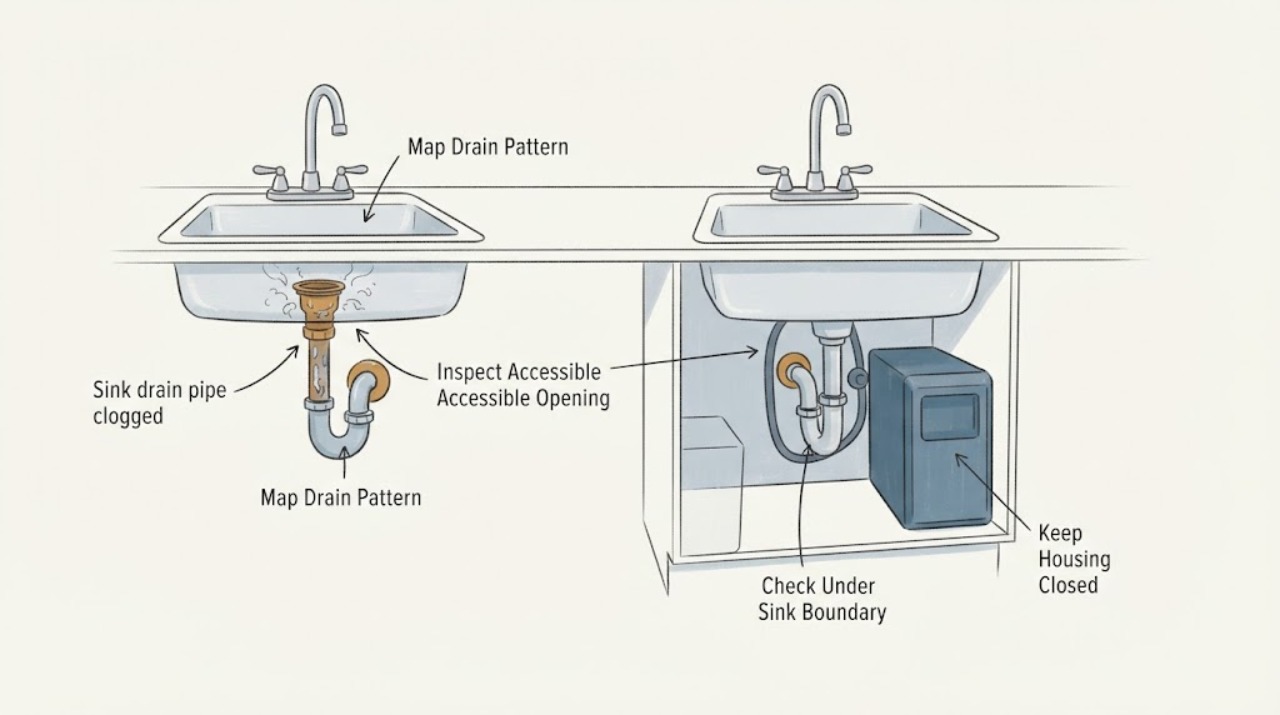
With no chemical cleaner present and the basin safe to reach, lift or remove only the accessible stopper, strainer, or drain screen as the exact American Standard sink instructions allow; use a flashlight to look at the opening without pushing debris farther down.
Expected result: Classify the opening as visibly blocked by hair, food, grease, or a foreign object; clear but slow; damaged; or impossible to inspect without tools or force.
Next step: Remove only loose, visible debris into the trash and restore the stopper or strainer as designed. If the opening is clear, damaged, or requires disassembly, keep the sink unused and arrange plumbing service.
Stop if: Do not push a tool into an unseen pipe, pry a fixed drain body, remove a retaining part under standing water, or handle debris that may contain chemical cleaner or sewage.
Why this matters
Why: A visible obstruction at the opening can explain a single-basin clog. A clear opening with continued standing water shifts suspicion to the tailpiece, trap, branch, vent, or downstream pipe; a damaged or loose waste fitting may also leak rather than simply clog.
-
Check 3
Place a dry towel under the sink and inspect the visible tailpiece, trap, slip joints, shutoff area, cabinet base, and wall entry without loosening any connection; do not crawl into an unstable cabinet or touch a wet electrical device.
Expected result: Record whether the trap or connection is visibly wet, cracked, displaced, corroded, or dry; note whether the cabinet base or wall entry is stained or soft and whether a drain sound is heard behind the wall.
Next step: Keep the sink out of use and arrange a plumber for any leak, wall dampness, damaged fitting, or blockage that cannot be reached without disconnecting the trap.
Stop if: Do not loosen slip nuts, cut pipe, pull a wall connection, use an open flame, or continue if water reaches electrical equipment or the cabinet is contaminated.
Why this matters
Why: A wet joint or damaged drain assembly is a leak boundary that needs repair as well as flow diagnosis. A dry trap with slow flow makes an internal restriction plausible, while dampness at the wall entry or cabinet base can indicate a concealed connection or ongoing leak.
-
Check 4
Only when the opening is clear, no chemical product is present, the trap and cabinet are dry, and the sink instructions permit it, add a small amount of clean water and observe whether the basin drains; if using a sink plunger, follow its instructions and keep the test gentle rather than forcing a sealed or overflowing drain.
Expected result: The water drains, drains slowly, rises immediately, causes a nearby fixture to gurgle, or leaks below; record the result without repeating the test until the basin is safe and empty.
Next step: If the basin remains slow or backs up, stop the test and arrange service. Do not use a plunger after chemical cleaner, and do not escalate to tools or products without a plumber's assessment.
Stop if: Stop for any splash of unknown liquid, sewage backup, a leaking trap or wall connection, an overflowing basin, or a plunger that requires excessive force.
Why this matters
Why: A brief improvement after visible debris removal supports a local opening restriction. Immediate rise, gurgling, cross-fixture movement, or a leak points farther into the trap, branch, vent, or drain system and is not proof that more force will clear it.
-
Check 5
After only visible debris removal or an authorized low-risk procedure, place a dry towel under the sink, restore a small amount of water, and observe the drain and all visible connections once; do not run a full basin if the downstream path remains uncertain.
Expected result: The basin drains steadily with no gurgling and the towel stays dry, or water remains, returns from another fixture, gurgles, or leaks at the waste fitting, trap, cabinet, or wall entry.
Next step: Keep the sink in limited or no use if the result is anything other than a dry steady drain; provide the plumber the fixture comparison, photos, opening inspection, and test result.
Stop if: Stop immediately for rising water, sewage, hidden moisture, cabinet damage, or a connection that begins to drip; do not repeat tests to force a result.
Why this matters
Why: A dry steady drain supports a localized obstruction that has cleared, but recurrence indicates remaining debris or a downstream restriction. Any leak or cross-fixture backup means the sink is not restored and requires plumbing diagnosis.
Use your observations
Decision map
Find the observation that best matches what you see, then follow the next safe action.
-
PATH 01Safety boundary
What you see
Only this sink is slow and a loose obstruction is visible at the stopper, strainer, or drain opening.
Do this next
Remove only visible debris into the trash, restore the fitting, and perform one small-water dry-towel check; arrange service if flow remains slow or a leak appears.
Why this path and its safety boundary
Why it matters: A local opening restriction is plausible, and the branded waste fitting may be the area to clean, but the pipe farther below is not yet cleared.
Safety stop: Do not push debris deeper, pry the drain body, or continue if unknown chemicals or sewage are present.
-
PATH 02Safety boundary
What you see
The opening is clear, other fixtures drain normally, but this basin still holds water or drains slowly.
Do this next
Keep the sink out of use and request plumbing service rather than disconnecting the trap or pushing a tool into the wall pipe.
Why this path and its safety boundary
Why it matters: The restriction is more likely in the tailpiece, trap, local branch, or vent than at the visible strainer; the complete drain assembly alone does not identify the blocked section.
Safety stop: Stop for an under-sink leak, cabinet damage, or any need to force a fitting or cut pipe.
-
PATH 03Safety boundary
What you see
Several fixtures back up, gurgle together, or water returns to this sink when another fixture drains.
Do this next
Stop using affected fixtures, limit water discharge, and arrange prompt qualified plumbing service; report whether neighboring fixtures are affected.
Why this path and its safety boundary
Why it matters: A shared branch, vent, building drain, or sewer restriction is more likely than an American Standard sink waste fitting alone.
Safety stop: Do not add chemicals, run a full basin, or attempt to reach a shared or main drain through an improvised opening.
-
PATH 04Safety boundary
What you see
Water appears at the waste fitting, tailpiece, trap, cabinet base, or wall entry during a drain test.
Do this next
Stop adding water, contain only the visible spill without loosening the connection, and arrange plumbing service with photos of the wet point.
Why this path and its safety boundary
Why it matters: The sink has a leak boundary in addition to a possible clog. Continuing to run water can damage the cabinet or wall even if the basin eventually drains.
Safety stop: Do not tighten blindly, remove the trap, cut pipe, or continue testing when water can reach electrical equipment or hidden building materials.
-
PATH 05Safety boundary
What you see
A chemical drain cleaner may already be in the sink or pipe, the container is unknown, or the drain liquid causes irritation or fumes.
Do this next
Stop handling the drain, keep people and pets away, follow the product's emergency label guidance, and tell the plumber exactly what was used and when.
Why this path and its safety boundary
Why it matters: The drain is a chemical-exposure hazard, so ordinary plunging, trap opening, or mixing another product is unsafe.
Safety stop: Do not mix cleaners, add bleach or another product, plunge, bail by hand, or open the trap while chemical exposure is possible.
-
PATH 06Safety boundary
What you see
The sink drains briefly after visible debris removal but slows again, or the same blockage returns soon after a test.
Do this next
Stop repeated treatments and arrange plumbing diagnosis; provide the American Standard drain identity, recurrence timing, fixture comparison, and any material removed.
Why this path and its safety boundary
Why it matters: Remaining buildup, a deeper branch restriction, a vent issue, or a damaged drain component is more likely than a one-time opening obstruction.
Safety stop: Do not keep adding chemicals, force a plunger, replace the drain fitting without diagnosis, or continue using a recurring backup.
Helpful context
Understand the symptom
A sink drain fitting is not the whole drain pipe
The basin opening, stopper or strainer, tailpiece, trap, and wall branch can each restrict flow. American Standard's product pages show both a sink waste fitting and a complete drain assembly with a drain body and tailpiece, but those visible components do not establish what is blocked farther downstream. Begin at the basin and work only through safe, accessible observations rather than assuming the branded drain part is the failed pipe.
Use the symptom pattern to locate the likely section
If only this basin is slow and the water level falls when the stopper is lifted, a local stopper, strainer, tailpiece, or trap restriction is plausible. If the sink gurgles when another fixture drains, several fixtures back up together, or water returns into the basin, the restriction may be in a shared branch or building drain. Portland's flow guidance likewise uses fixture comparisons to separate a problem at one fixture from a broader plumbing issue.
Prevent a small clog from becoming a spill
Stop running the faucet as soon as the basin stops draining and remove standing water only in a way that does not splash or contact skin. Do not add another product if a chemical cleaner may already be in the drain. Portland Environmental Services identifies fats, oils, and grease as common contributors to sink and sewer clogs and advises calling a plumber when a clogged pipe in the home cannot be handled safely.
Safety boundary
Stop conditions
- Stop adding water for an overflowing basin, sewage-colored or foul-smelling backup, cross-fixture backup, or a blockage that returns immediately.
- Do not mix chemical drain cleaners, add a second product, plunge after an unknown chemical, or handle irritating liquid or fumes.
- Do not push tools into an unseen pipe, disconnect or cut the trap, pry the drain body, or force a fitting as a user test.
- Stop for water under the sink, a wet wall or cabinet base, a damaged waste fitting, water near electrical equipment, or an unstable or contaminated cabinet.
- Arrange qualified plumbing service for any multi-fixture or recurring clog and for any blockage beyond safe ordinary access.
Only after diagnosis
Potential parts
- American Standard sink stopper or strainer
Consider this category only if inspection confirms the accessible stopper or strainer is broken, missing, or obstructing the opening after the clog location is established.
Confirm the exact sink and drain design; an opening component cannot correct a blockage in the trap, branch, vent, or wall drain. - American Standard waste fitting or drain assembly
Consider this category only when the waste fitting or drain body is damaged, leaking, or incompatible with the installed sink and a qualified assessment separates it from a downstream pipe clog.
American Standard lists multiple sink waste and complete drain assemblies; confirm the exact sink, drain style, dimensions, and installation instructions before ordering. - compatible trap or drain connection seal
Consider this category only when inspection or service locates a damaged seal or connection leak at the accessible trap or drain assembly.
Confirm connection type and dimensions with the plumber; do not use a seal to compensate for a misaligned, cracked, or blocked pipe.
When checks do not resolve it
Need a professional?
Arrange qualified plumbing service when the opening is clear but the American Standard sink still drains slowly, the clog returns, the trap or wall entry leaks, several fixtures are affected, water backs up from another drain, or the blockage requires trap, branch, vent, or wall access. Request prompt help for sewage backup, chemical exposure, flooding, hidden moisture, or water near electrical equipment. Provide the sink model or drain markings if available, fixture comparison, first wet or blocked location, materials observed, products used, and before-and-after photos.
Safety scope: This article supports stopping water, ordinary-access observation, visible debris removal, and one cautious water check when no chemical exposure or leak is present. Do not mix chemicals, open a contaminated or pressurized connection, cut pipe, enter the wall, or work near electrical equipment.
Common questions
FAQ
Is the American Standard sink drain fitting the same thing as the drain pipe?
No. The visible waste fitting or complete drain assembly is only part of the path. A blockage can also be in the tailpiece, trap, branch, vent, or wall drain, so inspect the opening and symptom pattern before choosing a replacement fitting.
Why does only this sink stay full while other fixtures drain normally?
A one-sink problem makes the stopper, strainer, waste fitting, tailpiece, trap, or local branch more likely. If the opening is clear and the basin remains slow, arrange plumbing service rather than forcing a tool into the pipe.
What if the sink backs up when another fixture drains?
That pattern suggests a shared branch, vent, building drain, or sewer restriction rather than the American Standard sink fitting alone. Stop using affected fixtures and arrange prompt qualified plumbing service.
Can I use chemical drain cleaner and then plunge the sink?
Do not mix products or plunge when an unknown chemical may be present. Chemical exposure changes the safety boundary; keep people away, follow the product's emergency label guidance, and tell the plumber what was used.
Read the exact guide
Official sources
- Wipes Clog Pipes: During COVID-19 crisis and every day, prevent sewage overflows by flushing only the 3PsPortland Environmental Services · Use for sink-clog prevention and professional escalation; the article does not apply the toilet-specific flush rule to a sink or claim a particular clog material without observation.
- Troubleshooting water pressure and flowPortland Water Bureau · General fixture-comparison guidance applied to separating a one-sink restriction from a broader plumbing problem; it is not an American Standard drain repair manual.
- Metal Ez Drain 2-Piece AssemblyAmerican Standard · Use for explaining that a complete drain assembly includes a drain body and tailpiece and that a visible assembly is distinct from a downstream pipe restriction.
- Waste FittingAmerican Standard · Use for distinguishing the sink waste fitting and strainer at the basin opening from the downstream drain pipe; exact sink compatibility remains model-specific.
Community feedback
Share a repair observation
Share a plain-text repair observation. Accepted observations are published automatically; this page may take a moment to update.