
On this page
Start here
Quick answer
A clogged Delta sink drain is usually cleared by working from the opening toward the P-trap and downstream pipe, but first confirm that the symptom is a drain blockage rather than a supply leak. Dry the cabinet, inspect the stopper and drain opening, then use a properly sealed sink plunger if no chemical cleaner is present. Delta's drain guidance shows that pop-up components are removable for cleaning, while general residential guidance supports checking the accessible trap with a bucket underneath. If the trap is clear, the blockage returns, several fixtures gurgle or back up, a pipe is cracked or glued, or chemical residue is present, stop adding force and arrange plumbing service. Do not mix drain products, open a trap over chemical residue, force a corroded Delta stopper, or keep adding water when the basin is close to overflowing.
Before you begin
Safety first
- A qualified plumber should clear concealed or shared waste lines, inspect venting and damaged piping, handle chemical residue or sewage backup, and repair corroded, glued, cracked, or leaking connections.
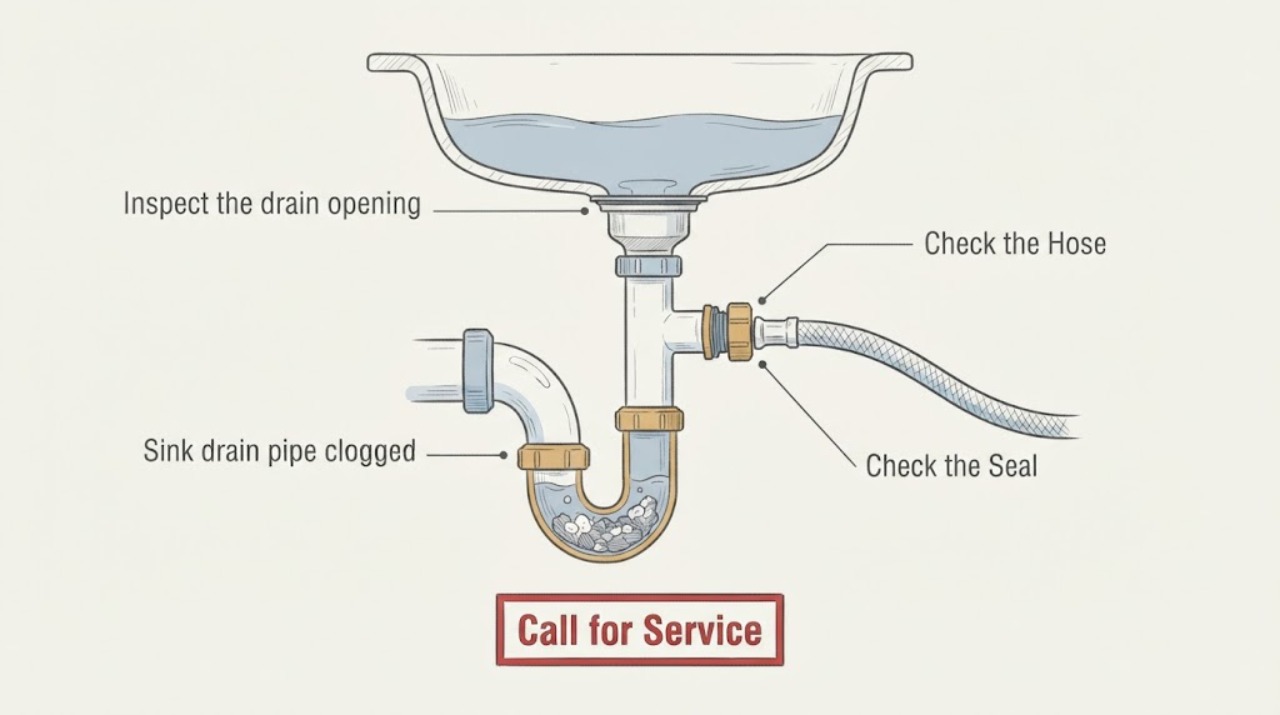
Work through in order
Diagnostic checks
Use only checks that match the exact appliance or system and its official guide.
-
Check 1
Stop adding water, move items away from the cabinet, and place a towel or container below the sink. With the faucet off, trace the supply shutoffs, hoses, faucet underside, drain body, P-trap, and wall connection without touching wet electrical equipment.
Expected result: The basin is close to overflowing, water is near an outlet or disposal, a supply connection is wet with the faucet off, or the supply side stays dry while the basin rises during drainage.
Next step: For overflow, electrical, or pressurized leakage, stop using the sink, isolate water only at a safe accessible valve, and arrange qualified service. If the area is dry and contained, continue to the stopper inspection.
Why this matters
Why: An active overflow, electrical exposure, or pressurized supply leak is not a routine drain-clearing step. A rising basin with dry supply connections makes an obstruction in the drain path more likely.
-
Check 2
Inspect the Delta drain opening, strainer, and stopper for hair, soap film, food, or an object. If it is a Delta push-pop design that matches the manufacturer's support information, remove the top stopper by the described counterclockwise motion; use the model instructions for other designs.
Expected result: Debris is visible at the opening or stopper, the stopper does not lift or stay open, the stopper comes out cleanly, or the stopper is seized or unfamiliar.
Next step: Remove accessible debris without pushing it farther into the pipe and rinse the stopper. If the mechanism will not release with the model-appropriate motion, stop and arrange service rather than prying or twisting the drain body.
Why this matters
Why: Visible debris or a trapped stopper supports a localized obstruction at the fixture. A clear opening shifts suspicion toward the trap or downstream pipe. A seized or unfamiliar Delta mechanism can be damaged by force and is not a generic removal problem.
-
Check 3
If no drain chemical has been used, cover any second sink opening and place a properly sealed sink plunger over the clogged opening. Use controlled strokes with enough water to cover the cup, keeping splashes contained.
Expected result: The basin drains normally, flow improves but remains slow, the water level does not move, or the plunger cannot seal.
Next step: Use a small amount of clean water only after flow improves. If the plunger cannot safely improve flow, stop repeating force and proceed to an accessible-trap check or arrange service; do not add chemical opener.
Why this matters
Why: A release or clear improvement supports a movable local obstruction. Partial improvement suggests remaining material or a restriction beyond the trap. No movement with a poor seal is inconclusive; no movement with a good seal makes a deeper or harder blockage more likely.
-
Check 4
Only when no chemical product has been used and the Delta sink's P-trap is an accessible slip-joint assembly, place a bucket below it and inspect the trap according to the fitting design; do not force a seized, glued, cracked, or corroded connection.
Expected result: The trap contains sludge or an object, the trap is clear but the sink remains clogged, a washer or fitting is damaged, or the connection will not separate safely.
Next step: Clean only an easily removable trap and preserve its existing configuration, then retest for flow and drips. If it is clear, damaged, glued, contaminated, or inaccessible, stop and have a plumber clear and test the downstream line.
Why this matters
Why: Material in the trap supports a local blockage. A clear trap with a blocked sink points farther downstream or toward a vent/shared-line issue. Damaged or immovable fittings can create a leak and require more than routine cleaning.
-
Check 5
Check nearby sinks, tubs, showers, toilets, and floor drains while the Delta sink remains unused. Note slow flow, gurgling, sewer odor, or water backing up at a lower fixture.
Expected result: Only the Delta sink is affected and other fixtures are normal, or several fixtures show the same drainage symptoms.
Next step: Continue only with safe accessible checks for an isolated sink. For multiple-fixture symptoms or sewage backup, stop water use in the area and arrange plumbing service; do not keep plunging or add products.
Why this matters
Why: An isolated symptom supports a fixture opening, stopper, P-trap, or branch obstruction. Multiple fixtures, gurgling, lower-level backup, or sewer odor make a shared waste-line or vent problem more likely.
-
Check 6
After an accessible clearing, run a small controlled amount of clean water through the sink and watch the drain opening, Delta drain body, P-trap joints, wall connection, and supply lines through one complete drain cycle.
Expected result: The basin empties, flow stays normal, and all accessible joints remain dry, or the clog returns, the drain remains slow, or a trap/drain joint starts dripping.
Next step: Keep grease, oil, coffee grounds, food solids, and hair out of the drain. If flow or dryness does not remain normal, stop using the sink and provide the observed pattern and Delta model information to a qualified plumber.
Why this matters
Why: Normal flow with dry joints supports a successful local clearing. Recurrence indicates remaining material, a downstream restriction, venting issue, or damaged pipe. A new drip indicates a sealing or fitting problem in addition to the clog.
Use your observations
Decision map
Find the observation that best matches what you see, then follow the next safe action.
-
PATH 01Next step
What you see
The basin rises during drainage, the supply connections stay dry with the faucet off, and no other fixture is affected.
Do this next
Remove accessible stopper debris, use a properly sealed plunger, and inspect an accessible trap only when no chemical cleaner is present. Retest with a small flow and stop if fittings are damaged or inaccessible.
Why this path and its safety boundary
Why it matters: A localized obstruction at the Delta stopper, drain opening, or P-trap is more likely than a pressurized supply leak.
-
PATH 02Next step
What you see
The stopper and accessible trap are clear, but the Delta sink remains blocked or improves only briefly before slowing again.
Do this next
Stop escalating force or adding products and arrange plumbing service to inspect the downstream line, then verify drainage and trap-joint integrity.
Why this path and its safety boundary
Why it matters: The restriction is more likely in the branch drain, a vent-related flow path, or a narrowed/damaged pipe beyond the accessible trap.
-
PATH 03Next step
What you see
Several fixtures gurgle, drain slowly, develop sewer odor, or back up while the Delta sink is clogged.
Do this next
Stop using water in the affected area and arrange plumbing service for the shared line or vent. Do not open a concealed cleanout or continue plunging where sewage is backing up.
Why this path and its safety boundary
Why it matters: A shared waste line, vent, or main drainage problem is more likely than a single-sink obstruction, and continued water use can increase backup and contamination risk.
-
PATH 04Next step
What you see
Drain cleaner was already used, a chemical odor or splash is present, a fitting is seized or cracked, or water is reaching cabinetry, flooring, or an electrical device.
Do this next
Stop work, keep people and pets away, follow the product label's exposure guidance, and tell the plumber exactly what product was used. Do not mix cleaners or try to neutralize one with another.
Why this path and its safety boundary
Why it matters: Disassembly and force can spread corrosive residue, cause a pipe failure, or expose the person to contaminated water; this is outside a routine mechanical clog check.
-
PATH 05Next step
What you see
Water leaks from the drain body or P-trap during retesting even though the basin now drains.
Do this next
Stop using the sink, contain the water, and arrange plumbing service if the joint cannot be safely identified and corrected without forcing it. Do not overtighten plastic fittings or seal an active leak with caulk.
Why this path and its safety boundary
Why it matters: The clog may be cleared, but a displaced washer, loose joint, or damaged Delta drain connection has created a separate leak risk.
Helpful context
Understand the symptom
Confirm that the problem is in the waste path
A basin that rises while water is draining, with dry supply hoses and shutoffs, points toward the stopper, drain opening, P-trap, or downstream branch. Water that appears under the sink while the faucet is off is a different problem: it may be a pressurized supply or drain-side leak. Dry the area before testing so the first new wet point is not confused with an old puddle. If the water is already at the overflow level, stop adding water and contain it rather than trying another test.
Start with the Delta stopper and opening
Hair, soap film, food solids, and a dropped object can obstruct the first part of a sink drain. Delta's product support says a push-pop stopper can be unscrewed counterclockwise on the referenced design, while its other drain designs use different removal methods. A lift-rod pop-up may have a horizontal rod and retaining nut under the drain. Remove only a clearly accessible stopper according to its design; do not force a corroded cap or pull on an unfamiliar linkage.
Use mechanical clearing with a clear safety boundary
A sink plunger can test and move a localized blockage when its cup seals over the drain. Cover a second basin opening if present and make controlled strokes without splashing. Do not plunge or open the trap if chemical cleaner may be standing in the sink. EPA guidance for septic users specifically recommends avoiding chemical drain openers for a clog and using mechanical methods instead; chemical residue must be disclosed before anyone disassembles the drain.
Use the P-trap as a location test
The U-shaped P-trap is commonly visible below a sink and holds a water seal, but a clear trap does not prove that the pipe beyond it is clear. If the trap is an accessible slip-joint assembly and no chemical product has been used, place a bucket underneath and stop if the fittings are seized, cracked, solvent-welded, or difficult to identify. Material in the trap supports a local blockage; a clear trap with a blocked sink shifts suspicion to the branch drain, venting, or a shared line.
Let the pattern decide when to stop
A one-sink blockage with normal nearby fixtures is more consistent with a local drain path problem. Slow drainage or gurgling at several fixtures, sewer odor, or water backing up at a lower drain suggests a shared waste or vent issue and makes continued water use risky. Municipal guidance notes that blocked drains can produce gurgling, floor water, and sewage backup. After a safe clearing, run only a small amount of water and check both flow and every accessible joint for leaks.
Safety boundary
Stop conditions
- Stop using the sink and arrange plumbing service if water backs up at several fixtures, sewage appears, the basin is near overflow, or a lower drain receives backup.
- Do not mix drain products, plunge or open the P-trap over possible chemical residue, or pour another substance down the drain. Disclose the product and timing to the professional.
- Do not force a Delta stopper, seized trap nut, glued fitting, cracked pipe, or concealed cleanout, and do not keep adding water to reproduce a blockage.
- Arrange service when the accessible stopper and trap are clear but the sink remains blocked, the clog returns, the drain path is hidden, or a new leak appears after clearing.
- Keep away from wet electrical equipment and arrange qualified plumbing/electrical help if water reaches an outlet, disposal wiring, powered appliance, cabinet structure, or flooring.
Only after diagnosis
Potential parts
- Delta sink drain stopper or pop-up assembly
Consider this only when the stopper is broken, seized, missing, or cannot hold its intended open position after the drain is cleared; a hair or soap blockage does not justify replacement.
Match the exact Delta drain model, stopper style, overflow arrangement, finish, and installation instructions before ordering. - P-trap washer or sink drain gasket
Consider this only if an accessible trap or drain joint is damaged or no longer seals after inspection; a clear trap with a persistent clog needs downstream diagnosis instead.
Confirm pipe material, connection size, drain configuration, and local installation requirements; do not substitute a part for a concealed-line diagnosis.
When checks do not resolve it
Need a professional?
Use a plumber for a persistent or recurring blockage beyond the accessible stopper and P-trap, a shared-line or vent symptom, sewage backup, chemical residue, or damaged/corroded drain piping.
Safety scope: A qualified plumber should clear concealed or shared waste lines, inspect venting and damaged piping, handle chemical residue or sewage backup, and repair corroded, glued, cracked, or leaking connections.
Common questions
FAQ
How do I know whether a Delta sink drain pipe is clogged or leaking?
A basin that rises only when water is sent down the drain, with dry supply connections, supports a drain obstruction. Water that appears under the sink with the faucet off points toward a supply or drain-side leak and should be traced before plunging.
Can I remove a Delta pop-up stopper to clear hair?
Some Delta push-pop designs have a top stopper that unscrews counterclockwise for cleaning, while lift-rod and other designs use different mechanisms. Use the exact model instructions and stop if the stopper is seized or unfamiliar.
Should I use chemical drain cleaner in a clogged sink?
Avoid chemical drain openers, especially if the home uses a septic system. Use a mechanical check such as a properly sealed plunger only when no chemical residue is present; if a product was already used, stop disassembly and disclose it to the plumber.
What if the P-trap is clear but the Delta sink is still blocked?
A clear trap shifts suspicion to the downstream branch, venting, or a shared waste line. Stop escalating force and arrange plumbing service, particularly if the clog recurs or nearby fixtures gurgle, drain slowly, or back up.
When should I stop trying to clear the sink myself?
Stop for chemical residue, sewage backup, an overflowing basin, wet electrical equipment, a seized or cracked fitting, a hidden blockage, or a clog that remains after safe stopper, plunger, and accessible-trap checks. Those conditions need qualified service.
Read the exact guide
Official sources
- Safety and maintenance tipsCity of Minneapolis · Municipal residential sewer guidance; local sewer layouts and maintenance responsibilities vary
- Waste and vent pipe installationKing County, Washington · Washington plumbing installation guidance; existing residential configurations and access vary
- Square Push Pop-Up Less Overflow in StainlessDelta Faucet · Delta 72174 square push-pop drain and similar design-specific guidance; do not generalize the removal motion to every Delta drain
- How to Remove a Bathroom Faucet and Pop-Up DrainDelta Faucet · Delta bathroom sink pop-up drain assemblies; exact stopper and fitting design varies by model
- COMPLETE BATH WASTESDelta Faucet · Delta complete bath waste instructions; fixture and drain designs vary, so use the exact model instructions where available
- THIS WAY TO A BETTER HOMEU.S. Department of Housing and Urban Development · General residential maintenance guidance; exact Delta drain and trap access varies by installation
- How to Care for Your Septic SystemU.S. Environmental Protection Agency · The cautions are written for septic-system users; chemical-mixing and waste-disposal safety still matters, while municipal systems may differ downstream
Community feedback
Share a repair observation
Share a plain-text repair observation. Accepted observations are published automatically; this page may take a moment to update.