
Plumbing guides
Sinks Repair Guides
Guidance for sink leaks, clogs, drainage, fittings, and installation questions.
Published sinks guides
Choose the guide that best matches the equipment and symptom you are seeing.
-
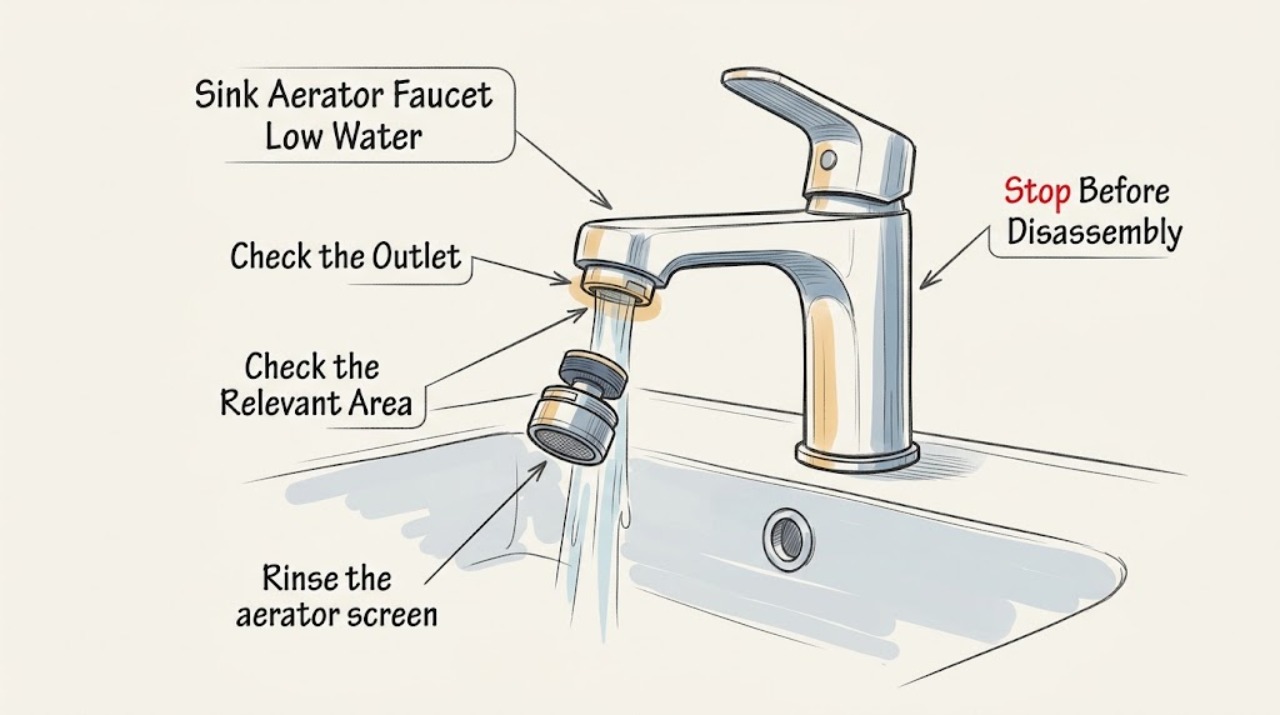
American Standard Sink Aerator Faucet Low Water Pressure: What to Check and What to Do Next
When one American Standard sink faucet has weak flow, first compare the stream at the spout, spray outlet, and both temperature positions, then remove and rinse the aerator and briefly retest with it out. If flow returns, the aerator screen or flow insert is restricted; clean it or identify the exact model before replacing it.
-
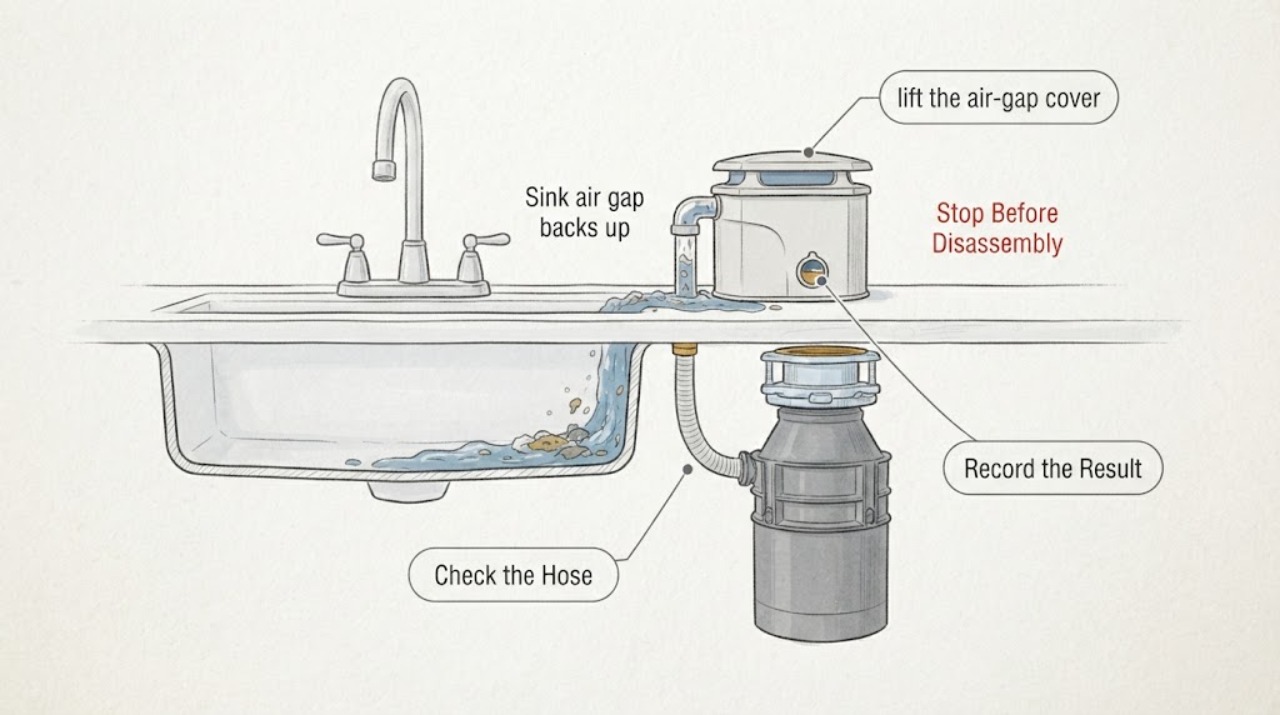
American Standard sink air gap backs up when disposal runs: What to Check and What to Do Next
When an American Standard sink air gap backs up as the garbage disposal runs, the restriction is usually in the air-gap outlet path, the disposal inlet, or the shared drain—not necessarily in the air-gap cap itself. Stop the disposal and keep hands out of it.
-
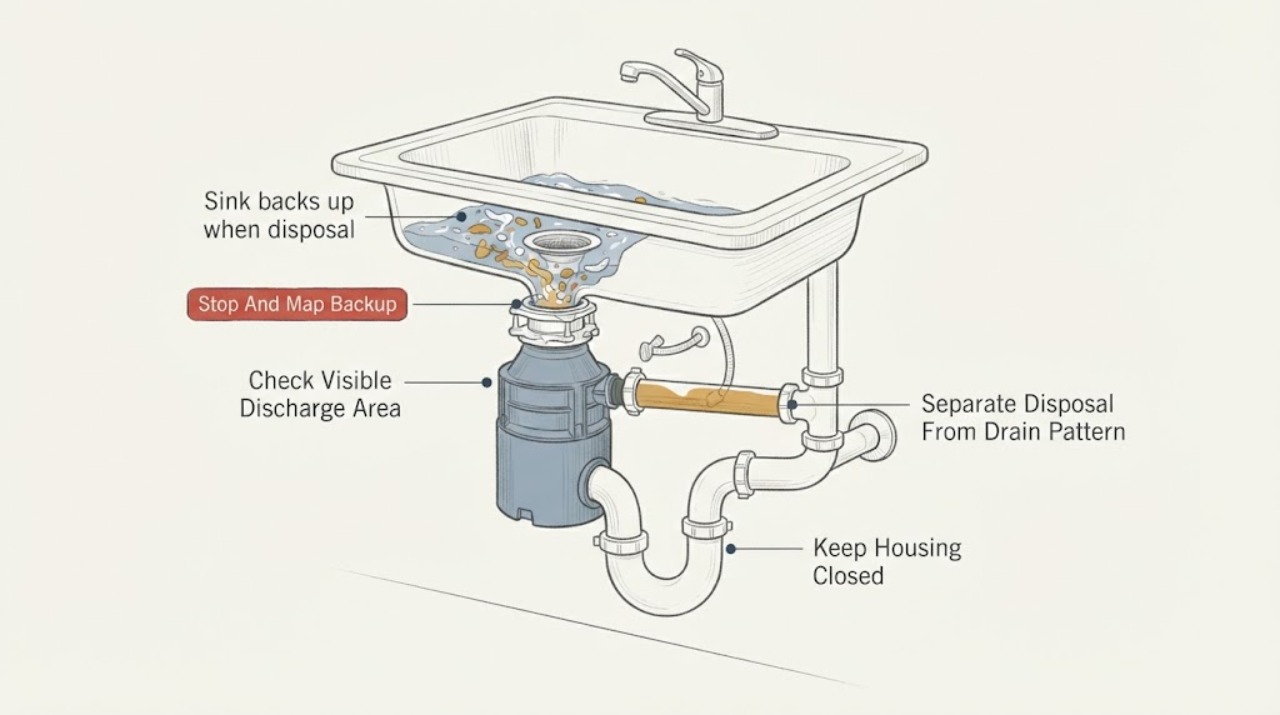
American Standard sink backs up when disposal runs: What to Check and What to Do Next
If an American Standard sink backs up only when the garbage disposal runs, the most likely issue is a restriction downstream of the disposal outlet or in the disposal discharge path; a jammed or non-running disposal can also leave water unable to pass. Turn the disposal off, keep hands and tools out of the opening, and note whether water rises in the disposal bowl, the other bowl, or the connected drain.
-
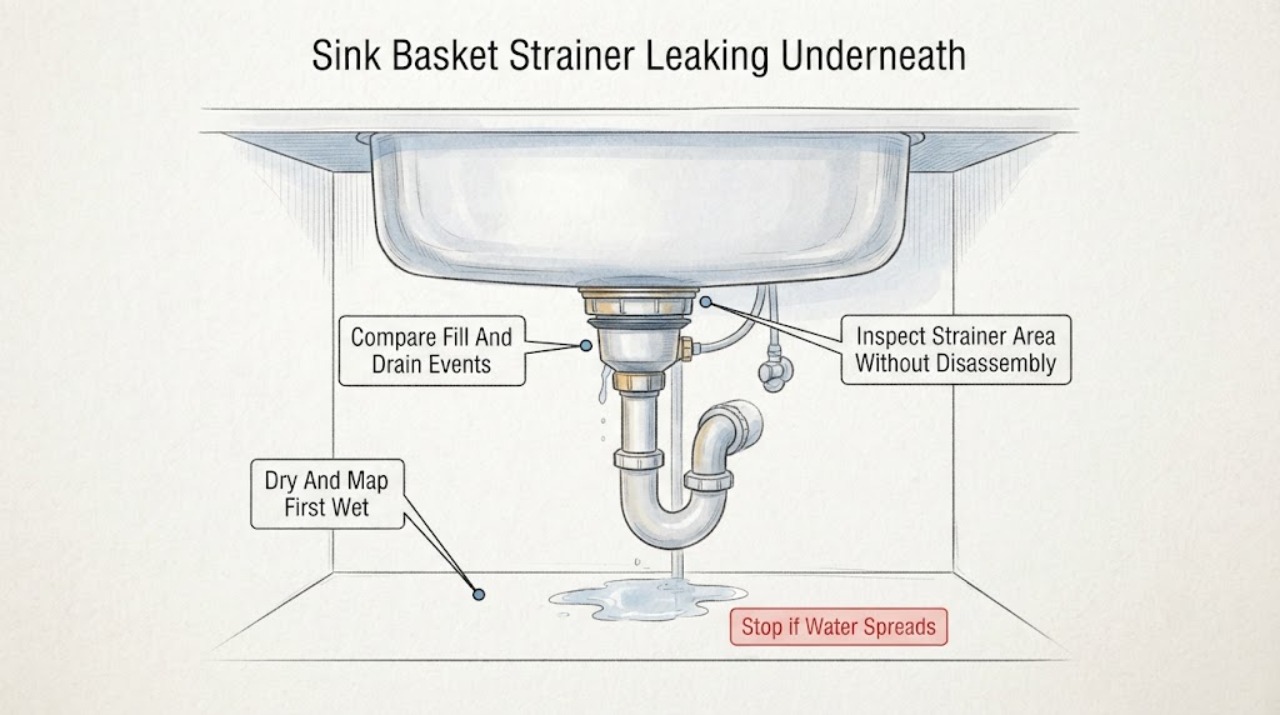
American Standard Sink Basket Strainer Leaking Underneath: What to Check and What to Do Next
Water under an American Standard sink does not prove the basket strainer is the source. First dry the cabinet and identify the first wet point while observing the drain, then compare water entering the basin with water draining through it.
-
American Standard sink cartridge faucet keeps dripping: What to Check and What to Do Next
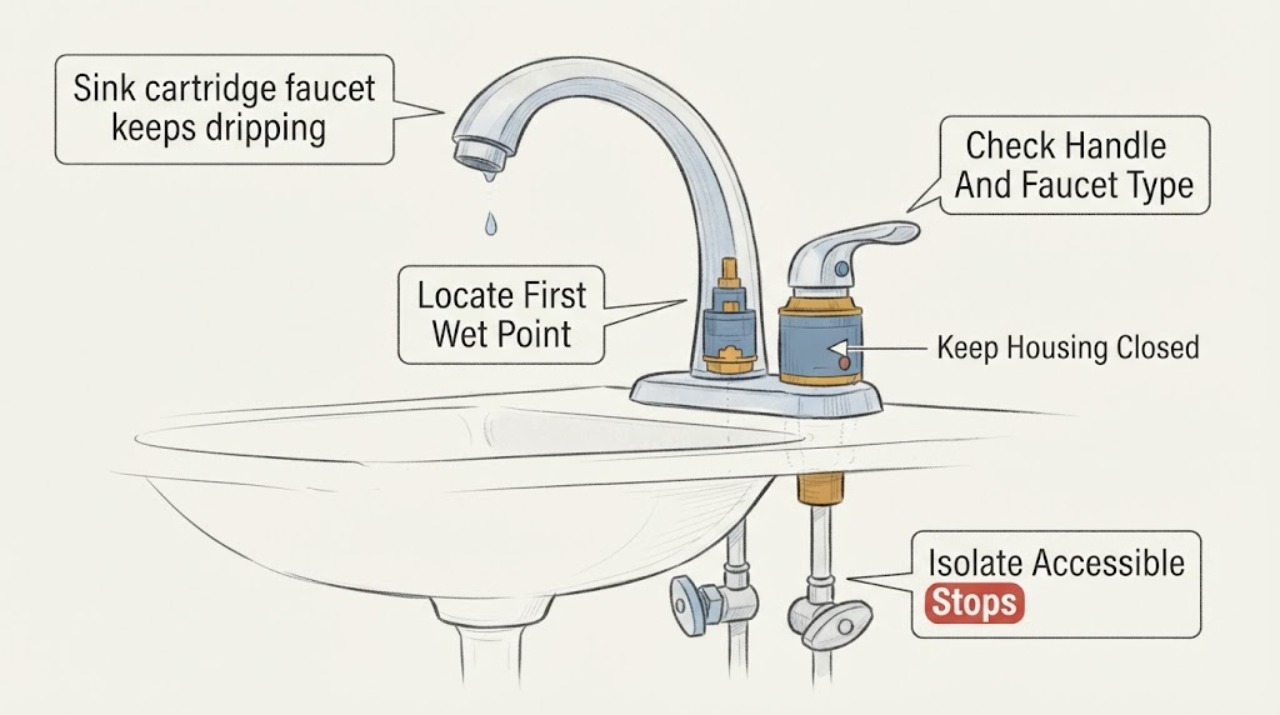
A faucet that drips from the spout after the handle is fully off usually has a shutoff problem in the cartridge or its seals, but first confirm the water is not coming from the handle, spout base, hose connection, or supply fitting. Close the accessible hot and cold stop valves gently, identify the faucet model, and clean only an accessible aerator if flow is distorted.
-
American Standard Sink Cartridge Faucet Low Water Pressure: What to Check and What to Do Next
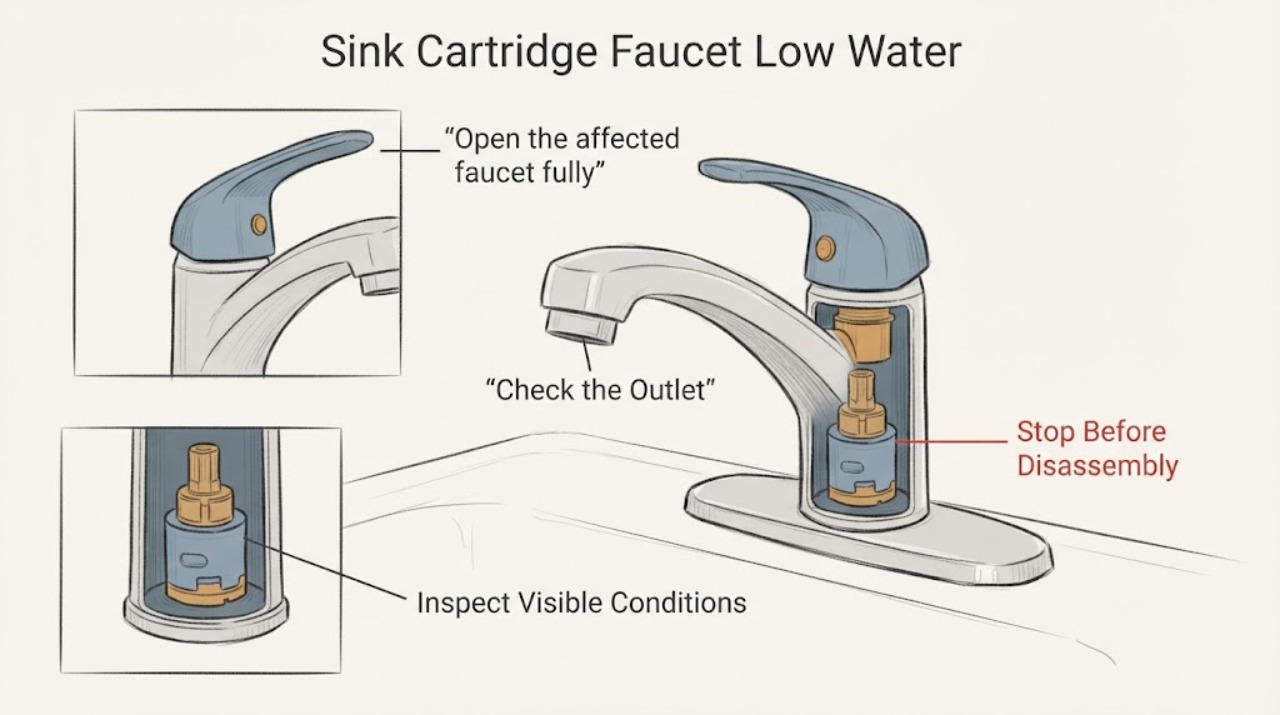
When an American Standard sink faucet has low water pressure, first determine whether the restriction is at the faucet outlet, one supply side, or the whole sink. Remove and rinse a dirty aerator or spray outlet, confirm both stop valves are fully open and the hoses are not kinked, then compare hot and cold flow with another nearby fixture.
-
American standard sink clogged: What to Check and What to Do Next
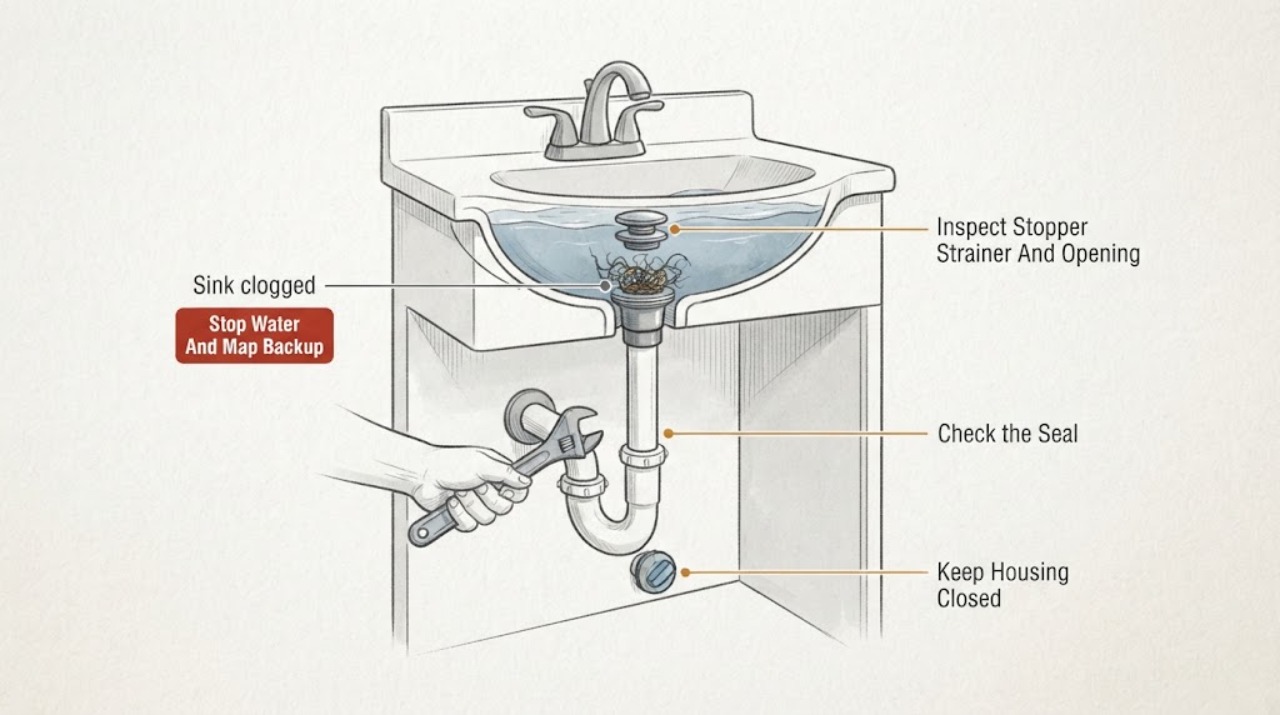
Stop adding water and identify whether only the American Standard sink is slow or whether nearby fixtures also back up. If the bowl is safe to handle, remove the stopper or strainer and clear only visible hair, food, or soap without pushing it farther into the drain.
-
American Standard sink drain branch backs up when disposal runs: What to Check and What to Do Next
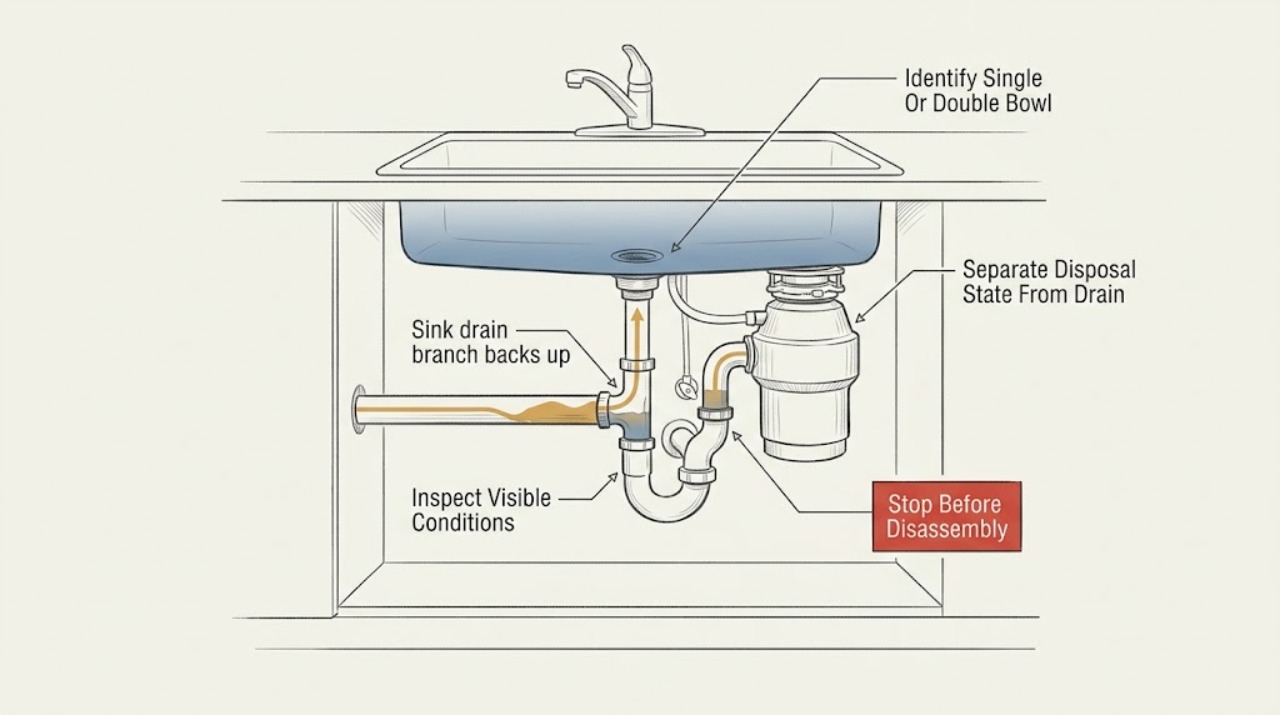
When an American Standard sink branch backs up only while the garbage disposal runs, the usual focus is the shared drain path: the disposal can move water and ground waste into a branch that has a partial obstruction, a restricted trap or tailpiece, a poor connection, or a downstream blockage. Stop grinding, keep hands out of the disposal opening, and clear standing water safely before inspecting the visible area.
-
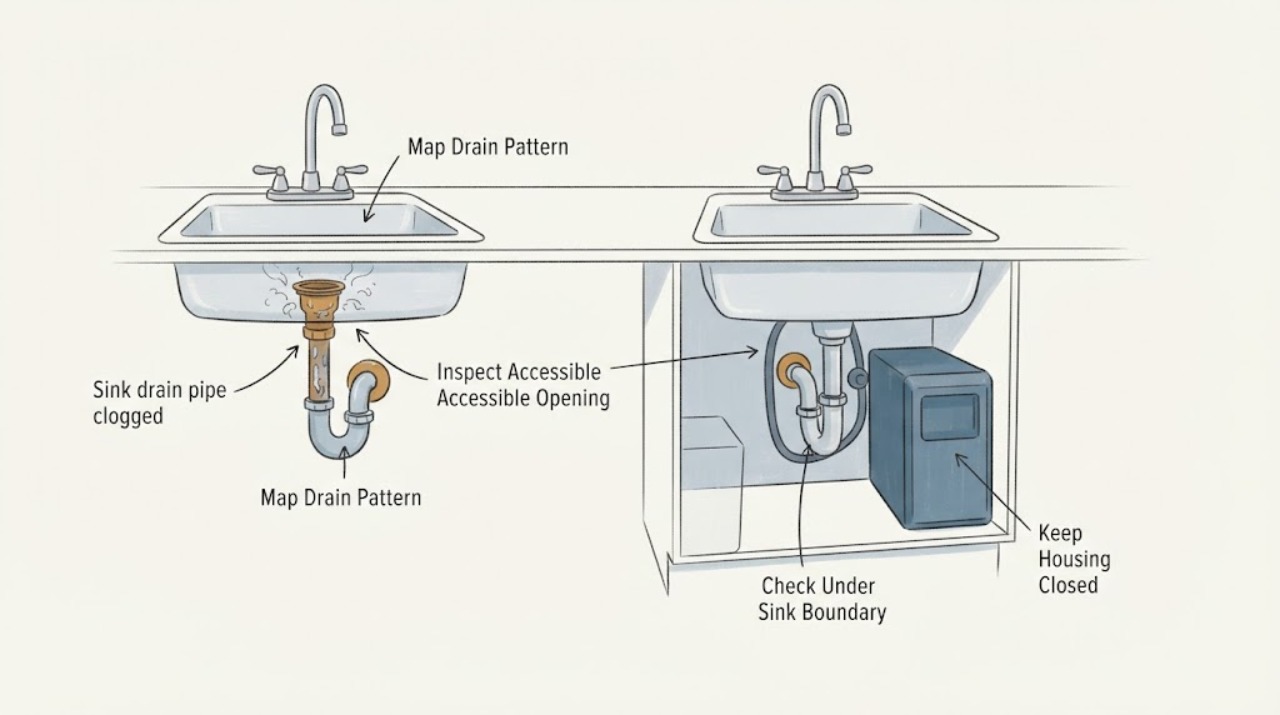
American Standard sink drain pipe clogged: What to Check and What to Do Next
An American Standard sink that holds water may be blocked at the stopper or strainer, the short tailpiece or trap below the basin, or farther downstream in the wall drain. First stop adding water, remove only the accessible stopper or strainer as the sink design allows, and compare this sink with other fixtures.
-
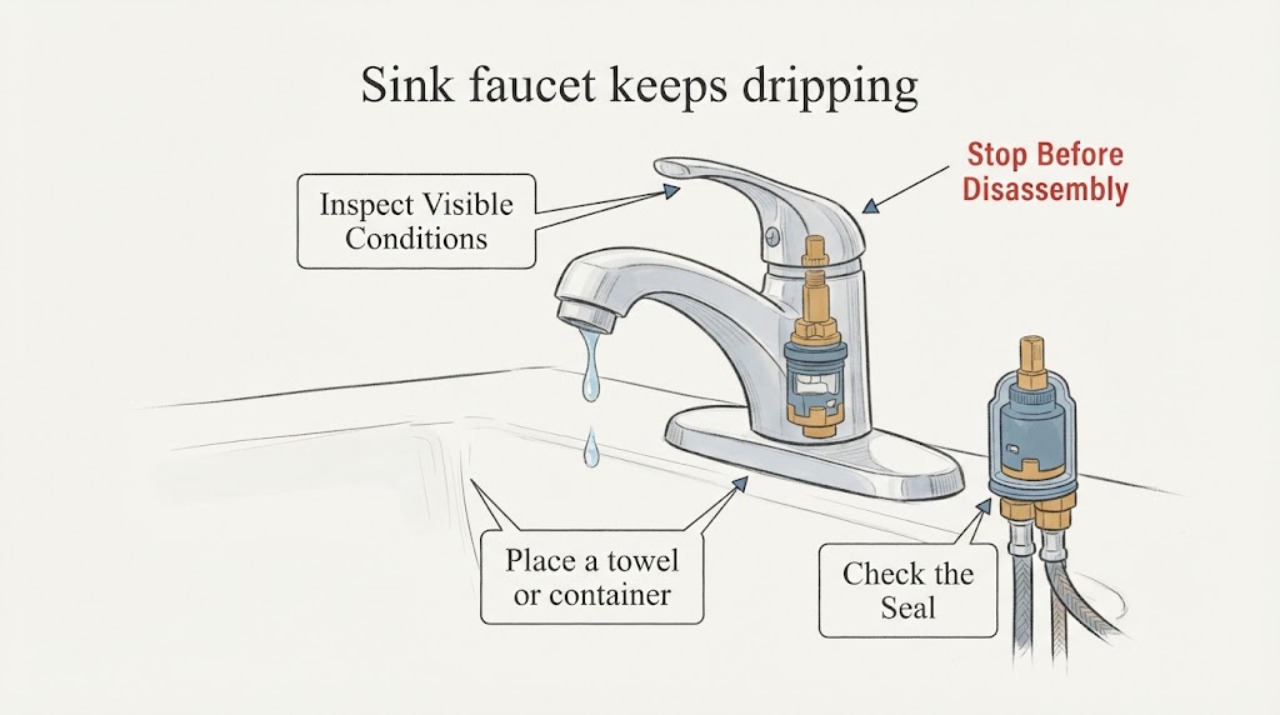
American Standard sink faucet keeps dripping: What to Check and What to Do Next
If an American Standard sink faucet keeps dripping after it is turned off, first identify whether water is coming from the spout, around the handle or faucet base, or from a supply connection below the sink. A spout drip with dry external connections points toward the faucet's shutoff valve or cartridge; a drip under the sink points toward a fitting, hose, O-ring, or body connection instead.
-
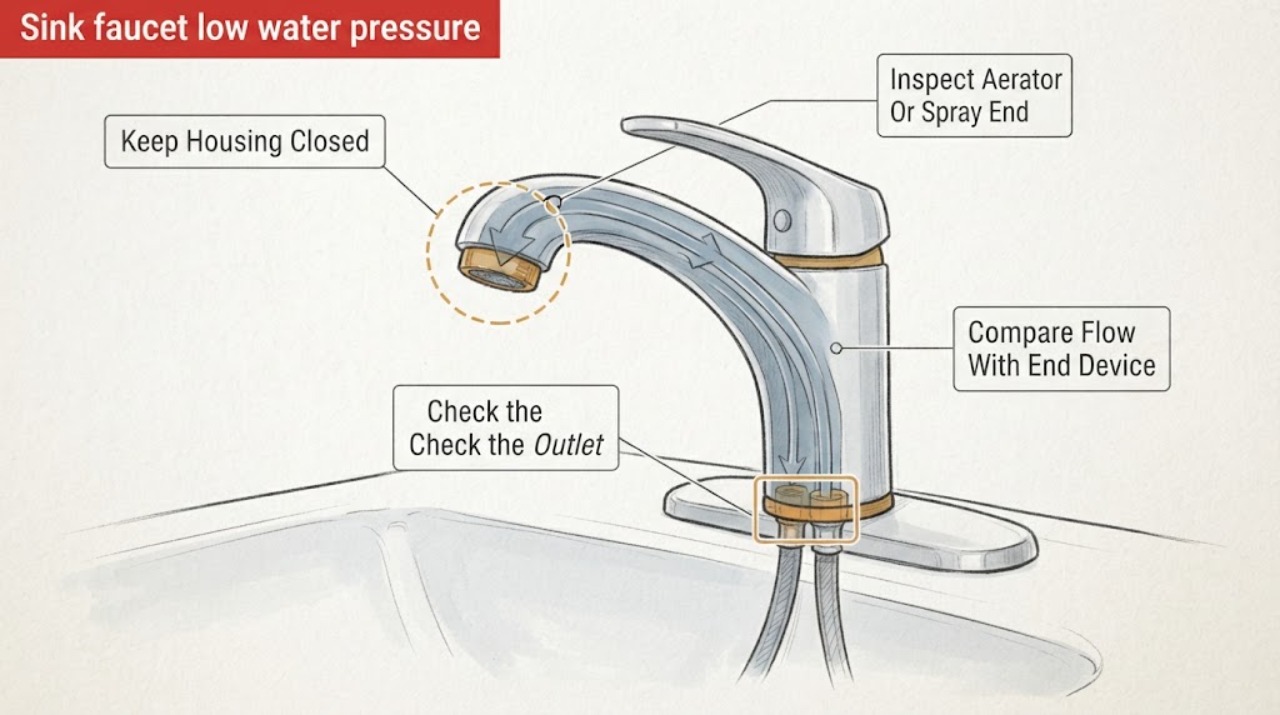
American standard sink faucet low water pressure: What to Check and What to Do Next
When an American Standard sink faucet has low flow, first compare it with another nearby faucet and compare hot with cold. If only this outlet is weak, close the handles, place a cloth over the drain, and inspect the removable aerator or spray head for scale or debris; clean it only as the faucet instructions allow, then test with the end device removed into the sink.
-
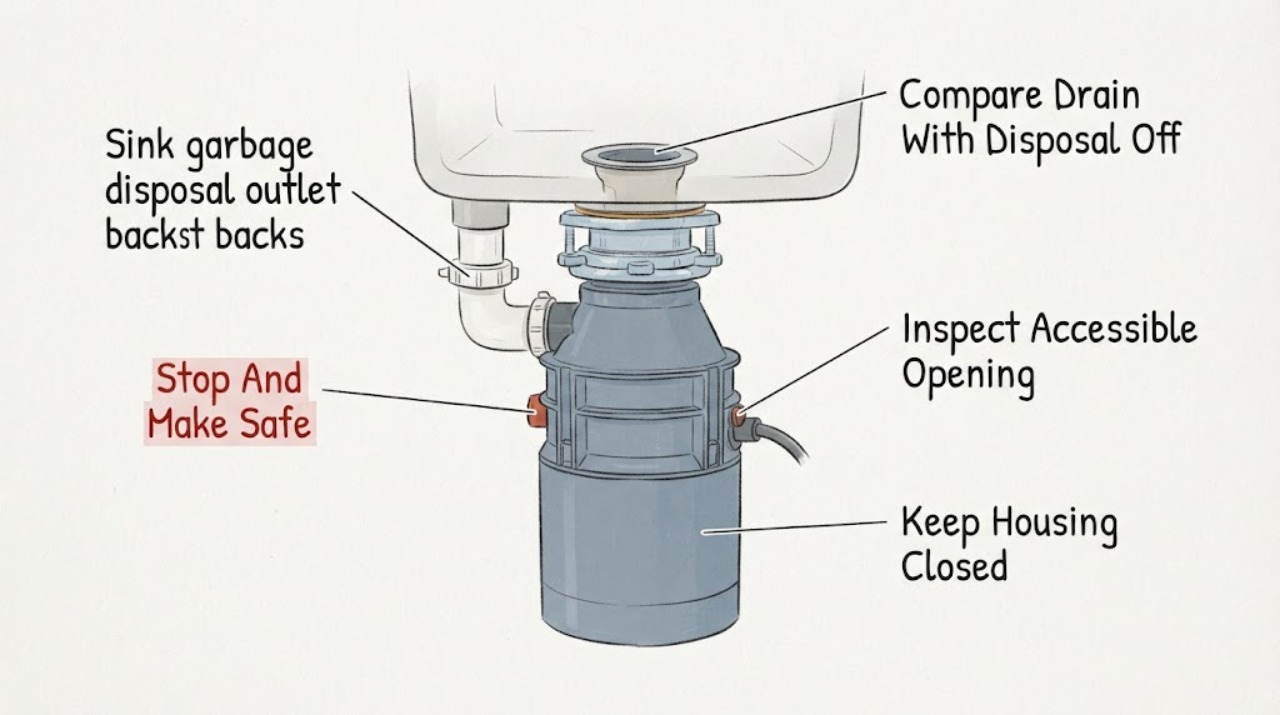
American standard sink garbage disposal outlet backs up when runs: What to Check and What to Do Next
Stop the garbage disposal as soon as water rises at the American Standard sink outlet. With the switch off, keep hands and tools out of the disposer, remove standing water only as needed, and note whether the sink drains normally when the disposer is off and whether a second bowl also rises.
-
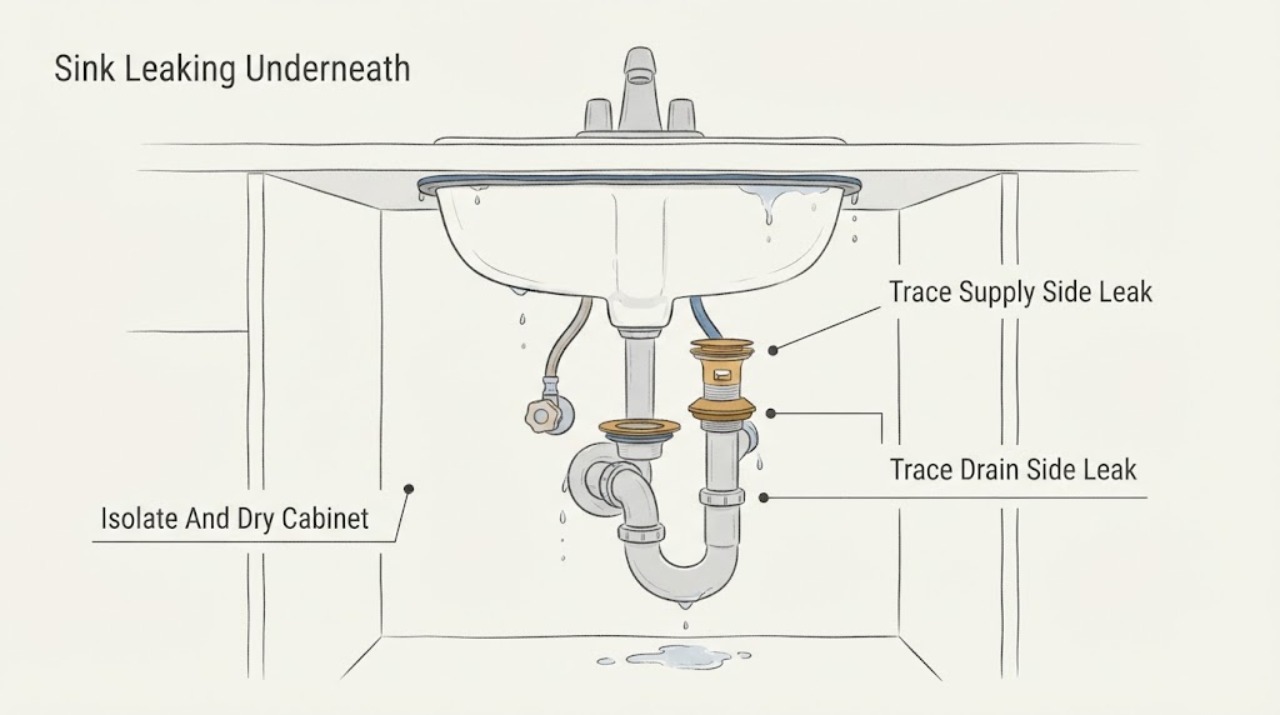
American Standard Sink Leaking Underneath: What to Check and What to Do Next
Water under an American Standard sink can come from a faucet supply connection, the faucet mounting area, the drain flange or gasket, the pop-up or strainer, the P-trap, or a hose or pipe farther back in the cabinet. First stop using the sink, empty and dry the cabinet, and place a dry paper towel beneath each visible joint.
-
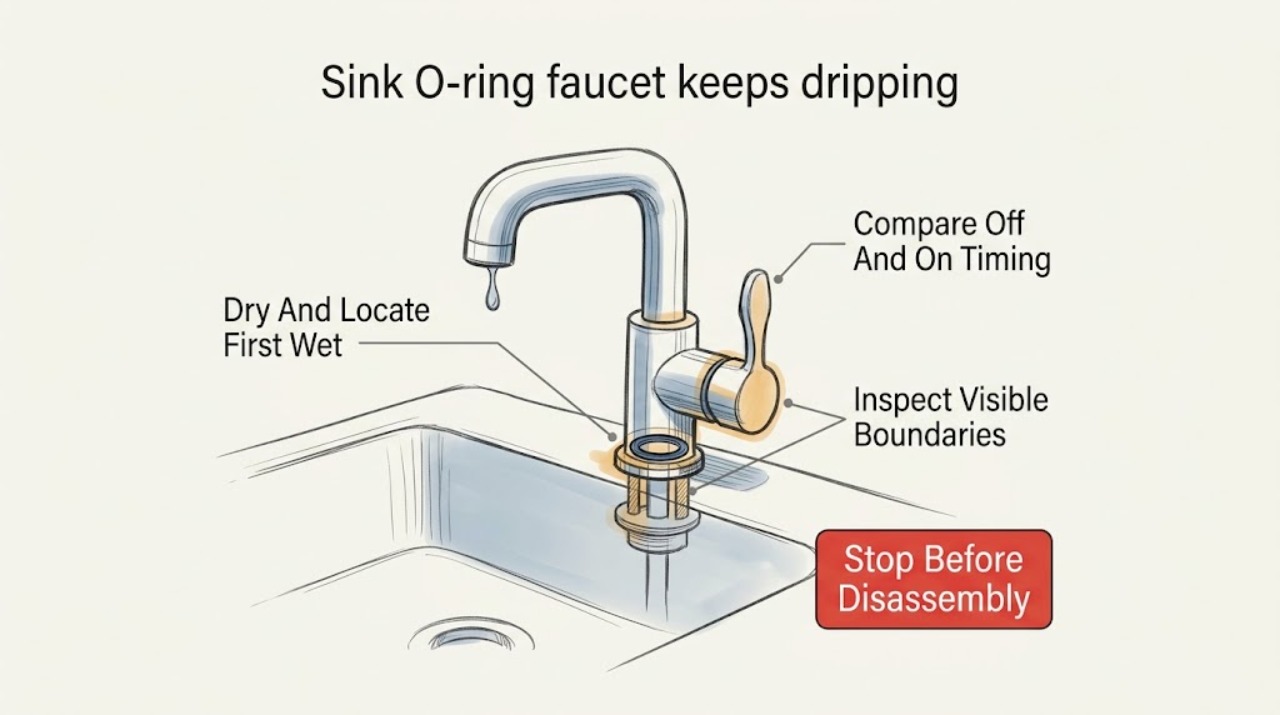
American Standard sink O-ring faucet keeps dripping: What to Check and What to Do Next
An American Standard sink faucet that keeps dripping is not automatically an O-ring problem. First dry the faucet and identify whether water comes from the spout outlet with the handles off, from the rotating spout base or handle area, or from a supply connection below the sink.
-
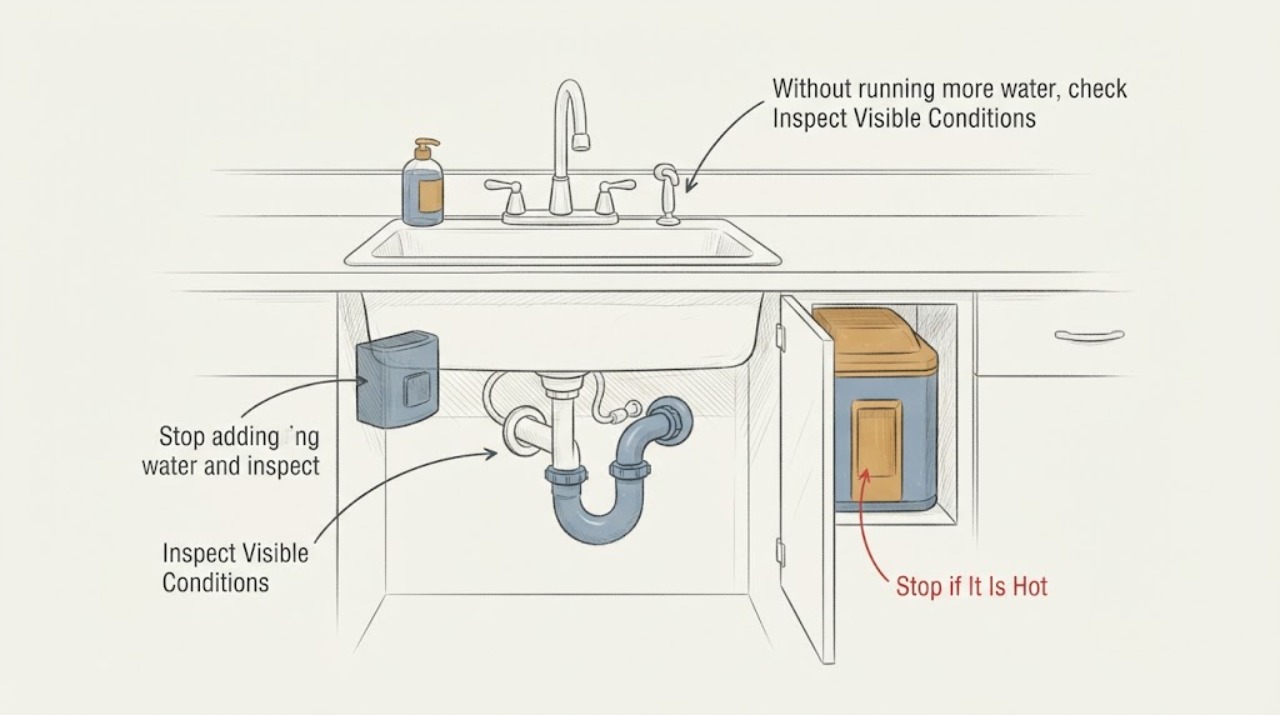
American standard sink p trap clogged: What to Check and What to Do Next
If an American Standard sink is slow or blocked and the P-trap appears to be involved, stop adding water and inspect only from the outside first. Note standing water, a wet or corroded trap, and whether another fixture also backs up.
-
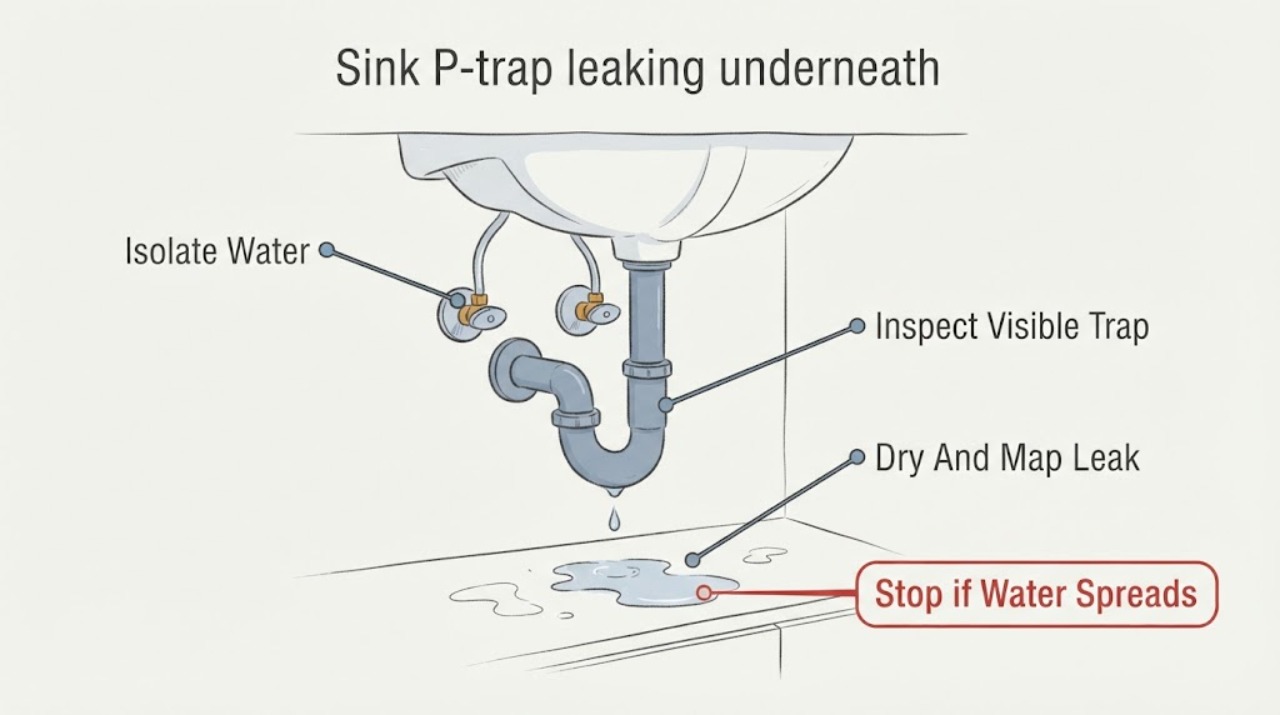
American Standard sink P-trap leaking underneath: What to Check and What to Do Next
Water under an American Standard sink can come from a P-trap joint, the sink tailpiece or drain body, a supply connection, a wall connection, or water that ran down from the faucet rather than from the trap. Stop using the sink, empty standing water carefully, and dry the underside so you can identify the first wet point during one small controlled drain test.
-
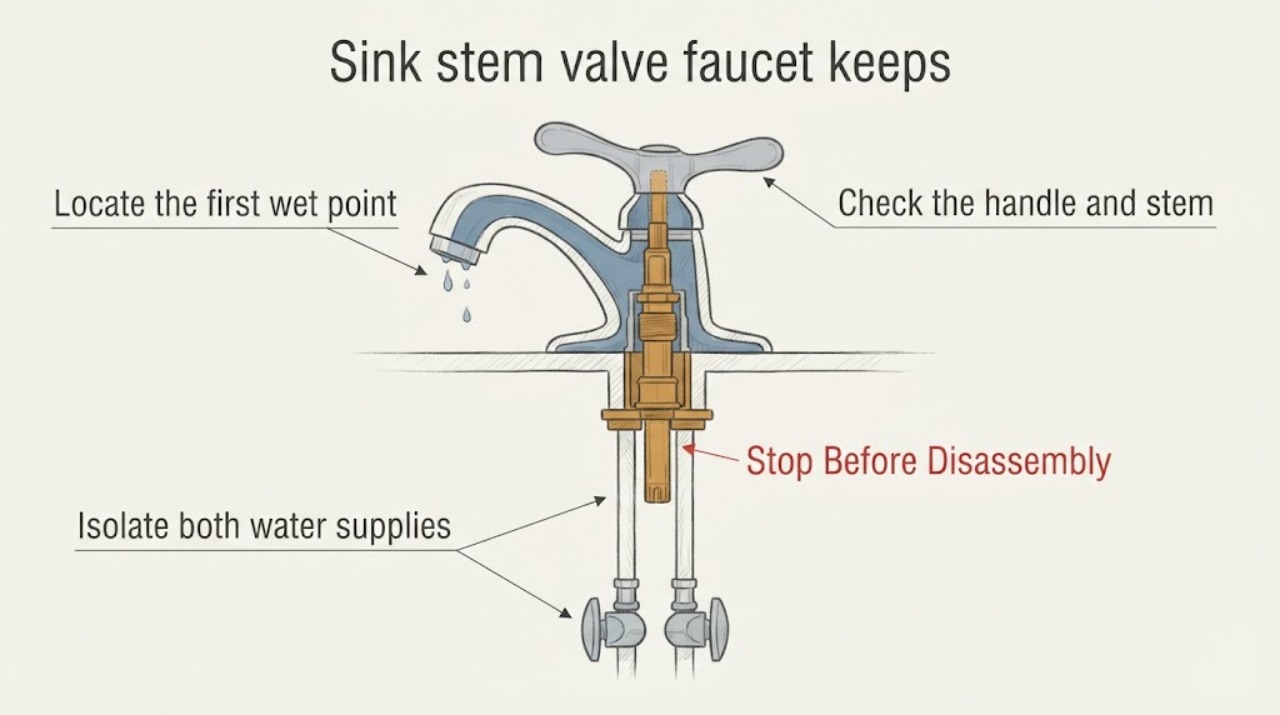
American Standard sink stem valve faucet keeps dripping: What to Check and What to Do Next
First find where the American Standard sink faucet is dripping: from the spout with the handles off, around a handle or valve stem, or below the sink at a supply connection. Turn off the hot and cold stop valves before opening a handle or valve area, dry the faucet, and observe whether the drip stops.
-
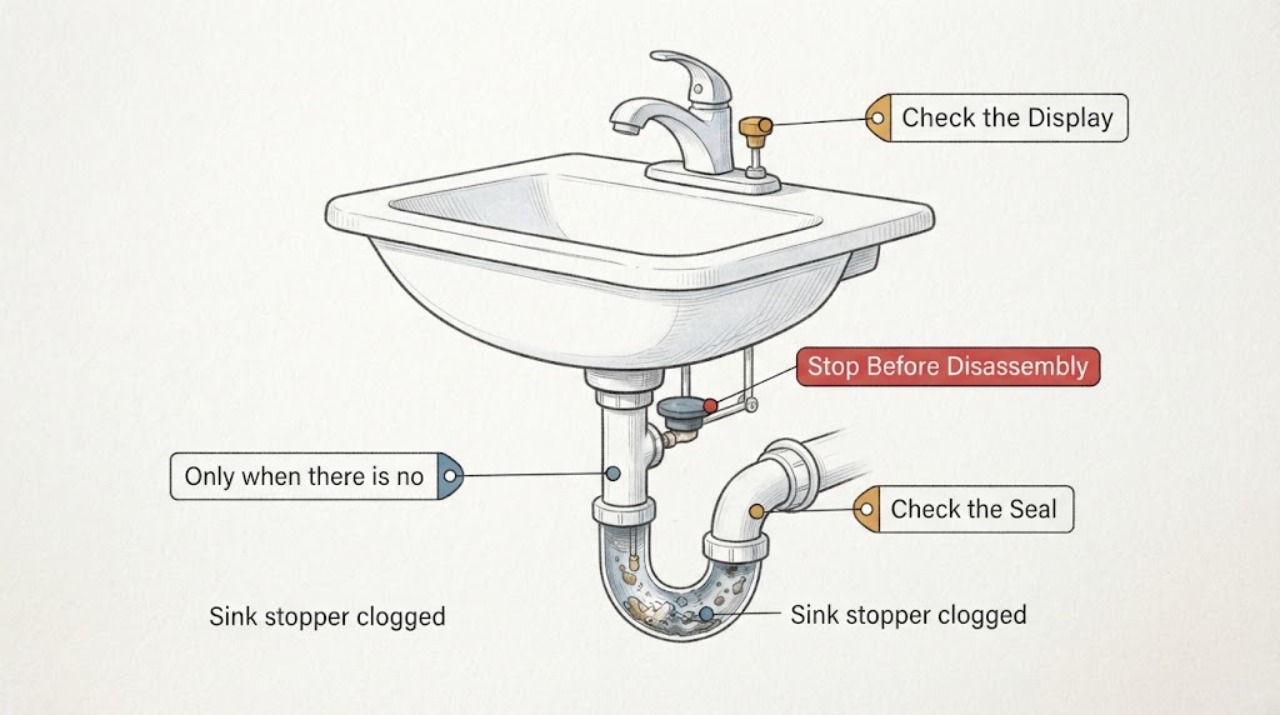
American Standard sink stopper clogged: What to Check and What to Do Next
A clogged American Standard sink stopper is often a debris restriction around the stopper head or drain opening, but a blockage farther down the trap or branch drain can feel the same. First stop adding water and identify whether the stopper is stuck down, lifts but drains slowly, or lifts normally while the basin remains full.
-
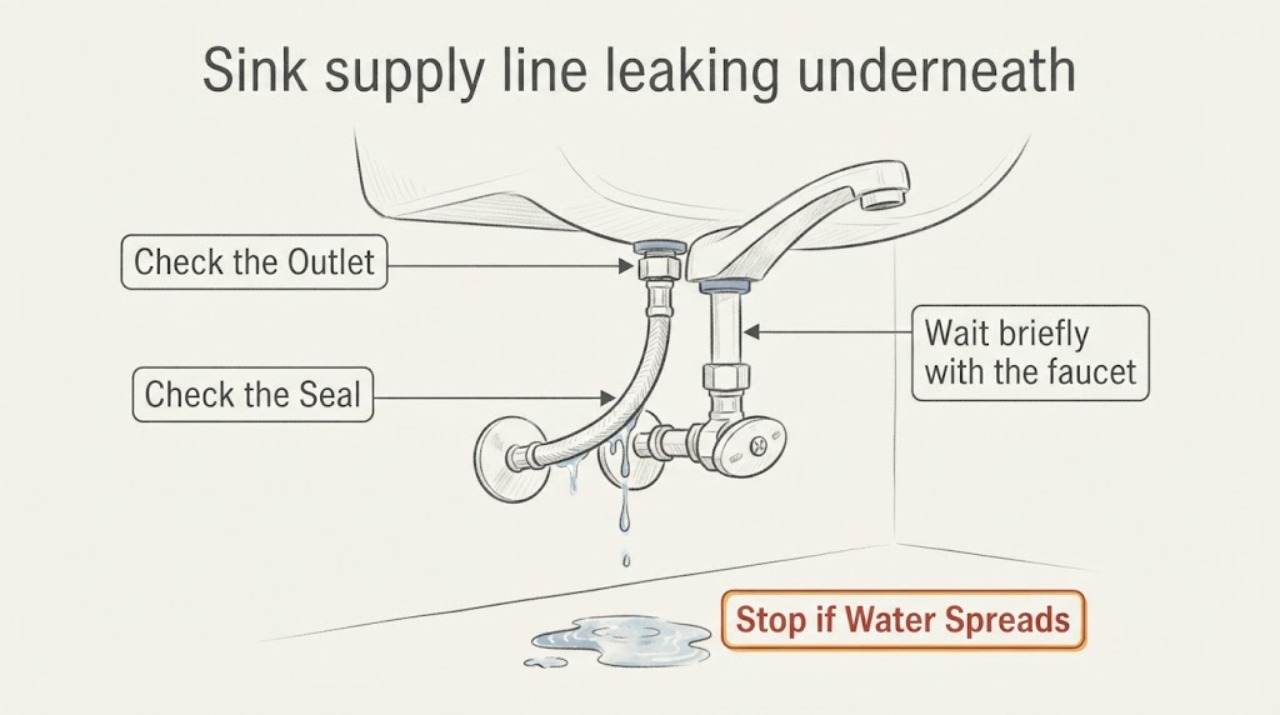
American standard sink supply line leaking underneath: What to Check and What to Do Next
If an American Standard sink supply line is leaking underneath, first protect the cabinet and identify the first wet point with the faucet off. A continuous drip at a shutoff, braided tube, compression connection, or faucet inlet is a pressurized supply leak; water that appears only while the faucet or sink drain is used may instead come from a hose, faucet body, drain, or trap.
-
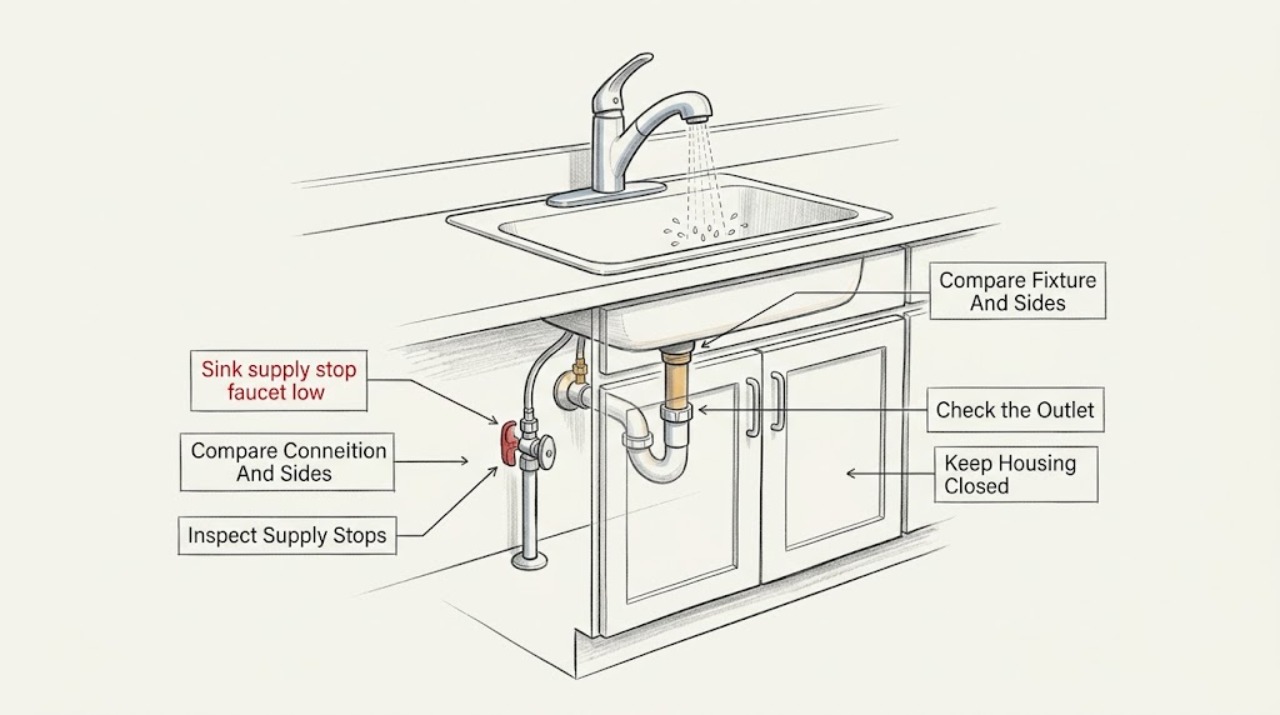
American Standard sink supply stop faucet low water pressure: What to Check and What to Do Next
First determine whether low flow affects only this American Standard faucet or the whole sink, then compare hot and cold flow. If one side is weak, check that its accessible supply stop is fully open and not visibly leaking; if both sides are weak only at the faucet, inspect an accessible aerator or spray outlet for debris.
-
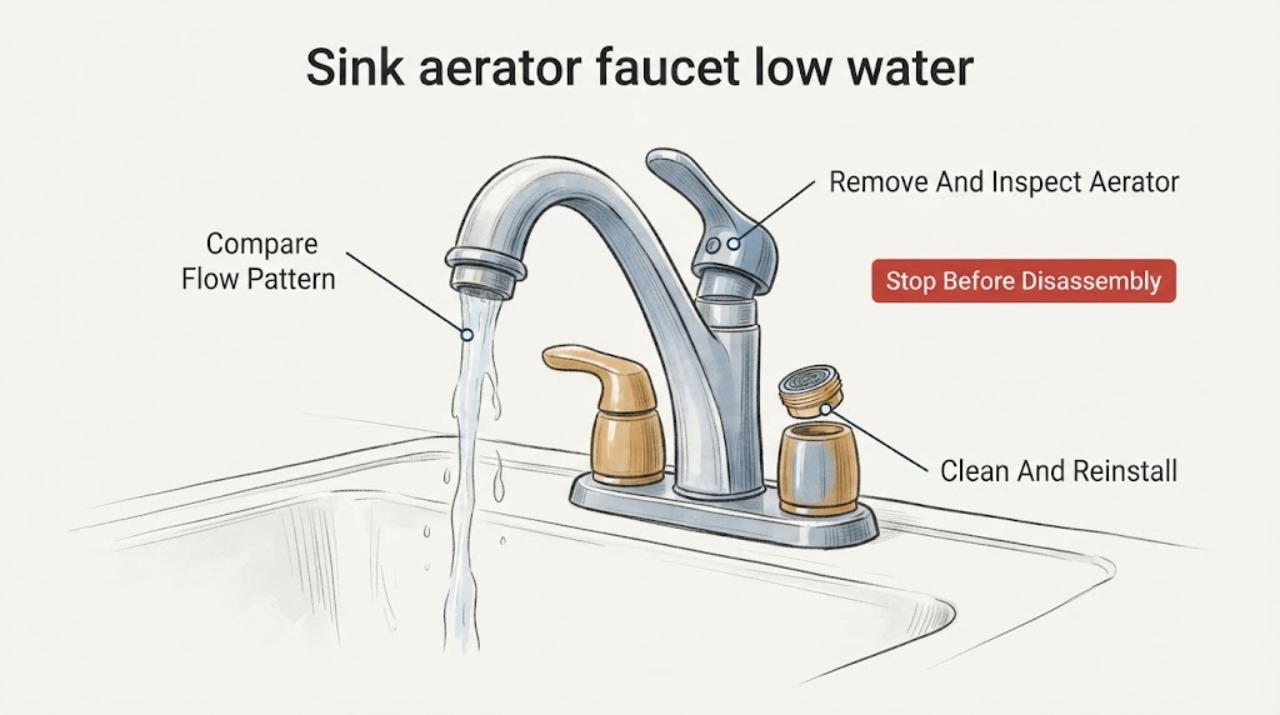
Delta sink aerator faucet low water pressure: What to Check and What to Do Next
If only this Delta sink faucet has weak flow, compare hot and cold flow and another nearby fixture first. Delta says a clogged aerator or flow restrictor can greatly reduce faucet flow; remove the aerator only as the exact faucet instructions allow, clean its screen and gasket without force, and reinstall it correctly.
-
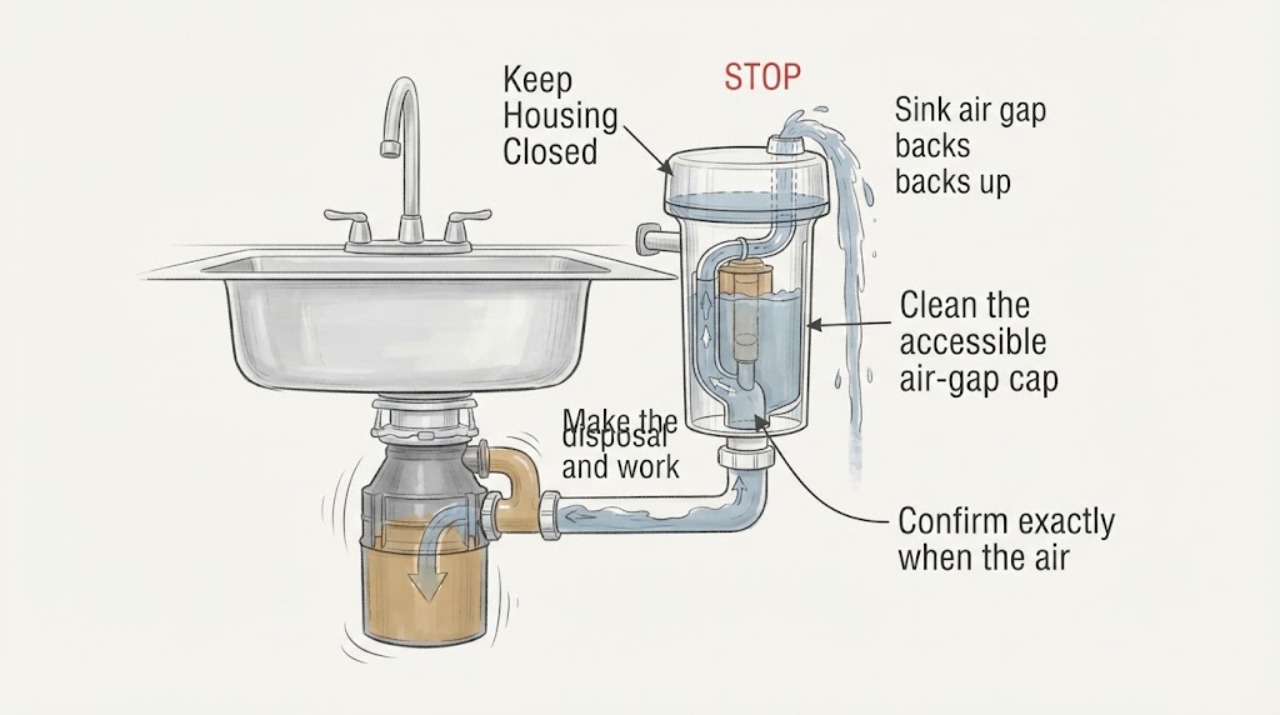
Delta sink air gap backs up when disposal runs: What to Check and What to Do Next
A Delta sink air gap that spills or backs up when the garbage disposal runs usually points to a restriction downstream of the air gap: the small cap or vent may be dirty, the hose to the disposal may be kinked or clogged, the disposal inlet may still have its installation knockout plug, or the sink drain or trap may be restricted.
-
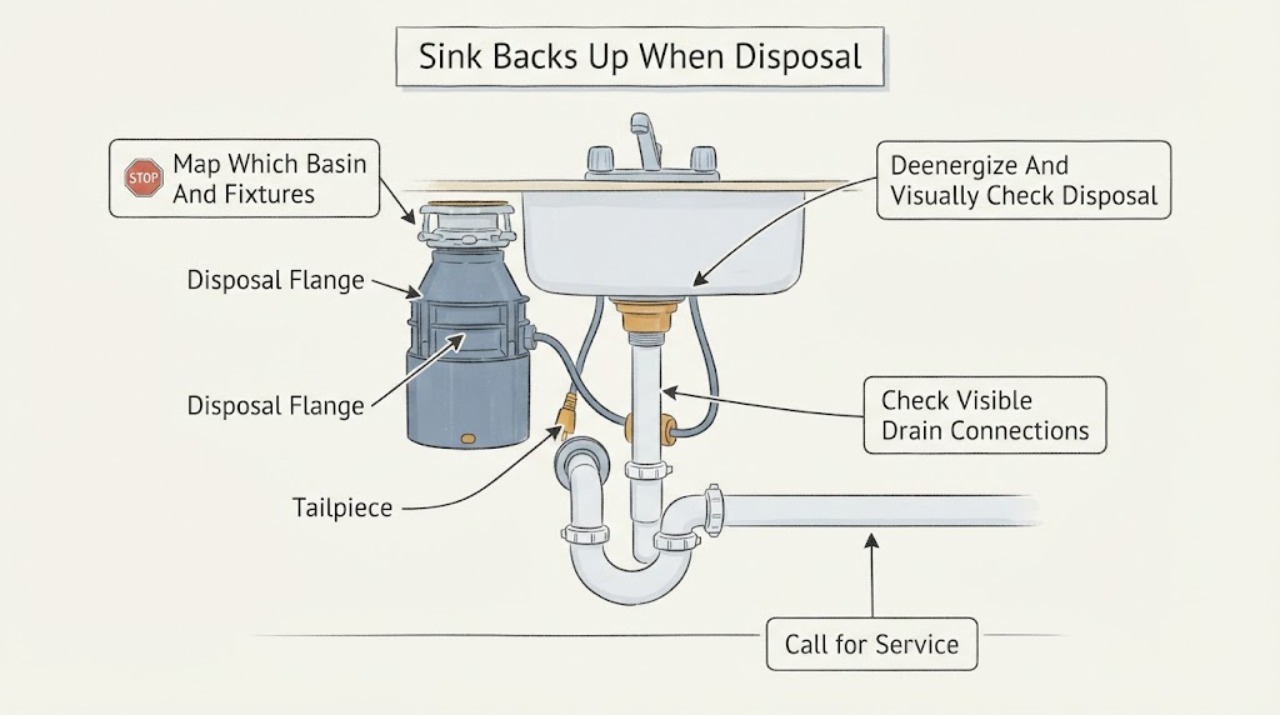
Delta Sink Backs Up When Disposal Runs: What to Check and What to Do Next
If a Delta sink rises or backs up when the garbage disposal runs, the disposal is moving water into a drain path that is restricted, or the disposal itself is jammed or not moving water as expected. First stop adding water and compare whether one basin or both basins rise, whether the disposal runs normally or only hums, and whether another nearby fixture drains slowly.
-
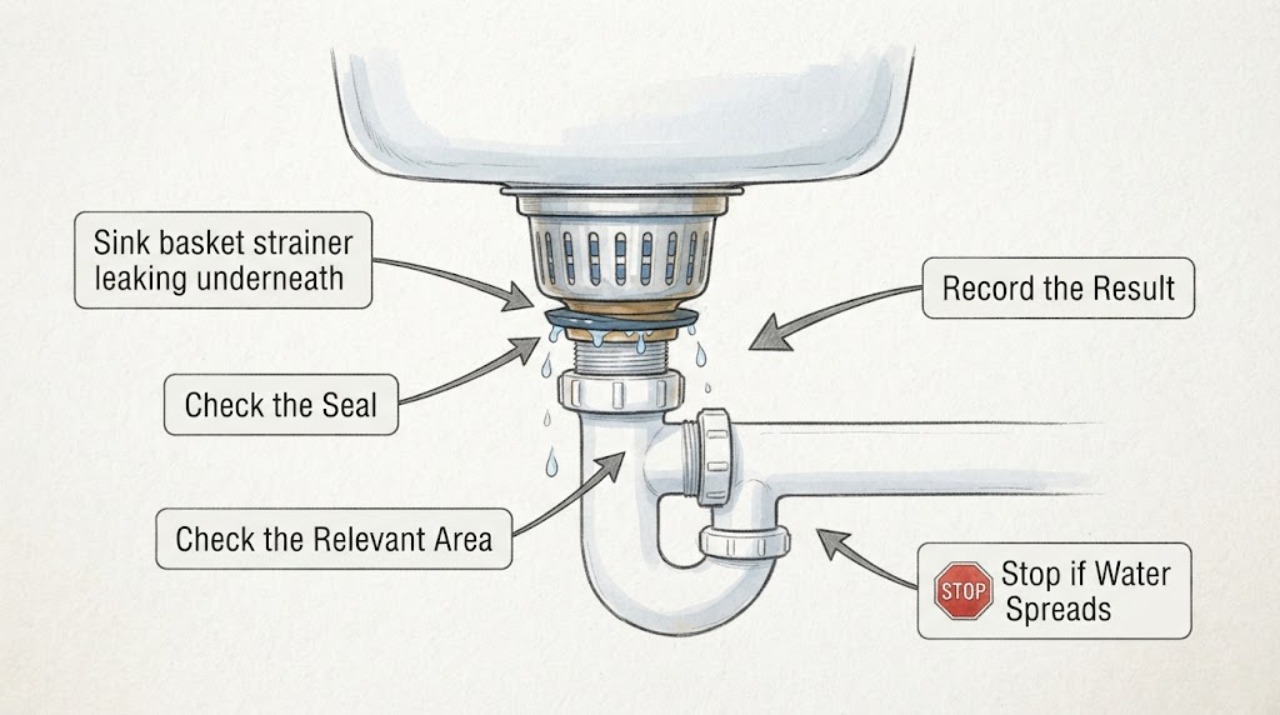
Delta sink basket strainer leaking underneath: What to Check and What to Do Next
Stop using the Delta sink until you know where the water starts. Dry the underside, place a dry tissue or paper towel below the basket strainer, and add only a small amount of clean water to the sink while watching from a safe position.
-
Delta Sink Cartridge Faucet Keeps Dripping: What to Check and What to Do Next
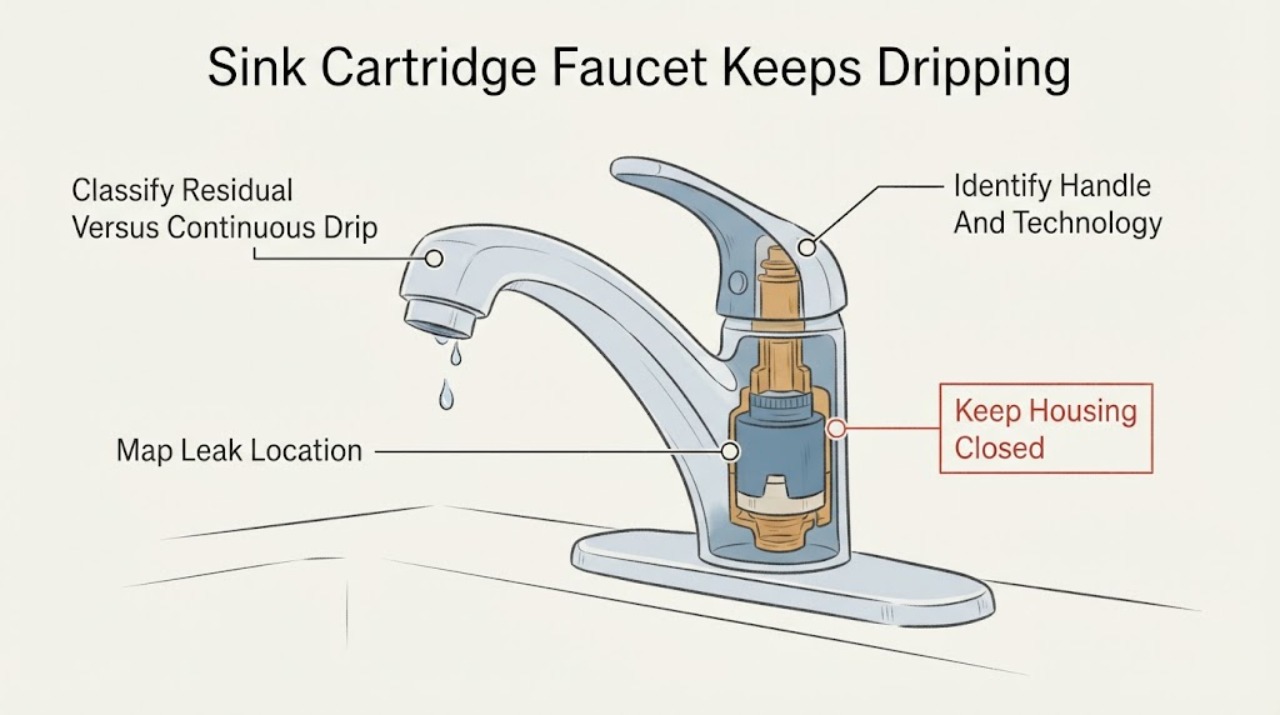
A Delta sink faucet that keeps dripping with the handle off may have a worn or contaminated cartridge, but the drip location and faucet design matter before choosing a part. First distinguish a short-lived drop of retained water from a continuous drip, then classify whether water comes from the spout, around the handle or base, or underneath the sink.
-
Delta sink clogged: What to Check and What to Do Next
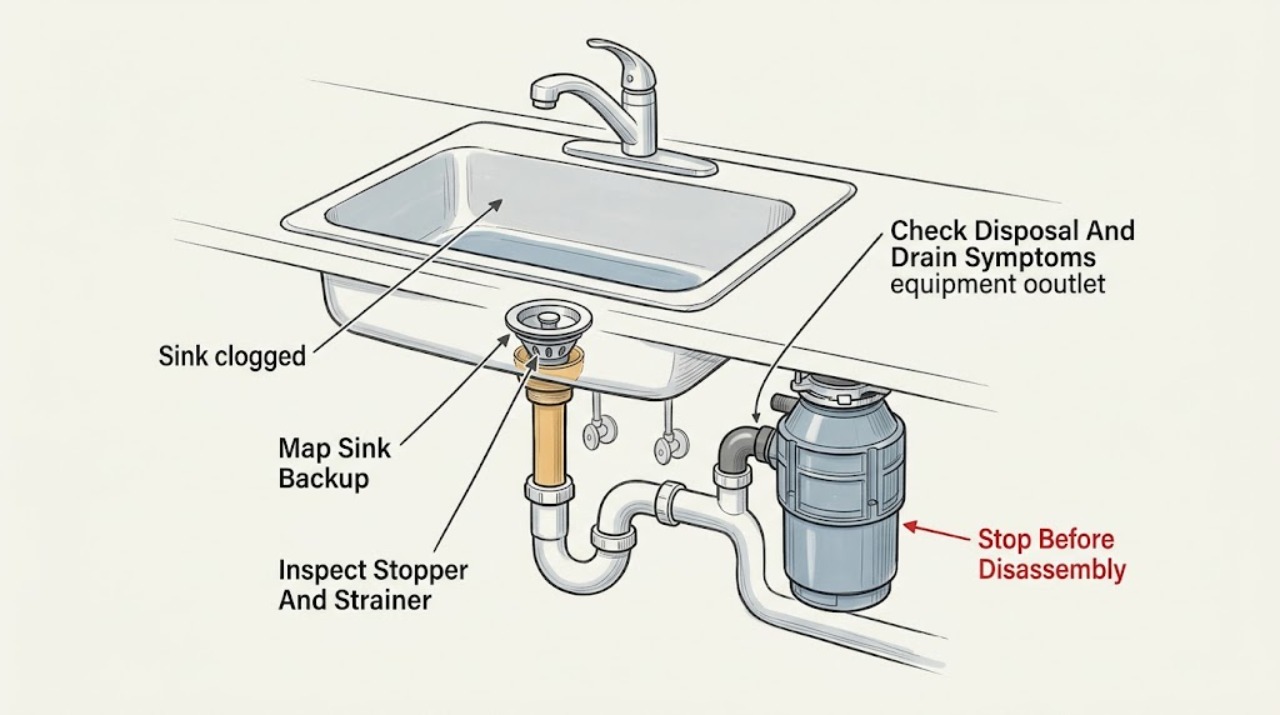
For a clogged Delta sink, first stop adding water and identify whether the water is standing in one bowl, both bowls, or also backing up in another fixture. Remove visible debris from the strainer or stopper only from above; do not reach into a garbage disposal or use chemical drain cleaner.
-
Delta sink drain pipe clogged: What to Check and What to Do Next
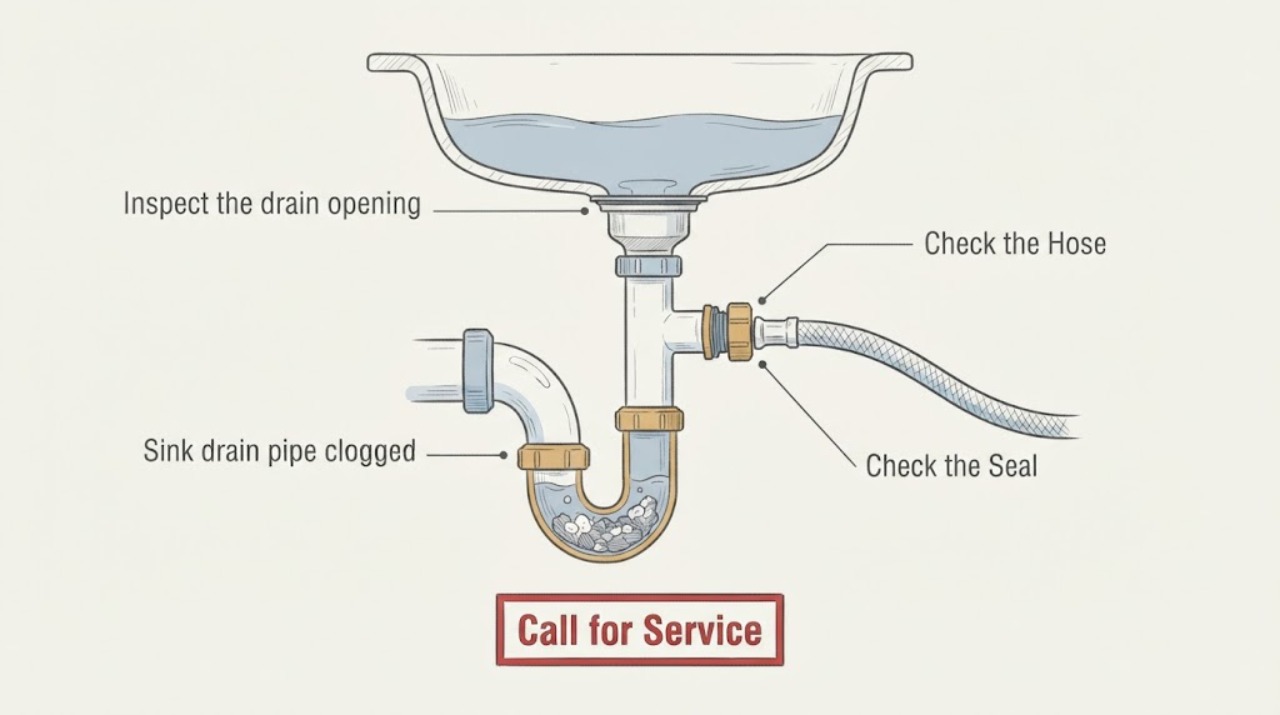
A clogged Delta sink drain is usually cleared by working from the opening toward the P-trap and downstream pipe, but first confirm that the symptom is a drain blockage rather than a supply leak. Dry the cabinet, inspect the stopper and drain opening, then use a properly sealed sink plunger if no chemical cleaner is present.
-
Delta Sink Faucet Keeps Dripping: What to Check and What to Do Next
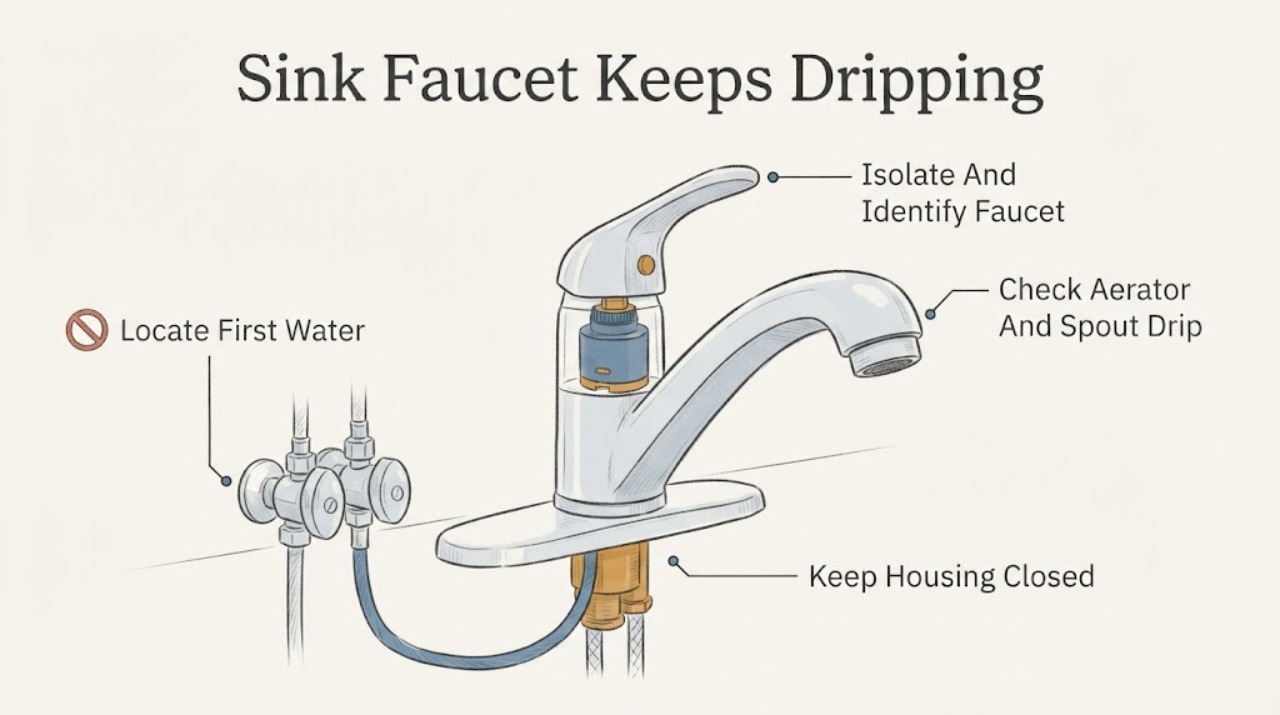
For a Delta sink faucet that keeps dripping, first identify whether water is coming from the spout or aerator when the faucet is off, around a handle or base, or from a connection underneath the sink. A spout drip can come from sediment or worn seats and springs on some two-handle designs, or a model-specific cartridge or valve on a single-handle or DST design.
-
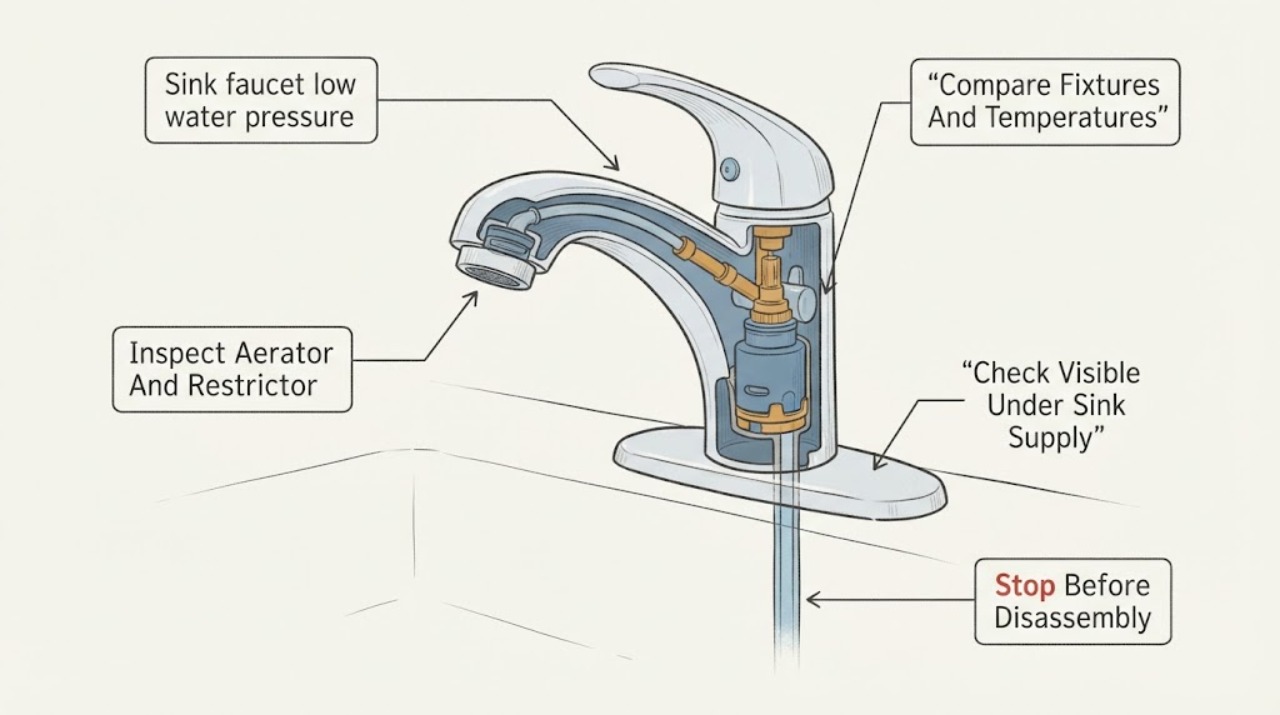
Delta sink faucet low water pressure: What to check and what to do next
Low pressure at a Delta sink faucet is usually a restriction or supply problem, not a reason to remove the faucet's flow-control parts. First compare the affected faucet with another nearby fixture and test hot and cold separately.
-
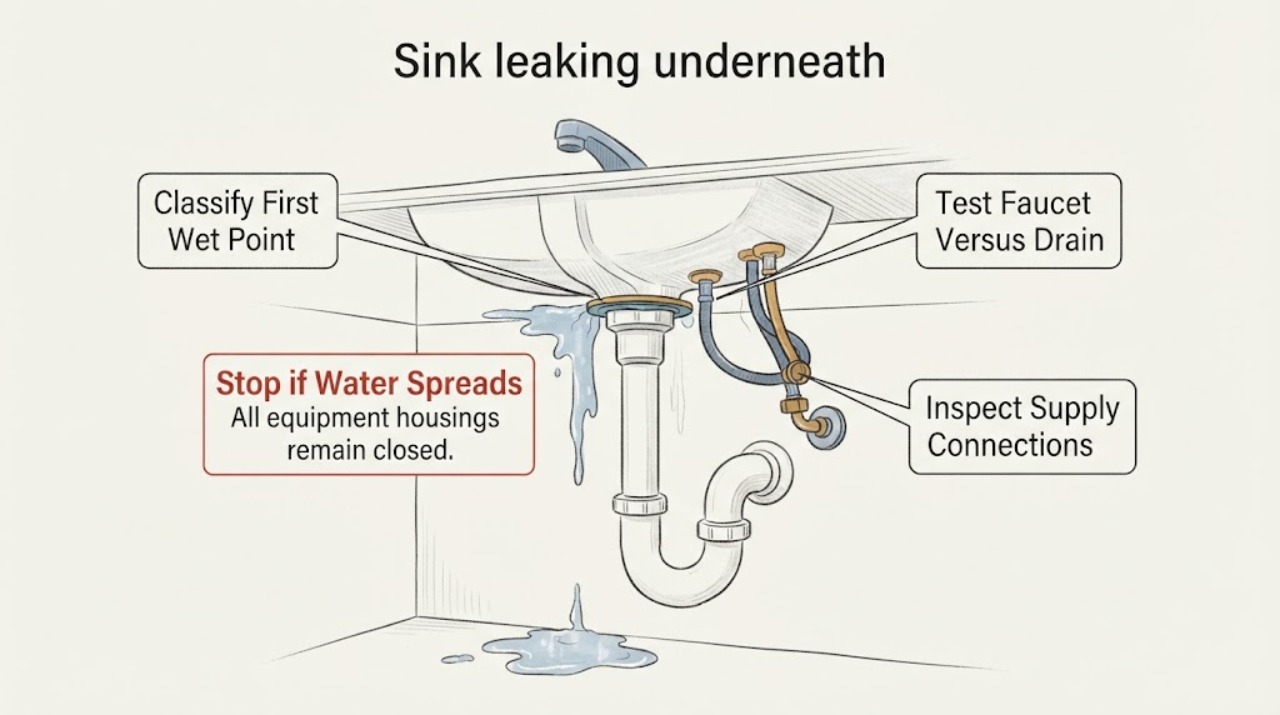
Delta sink leaking underneath: What to Check and What to Do Next
A Delta sink that leaks underneath must first be separated into a pressurized supply-side leak, a faucet body or mounting leak, a drain-side leak, or water arriving from the wall, countertop, or another appliance. Dry the area, place a paper towel under separate connections, and briefly run water while watching from a safe position; the first wet point matters more than where the puddle collects.
-
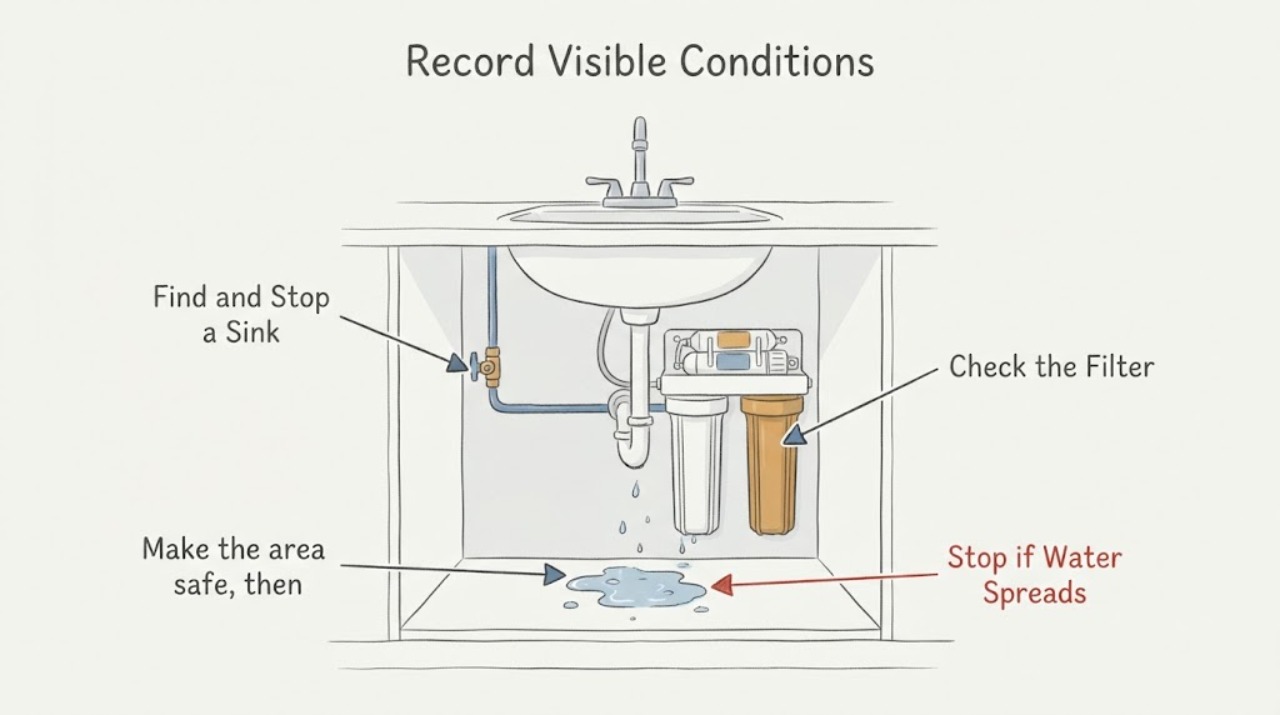
How to Find and Stop a Sink Leak Around a Filter
Turn off the sink's local water supply if it is safe, dry the area, and identify the first wet point. A leak at a filtered faucet or aerator, an under-sink filter housing or connection, and a drain joint need different repairs.
-
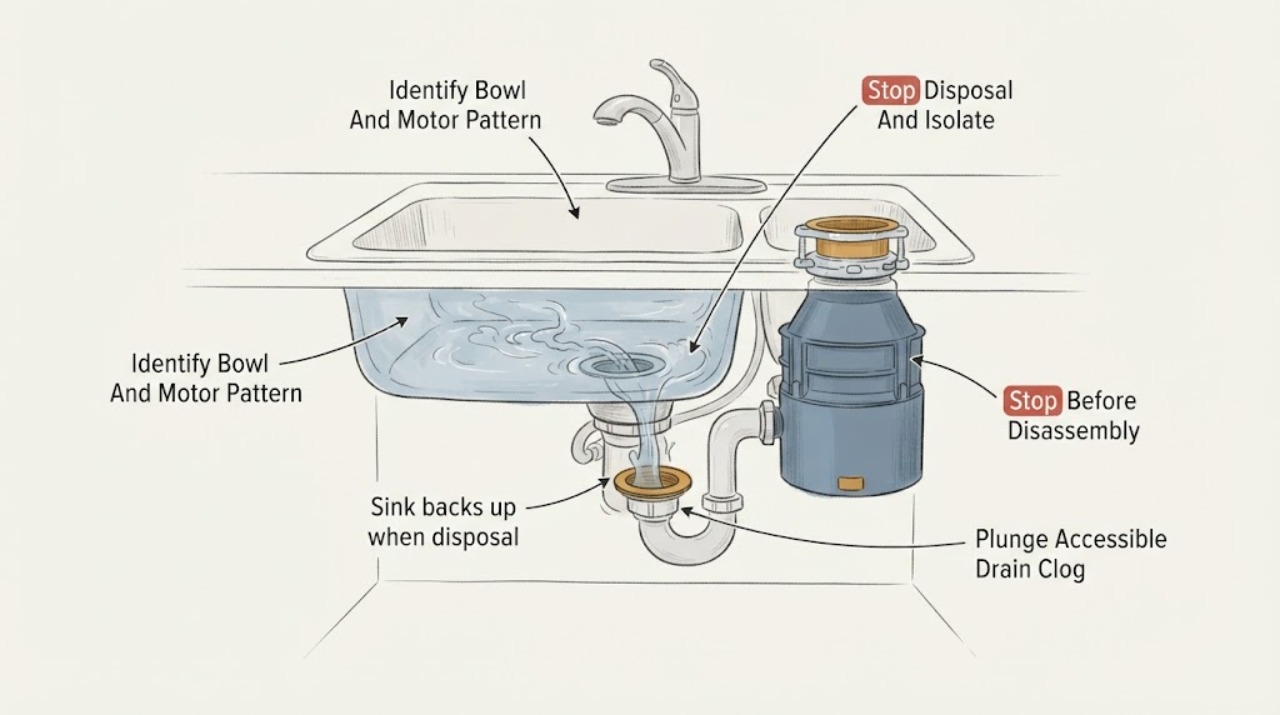
Kohler sink backs up when disposal runs: What to Check and What to Do Next
When a Kohler sink backs up as the garbage disposal runs, stop the disposal and treat the pattern as a drain-path problem until proven otherwise. Note whether the disposal side, the other bowl, or both bowls rise, and whether the motor actually runs; do not put a hand into the disposal or keep activating it against standing water.
-
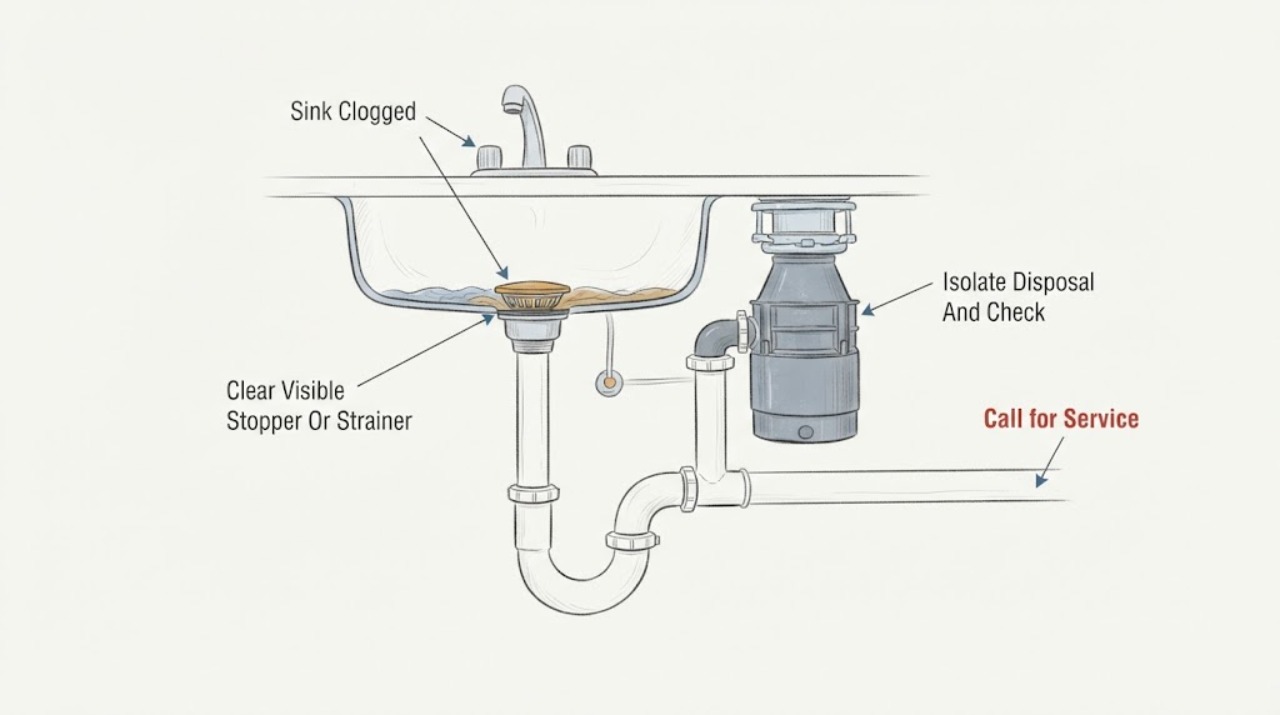
Kohler Sink Clogged: What to Check and What to Do Next
A clogged Kohler sink is usually blocked at the stopper or strainer, the trap, a disposal connection, or farther downstream. First stop adding water and identify whether the basin is fully blocked or only slow, whether one bowl or both bowls are affected, whether a disposal is installed, and whether other fixtures also back up.
-
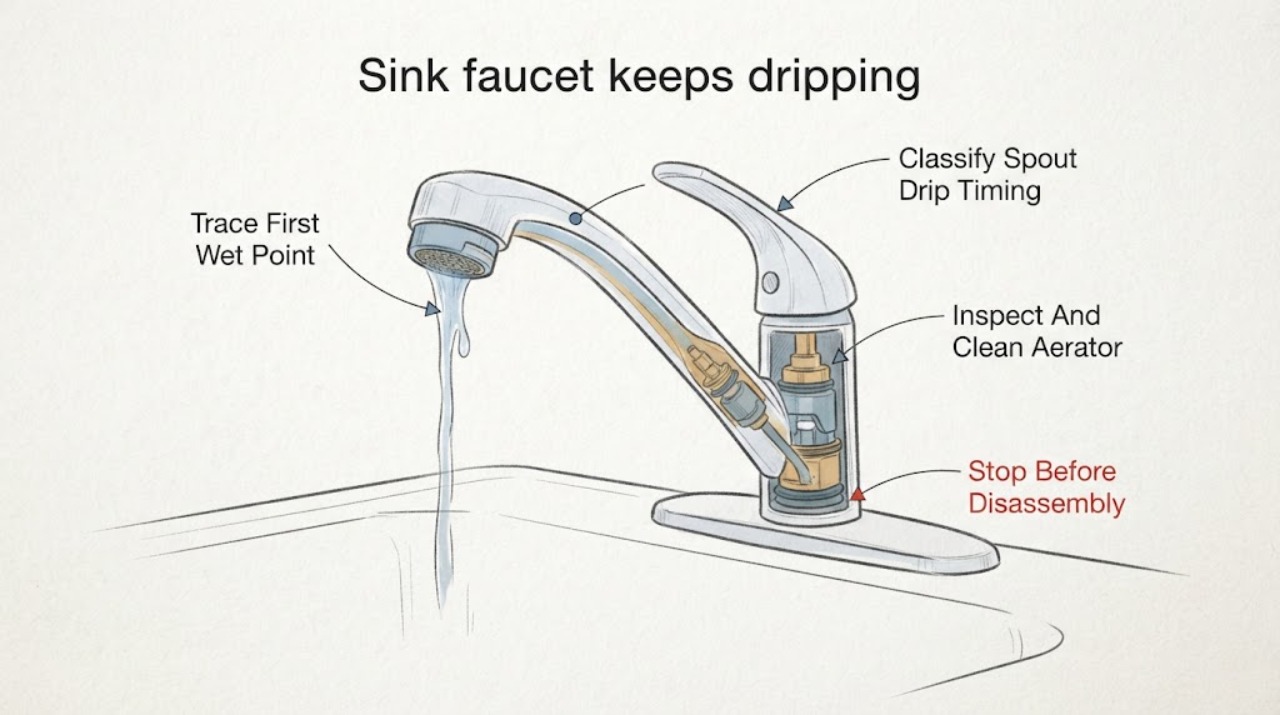
Kohler sink faucet keeps dripping: What to check and what to do next
A Kohler sink faucet that keeps dripping after the handle is off usually has either a temporary spout drip from water or debris at the aerator, or a continuous leak because the valve or cartridge is no longer sealing. First identify exactly where the water appears: the end of the spout, under the handle, around the spout base, at a side sprayer or hose, or below the sink.
-
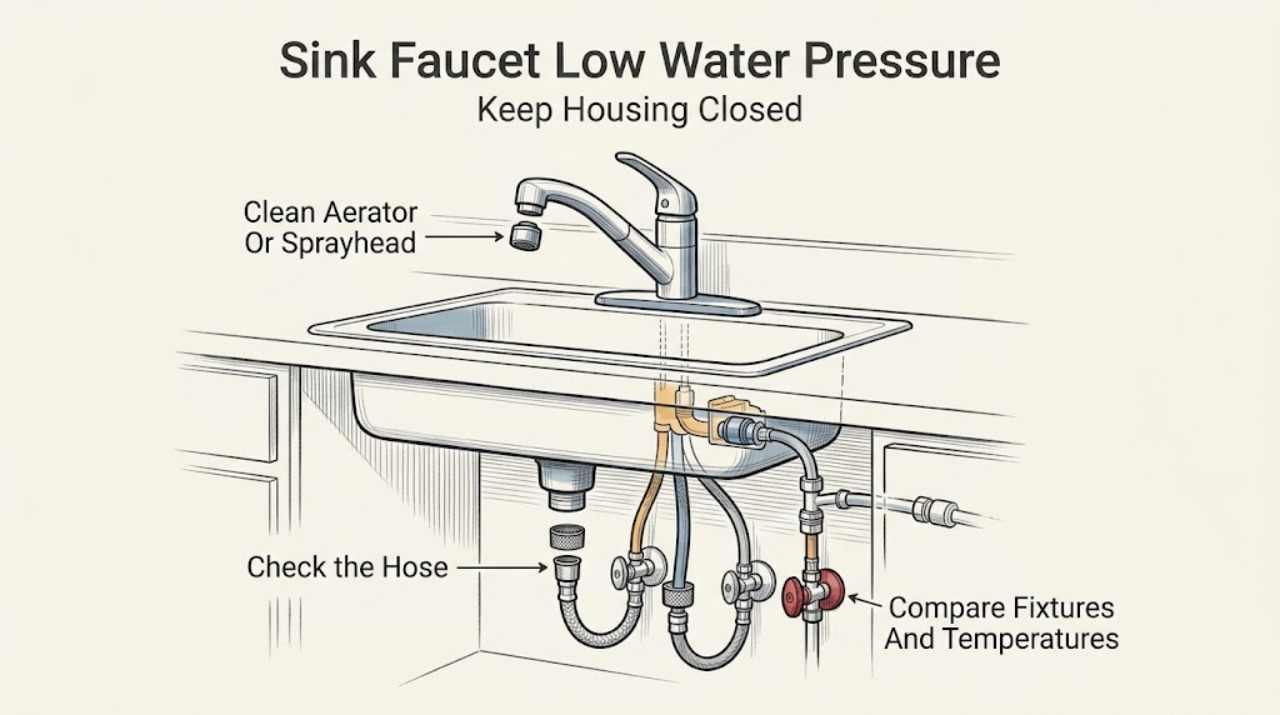
Kohler Sink Faucet Low Water Pressure: What to Check and What to Do Next
Low flow at a Kohler sink faucet usually comes from a restricted aerator or sprayhead, a partly closed supply stop, a kinked hose, debris in a screen or supply line, or a valve or cartridge restriction. First compare this faucet with another fixture and test hot and cold separately.
-
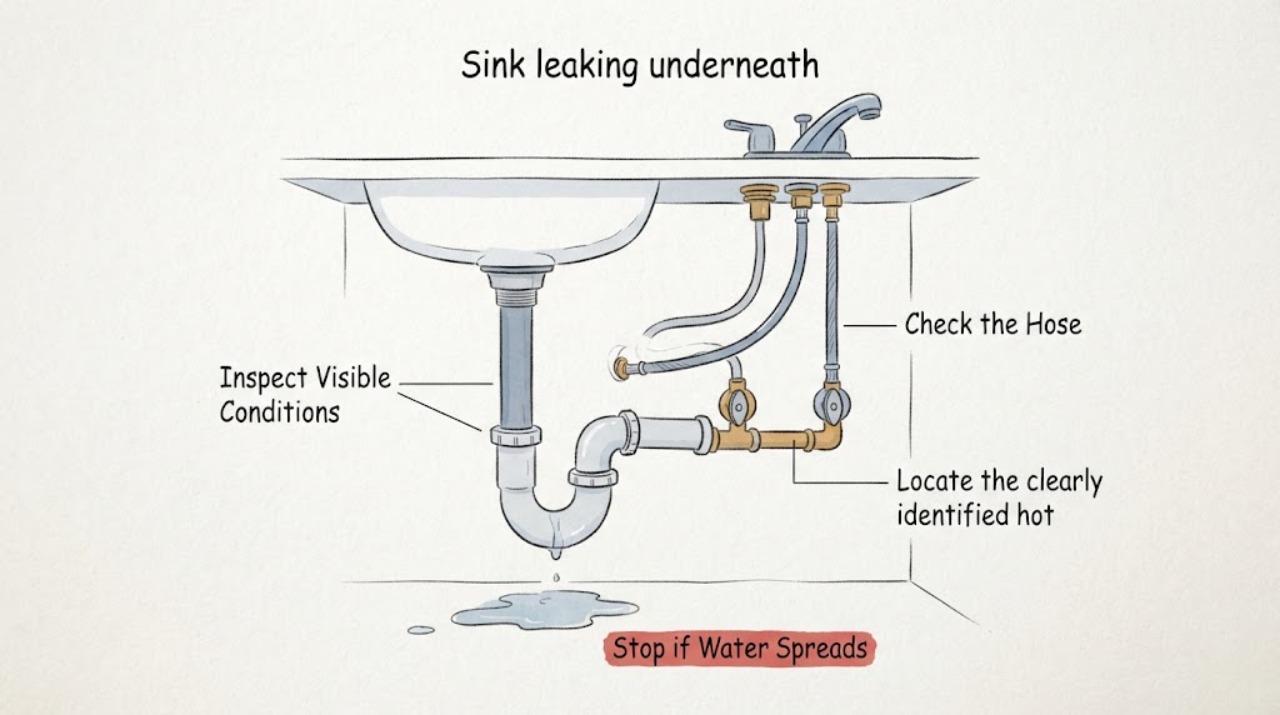
Kohler sink leaking underneath: What to Check and What to Do Next
If a Kohler sink is leaking underneath, dry the cabinet and identify the first wet point while the faucet is off, then while water drains. A leak that appears only while the faucet runs or the sink drains points toward a faucet supply, spray hose, drain, strainer, trap, or connection gasket; a continuous leak with no use can point toward a pressurized supply line or shutoff.
-
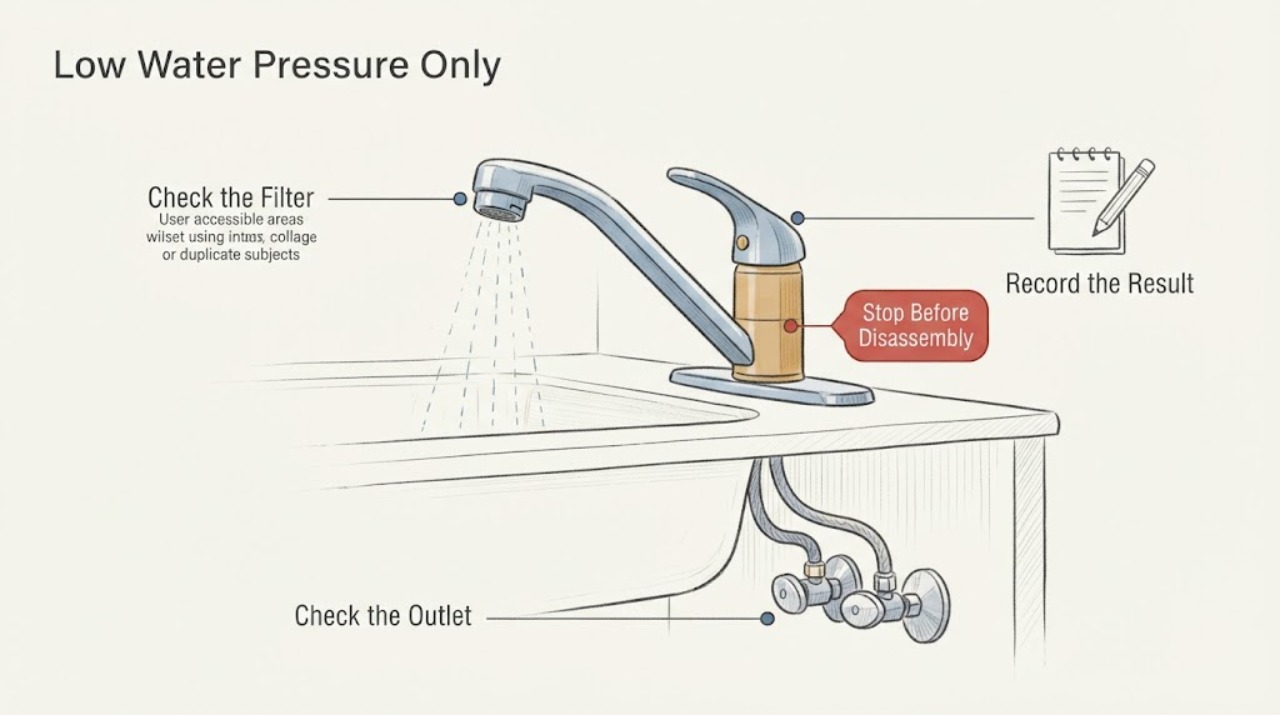
Low Water Pressure Only at the Kitchen Sink Faucet
When low water pressure occurs only at the kitchen sink faucet, compare hot and cold flow, then isolate the faucet outlet from its supply. A blocked aerator or spray-head screen, a restricted under-sink cartridge path, a partly closed shutoff, or a kinked hose is more likely than a whole-house pressure failure.
-
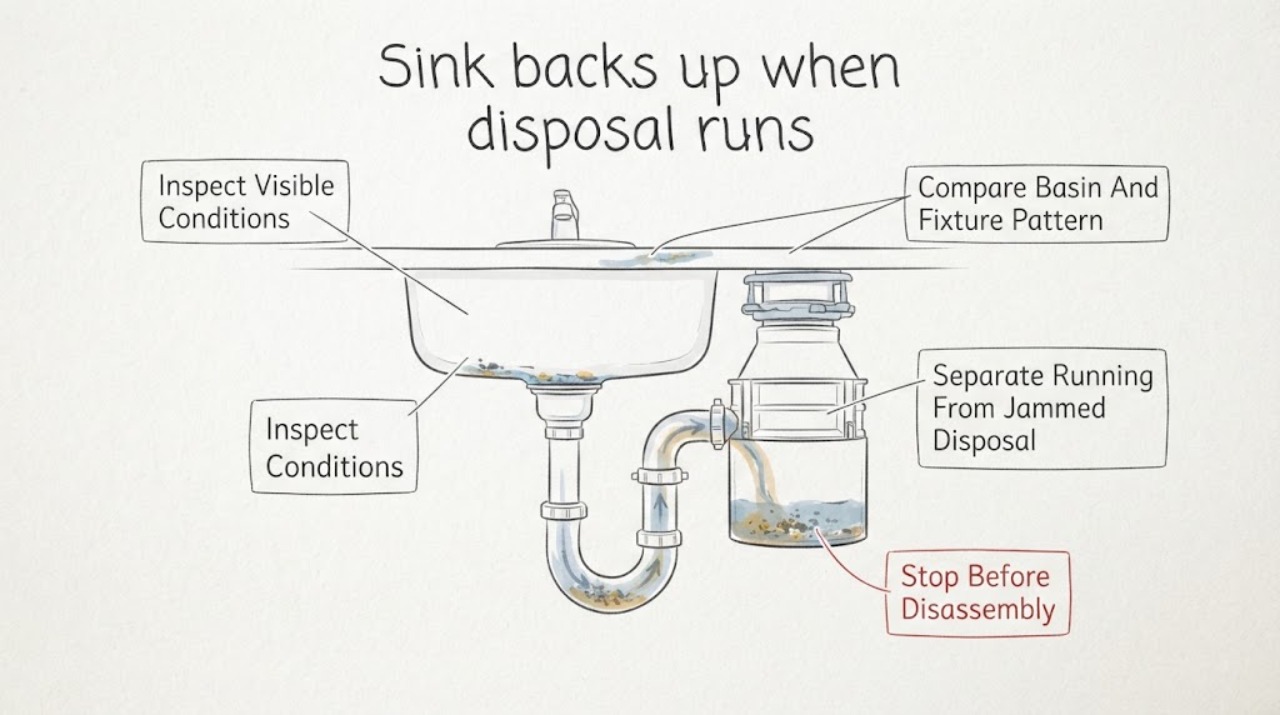
Moen sink backs up when the disposal runs: What to check next
If a Moen sink backs up when the garbage disposal runs, the first question is whether the disposal is moving water while the drain line cannot carry it away. Turn the disposal off, keep hands and tools out of the opening, and note whether the motor runs, the sink water swirls, the other basin rises, or water leaks below.
-
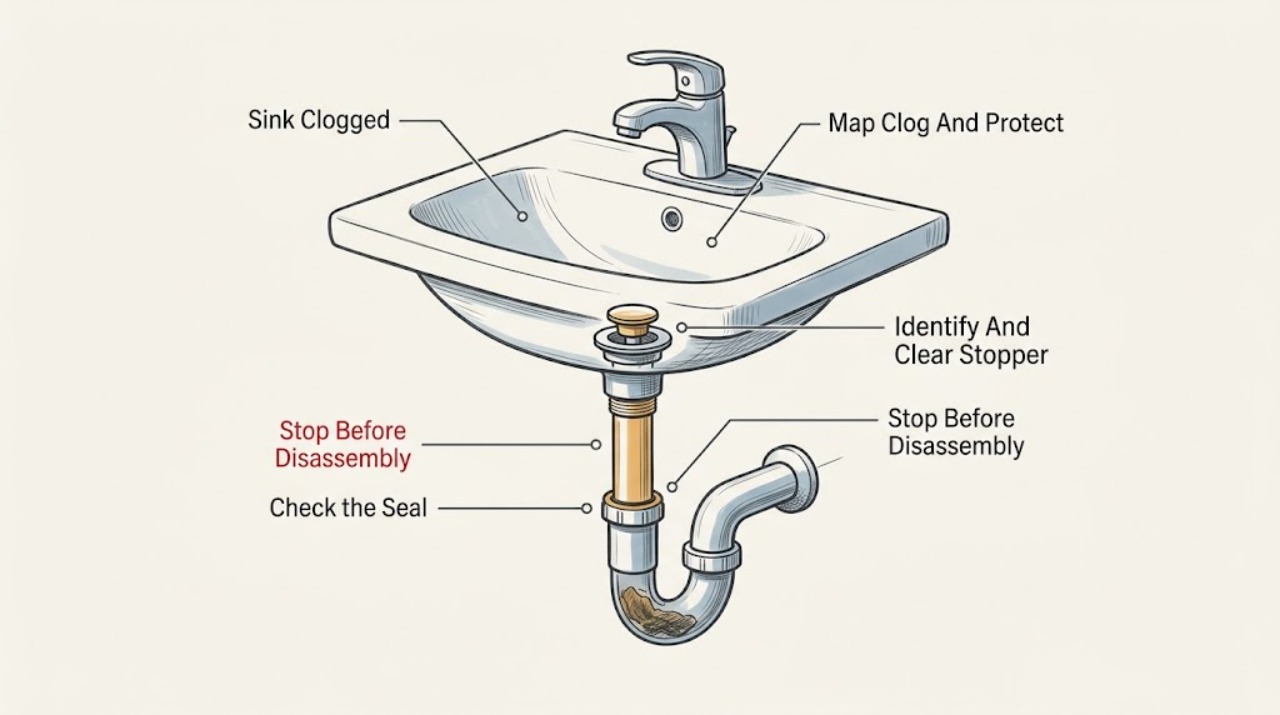
Moen Sink Clogged: What to Check and What to Do Next
A clogged Moen sink is usually a local obstruction at the stopper, strainer, or nearby drain, but a backup in more than one fixture can indicate a larger branch or main-line problem. First stop adding water and determine whether only this basin is affected.
-
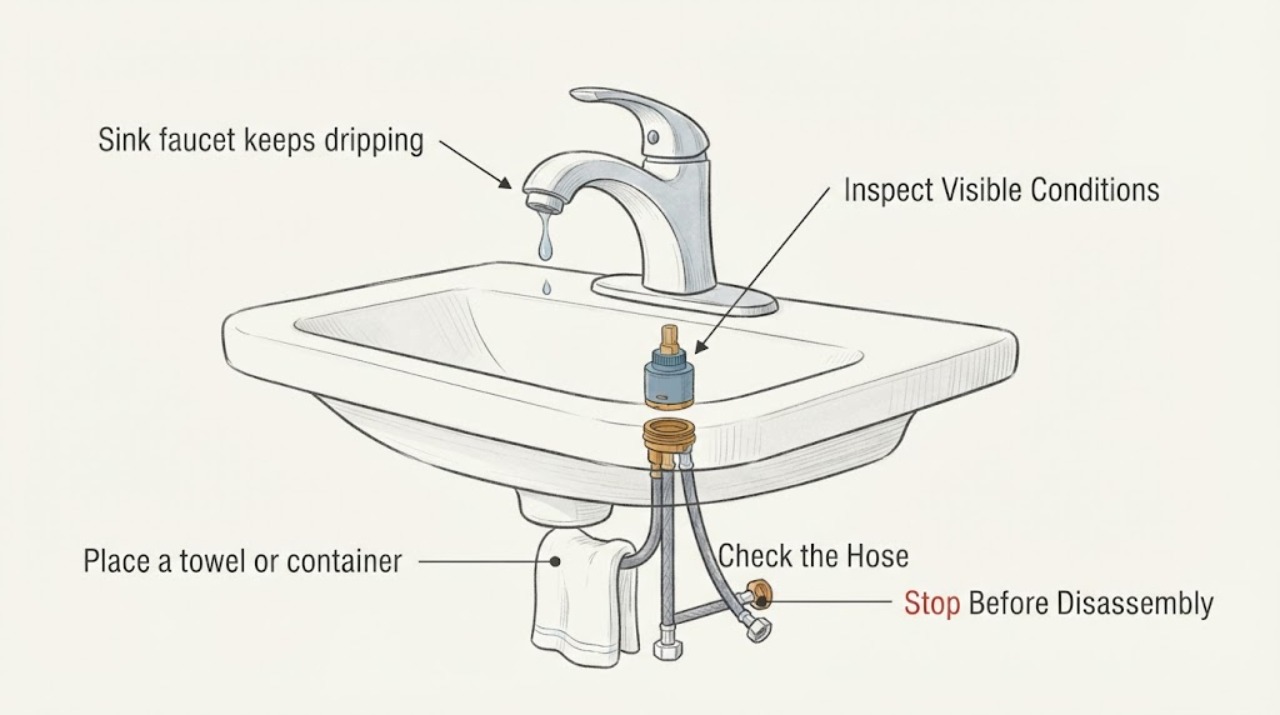
Moen sink faucet keeps dripping: What to Check and What to Do Next
If a Moen sink faucet keeps dripping after it is turned off, first determine whether water comes from the spout, around the handle or base, or from a connection below the sink, and whether it drips only after use or continuously. Moen says a spout that will not shut off is usually related to the cartridge, but its cartridges are not interchangeable; the model and handle style must be confirmed.
-
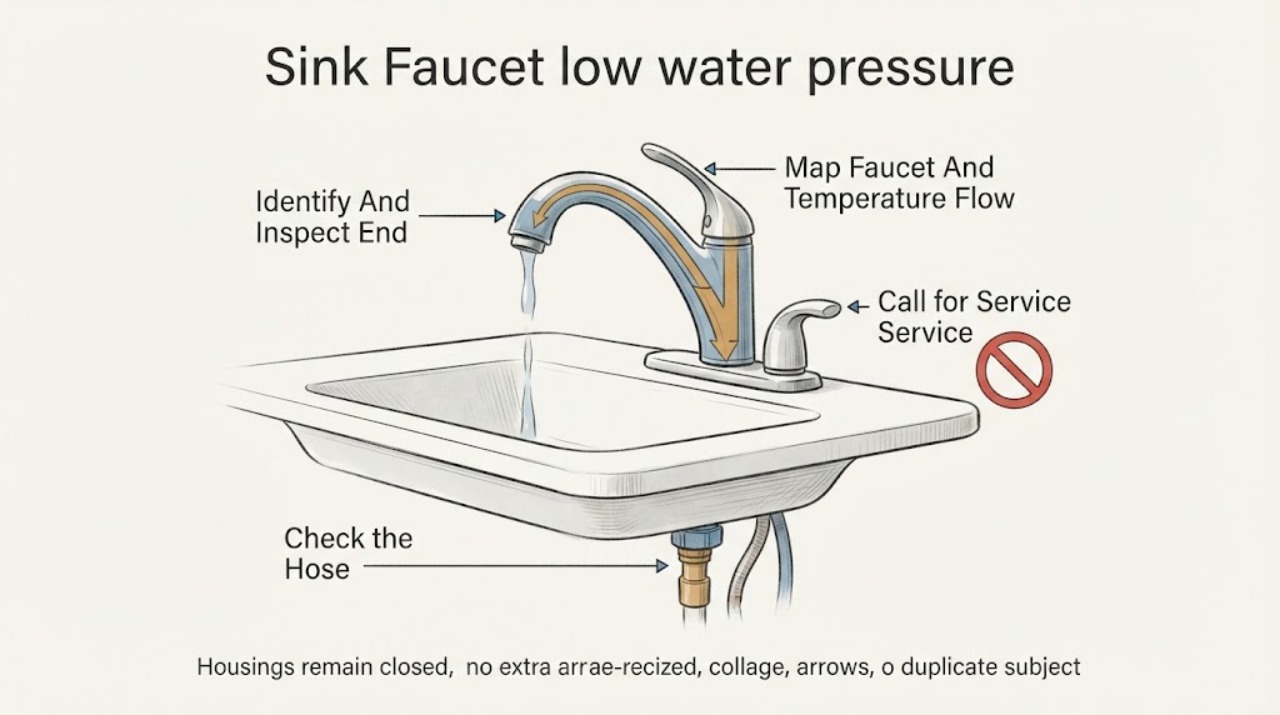
Moen sink faucet low water pressure: What to Check and What to Do Next
When a Moen sink faucet has low flow, first compare it with another nearby fixture and compare hot with cold. If only this faucet is weak, check the removable aerator, spray wand screen, or side-spray path for debris, then test flow at the hose or spout only as the Moen model instructions permit.
-
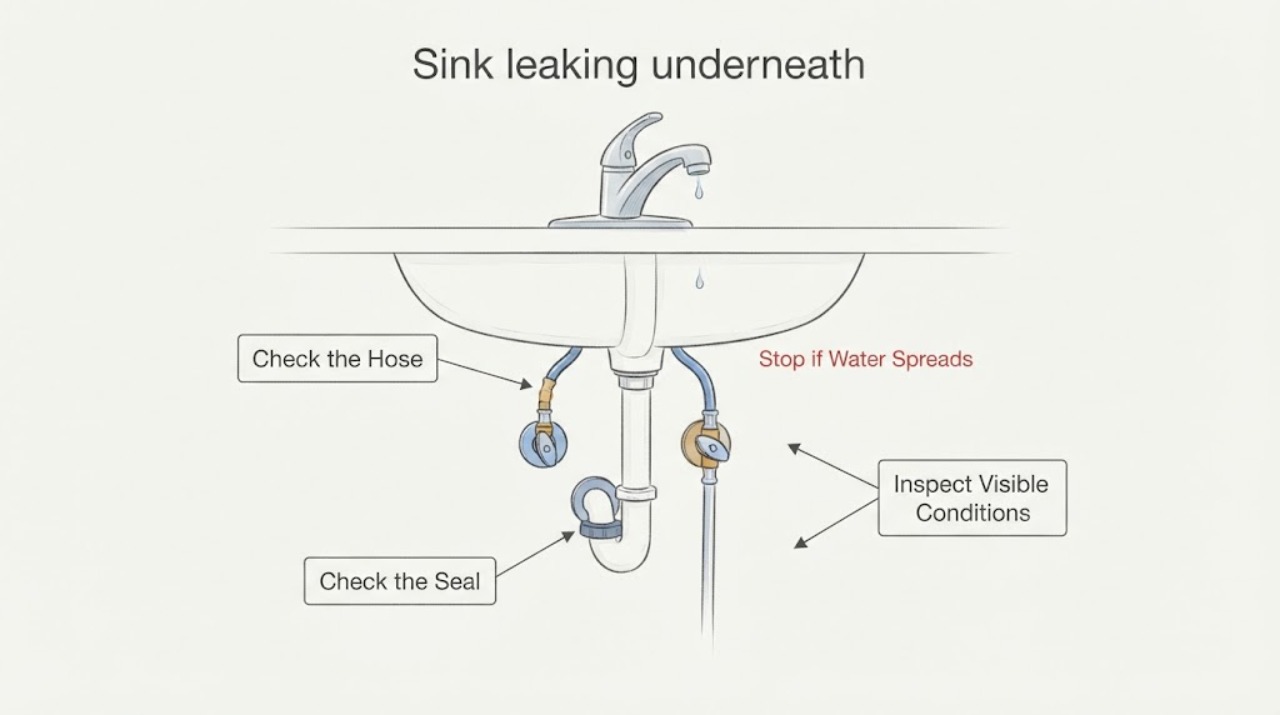
Moen sink leaking underneath: What to Check and What to Do Next
If water is leaking underneath a Moen sink, first protect the cabinet and identify whether the leak is steady or appears only while the faucet, sprayer, drain, or disposal is used. Dry the area, place a towel or container below the suspected connection, and use a dry tissue to trace the first wet point without reaching around energized disposal wiring.
-
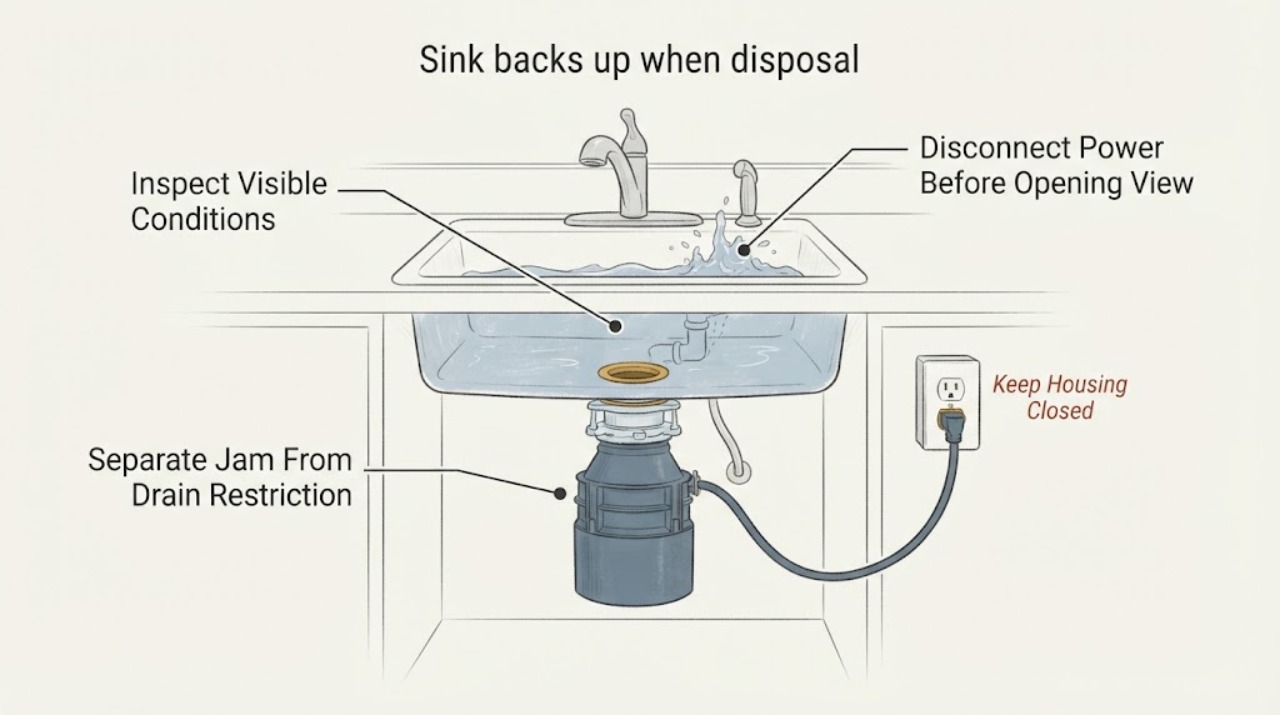
Sink backs up when disposal runs water rises in: What to Check and What to Do Next
When water rises in the sink as the garbage disposal runs, the disposal is probably moving water into a restricted path rather than clearing it. The restriction may be at the disposal outlet, sink tailpiece, trap, shared drain, or farther downstream; a jammed or weak disposal can also leave debris in the discharge path.
-
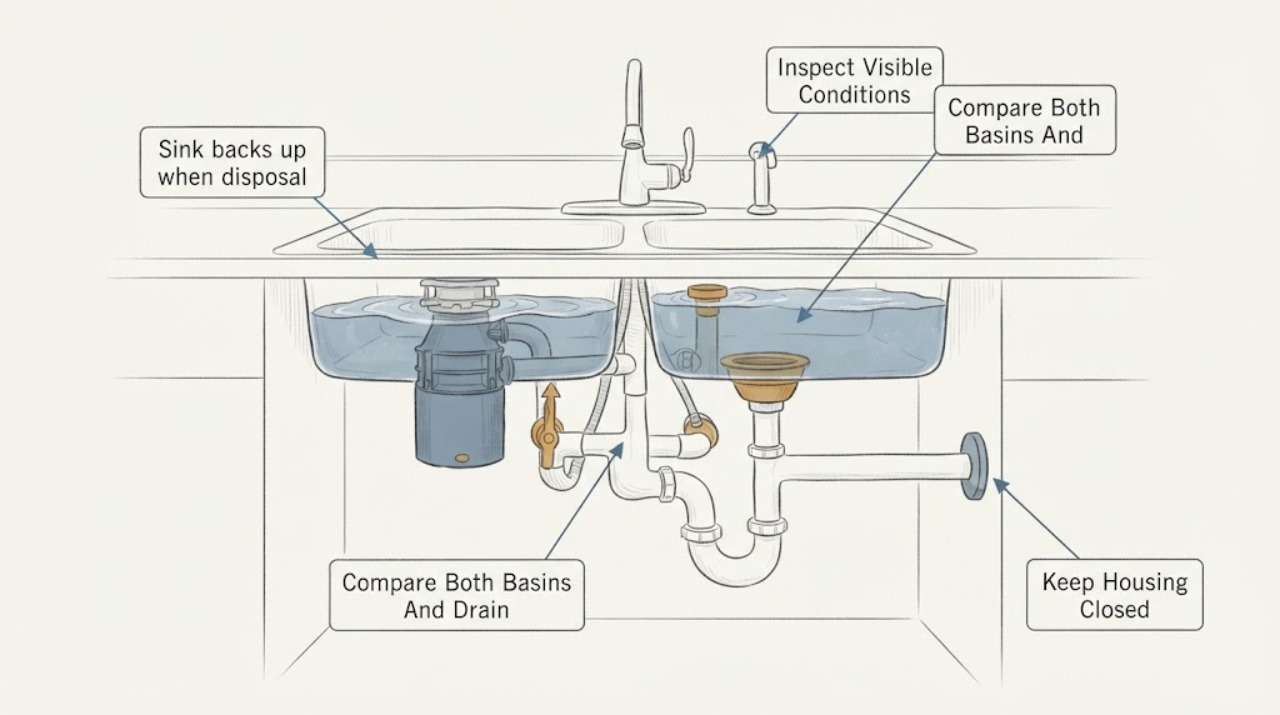
Sink backs up when disposal runs: What to Check and What to Do Next
Stop treating the symptom as a disposal-only problem. From a dry position, note whether the backup appears immediately when the disposal runs, whether the other basin rises, whether water drains normally with the disposal off, and whether you hear gurgling or see standing water.
-
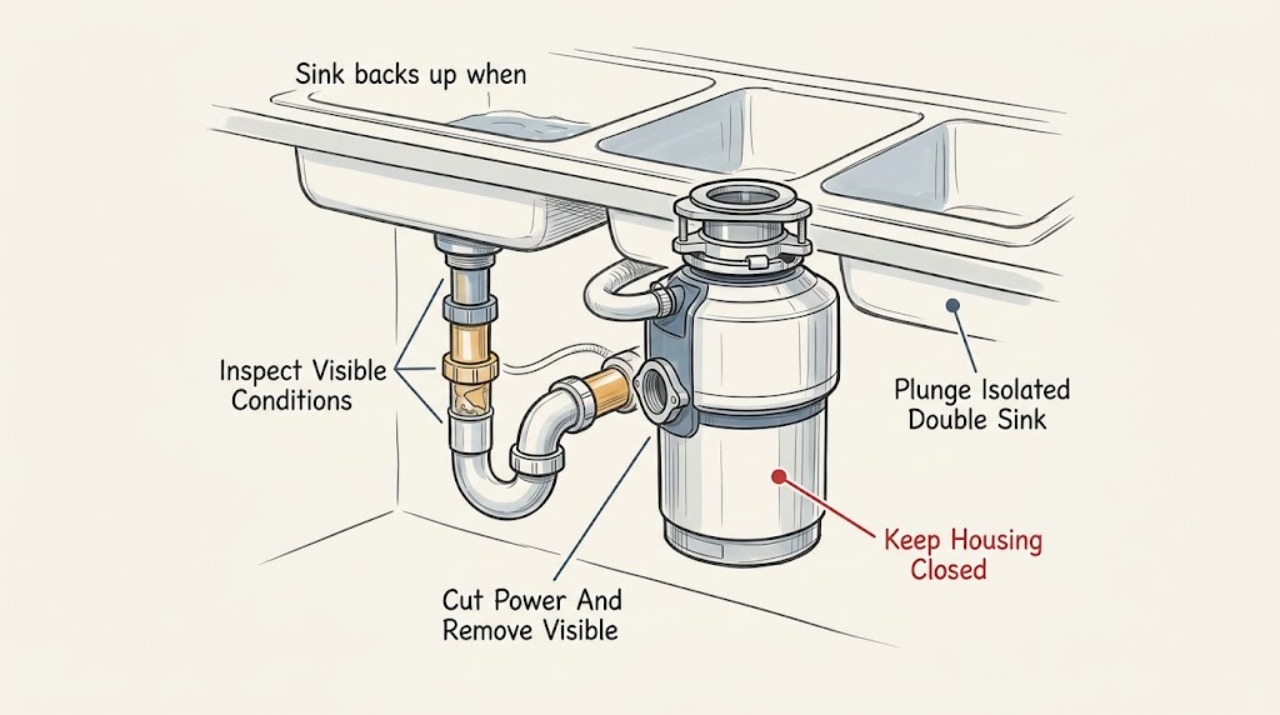
Sink backs up when the disposal runs while the other drain may be clear: What to Check and What to Do Next
If water rises in the sink when the garbage disposal runs, the disposal motor may be working while the drain path is restricted. A clear second basin does not rule out a clog at the disposal outlet, the baffle or discharge connection, the trap, or the shared drain farther downstream.
-
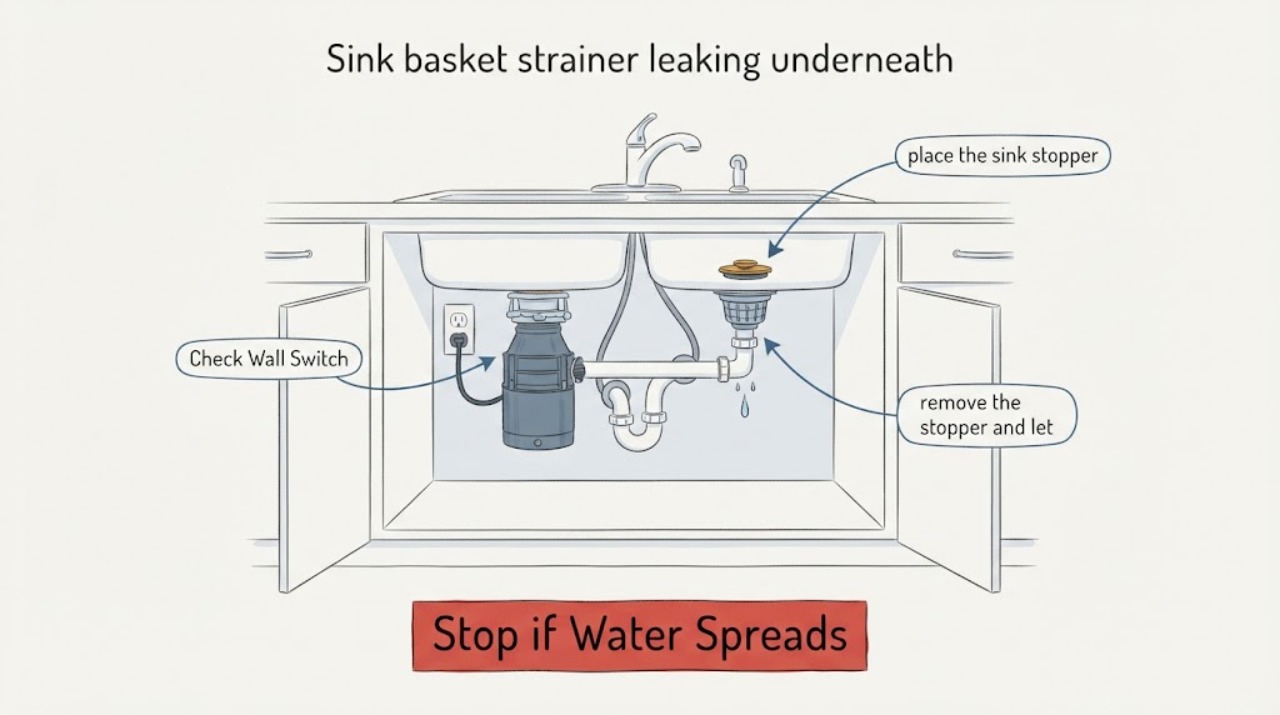
Sink basket strainer leaking underneath: What to Check and What to Do Next
To troubleshoot a sink basket strainer leaking underneath, first empty and dry the cabinet and place a dry paper towel beneath the drain assembly. With the disposal off and no hands near moving equipment, use a brief, controlled test: hold water in the basin, then release it while watching the underside.
-
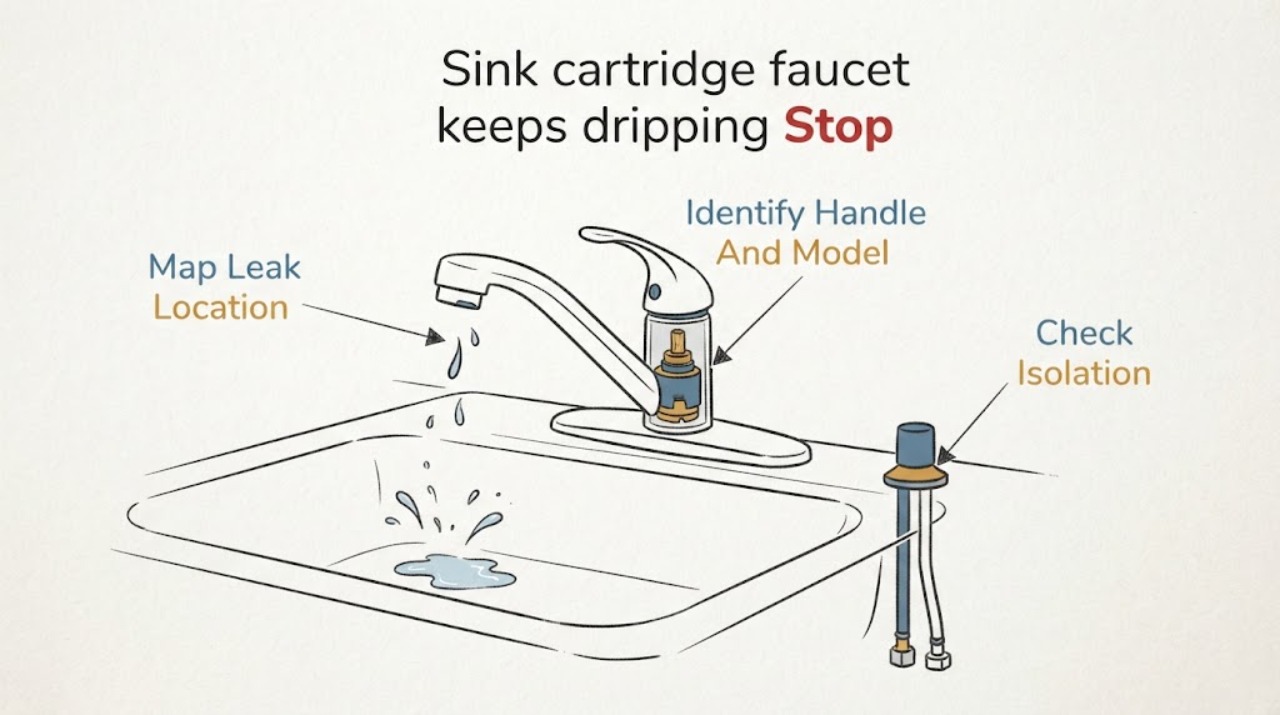
Sink cartridge faucet keeps dripping: What to Check and What to Do Next
A faucet that drips from the spout while its handle is fully off often has an internal cartridge, seat, or seal that is not closing, but a leak around the handle, faucet base, supply connection, or under the sink points to a different repair. First locate the water, identify whether the faucet has one or two handles, and record the faucet model if it is visible.
-
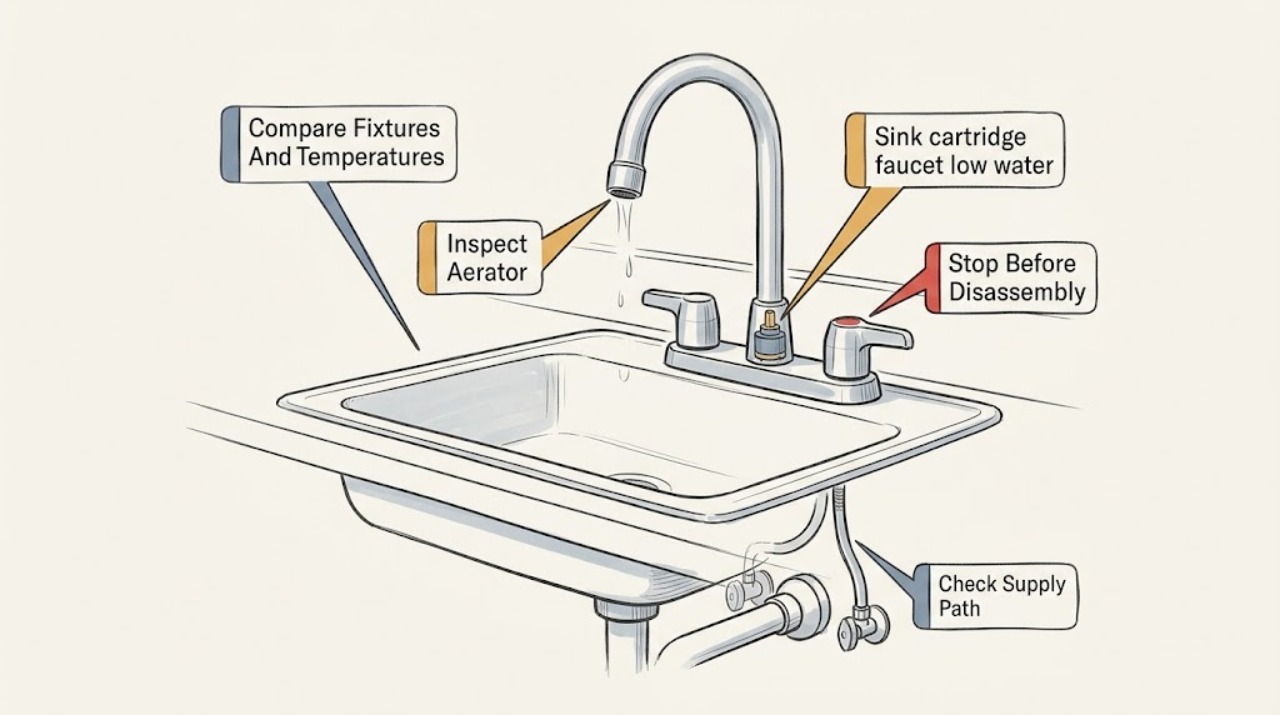
Sink cartridge faucet low water pressure: What to check and what to do next
When one sink faucet has low flow but nearby fixtures are normal, start at the faucet outlet and supply path: compare hot and cold, inspect the aerator, and check that the visible shutoff valves are open without forcing them. If the aerator is clear and both sides remain weak, debris or wear in the cartridge or valve body becomes more likely.