
On this page
Start here
Quick answer
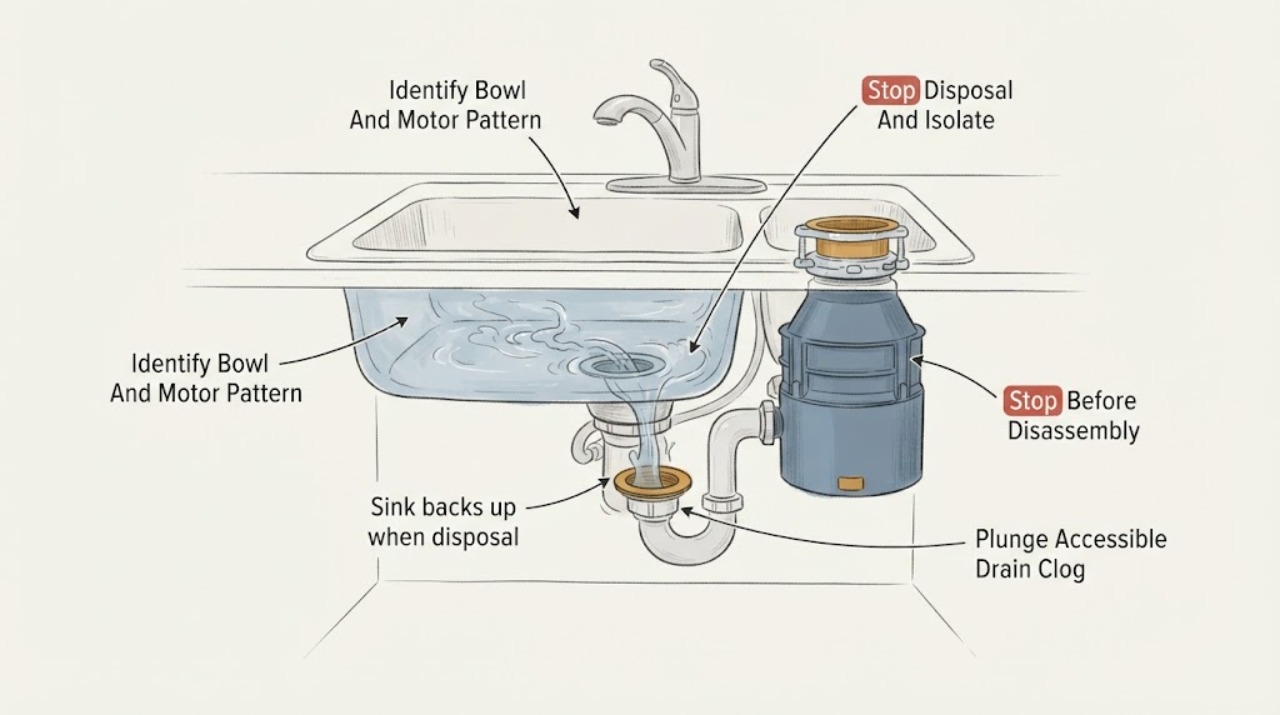
When a Kohler sink backs up as the garbage disposal runs, stop the disposal and treat the pattern as a drain-path problem until proven otherwise. Note whether the disposal side, the other bowl, or both bowls rise, and whether the motor actually runs; do not put a hand into the disposal or keep activating it against standing water. With the disposal switched off and power isolated before reaching near the opening, a double-bowl sink can be checked with the other opening stopped and a gentle plunger attempt, following the disposal maker's instructions. Inspect the visible discharge connection, trap, and cabinet for leaks without disconnecting pipes unless you are equipped and authorized to do that work. A blockage farther down the shared drain, a jammed disposal, a damaged connection, or a recurring backup needs a qualified plumber or disposal service. After the path is clear, use cool running water, feed small amounts, flush briefly after grinding, and keep grease out of the drain.
Before you begin
Safety first
- This article supports stopping the disposal, isolating power before reaching near it, observing the bowl and motor pattern, inspecting visible connections, and a gentle plunger attempt when the setup is safe. It does not authorize hand access, energized electrical work, trap or disposal removal, chemical drain treatment, or forceful jam clearing.
Work through in order
Diagnostic checks
Use only checks that match the exact appliance or system and its official guide.
-
Check 1
Stop the disposal and water, switch the disposal control off, and isolate its power according to the product instructions before placing hands near the opening or working below the sink; never reach into the grinding chamber.
Expected result: Water remains in one or both bowls, the disposal is humming or silent, water leaks below the cabinet, or there is a burning smell, sparking, damaged cord, or exposed electrical connection.
Next step: Leave the disposal off. If water is high, bail it into a container without touching the disposal opening. For a leak, damaged wiring, burning smell, or sparking, keep power isolated and arrange qualified plumbing or electrical service as appropriate.
Stop if: Do not put a hand into the disposal, activate it against standing water, use tools in the grinding chamber, or operate a leaking or electrically damaged unit.
Why this matters
Why: Standing water with the motor running can reflect a drain restriction; a humming or silent unit can add a jam or electrical issue. A leak or electrical sign makes continued operation unsafe and can damage the cabinet or wiring.
-
Check 2
Using the last safe run as the observation, identify whether the disposal bowl, the opposite bowl, or both rose, and whether the motor was running normally, humming, or not running; do not switch it on again just to reproduce the backup.
Expected result: The opposite bowl rises when the disposal discharges, only the disposal bowl rises while the motor runs, the motor hums or stops, or the backup occurs even when the disposal is not used.
Next step: Choose the matching safe path: use a power-off plunger check for an accessible drain clog, or keep the unit off and request service for a jammed disposal, leak, recurring backup, or restriction beyond the sink cabinet.
Stop if: Do not remove a jam by hand, run the disposal with a full sink, or assume a motor reset cleared the plumbing restriction.
Why this matters
Why: An opposite-bowl backup points toward the shared drain after the disposal. A disposal-side backup points closer to the discharge, trap, or nearby drain. A hum or stopped motor suggests a jam or overload in addition to the drainage symptom; backup without disposal use points to a broader sink or branch-drain restriction.
-
Check 3
If the disposal is off, power is isolated, there is no leak or electrical hazard, and the water level is manageable, place a plunger over the disposal opening; on a double-bowl sink, stopper the other opening first, then press down gently and pull upward repeatedly.
Expected result: The water level drops and the sink drains, the opposite bowl still fills, the plunger cannot form a seal, or water remains after the attempt.
Next step: When drainage returns, flush with cool water only after confirming the disposal is safe to use and follow the disposal maker's operating guidance. If the sink remains blocked, stop and arrange licensed plumbing service rather than escalating force or disassembling the drain.
Stop if: Do not plunge against a leaking, damaged, or electrically unsafe disposal, use excessive force that could disturb connections, or place a hand into the opening.
Why this matters
Why: A drop in level suggests an accessible restriction was displaced. Continued cross-bowl backup or no drainage suggests a deeper shared-line, trap, discharge, or venting problem, or a condition the plunger cannot reach.
-
Check 4
With the cabinet area dry and the disposal power isolated, use a light to inspect the visible discharge tube, trap, tailpiece, sink flange, and cabinet floor for a loose joint, crack, kink, standing water, or shifted connection; do not disconnect the pipes as a first check.
Expected result: A joint or elbow is wet, cracked, loose, kinked, or displaced, the trap area is full of water, or all visible connections are dry and intact while the backup persists.
Next step: Keep the sink and disposal out of service for a wet, cracked, or displaced connection and arrange a plumber. If connections look intact but the backup remains after a gentle plunger attempt, request drain diagnosis rather than opening the disposal or removing the trap without preparation.
Stop if: Do not loosen pressurized or stuck fittings, pull on the disposal, cut pipes, use a chemical drain product in the disposal, or work near wet electrical connections.
Why this matters
Why: A visible leak or deformed connection can restrict discharge or cause water damage. A full trap with no visible leak supports a drain restriction; clear exterior connections do not exclude an obstruction farther down the line or inside the disposal.
-
Check 5
Only after the sink drains freely, there is no leak, and the disposal has no jam or electrical warning, resume with a steady flow of cool water, small amounts of food waste, and several seconds of water after grinding; keep fats, oils, and grease out of the disposal and drain.
Expected result: Normal small-load use drains freely, the disposal starts and stops normally, or water backs up again, drains slowly, the motor jams, or a leak appears.
Next step: Stop use at the first recurrence and arrange qualified plumbing or disposal service. Provide the bowl pattern, motor behavior, plunger result, visible connection findings, and whether grease or a large load preceded the backup.
Stop if: Do not keep grinding large loads to force drainage, pour grease into the drain, or continue using the sink after a repeat backup or leak.
Why this matters
Why: A clear path with proper use supports a resolved minor restriction. A repeat backup indicates an unresolved downstream clog, improper or shifted connection, disposal problem, or broader branch-drain issue rather than a usage-only problem.
Use your observations
Decision map
Find the observation that best matches what you see, then follow the next safe action.
-
PATH 01Next step
What you see
On a double-bowl sink, water rises in the bowl opposite the disposal when the disposal discharges, while the disposal motor had been running normally.
Do this next
Stop running the disposal, isolate power before working near it, stopper the opposite opening, and try only a gentle plunger method if the water level and connections are safe. Arrange a licensed plumber if the backup persists or returns.
Why this path and its safety boundary
Why it matters: The shared drain after the disposal is more likely restricted than the disposal motor itself; the obstruction may be in the branch line, trap, or farther downstream.
-
PATH 02Next step
What you see
Only the disposal bowl backs up while the motor runs, and the opposite bowl does not rise or the disposal does not produce normal drainage.
Do this next
Leave the disposal off and use the safe, power-isolated plunger check if appropriate. If the bowl remains full, inspect only visible connections and have a plumber clear or diagnose the line.
Why this path and its safety boundary
Why it matters: A restriction closer to the disposal discharge, horizontal drain, trap, or disposal outlet is more likely; a whirlpool without drainage supports a clogged drain-line pattern.
-
PATH 03Safety boundary
What you see
The disposal hums, stops, or does not run while the sink is backed up, rather than grinding normally.
Do this next
Keep the switch off, isolate power, and never use a hand in the disposal. Follow only the exact disposal model's safe jam procedure with the provided tool or tongs if appropriate; arrange service if the jam recurs or water remains blocked.
Why this path and its safety boundary
Why it matters: A jam or overload may coexist with the drainage restriction. A motor reset or unjamming step does not establish that the drain is clear.
Safety stop: Do not reach into the grinding chamber, use fingers to remove an object, or repeatedly reset or run a jammed unit.
-
PATH 04Next step
What you see
The backup follows a large food load or greasy material and the sink drains after a gentle, power-off plunger attempt without a leak or motor problem.
Do this next
Use cool running water, feed smaller amounts, flush for several seconds after grinding, and keep fats, oils, and grease out of the drain. Stop and call a plumber if drainage slows or the backup returns.
Why this path and its safety boundary
Why it matters: A partial drain restriction or unsuitable disposal input is more likely than a failed sink body. This pattern does not prove the downstream line is fully clear.
-
PATH 05Safety boundary
What you see
Water leaks at the disposal, discharge connection, trap, or sink flange, the sink remains blocked after the accessible check, or the backup occurs without using the disposal.
Do this next
Keep the disposal off, contain only a safe surface leak, avoid wet electrical connections, and arrange a licensed plumber. Do not disconnect the trap or disposal without the tools and preparation for trapped water and reconnection.
Why this path and its safety boundary
Why it matters: A damaged or shifted connection, deep drain obstruction, or wider branch-line problem needs plumbing diagnosis; continued disposal use can spread water damage.
Safety stop: Do not keep using the sink, pour chemical drain cleaner into a disposal, work on energized equipment, or open a connection that may release standing water without proper control.
Helpful context
Understand the symptom
The bowl that rises identifies the likely section
If the opposite bowl rises when the disposal discharges, the shared drain downstream of the disposal is a strong suspect. If only the disposal bowl remains full, the restriction may be at the disposal outlet, discharge tube, trap, or nearby drain. A whirlpool without drainage points toward a clogged drain line, while a silent or humming disposal is a separate motor or jam condition. Use the last known symptom; do not repeatedly run the disposal to reproduce a backup.
Use power-off, no-hand checks
Turn the disposal control off before looking into the opening or working under the sink, and isolate power according to the disposal instructions before reaching near the unit. Never put a hand into the grinding chamber. A plunger can be an ordinary-access option when the water level and sink layout allow it, but a trapped object, jam, leaking connection, or clog beyond the accessible drain is a service boundary.
Prevent the backup after drainage returns
InSinkErator recommends cool running water while grinding, gradual feeding rather than a large load, and several seconds of water after grinding to flush the drain. It also warns against fats, oils, or grease in the disposal or drain. These habits can reduce new restrictions but will not clear a persistent obstruction or repair a damaged trap or discharge connection.
Safety boundary
Stop conditions
- Never put a hand into the garbage disposal; switch it off and isolate power before reaching near the opening or working below the sink.
- Do not run the disposal against standing water, repeat cycles to force a backup through, or keep using the sink after a leak, electrical warning, or recurring obstruction.
- Do not disconnect the trap, cut pipes, pull the disposal, or use force or tools in the grinding chamber unless the exact product instructions and safe preparation support that task.
- Do not pour fats, oils, or grease into the disposal or drain, and do not treat a motor reset or jam-clearing result as proof that the drain is clear.
- Arrange licensed plumbing or qualified disposal service when the clog is farther down the plumbing, the sink remains blocked after an accessible check, connections leak or are damaged, or the backup recurs.
Only after diagnosis
Potential parts
- sink disposal discharge tube or elbow
Consider this category only when inspection finds a cracked, blocked, kinked, or incorrectly seated discharge connection that explains the disposal-side backup.
Confirm the disposal and sink installation configuration and exact dimensions with a qualified installer before ordering. - sink P-trap or tailpiece
Consider this category only when a plumber identifies a damaged, shifted, or incompatible trap or tailpiece rather than a clog farther down the branch drain.
Confirm local plumbing requirements, sink and disposal arrangement, pipe size, and exact configuration before ordering or replacing. - garbage disposal sink baffle
Consider this category only when the disposal baffle is damaged, displaced, or contributing to splash or food retention after the drain path itself is confirmed clear.
Confirm the exact disposal model and baffle design; a baffle replacement will not clear a downstream drain obstruction.
When checks do not resolve it
Need a professional?
Arrange a licensed plumber when the opposite bowl repeatedly rises, the sink remains blocked after a safe power-off plunger attempt, the backup occurs without disposal use, a trap or discharge connection leaks or is damaged, or the obstruction appears farther down the plumbing. Arrange qualified disposal service for a recurring jam, motor fault, electrical concern, or disposal damage. Stop use immediately for exposed wiring, burning smell, sparking, or an uncontrolled leak.
Safety scope: This article supports stopping the disposal, isolating power before reaching near it, observing the bowl and motor pattern, inspecting visible connections, and a gentle plunger attempt when the setup is safe. It does not authorize hand access, energized electrical work, trap or disposal removal, chemical drain treatment, or forceful jam clearing.
Common questions
FAQ
Why does my Kohler sink back up only when the disposal runs?
The disposal is moving water into a drain path that may be partially blocked. On a double-bowl sink, water rising in the opposite bowl points toward the shared drain after the disposal; water staying in the disposal bowl points closer to its discharge or trap. Stop the disposal and use only safe, power-off checks.
Can I plunge a sink that backs up through the garbage disposal?
If the disposal is switched off, power is isolated before reaching near it, there is no leak or electrical hazard, and the water level is manageable, a gentle plunger attempt may be appropriate. On a double-bowl sink, stopper the other opening first. Never put a hand into the disposal or use force that could disturb drain connections.
What if the disposal hums and the sink is backed up?
A jam or overload may be present in addition to the drain restriction. Turn the control off, isolate power, and never reach in by hand. Follow only the exact model's safe jam instructions; if the disposal remains inoperative or water remains blocked, arrange disposal or plumbing service.
How can I keep the sink from backing up after it drains?
Use a steady flow of cool water, feed small amounts instead of a large load, let water run for several seconds after grinding, and keep fats, oils, and grease out of the disposal and drain. If a backup returns, stop using the disposal because an unresolved restriction or connection problem is likely.
Read the exact guide
Official sources
- How To Use a Garbage DisposalInSinkErator · Used for prevention after drainage is restored; it does not replace diagnosis of a persistent backup.
- Installation GuideKohler Co. · Used for Kohler sink/disposal plumbing layout and service-access context; this guide is for the listed Kohler sink system, so the installed sink and disposal instructions control.
- Fixing a Clogged Garbage DisposalInSinkErator · Used for distinguishing a drain-line clog, double-bowl plunger setup, and deep-plumbing service boundary; exact disposal model instructions control.
- Fixing a Jammed Garbage DisposalInSinkErator · Used to separate a humming or stopped disposal from a drainage clog and to establish the no-hand, power-off boundary; the installed model's instructions control.
Community feedback
Share a repair observation
Share a plain-text repair observation. Accepted observations are published automatically; this page may take a moment to update.