
On this page
Start here
Quick answer
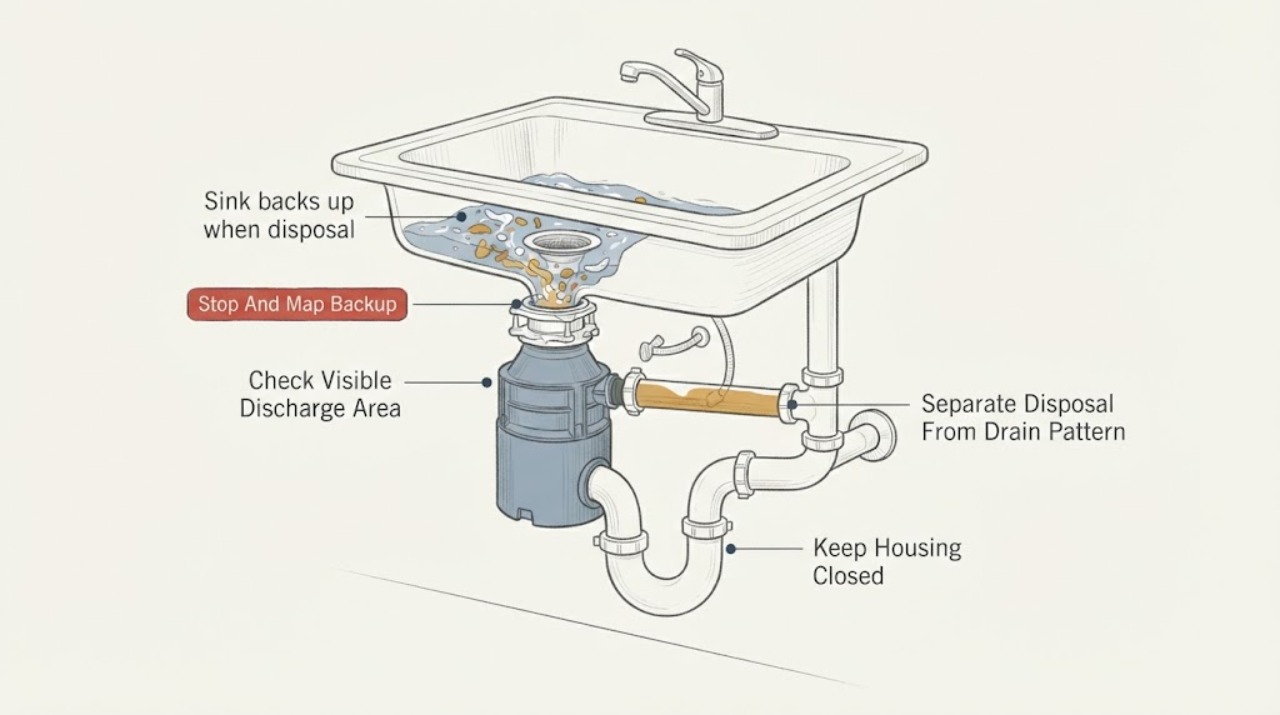
If an American Standard sink backs up only when the garbage disposal runs, the most likely issue is a restriction downstream of the disposal outlet or in the disposal discharge path; a jammed or non-running disposal can also leave water unable to pass. Turn the disposal off, keep hands and tools out of the opening, and note whether water rises in the disposal bowl, the other bowl, or the connected drain. Check the visible drain connection and P-trap area for a leak or displaced pipe without loosening fittings. If the disposal is off and there is no electrical or flooding hazard, a gentle plunger check may be appropriate only as the disposal manufacturer and local plumbing instructions allow; a double-bowl sink needs the other opening blocked. Do not use chemical drain cleaner, reach into the disposal, run it against standing water, or disconnect plumbing as a first step. If water backs up repeatedly, the clog is farther in the plumbing, there is a leak, the disposal hums or will not start, or the appliance must be opened or removed, leave it off and arrange qualified plumbing or disposal service.
Work through in order
Diagnostic checks
Use only checks that match the exact appliance or system and its official guide.
-
Check 1
Turn the disposal off and observe the water level, which bowl rises, whether the other bowl or nearby drain backs up, and whether water is leaking into the cabinet; do not place a hand or utensil in the disposal opening.
Expected result: Record a rise only when the disposal runs, a rise with the disposal off, backup in the second bowl, a slow drain with no overflow, or an active leak.
Next step: Keep the disposal off and use the corresponding drain, leak, jam, or service branch. Do not run repeated cycles to force the water through.
Stop if: Stop immediately if water is near an outlet or wiring, flooding is increasing, the disposal is smoking or sparking, or anyone may reach into the opening.
Why this matters
Why: Backup only during disposal discharge makes a disposal outlet or shared drain restriction more likely. Backup with the disposal off suggests a broader sink branch or household drain restriction; an active leak adds a plumbing or electrical hazard.
-
Check 2
With the disposal off and power disconnected when safe, inspect only the visible discharge connection, P-trap area, cabinet floor, and accessible drain pipe for a kink, sag, loose connection, standing leak, or a pipe displaced from its support; do not loosen a fitting.
Expected result: Record dry and supported plumbing, a drip or wet joint, a visibly displaced pipe, a sag or obstruction in an accessible section, or no safe view of the connections.
Next step: Keep the disposal off and arrange qualified plumbing service for a leak, displaced pipe, or inaccessible connection. Do not tighten blindly against a cracked fitting or move the disposal.
Stop if: Do not work near wet electrical components, remove the P-trap, disconnect the disposal, or continue if water is uncontrolled or the cabinet is unstable.
Why this matters
Why: A wet or displaced connection can explain backup or loss of flow and may damage the cabinet. A dry, supported visible route does not rule out an internal disposal outlet or deeper drain clog.
-
Check 3
After the sink is safe and the disposal remains off, note whether the sink drains normally by gravity with the disposal off, whether the backup appears only when discharge starts, and whether the disposal runs with an audible whirlpool or only hums.
Expected result: Record normal gravity drainage with a backup during discharge, slow or absent drainage with the disposal off, a running disposal with a whirlpool, or a hum/no-start condition.
Next step: Use a gentle drain-clearing check only if safe and manufacturer-authorized; use the disposal-service branch for hum/no-start or internal-jam symptoms. Do not reach into or disassemble the disposal.
Stop if: Stop if the disposal is energized unexpectedly, a jam is suspected, a chemical drain product is present, or diagnosis would require opening the appliance.
Why this matters
Why: Normal drainage until disposal discharge points toward a restricted disposal outlet or shared line. Slow drainage even when off points farther downstream. A whirlpool with a running disposal supports a drain-line restriction, while hum/no-start points toward a jam, overload, or electrical/control issue.
-
Check 4
Only when the disposal is switched off, the sink contains no chemical drain product, there is no leak or electrical hazard, and the disposal manual permits it, place a plunger over the affected opening; on a double sink, block the other opening before applying gentle strokes.
Expected result: Record water moving and the sink draining, no movement, water forcing into the second bowl, or a leak appearing below the sink.
Next step: Stop after a limited gentle attempt. If flow does not restore, returns when the disposal runs, or the clog is farther down the line, arrange licensed plumbing service.
Stop if: Do not plunge against a running disposal, use excessive force, use chemical drain cleaner, insert hands or tools, or continue with hot/contaminated standing water or an active leak.
Why this matters
Why: Improved drainage supports a near-sink clog, but it does not prove the disposal or pipe is undamaged. No movement, cross-bowl pressure, or a new leak makes force-based clearing inappropriate and raises the likelihood of a deeper clog or plumbing defect.
-
Check 5
From above, with the disposal off and power disconnected when safe, use a flashlight to look for a plainly visible foreign object, standing water, a damaged splash baffle, or a blocked opening; keep hands and tools outside the grind chamber.
Expected result: Record no visible object, an object that cannot be removed without reaching in, a damaged baffle or opening, or a disposal that is jammed, humming, or not starting.
Next step: Leave the disposal off and arrange qualified disposal or plumbing service for any jam, damaged part, or no-start condition. Follow an exact model manual only for an explicitly user-safe external reset or jam procedure.
Stop if: Never put hands into the disposal, insert utensils, bypass the switch, or work on wiring. Disconnect electrical supply before any servicing described by the exact manual.
Why this matters
Why: A visible obstruction or damaged baffle can reduce discharge, but an unseen jam or internal fault cannot be safely confirmed from above. A disposal motor symptom points away from a simple downstream drain clog.
-
Check 6
Prepare a service handoff with the sink brand and exact sink/disposal models if known, one- or two-bowl layout, backup timing, water level, visible plumbing/leak findings, plunger result if safely attempted, disposal sound, and any prior drain work.
Expected result: Confirm that only disposal-off observation, safe external inspection, and at most one manufacturer-authorized gentle plunger check were performed; no disposal opening, P-trap, wiring, or drain connection was disassembled.
Next step: Arrange plumbing service for persistent or deeper backup and disposal service for a jam, hum/no-start, damaged baffle, or internal appliance fault. Keep the disposal off until resolved.
Stop if: Stop all homeowner work when diagnosis requires removing plumbing, moving the disposal, opening electrical compartments, or clearing a blockage beyond the visible sink-side area.
Why this matters
Why: The pattern helps a plumber or appliance technician separate a downstream branch clog, disposal outlet restriction, jam or motor fault, leaking connection, and a wider household drain problem before selecting a repair.
Use your observations
Decision map
Find the observation that best matches what you see, then follow the next safe action.
-
PATH 01Next step
What you see
The sink drains normally with the disposal off but backs up as soon as the disposal runs, with no disposal hum/no-start, leak, or electrical hazard.
Do this next
Keep the disposal off, use only a limited manufacturer-authorized gentle plunger check if safe, and arrange plumbing service if flow does not restore or backup returns.
-
PATH 02Next step
What you see
Water drains slowly or backs up even while the disposal is off, or another connected fixture also shows poor drainage.
Do this next
Stop using the affected drain and arrange licensed plumbing service. Do not keep adding water or run the disposal into a standing backup.
-
PATH 03Next step
What you see
The disposal hums, stops, will not start, or shows a visible obstruction while the sink response cannot be explained by a simple drain restriction.
Do this next
Keep power off and follow only the exact disposal manual's external safe procedure; arrange qualified disposal service for internal access, repeated trips, or unresolved no-start symptoms.
-
PATH 04Next step
What you see
Water appears at the disposal outlet, sink flange, P-trap, or another under-sink connection when the disposal runs or the sink drains.
Do this next
Keep the disposal off, dry only what can be reached safely, and arrange qualified plumbing service. Do not tighten cracked fittings, move the disposal, or work near wet wiring.
-
PATH 05Next step
What you see
The sink contains chemical drain product or contaminated water, flooding is increasing, water is near an outlet, or a person may reach into the disposal.
Do this next
Do not plunge, operate, or touch the disposal. Keep people clear and obtain qualified plumbing or emergency assistance according to the hazard.
Helpful context
Understand the symptom
The backup pattern points downstream, but does not prove the location
When a disposal runs, it sends water and ground food waste into the drain line. A rise in the sink during that discharge often means the disposal outlet, shared sink branch, P-trap, or farther drain line cannot accept the flow. InSinkErator uses a whirlpool or water that will not drain as a clue for a clogged drain line, but a disposer that is jammed or not running can create a different path. Observe the exact bowl and timing before choosing between a drain-clearing, disposal, or service branch.
A sink brand does not identify the disposal model
American Standard identifies the sink fixture, while the disposal may be a separate appliance with its own outlet, baffle, reset, and safety instructions. Use the disposal's exact manual for any model-specific procedure. A sink that drains normally with the disposal off but backs up when it runs still needs the disposal discharge path and the shared drain checked; do not assume the sink basin itself is defective.
Plunging is a limited, controlled check
For a suitable clog with the disposal switched off and no electrical, chemical, or flooding hazard, the disposal manufacturer describes a plunger approach and says to block the other opening on a double sink. Press gently rather than forcing water through a sealed or damaged connection. If the sink will not hold water, the backup returns immediately, or the clog is farther down the plumbing, stop and arrange plumbing service instead of adding force or chemicals.
Leaks and jams are different from a shared drain backup
A leak below the sink, a disposer that hums or stops, or water that backs up even when the disposal is off changes the next step. InSinkErator's manual treats electrical and jam troubleshooting as service-sensitive and requires power disconnection before servicing. A sink-side observation can separate a drain restriction from a disposal fault, but it cannot safely diagnose internal cutting parts, wiring, or the motor.
Safety boundary
Stop conditions
- Keep the disposal off and stop immediately for an active leak, rising floodwater, chemical drain product, water near an outlet or wiring, smoke, sparks, shock, or a jam that cannot be handled by the exact model manual.
- Never put hands or tools into the disposal, bypass the switch, run it against standing water, use chemical drain cleaner, or loosen plumbing fittings as a first step.
- Do not move or remove the disposal, disconnect wiring, open electrical compartments, or force a plunger when the other sink bowl is not blocked or a leak is present.
Only after diagnosis
Potential parts
- garbage disposal splash baffle or stopper
Consider this only when qualified inspection confirms a damaged or displaced baffle that obstructs the opening or allows abnormal splash; a sink backup alone does not prove the baffle failed.
Confirm the exact disposal model, baffle shape, mounting interface, and manufacturer instructions before selection. - garbage disposal discharge elbow or gasket
Consider this only when inspection or qualified plumbing service confirms a cracked, displaced, or leaking discharge connection contributing to poor flow.
Confirm the exact disposal model, outlet geometry, gasket type, pipe size, and local plumbing requirements before replacement. - sink drain or P-trap section
Consider this only when qualified plumbing diagnosis confirms a damaged, obstructed, or improperly configured trap or drain section.
Confirm the sink/disposal configuration, pipe material and size, clearances, connection types, and applicable plumbing code before selection. - garbage disposal assembly
Consider this only after qualified diagnosis confirms an internal disposal fault, repeated jam, failed motor, or damage that cannot be resolved by the drain path.
Confirm sink flange, mounting system, outlet orientation, electrical connection, capacity, and local installation requirements before any replacement.
When checks do not resolve it
Need a professional?
Arrange licensed plumbing service when the sink backs up with the disposal off, another fixture drains poorly, a gentle manufacturer-authorized check does not restore flow, the restriction appears farther down the line, or a P-trap/discharge connection leaks. Arrange qualified disposal service for a jam, hum/no-start, repeated overload, damaged baffle, internal obstruction, or any diagnosis requiring the appliance to be opened or removed. Stop immediately for chemical drain product, flooding, water near electricity, smoke, sparks, shock, or hands/tools entering the disposal.
Have this ready
- Provide the American Standard sink details, exact disposal model if known, one- or two-bowl layout, backup timing, water level, visible discharge/P-trap findings, plunger result if safely attempted, disposal sound, leaks, and any prior drain or disposal work.
Common questions
FAQ
Why does my American Standard sink back up when the disposal runs?
The disposal may be sending flow into a restricted outlet, P-trap, shared branch, or deeper drain line. A jammed or non-running disposal can also prevent normal discharge. Keep the disposal off, observe whether the sink drains when it is off, and arrange plumbing or disposal service based on that pattern.
What does a whirlpool in the sink during disposal operation mean?
InSinkErator treats a whirlpool with a running disposal as a clue that the drain line may be clogged. It is not proof of the exact location, so keep the disposal off and use only a safe, limited manufacturer-authorized drain check before arranging plumbing service.
Can I plunge a sink that backs up when the disposal runs?
Only when the disposal is switched off, there is no chemical drain product, leak, flooding, or electrical hazard, and the disposal instructions permit it. On a double sink, block the other opening and use gentle strokes. Stop if water does not move, crosses bowls forcefully, or a leak appears.
Should I remove the P-trap to clear this backup?
Do not make P-trap removal the first homeowner step, especially with standing water, a leak, or a disposal connection above it. Inspect visible plumbing only; if the restriction persists or the connection leaks, arrange licensed plumbing service.
When is a sink backup an emergency?
Stop and get urgent help for rising uncontrolled water, water near electrical equipment, chemical drain product, smoke, sparks, shock, or a person reaching into the disposal. Do not operate switches or the disposal in a suspected electrical or mechanical hazard.
Read the exact guide
Official sources
- InSinkErator SupportInSinkErator · InSinkErator support index confirms separate clogged-disposal, jam, and reset troubleshooting paths; exact product instructions govern.
- Fixing a Clogged Garbage DisposalInSinkErator · InSinkErator disposal guidance used for general disposal/drain triage; the exact disposal manual and local plumbing requirements govern.
- Kitchen SinksAmerican Standard · American Standard sink catalog used to preserve the assigned sink brand and explain that bowl configuration affects the drain check; disposal troubleshooting follows the separate disposal manufacturer's instructions.
- TroubleshootingInSinkErator · InSinkErator commercial SS-series manual used for general safety boundaries and plumbing principles; exact disposal model manual controls.
Community feedback
Share a repair observation
Share a plain-text repair observation. Accepted observations are published automatically; this page may take a moment to update.