
On this page
Start here
Quick answer
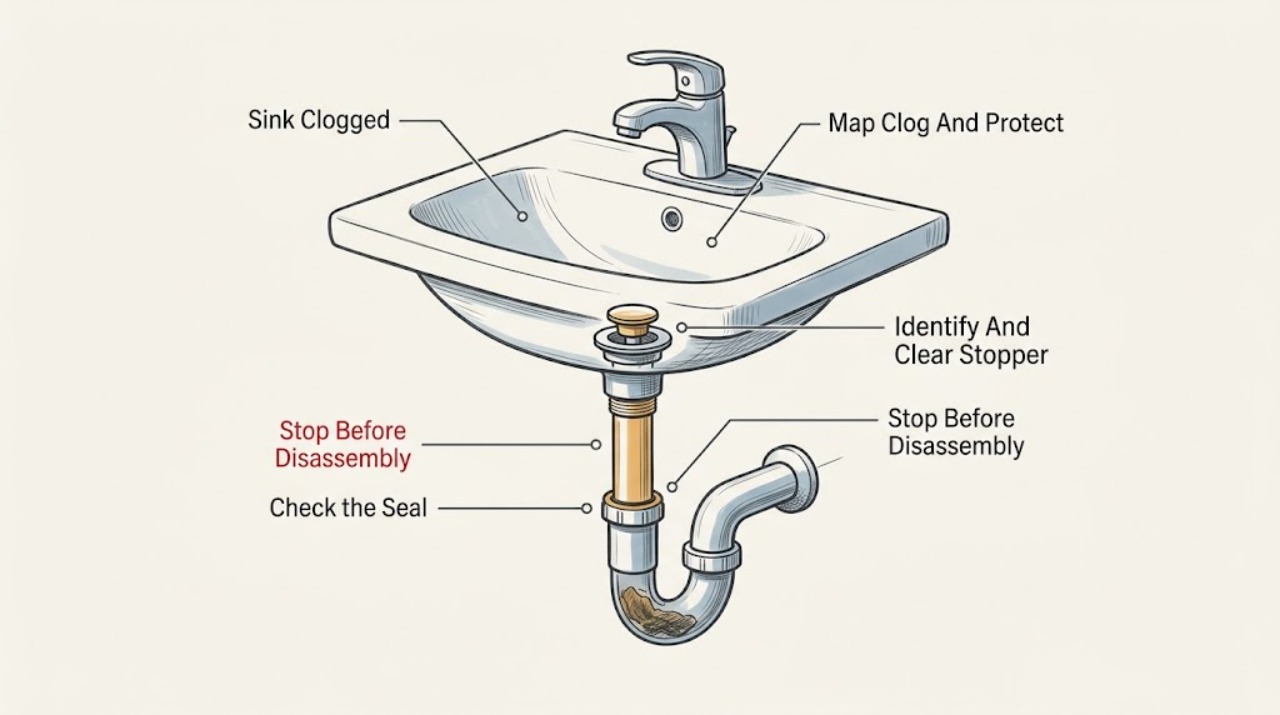
A clogged Moen sink is usually a local obstruction at the stopper, strainer, or nearby drain, but a backup in more than one fixture can indicate a larger branch or main-line problem. First stop adding water and determine whether only this basin is affected. Identify the Moen drain style, remove only an accessible stopper or strainer, and clear visible hair or debris. If no chemical cleaner has been used, a sink plunger with the overflow sealed can be tried; do not mix cleaners or plunge against standing caustic liquid. Check under the sink for a leak without loosening fittings. If the basin will not clear, the trap leaks, multiple fixtures back up, sewage returns, or a chemical has already been poured in, stop and use qualified plumbing service.
Work through in order
Diagnostic checks
Use only checks that match the exact appliance or system and its official guide.
-
Check 1
Stop using the clogged basin and remove only enough standing water to prevent an overflow. Check whether the problem is a complete stoppage or slow drainage, whether the second basin (if present) backs up, and whether other fixtures in the home drain normally. Look under the sink for fresh water at the trap or drain connections without loosening anything.
Expected result: Only this basin is affected, both basins share a backup, several fixtures are slow or backing up, or water is leaking below the sink.
Next step: For a single affected basin, continue with the stopper and mechanical checks. If multiple fixtures back up, sewage appears, or the trap or wall connection leaks, stop using the affected fixtures and arrange qualified plumbing service rather than forcing water through the line.
Stop if: Do not keep adding water to a full sink, run a disposal against standing water, or loosen a fitting when chemical drain cleaner may be present.
Why this matters
Why: A single-basin symptom points more toward the stopper, strainer, trap, or nearby branch. A shared or multi-fixture backup makes a downstream branch or main drain issue more likely. A leak means clearing the obstruction is not the only problem.
-
Check 2
Identify the Moen drain style at the basin: a grid that strains debris, a push-button stopper, or a lift-rod pop-up. With the drain dry enough to work safely, operate the stopper and remove it only if the design and owner's instructions allow; clear hair, soap residue, or food debris from the stopper and drain opening, then reinstall it without forcing the linkage.
Expected result: The stopper is closed or stuck, debris is wrapped around it, the stopper moves freely and the opening is clear, or the linkage will not release normally.
Next step: Correct the stopper position and retest with a small amount of water if the opening is clear. If the basin remains blocked, move to a mechanical plunge only when no chemical cleaner is present; use qualified service for a stuck linkage, damaged drain, or inaccessible obstruction.
Stop if: Do not pry against the sink finish, force a pivot rod, or order a replacement based only on appearance; confirm the drain style and exact model information first.
Why this matters
Why: A closed, jammed, or debris-covered stopper can block the basin without a deeper pipe clog. A clear, freely moving stopper makes an obstruction in the tailpiece, trap, or branch drain more likely. Resistance or an unfamiliar assembly is a sign not to force the Moen hardware.
-
Check 3
Only if no drain cleaner or other hazardous chemical has been poured into the basin, place enough water to cover the cup of a sink plunger, seal the sink overflow with a wet rag, and keep the plunger centered over the drain. Use controlled up-and-down strokes while maintaining the seal, then pause to see whether the water level falls; for a double basin, keep the other opening sealed as well.
Expected result: The water level drops and the sink drains, the water moves but returns, there is no movement, or water appears under the sink.
Next step: Flush with a modest amount of water and watch the trap and connections for leaks only if the sink clears. If the clog returns, does not move, or causes a leak, stop plunging and arrange plumbing service; disclose any chemical use before anyone works on the drain.
Stop if: Do not plunge if chemical cleaner is in the basin or drain, mix products, use excessive force, or continue after a fitting starts leaking.
Why this matters
Why: A drop in level suggests a local obstruction has shifted, while a temporary improvement suggests debris remains or the restriction is farther along. No movement makes a deeper or solid blockage more likely. Water under the sink indicates a leaking trap or connection and is not a successful clear.
-
Check 4
Ask whether a chemical drain opener, bleach, or another cleaner was used, and inspect the sink cabinet for a wet trap, swollen cabinet material, corrosion, or a loose-looking connection. Do not touch or disassemble a drain containing an unknown chemical; read the product label and keep the area ventilated while arranging help.
Expected result: No chemical was used and the trap is dry, a chemical was used or its identity is uncertain, the trap is visibly leaking, or the basin and other fixtures remain blocked.
Next step: Use only the low-risk stopper and plunger path when the drain is chemical-free. Otherwise stop handling the plumbing, keep people away from splashes, and tell a qualified plumber exactly what product was used. Escalate promptly for leaks, sewage, or multiple affected fixtures.
Stop if: Never mix drain products, pour another chemical into a standing clog, or open the trap after chemical use; do not use a flame or heat source near chemical fumes.
Why this matters
Why: A dry trap with one blocked basin leaves a mechanical local clog possible. Chemical residue creates a splash and burn hazard during plunging or pipe disassembly. A leak or several blocked fixtures points to plumbing damage or a downstream obstruction rather than a simple Moen stopper issue.
Use your observations
Decision map
Find the observation that best matches what you see, then follow the next safe action.
-
PATH 01Next step
What you see
Only one basin is affected, the Moen stopper is closed, stuck, or covered with debris, and the drain improves when the stopper is cleared.
Do this next
Keep the stopper moving freely and use a sink strainer where appropriate. If the same clog returns or the linkage is damaged, identify the exact Moen drain assembly before arranging repair or a part.
Why this path and its safety boundary
Why it matters: The restriction is likely at the drain opening or stopper rather than in the household drain line.
-
PATH 02Next step
What you see
The stopper is clear, no chemical cleaner was used, and a correctly sealed sink plunger lowers the water or briefly restores drainage.
Do this next
Retest with a modest amount of water while watching under-sink connections. Stop and use qualified service if drainage slows again, water leaks, or the plunger cannot move the blockage.
Why this path and its safety boundary
Why it matters: A movable local obstruction is more likely, but temporary drainage does not prove the branch is fully clear.
-
PATH 03Next step
What you see
Both basins or multiple fixtures back up, the clog returns after a temporary improvement, or the sink remains full despite a clear stopper and careful plunging.
Do this next
Stop adding water and arrange qualified plumbing service. Describe which fixtures are affected, whether sewage is present, and whether the sink trap or wall connection leaks.
Why this path and its safety boundary
Why it matters: The obstruction is more likely in a shared branch, deeper drain, or main line, and repeated basin-level plunging is unlikely to resolve the underlying issue.
-
PATH 04Next step
What you see
A drain chemical was used or is uncertain, the trap is leaking, the cabinet is wet, or there is a strong chemical odor or splash exposure.
Do this next
Stop handling the drain, do not mix products, ventilate as the product label directs, and contact qualified plumbing or poison/emergency support as appropriate. Provide the product container or label to responders if there was exposure.
Why this path and its safety boundary
Why it matters: The immediate risk is chemical or water damage, not simply a clog. Plunging or opening the drain can expose someone to corrosive liquid.
Helpful context
Understand the symptom
Start by locating the clog
A basin that drains slowly or holds water usually has a local restriction, often near the drain opening or trap. If another sink, tub, toilet, or floor drain is also backing up, the obstruction may be farther downstream. Do not keep running water into a full basin while deciding which branch applies.
Moen drain style changes the first check
Moen lavatory drains may use a grid drain, push-button drain, or a lift-rod pop-up assembly. A stopper that is closed, stuck, or carrying hair can look like a pipe clog. Identify the style before ordering a component or forcing the linkage; Moen's own guide emphasizes accurate drain identification for fit and function.
Only after diagnosis
Potential parts
- Moen pop-up stopper or lift-rod linkage
Only consider this category when the stopper is damaged, stuck, or fails to open after the drain style and exact model are identified.
Moen drain assemblies differ by design and overflow configuration; confirm the exact model and drain type before selecting a component. - Moen sink grid or push-button drain assembly
Only consider this category when the grid, button, flange, or drain assembly is damaged or service confirms that replacement is needed after the clog is cleared.
Verify the basin's overflow configuration, finish, and exact Moen drain model; do not assume visually similar parts fit. - sink P-trap or drain connection
Only consider this category when the trap or connection leaks, is damaged, or a qualified plumber confirms the obstruction is located there.
Drain dimensions and connection materials vary; have the existing configuration and local requirements checked before replacement.
When checks do not resolve it
Need a professional?
Arrange qualified plumbing service when more than one fixture backs up, sewage appears, the clog returns after a temporary improvement, the sink remains full after the stopper and chemical-free plunger checks, or the trap, wall connection, cabinet, or drain assembly leaks. Stop immediately if a chemical cleaner was used or is unidentified; do not plunge, mix products, or open the trap, and tell the plumber the product and timing. Seek poison or emergency help for a chemical splash, breathing difficulty, or ingestion. Do not force Moen drain hardware or use a replacement part without confirming the exact drain style and model.
Common questions
FAQ
How do I tell whether my Moen sink clog is in the stopper or the pipe?
Identify the drain style and inspect the accessible stopper or strainer first. If the stopper is closed, stuck, or carrying hair or debris and drainage improves when it is cleared, the obstruction was likely local. If the opening is clear and the basin remains blocked, the tailpiece, trap, or branch drain is more likely.
Can I plunge a clogged Moen sink?
Yes, if no chemical drain cleaner has been used. Remove standing water, seal the overflow, center a sink plunger over the drain, and use controlled strokes. Stop if there is no movement, water appears under the sink, the clog returns, or chemicals may be present.
When is a clogged sink a plumbing-service problem?
Use qualified service when multiple fixtures back up, sewage appears, the trap or wall connection leaks, the sink stays blocked after safe stopper and plunger checks, or the clog keeps returning. Chemical cleaner in the drain is also a stop condition: do not plunge or open the trap until a professional has been told what product was used.
Read the exact guide
Official sources
- Lavatory DrainsMoen Solutions · Moen lavatory drain styles, stopper and drain assembly identification, overflow distinction, and fit guidance
- What is a pop-up drain assemblyMoen Solutions · Moen bathroom-sink pop-up stopper purpose and drain assembly terminology
- Use household chemicals safelyHealth Canada · Government household chemical hazards, drain-cleaner handling, no-mixing warning, ventilation, label and exposure guidance
- Advice about blocked sinks and toiletsCity of York Council · Council guidance on sink blockage causes, fixture-scope checks, standing water, overflow sealing, sink plunging, and downstream escalation
Community feedback
Share a repair observation
Share a plain-text repair observation. Accepted observations are published automatically; this page may take a moment to update.