
On this page
Start here
Quick answer
For a clogged American Standard toilet, stop flushing and turn off the toilet's water supply before the bowl reaches the rim. Protect the floor, then use a toilet plunger with its cup fully covering the outlet and make controlled strokes; American Standard says the bowl should begin to drain before one normal flush is used to check the result. If the bowl will not drain, the plunger cannot seal, an object may be lodged, several fixtures back up, or the clog returns, stop escalating force and arrange qualified plumbing service. Do not use a chemical drain opener, reach into the trap, remove the toilet, or keep flushing to test it. Flush only human waste and toilet paper after the blockage is resolved.
Before you begin
Safety first
- This article covers overflow control, ordinary-access observation, and a toilet-plunger attempt only. Do not use chemicals, reach into or dismantle the trap, remove the toilet, open a cleanout, or improvise a drain tool.
Work through in order
Diagnostic checks
Use only checks that match the exact appliance or system and its official guide.
-
Stop the next flush and control the water level
Do not flush again. Turn the toilet's local water supply off from a dry, stable position, place towels around the base, and keep the handle from being used while the bowl is high.
Expected result: The bowl level is rising, near the rim, stable but high, or slowly falling after the supply is off; note whether water reaches the floor or leaks at the base.
Next step: Wait for the level to become manageable before plunging. If the bowl overflows, water reaches electrical equipment, sewage is spreading, or the base is leaking, isolate the area and arrange urgent plumbing service.
Stop if: Do not repeatedly flush, hold the flush lever down, scoop contaminated water by hand, or continue if the floor, outlet, or surrounding area is unsafe.
Why this matters
Why: A rising or near-rim level is an immediate overflow risk, while a bowl that slowly falls shows some passage but does not prove the trapway is clear. Water at the base can be a separate seal or fixture problem and should not be tested by more flushing.
-
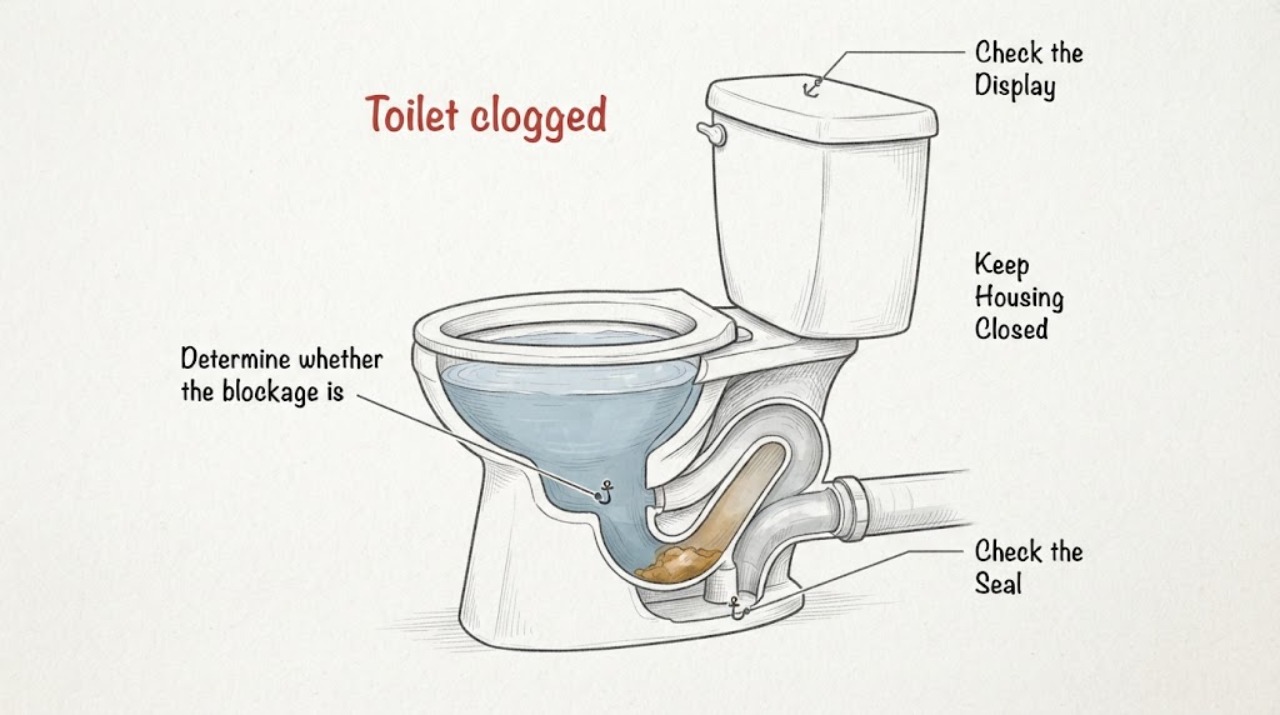
Determine whether the blockage is isolated to this toilet
Without flushing the blocked toilet, observe nearby sink, tub, shower, and floor-drain behavior during normal use only when it can be done without sending water toward the affected bowl or floor.
Expected result: Only this bowl is slow or full, or another fixture also gurgles, drains slowly, rises, or sends water toward the toilet or floor drain.
Next step: Keep water use low when more than one fixture is affected and tell the plumber which fixtures changed together. If only the toilet is affected and its level is controlled, continue with the toilet-specific plunger check.
Stop if: Do not run other fixtures to force the clog through, open a cleanout, or use a chemical product when shared backup or sewage is suspected.
Why this matters
Why: An isolated bowl supports a trapway or toilet-level obstruction. Symptoms at several fixtures make a shared branch or building drain restriction more likely, so plunging the toilet alone may not solve it and can move contaminated water unexpectedly.
-
Use a toilet plunger with a complete seal
When the bowl level is safe to work around, place a toilet plunger so its rubber cup covers the trapway outlet completely. Pump the handle with controlled strokes while keeping the seal in place; do not use the fixture's flush handle during the attempt.
Expected result: The plunger seals and the bowl level moves or begins to drain, the seal breaks repeatedly, or the water does not move at all.
Next step: If the water begins to drain, allow it to settle and use one controlled flush only after the bowl is at a normal level. If it does not move or porcelain, seal, or floor could be damaged, stop and request plumbing service.
Stop if: Do not strike the bowl, force the plunger against a fragile or cracked fixture, use a sink plunger that cannot seal the outlet, or continue plunging contaminated water onto the floor.
Why this matters
Why: A moving level indicates pressure is reaching the obstruction and the clog may be loosening. A broken seal can make the tool ineffective, while no movement after a properly sealed attempt suggests a stubborn or inaccessible obstruction rather than permission to apply unlimited force.
-
Check one flush only after the bowl drains
Once the bowl has returned to a normal level and there is no visible leak, restore the local water supply and perform one normal flush while watching the bowl from a safe position; be ready to stop the supply again if the level rises.
Expected result: The flush clears normally and the bowl refills without rising, the flush is weak or leaves material behind, the level rises again, or water leaks at the base or supply connection.
Next step: If the flush is normal, monitor for recurrence and review what entered the toilet. If it is weak, rises, gurgles, or leaks, turn the supply off again and arrange qualified plumbing diagnosis rather than repeating the flush.
Stop if: Do not keep flushing a slow or rising bowl, hold the valve open, remove tank or bowl components as a clog test, or continue when water is leaking at the base.
Why this matters
Why: A normal flush supports a cleared immediate blockage. A weak or recurring flush suggests a partial trapway, flush-performance, water-level, or downstream drain problem; a leak is a separate stop-use condition.
-
Separate a stubborn or object-related clog from a soft blockage
If the plunger does not restore drainage, note whether a known object, excessive paper, wipe, hygiene product, toy, or other non-toilet material may have entered the bowl. Keep the supply off and do not reach into the trap or push an object farther in.
Expected result: The cause is known and visible at the bowl opening, suspected but not visible, or unknown after the bowl remains blocked.
Next step: If the obstruction cannot be removed from ordinary safe access without reaching into the trap, stop and ask a plumber to use the correct toilet-specific method. Provide the likely object and when the blockage began.
Stop if: Do not use a wire, coat hanger, knife, improvised rod, drain opener, or forceful tool in the trap; do not remove the toilet to investigate as a user test.
Why this matters
Why: A visible cause may require careful removal only when it can be lifted without contact with the trap or porcelain; a suspected or unknown object can become more tightly lodged if pushed. Persistent blockage can also be downstream of the toilet.
-
Record recurrence and what was flushed
After a normal recovery, keep a short record of whether the clog followed a large paper load or a non-toilet item, whether the flush was weak, and whether it recurred on the next several uses; do not deliberately repeat a flush to reproduce the symptom.
Expected result: The toilet remains normal, clogs again soon, has a consistently weak flush, or shares symptoms with another drain.
Next step: Arrange a plumber for recurrence, weak flushing, gurgling, or multi-fixture symptoms. Until then, limit use if the bowl is slow and do not use chemical treatments to mask the pattern.
Stop if: Stop use for any overflow, sewage backup, base leak, cracked porcelain, or contamination that cannot be safely isolated and cleaned.
Why this matters
Why: A one-time obstruction may be local, but recurrence or persistent weak flushing shifts concern toward a partial trapway, flush component, water level, or shared drain restriction. EPA advises flushing only human waste and toilet paper, but correct use does not rule out a plumbing fault.
Use your observations
Decision map
Find the observation that best matches what you see, then follow the next safe action.
-
PATH 01Safety boundary
What you see
The bowl is rising toward the rim, has overflowed, or the local supply cannot be safely controlled.
Do this next
Keep the toilet out of service, isolate the wet area, and arrange urgent plumbing or cleanup help as appropriate. Do not flush or add water from another fixture.
Why this path and its safety boundary
Why it matters: The immediate problem is spill and contamination control, not a longer unclogging experiment.
Safety stop: Stop immediately for water near electrical equipment, sewage spreading, a floor or ceiling leak, or an unsafe or contaminated area.
-
PATH 02Safety boundary
What you see
Only this toilet is affected, the bowl level is controlled, and a toilet plunger creates a seal and makes the water level move.
Do this next
Allow the bowl to drain, make one controlled flush, and stop if the level rises, the flush remains weak, or a leak appears.
Why this path and its safety boundary
Why it matters: A local trapway obstruction is plausible and the plunger is changing the blockage, but movement alone does not prove the passage is clear.
Safety stop: Do not keep flushing to test it or substitute a chemical drain opener if the first controlled flush fails.
-
PATH 03Safety boundary
What you see
The bowl level is safe, the plunger seals correctly, but the water never moves or the seal cannot be maintained without damaging the fixture.
Do this next
Keep the supply off and arrange qualified plumbing service for a toilet-specific obstruction assessment. Tell the plumber whether an object may have entered and whether other fixtures are affected.
Why this path and its safety boundary
Why it matters: The obstruction may be hard, lodged, beyond the bowl, or inaccessible to this method; increasing force can damage porcelain, seals, or the floor.
Safety stop: Do not reach into the trap, push an improvised tool through it, remove the toilet, or pour chemicals into the bowl.
-
PATH 04Safety boundary
What you see
The toilet drains after plunging but the next flush is weak, leaves material behind, gurgles, or the clog returns soon afterward.
Do this next
Stop repeated testing, record the timing and flush behavior, and arrange plumbing diagnosis before the bowl backs up again.
Why this path and its safety boundary
Why it matters: The immediate obstruction may be only partly cleared, or the cause may involve the trapway, flush components, bowl water level, or downstream drain. A single successful flush is not a complete repair.
Safety stop: Do not compensate with repeated flushes, unapproved chemicals, tank modifications, or a more forceful improvised tool.
-
PATH 05Safety boundary
What you see
A sink, tub, shower, floor drain, or another toilet also drains slowly, gurgles, rises, or backs up when the toilet is used.
Do this next
Minimize water use in the affected area and arrange qualified plumbing service for the shared drain path. Keep the toilet supply off if its bowl is not stable.
Why this path and its safety boundary
Why it matters: A shared branch or building drain restriction is more likely than a blockage confined to this American Standard bowl.
Safety stop: Do not open a cleanout, use chemical drain opener, or send more water into the system while sewage backup is present.
-
PATH 06Safety boundary
What you see
Water leaks at the base, the toilet rocks, the porcelain is cracked, or the supply connection leaks during the incident.
Do this next
Turn off the local supply, stop using the toilet, keep the area dry and isolated, and arrange prompt plumbing assessment for the seal, fixture, or connection.
Why this path and its safety boundary
Why it matters: A leak or fixture/seal problem is a separate service boundary and can cause floor or subfloor damage even if the clog later drains.
Safety stop: Do not tighten hidden hardware, lift the toilet, continue plunging a cracked bowl, or use the fixture while water can reach the floor or structure.
Helpful context
Understand the symptom
A clogged toilet is first an overflow-control problem
Before diagnosing why an American Standard toilet is blocked, prevent another flush from adding water to the bowl. A high bowl level can spill even when the obstruction is only partly restricting the trapway. Turn off the toilet's local supply from a dry, stable position, keep people away from the wet floor, and use towels to protect the area. Do not keep pressing the handle or hold it down to force a flush.
Plunge the trapway, not the overflow
A toilet plunger must seal the bowl outlet so its movement acts on the trapway. American Standard recommends covering the trapway hole completely and pumping the handle; a cup that cannot seal, a bowl that never drains, or an object that resists the plunger is a reason to stop rather than add force. Keep the porcelain, seal, and floor protected, and use only a tool and procedure appropriate for a toilet.
A recurring clog changes the diagnosis
A clog that clears once but returns, a weak flush that leaves waste behind, or backup at another fixture can indicate a partial obstruction beyond the bowl, an object in the trapway, a flush or water-level issue, or a building drain problem. Do not assume a larger plunger or repeated chemical treatment is the answer. Record when it happens, what was flushed, how quickly the bowl drains, and whether other drains are affected so a plumber can choose the correct scope.
Safety boundary
Stop conditions
- Do not keep flushing a rising or slow bowl, hold the flush handle down, or add water to force a blockage through.
- Do not pour chemical drain opener into the toilet, mix cleaning products, or use an unapproved solvent; keep the product out of the wastewater path.
- Do not reach into the trap, use a wire or coat hanger, push an object farther into the drain, remove the toilet, or open a building cleanout as an ordinary user check.
- Stop for overflow, sewage backup, water near electrical equipment, a cracked or rocking toilet, a base or supply leak, or contamination that cannot be safely isolated.
- Arrange qualified plumbing service when plunging does not restore drainage, the clog recurs, the flush remains weak, or multiple fixtures show backup or gurgling.
Only after diagnosis
Potential parts
- toilet plunger
Consider this tool category only when the bowl is stable and the immediate obstruction is isolated to the toilet; it must form a suitable seal without damaging the fixture.
Use a toilet-specific tool according to its instructions; do not substitute an improvised rod or a tool that cannot safely cover the outlet. - toilet auger
Consider this category only after a qualified decision that the obstruction remains in the toilet trapway and a toilet-specific auger is appropriate; a suspected hard object or shared-drain backup may need professional handling instead.
Confirm the tool is intended for toilets and follow its instructions; stop if it binds, risks scratching porcelain, or would push an object farther into the drain. - flush valve or flapper assembly
Consider this category only when a qualified diagnosis finds a persistent weak flush or incomplete flush after the drain path is clear and identifies a worn or incompatible flush component.
Confirm the exact American Standard model and component arrangement before ordering; do not alter tank parts as a substitute for clearing a drain blockage.
When checks do not resolve it
Need a professional?
Arrange qualified plumbing service when the bowl will not drain after a properly sealed toilet-plunger attempt, a suspected object is lodged, the flush remains weak or the clog returns, more than one fixture backs up or gurgles, the toilet rocks or leaks at the base, or the local supply cannot be safely controlled. Treat overflow, sewage spreading, cracked porcelain, water near electrical equipment, or a contaminated or unsafe area as an urgent stop-use condition.
Safety scope: This article covers overflow control, ordinary-access observation, and a toilet-plunger attempt only. Do not use chemicals, reach into or dismantle the trap, remove the toilet, open a cleanout, or improvise a drain tool.
Common questions
FAQ
What should I do first when my American Standard toilet is clogged?
Stop flushing, turn off the local water supply, and protect the floor. Once the bowl level is manageable, use a toilet plunger that seals the trapway. If the bowl is rising, overflowing, leaking, or unsafe to approach, keep the toilet out of service and arrange urgent plumbing help.
Why does my American Standard toilet clog again after plunging?
A plunger may move a partial trapway obstruction without clearing it, or the recurring problem may involve a foreign object, weak flush, water-level issue, or downstream drain restriction. Stop repeated flushing, note whether other fixtures gurgle or back up, and arrange plumbing diagnosis if the pattern returns.
Can I use chemical drain opener in a clogged toilet?
Do not use chemical drain opener as a routine toilet-clog fix. EPA advises avoiding chemical drain openers for a clogged drain, and residue can create a hazard for anyone who later plunges or services the toilet. Use overflow control and a toilet-specific approach, or request qualified service.
How do I know whether the clog is in the toilet or the main drain?
If only this toilet is slow and nearby fixtures are normal, a bowl or trapway obstruction is more plausible. If a sink, tub, shower, floor drain, or another toilet also backs up, gurgles, or drains slowly, a shared branch or building drain restriction is more likely and water use should be minimized until a plumber assesses it.
Does every American Standard toilet have overflow protection?
No feature should be assumed from the brand name alone. American Standard documents overflow protection on specific models such as the Renaissance WaterWarden, but an unidentified or different toilet may not have the same path. Treat a rising bowl as an overflow risk and turn off its supply.
Read the exact guide
Official sources
- How to Care for Your Septic SystemU.S. Environmental Protection Agency · EPA wastewater guidance used for prevention and chemical-safety boundaries; the waste-disposal rule applies especially directly to homes with septic systems but is prudent for connected plumbing generally.
- Renaissance WaterWarden Right Height Round Front Complete ToiletAmerican Standard · One American Standard product page used only to show that overflow-protection and trapway features are model-specific; it is not a claim about every American Standard toilet.
- How to Unclog a ToiletAmerican Standard · American Standard's general toilet-unclogging article used for the initial overflow-control, towel, plunger-seal, and controlled-flush sequence; exact fixture instructions still control.
Community feedback
Share a repair observation
Share a plain-text repair observation. Accepted observations are published automatically; this page may take a moment to update.