
On this page
Start here
Quick answer
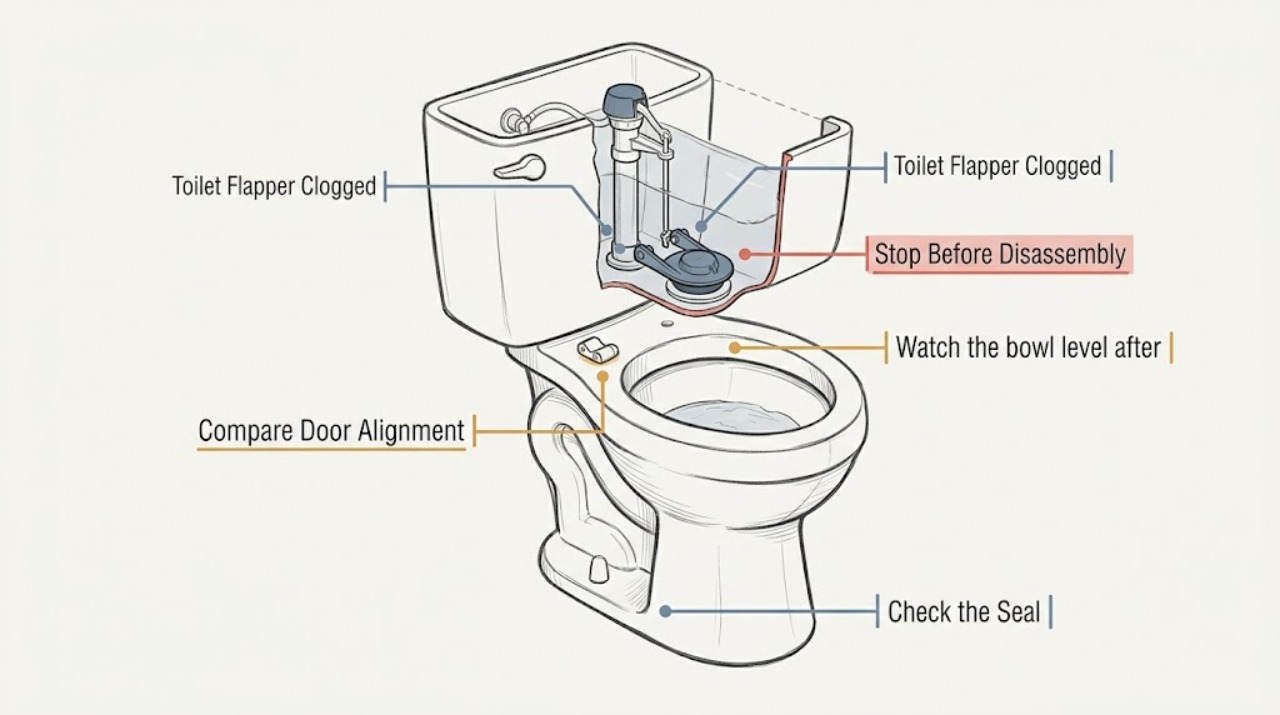
A flapper can be held open by a loose chain, debris, or a misshapen seal, but a toilet that will not drain may instead have a bowl or trapway clog. If the bowl water is rising, stop flushing and close the toilet supply valve first. For a tank-side flapper problem, remove the tank lid, let the tank level settle, and inspect the flapper, hinge points, chain, and flush-valve seat without forcing anything. Rinse away loose debris, confirm the flapper lies flat and the chain has slight slack, then test one flush. If the flapper cannot seal, the bowl still backs up, the valve or tank is damaged, or the supply will not shut off, stop and call a plumber.
Work through in order
Diagnostic checks
Use only checks that match the exact appliance or system and its official guide.
-
Check 1
Watch the bowl level after a flush attempt and turn the toilet supply valve clockwise until it stops if the bowl is rising or fails to drain.
Expected result: The bowl is high and slow to drain, the bowl is normal but water keeps running into it from the tank, or the supply valve will not stop the water.
Next step: Do not flush again when the bowl is high. If the bowl is not blocked, continue with the tank inspection; if the supply cannot be stopped, use the home shutoff if safely accessible and arrange service.
Stop if: Stop immediately for an overflowing bowl, water on the floor, or a supply valve that will not close.
Why this matters
Why: A high bowl points to a bowl or trapway blockage, not a tank flapper clog. A normal bowl with continuing refill flow makes a flapper seal or fill-control issue more likely. A valve that will not shut off creates an overflow risk.
-
Check 2
Remove the tank lid and identify the flapper at the bottom of the tank, where the chain from the trip lever attaches to the rubber seal.
Expected result: The flapper is partly open, the chain is tangled or tight, debris is visible around the seal, or the toilet uses a tower or another flush design without a conventional flapper.
Next step: Leave the trip lever alone while inspecting, and use the toilet model's parts and service information if the tank does not contain the expected flapper.
Stop if: Stop if the tank lid, flush valve, or internal parts are cracked, unstable, or not identifiable without dismantling the tank.
Why this matters
Why: An open seal, tight chain, or debris can let water pass from the tank and make the toilet run or weaken the next flush. A tower-style or different valve means a generic flapper procedure may not apply.
-
Check 3
With the supply closed and the tank level lowered by one flush, inspect the flapper seal, hinge tabs, chain hook, and flush-valve rim for loose sediment or a foreign object.
Expected result: The seal has grit on its contact edge, the hinge is obstructed, the chain is wrapped around another part, or the rubber is cracked, warped, or sticky.
Next step: Remove only loose debris with a soft cloth or rinse water while keeping pieces out of the flush opening. Do not scrape the rubber or pry the valve rim.
Stop if: Stop if the flush-valve rim is chipped, the rubber tears, or debris drops into an inaccessible passage.
Why this matters
Why: A clean obstruction can hold a sound seal open. A damaged or distorted seal is not a removable clog and will usually continue to leak after cleaning.
-
Check 4
Set the chain so the flapper can rest flat on the flush-valve opening with a small amount of slack, then open the supply slowly and watch the seal without touching it.
Expected result: The flapper stays flat and the tank stops filling, the chain holds the seal open, or water still slips past the seal after the tank fills.
Next step: Correct only an obvious chain tangle or over-tight setting. If seepage remains, close the supply and identify the exact model before replacing the flapper.
Stop if: Stop if the supply connection leaks, the valve will not close, or the flapper must be forced against the flush valve.
Why this matters
Why: A flat seal with a stopped refill supports a chain or debris correction. A chain that holds the seal open needs routing or length correction. Persistent seepage points to a worn seal, a damaged seat, or a mismatched part.
-
Check 5
If the tank-side seal is clear and the bowl level is safe, use a toilet plunger with its cup centered over the trapway opening rather than continuing to flush.
Expected result: The bowl level falls after several controlled plunging strokes, remains high, or water returns to the bowl when the tank is opened or a nearby fixture drains.
Next step: Restore the water supply only for one cautious flush after the bowl drains. If the blockage persists or returns, stop and have a plumber clear the drain path.
Stop if: Stop if the bowl approaches the rim, the plunger cannot form a seal, or wastewater backs up elsewhere.
Why this matters
Why: A falling bowl level supports a bowl-side blockage. No improvement suggests a deeper trapway or drain issue, and water movement from another fixture can indicate a shared drain problem.
-
Check 6
After a successful tank-side correction or model-matched flapper installation, run one flush while watching the tank seal, chain movement, bowl drain, and refill shutoff.
Expected result: The flush clears, the flapper closes at the end of the flush, the tank stops filling, or the toilet keeps running or backs up again.
Next step: If the test fails, close the supply and record the observed pattern for a plumber instead of repeating flushes or buying unrelated parts.
Stop if: Stop after the first failed test when water rises, leaks, or continues running without a clear adjustment.
Why this matters
Why: A complete flush with a closed seal supports the correction. Continued running indicates a seal, chain, flush-valve, or fill-control issue; renewed backup indicates the drain path was not cleared.
Use your observations
Decision map
Find the observation that best matches what you see, then follow the next safe action.
-
PATH 01Next step
What you see
Do this next
Stop flushing, use the plunger only with a safe bowl level, and arrange plumbing service if the blockage does not clear or returns.
-
PATH 02Next step
What you see
Do this next
Remove loose debris, restore slight chain slack, and perform one controlled refill and flush test.
-
PATH 03Next step
What you see
Do this next
Close the supply and use the exact toilet model to identify the replacement; call a plumber if the seat or valve is damaged.
-
PATH 04Next step
What you see
Do this next
Stop generic adjustments and use the model-based parts guide or arrange service with the model information available.
Helpful context
Understand the symptom
First separate tank trouble from a bowl clog
The flapper is inside the tank and seals the flush-valve opening between flushes. A toilet that refills and then runs, or a flush that starts normally but leaks through the tank, points to the flapper area. A bowl that rises, drains slowly, or will not drain points to the trapway or drain path instead. Do not keep flushing while the bowl level is high.
What clogged can mean here
Debris can keep the flapper from lying flat, and a chain or float can hold it open. The rubber seal can also be swollen, brittle, or distorted. If the tank-side parts look clear and the bowl still will not pass water, cleaning the flapper will not remove that blockage.
Use model identity before buying a part
American Standard has several toilet families and repair-part layouts. A replacement flapper that looks close may have a different hinge, chain connection, seal shape, or flush-valve opening. Record the toilet model and use the manufacturer's model-based parts guide before selecting a replacement.
Safety boundary
Stop conditions
- Stop flushing when the bowl water is high or rising; close the toilet supply to prevent an overflow.
- Stop if the supply valve will not close, a tank or flush-valve part is cracked, or water is leaking onto the floor.
- Stop if the bowl remains blocked after controlled plunging, wastewater backs up at another fixture, or the drain path needs a snake or other professional tool.
Only after diagnosis
Potential parts
- toilet flapper assembly
Consider this only when the seal is cracked, warped, sticky, or still leaks after loose debris and chain tension are corrected.
Confirm the toilet model, flush-valve opening, hinge arrangement, chain connection, and any model-specific adjustment before selecting a part. - flush valve
Consider this only when the flapper or seal is sound but the valve rim or seat is visibly damaged, or a matching flapper cannot seal against it.
Flush-valve designs vary by American Standard toilet family; use the model-based parts guide and do not infer fit from the brand alone. - toilet supply valve
Consider this only when the accessible supply valve leaks or will not stop the water during a safe shutoff check.
A leaking or seized supply connection may require a plumber; confirm the pipe and connection type before any replacement.
When checks do not resolve it
Need a professional?
Call a plumber when the bowl will not clear, the flapper still leaks after a clean chain and seal check, the flush-valve seat is damaged, the tank uses an unfamiliar valve design, the supply cannot be shut off, or water backs up at more than one fixture.
Common questions
FAQ
Is a clogged flapper the same as a clogged toilet bowl?
No. The flapper is a tank seal. A bowl that rises or will not drain points to the trapway or drain path, while a normal bowl with water leaking from the tank points to the flapper or another tank control.
What should I do first if an American Standard toilet is backing up?
Stop flushing and close the toilet supply valve if it works. Protect the floor, wait for the bowl level to fall safely, and use a toilet plunger. If the bowl stays blocked or backs up elsewhere, call a plumber.
Can debris keep a toilet flapper from sealing?
Yes. Loose debris at the seal or flush-valve rim can hold it open. With the supply closed, remove only loose material and avoid scraping the rubber or forcing the valve.
How do I know if an American Standard flapper needs replacement?
If the chain has slight slack and the seal still leaks, or the rubber is cracked, warped, or sticky, a replacement may be needed. Match it to the exact toilet model; do not select one by appearance alone.
When should I stop working on the tank?
Stop for a seized supply valve, a cracked tank or flush-valve rim, a leak onto the floor, an unfamiliar flush design, or a bowl that remains blocked after controlled plunging. Those conditions need plumbing service.
Read the exact guide
Official sources
- GlossaryAmerican Standard · Official American Standard glossary used to distinguish the tank flapper, flush valve, trap, and water control.
- How To Unclog A ToiletAmerican Standard · Official American Standard guidance for a bowl clog; included to prevent confusing a bowl or trapway blockage with a tank flapper issue.
- SupportAmerican Standard · Official American Standard support page showing the toilet parts service guide and technical support route.
- How To Replace The Flapper Float Ball On The Cadet ToiletAmerican Standard · Official American Standard guide for the Cadet toilet; use its sequence as model-specific evidence, not as proof that every toilet uses the same flapper.
Community feedback
Share a repair observation
Share a plain-text repair observation. Accepted observations are published automatically; this page may take a moment to update.