
Plumbing guides
Toilets Repair Guides
Guides for toilet flushing, filling, running water, leaks, and clogs.
Published toilets guides
Choose the guide that best matches the equipment and symptom you are seeing.
-
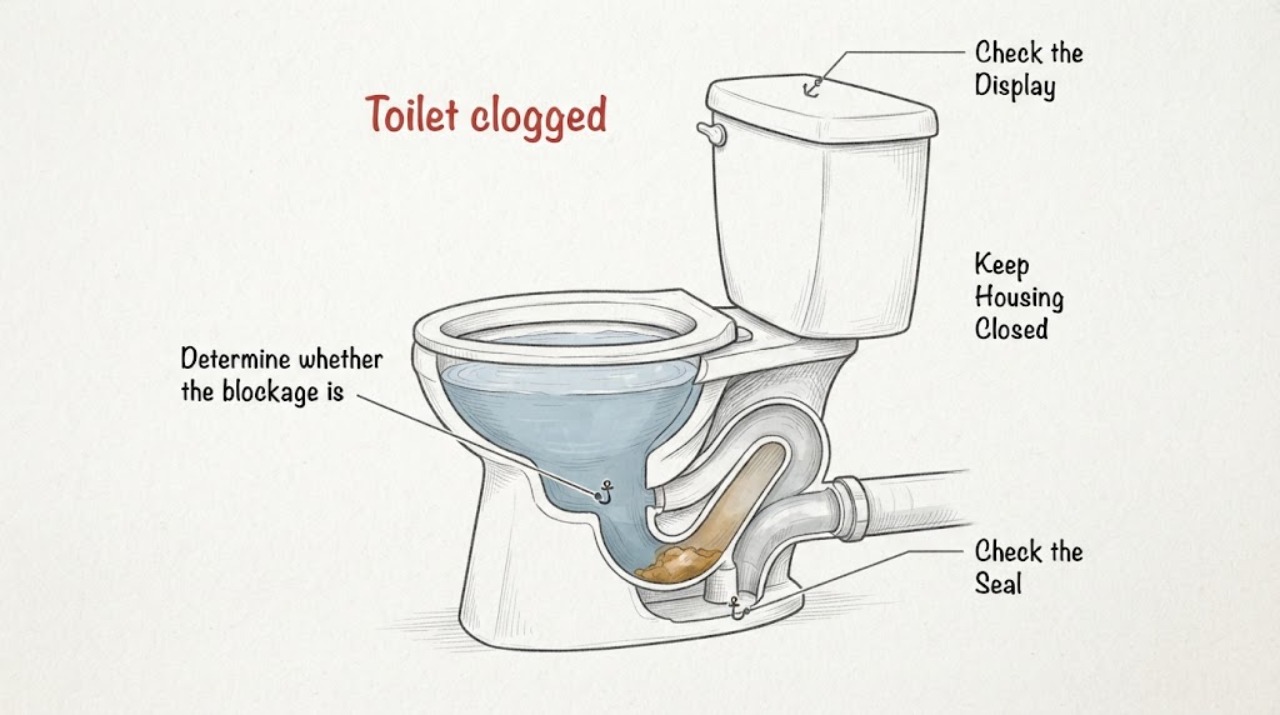
American Standard toilet clogged: What to Check and What to Do Next
For a clogged American Standard toilet, stop flushing and turn off the toilet's water supply before the bowl reaches the rim. Protect the floor, then use a toilet plunger with its cup fully covering the outlet and make controlled strokes; American Standard says the bowl should begin to drain before one normal flush is used to check the result.
-
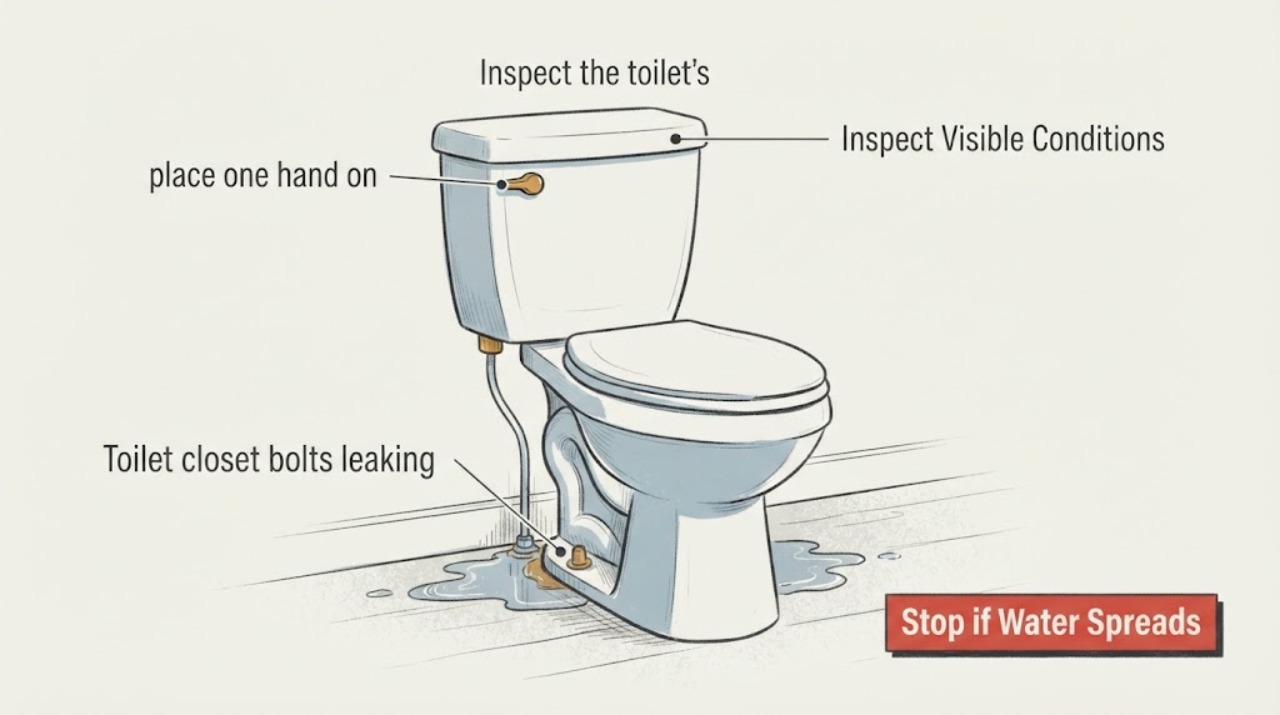
American standard toilet closet bolts leaking at base: What to Check and What to Do Next
If an American Standard toilet appears to leak around the closet bolts or base, first determine whether water is coming from the supply or tank, from the bowl-to-floor seal, or from a spill. Closet bolts hold the bowl in position; tightening them is not a substitute for a failed wax ring, damaged flange, or cracked porcelain.
-
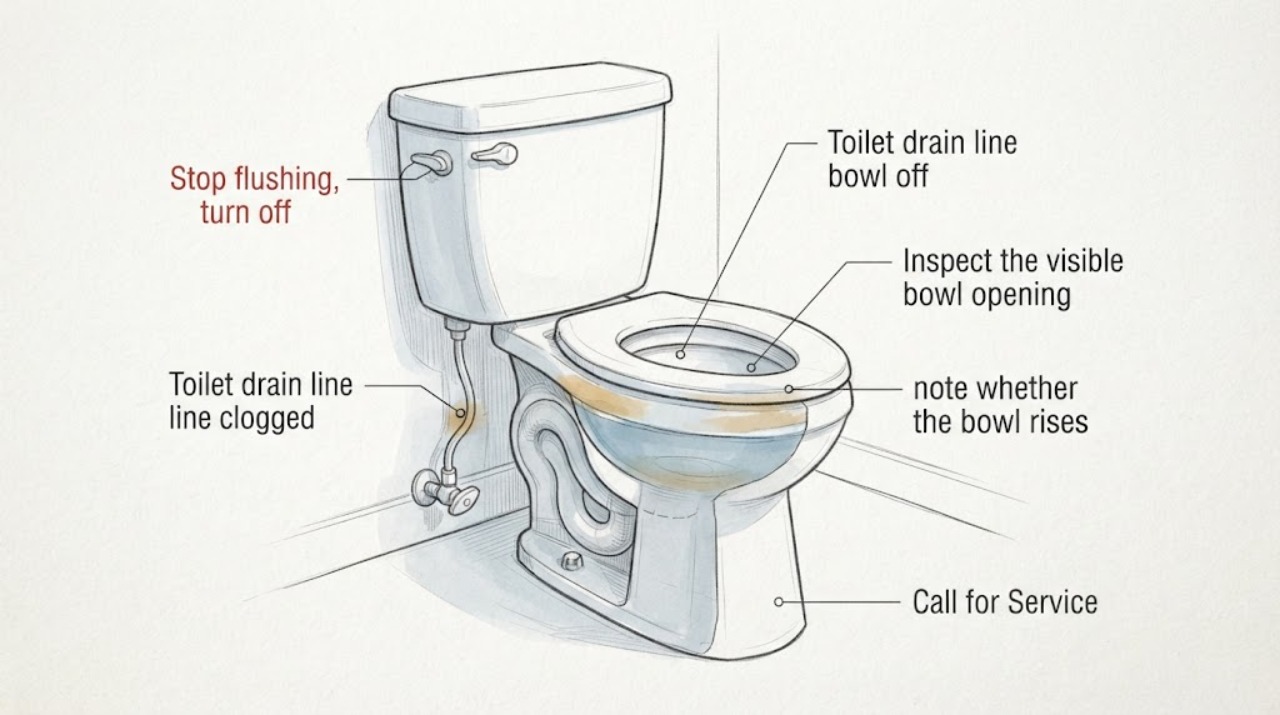
American standard toilet drain line clogged: What to Check and What to Do Next
For a clogged American Standard toilet drain line, stop flushing first and turn off the toilet's water supply so the bowl cannot overflow. Cover the floor, use a toilet plunger whose cup seals over the trapway, and judge the result by whether the bowl level drops and a single retest restores a normal flush.
-
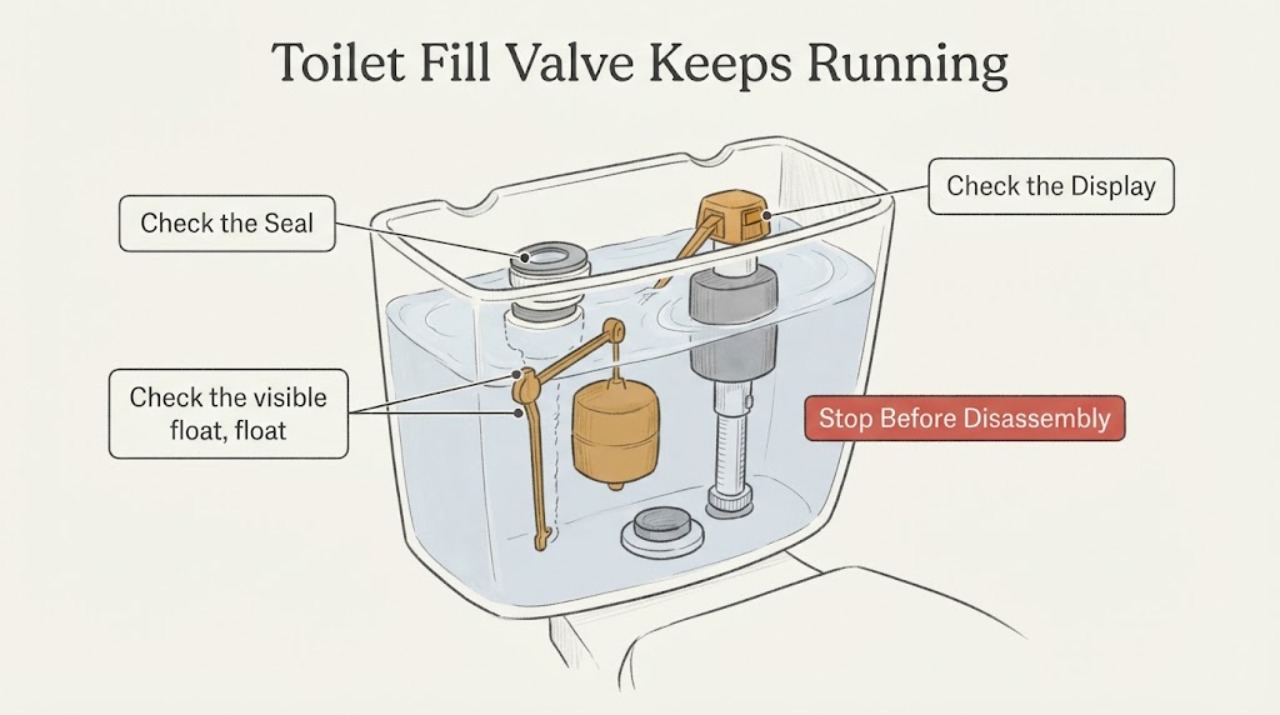
American Standard Toilet Fill Valve Keeps Running: What to Check and What to Do Next
If an American Standard toilet fill valve keeps running, first determine whether water is entering the tank continuously, spilling into the overflow tube, or leaking from the tank through the flush seal. Close the toilet supply valve if the bowl is rising or the valve will not shut off.
-
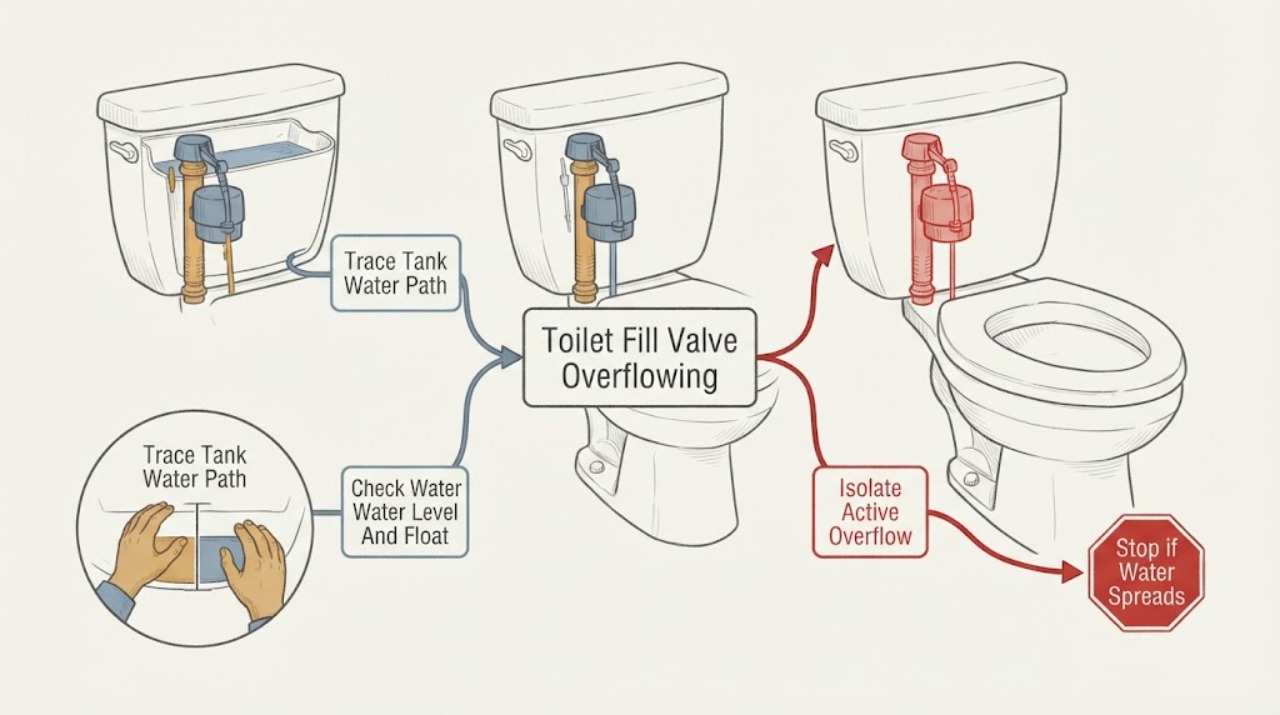
American Standard Toilet Fill Valve Overflowing: What to Check and What to Do Next
If an American Standard toilet fill valve is overflowing, close the toilet's accessible water shutoff and protect the floor first. With the tank lid off, determine whether water is entering continuously through the fill valve, the refill tube is sending water into the overflow, or a flush valve or flapper is letting water escape into the bowl and causing repeated refilling.
-
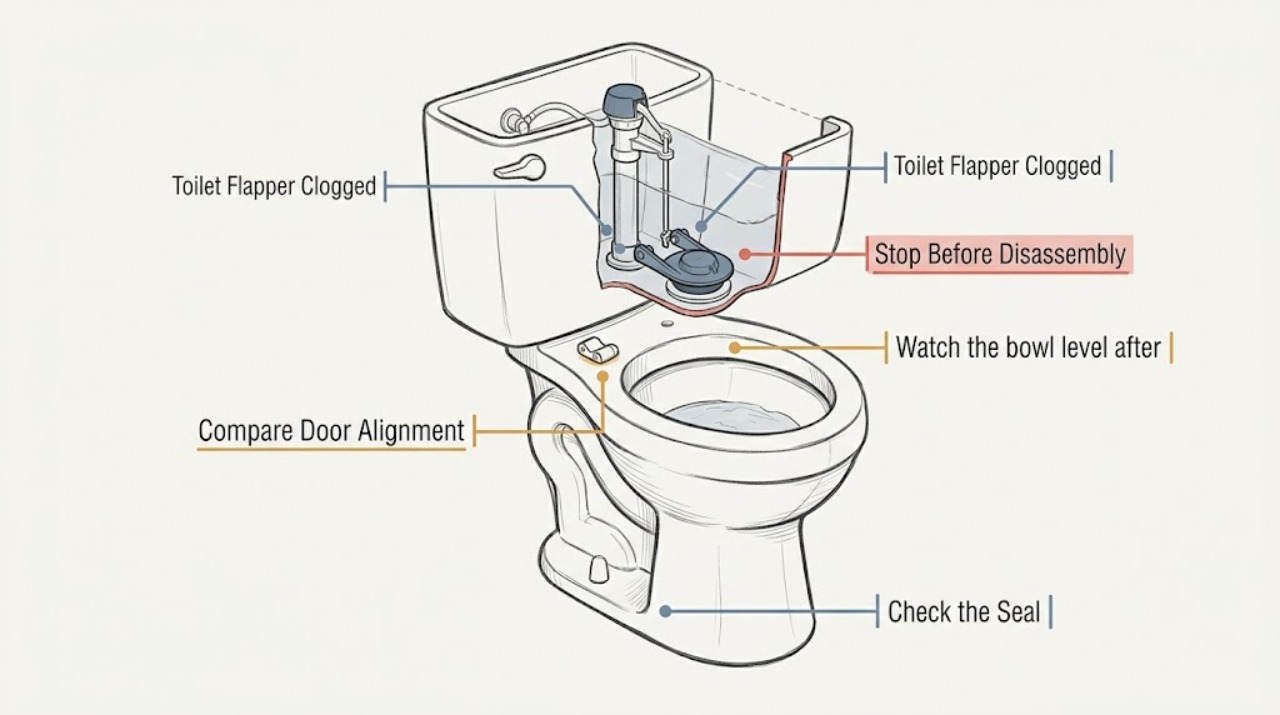
American Standard Toilet Flapper Clogged: What to Check and What to Do Next
A flapper can be held open by a loose chain, debris, or a misshapen seal, but a toilet that will not drain may instead have a bowl or trapway clog. If the bowl water is rising, stop flushing and close the toilet supply valve first.
-
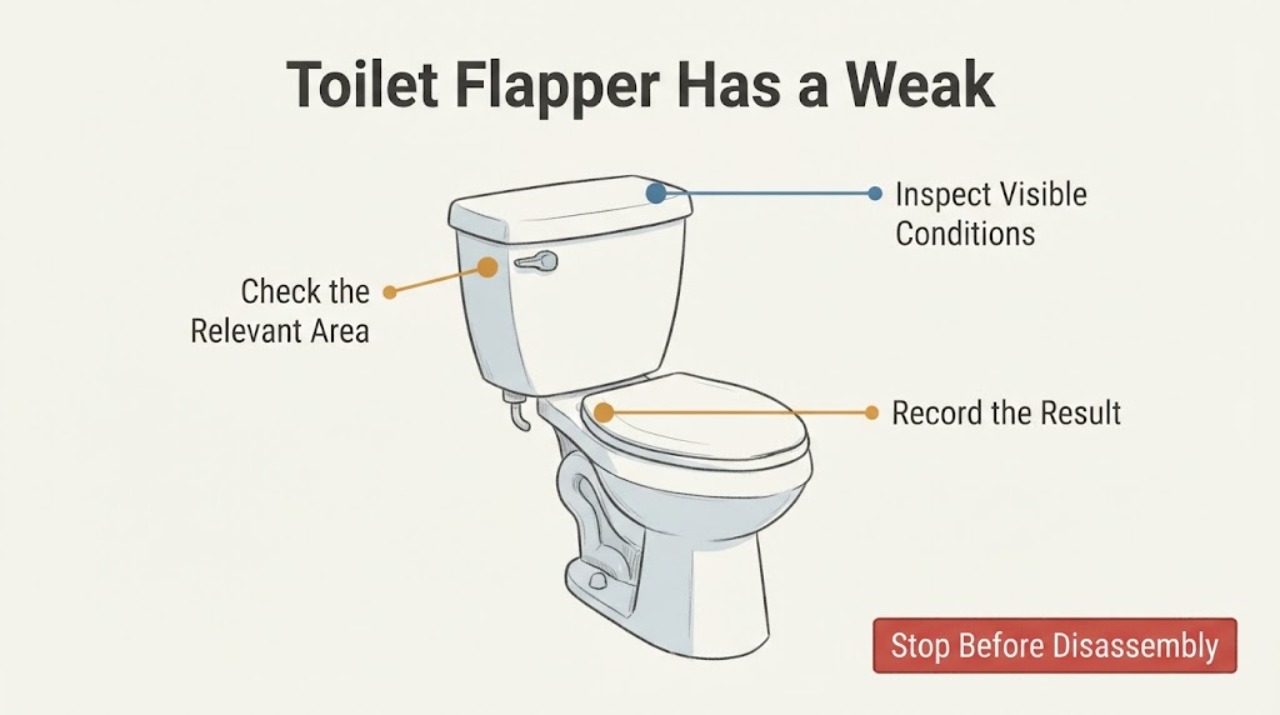
American Standard Toilet Flapper Has a Weak Flush: What to Check and What to Do Next
If an American Standard toilet has a weak flush and uses a flapper, first check that the tank refills to the model's marked level, the trip lever lifts the flapper fully, and the chain is not too loose or caught. Inspect the flapper for a warped seal or water leaking into the bowl, then rule out a partial bowl or trapway clog with a safe, single plunger test.
-
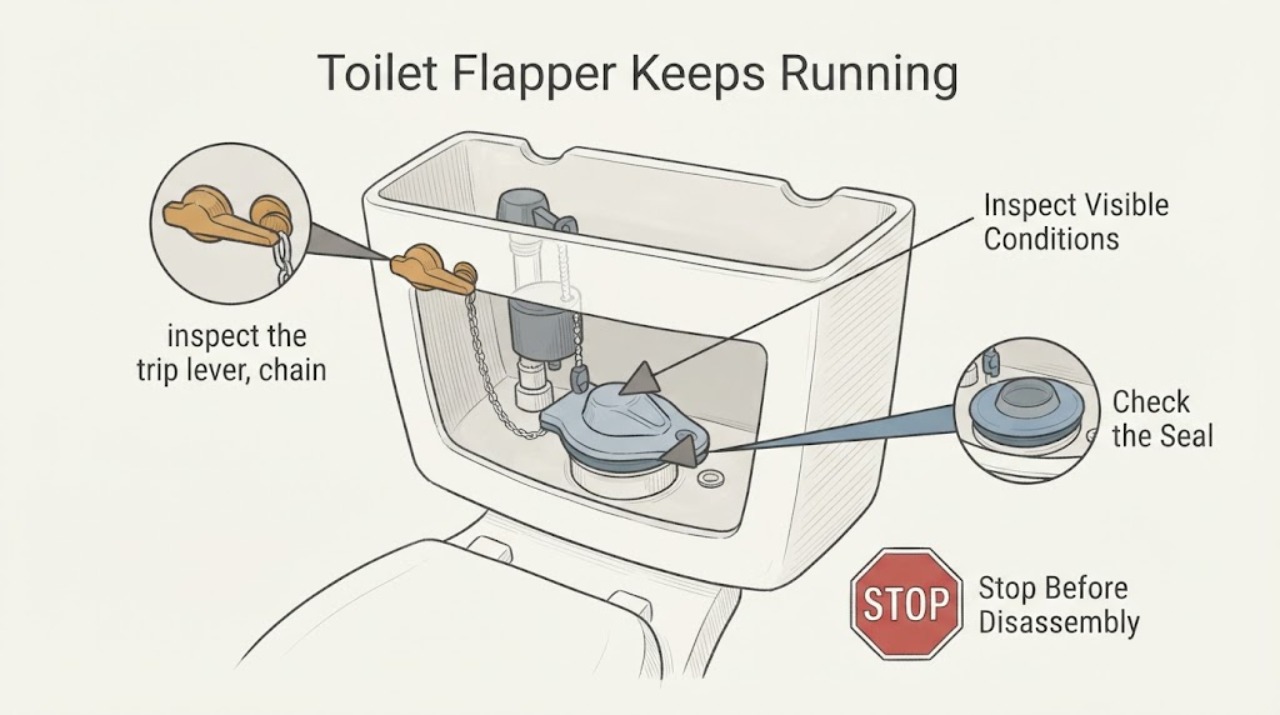
American Standard Toilet Flapper Keeps Running: What to Check and What to Do Next
If an American Standard toilet keeps running, first watch whether water is leaking past the flapper into the bowl or whether the tank never stops refilling. Check that the flapper sits flat, the chain or trip lever is not holding it open, and the tank water reaches the exact model's fill mark without rising into the overflow.
-
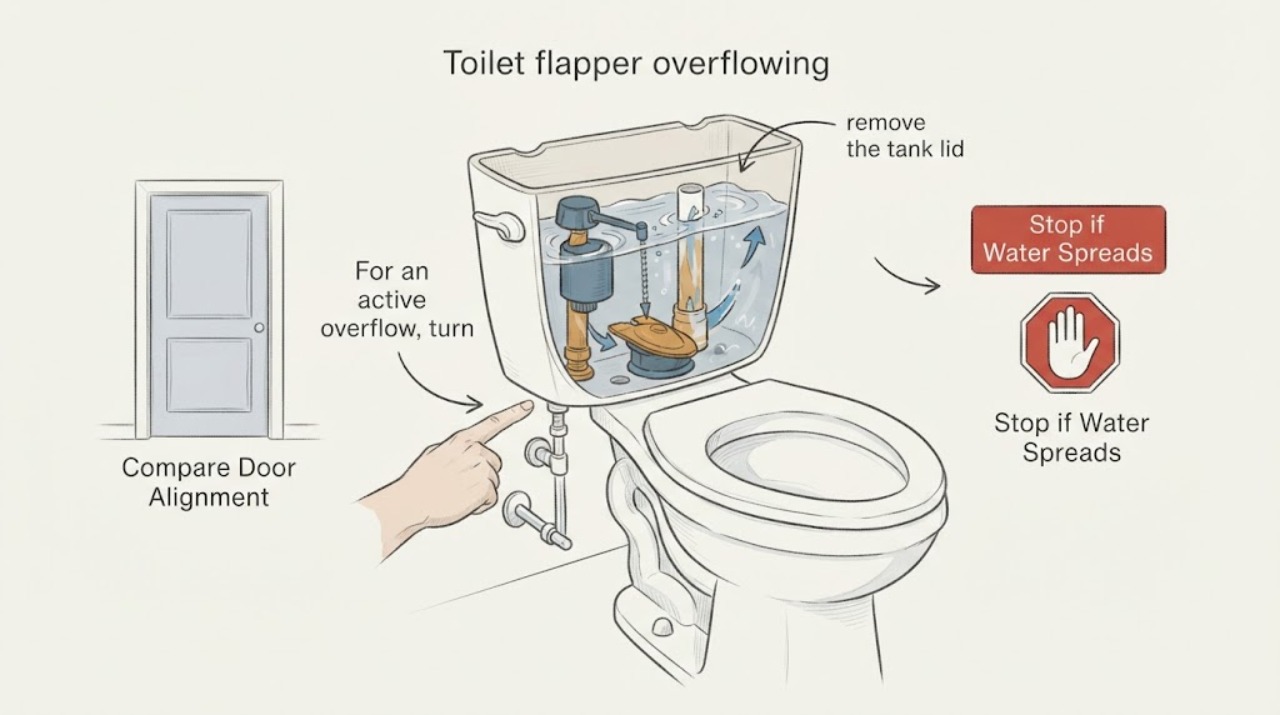
American standard toilet flapper overflowing: What to Check and What to Do Next
If an American Standard toilet is overflowing or the flapper appears to be involved, close the toilet's water-supply stop and stop flushing first. Then distinguish a flapper that is not sealing from a fill valve that keeps adding water, a trip-lever or chain that holds the flapper open, and a bowl or drain blockage.
-
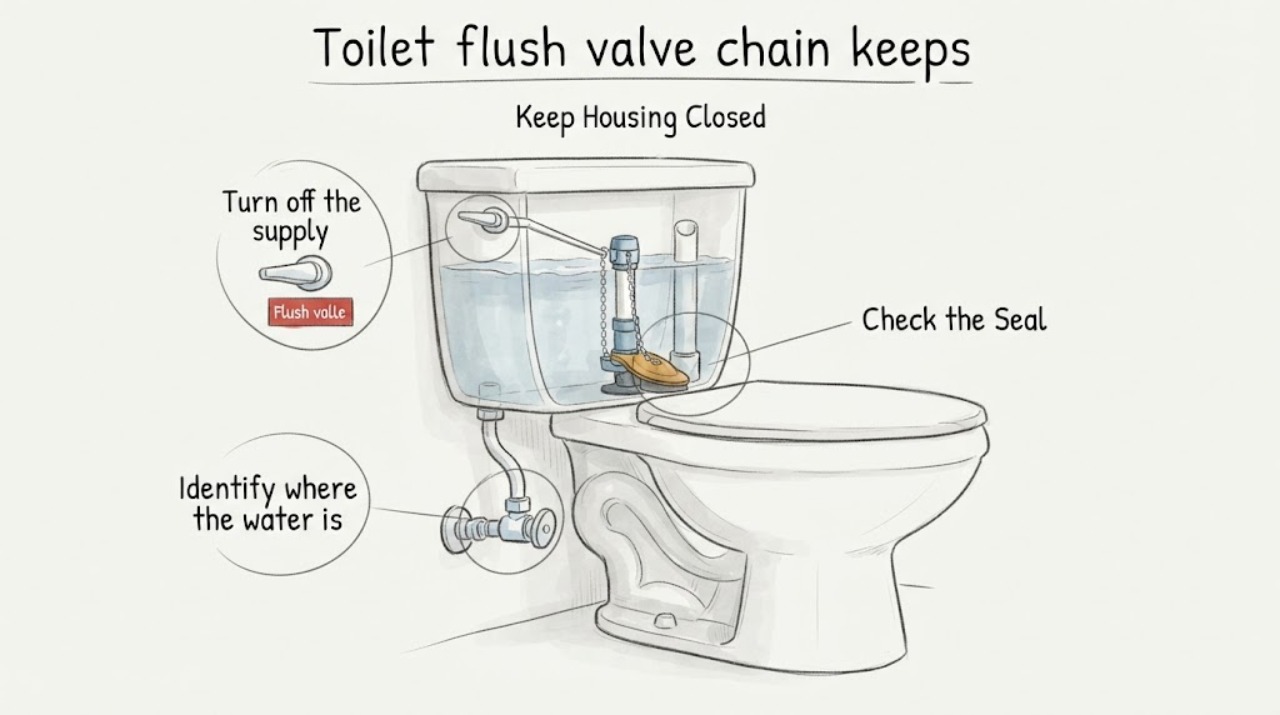
American standard toilet flush valve chain keeps running: What to Check and What to Do Next
When an American Standard toilet with a flush valve chain keeps running, first identify whether water is continuously entering the bowl or only refilling into the overflow. A chain that is tangled, too tight, caught under the trip lever, or holding the flapper open can prevent the flush valve from reseating; a worn or dirty flapper seal can leak even when the chain moves freely.
-
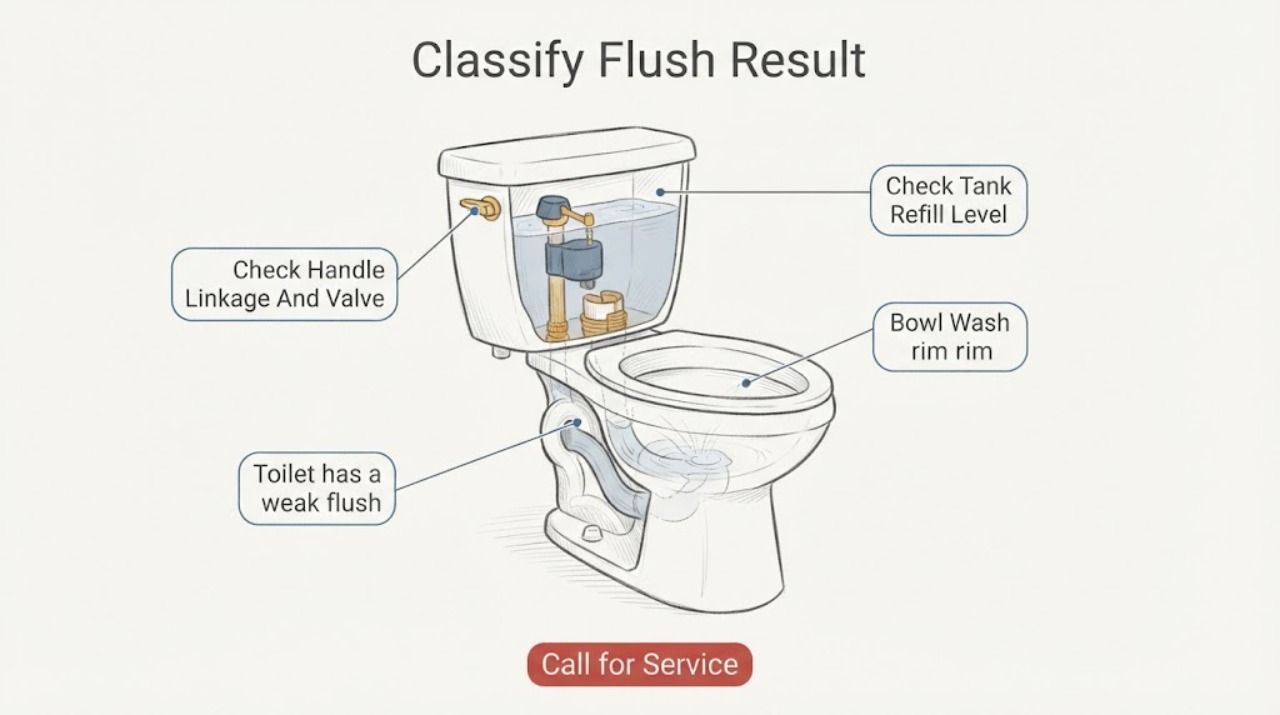
American Standard toilet has a weak flush: What to Check and What to Do Next
A weak flush on an American Standard toilet can mean the tank is not refilling to the model's marked level, the handle or flush valve is not opening fully, the bowl's rim or siphon-jet passages have mineral or debris buildup, or the trapway or drain line is partly blocked. First observe whether the bowl water rises, swirls without siphoning, drains slowly, or simply receives too little water.
-
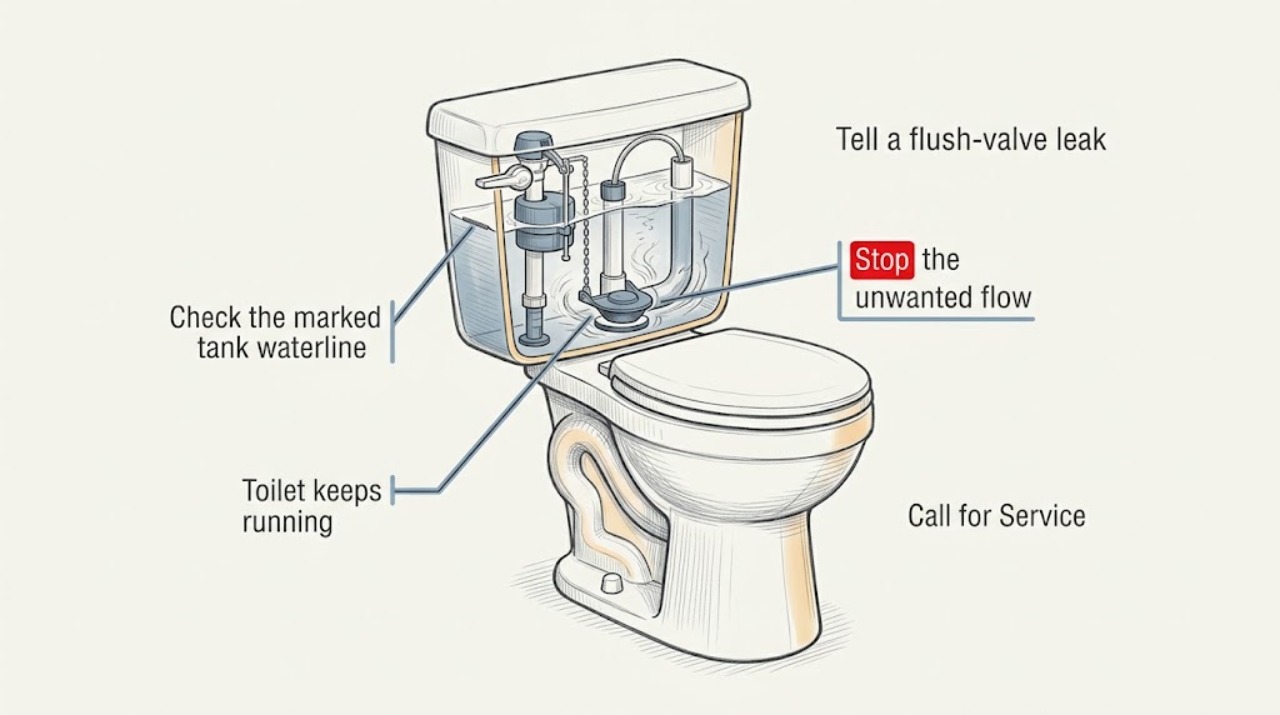
American Standard toilet keeps running: What to Check and What to Do Next
An American Standard toilet that keeps running is usually allowing water to pass into the bowl or is failing to shut off the fill valve. First confirm whether water is entering the bowl through the flush valve or rising in the tank and overflow tube, then check the tank waterline, handle or chain movement, and the model-specific flapper or seal.
-
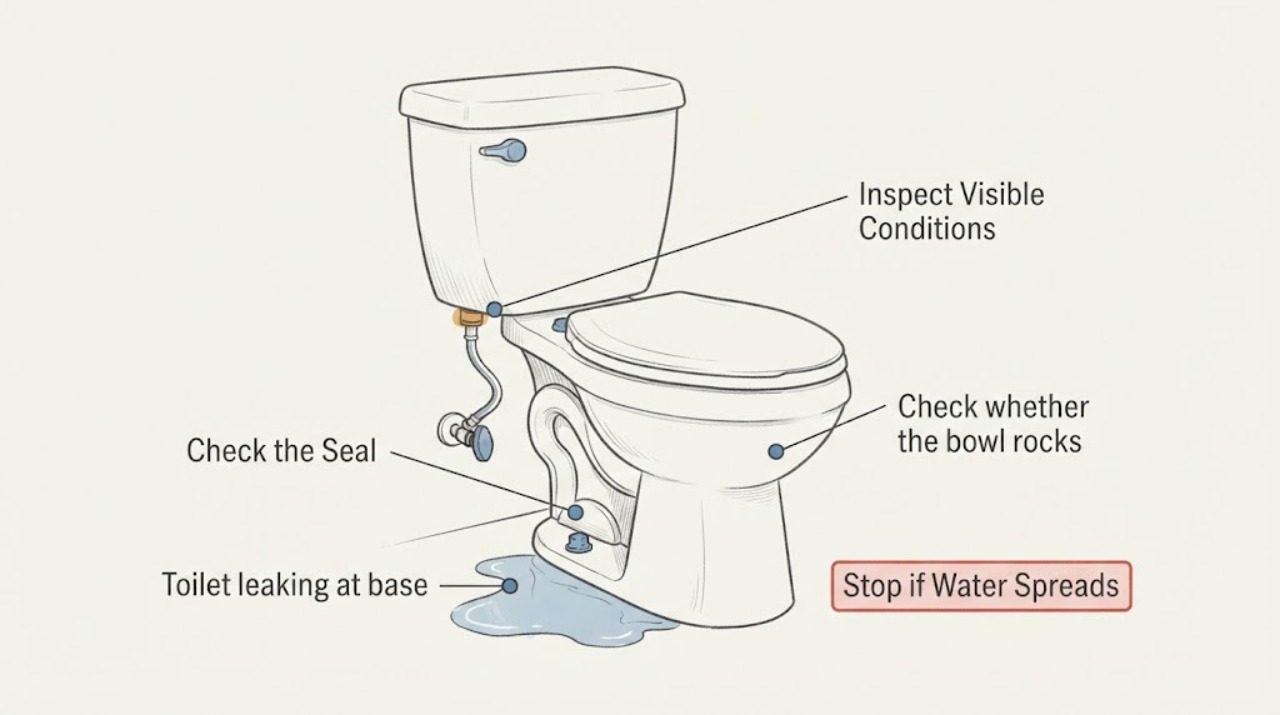
American Standard toilet leaking at base: What to Check and What to Do Next
An American Standard toilet leaking at the base can be a failed floor seal, a loose or damaged flange connection, or clean water running down from the tank or supply line. Dry the floor and toilet, then flush while watching the supply connection, tank-to-bowl joint, bowl sides, and base.
-
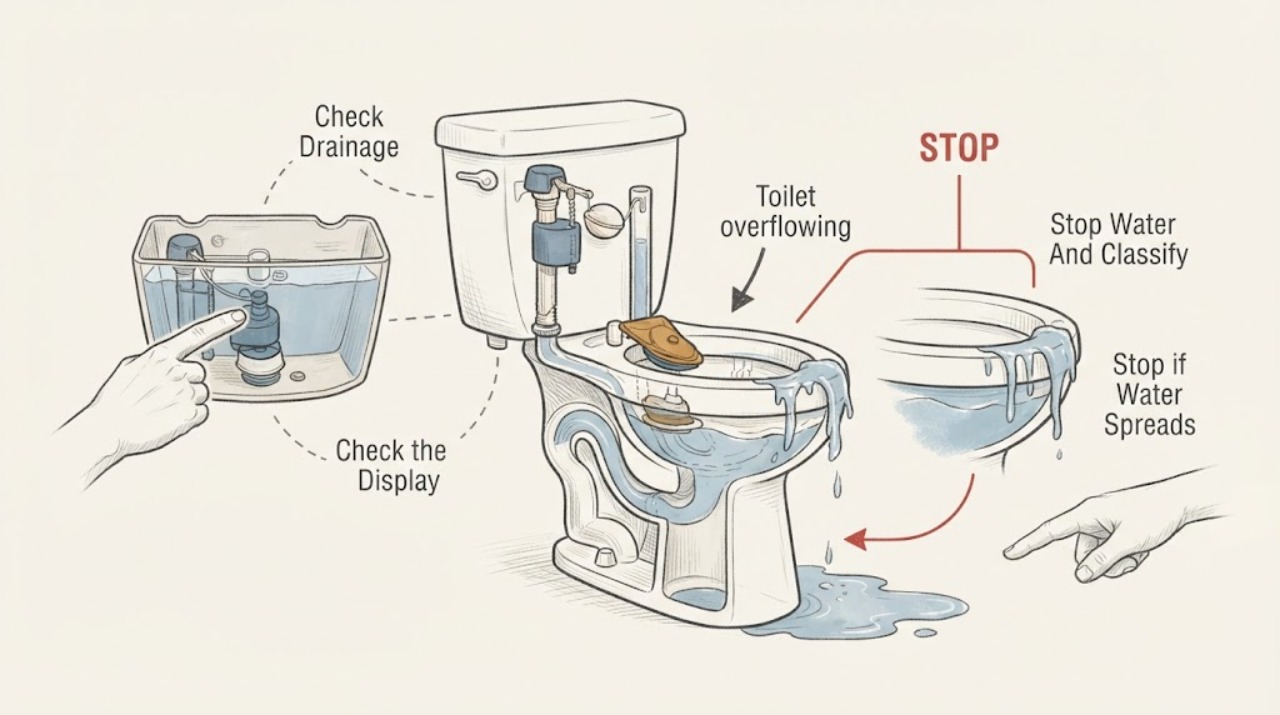
American Standard toilet overflowing: What to Check and What to Do Next
Stop flushing immediately. If the bowl is rising, turn the toilet's supply stop clockwise until the water stops, if it is accessible and turns normally; keep towels and gloves nearby and do not use chemical drain opener.
-
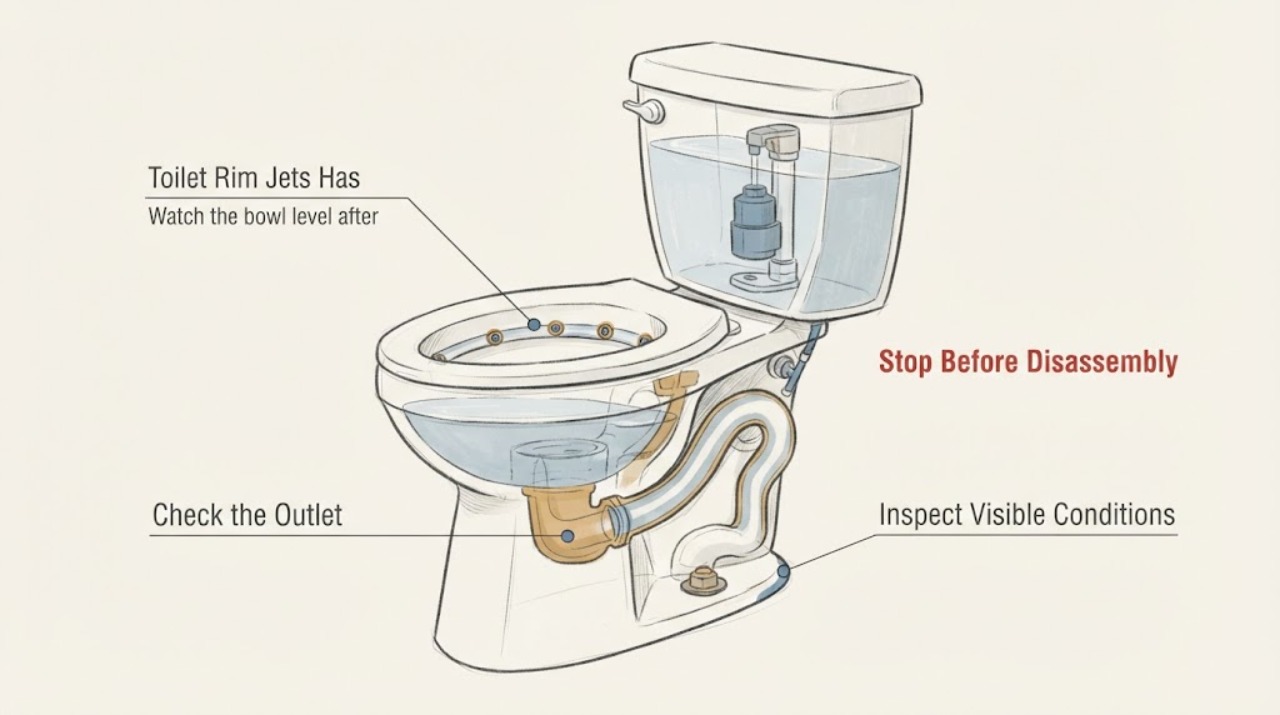
American Standard Toilet Rim Jets Has a Weak Flush: What to Check and What to Do Next
A weak flush that has little swirl or little water from the bowl rim can come from blocked conventional rim holes, but first identify whether this American Standard toilet actually uses conventional holes or a VorMax jetted design. Stop flushing if the bowl rises.
-
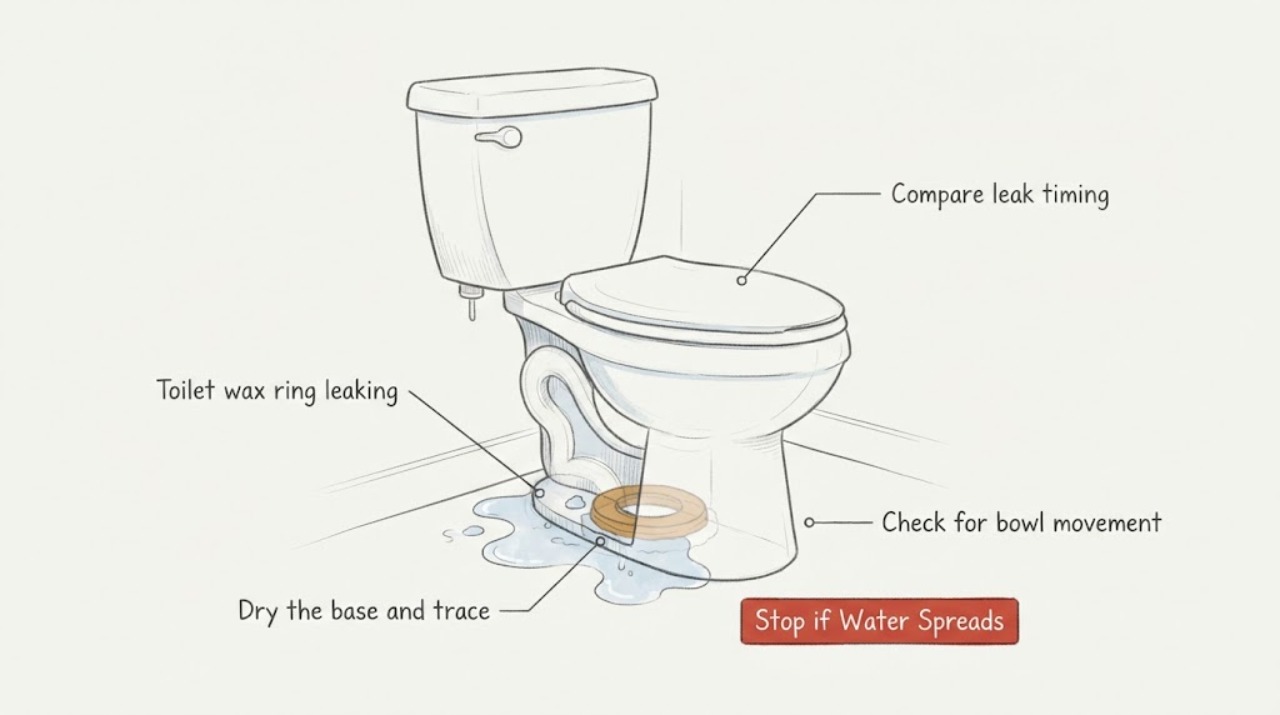
American standard toilet wax ring leaking at base: What to Check and What to Do Next
Water at the base of an American Standard toilet can come from the wax ring and floor-flange seal, but first rule out water running down from the supply connection, tank bolts, or bowl condensation. Wipe the base dry, observe whether moisture appears only after flushing or refilling, and check whether the bowl rocks or the floor feels soft.
-
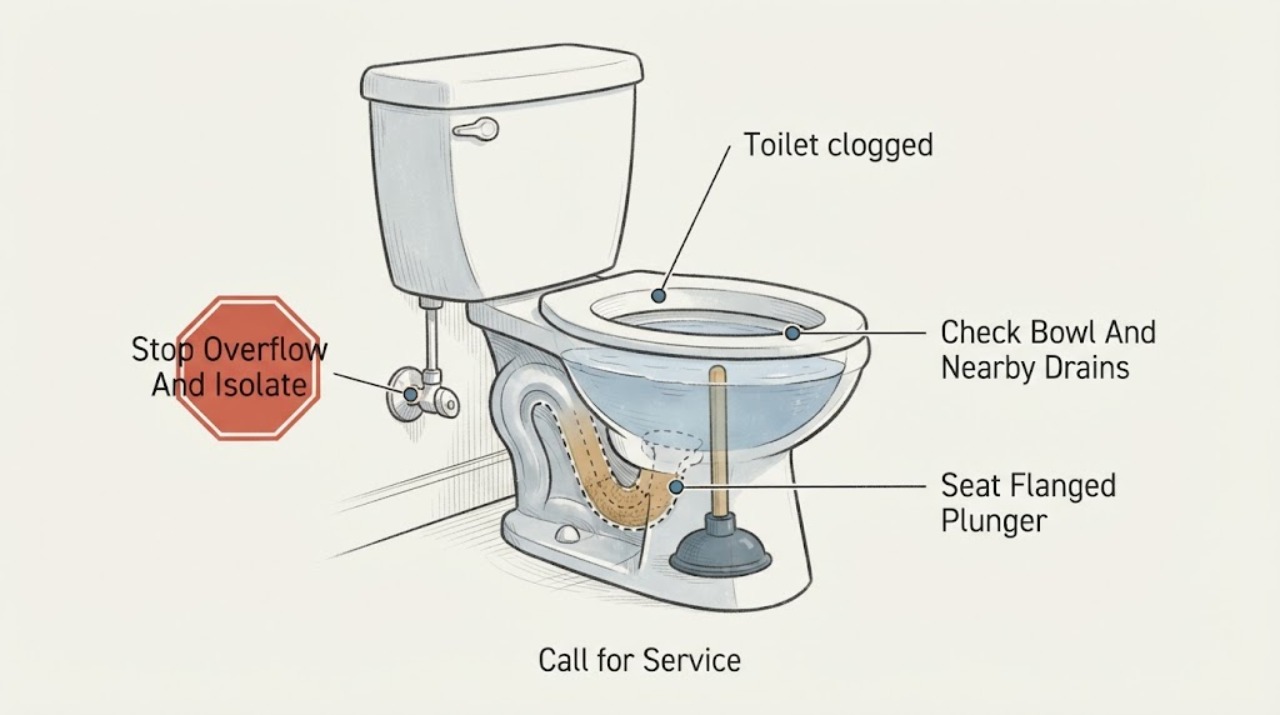
Glacier Bay toilet clogged: What to Check and What to Do Next
Stop flushing as soon as the bowl level rises. Close the accessible toilet supply valve only if it operates normally, protect the floor, and use a toilet flange plunger with enough water to cover its cup.
-
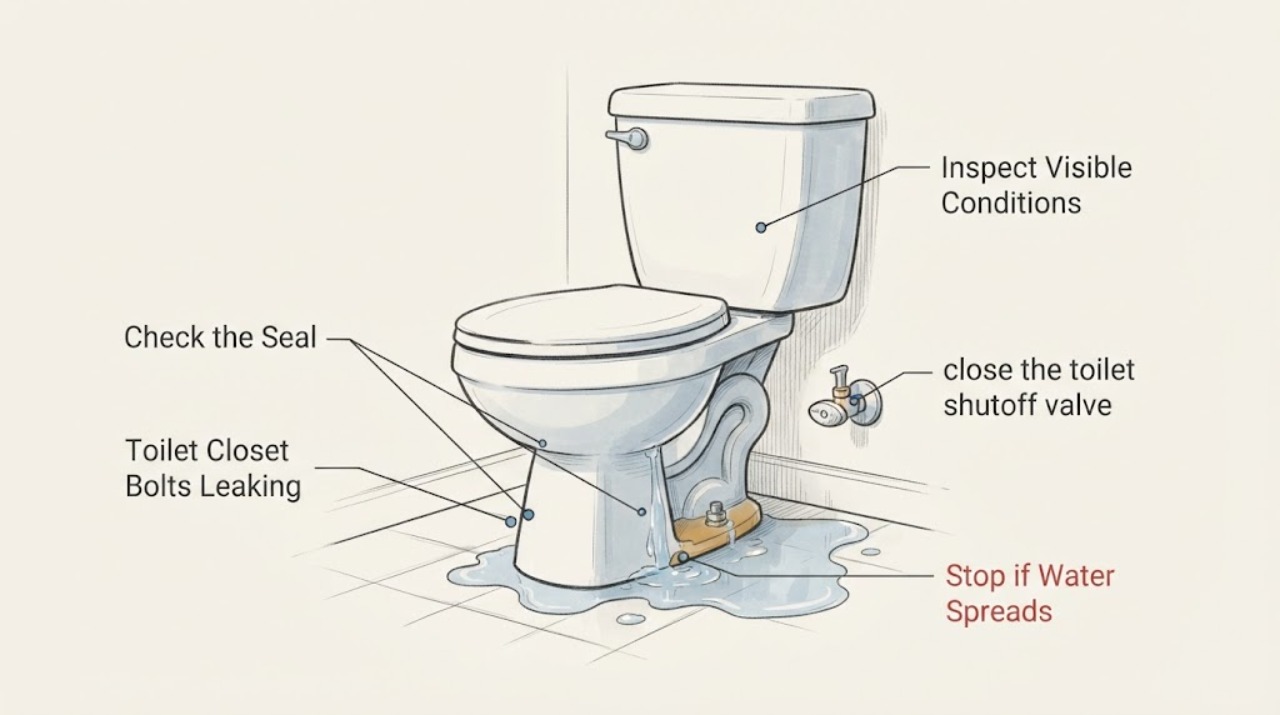
Glacier Bay Toilet Closet Bolts Leaking at the Base: What to Check and What to Do Next
Closet bolts hold a Glacier Bay toilet to the floor, but the wax or rubber seal around the drain opening normally keeps flush water from escaping. Stop using the toilet, dry the floor, and identify whether fresh water appears only after a flush, while the tank refills, or at the supply connection.
-
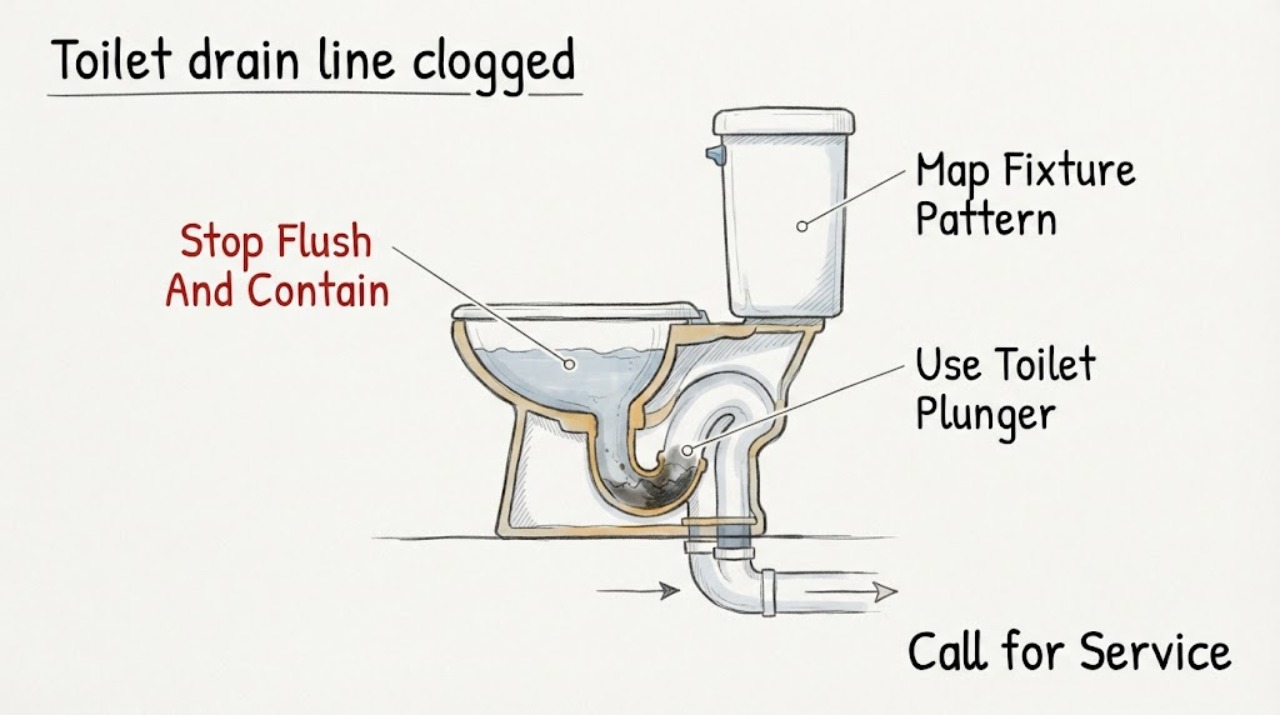
Glacier Bay toilet drain line clogged: What to Check and What to Do Next
Stop flushing a Glacier Bay toilet when the bowl rises, and close the toilet's accessible shutoff valve if it moves normally and the bowl may overflow. First determine whether the blockage is in this toilet's trap or farther along the drain line: check whether other fixtures drain normally and whether they gurgle or back up when the toilet is used.
-
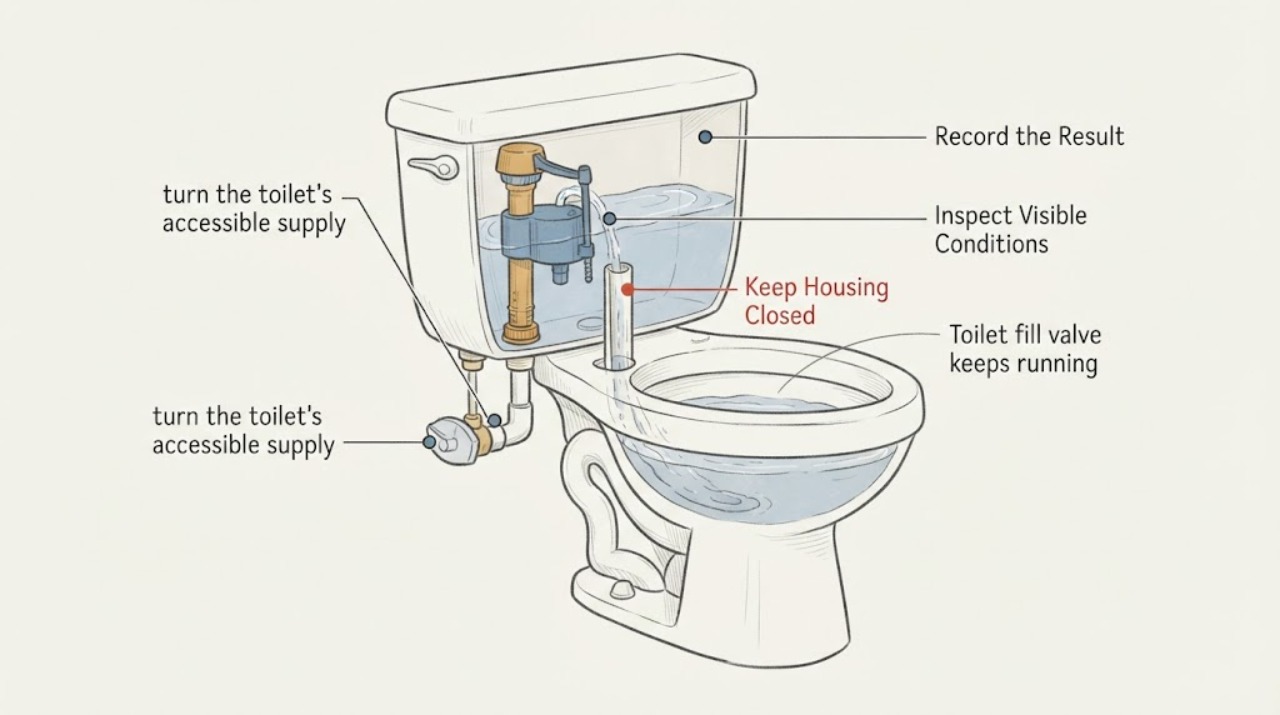
Glacier bay toilet fill valve keeps running: What to Check and What to Do Next
A Glacier Bay toilet that keeps running is not always a failed fill valve. Remove the tank lid and compare the water with the marked waterline on the flush-valve overflow tube.
-
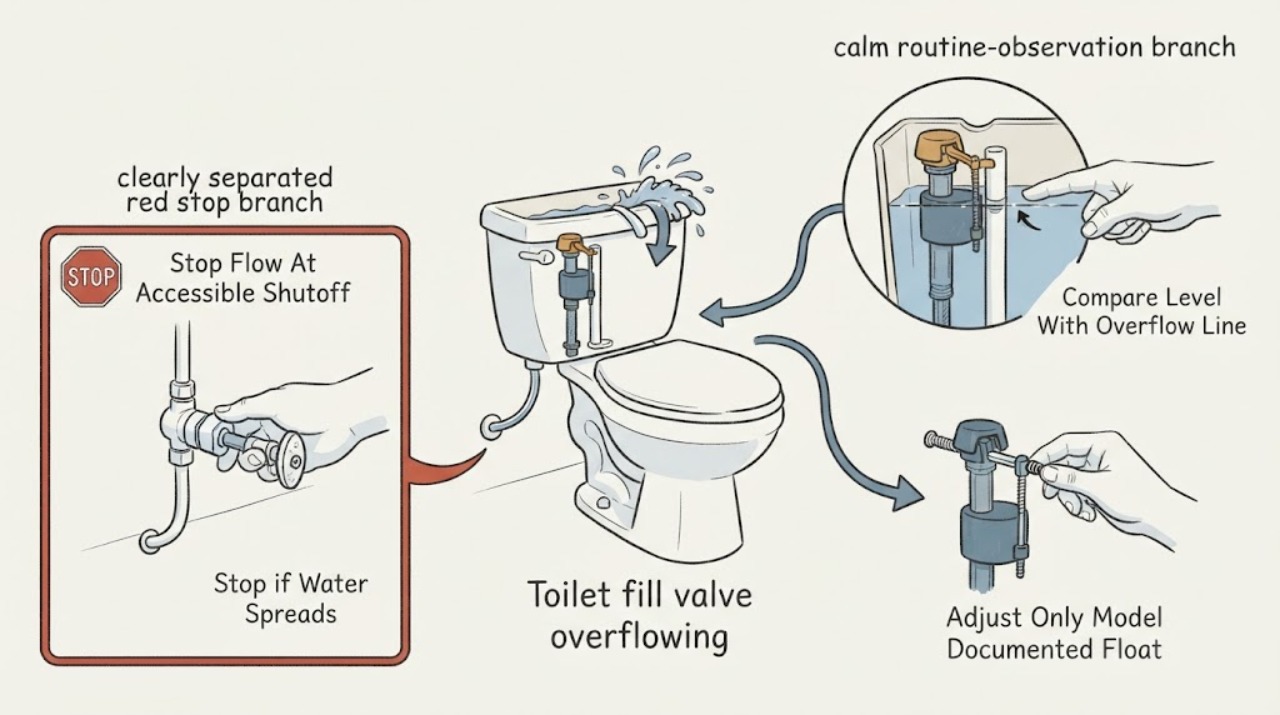
Glacier bay toilet fill valve overflowing: What to Check and What to Do Next
If a Glacier Bay toilet's tank water is rising above the water line and entering the overflow tube, the float may be set too high or the fill valve may not be shutting off. First prevent further overflow with the accessible fixture shutoff, then compare the tank level with the marked line.
-
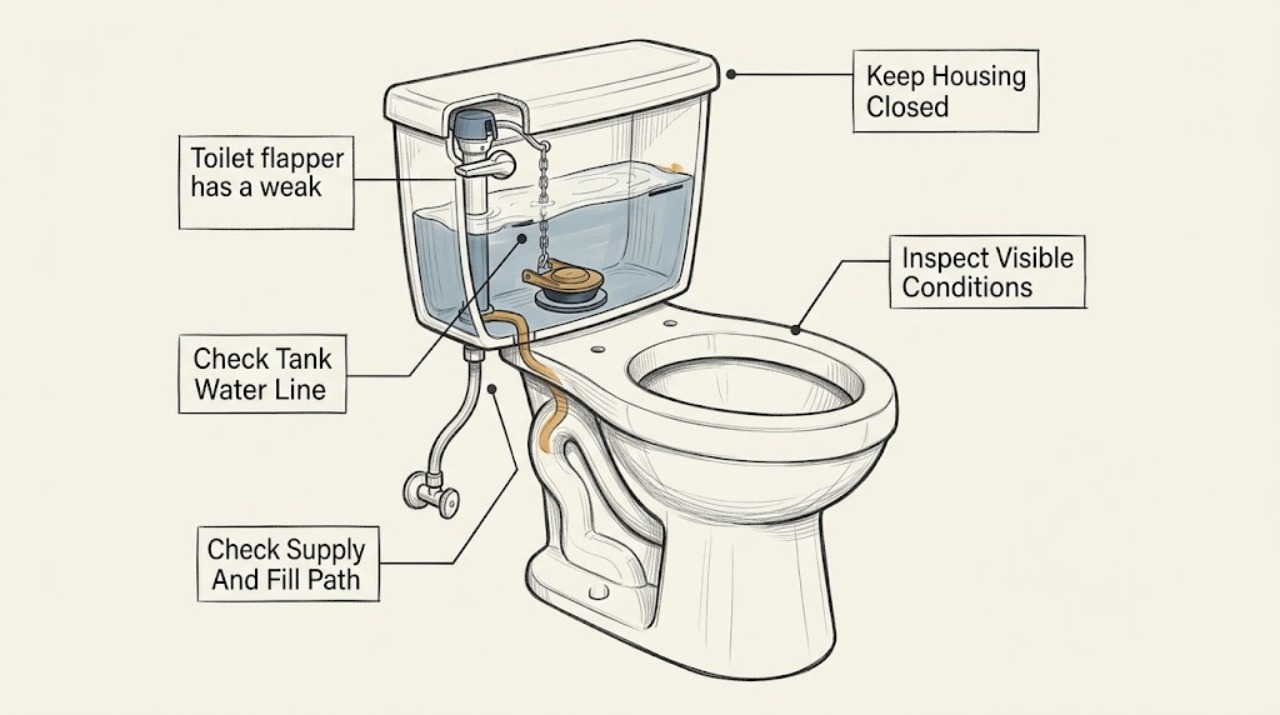
Glacier Bay toilet flapper has a weak flush: What to check and what to do next
A Glacier Bay toilet that flushes weakly can have a low tank level, a flapper that does not lift fully, a chain that is too long or tangled, a worn flapper seal, or a bowl or drain restriction. Start by checking the tank water against its marked level and observing one flush with the lid off.
-
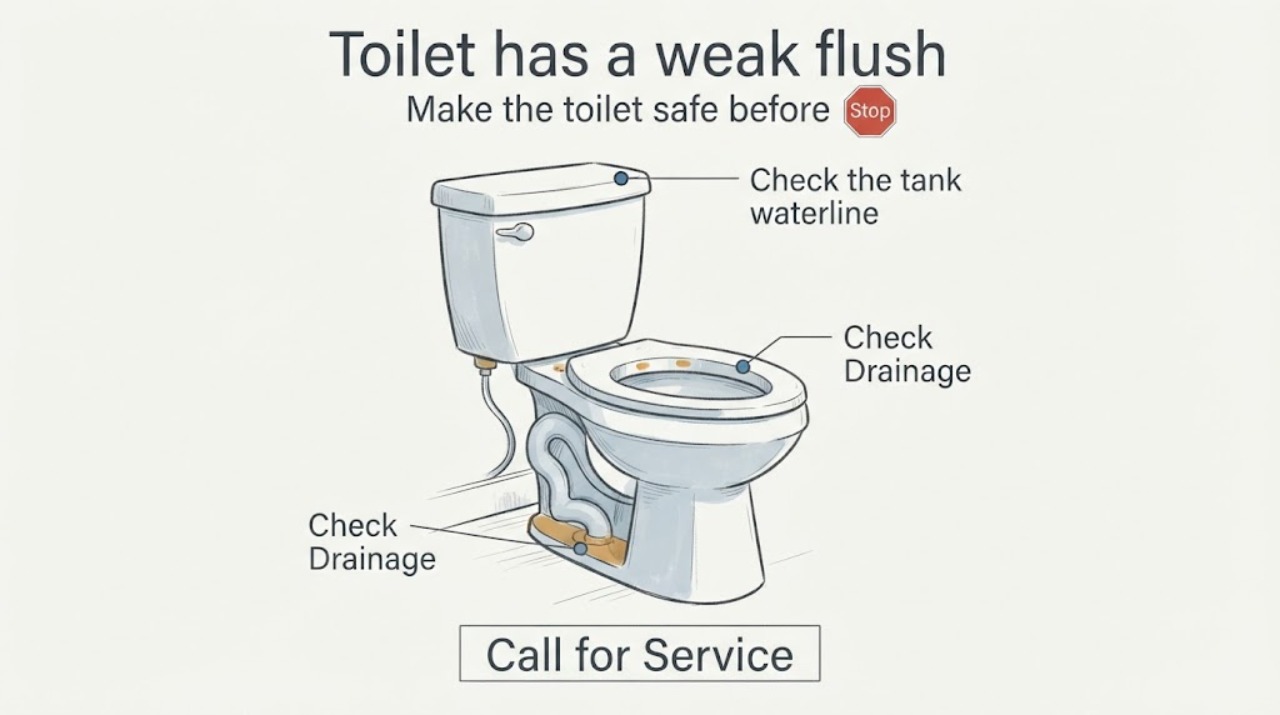
Glacier Bay toilet has a weak flush: What to Check and What to Do Next
A weak-flushing Glacier Bay toilet can be caused by a tank water level below the marked line, a flush button, handle, or chain that does not open the flush valve fully, restricted rim holes, a leaking or obstructed seal, or a trapway, drain, or vent problem.
-
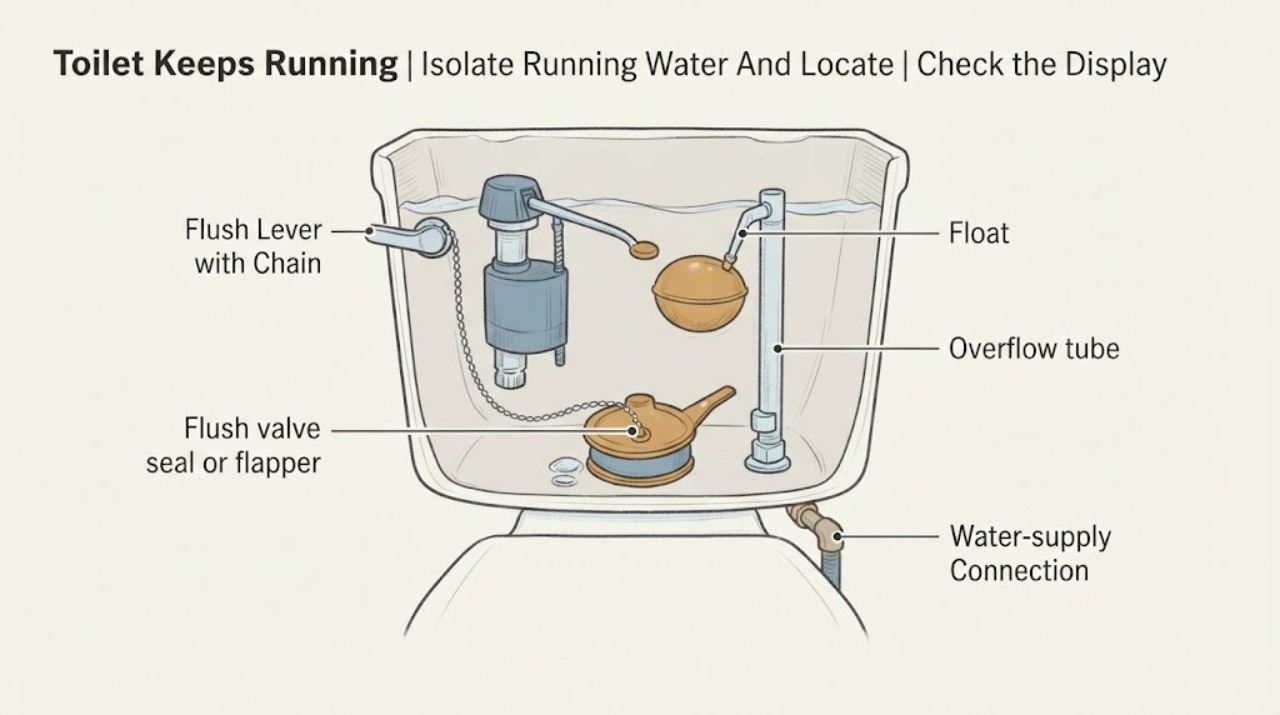
Glacier Bay Toilet Keeps Running: What to Check and What to Do Next
A Glacier Bay toilet that keeps running is usually losing tank water into the bowl or sending water into the overflow tube. Close the accessible angle stop gently if the flow is wasting water, then observe the tank and bowl without flushing repeatedly.
-
Glacier Bay Toilet Leaking at the Base: What to Check and What to Do Next
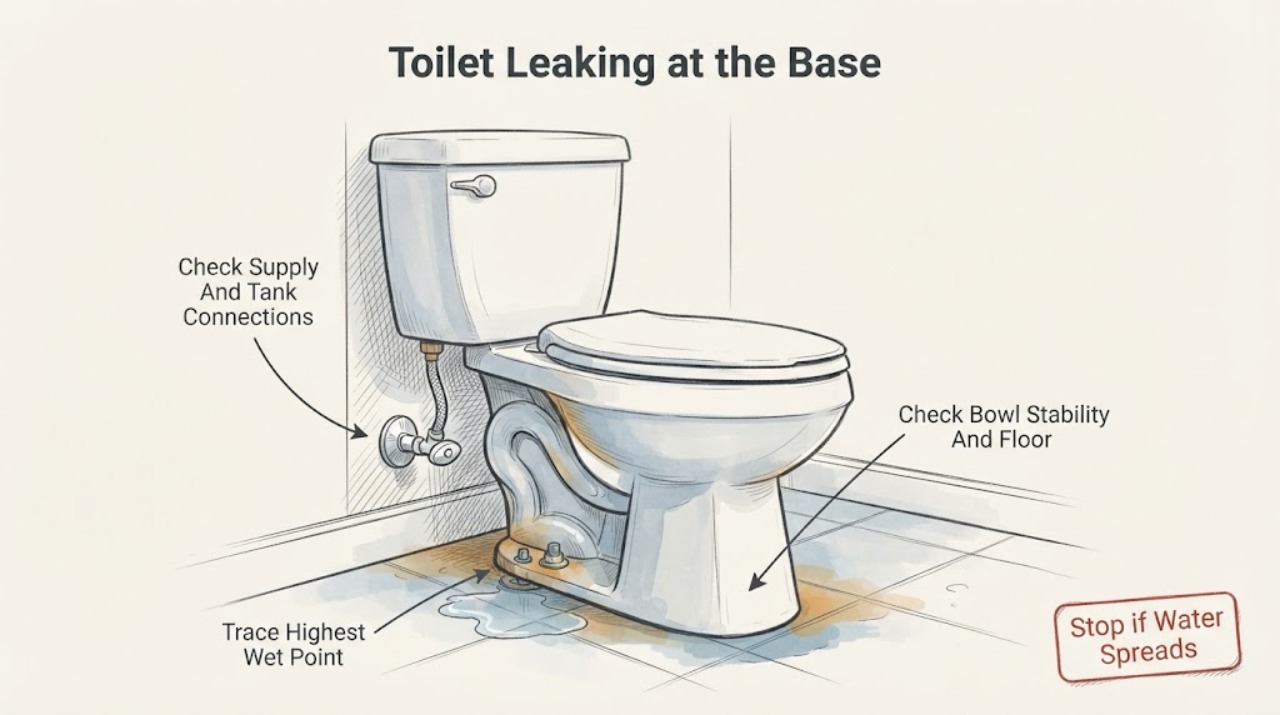
A Glacier Bay toilet that leaks at the base may have a failed or disturbed wax seal, a loose or damaged floor flange, a rocking bowl, or water running down from the supply line, tank, or bowl rather than coming through the floor seal. Dry the area, observe the leak during a flush and while the tank refills, and trace the highest wet point before tightening anything.
-
Kohler toilet clogged: What to Check and What to Do Next
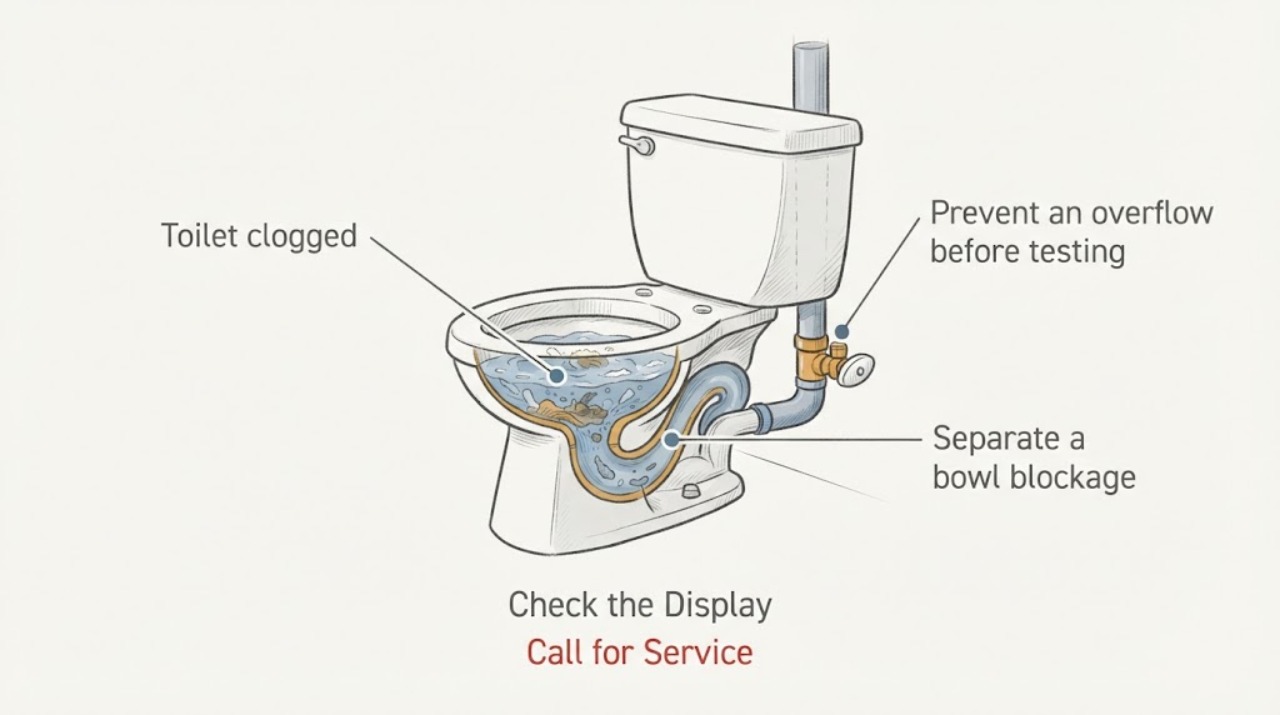
If a Kohler toilet is clogged, stop flushing while the bowl is high and close the nearby supply stop if water is still entering. A single slow or non-draining bowl often points to a bowl or trapway blockage, so a toilet plunger is the appropriate first low-risk check; use a toilet auger only when the exact model instructions and your access make that safe.
-
Kohler Toilet Has a Weak Flush: What to Check and What to Do Next
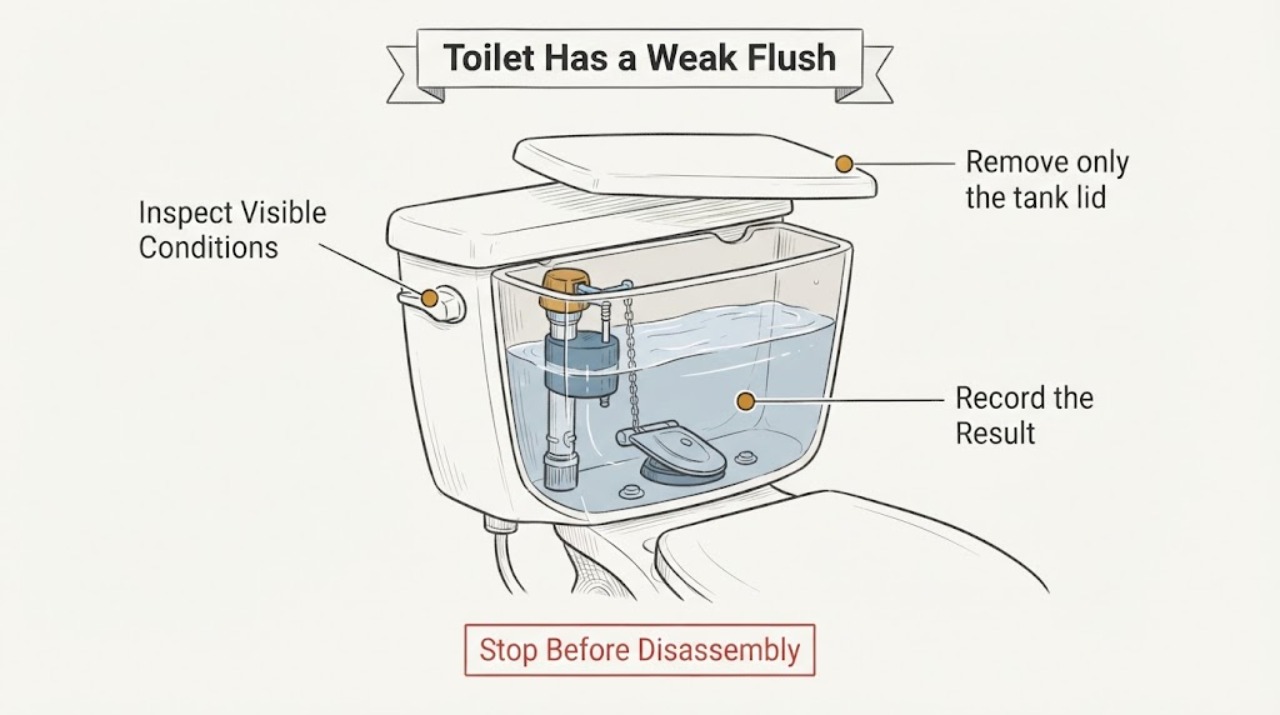
A weak Kohler toilet flush usually comes from one of four different conditions: the tank is not reaching its marked waterline, the supply valve or handle mechanism is limiting the flush, the rim holes or jet are restricted, or the bowl trapway, waste line, or vent is restricting flow. First note whether the bowl rises and drains slowly or whether it simply lacks a strong swirl.
-
Kohler toilet keeps running: What to Check and What to Do Next
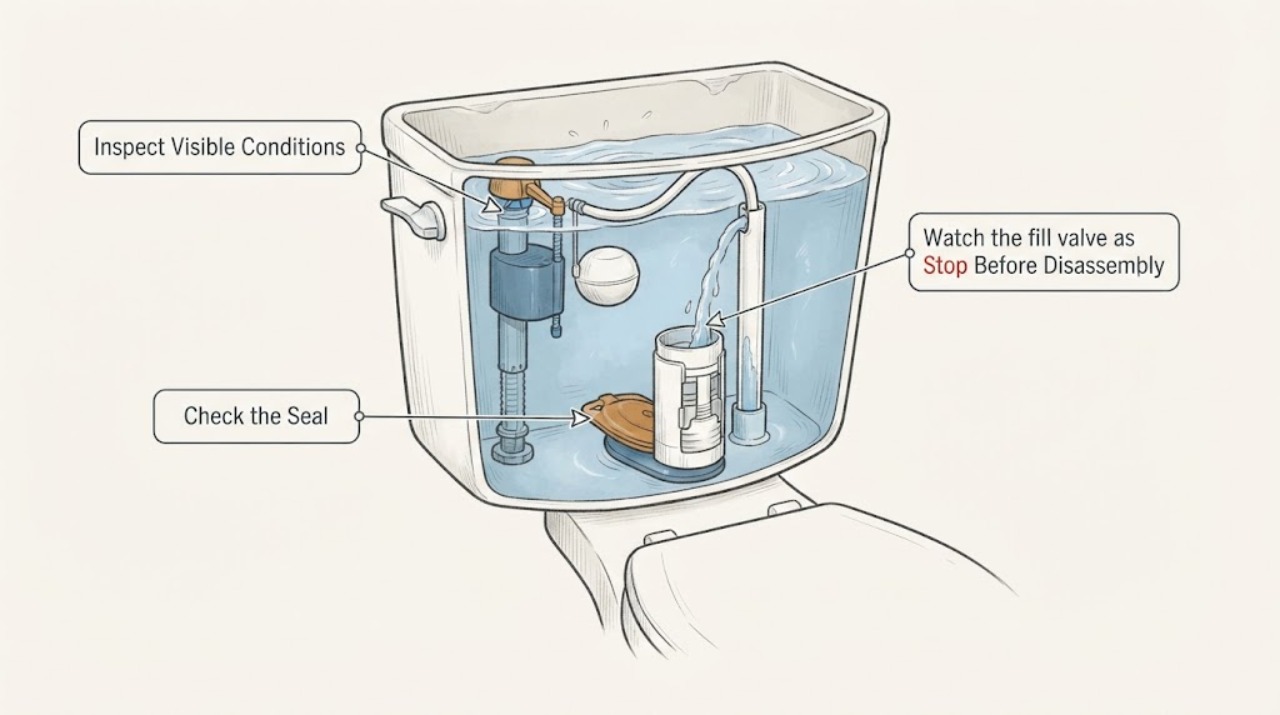
A Kohler toilet that keeps running is usually either losing tank water into the bowl or failing to shut off before water reaches the overflow. Remove the tank lid and watch the path: check whether the flapper or canister seal closes, the trip-lever chain has slight slack, the fill valve stops, the float moves freely, and the water level stays below the overflow.
-
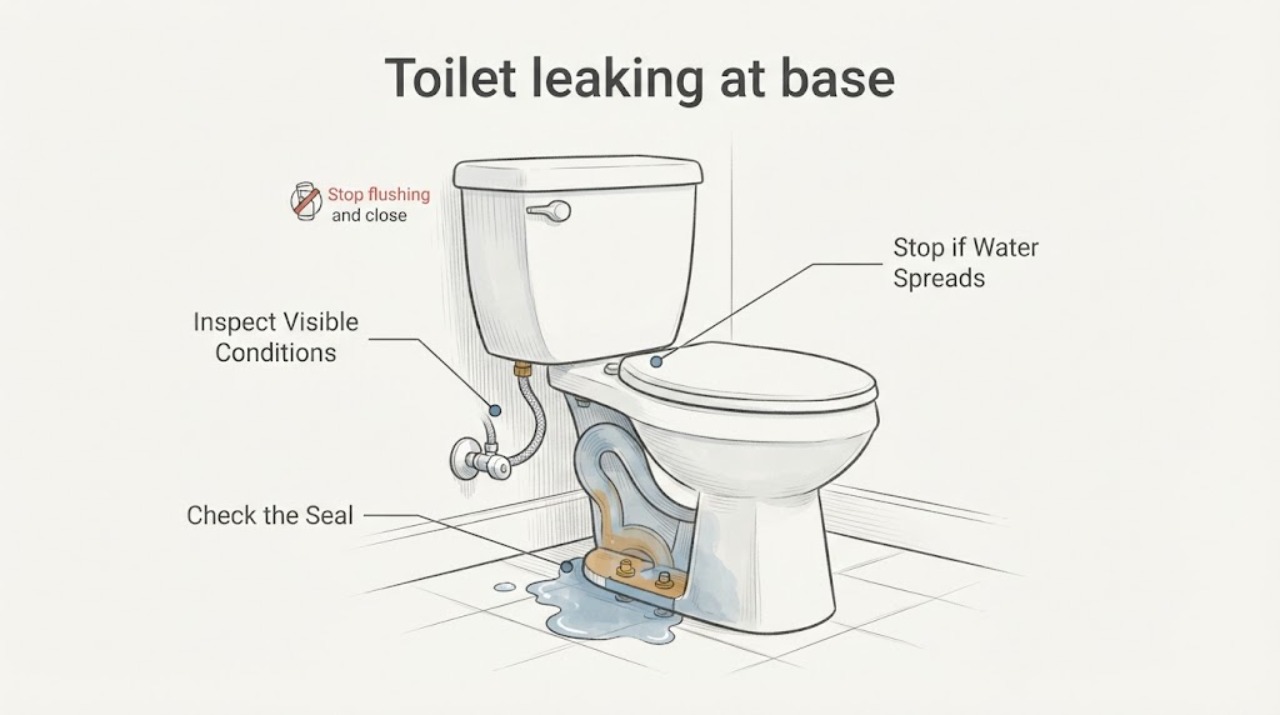
Kohler toilet leaking at base: What to Check and What to Do Next
If a Kohler toilet is wet at the base, first stop flushing and trace the water to its highest dry-to-wet point. Close the toilet's accessible supply stop if water is actively pooling, protect the floor, and do not keep using the toilet until the source is identified.
-
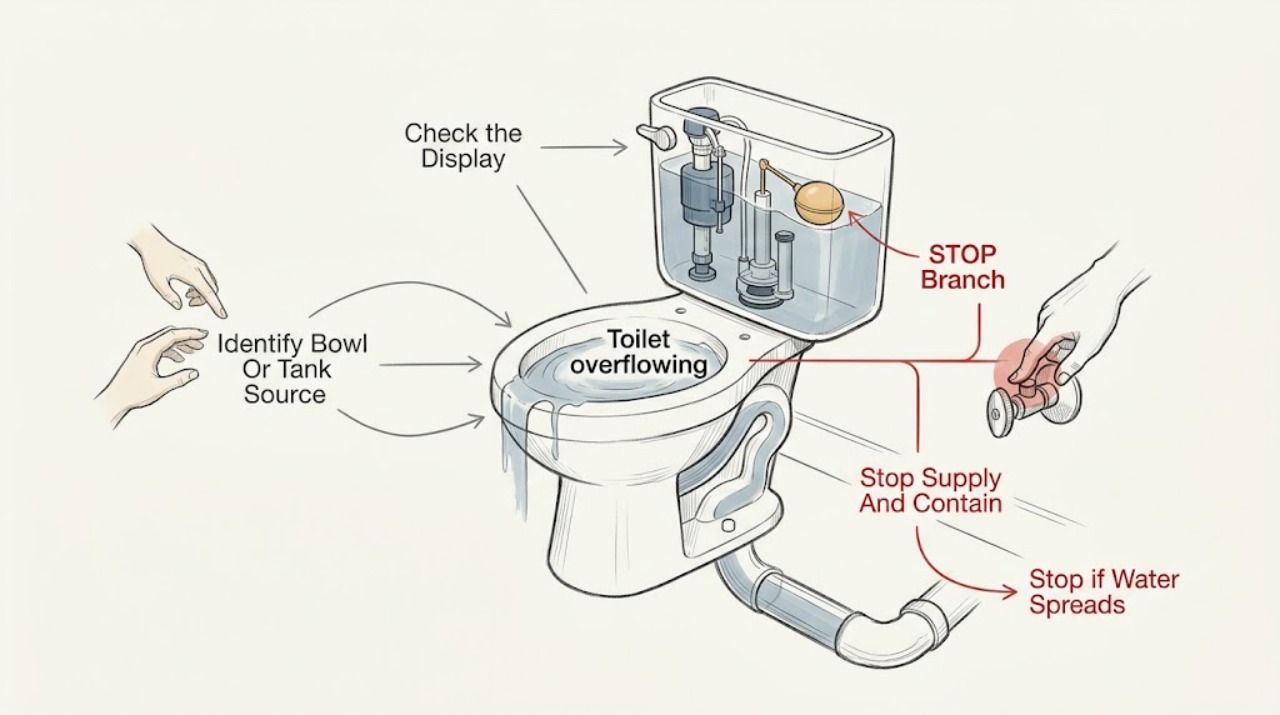
Kohler toilet overflowing: What to Check and What to Do Next
Stop the incoming water before a Kohler toilet reaches the rim: turn the toilet's local supply shut-off clockwise if it operates normally, then do not flush again. If the bowl is high because water is not leaving, a trapway or waste-line clog is likely; use only a toilet plunger or auger after the supply is stopped and the water level is controlled, and stop if the obstruction does not clear.
-
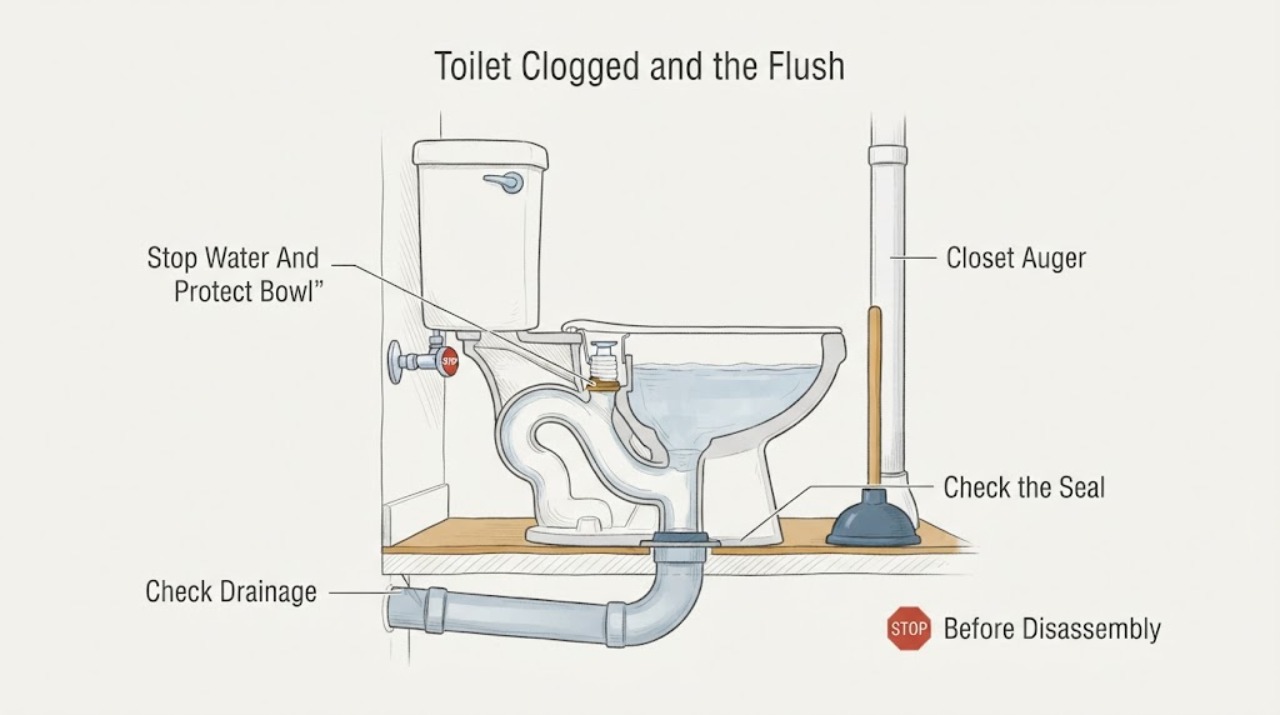
Toilet Clogged and the Flush Does Not Clear: What to Check and What to Do Next
If a toilet is clogged and the flush does not clear it, stop adding water first so the bowl cannot overflow. Close the toilet’s supply valve, or hold the flapper closed if water is still entering the bowl, then use a toilet flange plunger with enough water to seal the trap opening.
-
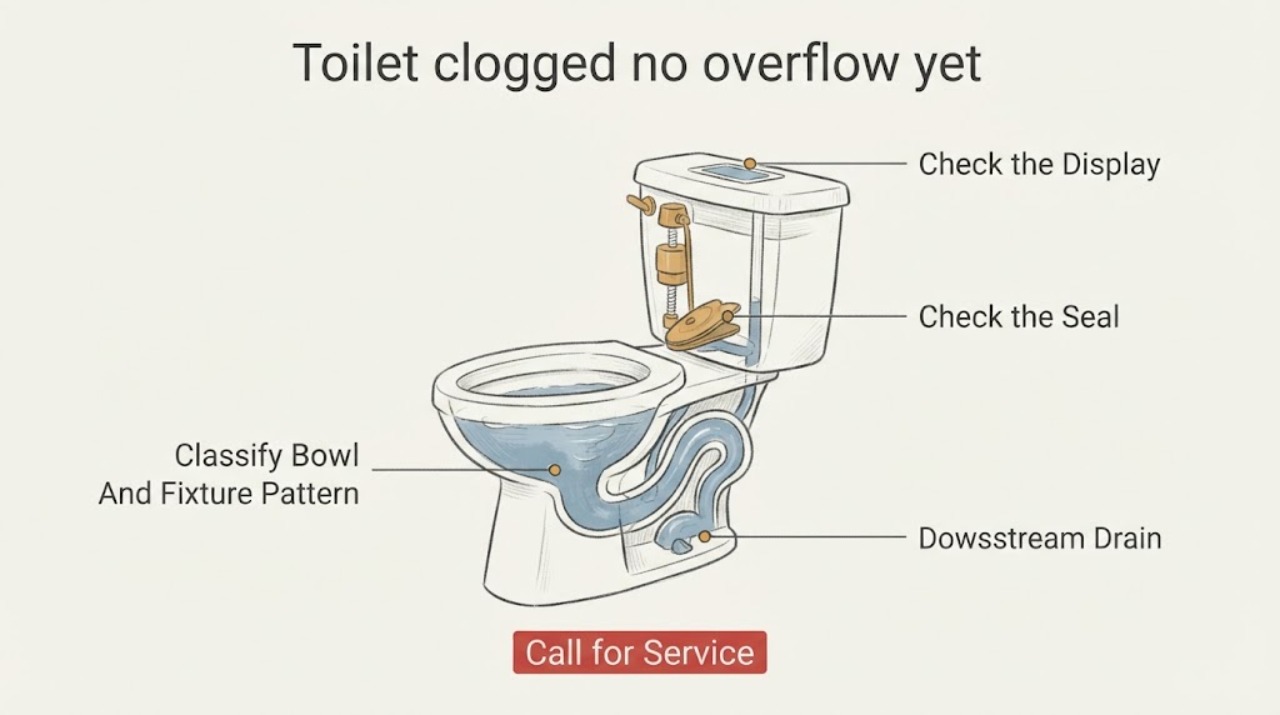
Toilet clogged no overflow yet: What to Check and What to Do Next
A toilet that is clogged but not overflowing can become an overflow quickly, so stop flushing and close the toilet's supply valve or hold the tank flapper closed before testing anything. Protect the floor, check whether the bowl is slowly dropping or staying high, and use a toilet plunger with a complete seal only when no drain cleaner may be present.
-
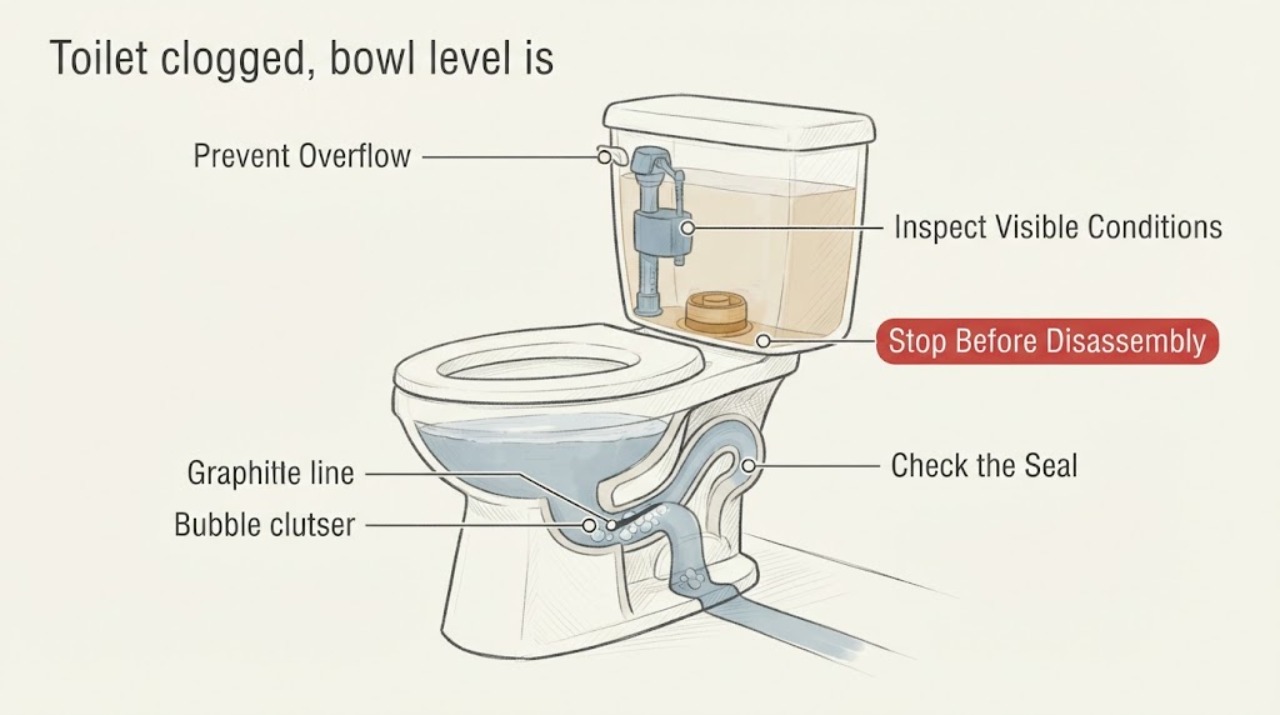
Toilet clogged, bowl level is high or slow: What to Check and What to Do Next
If a toilet bowl is high or drains slowly, prevent an overflow before testing it: do not flush again, close the normal water-supply valve if it turns easily, and keep towels ready. Confirm whether the level falls on its own, then use a toilet plunger with a full seal and controlled strokes.
-
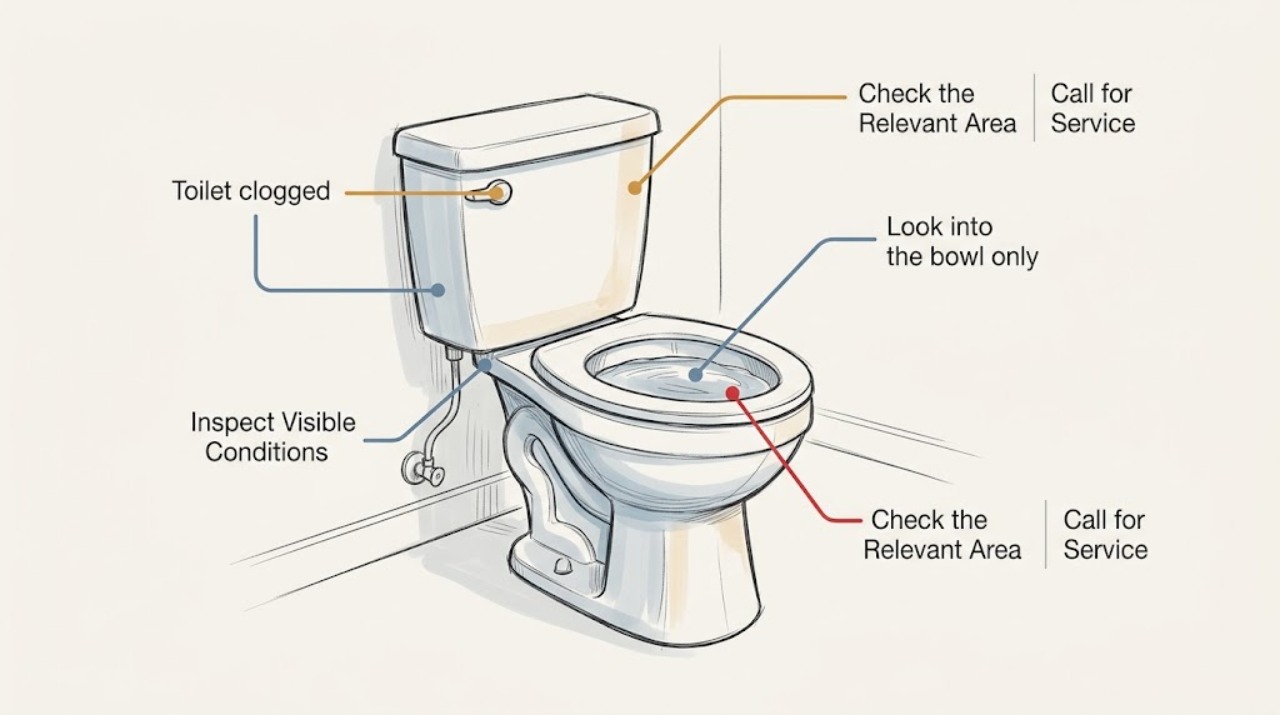
Toilet clogged: What to Check and What to Do Next
Stop flushing as soon as the bowl rises or drains slowly, and keep people away from any overflow. From a dry, safe position, note the bowl level, whether other fixtures are slow or backing up, whether a visible object is present, and whether there is sewage, odor, or water outside the bowl.
-
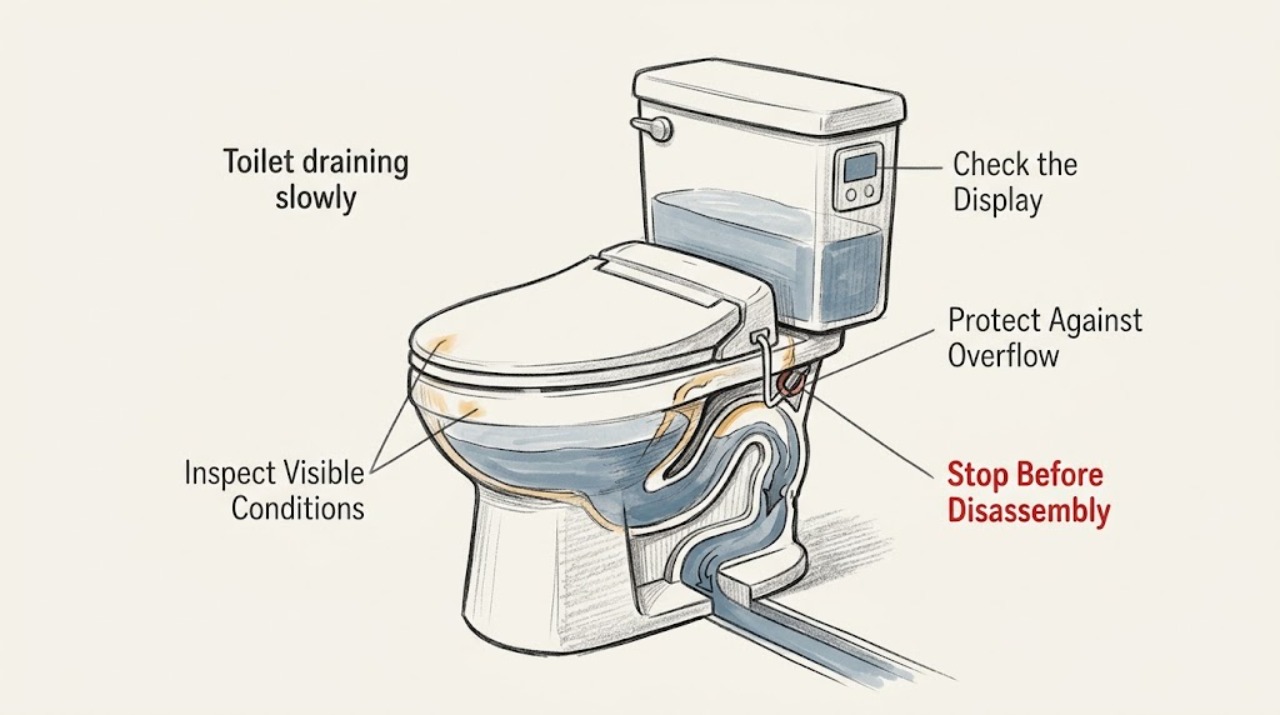
Toilet draining slowly: test the bowl and trapway before calling for deeper drain work
A slow-draining toilet usually needs its bowl, trapway, or connected drain path distinguished before parts are replaced. Keep the bowl from overflowing, check whether the water level falls normally after a flush, and—only when the bowl is at a safe level—use a small controlled water-pour observation.
-
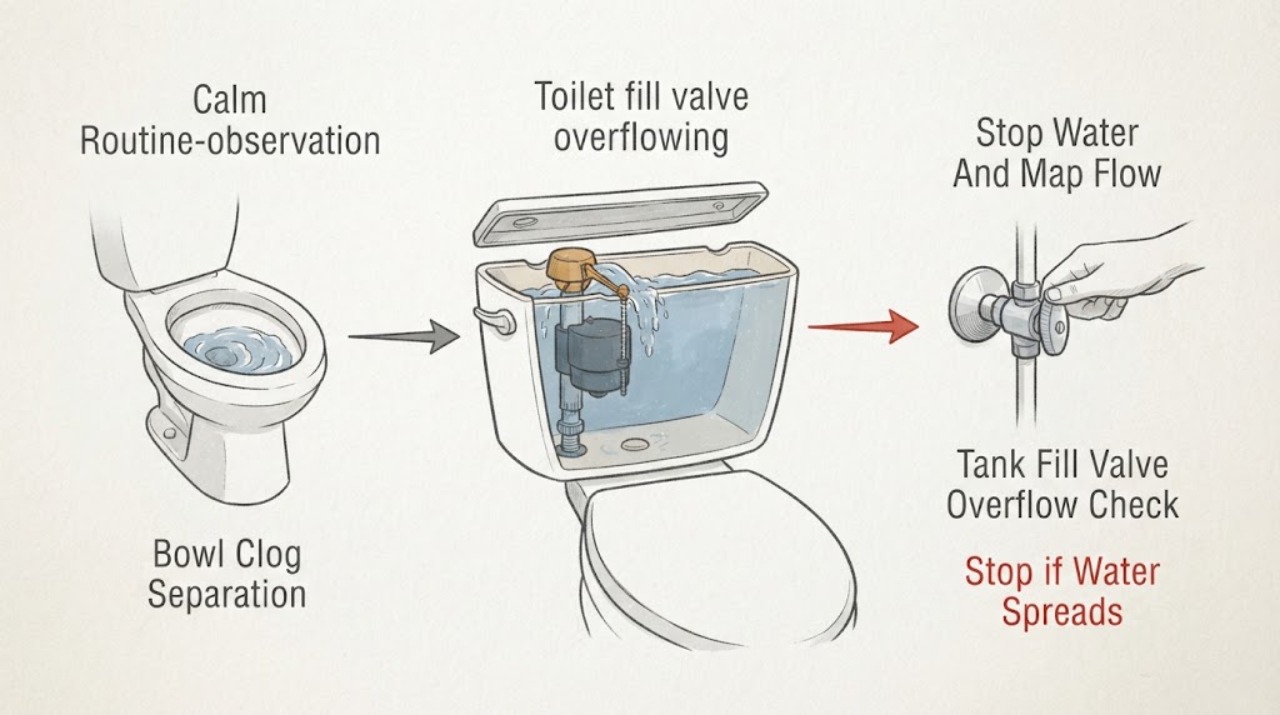
Toilet fill valve overflowing: What to Check and What to Do Next
If a toilet seems to be overflowing around the fill valve, stop pressing the handle and close the accessible toilet supply valve if it turns normally.
-
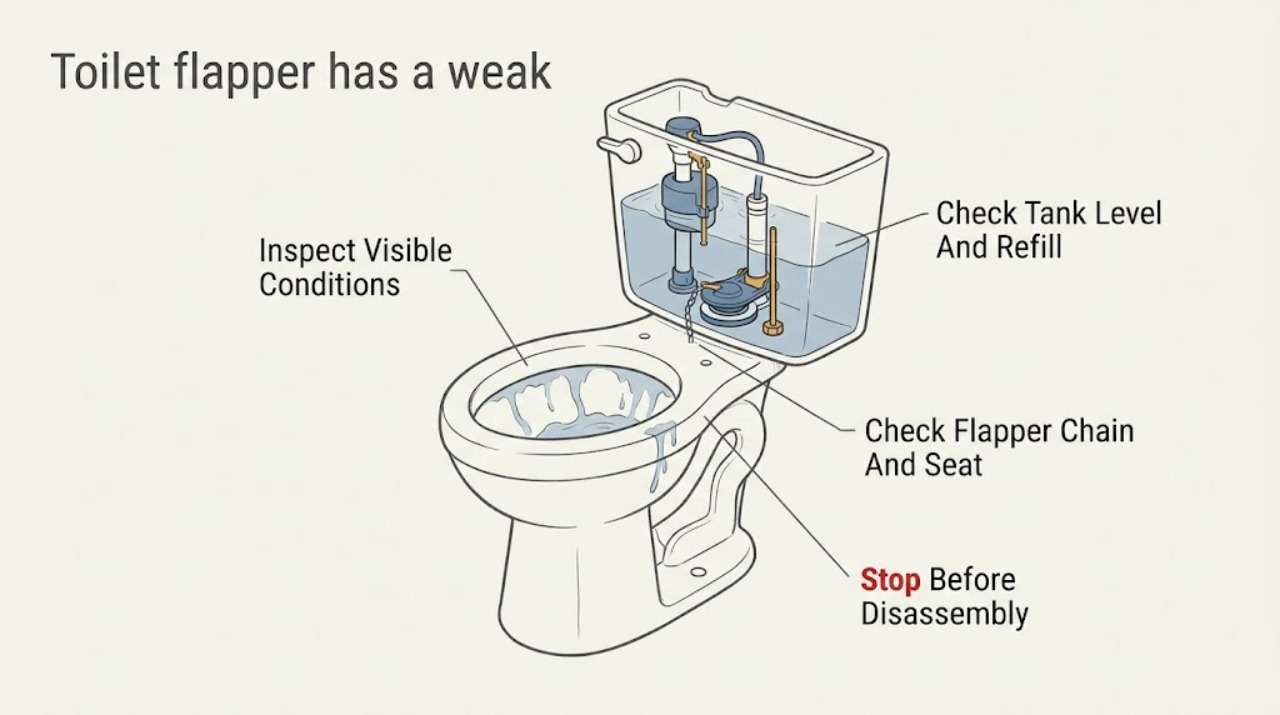
Toilet flapper has a weak flush: What to check and what to do next
A flapper can cause a weak flush when its chain does not lift it fully, it closes too soon, or the seal is dirty, worn, or misaligned. But weak flushing also comes from a low tank water level, a partly closed supply stop, blocked rim or jet passages, or a partial trapway or vent problem.
-
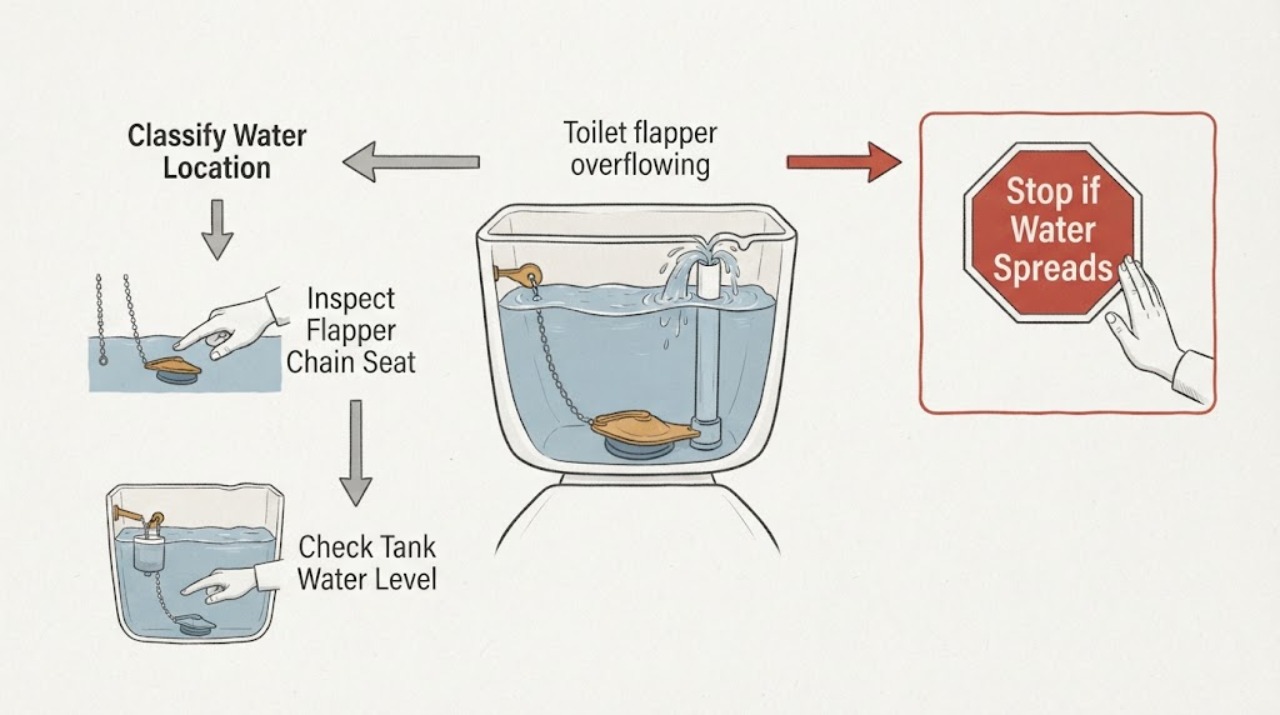
Toilet flapper overflowing: What to Check and What to Do Next
A flapper normally causes a tank-to-bowl leak or a toilet that keeps refilling; it does not by itself explain a bowl that rises and drains slowly. First stop flushing, turn the toilet's accessible shutoff valve clockwise if water is still entering, and identify whether water is rising in the bowl, spilling from the tank into the overflow tube, or appearing on the floor.
-
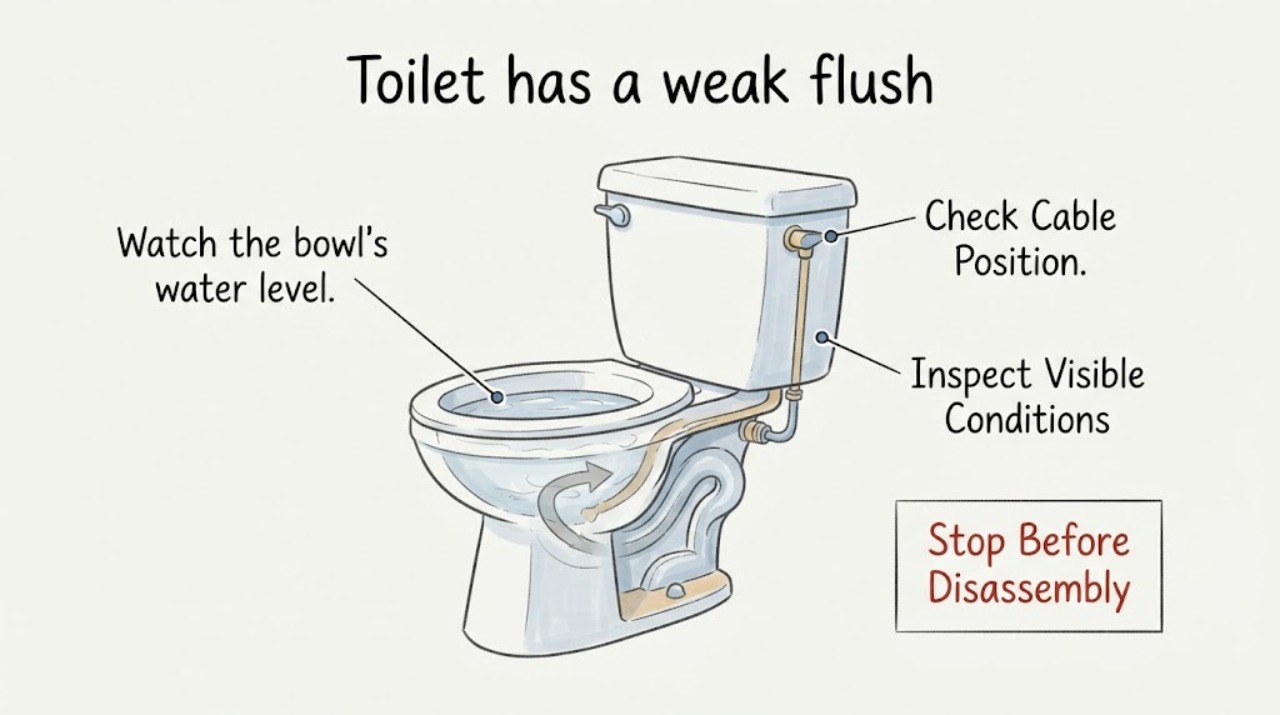
Toilet has a weak flush bowl clears partially: What to Check and What to Do Next
A toilet that only partly clears the bowl usually has insufficient tank water or an incomplete valve release, restricted rim holes or jet, or a partial obstruction in the trapway or waste line. Check the tank water against its marked waterline, confirm the supply shut-off is open, and inspect accessible openings.
-
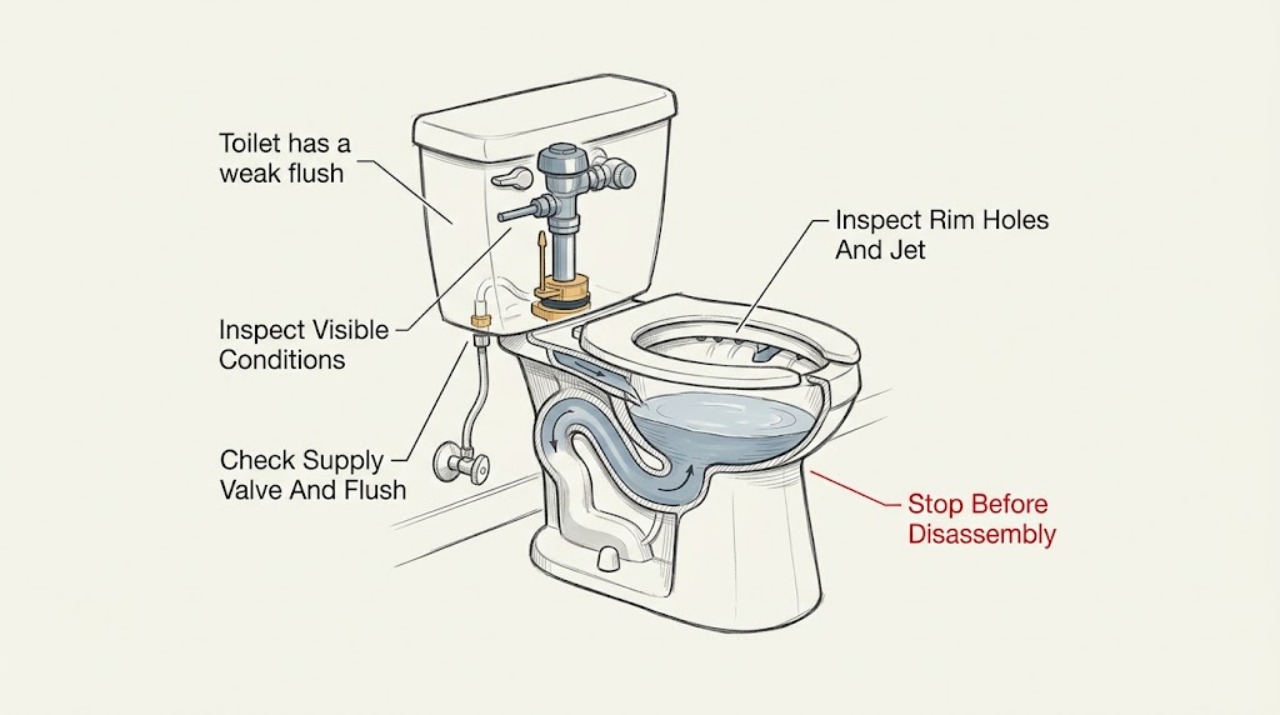
Toilet has a weak flush when water level is correct: What to Check and What to Do Next
When the tank and bowl water levels are already correct, a weak toilet flush is more likely to come from incomplete flush-valve opening, a partially closed supply valve, mineral buildup in the rim or jet passages, an obstruction in the trapway, or a restricted waste vent than from the water level itself. First note whether the bowl rises and drains slowly, bubbles, needs the handle held down, or has weak rim flow.
-
Toilet has a weak flush, but the tank fills normally: What to Check and What to Do Next
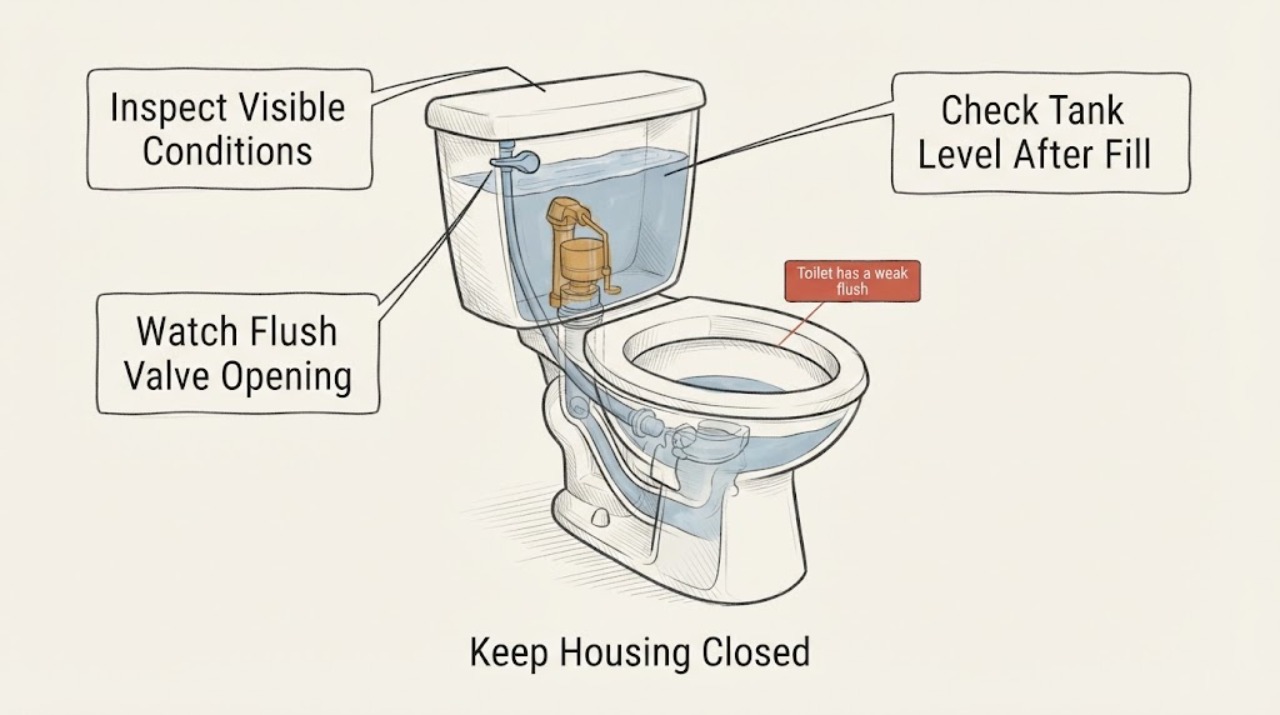
A toilet can fill to its normal level and still flush weakly when the flush valve or flapper does not stay open long enough, the refill tube is not restoring the bowl, the rim or siphon jets are restricted, or the bowl trapway has a partial obstruction. Watch one flush from a safe position: compare the tank water line with the marked line or overflow tube, note whether the valve opens fully and the bowl swirls, and observe whether the bowl rises, gurgles, or drains slowly.
-
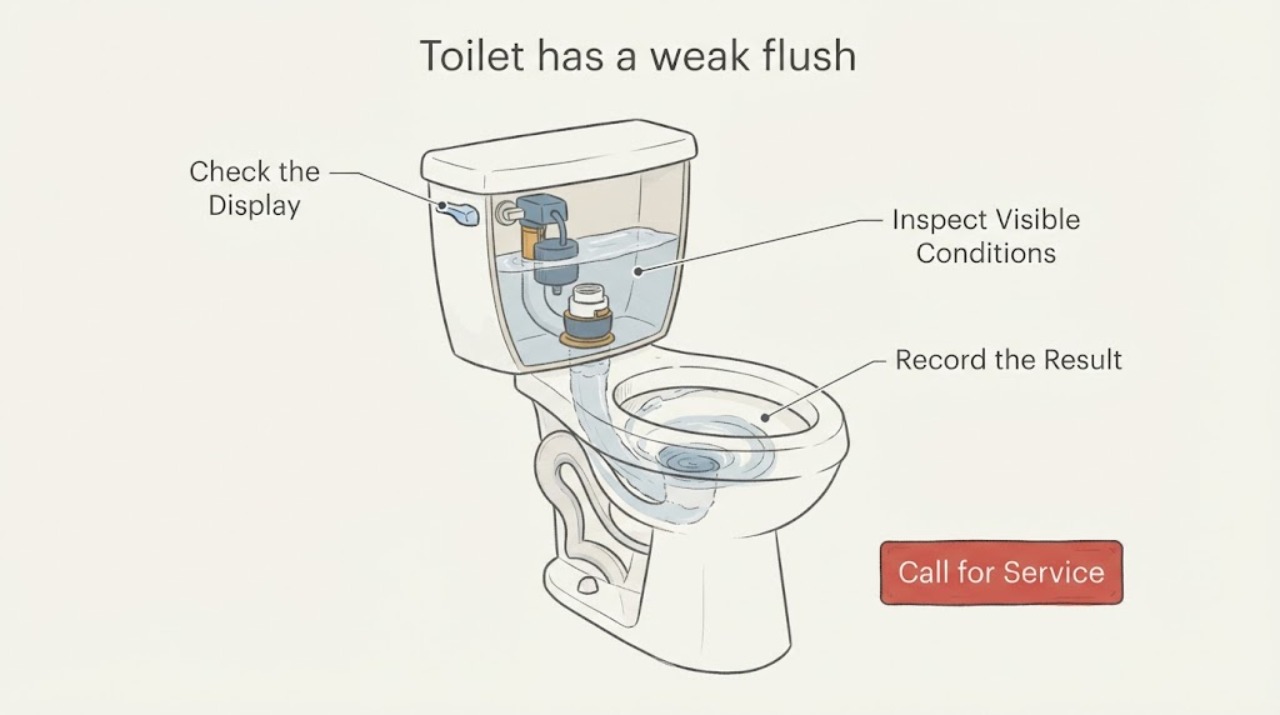
Toilet has a weak flush: What to Check and What to Do Next
A weak toilet flush can come from a low or interrupted tank fill, a handle or flush mechanism that does not open fully, mineral buildup visible at the rim, a partial drain restriction, or a problem shared by other fixtures. Make one normal flush while watching the bowl and listening for the refill, then inspect only visible indicators: the bowl's water movement, any visible tank water line or warning, the rim holes, supply-valve position, and nearby drain behavior.
-
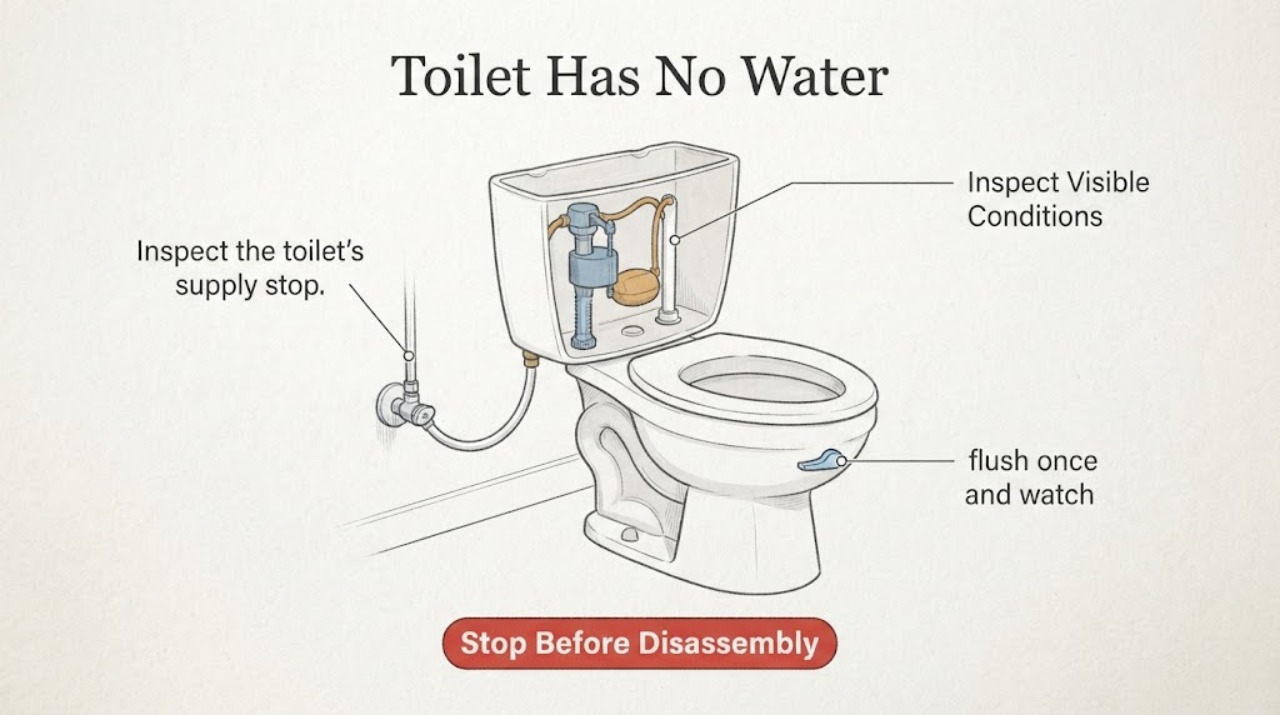
Toilet Has No Water: Check the Supply, Shutoff Valve, and Fill Valve
If the toilet tank is empty after a flush, first check whether other fixtures have water, then verify the toilet's supply stop is fully open and the supply line is not kinked. If water reaches the fill valve but the tank still does not refill, debris or a failed fill-valve/float assembly is more likely.
-
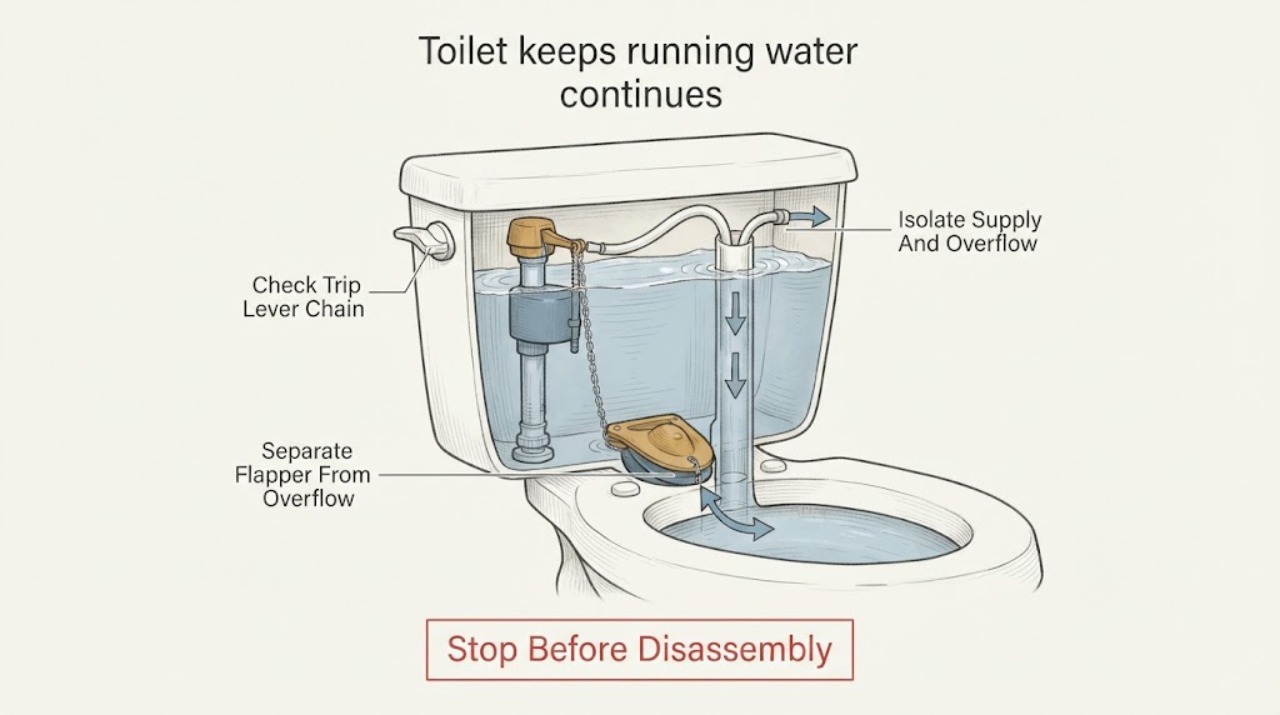
Toilet keeps running water continues into bowl: What to Check and What to Do Next
When water continues into the toilet bowl, first prevent waste and an overflow by turning the toilet's supply stop clockwise only until it stops if the valve is accessible and operable. Remove the tank lid and observe whether water is leaking past the flapper or canister seal, entering the overflow tube, or siphoning through a refill hose that sits below the tank waterline.
-
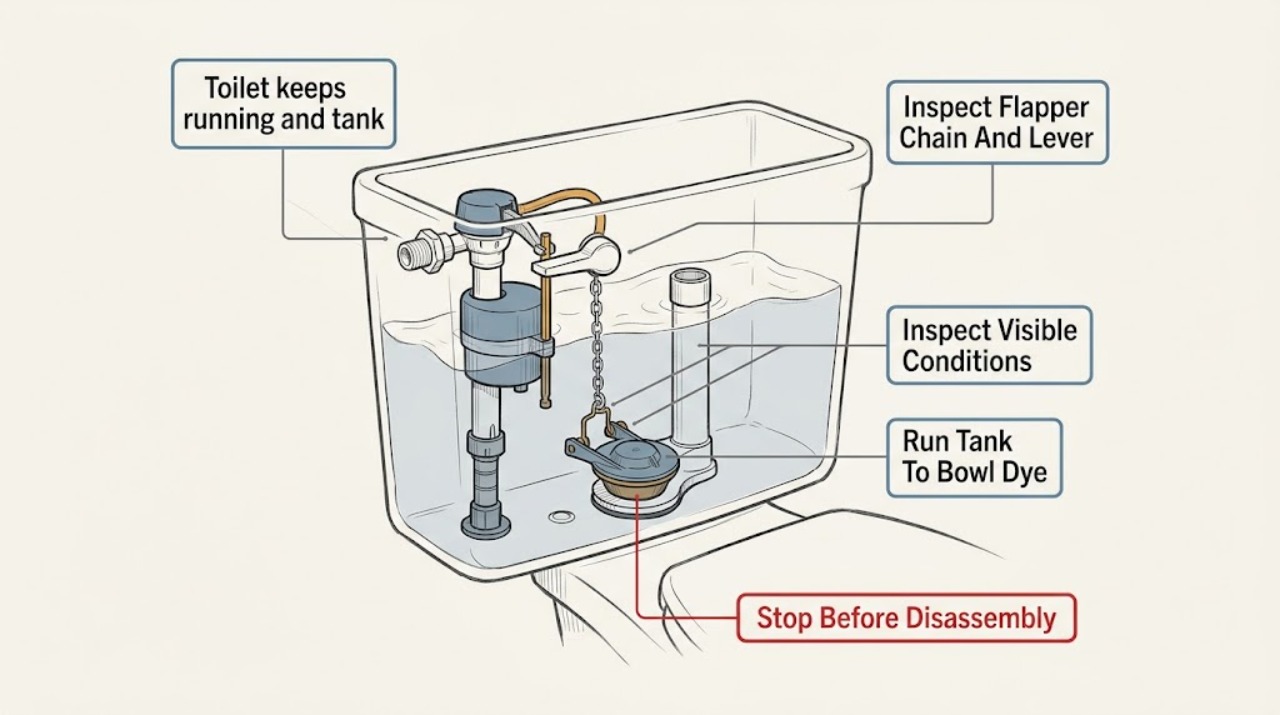
Toilet keeps running and tank level fluctuates: What to Check and What to Do Next
A running toilet whose tank level rises and falls is usually either losing water into the bowl through the flapper/flush-valve seal or failing to shut off at the fill valve. Remove the tank lid carefully and watch one refill cycle: water that reaches or enters the overflow points toward fill-level or fill-valve trouble, while a normal-looking level followed by a slow drop and automatic refill points toward a flush-valve seal, flapper, chain, or seat leak.
-
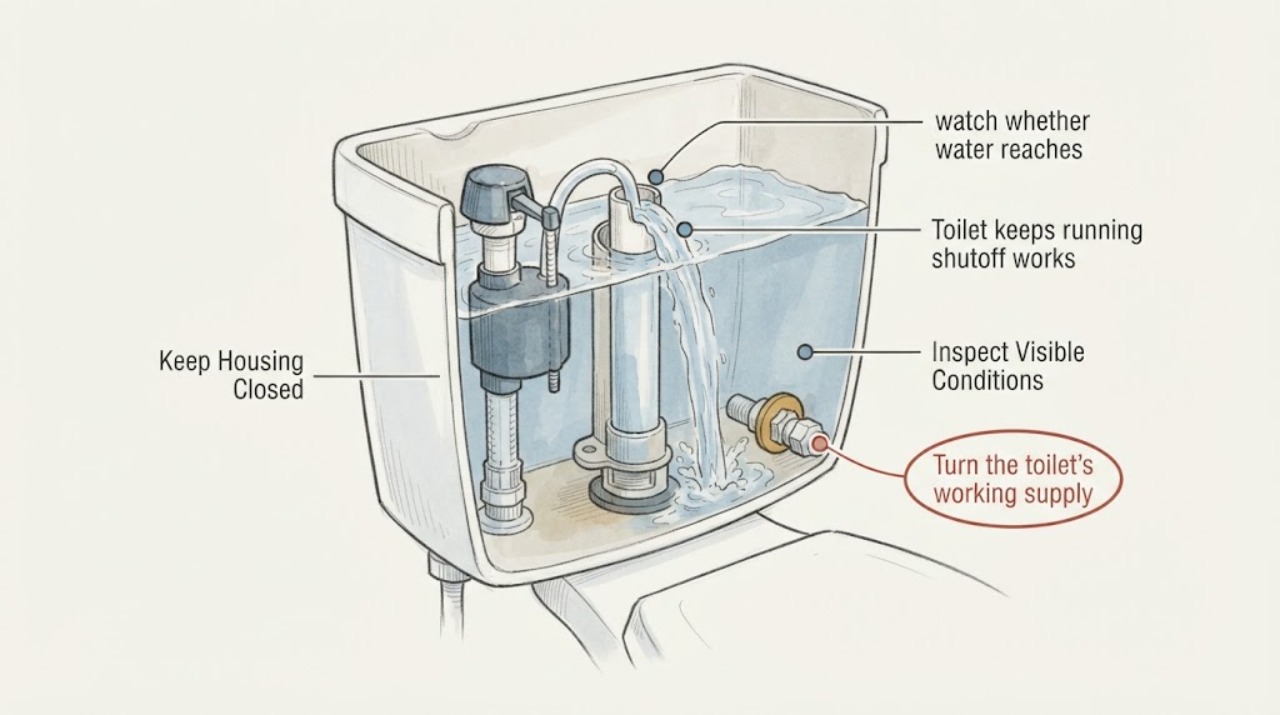
Toilet keeps running shutoff works: What to Check and What to Do Next
When the toilet shut-off works but the toilet keeps running, first close the valve to stop wasted water while you identify whether water is leaking from the tank through the flapper or flush-valve seal, rising into the overflow because the float is too high, or entering through a fill valve that will not shut off. With the tank lid off, watch the water level, press the flapper briefly, and check the chain, refill tube, and fill-valve behavior.
-
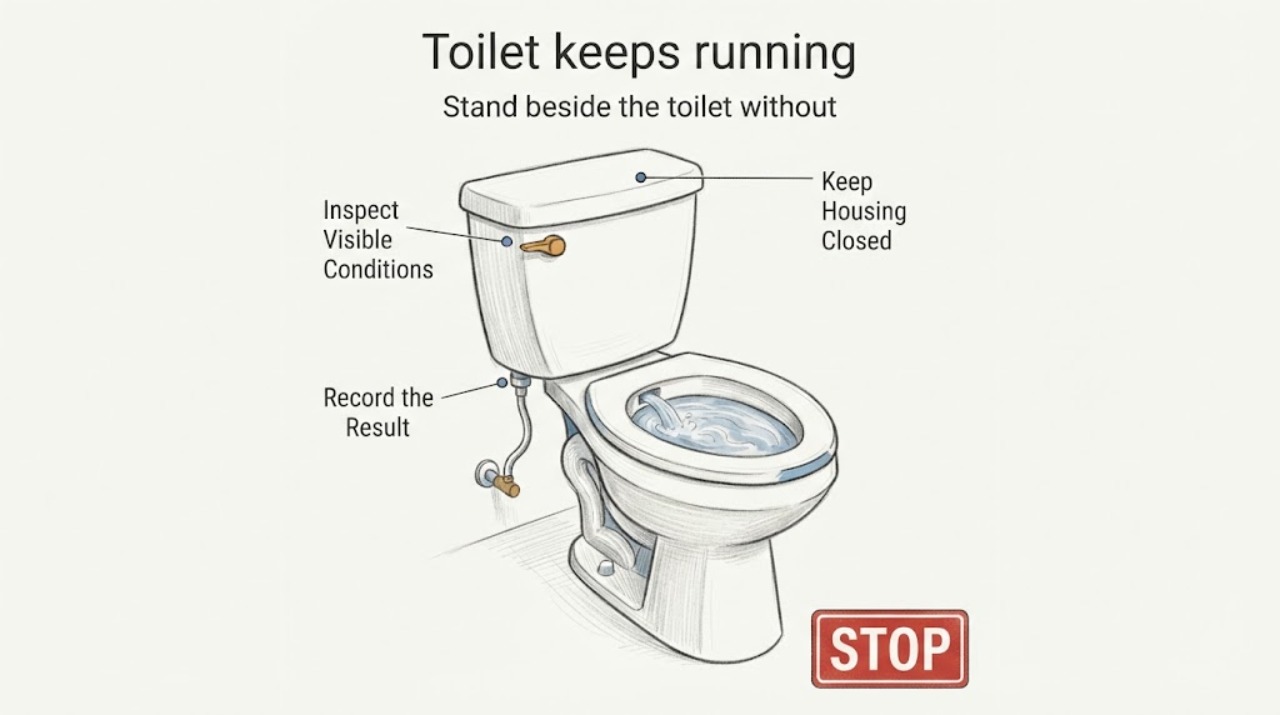
Toilet keeps running: What to Check and What to Do Next
A toilet that keeps refilling or makes a steady hiss usually has water passing from the tank into the bowl, a flush handle or chain that is not returning, or a fill control that is not stopping at the normal level. Start with external sound, water-surface, handle, tank, and nearby-fixture observations.
-
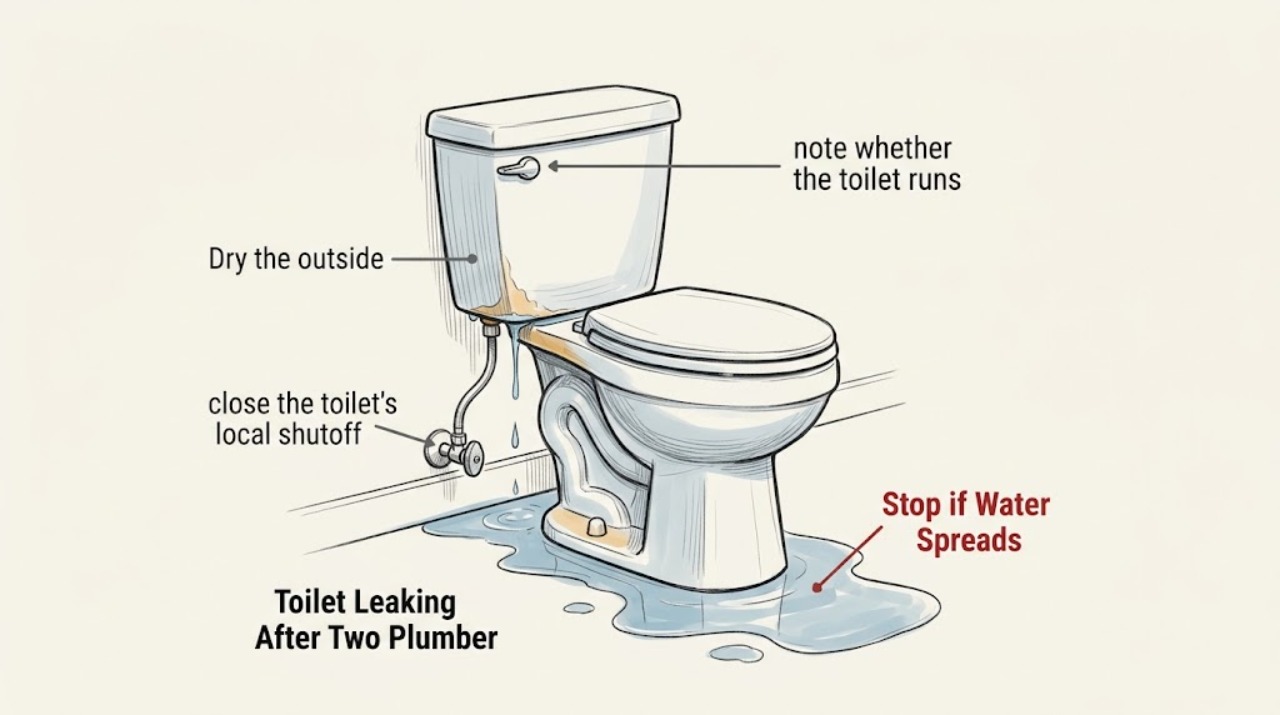
Toilet Leaking After Two Plumber Visits: Find the First Wet Point
If a toilet still leaks after two plumber visits, stop repeating the same adjustment and document the first place that becomes wet, when it happens, and whether the water is clean tank supply or contaminated bowl or drain water. Close the toilet shutoff valve for an active or growing leak, stop using the toilet if water appears at the base, and protect nearby flooring.