
On this page
Start here
Quick answer
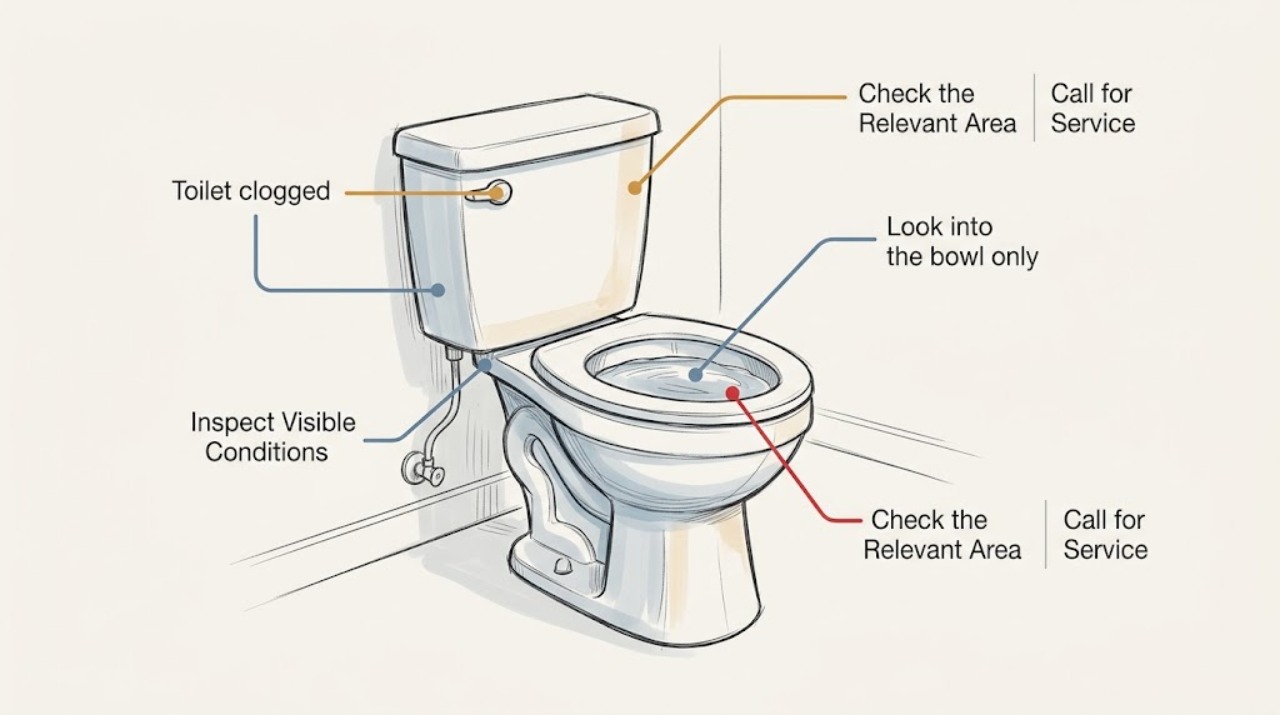
Stop flushing as soon as the bowl rises or drains slowly, and keep people away from any overflow. From a dry, safe position, note the bowl level, whether other fixtures are slow or backing up, whether a visible object is present, and whether there is sewage, odor, or water outside the bowl. Do not mix chemicals, use high-pressure equipment, dismantle the toilet or drain, or touch sewage. A single bowl clog without other symptoms may be a local blockage, but multiple slow fixtures, gurgling, floor-drain backup, or sewage indicates a larger drain or sewer problem that needs prompt professional plumbing service.
Work through in order
Diagnostic checks
Use only checks that match the exact appliance or system and its official guide.
-
Check 1
Without flushing again, look at the water level in the toilet bowl from a dry standing position and note whether it is normal, high but stable, slowly falling, or rising toward the rim.
Expected result: Record the level and whether it changes on its own; stop any flush cycle immediately if the level rises.
Next step: Keep the toilet out of use, reduce water use in nearby fixtures, and document the level and timing for a plumber. If water is at the rim or overflowing, isolate the area and request urgent service.
Stop if: Stop all flushing and keep people away immediately when the bowl rises, spills, or reaches an unsafe level. Do not touch the water or add a chemical product.
Why this matters
Why: A high or slow-falling bowl confirms restricted flow, while a rising bowl signals imminent overflow. The level alone does not identify whether the restriction is local or farther in the drain.
-
Check 2
From dry locations, observe whether nearby sinks, tubs, showers, floor drains, or other toilets drain normally without deliberately adding more water. Listen for gurgling that occurs during ordinary use elsewhere.
Expected result: Classify the pattern as only this toilet, several fixtures in the same room, fixtures in more than one area, or a floor drain or lower fixture showing wastewater.
Next step: Stop using affected fixtures and tell the plumber which fixtures are involved and in what order the symptoms appeared. Do not run a deliberate flow test or add water to compare fixtures.
Stop if: Stop immediately for wastewater at another fixture, floor-drain backup, or sewage outside the home. Keep clear, avoid contact, and request urgent plumbing or wastewater assistance.
Why this matters
Why: One affected toilet is more consistent with a localized restriction; several slow fixtures, gurgling, or wastewater at a lower opening can indicate a branch, building, septic, or sewer-line problem.
-
Check 3
Look into the bowl only from above and without touching the water to see whether a non-flushable item or unusual material is visibly present. Do not reach in, push the material deeper, or use a tool.
Expected result: Record no visible object, an identifiable object sitting in view, or material that is unidentifiable, submerged, or mixed with wastewater.
Next step: Keep the toilet unused and tell the plumber what was seen and when the blockage began. If the material is reachable only by contact or the bowl contains sewage, leave it for trained service and cleanup personnel.
Stop if: Stop the observation if splash, contact, odor, or overflow is possible. Do not touch the material, dismantle the toilet, or use high-pressure equipment.
Why this matters
Why: A visible object can explain a sudden blockage, but removal by hand or improvised tools can spread contamination or damage the toilet. An unseen restriction remains possible even when the bowl looks clear.
-
Check 4
From a safe, dry position, inspect the floor around the toilet, nearby floor drain, baseboard, and visible cleanout area for sewage, clear water, staining, dampness, or an unusual sewage odor. Do not lift covers, open a cleanout, or step into contaminated water.
Expected result: Record a dry area, an isolated clean-water spill, or sewage, foul odor, spreading dampness, or backup at another opening.
Next step: Keep people and pets away, stop nonessential water use, photograph the safe visible condition, and arrange professional plumbing and, when needed, wastewater or cleanup assistance.
Stop if: Stop immediately if sewage is present, the floor is contaminated or slippery, electrical equipment could contact water, or the source is unclear. Do not clean, pump, or handle wastewater yourself.
Why this matters
Why: Sewage or backup beyond the bowl raises a contamination and larger-line concern; a dry floor does not rule out a concealed restriction. A visible cleanout condition should be reported rather than investigated invasively.
-
Check 5
Review the timeline without another flush: note the last normal use, any object that may have entered the toilet, whether the bowl became slow before stopping, and whether the problem followed heavy rain, a septic warning, or work on nearby plumbing.
Expected result: Record a sudden single-fixture event, a gradually worsening flow, recurrence after previous clearing, or onset alongside weather or multiple-fixture symptoms.
Next step: Give the plumber the timeline, bowl level, other-fixture pattern, visible material, and any sewage indicators. Keep all affected fixtures out of use until the restriction is assessed.
Stop if: Stop testing if the bowl rises, another fixture backs up, sewage appears, or anyone would need to enter contaminated water or handle the toilet.
Why this matters
Why: A sudden event may point to a local obstruction, while gradual or recurring symptoms and weather-linked or multi-fixture symptoms increase concern for a line or system issue. The timeline narrows the service call but is not a diagnosis.
Use your observations
Decision map
Find the observation that best matches what you see, then follow the next safe action.
-
PATH 01Safety boundary
What you see
Only one toilet is affected, the bowl is stable or slowly falling, and there is no sewage outside the bowl.
Do this next
Keep it out of use and arrange plumbing service. Tell the plumber the bowl level, timing, visible object observation, and whether any safe prior maintenance is known.
Why this path and its safety boundary
Safety stop: Do not flush repeatedly, mix chemicals, dismantle the toilet, or force a tool into the drain.
-
PATH 02Safety boundary
What you see
The bowl rises toward the rim or begins to overflow.
Do this next
Stop flushing immediately, isolate the bathroom, keep people and pets away, and request prompt plumbing service. Protect nearby belongings only from a dry safe position.
Why this path and its safety boundary
Safety stop: Do not touch the water, add chemicals, or use pressure equipment.
-
PATH 03Safety boundary
What you see
Several fixtures are slow, gurgle, back up, or show wastewater at a floor drain or lower opening.
Do this next
Stop using toilets and other water fixtures and call a plumber for a branch, building, septic, or sewer-line assessment. If a public sewer or septic issue is suspected, contact the responsible utility or health authority as directed locally.
Why this path and its safety boundary
Safety stop: Do not run water to test the line, try to stop sewage by hand, or enter contaminated water.
-
PATH 04Safety boundary
What you see
A visible object is present in the bowl, or the bowl contains sewage or unidentifiable material.
Do this next
Keep the toilet isolated and tell the plumber what is visible. Use trained cleanup personnel for any sewage exposure or contaminated surface.
Why this path and its safety boundary
Safety stop: Do not reach in, pull at the object, dismantle the fixture, or use chemical or high-pressure clearing methods.
-
PATH 05Safety boundary
What you see
The blockage recurs, follows heavy rain or septic symptoms, or cannot be explained by the safe observations.
Do this next
Request a professional assessment of the drain path and, when applicable, the septic or sewer connection. Provide the full timeline and all affected fixtures.
Why this path and its safety boundary
Safety stop: Do not keep attempting temporary clearing or resume normal water use until the professional says the system is safe to use.
Helpful context
Understand the symptom
Read the bowl before choosing a response
A toilet can be blocked at the bowl trap, farther along the branch drain, or as part of a larger building or sewer restriction. The bowl level and the behavior of other fixtures help distinguish those possibilities, but they do not prove where the obstruction is. Keep water use low while the condition is unclear and give the observations to a plumber.
Protect against overflow and sewage
Do not flush again to see whether the toilet clears. If the bowl rises, stop the flush cycle and isolate the bathroom. Do not touch wastewater or try to stop sewage coming from a floor drain. Keep children and pets away and seek professional cleanup or plumbing help when contaminated water is present.
Only after diagnosis
Potential parts
- toilet plunger
Consider this category only if a plumber or the owner’s instructions confirm a simple localized bowl restriction and the toilet is not overflowing or contaminated outside the bowl.
Use only a tool intended for the toilet design and follow its instructions; a tool is not a remedy for a branch, septic, or sewer-line blockage. - toilet auger
This category may be relevant only after the obstruction is assessed as a localized toilet-trap problem and a safe, manufacturer-appropriate clearing method is confirmed.
Confirm the toilet configuration and appropriate technique with a qualified professional; do not force a tool or use it when sewage exposure or structural damage is possible. - toilet flapper
A flapper is relevant to a tank leak or flush-control symptom, not as a general cure for a bowl or drain blockage. Consider it only if a professional confirms that separate condition.
Match the toilet’s manufacturer-specified flush assembly and fit information; a flapper replacement does not clear a blocked drain.
When checks do not resolve it
Need a professional?
Call a qualified plumber when the bowl rises, the blockage does not clear with safe observation, the problem recurs, or more than one fixture is affected. Treat sewage backup, foul odor, floor-drain overflow, contamination, or a possible septic or public-sewer issue as urgent escalation.
Have this ready
- Provide the bowl level and trend, whether flushing was stopped, affected fixtures and gurgling, visible object or material, floor and drain observations, odor or sewage indicators, the onset timeline, recent rain or plumbing work, and whether the property uses septic service.
Common questions
FAQ
What should I do first when a toilet is clogged?
Stop flushing, especially if the bowl is rising. From a dry position, note the bowl level, whether other fixtures are slow, and whether there is sewage or an object visible. Keep the toilet isolated and call a plumber if the condition is not clearly local and stable.
How do I know if a toilet clog is in the main sewer line?
You cannot confirm the location from the bowl alone. Several slow or gurgling fixtures, floor-drain backup, recurring symptoms, or sewage outside the toilet suggest a larger branch, septic, or sewer concern and warrant professional assessment.
Should I use chemical drain cleaner in a clogged toilet?
No. Do not mix or add chemical products, and do not use high-pressure equipment. Chemicals can create a hazard for occupants and the plumber, while pressure can worsen a blockage or spread contaminated water.
What if the toilet bowl is full of dirty water?
Do not flush, reach into the bowl, or handle the water. Isolate the bathroom, keep children and pets away, reduce water use, and request prompt plumbing and, if surfaces are contaminated, trained cleanup help.
Read the exact guide
Official sources
- Resolving Septic System MalfunctionsU.S. Environmental Protection Agency · Relevant when the property uses an onsite wastewater system or shows backup, slow fixtures, gurgling, sewage odor, or wet areas; municipal sewer users should follow local utility guidance.
- Prevent Blocked DrainsCity of Tampa Wastewater Department · General homeowner orientation; utility procedures and contacts vary by municipality.
- What you can (and can't) flushCity of Portland Bureau of Environmental Services · General prevention guidance; local sewer rules and the condition of an individual toilet or line may differ.
Community feedback
Share a repair observation
Share a plain-text repair observation. Accepted observations are published automatically; this page may take a moment to update.