
On this page
Start here
Quick answer
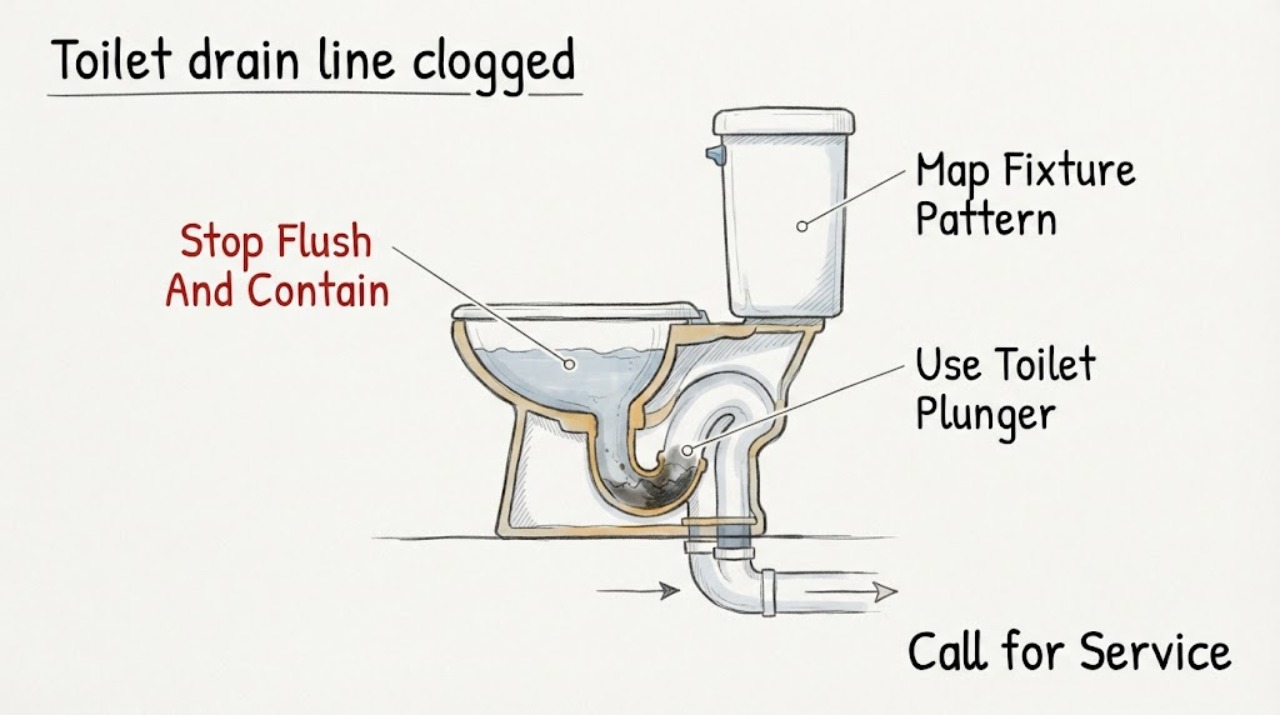
Stop flushing a Glacier Bay toilet when the bowl rises, and close the toilet's accessible shutoff valve if it moves normally and the bowl may overflow. First determine whether the blockage is in this toilet's trap or farther along the drain line: check whether other fixtures drain normally and whether they gurgle or back up when the toilet is used. A toilet plunger made for the bowl is the ordinary first clearing attempt, using controlled strokes without forcing the fixture. If the water level stays high, the blockage returns, more than one fixture is affected, sewage backs up, or a snake would need to be forced through a power-flush passage or the toilet removed, stop and arrange qualified plumbing service. Do not use chemical drain opener or keep flushing to push an unknown obstruction farther into the line.
Before you begin
Safety first
- This article supports containment, fixture-pattern observation, one careful toilet-plunger attempt when no chemical was used, and visible model identification. Toilet removal, cleanout access, powered snaking, buried-line work, and chemical or sewage cleanup require qualified service.
Work through in order
Diagnostic checks
Use only checks that match the exact appliance or system and its official guide.
-
Check 1
Stop pressing the flush handle as soon as the bowl level rises or drains abnormally; if the toilet has an accessible shutoff valve that turns normally, close it gently and keep towels or a container away from contaminated water.
Expected result: Observe whether the water level is still rising, holds steady, slowly falls, or has already overflowed; note any sewage odor, visible leak, or water reaching the floor.
Next step: Leave the toilet unused and continue with pattern checks only when the water is contained and the floor is safe; call a plumber promptly for overflow, sewage contamination, or a shutoff that will not control the water.
Stop if: Do not flush repeatedly, reach into contaminated water, force the shutoff valve, or use the toilet if the bowl or supply connection is leaking.
Why this matters
Why: A rising or persistent level means the passage is not safely carrying more water, while a slow fall is consistent with a partial obstruction. Overflow, sewage, or a leaking connection makes containment and professional cleanup more important than another flush.
-
Check 2
Without adding more water to the blocked toilet, check whether nearby sinks, tubs, showers, floor drains, or another toilet drain normally; ask whether the symptoms began after a large flush, non-flushable item, plumbing work, or a recent backup.
Expected result: Record whether only this toilet is affected, several fixtures in the same bathroom are slow, multiple fixtures are backing up, or a lower fixture receives water when this toilet is disturbed.
Next step: Use a toilet-specific plunger only for an isolated, contained bowl blockage; do not keep adding water or attempt local clearing when several fixtures share the symptom.
Stop if: Stop and arrange qualified service for sewage backup, multiple blocked fixtures, basement or floor-drain involvement, or suspected damage to a buried or shared drain.
Why this matters
Why: One toilet with normal nearby drainage makes a local trap or branch obstruction more likely. Several fixtures, gurgling, or lower-fixture backup points farther along the branch or main drain and increases the risk of pushing sewage into another fixture.
-
Check 3
For an isolated bowl blockage with a contained water level, use a clean toilet plunger with a flange that fits the outlet, seat it over the opening, and use controlled push-and-pull strokes without striking the porcelain or forcing water over the rim.
Expected result: Watch whether the bowl level falls and stays down, the toilet clears but drains slowly, the plunger loses its seal, or water rises in another fixture.
Next step: Run only a cautious normal flush after the bowl has remained at its normal level and no other fixture is backing up; if the result is incomplete or returns, stop repeated plunging and call a plumber.
Stop if: Do not use a plunger after chemical drain opener has been added, do not use excessive force, and do not continue if sewage appears in another fixture or the bowl rises toward overflow.
Why this matters
Why: A stable clear bowl after controlled plunging supports a local obstruction. A temporary improvement followed by recurrence suggests a remaining obstruction or downstream restriction; movement in another fixture suggests the blockage is beyond this toilet.
-
Check 4
Read the exact Glacier Bay model and flush type from the toilet or its manual, then inspect only visible, dry areas for a displaced tank component, an object at the bowl opening, or a leak at the base or supply connection; do not remove the toilet or open the drain line.
Expected result: Record the model identity, whether the toilet is gravity or power flush, whether the tank reaches its marked water level, and whether anything is visibly lodged or leaking.
Next step: Follow only the model manual's ordinary maintenance procedure for an identified tank issue; give the model and observations to a plumber when the bowl obstruction remains or the passage is unusual.
Stop if: Do not remove the toilet, disconnect the supply, open a power-flush mechanism, or force a tool through an unknown passage as an ordinary next step.
Why this matters
Why: A low tank level or flush-valve issue can make a flush weak without proving a drain-line clog; a visible object or normal tank with a rising bowl keeps an obstruction likely. Model-specific passages and components may not tolerate a generic tool.
-
Check 5
If the blockage persists or returns, document the water-level pattern, fixture map, plunger result, model, and any suspected flushed object for a qualified plumber; leave the toilet and affected fixtures unused until the drain path is assessed.
Expected result: The relevant result is whether a qualified inspection finds a local trap obstruction, a branch or main line blockage, a collapsed or displaced pipe, a vent-related symptom, or no obstruction after safe access.
Next step: Provide the records and ask the plumber to identify the obstruction location and safe repair before returning the toilet to service; follow local wastewater or septic guidance if sewage entered the home.
Stop if: Do not excavate, remove the toilet, open a cleanout, run a powered snake, or use chemical opener based only on this article.
Why this matters
Why: A local obstruction may be cleared with a toilet-specific tool, but repeated blockage or several affected fixtures is evidence that the cause is not safely resolved at the bowl. A camera, cleanout, toilet removal, or buried-line repair requires professional equipment and judgment.
Use your observations
Decision map
Find the observation that best matches what you see, then follow the next safe action.
-
PATH 01Safety boundary
What you see
Only this Glacier Bay toilet is affected, the bowl is contained, nearby fixtures drain normally, and a toilet plunger restores a stable water level without leakage.
Do this next
Use one cautious normal flush to confirm stable drainage, then monitor recurrence and avoid flushing non-flushable items.
Why this path and its safety boundary
Why it matters: A local bowl or trap obstruction is more likely than a shared drain-line blockage, although recurrence means the obstruction was not fully removed or a separate flush problem remains.
Safety stop: Stop if the bowl rises again, the clearing is temporary, the base leaks, or another fixture begins to back up.
-
PATH 02Safety boundary
What you see
Several fixtures are slow or backing up, water appears in a lower fixture, or the toilet causes gurgling elsewhere.
Do this next
Stop using affected fixtures and arrange qualified plumbing service to locate the shared blockage; describe the order in which fixtures changed.
Why this path and its safety boundary
Why it matters: The obstruction is more likely in a branch or main drain than in the Glacier Bay bowl, and continued flushing can spread wastewater to another outlet.
Safety stop: Do not keep plunging or add chemical opener when another fixture is receiving sewage or the floor drain is involved.
-
PATH 03Safety boundary
What you see
The bowl drains, but the flush lacks force or the tank does not refill or reach its marked level, with no persistent standing water.
Do this next
Use the exact Glacier Bay manual for visible, ordinary tank checks and ask for service if the internal valve or model-specific mechanism needs disassembly.
Why this path and its safety boundary
Why it matters: A fill-valve, flush-valve, tank-water, or model-specific mechanism issue may be present instead of a clogged drain line.
Safety stop: Do not adjust or replace internal parts by generic fit, and stop for a leak or uncontrolled refill.
-
PATH 04Safety boundary
What you see
Plunging does not clear the bowl, the blockage returns soon, a suspected object remains, or a tool would need to pass through an unusual power-flush passage.
Do this next
Leave the toilet unused and have a qualified plumber identify the obstruction and equipment needed before removing the toilet or accessing the drain line.
Why this path and its safety boundary
Why it matters: A deeper trap or drain-line obstruction, damaged pipe, or model-specific passage issue remains unresolved; the first safe household check has been exhausted.
Safety stop: Do not force an auger or powered snake, remove the toilet, open a cleanout, or use chemical opener as a substitute for diagnosis.
-
PATH 05Safety boundary
What you see
Chemical drain opener was added, sewage overflowed, or contaminated water reached the floor, wall, or another fixture.
Do this next
Keep people and pets away, do not plunge or disassemble the line, ventilate without creating a spray, and contact qualified plumbing or cleanup service for the appropriate response.
Why this path and its safety boundary
Why it matters: The immediate concern is exposure, property damage, and safe containment; plunging or opening the line can spread chemical or biological hazards.
Safety stop: Do not mix products, touch contaminated water without appropriate protection, or return the toilet to service before the leak or backup is assessed.
Helpful context
Understand the symptom
A bowl clog and a drain-line clog are different problems
Water that rises in this bowl but leaves other fixtures normal can be trapped in the toilet's internal passage or nearby branch. If a tub, shower, sink, or another toilet also drains slowly, gurgles, or backs up, the restriction is more likely farther downstream. Do not keep flushing to distinguish them: an overflowing bowl spreads contaminated water and can turn a partial blockage into a cleanup problem.
Glacier Bay models need model-specific handling
Use the exact Glacier Bay model number and flush type to identify the correct maintenance procedure. A power-flush or unusual internal passage may be damaged by a general-purpose snake forced through the bowl.
Keep chemicals out of a suspected toilet blockage
EPA guidance says to flush only human waste and toilet paper and to avoid chemical drain openers for a clogged drain. Chemical residue can expose the next person who plunges or opens the line, and it does not establish where the obstruction is. Use a mechanical toilet-specific approach only within the safe boundary below, then escalate when the pattern points to a branch or main drain problem.
Safety boundary
Stop conditions
- Stop flushing when the bowl rises, and do not keep adding water to a standing or overflowing bowl.
- Do not use chemical drain opener in the toilet or plunge after chemical opener was added.
- Do not force a general-purpose or powered snake through a Glacier Bay toilet, especially a power-flush or unusual passage.
- Do not remove the toilet, open a cleanout, disconnect a pressurized supply, excavate, or access a buried drain line as an ordinary household step.
- Stop for sewage backup, contaminated water, a leaking base or supply connection, multiple blocked fixtures, or water damage and arrange qualified service.
Only after diagnosis
Potential parts
- toilet plunger with flange
Consider this tool only for an isolated, contained bowl blockage when no chemical opener was used and the toilet's porcelain and water level can be handled safely.
Use a toilet-specific design that seals the bowl outlet; stop if it cannot seal without force or if another fixture backs up. - Glacier Bay model-specific flush valve or fill valve seal
Consider an internal valve part only when the exact model manual or a qualified diagnosis identifies a weak flush or refill fault rather than a drain-line blockage.
Confirm the exact Glacier Bay model and manufacturer's part information; do not substitute a generic valve based only on appearance.
When checks do not resolve it
Need a professional?
Arrange qualified plumbing service when plunging does not clear an isolated clog, the clog returns, more than one fixture is affected, sewage backs up, the base or supply leaks, the toilet is a power-flush or otherwise model-specific, a suspected object remains, or any next step would require removing the toilet, opening a cleanout, using powered equipment, or accessing a buried drain line.
Safety scope: This article supports containment, fixture-pattern observation, one careful toilet-plunger attempt when no chemical was used, and visible model identification. Toilet removal, cleanout access, powered snaking, buried-line work, and chemical or sewage cleanup require qualified service.
Common questions
FAQ
How can I tell whether my Glacier Bay toilet clog is in the drain line?
Check the pattern without flushing again. If only this toilet is affected and a toilet plunger restores stable drainage, a local bowl or trap blockage is more likely. If several fixtures are slow, gurgle, or back up, the restriction is more likely in a shared branch or main drain and needs a plumber.
Should I keep flushing a clogged toilet to clear the line?
No. Stop when the bowl rises and close the accessible shutoff valve if it moves normally. Repeated flushing adds water to a restricted passage and can cause an overflow or push wastewater into another fixture.
Can I use chemical drain opener in a Glacier Bay toilet?
Avoid it. EPA advises avoiding chemical drain openers for a clogged drain and limiting toilet flushing to human waste and toilet paper. Chemical residue also creates a hazard for anyone who later plunges or opens the line.
Why is a Glacier Bay power-flush toilet still slow after plunging?
The issue may be a model-specific flush passage or valve problem rather than a buried drain-line clog. If the toilet has an unusual power-flush design, the blockage returns, or a tool would need to be forced through the fixture, stop and provide the exact model to a qualified plumber.
Read the exact guide
Official sources
- Home MaintenanceU.S. Environmental Protection Agency · EPA WaterSense household maintenance guidance; it does not replace the exact Glacier Bay manual or local plumbing requirements.
- Residential ToiletsU.S. Environmental Protection Agency · EPA WaterSense performance information; it does not diagnose a particular Glacier Bay installation or blockage.
- New toilet has no flush powerReddit r/Plumbing · One community report about a newly installed Glacier Bay power-flush toilet; it is a reported case, not manufacturer confirmation or proof of a repair.
- How to Care for Your Septic SystemU.S. Environmental Protection Agency · EPA septic-system care guidance; the waste and chemical cautions are relevant to household plumbing, while septic-specific remedies apply only to septic systems.
Community feedback
Share a repair observation
Share a plain-text repair observation. Accepted observations are published automatically; this page may take a moment to update.