
On this page
Start here
Quick answer
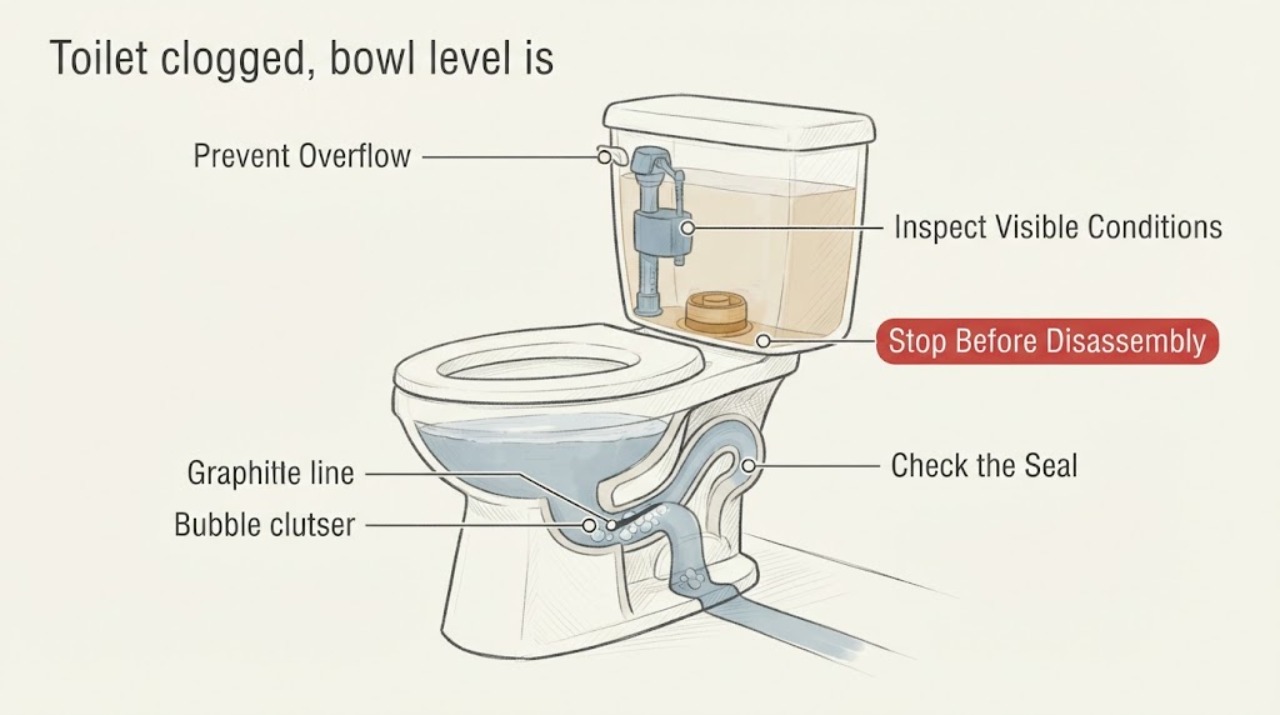
If a toilet bowl is high or drains slowly, prevent an overflow before testing it: do not flush again, close the normal water-supply valve if it turns easily, and keep towels ready. Confirm whether the level falls on its own, then use a toilet plunger with a full seal and controlled strokes. If plunging does not clear the trapway, a toilet auger or qualified plumber may be needed; a continuing problem after the trapway is clear can involve a vent or downstream drain. A rising bowl with water around the base, sewage backup at other fixtures, a cracked bowl, or a supply valve that will not close needs prompt service. Do not pour chemical drain cleaner, use boiling water, keep flushing, or force an auger through porcelain.
Work through in order
Diagnostic checks
Use only checks that match the exact appliance or system and its official guide.
-
Check 1
Do not flush again; from a dry position, close the toilet's normal water-supply valve only if it turns easily, and observe whether water is still entering the bowl from the tank.
Expected result: Record a supply valve that closes normally, a valve that is stuck or leaking, a bowl that stops rising, or water that continues entering despite the control being off.
Next step: Keep the toilet unused and continue only when the water level is stable and below the rim. Use prompt plumbing service if the valve will not close or water keeps entering.
Stop if: Stop for an overflowing bowl, fast flow, sewage, water at the base, a cracked bowl, a stuck valve, or water near electrical equipment.
Why this matters
Why: Stopping supply limits overflow risk. A stuck valve or continuing refill indicates a separate supply or fill-mechanism issue that should not be forced while the bowl is high.
-
Check 2
Without flushing, watch the bowl for several minutes and note whether the level falls, remains high, or rises when a small amount of water is added only if there is ample room below the rim.
Expected result: Record a gradual fall, no fall, a rise with a small addition, a normal drain followed by abnormal refill, or no safe room for an observation.
Next step: Use the result to choose a plunger or service path. Do not perform another flush as a test while the level is high.
Stop if: Do not add water when the bowl is near the rim, use a bucket to force flow, or continue if sewage or water is escaping at the base.
Why this matters
Why: A gradual fall or rise with added water supports a partial or significant trapway restriction. Normal evacuation with abnormal refill shifts attention toward the tank or fill mechanism; no safe room means do not add water.
-
Check 3
When the bowl is stable and low enough to prevent splashing, center a toilet plunger over the trapway opening and use controlled strokes that keep the cup sealed; follow the plunger instructions.
Expected result: Record a clear drop in bowl level, water moving but remaining slow, no movement, or water approaching the rim.
Next step: If flow returns, wait and perform one cautious normal flush only after the level is stable and the supply is restored. If it remains slow or rises, leave the toilet unused and consider a toilet auger or plumber.
Stop if: Stop if the bowl rises, the plunger cannot seal, porcelain moves, water splashes outside the bowl, or sewage appears.
Why this matters
Why: A level drop suggests the blockage is loosening; movement without normal drainage means the restriction remains. No movement or a rising bowl calls for stopping rather than more force.
-
Check 4
Without flushing the affected toilet, observe whether another toilet, tub, shower, or sink gurgles, drains slowly, or backs up when used; keep wastewater-producing fixtures to a minimum.
Expected result: Record only this toilet affected, several fixtures slow or gurgling, sewage at another fixture, or water around the toilet base.
Next step: For multiple fixtures, sewage backup, or base water, stop using the plumbing and call a plumber. Do not keep plunging one toilet while wastewater is backing up elsewhere.
Stop if: Stop for sewage exposure, water at the base, floor damage, an unstable toilet, or any overflow from another fixture.
Why this matters
Why: One affected toilet is more consistent with a local trapway clog. Several fixtures, gurgling, or sewage elsewhere suggests a shared drain or vent restriction; water at the base can indicate a seal or crack in addition to a clog.
-
Check 5
Record the bowl level, whether it falls, plunger result, other-fixture symptoms, supply-valve behavior, visible base water or cracks, and any object or event that preceded the clog.
Expected result: Confirm the record contains external observations and that no chemical, boiling water, sharp tool, or forced auger was used.
Next step: Arrange qualified plumbing service when the bowl remains slow or high, the plunger fails, the issue recurs, or any wider drain or damage symptom is present.
Stop if: Stop all homeowner troubleshooting when the next step requires removing the toilet, opening a drain line, using powered equipment, handling sewage, or forcing a tool through porcelain.
Why this matters
Why: Timing and scope help a plumber distinguish a local trapway blockage from a shared drain, vent, fill mechanism, base seal, or porcelain problem.
-
Check 6
After the water is isolated and the bowl is stable, protect the floor with towels and clean only visible surface water using gloves and ordinary cleanup materials; keep contaminated water away from people and other fixtures.
Expected result: Record a contained bowl, water on the floor, sewage contamination, a cracked fixture, or a cleanup area that cannot be safely contained.
Next step: Keep the bathroom out of use and request prompt plumbing or cleanup help for sewage, a crack, spreading water, or a contaminated area.
Stop if: Do not handle sewage without appropriate protection, mix cleaning chemicals, use chemical drain opener, or continue cleanup near electrical equipment.
Why this matters
Why: Contained clean water can be managed while service is arranged; sewage, a crack, or spreading water creates sanitation or property-damage risk beyond simple unclogging.
Use your observations
Decision map
Find the observation that best matches what you see, then follow the next safe action.
-
PATH 01Next step
What you see
The bowl is near the rim, still filling, overflowing, or the normal supply valve will not close.
Do this next
Stop using the toilet, keep clear of contaminated water, and obtain prompt plumbing help. Do not force the valve or flush again.
Why this path and its safety boundary
Why it matters: The immediate issue is water control and damage prevention; plunging or flushing can make the spill worse.
-
PATH 02Next step
What you see
Only this toilet is affected, the bowl slowly falls, and a sealed toilet plunger lowers the level without water escaping at the base.
Do this next
Allow the level to stabilize and perform one cautious normal test only when overflow risk is gone. If flow remains slow or the clog returns, use a toilet auger according to its instructions or call a plumber.
Why this path and its safety boundary
Why it matters: A local, partial trapway blockage is more likely than a building-wide drain issue.
-
PATH 03Next step
What you see
The bowl remains high or slow after careful plunging, the auger does not clear it, or the bowl refills abnormally after draining.
Do this next
Leave the toilet unused and request qualified plumbing service. Do not pour chemicals, use powered equipment, or remove the toilet as a first homeowner step.
Why this path and its safety boundary
Why it matters: A deeper trapway obstruction, flush mechanism problem, restricted vent, or downstream drain issue remains possible; repeated force is unlikely to identify it safely.
-
PATH 04Safety boundary
What you see
Other fixtures gurgle, drain slowly, or back up, or sewage appears outside the affected toilet.
Do this next
Stop using nearby fixtures and call a plumber for shared drain diagnosis. Keep people and pets away from wastewater.
Why this path and its safety boundary
Why it matters: A shared drain or vent restriction is more likely than an isolated bowl clog, and continued water use can spread wastewater.
Safety stop: Do not keep flushing, add chemical cleaner, or continue plunging while another fixture is backing up.
-
PATH 05Next step
What you see
Water appears around the toilet base, the porcelain is cracked, the toilet is unstable, or the floor is swelling.
Do this next
Stop using the toilet and request prompt plumbing service. Do not tighten mounting hardware, move the toilet, or test it with another flush.
Why this path and its safety boundary
Why it matters: A seal, fixture, mounting, or structural problem may coexist with the clog and can cause property damage or injury.
Helpful context
Understand the symptom
Stop the next flush before diagnosing the clog
A high bowl can overflow with one more flush. First stop adding water: close the toilet's normal supply valve if it turns without force, and if the tank is still filling, stop the fill mechanism only from safe, ordinary access. American Standard says not to keep flushing a clogged toilet, and Delta begins its clogged-toilet guidance by turning off the water. If the valve is stuck, water is spraying, or the bowl is already overflowing, keep clear and request prompt plumbing help.
A slow fall points to a flow restriction
Observe the bowl without flushing again. If the level slowly falls but remains high, a partial trapway restriction is plausible. If it rises when a small amount of water is added, the passage is more restricted and overflow risk is higher. If the bowl drains normally but refills abnormally, the fill or flush mechanism may be involved instead. These observations separate a clog from a refill issue; they do not justify changing tank settings by guesswork.
Plunge the trapway with a seal
When the water level is low enough to avoid splashing, use a toilet plunger whose cup seals the bowl outlet. Keep the first strokes controlled so water stays in the bowl, then work according to the plunger instructions. American Standard describes covering the trapway opening and repeated pumping; Kohler also lists a plunger for a blockage. If the plunger does not change the level, stop before repeated force damages the seal or sends water over the rim.
Know when the problem is larger than this toilet
If plunging does not restore flow, a toilet auger can be appropriate for a trapway obstruction when the exact tool and instructions are understood; do not force it or scratch the porcelain. A toilet that remains slow after the trapway is clear may have a restricted vent or downstream drain. Gurgling at another fixture, sewage backing up elsewhere, or water at the toilet base calls for a plumber rather than more plunging. A crack or unstable base also needs service because water can damage the floor.
Safety boundary
Stop conditions
- Stop immediately for an overflowing bowl, sewage backup, fast water flow, water at the base, a cracked or unstable toilet, a stuck supply valve, or water near electrical equipment.
- Leave the toilet unused when plunging fails, the bowl remains high or slow, other fixtures gurgle or back up, or the issue returns after clearing.
- Never keep flushing, pour chemical drain cleaner or boiling water into the toilet, force a tool through porcelain, use powered drain equipment, or remove the toilet as a homeowner first step.
Only after diagnosis
Potential parts
- toilet plunger or toilet auger
A plunger or toilet auger is a tool choice for a suspected local trapway blockage, not a replacement part or guarantee that the obstruction is local.
Use a toilet-specific tool appropriate for the bowl and follow its instructions without force; stop for porcelain damage, sewage, or an unresolved clog. - fill valve, flush valve seal, or toilet base seal
A fill mechanism or seal is relevant only if observations show abnormal refill or base leakage and a qualified technician or model manual identifies the component; a high bowl during a clog does not establish a failed part.
Confirm the exact toilet model, valve or seal design, dimensions, and manufacturer-approved fit before selecting a replacement.
When checks do not resolve it
Need a professional?
Call a qualified plumber when the bowl remains high or slow after careful plunger use, a toilet auger does not clear the trapway, the clog recurs, other fixtures gurgle or back up, water appears at the base, the toilet is cracked or unstable, or the supply valve will not close. Seek prompt help for overflow, sewage, spreading water, or floor damage and keep the bathroom out of use.
Have this ready
- Provide bowl-level timing, supply-valve behavior, plunger and auger result, other-fixture symptoms, base-water or crack observations, recurrence history, and any known object or event before the clog.
Common questions
FAQ
What should I do first if the toilet bowl is high?
Do not flush again. Close the normal supply valve if it turns easily, keep the bowl from filling, and wait for the level to stabilize before using a toilet plunger. Call a plumber if the valve is stuck, water is overflowing, or sewage is escaping.
How do I unclog a toilet that drains slowly?
Once the bowl is stable and below the rim, use a toilet plunger that seals the trapway with controlled strokes. If the level remains high or slow, stop rather than applying more force; a toilet auger or qualified plumber may be needed.
Why is the toilet still slow after plunging?
A deeper trapway obstruction, restricted vent, downstream drain problem, or abnormal flush mechanism can remain. If other fixtures gurgle or back up, or the toilet is still slow after careful plunging, leave it unused and call a plumber.
Can I use chemical drain cleaner in a clogged toilet?
Do not use chemical drain opener as a first response. It can leave hazardous liquid in a bowl and does not identify whether the obstruction is in the trapway, vent, or shared drain. Prevent overflow and use a toilet plunger or qualified plumbing service.
Read the exact guide
Official sources
- 3 Quick Fixes for Common Toilet ProblemsDelta Faucet · Delta official consumer guidance used for general toilet overflow and clog safety; toilet model and local plumbing conditions govern repair details.
- Toilet Water Not Leaving BowlKohler Assist · Kohler official toilet support used for general blockage and vent-path decisions; exact toilet model instructions govern tools and access.
- How To Unclog A ToiletAmerican Standard · American Standard official toilet guidance used for a general plunger sequence and overflow boundary; exact fixture and installation instructions govern.
Community feedback
Share a repair observation
Share a plain-text repair observation. Accepted observations are published automatically; this page may take a moment to update.