
On this page
Start here
Quick answer
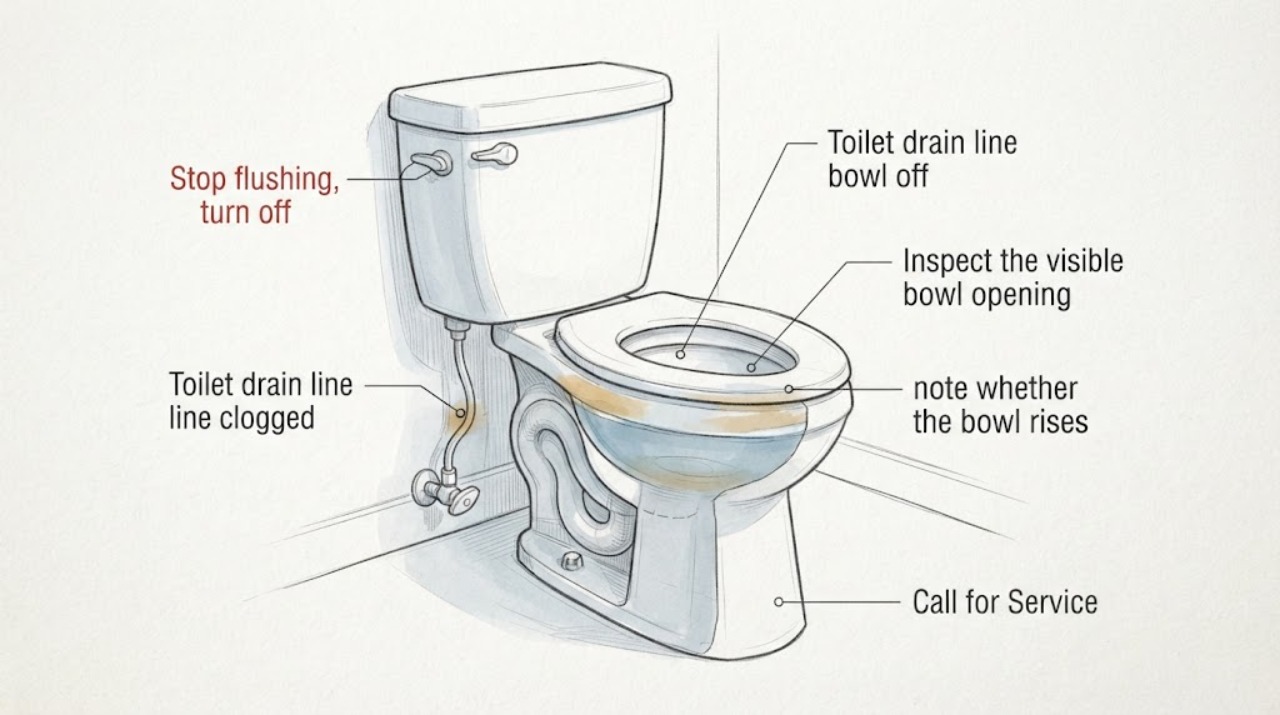
For a clogged American Standard toilet drain line, stop flushing first and turn off the toilet's water supply so the bowl cannot overflow. Cover the floor, use a toilet plunger whose cup seals over the trapway, and judge the result by whether the bowl level drops and a single retest restores a normal flush. A blockage limited to one toilet may be in the bowl trapway or nearby branch; a clog that remains after safe plunging, returns quickly, or coincides with gurgling or backup at other fixtures may be farther down the drain line. American Standard's WaterWarden overflow protection is available only on specific models, so do not assume every American Standard toilet has that feature. Stop for sewage, an overflowing bowl, a hard object, a damaged or rocking toilet, chemical residue, or a shared-line symptom, and arrange qualified plumbing service.
Before you begin
Safety first
- A qualified plumber should clear concealed or shared drain lines, inspect venting and damaged trapways, remove a toilet when necessary, handle chemical residue or sewage, and repair leaking or unstable closet connections.
Work through in order
Diagnostic checks
Use only checks that match the exact appliance or system and its official guide.
-
Check 1
Stop flushing, turn off the toilet water supply if the valve turns normally, place towels around the base, and keep the bowl level below the rim; do not touch sewage with bare hands or use a chemical product before mechanical work.
Expected result: The bowl is close to overflowing, water or sewage is on the floor, the valve will not close, or the water level is stable and contained.
Next step: For overflow, sewage, or a failed shutoff, stop adding water and arrange plumbing service; use the safest accessible upstream isolation only if it can be done without force. Otherwise continue with the trapway and pattern check.
Why this matters
Why: An active overflow or unreliable shutoff can cause contamination and property damage. A stable contained bowl allows a short, low-risk inspection.
-
Check 2
With the tank and bowl stable, note whether the bowl rises only during flushing, drains slowly on its own, or remains full; check one nearby toilet, tub, shower, and floor drain without adding water to the clogged toilet.
Expected result: Only the American Standard toilet is affected, the bowl level falls slowly, or multiple fixtures gurgle, drain slowly, or back up.
Next step: Use only the toilet-specific plunger check for an isolated, contained bowl. If several fixtures are affected or sewage is backing up, stop water use in the area and arrange plumbing service.
Why this matters
Why: An isolated symptom supports a bowl trapway or nearby branch obstruction. Multiple fixtures or lower-level backup make a shared drain-line or vent problem more likely.
-
Check 3
Inspect the visible bowl opening for a dropped object, excessive paper, or material at the trapway entrance; do not push an object farther in and do not assume the toilet has American Standard WaterWarden overflow protection unless the exact model documentation confirms it.
Expected result: Debris is visible at the opening, a hard object is suspected, the bowl opening is clear, or the toilet appears to have model-specific overflow holes.
Next step: Remove only loose, reachable material with gloves and stop for a hard or unreachable object. Treat model features as identification information, then continue with a proper toilet plunger if the bowl is stable and no chemicals are present.
Why this matters
Why: Visible material supports an obstruction near the bowl opening. A suspected hard object may resist plunging and become more tightly lodged. WaterWarden is a model-specific feature and does not identify or remove the clog.
-
Check 4
Place a toilet plunger so its cup completely covers the American Standard toilet's trapway opening, then make controlled pumping strokes while keeping the bowl from overflowing; stop if the seal cannot be made or the bowl rises dangerously.
Expected result: The water level drops, the blockage releases, the level moves but remains slow, or there is no movement despite a sound seal.
Next step: Allow the bowl to stabilize and use one controlled retest only after the water is safely restored. If there is no safe improvement, stop repeating force and arrange service or use a suitable auger only within the stated safety boundary.
Why this matters
Why: A release or clear improvement supports a movable obstruction in or near the trapway. Partial improvement suggests remaining material or a restriction beyond the bowl. No movement with a good seal makes a deeper, hard, or shared-line blockage more likely.
-
Check 5
If the bowl is stable, no drain chemical has been used, and the tool and access are familiar, use a toilet auger carefully through the trapway; do not force it, remove the toilet, open a concealed cleanout, or work around a suspected hard object.
Expected result: The auger meets a soft obstruction and flow improves, it meets a hard stop, it cannot pass safely, or the bowl and line remain blocked.
Next step: Stop at a hard stop or failed attempt and arrange a plumber. Do not remove the toilet or cut into the drain line to continue diagnosis without the appropriate repair capability.
Why this matters
Why: A soft obstruction that releases supports a local trapway blockage. A hard stop or unsuccessful pass can indicate an object, damaged trapway, deeper branch obstruction, or a tool-access problem; force can damage ceramic or piping.
-
Check 6
After a safe clearing, restore water and perform one controlled flush while watching the bowl, base, closet connection, and nearby fixtures; do not hold the handle down or keep flushing if the bowl rises.
Expected result: The flush clears normally with no seepage, the bowl rises again, the clog returns soon, the base leaks, or another fixture gurgles or backs up.
Next step: Stop using the toilet and arrange plumbing service for recurrence, a base leak, or any shared-line sign. Record what was tried and whether a hard object or chemical product was involved.
Why this matters
Why: Normal clearance and a dry base support a successful local clearing. Recurrence, base leakage, or shared-fixture symptoms indicate remaining material, a drain-line/vent issue, or a separate installation leak.
Use your observations
Decision map
Find the observation that best matches what you see, then follow the next safe action.
-
PATH 01Next step
What you see
Only the American Standard toilet is affected, the bowl is contained, and the water level improves with a correctly sealed toilet plunger.
Do this next
Allow the bowl to stabilize, perform one controlled retest, and stop if the clog returns or the base begins to leak.
Why this path and its safety boundary
Why it matters: A movable obstruction in the toilet trapway or nearby branch is more likely than a shared main-line problem.
-
PATH 02Next step
What you see
The bowl remains blocked after a sound plunger seal, or the plunger produces only brief improvement before the toilet slows again.
Do this next
Stop repeating force and arrange plumbing service; provide the plumber with the plunger result and any suspected object or recurrence pattern.
Why this path and its safety boundary
Why it matters: A hard object, deeper branch obstruction, damaged trapway, or vent-related problem is more likely than a simple paper blockage.
-
PATH 03Next step
What you see
A nearby toilet, tub, shower, or floor drain also gurgles, drains slowly, shows sewer odor, or backs up.
Do this next
Stop using water in the affected area and arrange plumbing service. Do not keep flushing, open a concealed cleanout, or use chemical products to force flow.
Why this path and its safety boundary
Why it matters: A shared waste line, vent, or main drainage obstruction is more likely than a single American Standard bowl clog.
-
PATH 04Next step
What you see
The bowl is overflowing, sewage is on the floor, chemical cleaner was used, a hard object is lodged, or the water shutoff will not stop flow.
Do this next
Keep people and pets away, stop adding water, follow the product label's exposure guidance if chemicals are present, and arrange qualified plumbing service. Disclose the product or object before work begins.
Why this path and its safety boundary
Why it matters: Contamination, chemical exposure, ceramic damage, or uncontrolled water makes further DIY clearing unsafe.
-
PATH 05Next step
What you see
The toilet clears but leaks at its base, rocks, or causes water to appear around the closet connection during the retest.
Do this next
Stop using the toilet and arrange plumbing service to inspect the base and closet connection; do not caulk over an active leak or keep flushing to verify it.
Why this path and its safety boundary
Why it matters: The drain blockage may be gone, but a separate seal, mounting, or floor-connection problem can allow wastewater or supply water to damage the subfloor.
Helpful context
Understand the symptom
Stop the next flush before tracing the blockage
A toilet bowl that is already high can overflow with one more flush. American Standard's unclogging guide starts by turning off the water and specifically warns against continuous flushing. Close the toilet's supply valve gently if it operates normally, keep towels around the base, and do not assume an overflow-protection feature is present just because the toilet is an American Standard model.
Separate a bowl trapway clog from a drain-line clog
A single toilet that fills and drains slowly often has an obstruction in its trapway or the nearby branch. If a nearby toilet, tub, or floor drain also gurgles, drains slowly, or backs up, the restriction may be farther down a shared waste line or related to venting. The fill valve and tank can affect flush strength, but they do not by themselves clear a physical blockage in the drain line.
Use the correct plunger and read the result
American Standard specifies a toilet plunger with its rubber cup covering the trapway opening completely. A good seal and controlled pumping are a useful first mechanical test. A falling bowl level or restored flush supports a movable obstruction; little or no movement after a sound seal makes a deeper or harder blockage more likely. Do not keep forcing the bowl if it is close to overflow or if an object may be lodged.
Escalate carefully beyond the bowl
HUD describes a toilet auger as a tool that can be worked past the trap and down the pipe, but the bowl and drain can be damaged by force or a trapped object. Use an auger only when the bowl is stable, no chemical product has been used, the tool and access are familiar, and the attempt can stop without force. Toilet removal, concealed branch clearing, vent work, and sewer backup are professional boundaries.
A normal flush is not the only retest
After a safe clearing, run one controlled flush while watching the bowl, base, closet connection, and nearby fixtures. The bowl should clear without rising, and there should be no seepage at the base. A toilet that clears briefly and blocks again, leaks at the base, or causes another fixture to gurgle needs the drain path and installation checked rather than repeated plunging.
Safety boundary
Stop conditions
- Stop flushing and arrange plumbing service for an overflowing bowl, sewage on the floor, an uncontrollable water supply, or backup at another fixture.
- Do not plunge, auger, remove the toilet, or open a drain connection if chemical cleaner may be present. Disclose the product and timing to the professional.
- Do not force a hard object, a stuck auger, the toilet trapway, a closet connection, or a concealed cleanout; ceramic and drain piping can be damaged.
- Arrange service when the bowl stays blocked after a properly sealed plunger, the clog returns quickly, or the obstruction appears farther down the drain line or in a shared branch.
- Stop using the toilet for a base leak, rocking bowl, damaged floor, sewer odor, or water reaching electrical equipment, and arrange qualified plumbing service.
When checks do not resolve it
Need a professional?
Use a plumber for a persistent or recurring blockage, hard object, shared-line or vent symptom, sewage backup, chemical residue, concealed drain work, or a leaking or rocking toilet.
Safety scope: A qualified plumber should clear concealed or shared drain lines, inspect venting and damaged trapways, remove a toilet when necessary, handle chemical residue or sewage, and repair leaking or unstable closet connections.
Common questions
FAQ
What should I do first when an American Standard toilet is clogged?
Stop flushing, turn off the toilet water supply if the valve operates normally, and keep the bowl below the rim. Then use a toilet plunger with its cup sealed over the trapway opening.
Does every American Standard toilet have WaterWarden overflow protection?
No. American Standard describes WaterWarden on particular models, including a model-specific passage through overflow holes connected to the drain line. Confirm the exact model before relying on that feature, and still stop flushing when the bowl rises.
Why does plunging help briefly but the toilet clogs again?
Brief improvement can mean material remains in the trapway or the restriction is farther down the branch drain. Stop repeating force and arrange service if the clog returns, especially when another fixture gurgles or backs up.
Can I use an auger on an American Standard toilet drain line?
A toilet auger can be appropriate for a stable bowl when no chemical product is present and the tool is familiar, but stop at a hard obstruction or failed pass. Do not force the tool, remove the toilet, or open a concealed line without the needed repair capability.
When is a clogged toilet a drain-line emergency?
Treat it as urgent when the bowl overflows, sewage reaches the floor, several fixtures gurgle or back up, the shutoff will not stop flow, a hard object is lodged, or the toilet leaks or rocks at its base. Stop water use and arrange qualified plumbing service.
Read the exact guide
Official sources
- Waste and vent pipe installationKing County, Washington · Washington plumbing installation guidance; existing residential configurations and access vary
- Safety and maintenance tipsCity of Minneapolis · Municipal sewer and drain safety guidance; local layouts and responsibilities vary
- Renaissance WaterWarden Right Height Round Front Complete ToiletAmerican Standard · Renaissance WaterWarden toilet model only; do not generalize the feature to every American Standard toilet
- How To Unclog A ToiletAmerican Standard · American Standard's general toilet-unclogging guidance; exact toilet geometry and model features vary
- THIS WAY TO A BETTER HOMEU.S. Department of Housing and Urban Development · General residential maintenance guidance; exact toilet trapways and access vary
Community feedback
Share a repair observation
Share a plain-text repair observation. Accepted observations are published automatically; this page may take a moment to update.