
On this page
Start here
Quick answer
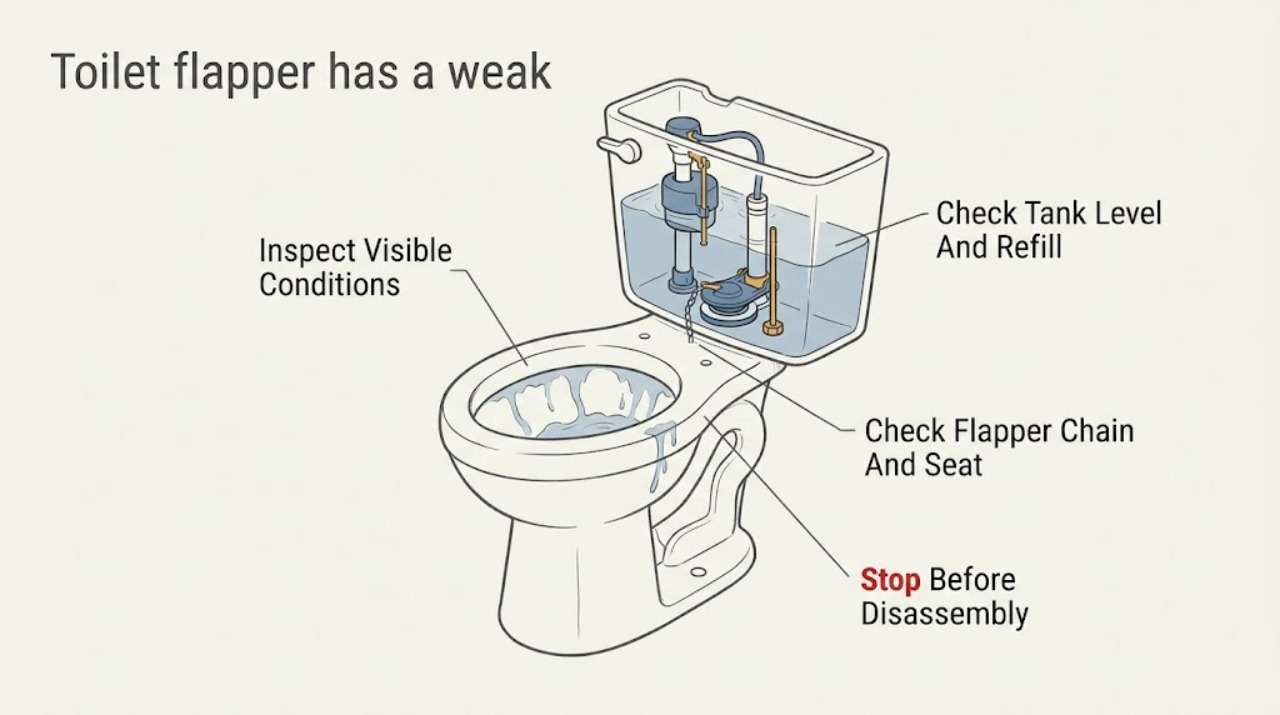
A flapper can cause a weak flush when its chain does not lift it fully, it closes too soon, or the seal is dirty, worn, or misaligned. But weak flushing also comes from a low tank water level, a partly closed supply stop, blocked rim or jet passages, or a partial trapway or vent problem. With the tank lid removed, observe one flush and compare the water level and flapper movement; do not hold the handle down repeatedly or reach into a tank with an unknown cleaner. If the bowl rises, drains slowly, bubbles, or threatens to overflow, stop flushing and treat it as a drain restriction rather than a flapper-only problem.
Work through in order
Diagnostic checks
Use only checks that match the exact appliance or system and its official guide.
-
Check 1
Remove the tank lid, keep fingers and clothing clear of the mechanism, and observe one flush from the side; note whether the flapper rises, stays open through the surge, closes early, or barely moves.
Expected result: The flapper opens fully, opens only partway, drops immediately, remains tilted or dirty on its seat, or the chain is detached or tangled.
Next step: If the chain is detached or visibly tangled, follow the exact toilet instructions to restore its normal routing. If the flapper or seat looks damaged, plan a model-matched replacement or service; do not hold the handle down as a workaround.
Stop if: Stop if the bowl rises toward the rim, the tank water is not clean, the mechanism is brittle, or a cleaner has been added to the tank.
Why this matters
Why: A short or incomplete flapper opening limits how much tank water reaches the bowl and makes the flapper/chain assembly a plausible cause. A full opening shifts attention toward tank level, rim/jet passages, trapway, or venting.
-
Check 2
After the flush finishes filling, compare the tank water with the manufacturer's marked waterline or the exact model instructions, and watch whether the fill valve shuts off normally without water spilling into the overflow tube.
Expected result: The level is below the marked line, the tank fills slowly, the supply stop is not fully open, the level enters the overflow, or the fill valve keeps running.
Next step: If the supply stop turns freely, return it to its normal fully open position and retest once. Adjust only the model-approved fill setting; if the valve is seized, leaks, will not shut off, or the tank cannot reach its line, call a plumber.
Stop if: Do not force the supply stop, bend parts blindly, or leave a toilet running into an overflow or onto the floor.
Why this matters
Why: A low tank level reduces the water available for the flush. Slow refill or an incomplete supply path can leave the tank underfilled, while overfill or continuous running can indicate a fill-valve or flapper seal problem rather than weak bowl hydraulics.
-
Check 3
With the tank water clean and the toilet not flushing, look at the flapper chain, trip lever, hinge ears, and sealing seat; confirm the chain is not pulling the flapper off-center or leaving it unable to lift, and do not scrape the seat.
Expected result: The chain has excessive slack or no slack, catches on the lever, the flapper is warped or discolored, or the seal does not sit evenly over the flush opening.
Next step: Use the exact model instructions to make one small chain adjustment or clean the accessible seal only if permitted. If the rubber is deteriorated or the seat is damaged, use a model-matched part or professional service instead of forcing it.
Stop if: Do not pull hard on the flapper, pry the flush valve, remove the tank, or use chlorine tablets or harsh chemicals to clean it.
Why this matters
Why: Chain geometry changes how long and how far the flapper opens; a dirty, worn, or misaligned seal can leak tank water and reduce the starting level for the next flush. A sound chain and even seal make a different cause more likely.
-
Check 4
Observe the bowl during and after one flush without adding a chemical drain opener; note whether water rises quickly, falls slowly, leaves solids behind, bubbles in the trapway, or makes nearby drains gurgle.
Expected result: The bowl drains normally but the surge is weak, or the bowl rises and drains slowly, bubbles, clogs repeatedly, or affects other drains.
Next step: If the bowl is rising or slow, stop flushing and use only a correctly sized plunger if the fixture is stable and the blockage is minor; call a plumber if it does not clear promptly, recurs, or affects other fixtures. Otherwise continue with rim/jet and tank-side checks.
Stop if: Stop before another flush if the bowl may overflow, sewage is present, or plunging would spread contaminated water.
Why this matters
Why: Normal bowl drainage keeps tank-side causes in play. Slow drainage, bubbling, repeated clogs, or nearby drain sounds point toward a trapway, waste-line, or vent restriction that a flapper replacement will not solve.
-
Check 5
With the tank at its marked level and the flapper visibly opening normally, inspect the bowl rim holes and siphon-jet entrance for visible mineral or debris buildup; clean only with a toilet-safe method from the exact manufacturer guidance, then make one controlled retest.
Expected result: The rim or jet openings are visibly restricted, the flush improves after permitted cleaning, or the flush remains weak despite normal tank level and flapper movement.
Next step: If the weak flush persists, stop replacing flappers by guesswork and give a plumber the model, tank-level observation, flapper movement, bowl behavior, and any recent cleaner or plumbing work.
Stop if: Do not use abrasive tools, incompatible chemicals, or repeated test flushes when the bowl level is abnormal.
Why this matters
Why: Blocked rim or jet passages can reduce the directed water flow that starts the siphon. If those passages are clear and the bowl path drains normally, a hidden trapway/vent issue, flush-valve design issue, or supply problem remains possible.
Use your observations
Decision map
Find the observation that best matches what you see, then follow the next safe action.
-
PATH 01Next step
What you see
The flapper barely lifts, closes immediately, is tilted or worn, or the chain is detached, tangled, or incorrectly tensioned, while the tank level is normal.
Do this next
Follow the exact model procedure for one safe chain correction or a model-matched seal/flapper replacement; call a plumber if the seat, hinge, or valve body is damaged.
Why this path and its safety boundary
Why it matters: The flush valve is not releasing the intended tank surge, so a flapper/chain or trip-lever issue is more likely than a drain clog.
-
PATH 02Next step
What you see
The flapper opens normally but the tank stops below its marked line, fills slowly, or the supply stop is not fully open.
Do this next
Use the exact fill-valve instructions or restore a freely moving supply stop to its normal position, then retest once. Escalate for a seized valve, leak, or persistent low level.
Why this path and its safety boundary
Why it matters: The flush has insufficient stored water or refill capacity; the flapper may be blamed only because it is the visible moving part.
-
PATH 03Next step
What you see
The tank level and flapper movement are normal, but the bowl rises, drains slowly, bubbles, clogs repeatedly, or affects nearby drains.
Do this next
Stop flushing, use only an appropriate plunger if safe, and call a plumber for a persistent, recurring, or multi-fixture restriction.
Why this path and its safety boundary
Why it matters: A trapway, waste-line, or vent restriction is more likely than a flapper fault, and further flushing can overflow the bowl.
-
PATH 04Next step
What you see
The bowl drains normally, but rim or jet openings are visibly restricted and the surge improves after a manufacturer-approved cleaning.
Do this next
Keep the passages clean using the exact toilet guidance and stop if cleaning does not improve the flush or damages the finish.
Why this path and its safety boundary
Why it matters: Mineral or debris buildup was reducing the directed bowl flow; replacing the flapper would not address that restriction.
-
PATH 05Next step
What you see
Tank level, flapper opening, supply, and visible bowl passages are normal, but the flush remains weak or the problem returns.
Do this next
Arrange qualified plumbing diagnosis with the model information and observations; do not keep swapping generic flappers or altering the waterline outside the manual.
Why this path and its safety boundary
Why it matters: A concealed trapway/vent issue, internal valve problem, incorrect component fit, or model-specific performance condition remains possible.
Helpful context
Understand the symptom
What a flapper can—and cannot—explain
The flapper is the tank's flush valve seal. It must open enough to release the available tank water, then close to allow refilling. A chain that is too loose, too tight, tangled, or detached can shorten or interrupt that opening. A worn or dirty seal more often causes running, but it can also leave the tank below its intended level for the next flush.
Separate tank-side weakness from a bowl-side blockage
If the bowl rises and falls slowly, bubbles, clogs repeatedly, or makes nearby drains gurgle, the trapway, waste line, or vent is more suspicious than the flapper. If the flush is a short, weak surge while the bowl drains normally, start with tank level, supply, flapper lift, and rim or jet passages.
Safe boundary
Use only clean water in the tank and keep the floor dry. Do not mix drain chemicals, use in-tank chlorine cleaners, remove a tank, or force a brittle plastic nut. Close the toilet's supply stop only if it turns freely and you know it controls this toilet; otherwise stop and call a plumber.
Safety boundary
Stop conditions
- Stop flushing if the bowl rises, drains slowly, bubbles, or may overflow; do not add chemical drain opener to the toilet.
- Do not use chlorine tablets or harsh in-tank cleaners, remove the tank, pry the flush valve, or force a brittle supply stop or plastic fitting.
- Stop for sewage, a cracked tank or bowl, uncontrolled water, a leak that cannot be isolated, or any work outside the exact model instructions.
Only after diagnosis
Potential parts
- Match the exact flush-valve style and toilet model; a generic visual match may change flush timing or sealing.
- Match the tank, refill-tube, overflow, and supply configuration; isolate water completely before any replacement.
- Tank-to-bowl hardware and valve geometry are model-specific; tank removal and gasket work may need a plumber.
When checks do not resolve it
Need a professional?
Call when the symptom persists, returns after a permitted correction, involves slow drainage or other fixtures, or requires tank removal, drain-line work, or uncertain internal access.
Have this ready
- Toilet brand/model and flapper or canister style
- Tank waterline and whether the flapper opens fully
- Bowl rise, drain speed, bubbling, gurgling, or repeat-clog pattern
- Photos of the tank mechanism, waterline, bowl, and any leaks
- Recent cleaner use, plumbing work, or replacement parts
Common questions
FAQ
Can a bad flapper make a toilet flush weak?
Yes, if it does not lift fully, closes too soon, or leaves the tank leaking below its normal waterline. But a low tank level, blocked rim or jet passages, or a trapway or vent restriction can produce the same complaint.
Why is the flush weak even though the flapper opens?
Check the tank waterline and refill, then observe whether the bowl drains normally. Normal tank-side behavior with slow drainage, bubbling, repeated clogs, or nearby gurgling points away from the flapper and toward the bowl path, waste line, or vent.
Should I hold the handle down longer?
Do not use repeated or prolonged handle-holding as a fix. It can mask a chain or flapper problem and can worsen an already slow or rising bowl. Observe one flush and correct only what the exact toilet instructions support.
Are in-tank cleaning tablets safe for the flapper?
Some manufacturer guidance warns that chlorine-containing in-tank cleaners can damage tank fittings and cause leaks. Avoid them unless the exact toilet maker explicitly approves the product.
Read the exact guide
Official sources
- Toilet Occasionally Leaking or RunningKohler Assist · Kohler one- and two-piece toilet guidance; use the installed model manual for exact adjustments.
- Poor FlushKohler Assist · General Kohler troubleshooting; exact toilet and building drainage configuration governs.
- How a Toilet FlushesKohler Assist · General gravity toilet explanation; designs vary, so the installed model manual governs.
- Kohler Toilet Installation Instructions and Troubleshooting GuideKohler · Kohler toilet installation guide; exact model instructions govern.
- Quick Tips to Fix That Running ToiletDelta Faucet · General Delta consumer guidance; follow the installed toilet's exact parts and instructions.
- Poor Toilet Rim WashKohler Assist · Kohler toilet rim-wash guidance; use only cleaners and methods approved for the installed model.
Community feedback
Share a repair observation
Share a plain-text repair observation. Accepted observations are published automatically; this page may take a moment to update.