
Repair problem
Has A Weak Flush Troubleshooting Guides
Published FixGraph guidance for diagnosing and responding to has a weak flush.
Matching published guides
Choose a guide that matches the service, equipment, and conditions you are seeing.
-
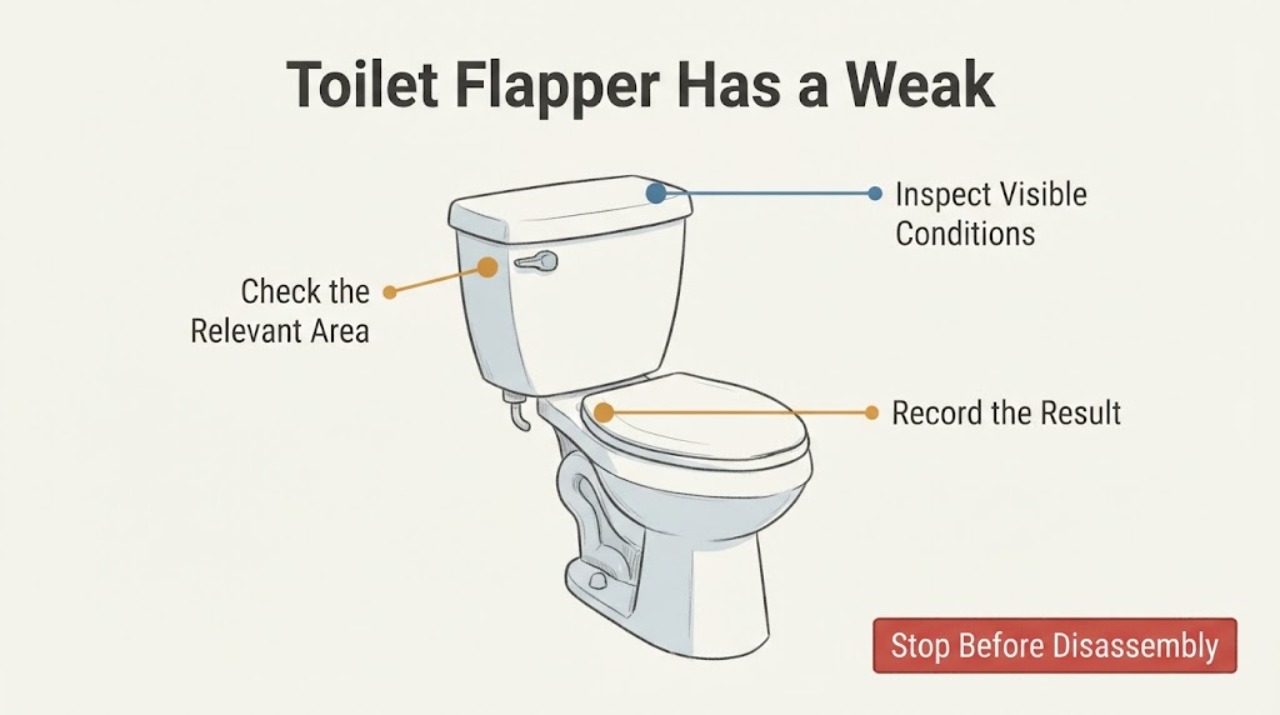
American Standard Toilet Flapper Has a Weak Flush: What to Check and What to Do Next
If an American Standard toilet has a weak flush and uses a flapper, first check that the tank refills to the model's marked level, the trip lever lifts the flapper fully, and the chain is not too loose or caught. Inspect the flapper for a warped seal or water leaking into the bowl, then rule out a partial bowl or trapway clog with a safe, single plunger test.
-
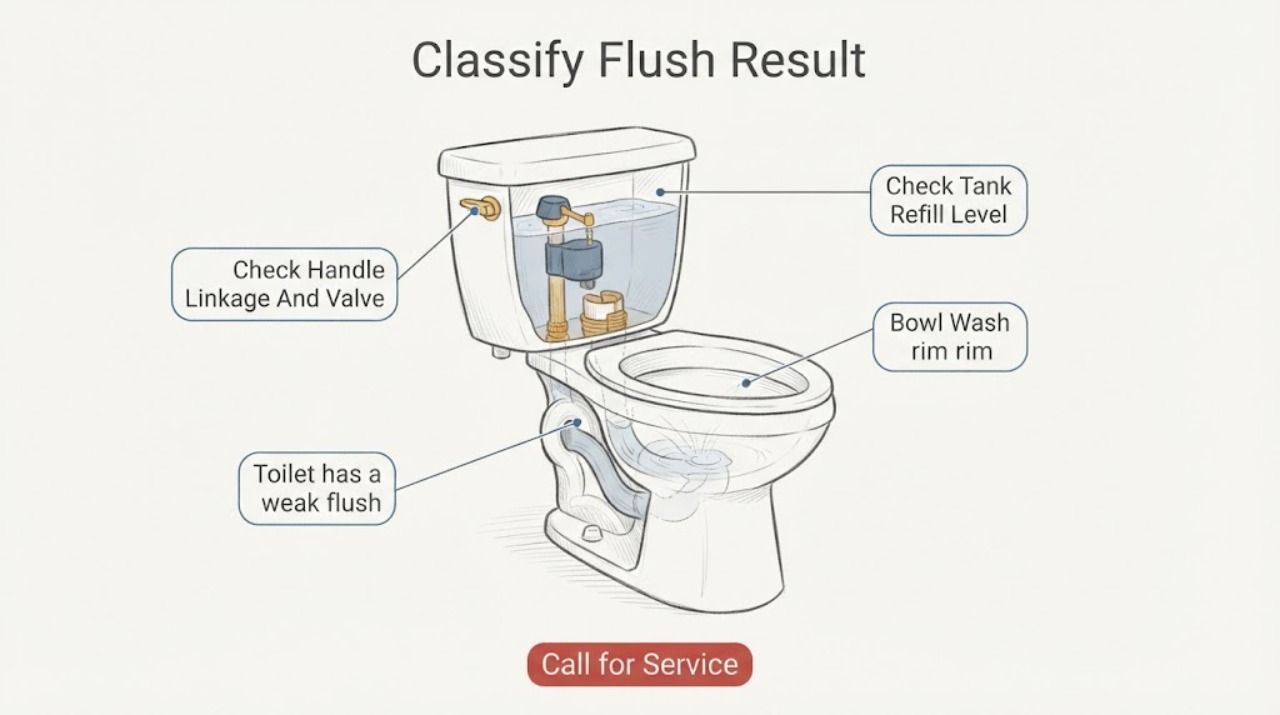
American Standard toilet has a weak flush: What to Check and What to Do Next
A weak flush on an American Standard toilet can mean the tank is not refilling to the model's marked level, the handle or flush valve is not opening fully, the bowl's rim or siphon-jet passages have mineral or debris buildup, or the trapway or drain line is partly blocked. First observe whether the bowl water rises, swirls without siphoning, drains slowly, or simply receives too little water.
-
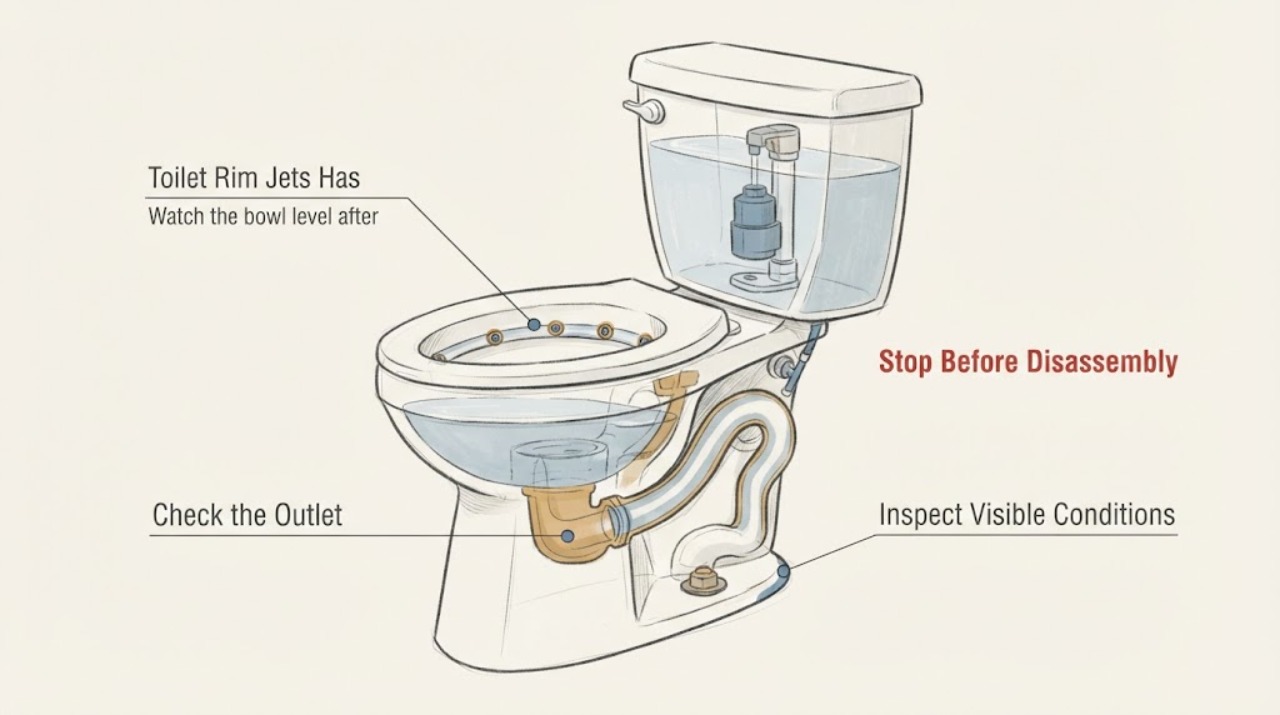
American Standard Toilet Rim Jets Has a Weak Flush: What to Check and What to Do Next
A weak flush that has little swirl or little water from the bowl rim can come from blocked conventional rim holes, but first identify whether this American Standard toilet actually uses conventional holes or a VorMax jetted design. Stop flushing if the bowl rises.
-
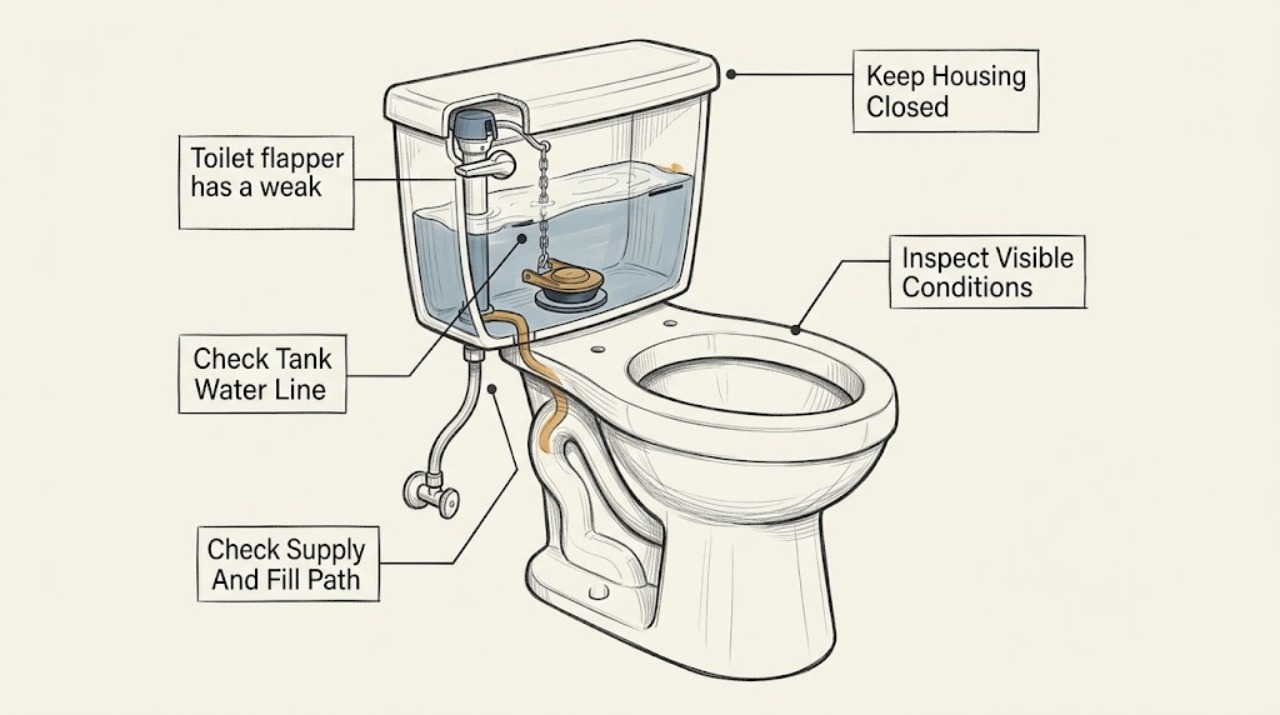
Glacier Bay toilet flapper has a weak flush: What to check and what to do next
A Glacier Bay toilet that flushes weakly can have a low tank level, a flapper that does not lift fully, a chain that is too long or tangled, a worn flapper seal, or a bowl or drain restriction. Start by checking the tank water against its marked level and observing one flush with the lid off.
-
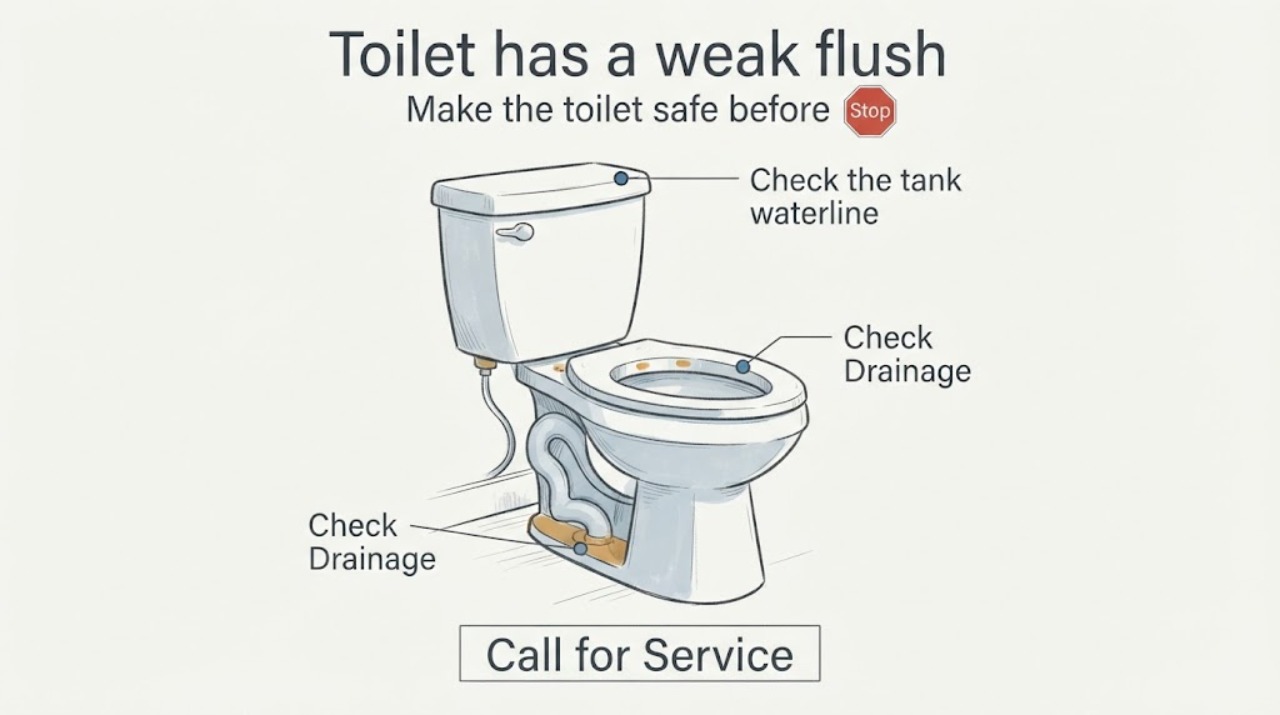
Glacier Bay toilet has a weak flush: What to Check and What to Do Next
A weak-flushing Glacier Bay toilet can be caused by a tank water level below the marked line, a flush button, handle, or chain that does not open the flush valve fully, restricted rim holes, a leaking or obstructed seal, or a trapway, drain, or vent problem.
-
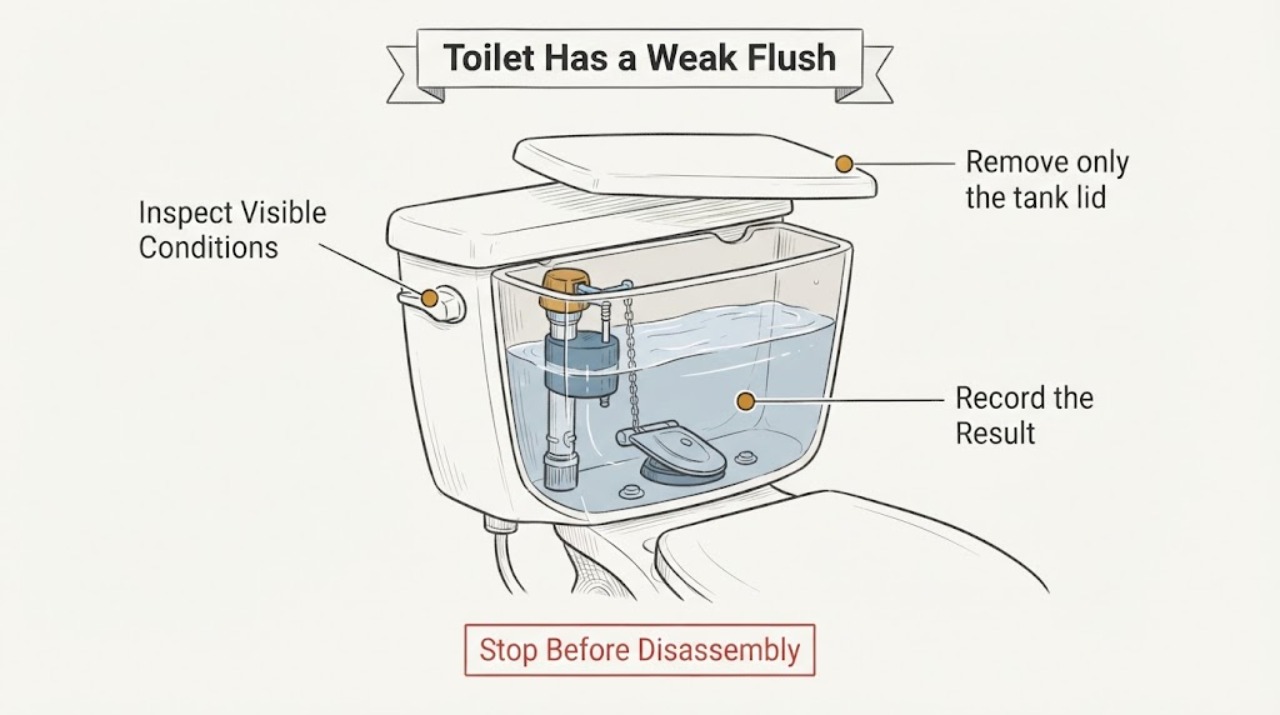
Kohler Toilet Has a Weak Flush: What to Check and What to Do Next
A weak Kohler toilet flush usually comes from one of four different conditions: the tank is not reaching its marked waterline, the supply valve or handle mechanism is limiting the flush, the rim holes or jet are restricted, or the bowl trapway, waste line, or vent is restricting flow. First note whether the bowl rises and drains slowly or whether it simply lacks a strong swirl.
-
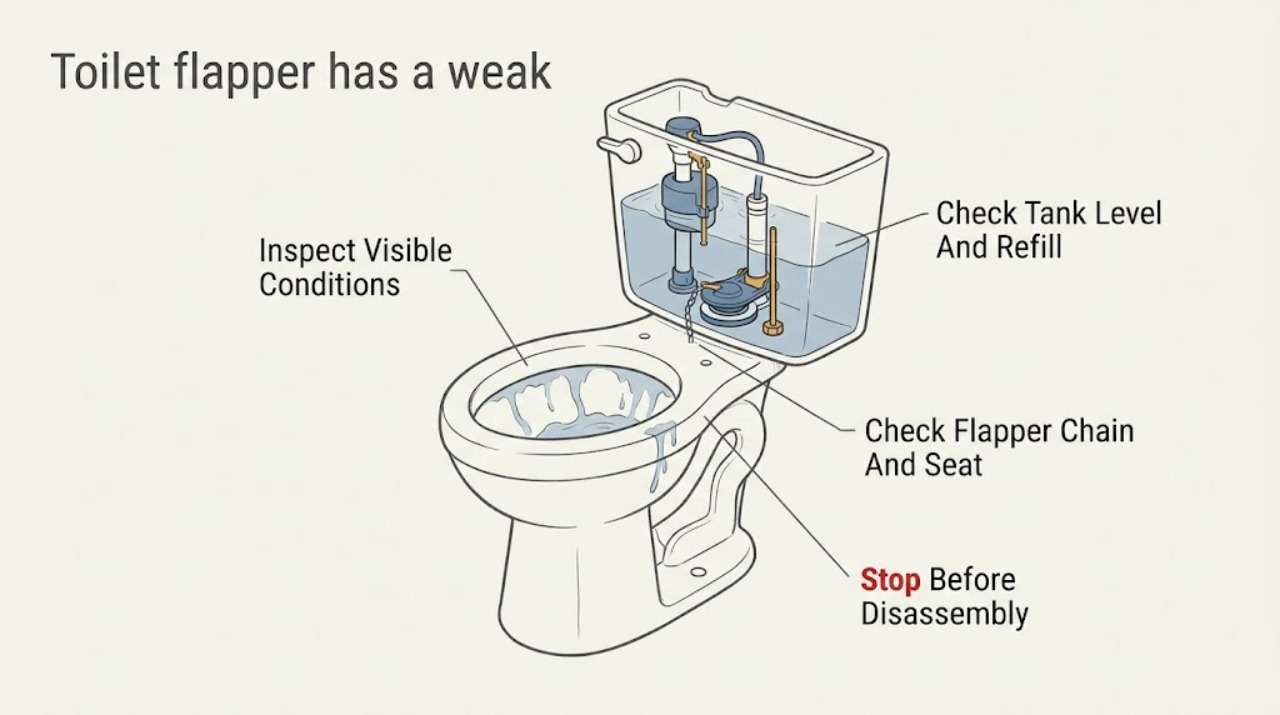
Toilet flapper has a weak flush: What to check and what to do next
A flapper can cause a weak flush when its chain does not lift it fully, it closes too soon, or the seal is dirty, worn, or misaligned. But weak flushing also comes from a low tank water level, a partly closed supply stop, blocked rim or jet passages, or a partial trapway or vent problem.
-
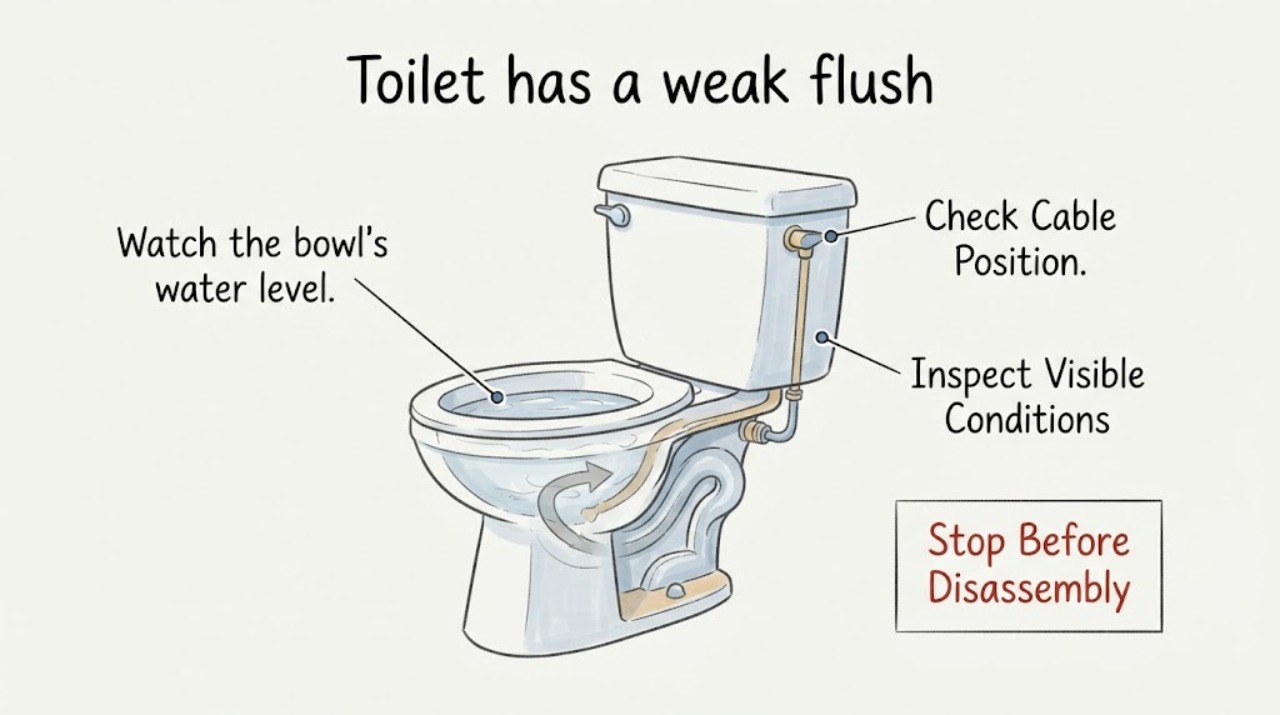
Toilet has a weak flush bowl clears partially: What to Check and What to Do Next
A toilet that only partly clears the bowl usually has insufficient tank water or an incomplete valve release, restricted rim holes or jet, or a partial obstruction in the trapway or waste line. Check the tank water against its marked waterline, confirm the supply shut-off is open, and inspect accessible openings.
-
Toilet has a weak flush when water level is correct: What to Check and What to Do Next
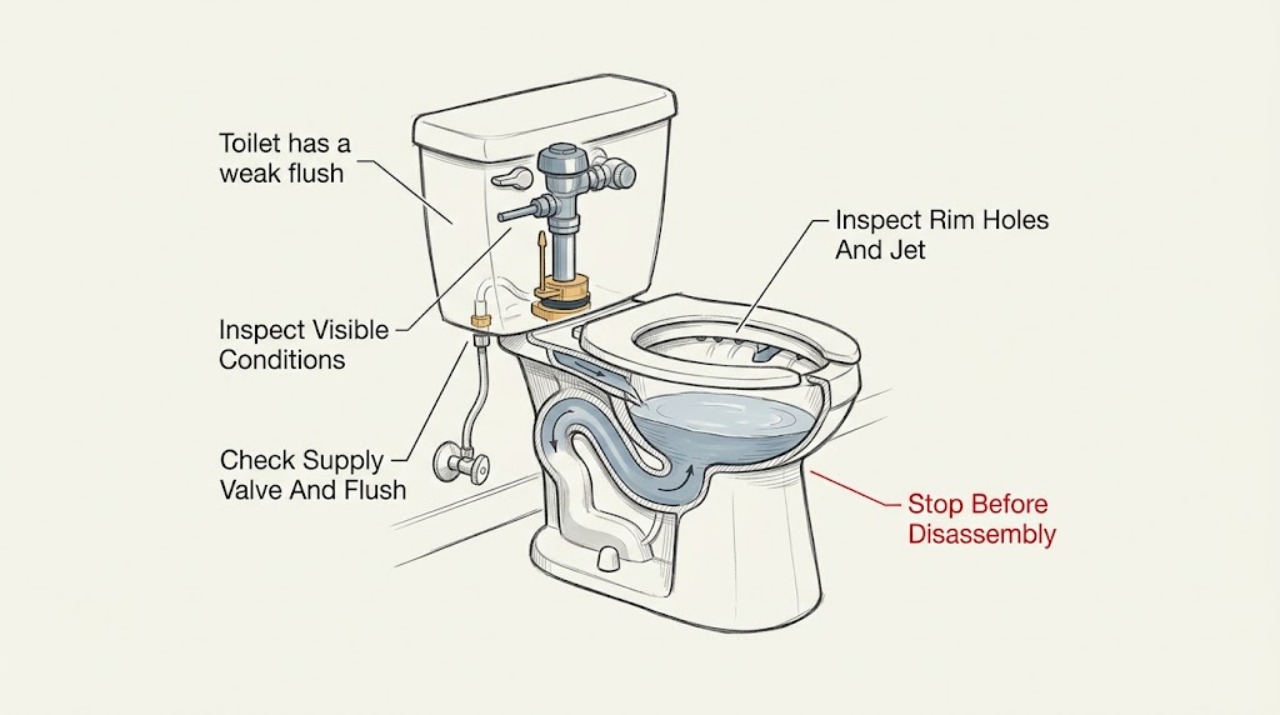
When the tank and bowl water levels are already correct, a weak toilet flush is more likely to come from incomplete flush-valve opening, a partially closed supply valve, mineral buildup in the rim or jet passages, an obstruction in the trapway, or a restricted waste vent than from the water level itself. First note whether the bowl rises and drains slowly, bubbles, needs the handle held down, or has weak rim flow.
-
Toilet has a weak flush, but the tank fills normally: What to Check and What to Do Next
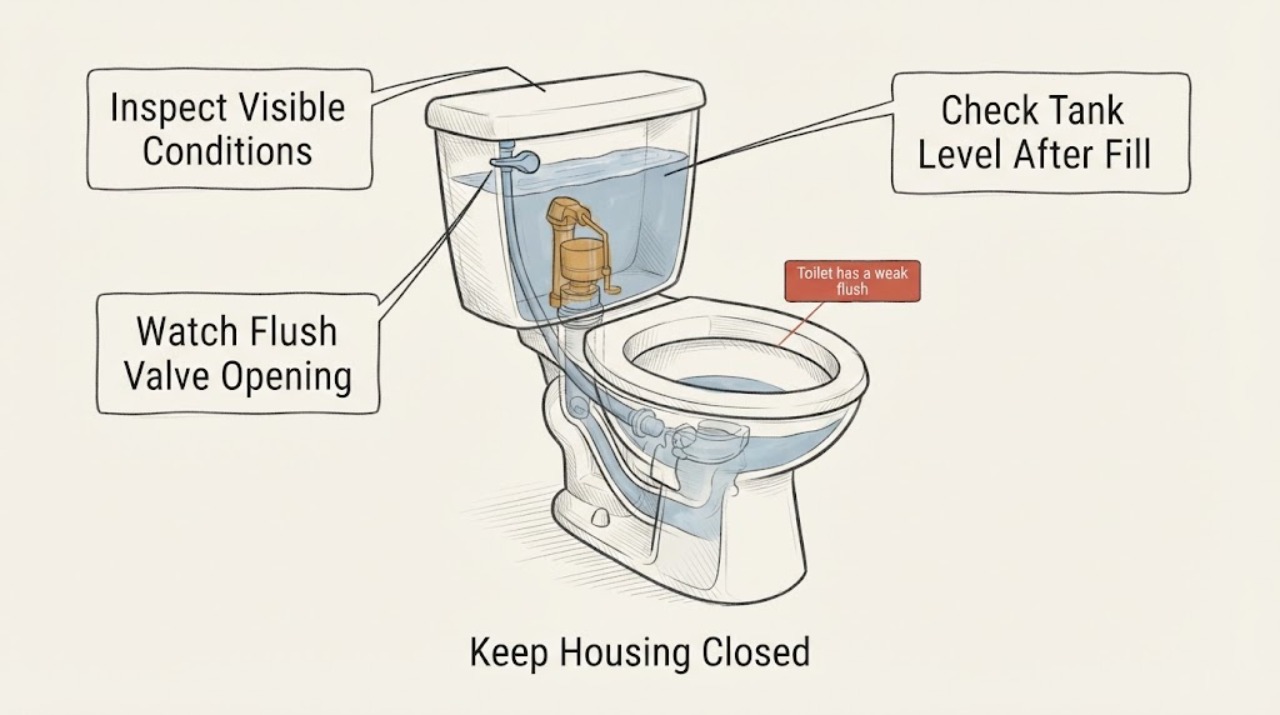
A toilet can fill to its normal level and still flush weakly when the flush valve or flapper does not stay open long enough, the refill tube is not restoring the bowl, the rim or siphon jets are restricted, or the bowl trapway has a partial obstruction. Watch one flush from a safe position: compare the tank water line with the marked line or overflow tube, note whether the valve opens fully and the bowl swirls, and observe whether the bowl rises, gurgles, or drains slowly.
-
Toilet has a weak flush: What to Check and What to Do Next
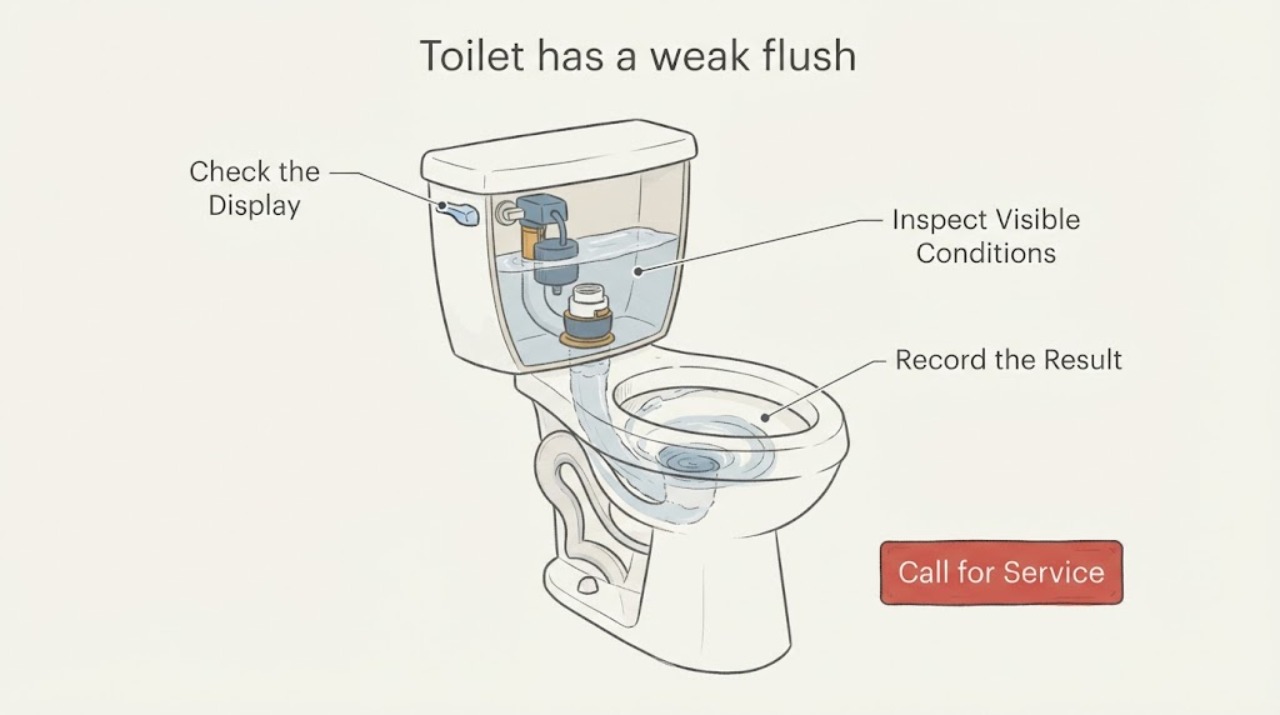
A weak toilet flush can come from a low or interrupted tank fill, a handle or flush mechanism that does not open fully, mineral buildup visible at the rim, a partial drain restriction, or a problem shared by other fixtures. Make one normal flush while watching the bowl and listening for the refill, then inspect only visible indicators: the bowl's water movement, any visible tank water line or warning, the rim holes, supply-valve position, and nearby drain behavior.
-
TOTO toilet has a weak flush: What to Check and What to Do Next
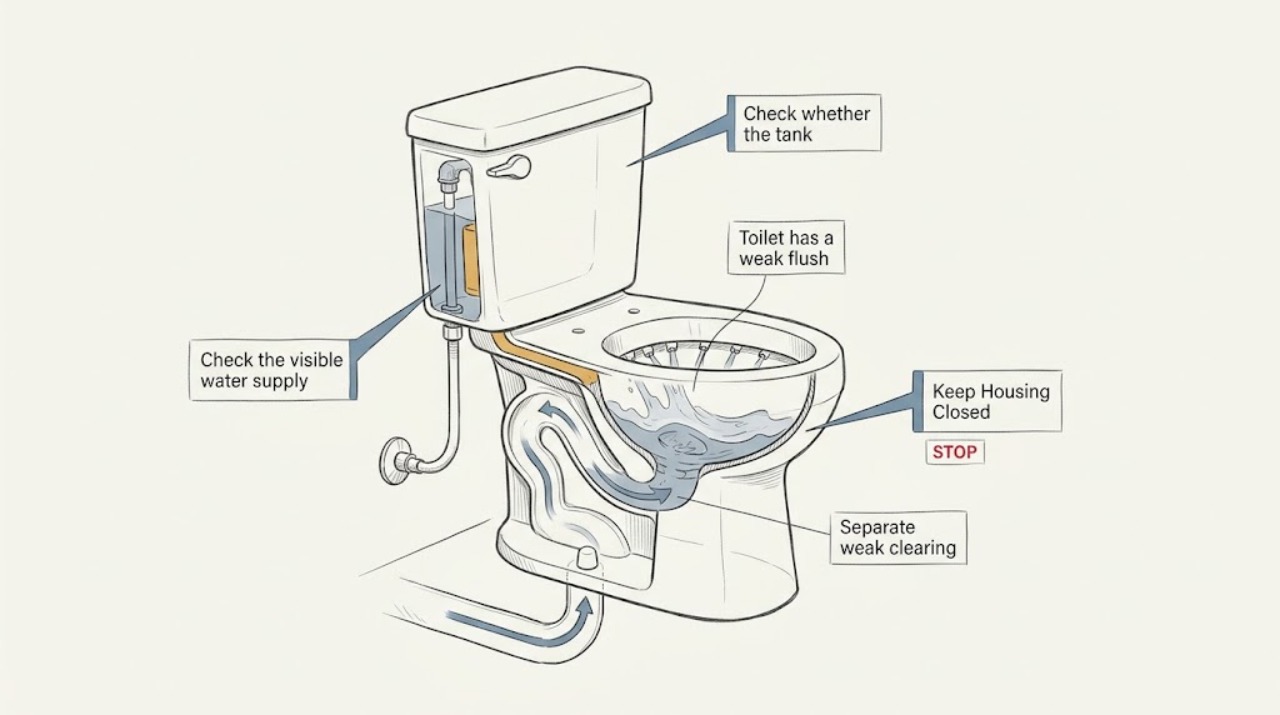
A TOTO toilet with a weak flush usually has one of four patterns: the bowl receives too little water, the water path or bowl openings are restricted, the trapway or drain is partly blocked, or the fixture is being used while its tank or supply is still recovering. Start by checking the visible shutoff valve, tank or control status, bowl water behavior, and any accessible filter or supply condition exactly as the model manual allows.