
On this page
Start here
Quick answer
If an American Standard toilet appears to leak around the closet bolts or base, first determine whether water is coming from the supply or tank, from the bowl-to-floor seal, or from a spill. Closet bolts hold the bowl in position; tightening them is not a substitute for a failed wax ring, damaged flange, or cracked porcelain. American Standard's installation guidance turns off the water, seats a wax ring, gently sets the bowl over the T-bolts, and hand-tightens the nuts. Dry the area, avoid flushing when wastewater may be escaping, and stop using the toilet if the floor or waste connection is wet until a qualified plumber identifies the seal, bolts, flange, or bowl damage.
Before you begin
Safety first
- Keep the toilet out of service and the water-supply stop closed for an active or suspected waste leak. Do not over-tighten closet bolts, open the waste connection without containment, touch contaminated water without appropriate protection, or continue flushing to test the repair.
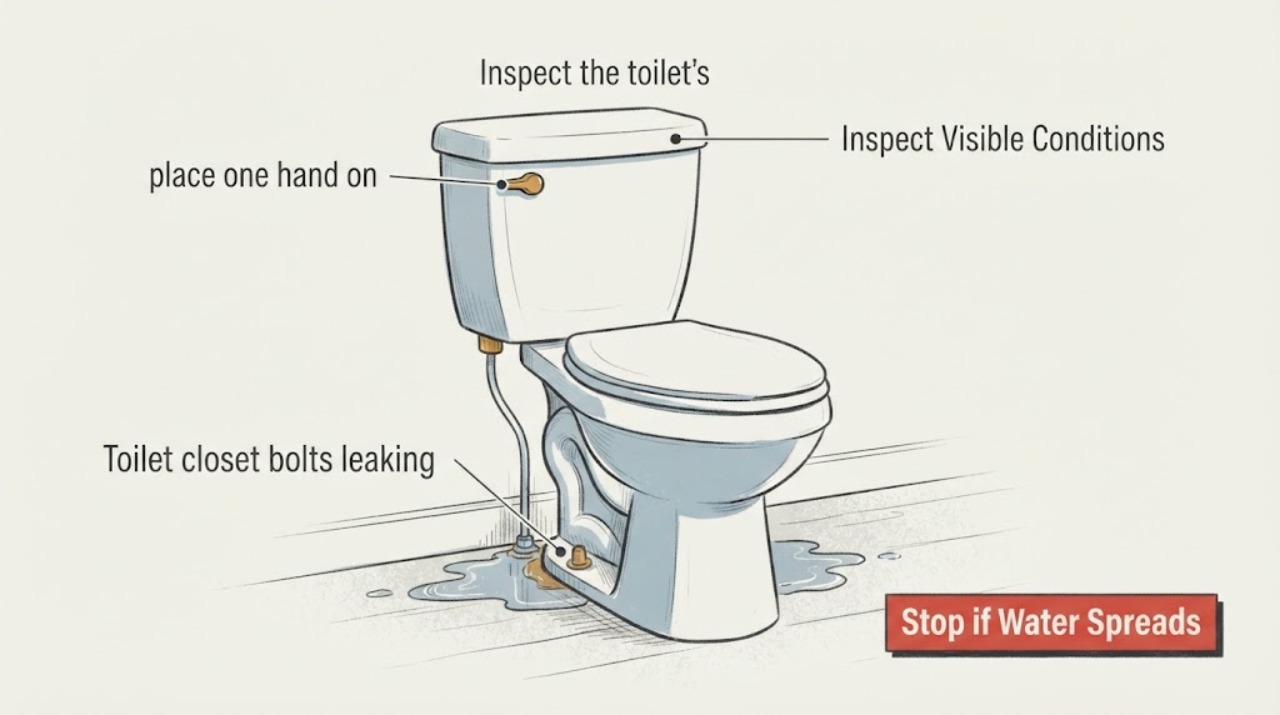
Work through in order
Diagnostic checks
Use only checks that match the exact appliance or system and its official guide.
-
Check 1
If there is no active sewage or electrical hazard, dry the visible base and closet-bolt area, place a clean towel around the perimeter, and observe where moisture first returns after one normal flush. If the floor is already wet, the leak smells like wastewater, or the bowl is unstable, do not flush; close the toilet's accessible water-supply stop instead.
Expected result: Moisture starts at the supply connection or tank, appears at the bowl-to-floor joint or bolt area after flushing, or does not return after drying.
Next step: Stop use for a suspected waste leak or any water reaching the floor. Do not keep flushing to test it; document the first wet location and arrange plumbing service if the source is not plainly an external supply connection.
Why this matters
Why: A supply or tank source is less consistent with a failed closet-bolt seal. Moisture that begins at the base after flushing makes the wax-ring, flange, bolt movement, or bowl outlet more relevant; a dry repeat check leaves a spill or intermittent source possible.
-
Check 2
Inspect the American Standard toilet's supply stop, supply connector, tank underside, tank-to-bowl area, and visible bolt caps with a dry cloth. Do not remove a bolt cap or fitting while water is flowing, and do not assume water that runs down the bowl came from the bolts.
Expected result: Water begins at the supply connector or tank, begins under the bowl after a flush, or no upstream source is visible.
Next step: Close the supply stop for an active leak and repair the identified external connection under the model instructions. If the source remains at the bowl base or cannot be isolated, stop using the toilet and call a qualified plumber.
Why this matters
Why: An upstream supply or tank leak can travel to the base and imitate a closet-bolt leak. A base-only leak after flushing keeps the bowl seal or flange in consideration, while no visible source calls for controlled inspection rather than tightening by guesswork.
-
Check 3
With the toilet unused and the floor dry, place one hand on the bowl and apply only gentle side-to-side pressure to see whether the bowl rocks or the base lifts. Do not sit on it during this check, lever it with a tool, or tighten a nut while the bowl is moving.
Expected result: The bowl is stable and fully seated, or it rocks, has a visible gap, or moves near one closet bolt.
Next step: Keep the toilet out of service if it rocks or the floor is wet. Have the bowl, bolts, flange, floor, and seal inspected together instead of using excessive nut force to pull the bowl down.
Why this matters
Why: A rocking bowl or gap can indicate loose or broken closet bolts, a damaged flange, an uneven floor, or a failed seal; it does not identify which component failed. A stable bowl does not rule out a wax-ring leak that appears only during a flush.
-
Check 4
From outside the bowl, check whether each visible closet-bolt cap and nut appears present, centered, and undamaged; compare the bowl's position with the base and do not spin a nut under load. American Standard's published installation example specifies hand-tightening, so do not use a wrench for a corrective test.
Expected result: A cap or nut is missing, a bolt is visibly broken or displaced, the bowl is not centered, or the hardware looks intact.
Next step: Do not replace or tighten hardware by appearance. Keep water off and obtain a model-specific plumbing inspection when a bolt is broken, the bowl is displaced, or the base leak persists.
Why this matters
Why: Missing, displaced, or broken hardware can permit bowl movement and compromise the seal, but intact hardware does not prove that the wax ring or flange is sound. Hardware is model-specific and may not be serviceable without lifting the bowl.
-
Check 5
Record whether the leak appears only during flushing, immediately after the tank refills, continuously while the supply is open, or after the toilet is cleaned or moved. Photograph the base, bolt caps, supply connection, tank underside, and any floor damage without removing the bowl.
Expected result: The timing follows a flush, follows refill, is continuous, or began after installation, a move, a repair, or a new wax ring.
Next step: Give the model number and timing record to a qualified plumber. Keep the water-supply stop closed when safe if the leak is active, and do not restart the appliance simply to collect more water.
Why this matters
Why: Flush-linked moisture makes the bowl outlet seal, flange, or bowl more relevant; refill-linked moisture makes tank or supply components more relevant; a post-installation or post-move leak raises an installation or seal problem without proving the closet bolts alone are at fault.
-
Check 6
Use the exact American Standard installation guide to identify whether the toilet uses the pictured wax-ring and closet-bolt arrangement, then stop at the removal boundary. Replacing a wax ring or flange repair normally requires shutting off and draining the toilet, disconnecting the supply, lifting the bowl, and inspecting the flange; do not begin that work without the model instructions, safe lifting help, and a plan for the exposed waste opening.
Expected result: The guide matches the toilet, the seal or flange is suspected, or the installation details and model are uncertain.
Next step: For a base or waste leak, a rocking bowl, a cracked flange, damaged porcelain, or uncertain installation, keep the toilet out of service and arrange qualified plumbing repair. Do not leave an open waste connection unattended.
Why this matters
Why: American Standard says toilet designs and wax-ring choices can differ. A suspected seal or flange failure cannot be confirmed by tightening closet bolts from above and may require inspection of the bowl outlet and floor flange.
Use your observations
Decision map
Find the observation that best matches what you see, then follow the next safe action.
-
PATH 01Next step
What you see
Water begins at the supply stop, connector, or tank before it reaches the floor, and the bowl base stays dry after the area is dried.
Do this next
Close the supply stop, contain the water, and repair the identified external connection under the exact model instructions. Do not tighten closet bolts as a response to an upstream leak.
Why this path and its safety boundary
Why it matters: An external supply or tank leak is more likely than a closet-bolt or wax-ring failure.
-
PATH 02Next step
What you see
Moisture returns at the bowl-to-floor joint or around the closet bolts only after a flush, especially with a wastewater odor.
Do this next
Stop flushing and close the water-supply stop if accessible. Keep the floor dry and arrange a plumber to inspect the wax ring, bowl, flange, and closet bolts together.
Why this path and its safety boundary
Why it matters: A failed bowl-to-flange seal, displaced bowl, damaged flange, or cracked outlet is more likely than a simple loose nut.
-
PATH 03Next step
What you see
The bowl rocks, has a visible gap, or a closet bolt is broken, missing, or displaced, whether or not the leak is currently visible.
Do this next
Do not pull the bowl down with excessive force. Stop use and obtain inspection of the bowl seating, bolts, flange, floor, and seal before returning the toilet to service.
Why this path and its safety boundary
Why it matters: Bowl movement can compromise the seal and can reflect hardware, flange, floor, or porcelain damage; it does not establish that a nut alone is the repair.
-
PATH 04Next step
What you see
The base stays dry after a controlled observation, but moisture follows tank refill or appears under the tank or supply connection.
Do this next
Close the supply stop and address the identified upper or supply source using the exact American Standard instructions. Recheck the floor only after the source is isolated; do not remove the bowl based on base location alone.
Why this path and its safety boundary
Why it matters: The timing makes a tank gasket, supply connector, or refill-related source more likely than closet bolts leaking at the base.
-
PATH 05Next step
What you see
The leak is active or recurring, reaches the floor or subfloor, has a waste odor, the porcelain is cracked, the flange is damaged, or the source remains uncertain after drying.
Do this next
Stop using the toilet, close its water-supply stop if safe, keep people away from wet or damaged flooring, and obtain qualified plumbing service. Do not keep flushing to reproduce the leak.
Why this path and its safety boundary
Why it matters: Continued use can spread contaminated water and damage the floor; the repair exceeds an external closet-bolt check.
Helpful context
Understand the symptom
A wet closet bolt is not proof that the bolt caused the leak
Water at an American Standard toilet's base can run from a supply connection, tank, bowl, flush path, or the bowl-to-floor seal before collecting around a closet bolt. A wax ring seals the toilet outlet to the closet flange; the closet bolts secure the bowl's position. A loose nut may allow movement, but adding force to the nut can damage the bowl and still leave a failed seal.
Use the exact American Standard installation guide
American Standard toilet families use different bolt, cap, bowl, and installation arrangements. The brand's published installation example uses T-bolts, a wax ring, a gently seated bowl, and hand-tightened nuts. Use the complete model number and its installation guide for the actual toilet; do not transfer torque, bolt, or seal instructions from a different model.
Treat a suspected waste leak as a stop-use condition
If moisture appears after flushing, smells like wastewater, reaches the floor or subfloor, or the bowl rocks, close the toilet's water-supply stop if it can be reached safely and stop using the toilet. Do not keep flushing to reproduce the leak. A plumber may need to remove the bowl to inspect the wax ring, closet flange, bolts, or porcelain; that work is not confirmed by an external bolt check.
Safety boundary
Stop conditions
- Stop using the toilet for a leak that returns after flushing, has a wastewater odor, reaches the floor or subfloor, or occurs with a rocking bowl, visible gap, damaged flange, or cracked porcelain.
- Close the toilet's water-supply stop from a safe accessible point for an active leak. Do not keep flushing, remove the bowl, or leave an exposed waste opening without the model instructions and a safe repair plan.
- Do not use excessive wrench force on closet-bolt nuts, lever the bowl, drill porcelain, or assume a new wax ring or bolt kit fits an American Standard toilet without the complete model and inspection.
- Stop immediately for contaminated water, structural floor damage, hidden leakage, or uncertainty about lifting the bowl and arrange qualified plumbing service.
Only after diagnosis
Potential parts
- toilet wax ring
Consider this only after inspection confirms that the bowl-to-closet-flange seal is leaking or was disturbed, rather than assuming the visible closet bolt is the source.
American Standard notes that wax-ring choices can vary by toilet installation. Confirm the complete model, flange condition, and installation instructions before selecting a seal. - toilet closet bolts
Consider this only when inspection finds a broken, missing, or incompatible bolt after the bowl and flange are safely exposed and the seal plan is known.
Bolt style, length, caps, and installation method vary by toilet and flange. Confirm the complete model and flange condition; do not use nut force to correct a rocking bowl. - toilet flange repair ring
Consider this only when a qualified inspection finds a damaged or deficient closet flange that prevents secure bowl attachment after the bowl is removed.
Flange repair requires matching the existing waste pipe, floor, fasteners, and local installation requirements. Confirm the actual flange damage and safe repair method before selecting a ring.
When checks do not resolve it
Need a professional?
Request service for a recurring base leak, suspected wax-ring or flange failure, bowl movement, broken closet bolts, cracked porcelain, a wet or damaged floor, wastewater odor, or any leak that cannot be isolated to an external supply connection.
Safety scope: Keep the toilet out of service and the water-supply stop closed for an active or suspected waste leak. Do not over-tighten closet bolts, open the waste connection without containment, touch contaminated water without appropriate protection, or continue flushing to test the repair.
Have this ready
- Provide the complete American Standard model, one-piece or two-piece style, leak timing, first wet location, bowl movement, bolt and cap condition, supply and tank observations, photographs, recent installation or move history, and any floor or odor evidence.
Common questions
FAQ
Why is my American Standard toilet leaking around the closet bolts?
Water may be traveling from the supply or tank, or a flush-linked leak may indicate the bowl-to-floor seal, flange, bolts, or porcelain. Dry the area and identify where moisture first returns before assuming the bolt is the cause.
Will tightening the closet bolts stop a toilet base leak?
Not necessarily. Closet bolts hold the bowl in position, while a wax ring seals the bowl outlet to the closet flange. Excessive force can damage the bowl and will not repair a failed seal or flange.
How tight should American Standard toilet closet bolts be?
American Standard's published installation example says to tighten the nuts by hand. Use the exact model guide and do not use force to pull down a rocking bowl or close a gap.
How can I tell whether the leak is from the wax ring or the supply line?
Dry the area and note timing and first wet location. A supply or tank leak can run down to the base; moisture that returns at the bowl joint after flushing, especially with a wastewater odor, makes the bowl seal or flange more likely.
Can a rocking American Standard toilet cause a base leak?
It can compromise the seal, but rocking does not identify whether the bolts, flange, floor, porcelain, or wax ring failed. Stop use and have those parts inspected together rather than tightening the nuts aggressively.
Do I need to replace the wax ring when closet bolts leak?
Only after inspection confirms a disturbed or failed bowl-to-flange seal. A visible wet bolt can be a symptom of a different leak, and lifting the bowl should follow the exact American Standard model instructions or be handled by a plumber.
Should I keep flushing to find the source of a toilet base leak?
No. If water is returning at the base, smells like wastewater, or reaches the floor, stop using the toilet and close its water-supply stop if safe. Repeated flushing can spread contaminated water and floor damage.
When should I call a plumber for American Standard closet-bolt leakage?
Call for a recurring flush-linked leak, bowl movement, a broken bolt, damaged flange, cracked porcelain, wet or damaged flooring, wastewater odor, or any source that is not clearly an external supply connection.
Read the exact guide
Official sources
- What Type Of Wax Ring Should I UseAmerican Standard · American Standard guidance on wax rings used to seal a toilet to the floor or closet flange
- How to Install the ActiClean ToiletAmerican Standard · American Standard toilet installation sequence using water shutoff, T-bolts, wax ring, bowl seating, and hand-tightened nuts
- Cadet3.1 Rf Het Compl W/Liner/Nt/ScAmerican Standard · American Standard toilet product construction showing a wax ring gasket with closet bolts
Community feedback
Share a repair observation
Share a plain-text repair observation. Accepted observations are published automatically; this page may take a moment to update.