
On this page
Start here
Quick answer
A toilet that is clogged but not overflowing can become an overflow quickly, so stop flushing and close the toilet's supply valve or hold the tank flapper closed before testing anything. Protect the floor, check whether the bowl is slowly dropping or staying high, and use a toilet plunger with a complete seal only when no drain cleaner may be present. If one controlled plunger attempt does not restore flow, a toilet auger or qualified plumber is safer than repeated flushing, chemical cleaner, or force. Gurgling in other fixtures, water at the toilet base, a foreign object, sewage-like water, a second backed-up fixture, or a bowl that rises despite the supply being off points beyond a simple local clog and needs plumbing service. Do not pour boiling water into the bowl, mix chemicals, reach into contaminated water, or remove the toilet as a first step.
Before you begin
Safety first
- This article supports stopping flushes, controlling an accessible supply, protecting the floor, observing the bowl and nearby fixtures, and one controlled toilet-plunger attempt when no chemical is present. A qualified plumber should handle deep or shared blockages, foreign objects, auger escalation, toilet removal, contaminated water, leaks, and damaged porcelain or piping.
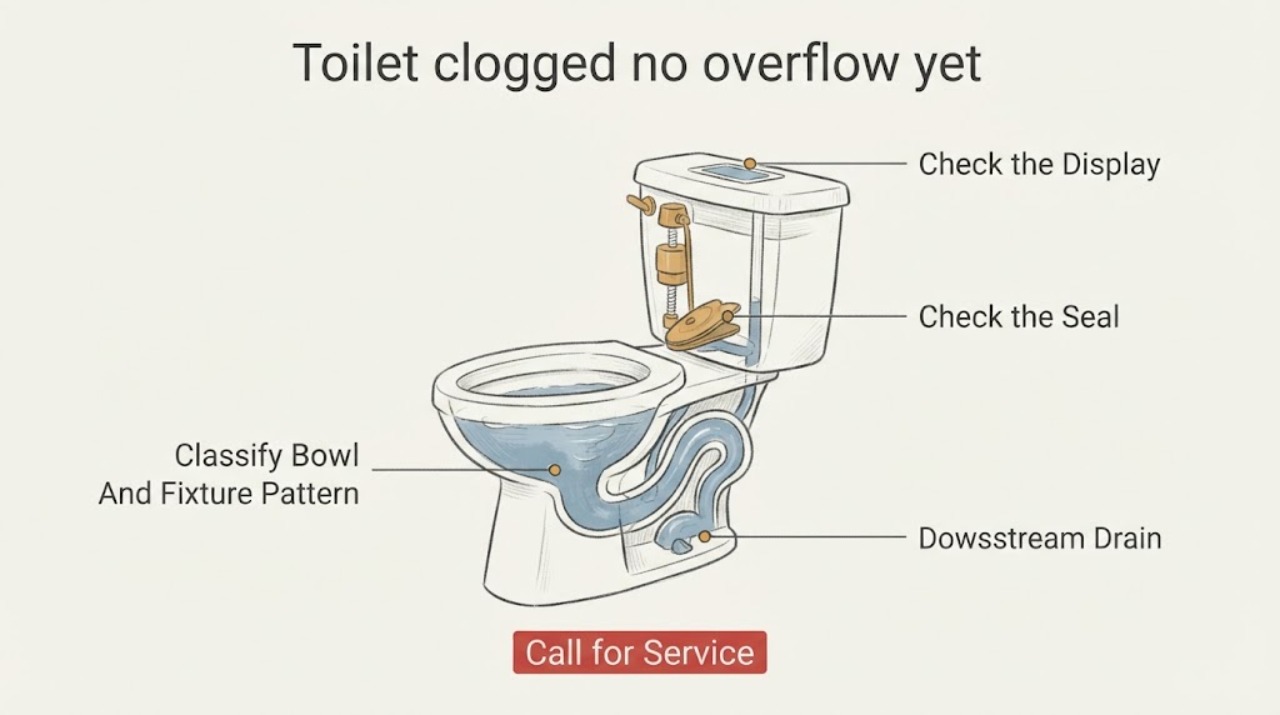
Work through in order
Diagnostic checks
Use only checks that match the exact appliance or system and its official guide.
-
Check 1
Stop flushing, turn the toilet supply valve clockwise until flow stops if it turns freely, and if a flush is in progress remove the tank lid and hold the flapper closed or raise the float without forcing the mechanism.
Expected result: The bowl may remain below the rim, continue rising from tank water, stop rising after the supply is closed, or the shutoff valve may be seized, leaking, or unable to stop flow.
Next step: Keep the toilet unused and protect the floor; proceed only when the bowl is stable and no chemical product or contaminated spill is present.
Stop if: Stop immediately for water over the rim, sewage-like contamination, an active base leak, a cracked bowl or tank, a shutoff that sprays or will not close, or water reaching electrical equipment.
Why this matters
Why: A level that stops after the supply is controlled supports a contained clog. Continued rise after the supply is off suggests stored tank water, a mispositioned flapper, or another source; an unusable shutoff increases overflow risk.
-
Check 2
Without adding water, observe whether the bowl level slowly falls, stays high, or changes when another nearby sink, tub, or toilet is used; listen for gurgling and inspect around the toilet base from a dry, safe position.
Expected result: The toilet may be the only affected fixture, another fixture may also be slow or back up, a nearby drain may gurgle, the bowl may rise when another fixture drains, or water may appear at the base.
Next step: Use one controlled local plunger attempt only for an isolated, stable bowl; leave the system unused and arrange plumbing service for shared symptoms, base water, or a persistent high level.
Stop if: Do not run more fixtures to provoke a response, flush another toilet repeatedly, or continue if water is contaminated or reaches floors, walls, or electrical equipment.
Why this matters
Why: A single toilet with a stable or slowly dropping bowl supports a local trapway clog. Multi-fixture backup, gurgling, or a level that changes with other fixtures makes a shared drain or vent issue more likely. A base leak adds a seal or structural problem.
-
Check 3
Only when no drain cleaner may be present and the bowl level is stable, place a toilet plunger so its cup seals the trapway opening, then make controlled strokes while keeping the handle aligned and splash contained.
Expected result: The seal may hold, the water may move and begin to drain, the bowl may remain high, water may splash without a seal, or the level may rise toward the rim.
Next step: Stop once flow improves, wait for the level to settle, and test only with a small controlled amount of water; if the clog remains, stop plunging and arrange an auger or plumbing service.
Stop if: Do not plunge after chemical cleaner may have been used, with contaminated splash risk, against a cracked bowl, or when the water is near the rim.
Why this matters
Why: A sealed plunger that restores drainage supports a movable local blockage. No movement, a failed seal, or a rising bowl means more force or more flushing could cause overflow or push the problem deeper.
-
Check 4
After the controlled plunger attempt, record whether the bowl drains normally, drains only partly, returns to a high level, or contains a suspected toy, wipe, sanitary item, or other foreign object; do not reach into the trapway or use improvised wire.
Expected result: The clog may clear once, recur quickly, remain fixed, involve a visible object at the opening, or be accompanied by scratches, porcelain damage, or contaminated water.
Next step: Leave the toilet unused and arrange a toilet auger or qualified plumber for a persistent, recurrent, foreign-object, or damaged-bowl condition; disclose any item or chemical involved.
Stop if: Do not use a coat hanger, knife, chemical opener, boiling water, or repeated high-force plunging, and do not remove the toilet without a safe plan and appropriate experience.
Why this matters
Why: A one-time improvement supports a local movable blockage. Recurrence, a fixed foreign object, or damage suggests a trapway or toilet problem that can worsen if pushed farther or scratched with an unsuitable tool.
-
Check 5
After one controlled mechanical attempt, keep the supply off or the toilet unused and classify the result as restored flow, partial flow, no flow, renewed rise, multi-fixture backup, base leakage, or chemical or sewage contamination.
Expected result: Flow may return normally, remain slow, stop entirely, cause the bowl to rise with a small test, or reveal water at the base, foul odor, discolored water, or another fixture affected.
Next step: Leave the toilet and affected fixtures unused and arrange qualified plumbing service; tell the plumber whether the supply was shut, how high the bowl rose, and what products or objects were involved.
Stop if: Stop immediately for overflow, sewage-like water, a chemical product, an active leak, flooding, or any need to open the drain, remove the toilet, or use powered equipment.
Why this matters
Why: Persistent or recurrent local blockage suggests a deeper trapway issue. Multi-fixture symptoms suggest shared drainage or venting, while base water, contamination, or renewed rising adds property, hygiene, or exposure risk.
Use your observations
Decision map
Find the observation that best matches what you see, then follow the next safe action.
-
PATH 01Safety boundary
What you see
The toilet alone was affected, the bowl was stable, no chemical was present, and a sealed plunger restores normal drainage without a leak.
Do this next
Wait for the bowl to settle, use only a small controlled water test, and monitor for recurrence rather than flushing repeatedly.
Why this path and its safety boundary
Why it matters: A movable local trapway blockage is more likely than a shared drain problem.
Safety stop: Arrange service if the clog returns, flow remains slow, water appears at the base, or another fixture becomes affected.
-
PATH 02Safety boundary
What you see
The bowl level slowly falls while the toilet remains unused and no other fixture changes or backs up.
Do this next
Try one properly sealed plunger attempt if no chemical is present; stop and arrange service if flow is not restored or the level rises again.
Why this path and its safety boundary
Why it matters: A partial local trapway restriction is more likely than a completely sealed blockage, but the toilet is not yet proven clear.
Safety stop: Do not pour a large volume of water or repeatedly flush to test the partial drainage.
-
PATH 03Safety boundary
What you see
The bowl remains high or rises after the supply is controlled, and a sealed plunger does not restore drainage.
Do this next
Keep the toilet unused and arrange a toilet auger or qualified plumber; do not add water or chemicals.
Why this path and its safety boundary
Why it matters: A tighter trapway blockage, foreign object, or deeper obstruction is more likely than a minor partial clog.
Safety stop: Stop for any bowl rise toward the rim, contamination, leak, or inability to isolate the supply.
-
PATH 04Safety boundary
What you see
Another toilet, sink, or tub backs up or gurgles, or its drainage changes when this toilet is used.
Do this next
Stop using affected fixtures and arrange prompt plumbing diagnosis before more water enters the system.
Why this path and its safety boundary
Why it matters: A shared branch, main drain, or vent restriction is more likely than a local bowl clog.
Safety stop: Do not keep flushing other fixtures, use chemicals, or open shared drain piping as a homeowner escalation.
-
PATH 05Safety boundary
What you see
A non-flushable object may be in the trapway, the bowl or toilet is cracked, or water appears at the base after testing.
Do this next
Leave the toilet unused, contain accessible water, and arrange qualified plumbing service with the suspected object or damage described.
Why this path and its safety boundary
Why it matters: The clog may be combined with a trapway, porcelain, flange, or seal problem and can worsen with improvised tools.
Safety stop: Do not use wire, knives, boiling water, chemicals, or remove the toilet without safe containment and experience.
-
PATH 06Safety boundary
What you see
Drain cleaner may be in the bowl or pipe, or the standing water is foul-smelling, discolored, or suspected sewage.
Do this next
Keep people and pets away, do not add products or plunge, and arrange plumbing or appropriate hazardous-material guidance while disclosing what was used.
Why this path and its safety boundary
Why it matters: Plunging and improvised mixing can expose people to corrosive or contaminated water and spread the hazard.
Safety stop: Do not touch the water without appropriate protection and guidance, mix cleaners, or pour more chemicals into the toilet.
Helpful context
Understand the symptom
No overflow yet is the time to stop adding water
Do not press the flush lever again to see whether the clog clears. Turn the supply valve near the toilet clockwise only until water stops, without forcing a seized valve. If a flush has already started, remove the tank lid and hold the flapper closed or raise the float only as a temporary way to stop bowl filling. Keep towels around the base and do not use the toilet until the level is under control.
A bowl that slowly drops is different from a solid blockage
Watch the bowl without adding water. A slow drop can indicate a partial trapway restriction, while a level that stays high suggests a tighter blockage. If water rises in a tub, sink, or another toilet, or another fixture gurgles, the restriction may be shared or related to venting. Water at the base or a cracked bowl adds a leak and structural boundary regardless of the bowl level.
Use a toilet plunger without chemicals
A toilet plunger needs a seal over the trapway opening and controlled strokes; towels protect the floor from splash. Never plunge if a chemical drain product may be in the bowl or pipe, and do not mix products. If the bowl remains high after a controlled attempt, stop rather than increasing force or flushing again.
A persistent clog may need an auger or professional diagnosis
Delta identifies a toilet auger as the next mechanical option when a plunger does not work, with care to avoid scratching the bowl. If the cause may be a foreign object, the blockage recurs, or a toilet auger is unavailable or cannot pass safely, a plumber can diagnose the trapway, shared drain, vent, or damaged toilet without guessing.
Safety boundary
Stop conditions
- Stop flushing and control the supply immediately when the toilet is clogged; do not add test water while the bowl level is high or the shutoff is uncertain.
- Do not plunge if a chemical drain product may be present, and never mix drain openers, toilet cleaners, bleach, or other household chemicals.
- Do not use boiling water, sharp or improvised tools, powered equipment, or repeated high-force plunging that can damage porcelain or push an object deeper.
- Stop using the toilet for overflow, sewage-like or contaminated water, a base leak, cracked bowl or tank, water damage, multi-fixture backup, gurgling, or a foreign object.
- Arrange qualified plumbing service when one controlled plunger attempt does not restore flow, the clog recurs, an auger is needed, the supply cannot be isolated, or the cause may be shared drainage or venting.
Only after diagnosis
Potential parts
- toilet flapper or fill-control component
Consider this only when the bowl continues filling because a tank control or flapper fails to stop water, rather than because of the trapway clog.
Match the toilet model, flush-valve design, chain or actuator geometry, and seal; a tank part will not clear a trapway blockage. - toilet tank-to-bowl or base seal
Consider this only after a qualified diagnosis confirms a leak at the toilet base or tank connection.
Confirm toilet design, flange condition, fasteners, and local installation requirements; do not remove a toilet just to clear a clog. - toilet trapway or flush component identified by model
Consider this only when service identifies a damaged or incompatible toilet component after clearing and inspecting the blockage.
Use the exact toilet model and approved component; do not substitute a generic part or alter the trapway with improvised tools.
When checks do not resolve it
Need a professional?
Arrange qualified plumbing service when the bowl remains high after the supply is controlled and one properly sealed plunger attempt, when the clog recurs or a foreign object is suspected, when another fixture backs up or gurgles, when water appears at the base, or when any chemical or contaminated water is involved. Stop flushing and keep the toilet unused until the condition is assessed.
Safety scope: This article supports stopping flushes, controlling an accessible supply, protecting the floor, observing the bowl and nearby fixtures, and one controlled toilet-plunger attempt when no chemical is present. A qualified plumber should handle deep or shared blockages, foreign objects, auger escalation, toilet removal, contaminated water, leaks, and damaged porcelain or piping.
Common questions
FAQ
What should I do first when a toilet is clogged but not overflowing?
Stop flushing and close the toilet supply valve if it turns freely. Keep the bowl stable, protect the floor, and observe whether it slowly drops before attempting one sealed plunger check.
Can I flush a clogged toilet once to see if it clears?
No. Repeated flushing adds tank water and can turn a contained clog into an overflow. Control the supply and use a properly sealed toilet plunger only when no chemical product is present.
Should I use a plunger or a toilet auger?
Start with one controlled toilet-plunger attempt for an isolated, stable bowl with no chemical contamination. If it does not restore flow, a toilet auger or qualified plumber is safer than repeated force, improvised wire, or chemicals.
Why does another fixture gurgle when my toilet is clogged?
Gurgling or backup in another sink, tub, or toilet makes a shared drain or vent restriction more likely than a local trapway clog. Stop using the affected fixtures and arrange plumbing diagnosis.
When should I call a plumber for a toilet clog?
Call when one controlled plunger attempt fails, the clog returns, a foreign object is suspected, another fixture backs up or gurgles, water appears at the base, the supply cannot be shut off, or chemical or contaminated water is involved.
Read the exact guide
Official sources
- 3 Quick Fixes for Common Toilet ProblemsDelta Faucet · Delta manufacturer toilet guidance used for general clog and overflow boundaries; the installed toilet and local plumbing control particular repairs.
- How To Unclog A ToiletAmerican Standard · American Standard manufacturer homeowner guidance; toilet design and the obstruction determine the safe method for a particular installation.
- How to Care for Your Septic SystemU.S. Environmental Protection Agency · EPA household and septic guidance; the disposal boundary is useful generally, with added importance for homes on septic systems.
- Household Hazardous Waste (HHW)U.S. Environmental Protection Agency · EPA household hazardous-waste guidance used for chemical drain-opener and contaminated-water precautions.
Community feedback
Share a repair observation
Share a plain-text repair observation. Accepted observations are published automatically; this page may take a moment to update.