
On this page
Start here
Quick answer
If an American Standard toilet is overflowing or the flapper appears to be involved, close the toilet's water-supply stop and stop flushing first. Then distinguish a flapper that is not sealing from a fill valve that keeps adding water, a trip-lever or chain that holds the flapper open, and a bowl or drain blockage. American Standard's model-specific guidance turns off the supply before draining the tank and shows different flapper and flush-valve arrangements for VorMax and Cadet toilets. Do not force the flapper, adjust an unfamiliar mechanism, or keep testing an overflowing bowl. If water rises toward the tank overflow tube, reaches the floor, or the cause is not clear after safe inspection, arrange qualified plumbing service.
Before you begin
Safety first
- Keep the supply closed and stop flushing during an overflow. Do not handle contaminated water unnecessarily, remove an unfamiliar flush valve, force tank parts, bypass the overflow path, or leave the toilet connected while water rises uncontrolled.
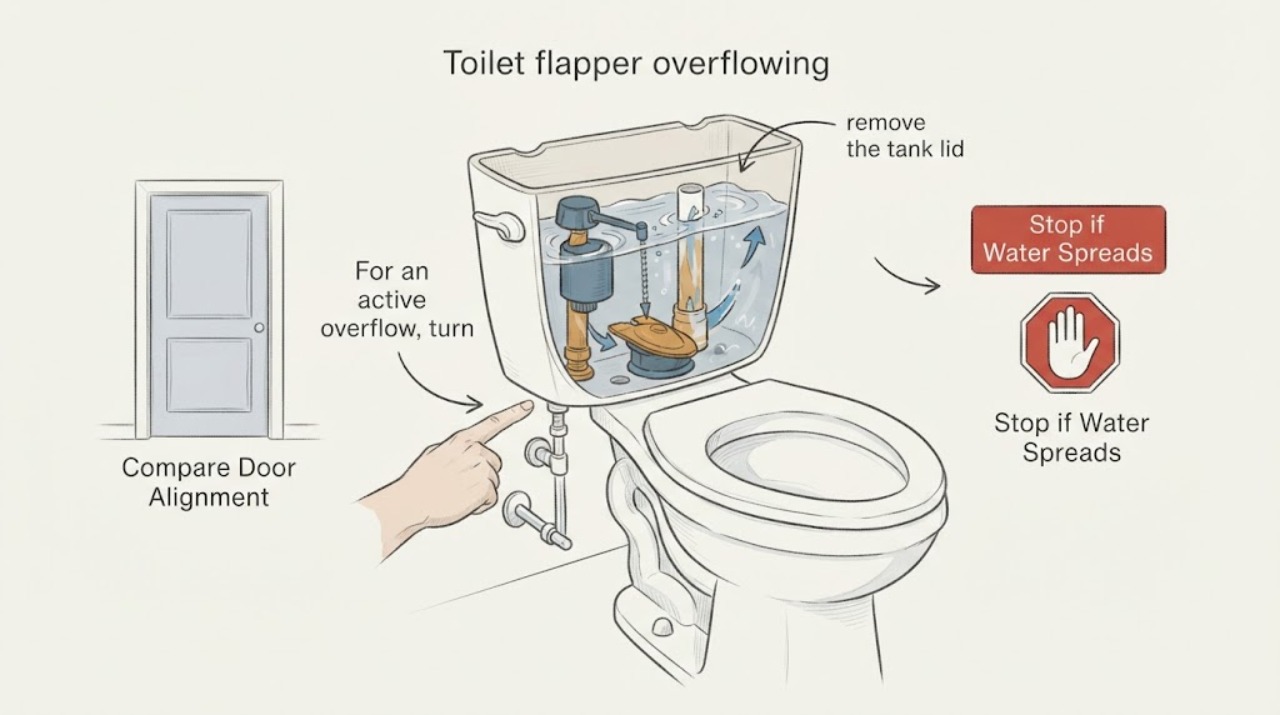
Work through in order
Diagnostic checks
Use only checks that match the exact appliance or system and its official guide.
-
Check 1
For an active overflow, turn the toilet's accessible water-supply stop clockwise until flow stops, and do not flush again. If the stop cannot be closed or water continues entering, keep clear of the water and shut off the bathroom or home supply only if you know the safe valve; do not remove tank parts while water is running.
Expected result: The incoming water stops, continues despite the stop being closed, or the water is rising in the bowl rather than the tank.
Next step: Keep the toilet out of service, contain water safely, and call a plumber for a stop valve that will not isolate, a bowl that keeps rising, or any water reaching the floor.
Why this matters
Why: Stopping supply prevents additional tank fill. Water rising in the bowl points toward a drain or flush-path problem as well as a possible flapper issue; continued incoming water can indicate a supply-stop or fill-valve problem.
-
Check 2
With the supply stop closed, remove the tank lid and identify the flapper, lift chain, trip lever, and overflow tube without reaching into contaminated bowl water. Check whether the chain is taut, tangled, caught under the flapper, or holding the flapper off its seat; do not pull the lever repeatedly.
Expected result: The flapper is visibly lifted, the chain or lever is holding it open, the flapper appears seated, or the toilet uses a different flush-valve design.
Next step: Release only an obvious chain snag without forcing the mechanism and keep supply off until the seal can be inspected under the model instructions. Stop for a damaged or unfamiliar assembly and arrange service.
Why this matters
Why: A chain or lever that cannot let the flapper close can cause continuous tank-to-bowl flow. A seated flapper shifts attention to its seal, flush-valve seat, fill valve, or a model-specific mechanism; not every American Standard toilet uses the same flapper arrangement.
-
Check 3
Inspect the flapper and its seat visually with the tank drained or water level low, looking for a warped edge, mineral debris, a torn seal, a misaligned hinge, or a flush-valve seat that prevents full contact. Do not scrape the seat, stretch the rubber, or install a generic flapper by appearance.
Expected result: The flapper edge is damaged or dirty, the flapper sits off-center, the seat appears damaged, or the seal and seat look intact.
Next step: Use only the exact American Standard model procedure for cleaning or replacing the seal. Keep the supply closed and call a plumber for a damaged seat, inaccessible valve, porcelain damage, or recurring leak.
Why this matters
Why: A damaged, dirty, or misaligned seal can let tank water leak into the bowl, causing the fill valve to run and potentially leaving the tank unable to recover. An intact-looking seal does not rule out a model-specific flush-valve or fill-valve fault.
-
Check 4
Compare the water level with the overflow tube after briefly reopening the supply only when the bowl is not rising and no floor leak is present. Observe whether water stops below the overflow tube, keeps entering after the tank should be full, or immediately runs through the flapper into the bowl; close the supply again if the level rises unexpectedly.
Expected result: Water rises to or above the overflow tube, the fill valve continues adding water while the flapper is seated, or water runs into the bowl and the tank level falls.
Next step: Close the supply stop for either uncontrolled condition. Follow the exact model guide for a permitted water-control check, or arrange plumbing service rather than leaving the toilet connected while it overfills.
Why this matters
Why: A rising tank level or continued fill with a seated flapper makes a fill-valve or water-control problem more likely. A falling tank level with water entering the bowl makes a flapper or flush-valve seal more likely; the observations do not prove a replacement part.
-
Check 5
Identify the complete American Standard model and compare its manual or official model guide with the tank mechanism before making any adjustment. For a VorMax model, the official guide addresses the trip lever, teeter bar, and flapper-to-frame contact; for a Cadet flapper, the guide says to preserve the old float-ball setting when fitting the same model's replacement.
Expected result: The model and mechanism match a documented procedure, or the model, flapper type, float setting, or flush-valve design is uncertain.
Next step: Perform only the model-documented low-risk step with the supply closed and tank drained. If the model cannot be identified or the mechanism does not match, stop and provide the model and photos to a qualified plumber.
Why this matters
Why: A documented procedure can explain a particular adjustment, but a different American Standard series may use another seal, setting, or valve. Uncertainty means a generic flapper or setting is not a safe diagnosis.
-
Check 6
After the mechanism has been corrected under the exact model instructions, reopen the supply slowly and watch one refill without flushing repeatedly. Confirm that the flapper closes, the fill valve stops, the water remains below the overflow tube, and the bowl level is normal; close the supply immediately for renewed overflow or a leak.
Expected result: The tank fills and stops normally, water continues into the bowl, the tank reaches the overflow tube, or the bowl remains high or drains slowly.
Next step: Close the supply and stop testing for any recurrence. Arrange service for persistent flow, a bowl blockage, contaminated water, a damaged valve, or a toilet that cannot hold a normal water level.
Why this matters
Why: Normal refill supports a corrected control or seal issue but does not prove long-term reliability. Continued bowl flow or a high tank points to a remaining flapper, flush-valve, or fill-valve fault; a high bowl or slow drain points to a separate drain blockage.
Use your observations
Decision map
Find the observation that best matches what you see, then follow the next safe action.
-
PATH 01Next step
What you see
Closing the supply stops the overflow, and the tank water was rising or the fill valve kept adding water after the flapper appeared seated.
Do this next
Keep the supply closed and use only the exact American Standard water-control procedure if it matches the model. Arrange plumbing service for recurrent filling, an inaccessible valve, or any valve that will not isolate.
Why this path and its safety boundary
Why it matters: A fill-valve or water-control problem is more likely than a flapper that is simply held open, although a failing seal can also make the valve run continuously.
-
PATH 02Next step
What you see
The tank level falls while the flapper is seated, water is visible entering the bowl, or a flapper edge, hinge, or flush-valve seat is damaged or contaminated.
Do this next
Keep the water off and follow the exact American Standard model guide for the seal. Do not fit a generic flapper by appearance; arrange service if the seat or valve is damaged or the leak returns.
Why this path and its safety boundary
Why it matters: A flapper or flush-valve sealing fault is more likely than an overflowing drain, and the running fill may be the response to water escaping into the bowl.
-
PATH 03Next step
What you see
The chain or trip lever holds the flapper open, the flapper is visibly lifted, or the problem began after handle or tank work.
Do this next
Release only an obvious snag and compare the mechanism with the model instructions while the supply is closed. Stop for a broken lever, unfamiliar valve, or recurring opening and call a plumber.
Why this path and its safety boundary
Why it matters: A linkage or adjustment problem is more likely than a proven failed flapper; the mechanism may not be able to close fully.
-
PATH 04Next step
What you see
The bowl, rather than the tank, rises toward the rim or drains slowly, especially after flushing, while the tank mechanism is not continuously filling.
Do this next
Stop flushing, close the supply, keep people away from the water, and arrange qualified plumbing help. Do not use a flapper replacement to treat a bowl blockage.
Why this path and its safety boundary
Why it matters: A drain or trapway blockage is more likely than a flapper leak; continued flushing can spill contaminated water.
-
PATH 05Next step
What you see
The supply cannot be shut off, water reaches the floor or electrical equipment, the tank or bowl overflows again, porcelain is cracked, or the mechanism remains unidentified.
Do this next
Stop use, isolate the water from a safe known valve if possible, contain water without touching contaminated surfaces unnecessarily, and obtain urgent qualified plumbing service. Do not continue flushing or leave the toilet unattended.
Why this path and its safety boundary
Why it matters: The risk of water damage, contamination, or a larger plumbing failure exceeds a safe flapper inspection.
Helpful context
Understand the symptom
Overflow can come from more than the flapper
A toilet that runs or overflows may have a flapper that cannot seal, a chain or trip lever holding it open, a fill valve that does not stop, or a bowl drain that cannot carry away water. The water level and where the water is going matter: tank water approaching the overflow tube is different from bowl water rising after a flush. Stop the supply before investigating an active overflow.
American Standard mechanisms are model-specific
American Standard publishes separate procedures for VorMax and Cadet toilets. One procedure adjusts a VorMax teeter bar so the flapper touches its frame stop; another uses the old Cadet flapper float setting when fitting a replacement. Do not apply either sequence to an unidentified American Standard toilet without the complete model instructions.
Protect the floor and avoid repeated flushing
Keep the water-supply stop closed while an overflow is active, place towels around the base without touching contaminated water unnecessarily, and stop flushing. If water has reached the floor, has a waste odor, or the bowl level continues rising, the problem needs plumbing attention rather than repeated flapper adjustments.
Safety boundary
Stop conditions
- Close the toilet's water-supply stop and stop flushing for any active tank or bowl overflow, a supply stop that will not isolate, or water reaching the floor.
- Do not reach into contaminated bowl water, scrape a flush-valve seat, force a flapper, remove an unfamiliar valve, or keep testing a tank that rises to the overflow tube.
- Use only the exact American Standard model procedure for a flapper, float, teeter-bar, or water-control adjustment. Do not assume a VorMax or Cadet procedure applies to another series.
- Stop for cracked porcelain, a damaged flush valve, a bowl that drains slowly, a wastewater spill, or a recurring overflow and arrange qualified plumbing service.
Only after diagnosis
Potential parts
- toilet flapper
Consider this only when the model-specific inspection confirms a damaged, warped, contaminated, or nonsealing flapper or seal after linkage and water-level checks.
American Standard uses different flapper and flush-valve designs, including model-specific settings. Confirm the complete model and exact mechanism before selecting a flapper. - toilet fill valve
Consider this only when the water level continues rising or the water-control valve continues adding water after the flapper is seated and the model-specific checks are complete.
Water-control connections and adjustment methods vary by American Standard toilet. Confirm the model, valve type, and diagnosis before selecting a replacement. - toilet auger
Consider this only when the bowl itself rises or drains slowly after flushing and the tank flapper is not the cause; a qualified plumber should handle a persistent or contaminated blockage.
Drain-access needs vary by toilet shape and blockage location. Do not use a drain tool during an active overflow or when porcelain damage is suspected; confirm a safe method first.
When checks do not resolve it
Need a professional?
Request service for a recurring run or overflow, a flapper or flush-valve seal that will not hold, a fill valve that keeps adding water, a broken chain or trip lever, a blocked bowl, a leaking supply stop, cracked porcelain, or any water damage.
Safety scope: Keep the supply closed and stop flushing during an overflow. Do not handle contaminated water unnecessarily, remove an unfamiliar flush valve, force tank parts, bypass the overflow path, or leave the toilet connected while water rises uncontrolled.
Have this ready
- Provide the complete American Standard model, one-piece or two-piece style, photographs of the tank mechanism and overflow tube, whether the water was rising in the tank or bowl, supply-stop result, chain and lever position, flapper condition, refill timing, and any floor or contamination evidence.
Common questions
FAQ
Why is my American Standard toilet overflowing when the flapper is involved?
A flapper that cannot seal can let tank water run into the bowl, but a fill valve that will not stop, a chain holding the flapper open, or a blocked bowl can also overflow. Close the supply stop and distinguish tank level from bowl level first.
What should I do first if my American Standard toilet is overflowing?
Turn the toilet's accessible water-supply stop off and stop flushing. If it will not isolate or the bowl continues rising, keep clear of the water and arrange plumbing service.
How do I know whether the flapper or fill valve is the problem?
With the supply safely controlled, observe whether tank water runs into the bowl when the flapper is seated or whether the tank level rises because the fill valve keeps adding water. These patterns guide the next check but do not replace model-specific diagnosis.
Can a loose chain make an American Standard toilet overflow?
A chain that is tangled, caught, or holding the flapper open can cause continuous tank-to-bowl flow. Release only an obvious snag without force and use the exact American Standard model guide for the linkage.
Can I adjust any American Standard flapper the same way?
No. American Standard publishes different guidance for VorMax and Cadet mechanisms, including different adjustments and flapper settings. Identify the complete model before changing a setting or replacing a seal.
Should I replace the flapper first?
Not automatically. Confirm that the flapper is damaged or not sealing after checking the chain, flush-valve seat, water level, and fill valve. A generic flapper may not match the American Standard mechanism or setting.
What if the bowl rises but the tank flapper looks normal?
A bowl that rises or drains slowly points more toward a drain or trapway blockage than a flapper leak. Stop flushing, close the supply, and obtain qualified plumbing help before contaminated water spills.
When should I call a plumber for an American Standard toilet overflow?
Call when the supply stop will not close, the overflow returns, the fill valve will not stop, the flapper or flush valve is damaged, the bowl drains slowly, water reaches the floor, contaminated water is present, or the model mechanism is uncertain.
Read the exact guide
Official sources
- Colony®3 1.28 gpf/4.8 Lpf 12-Inch Rough TankAmerican Standard · American Standard toilet tank valve type and model-specific flapper construction context
- How To Adjust Your VorMax Toilet Flush Valve SettingsAmerican Standard · American Standard VorMax water shutoff, tank draining, trip lever, teeter-bar, flapper contact, and tank water-level guidance
- How To Replace The Flapper Float Ball On The Cadet ToiletAmerican Standard · American Standard Cadet flapper float-ball setting, chain connection, water shutoff, and tank-drain guidance
- How To Clean the Toilet Water Control Valve of DebrisAmerican Standard · American Standard toilet water-control or fill-valve leak-after-shutoff symptoms and safe model procedure
- How to Replace a Flush Valve on a Vormax ToiletAmerican Standard · American Standard VorMax leaking flapper seal diagnosis and model-specific seal replacement sequence
Community feedback
Share a repair observation
Share a plain-text repair observation. Accepted observations are published automatically; this page may take a moment to update.