
Repair problem
Overflowing Troubleshooting Guides
Published FixGraph guidance for diagnosing and responding to overflowing.
Matching published guides
Choose a guide that matches the service, equipment, and conditions you are seeing.
-
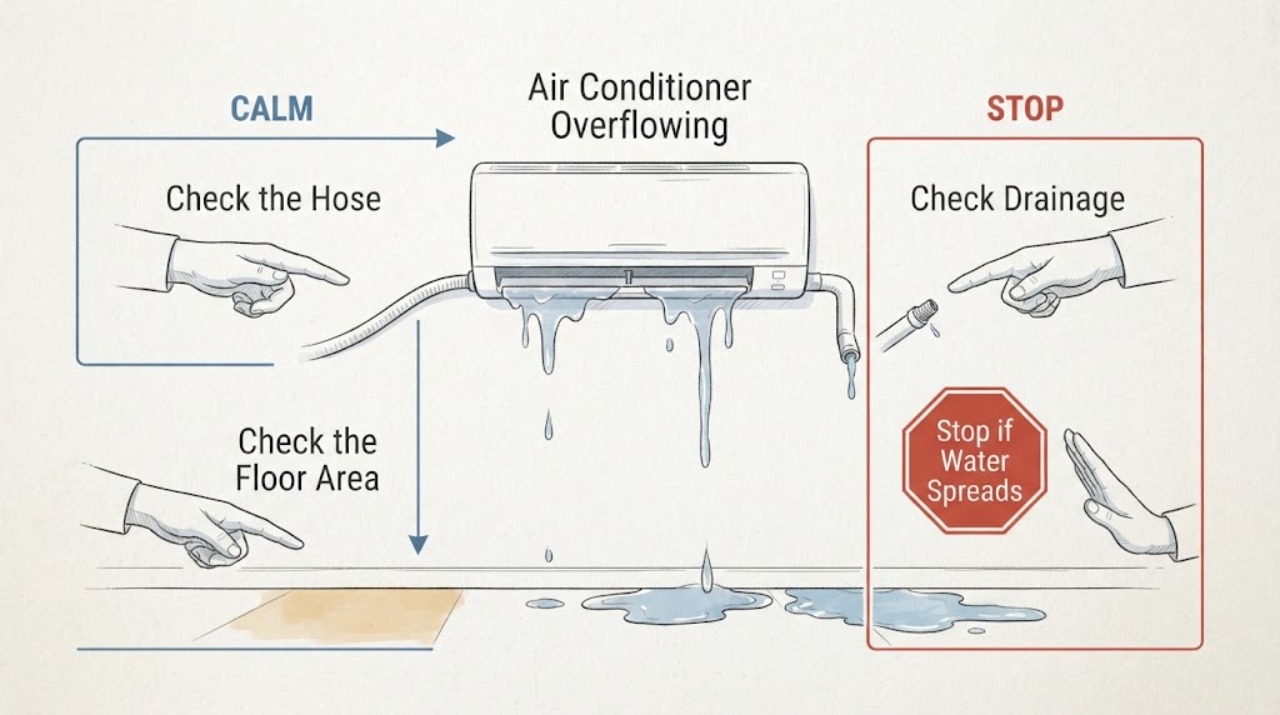
Air Conditioner Overflowing: Stop the Leak and Check Drainage
An overflowing air conditioner is usually a condensate-drain or airflow problem, but water near electrical equipment is a safety issue. Stop cooling, collect water, and isolate power if safe. Check the accessible filter and drain hose for dirt, kinks, poor slope, or blockage; do not open the sealed refrigerant system. Persistent overflow, a split drain pan, or a concealed line requires qualified HVAC service.
-
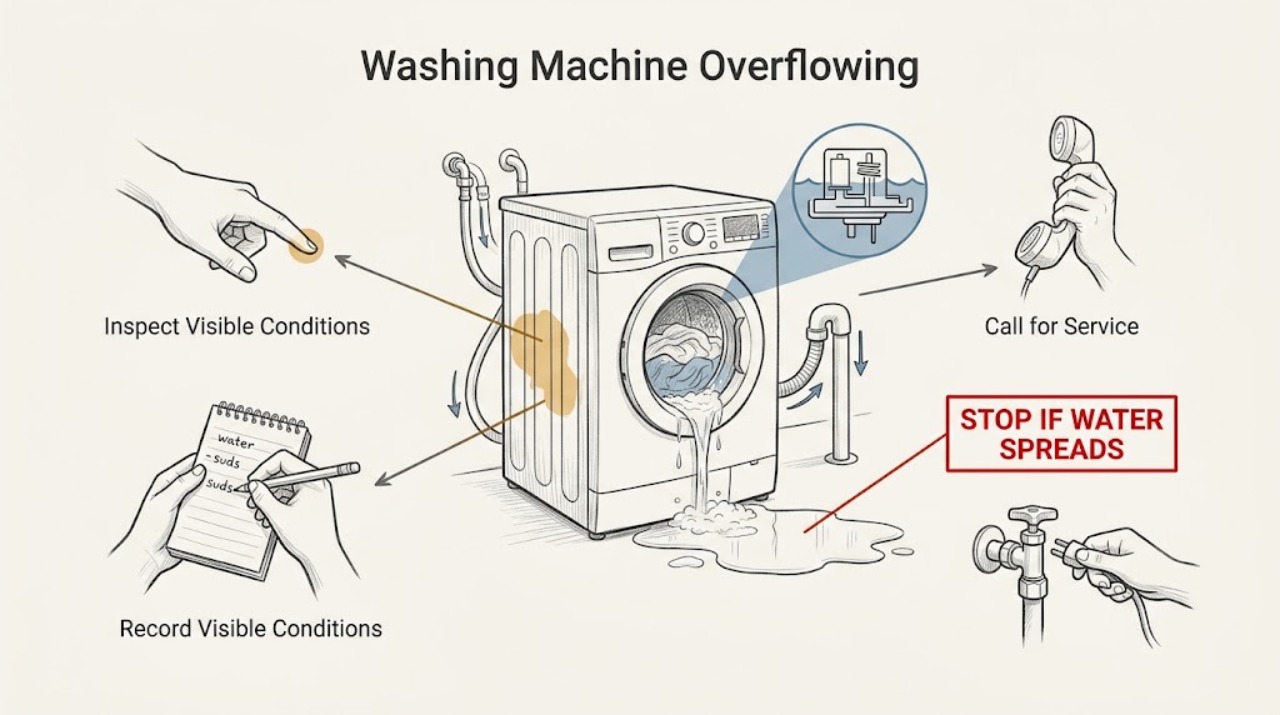
Amana Washing Machine Overflowing: Stop the Water and Trace the Cause Safely
If an Amana washing machine is actively overflowing, press Pause or Cancel from a dry position and close the household hot and cold water valves if they are safely reachable; do not reach through standing water or unplug a wet appliance. If the display shows F8 E3 on a front-load model, Amana defines that condition as too much water or foam and points first to HE detergent, excess suds, and a Clean Washer cycle.
-
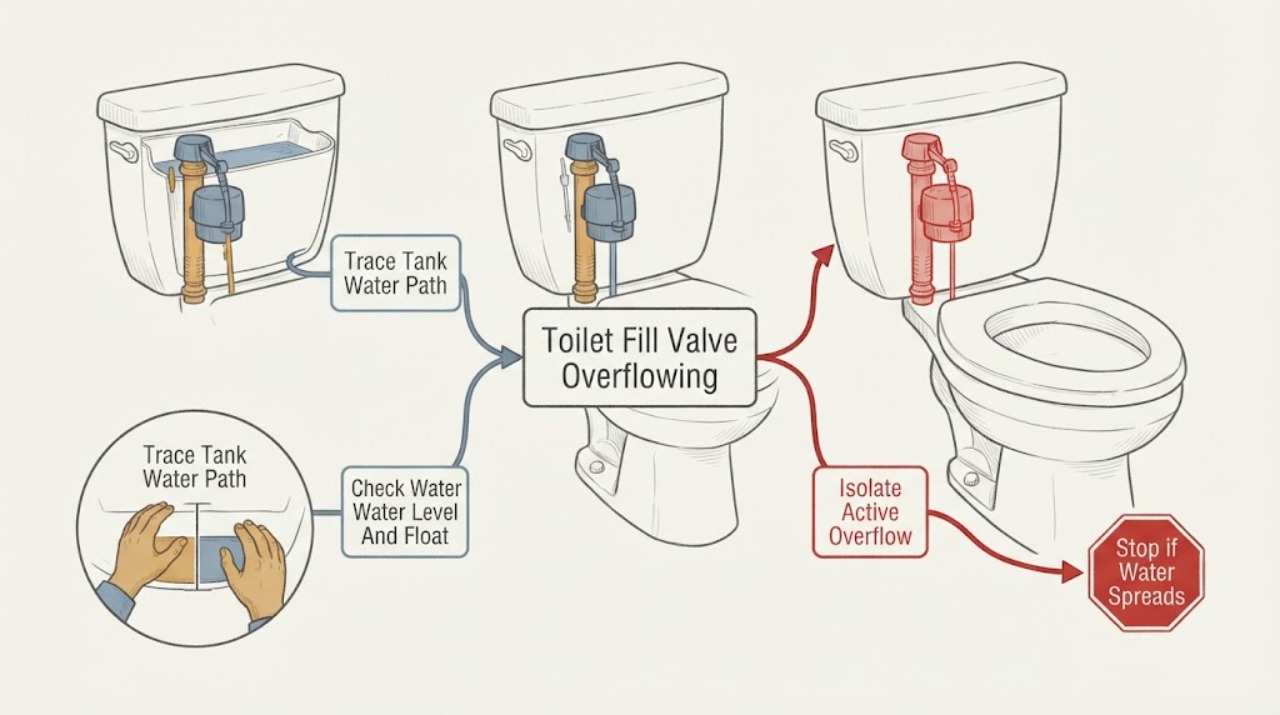
American Standard Toilet Fill Valve Overflowing: What to Check and What to Do Next
If an American Standard toilet fill valve is overflowing, close the toilet's accessible water shutoff and protect the floor first. With the tank lid off, determine whether water is entering continuously through the fill valve, the refill tube is sending water into the overflow, or a flush valve or flapper is letting water escape into the bowl and causing repeated refilling.
-
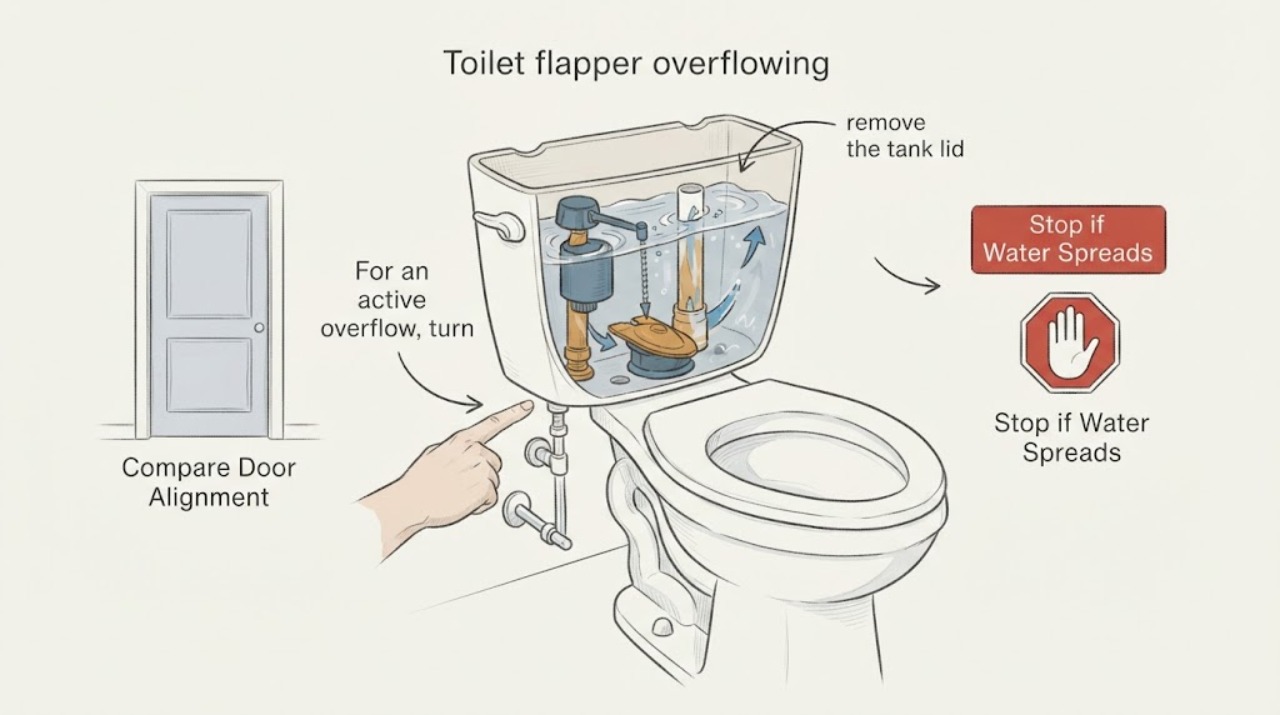
American standard toilet flapper overflowing: What to Check and What to Do Next
If an American Standard toilet is overflowing or the flapper appears to be involved, close the toilet's water-supply stop and stop flushing first. Then distinguish a flapper that is not sealing from a fill valve that keeps adding water, a trip-lever or chain that holds the flapper open, and a bowl or drain blockage.
-
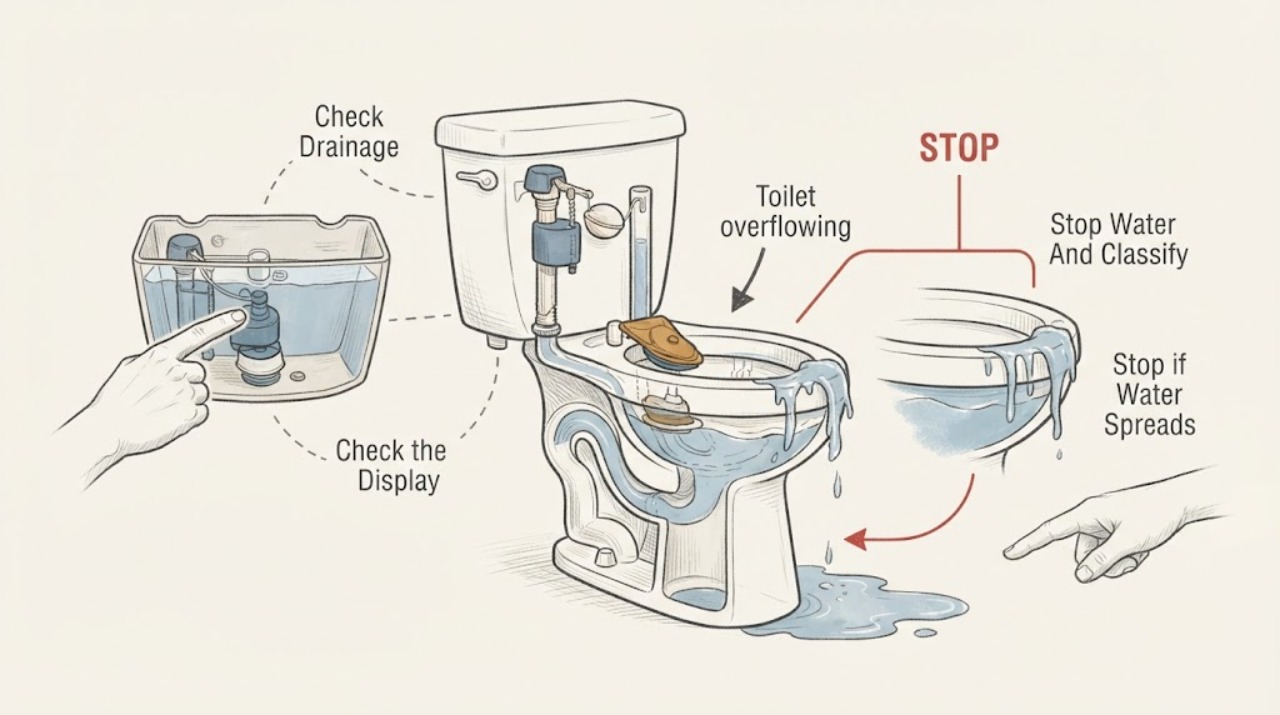
American Standard toilet overflowing: What to Check and What to Do Next
Stop flushing immediately. If the bowl is rising, turn the toilet's supply stop clockwise until the water stops, if it is accessible and turns normally; keep towels and gloves nearby and do not use chemical drain opener.
-
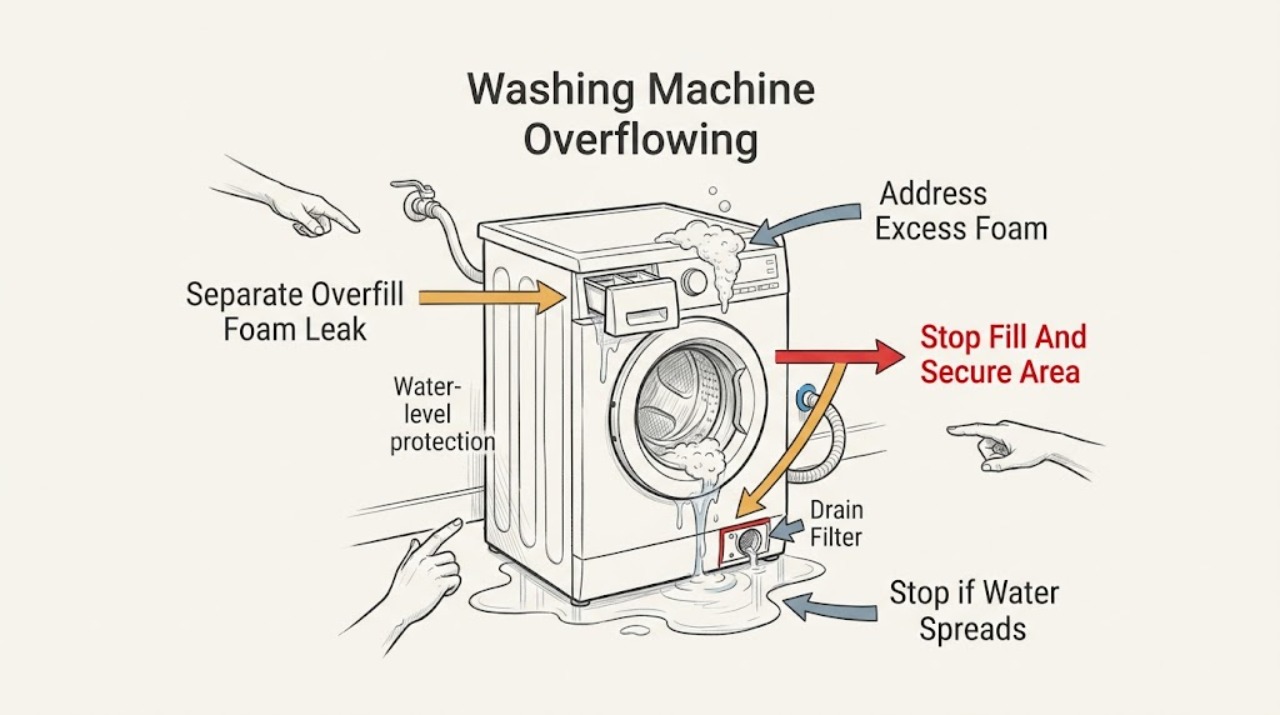
ASKO Washing Machine Overflowing: Stop the water, separate foam, drain, and inlet faults
If an ASKO washing machine is overflowing, stop the programme and prevent more water from entering before inspecting anything: close the appliance's water shutoff if water continues to flow, and disconnect power only when it is safe to do so. First distinguish a drum that is genuinely too full from suds or an external leak.
-
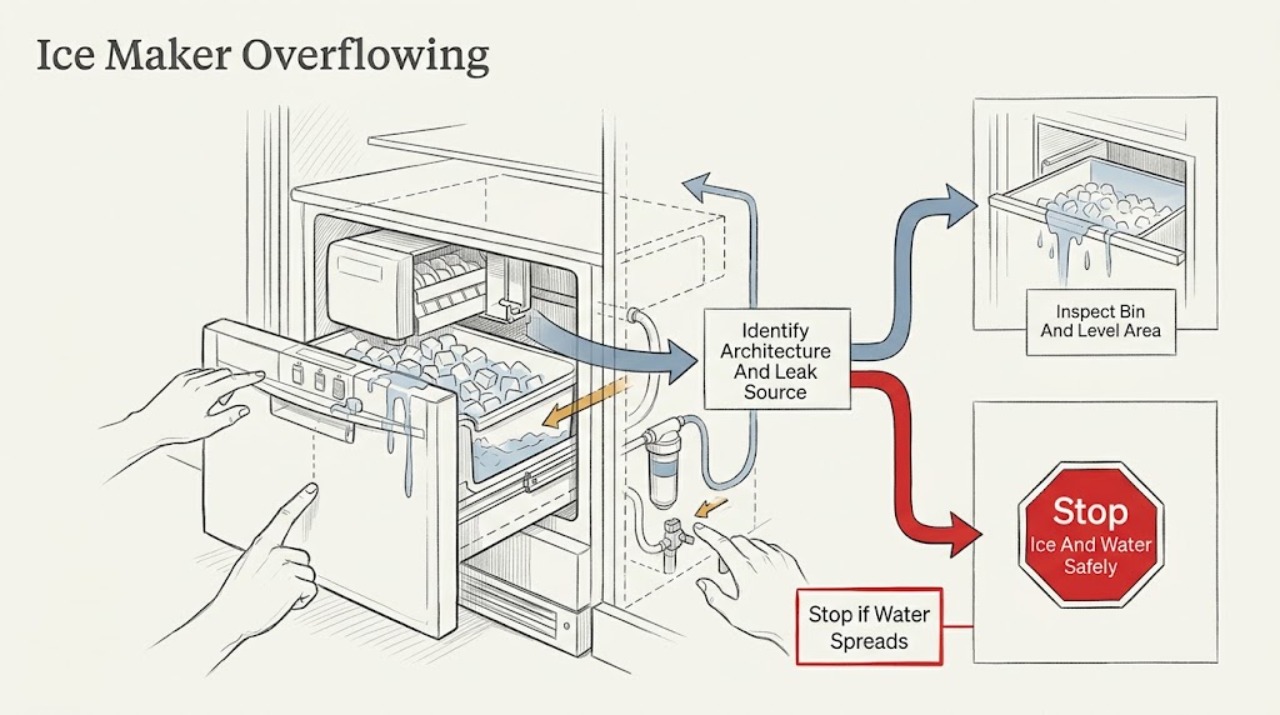
Bosch Ice Maker Overflowing
First identify the architecture and stop the water safely. The Bosch sources reviewed here describe ice makers integrated into Bosch refrigerator/freezer appliances; they do not establish a universal countertop or standalone ice-maker design.
-
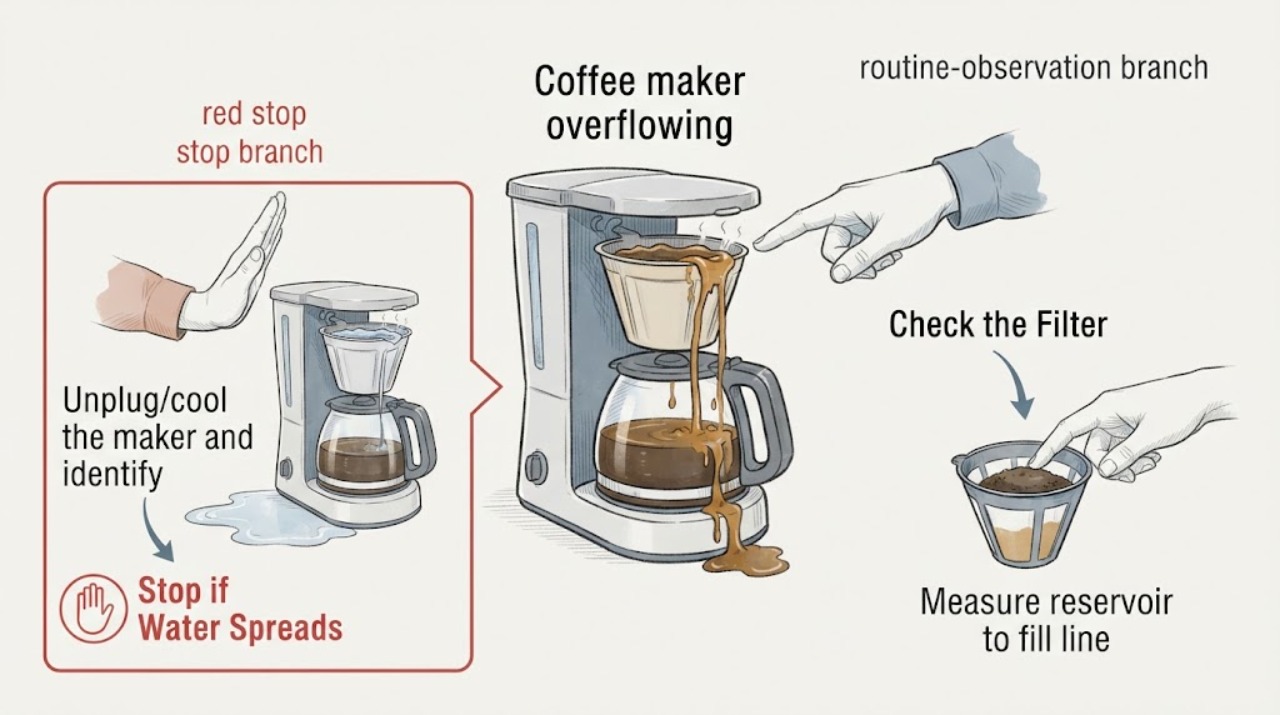
Coffee maker overflowing
A coffee maker that overflows usually has too much water or coffee, a clogged/collapsed filter, a too-fine grind, a mis-seated carafe, or a blocked brew-head outlet. Unplug and cool it, verify water and coffee limits, clean removable parts, then run one measured test. Base overflow or repeated overflow needs service.
-
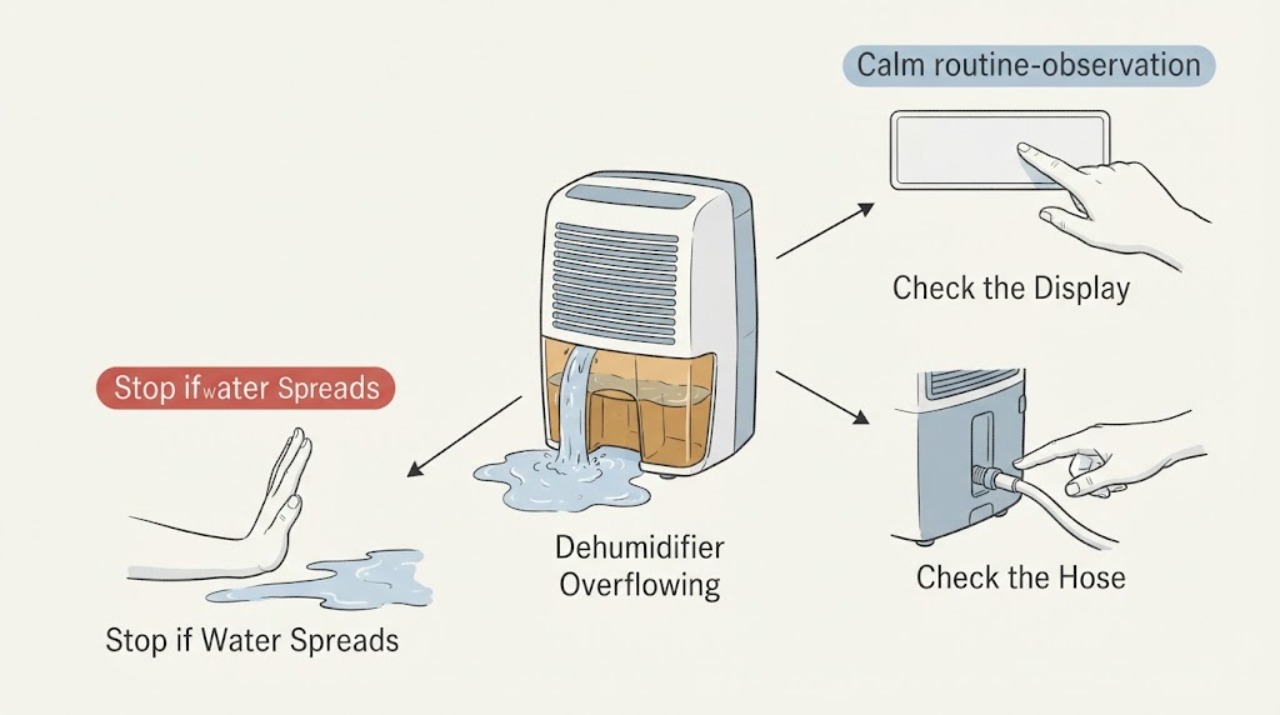
Dehumidifier Overflowing
To troubleshoot a dehumidifier that is overflowing, first identify the exact stage and accompanying signs, then make only the safe external checks supported by the owner guidance. Stop for hazards or recurrence and arrange qualified service.
-
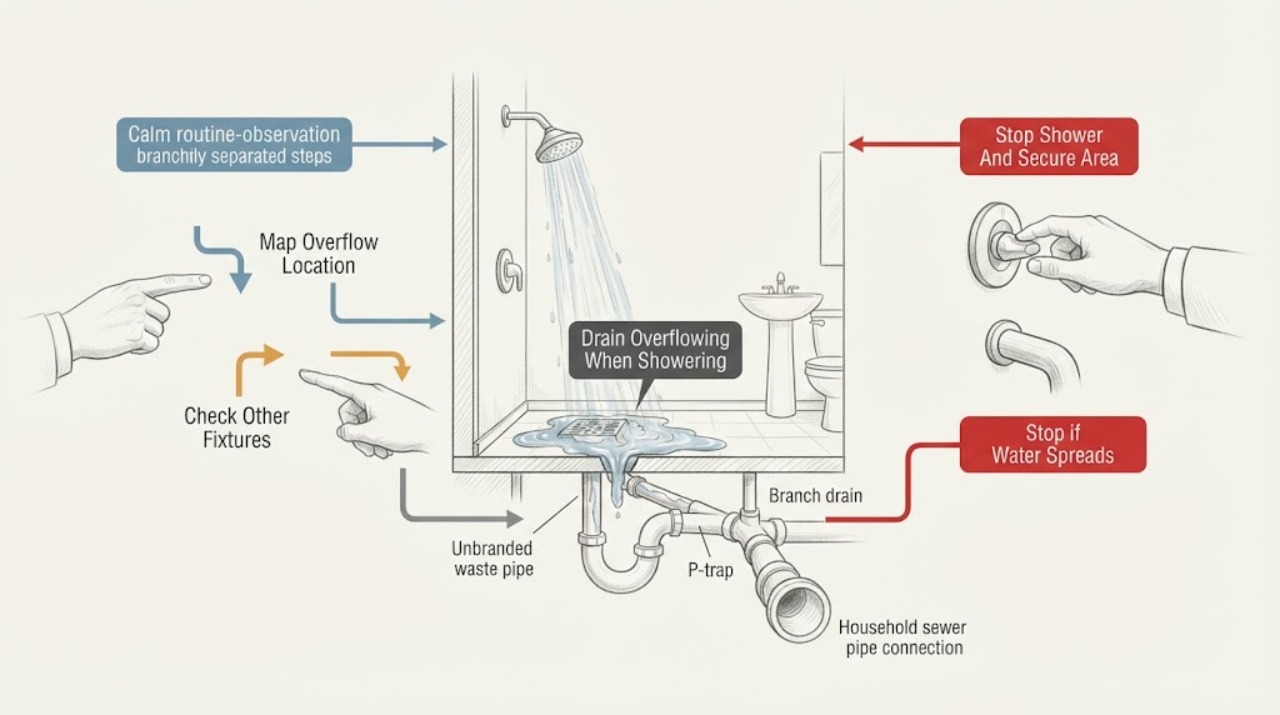
Drain Overflowing When Showering
Stop the shower as soon as the water level rises and keep people out of the wastewater. First note whether only the shower backs up or whether a toilet, basin, bath, or another fixture also drains slowly or overflows.
-
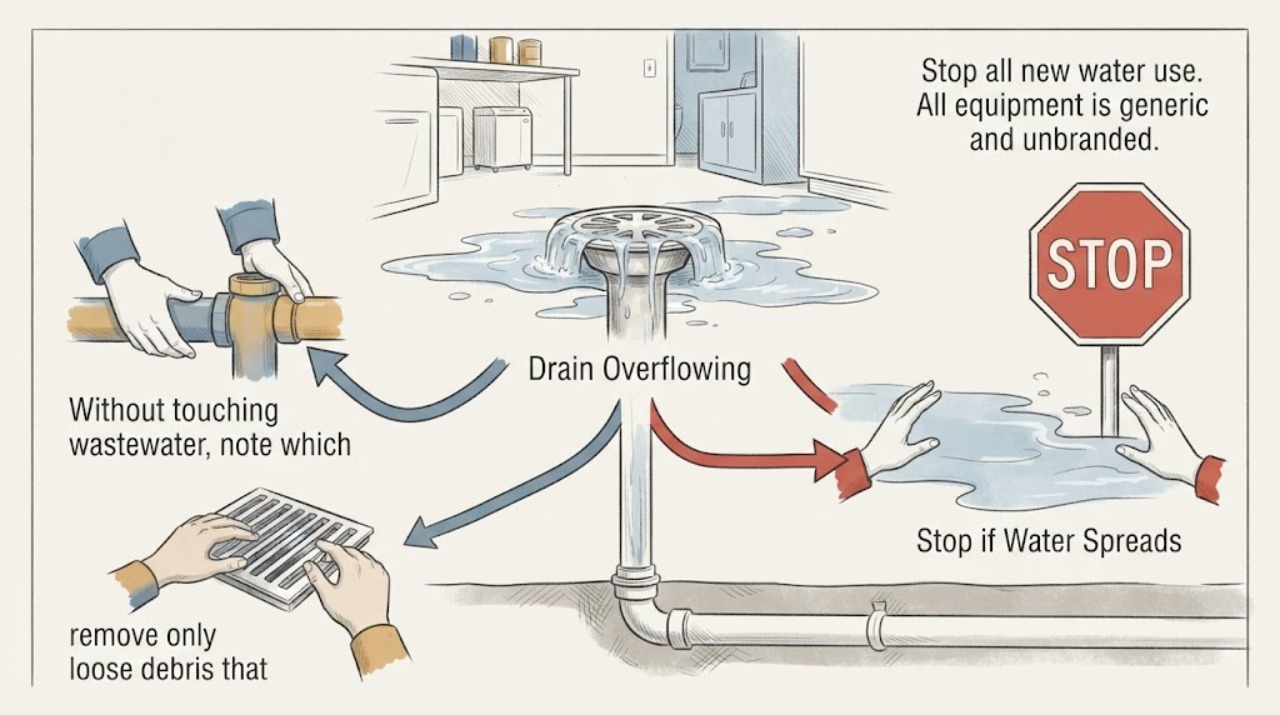
Drain Overflowing: Stop Water, Find the Blockage, and Check Whether the Sewer Is Backing Up
Stop adding water immediately, then determine whether one fixture is overflowing or several fixtures are backing up together. A single drain with a visible, reachable blockage may respond to a cautious plunger test, while water in multiple fixtures, a full cleanout, sewage, or an overflow that returns quickly points to a downstream service-line or public-sewer problem.
-
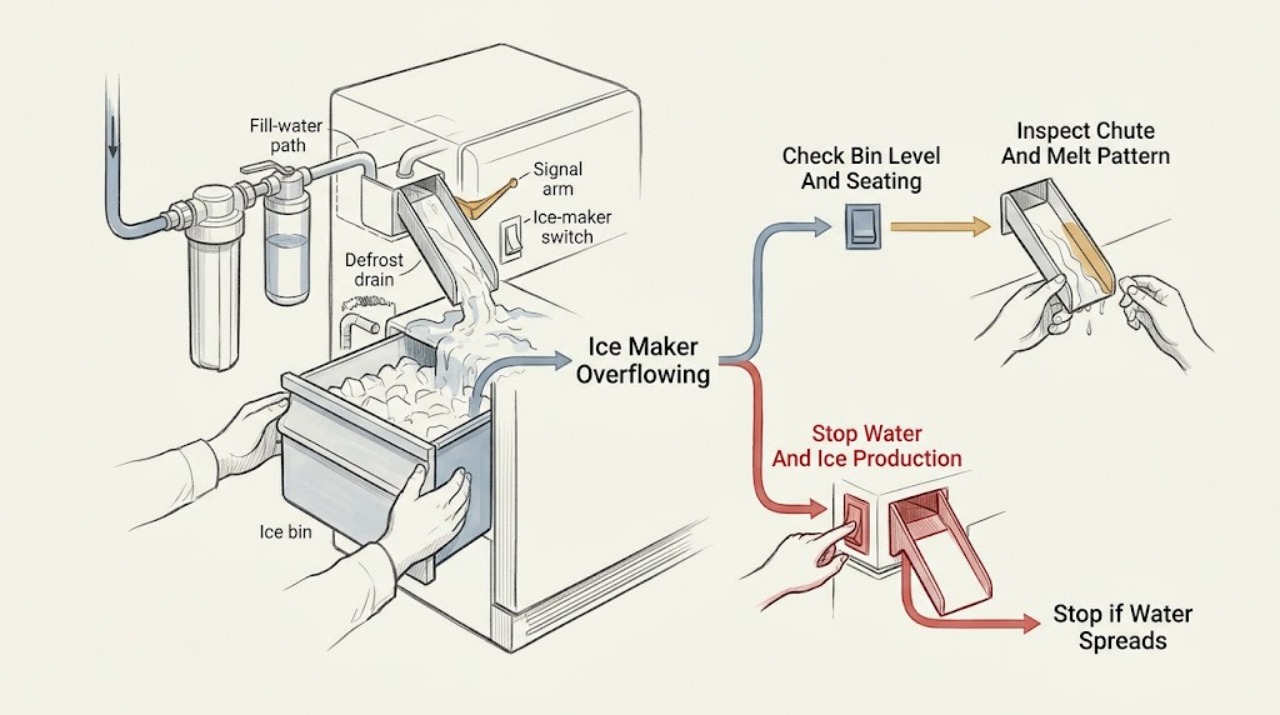
Electrolux Ice Maker Overflowing: Safe Water and Ice Checks
An Electrolux ice maker can appear to overflow because the bin is overfilled, the bin or chute is mispositioned, cubes are bridging or jammed, or meltwater is being mistaken for fresh fill water. First protect the floor and any nearby electrical parts, turn the ice maker OFF using the exact model's control or lift the wire signal arm only where the model uses one, and close the household water shutoff if water is still entering.
-
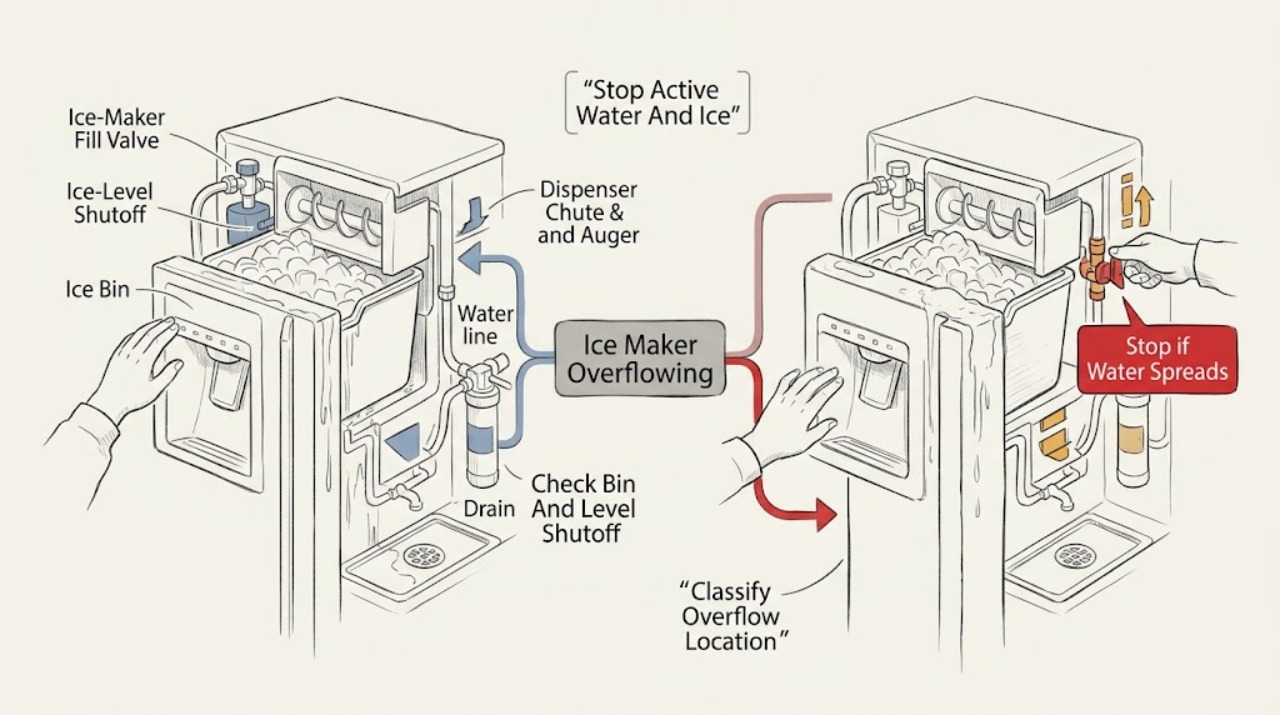
Frigidaire Ice Maker Overflowing: Stop the Water and Separate Fill, Bin, and Meltwater Causes
If water is still entering the ice maker or pooling around the refrigerator, turn the ice maker off using the exact model's control or raise its wire signal arm if that is the documented control, then close the refrigerator's water shutoff from a safe, dry location. Do not keep dispensing or run an ice-making test while water is escaping.
-
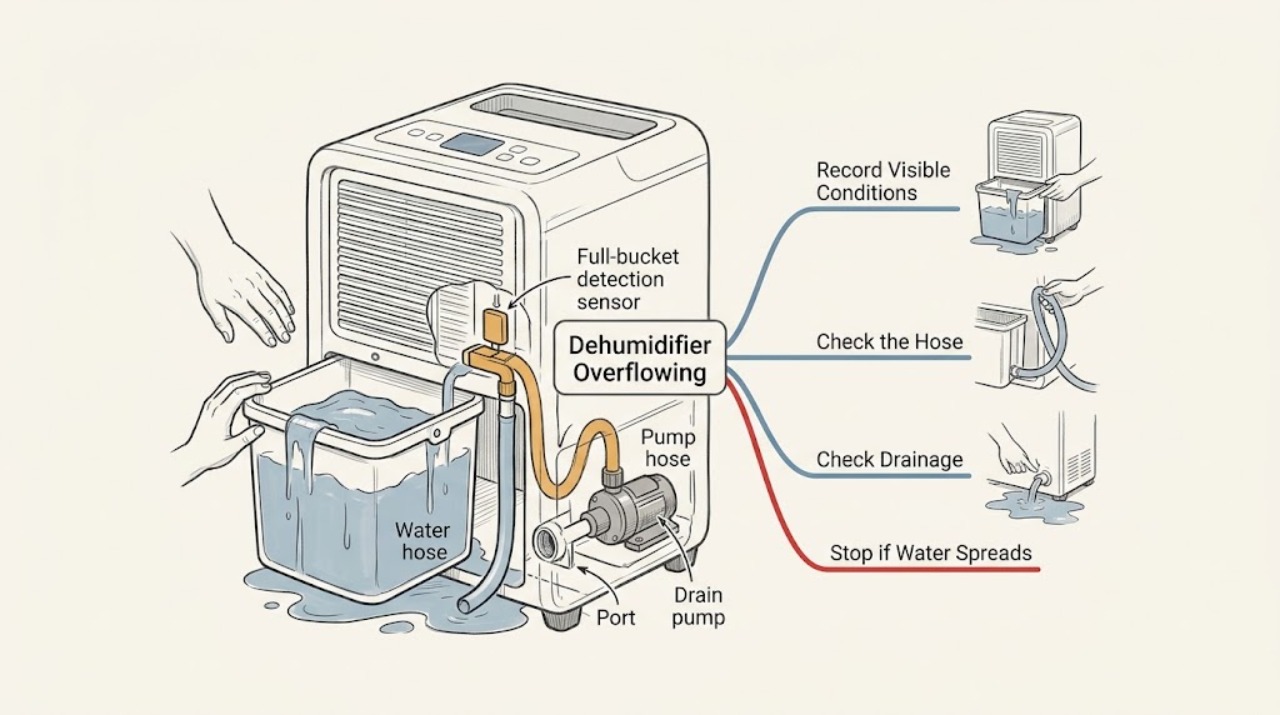
GE Dehumidifier Overflowing: Check the Bucket, Hose, and Pump Path
If a GE dehumidifier is overflowing, stop it before water reaches the cord or outlet and disconnect power only from a safe, dry, accessible point. Empty and correctly reseat the bucket, then determine whether this model is meant to collect in the bucket, drain by gravity, or use an internal pump.
-
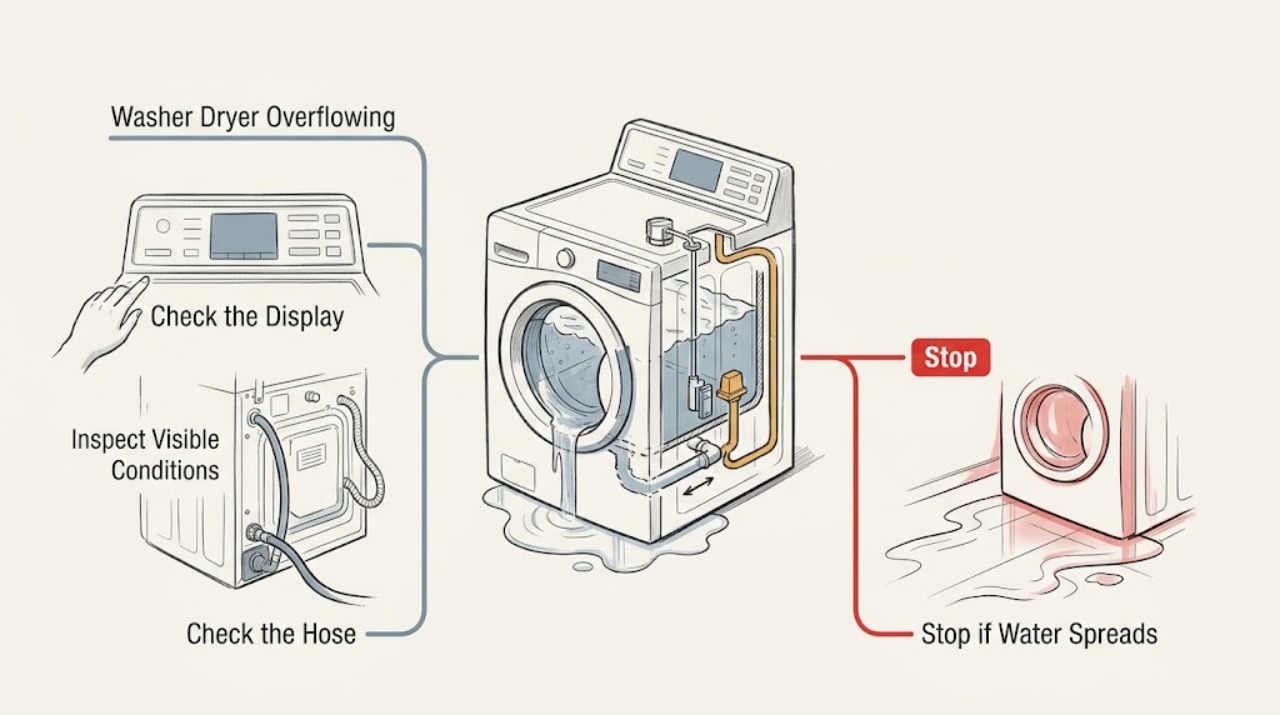
GE Washer Dryer Overflowing
If a GE washer-dryer is overflowing, stop the fill immediately: pause or turn the appliance off, and do not unplug it while standing in water. Once power is off, close the household hot and cold water valves behind the washer.
-
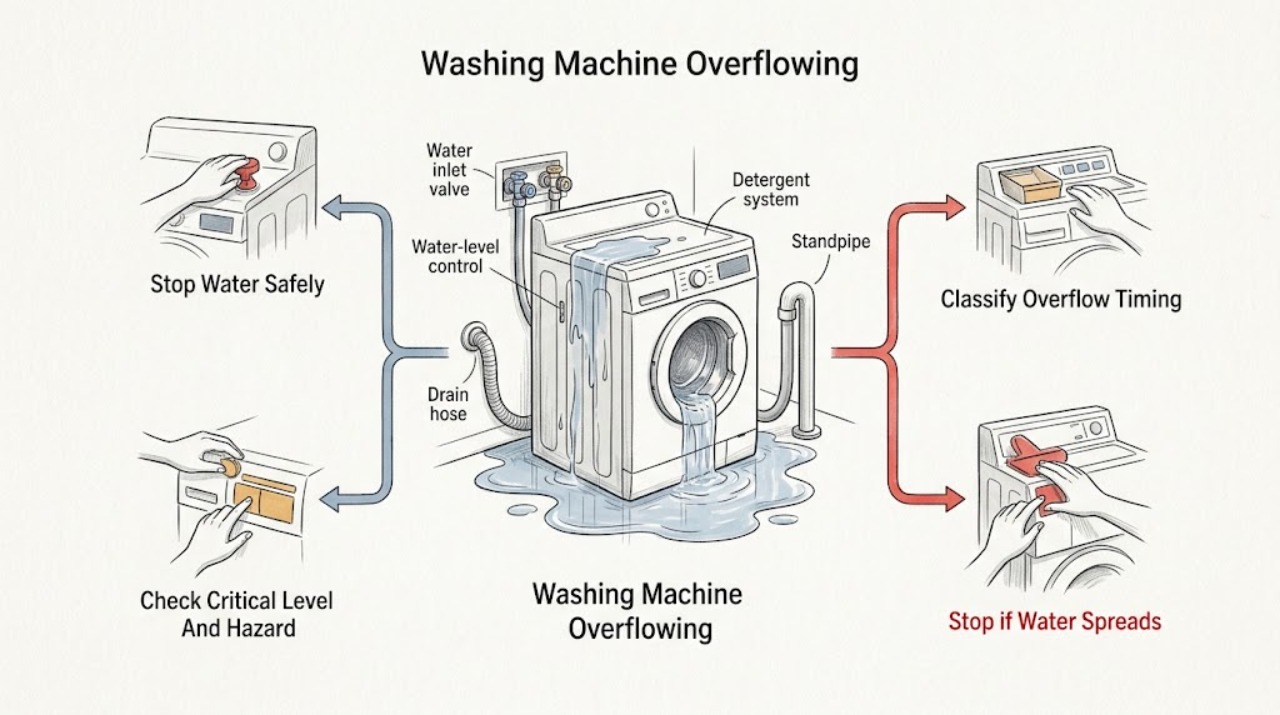
Ge Washing Machine Overflowing
Stop the fill or wash cycle immediately from a dry position. Press Pause or turn the washer off at its controls; if water is still flowing and the shutoff valves are safely reachable without standing in water or touching wet electrical parts, close both hot and cold supply valves, or shut off the home's water supply.
-
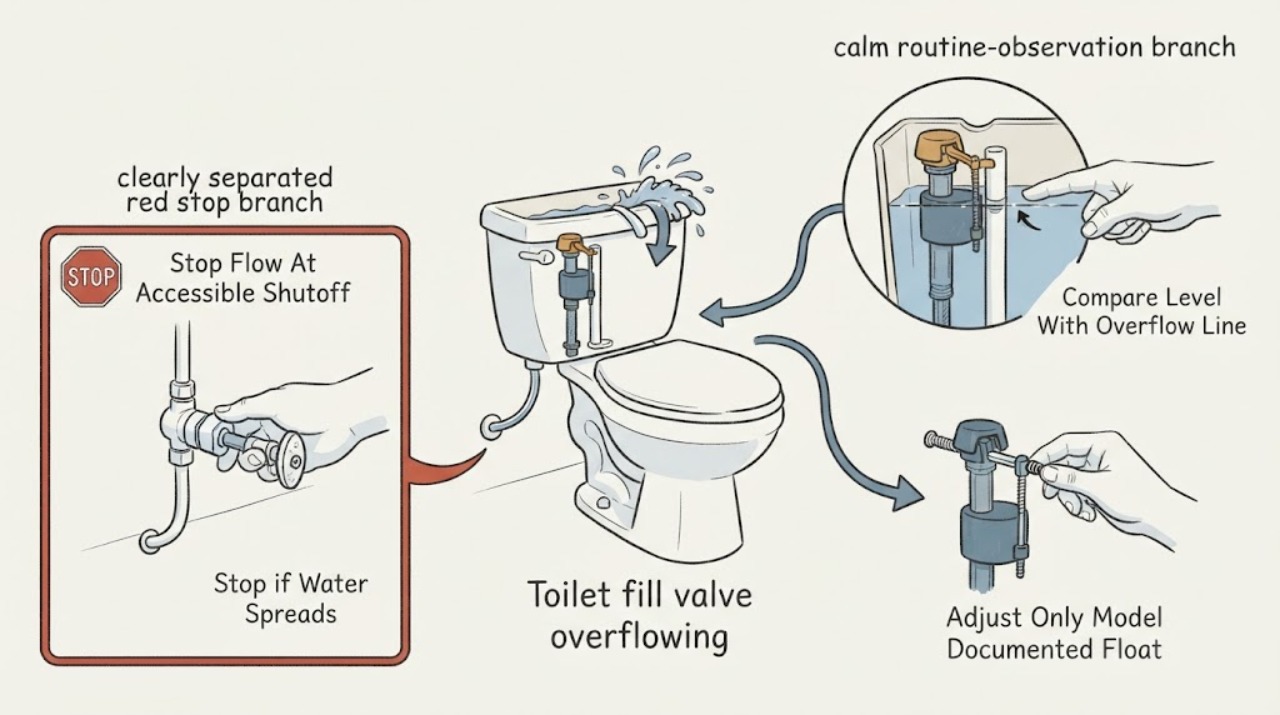
Glacier bay toilet fill valve overflowing: What to Check and What to Do Next
If a Glacier Bay toilet's tank water is rising above the water line and entering the overflow tube, the float may be set too high or the fill valve may not be shutting off. First prevent further overflow with the accessible fixture shutoff, then compare the tank level with the marked line.
-
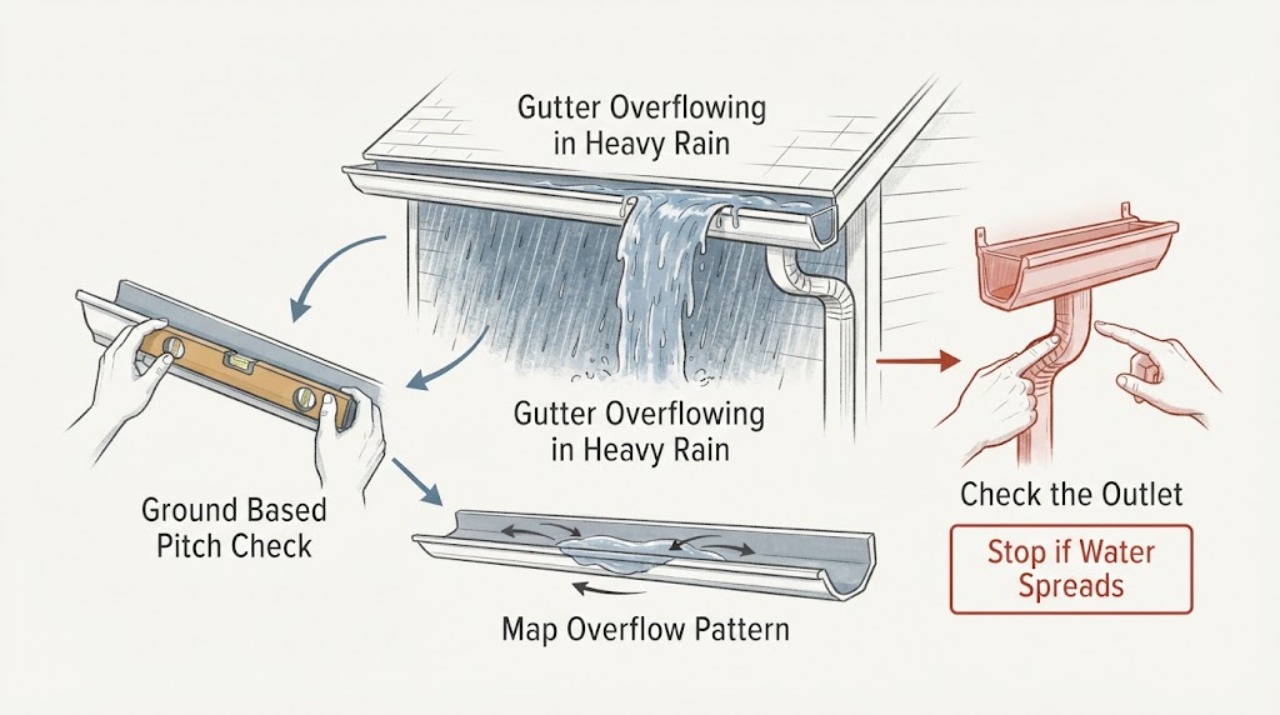
Gutter Overflowing in Heavy Rain: Inadequate Pitch Checks and Next Steps
If a gutter overflows in heavy rain and the water collects at one low section, inadequate fall or a sagging channel is a plausible path, but a blockage, concentrated roof-valley flow, undersized gutter, or limited downspout capacity can look similar. Observe the overflow from a safe position during or just after rain, record exactly where it starts, and on a dry day look for standing water or a visible low point without using a ladder or walking on the roof.
-
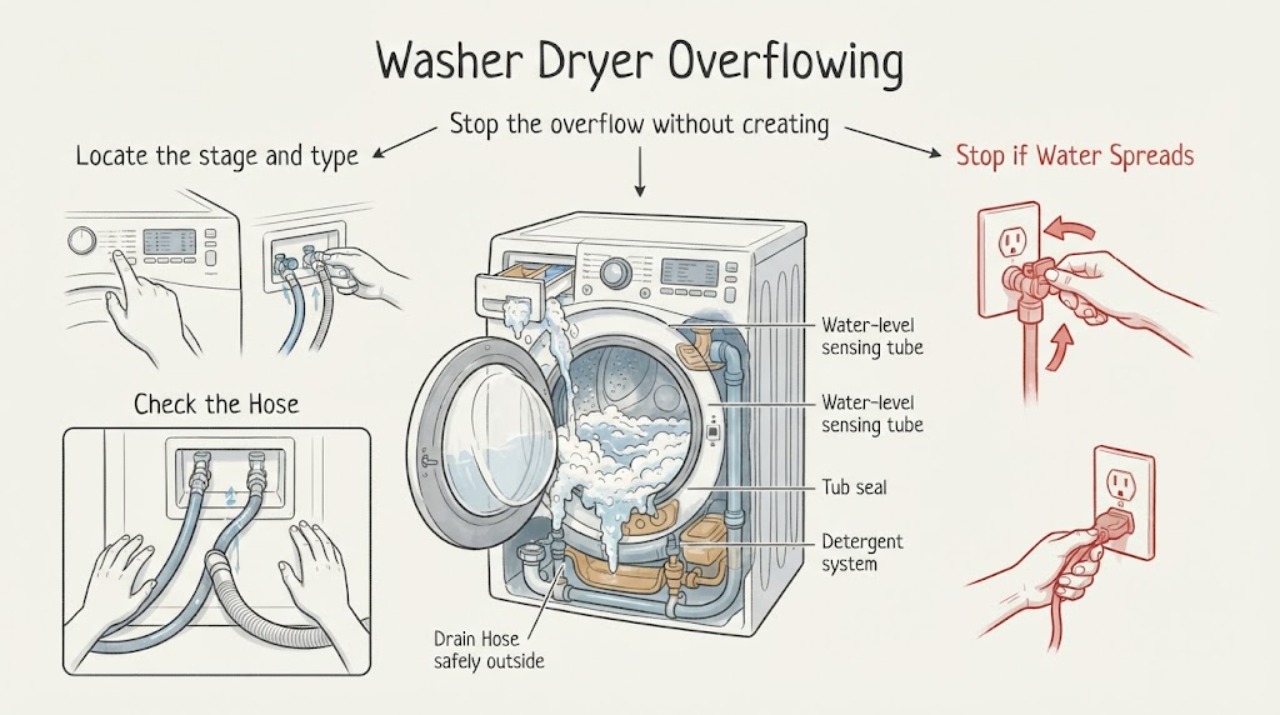
Haier Washer Dryer Overflowing
Stop the cycle, close both water taps, and disconnect power only when you can do so without stepping into unsafe standing water or touching a wet connection. If water continues entering with the controls Off, keep the taps closed and arrange service.
-
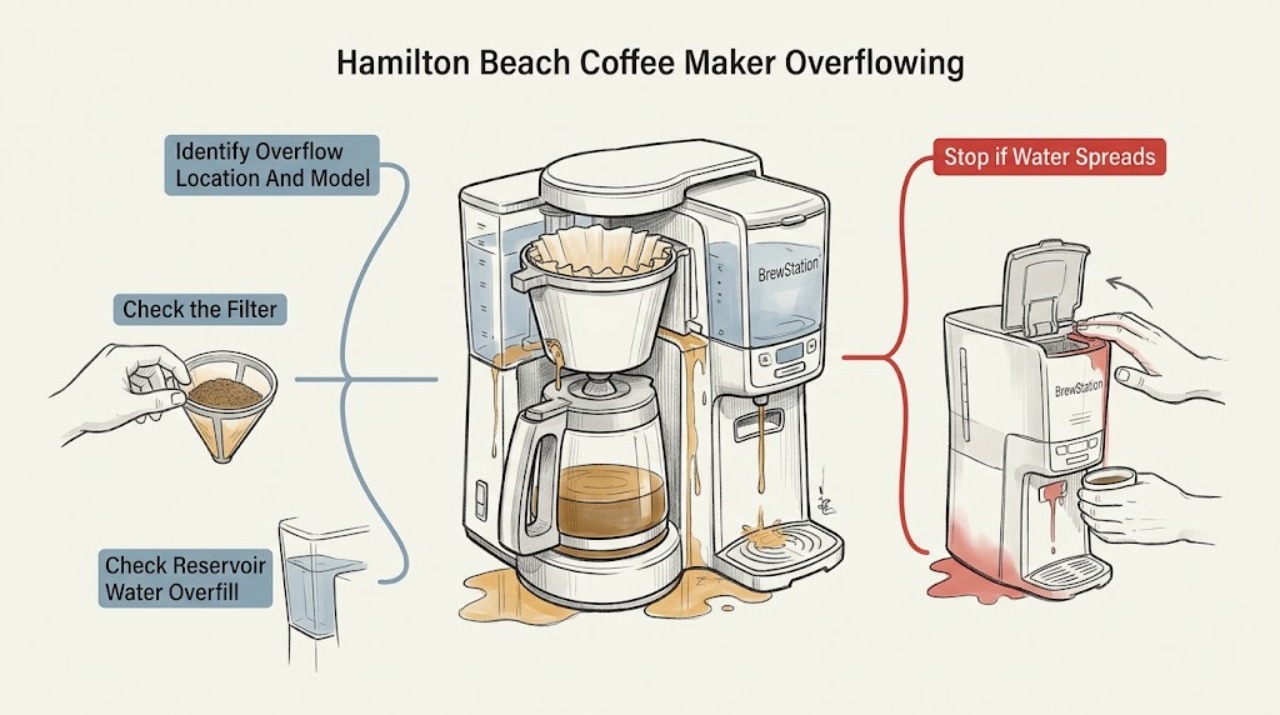
Hamilton Beach Coffee Maker Overflowing: Trace the Basket, Reservoir, or BrewStation Path
First unplug the coffee maker and let hot water or coffee cool before lifting a filter basket, holder, reservoir, or tank. Identify where the liquid escaped: water from the reservoir, coffee from a basket, coffee from the carafe or cup, or a leak from a BrewStation/One Press tank.
-
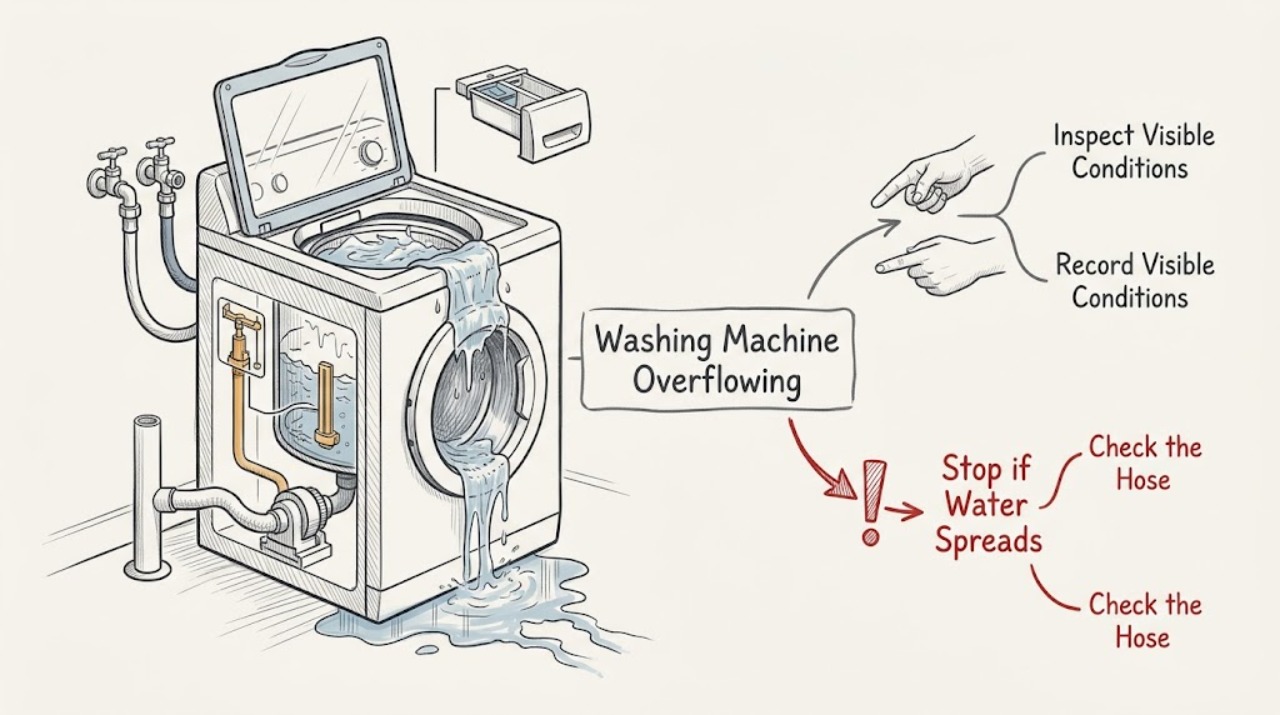
Hotpoint Washing Machine Overflowing
If a Hotpoint washer is still filling, stop the cycle and close both water-supply valves from a dry, safe position. Do not step into water to reach a plug or breaker.
-
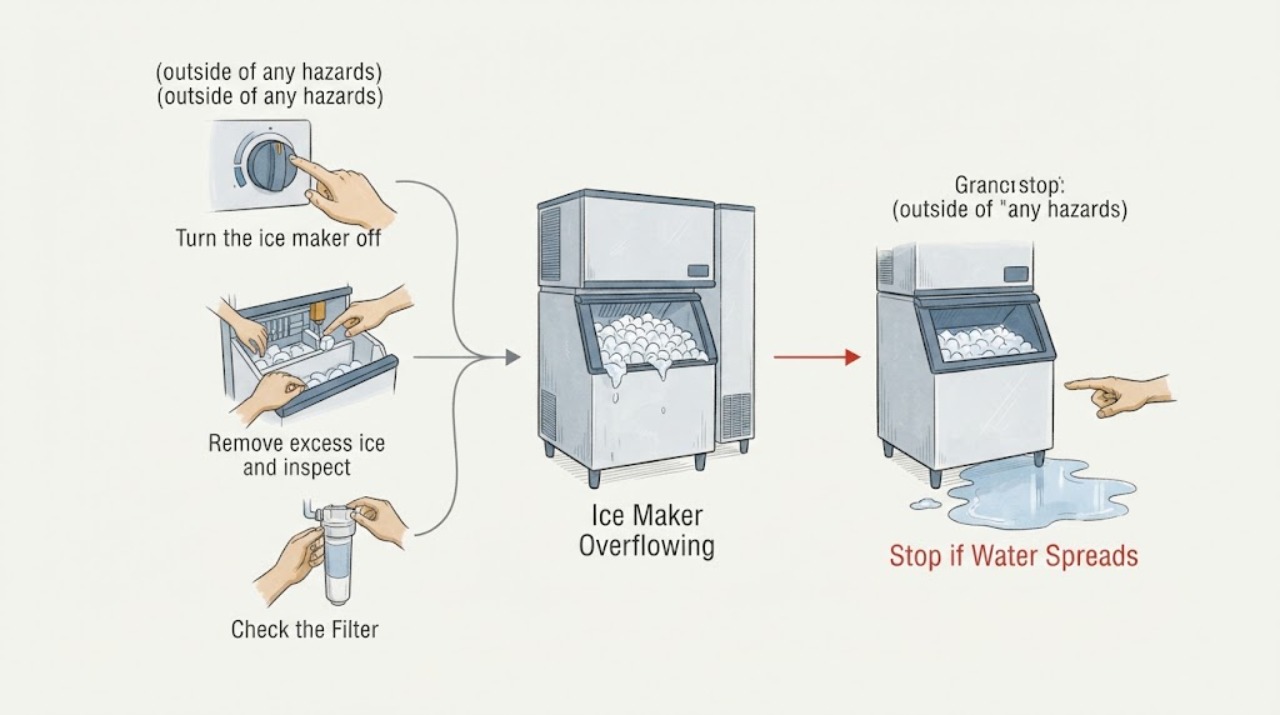
Ice Maker Overflowing
First stop the ice maker and protect the floor from water. Determine whether overflow is loose ice in the bin, water from the fill tube or filter, a chute blockage, or a continuous fill fault. Check the bin/chute and accessible water connections without opening sealed components; if water keeps entering, there is a cracked line or filter, or the maker refills continuously, leave it off and arrange service.
-
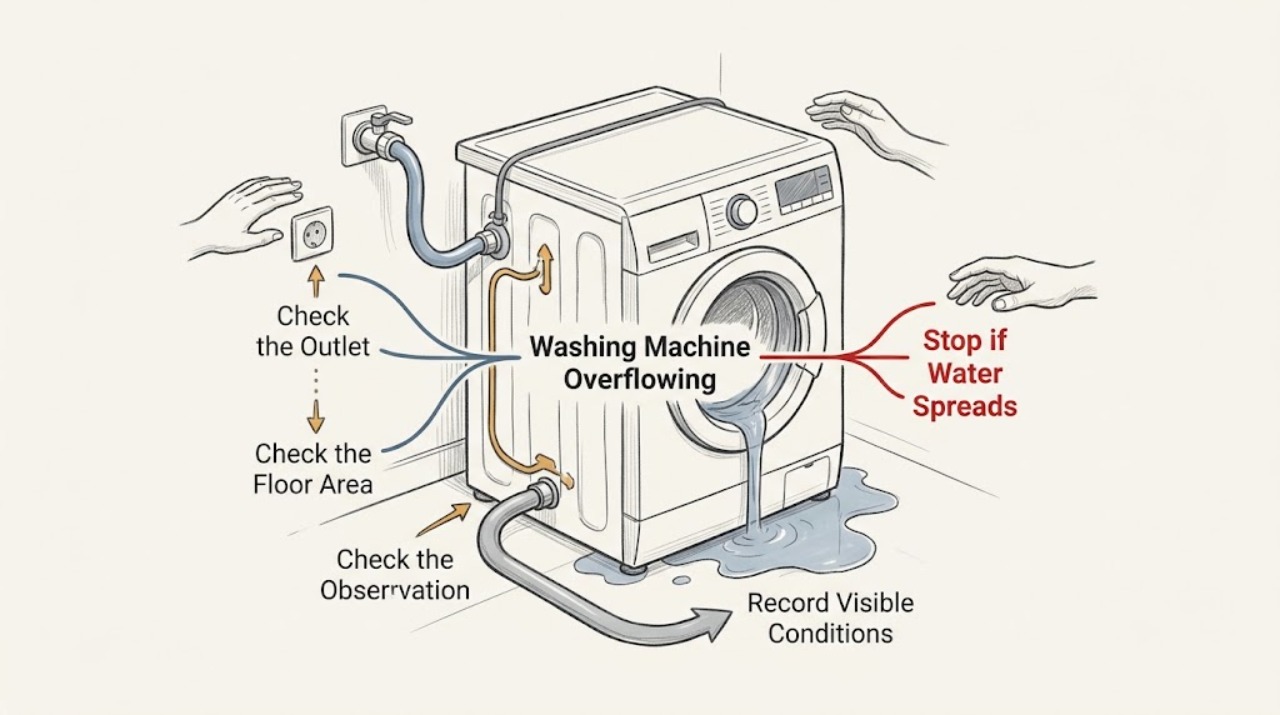
Kenmore Washing Machine Overflowing: Stop the Water and Find the Cause Safely
Pause the cycle immediately, turn off both household water valves, and disconnect power only if the floor, plug, and hands are dry and the outlet is safely reachable. Never reach into a moving tub or handle a wet electrical connection.
-
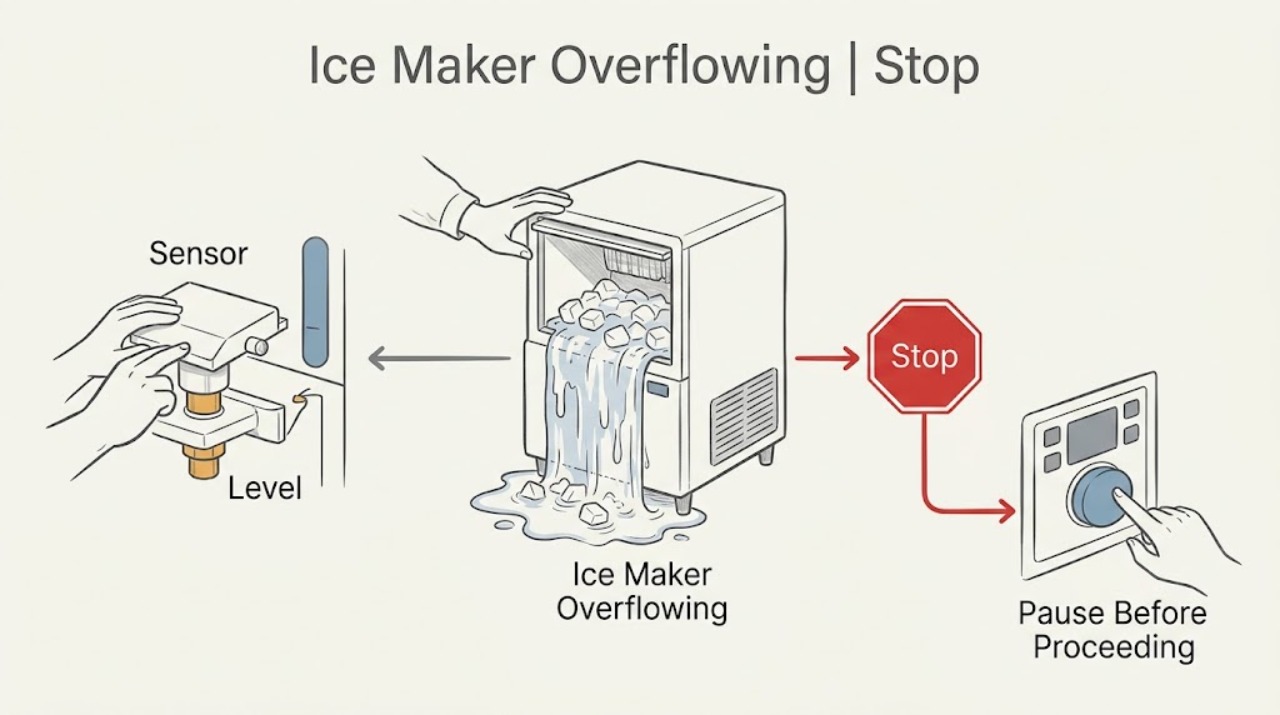
KitchenAid Ice Maker Overflowing: Check Level, Sensor, and Water Supply
Turn the ice maker off and stop the water supply if water continues entering. KitchenAid says to check level, a blocked or dirty bin sensor, and accelerated-ice settings. If water still overflows, keep it off and request service.
-
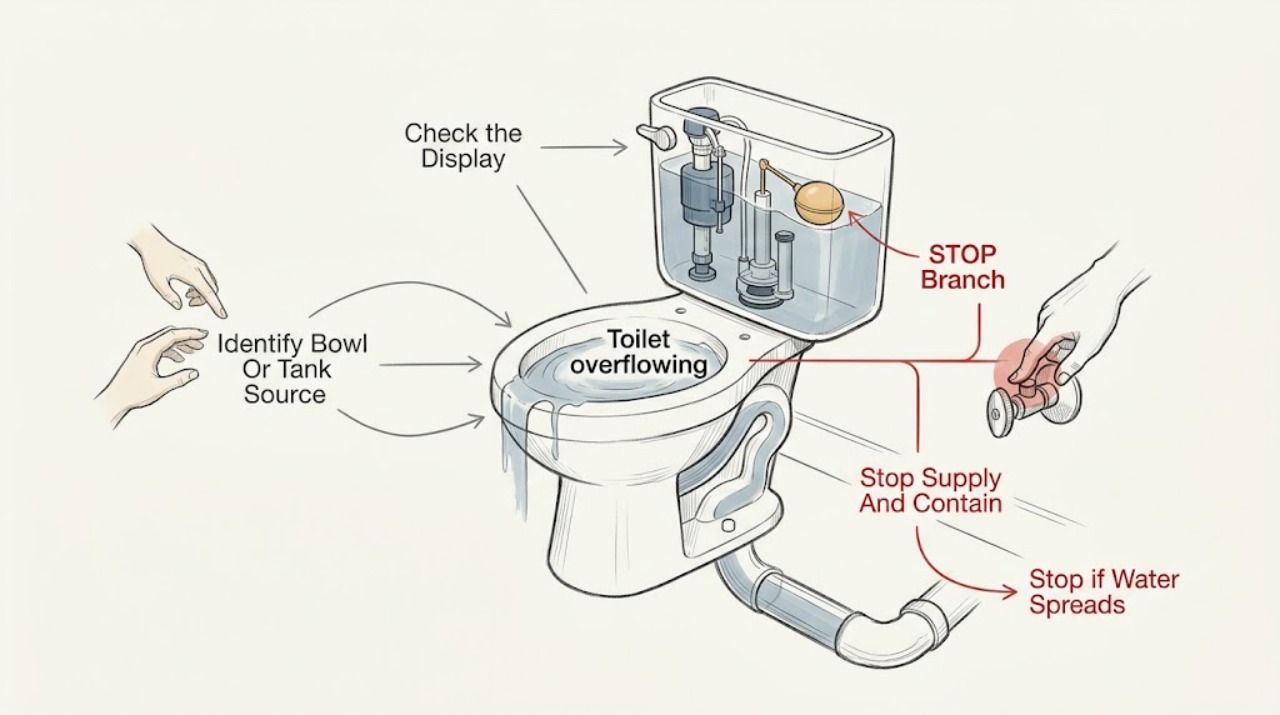
Kohler toilet overflowing: What to Check and What to Do Next
Stop the incoming water before a Kohler toilet reaches the rim: turn the toilet's local supply shut-off clockwise if it operates normally, then do not flush again. If the bowl is high because water is not leaving, a trapway or waste-line clog is likely; use only a toilet plunger or auger after the supply is stopped and the water level is controlled, and stop if the obstruction does not clear.
-
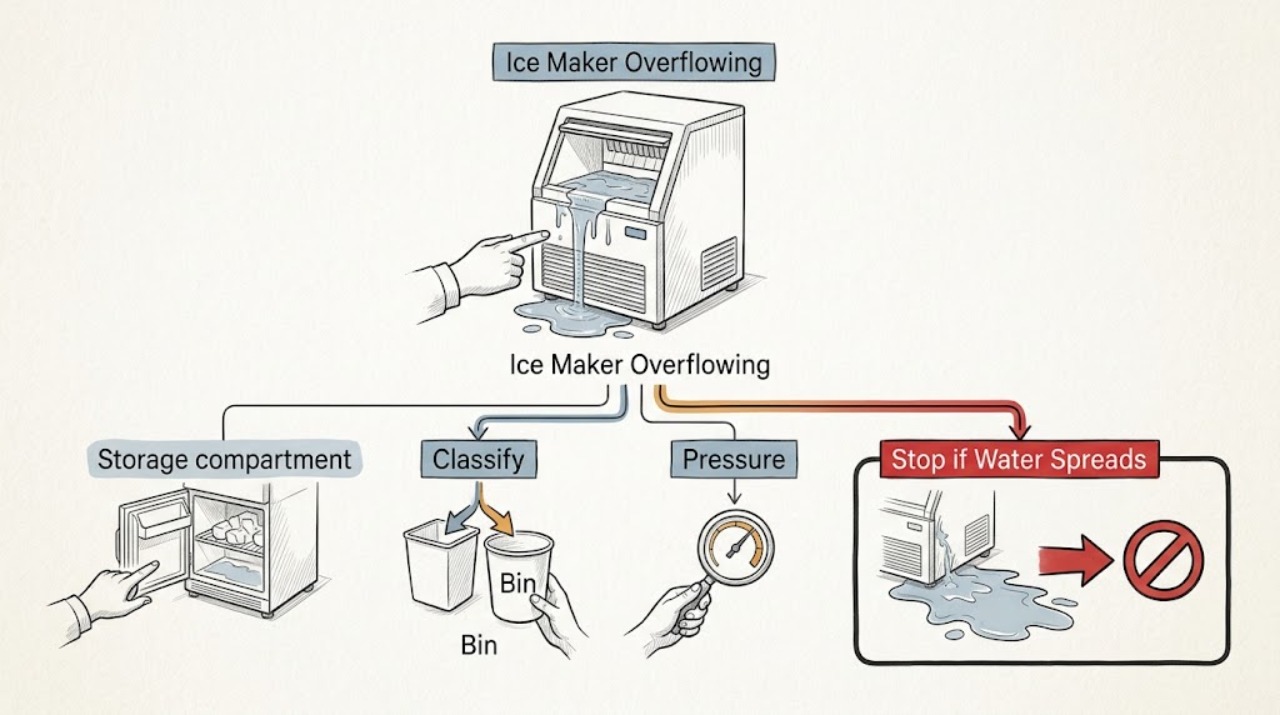
LG Ice Maker Overflowing: Check Water Pressure, Tray Type, and Bin Position
Turn ice production off if water is spilling, then identify whether water is overfilling the tray or ice is spilling from the bin. LG links tray overfill to water pressure and model-specific design, while a displaced bin can spill cubes. Keep it off and request service if the condition persists.
-
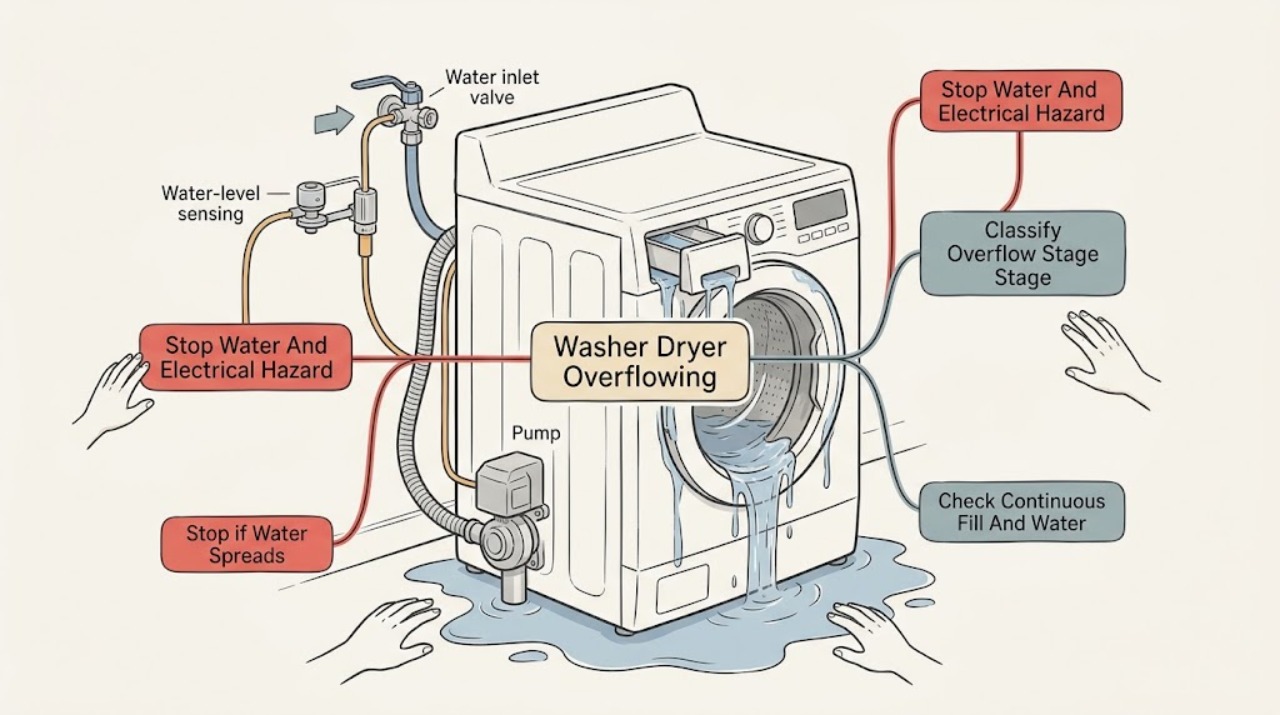
LG Washer Dryer Overflowing: Stop Water and Find the Cause
Stop the cycle immediately and close the hot and cold supply faucets from a dry position. If water is near the plug or outlet, there is smoke, a burning smell, a damaged cord, or active flooding, do not touch the appliance; isolate power only from a safe dry location and arrange help.
-
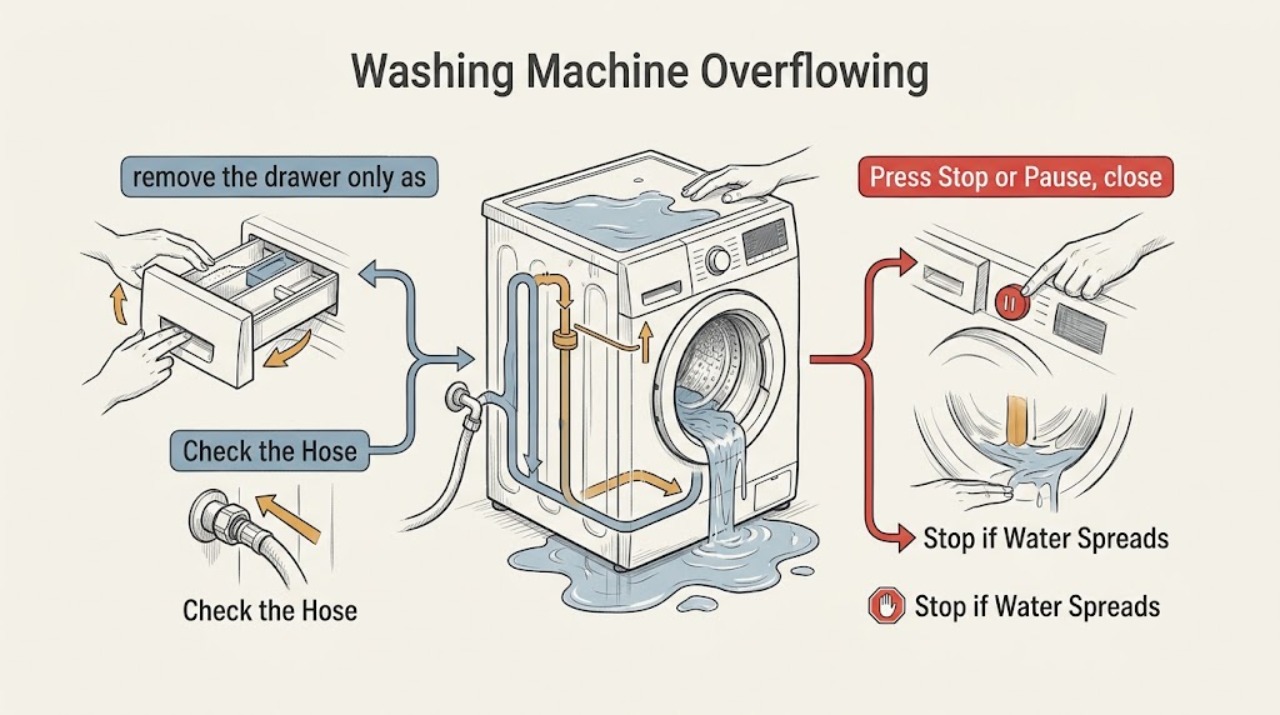
LG Washing Machine Overflowing: Stop the Water and Find the Cause
If an LG washing machine is overflowing, stop the cycle and close the water faucets if water is still entering. Keep water away from the plug, outlet, and controls; only disconnect power if the area is dry and the plug is safely reachable.
-
LG Water Heater Overflowing: Separate a Relief Discharge From a Leak
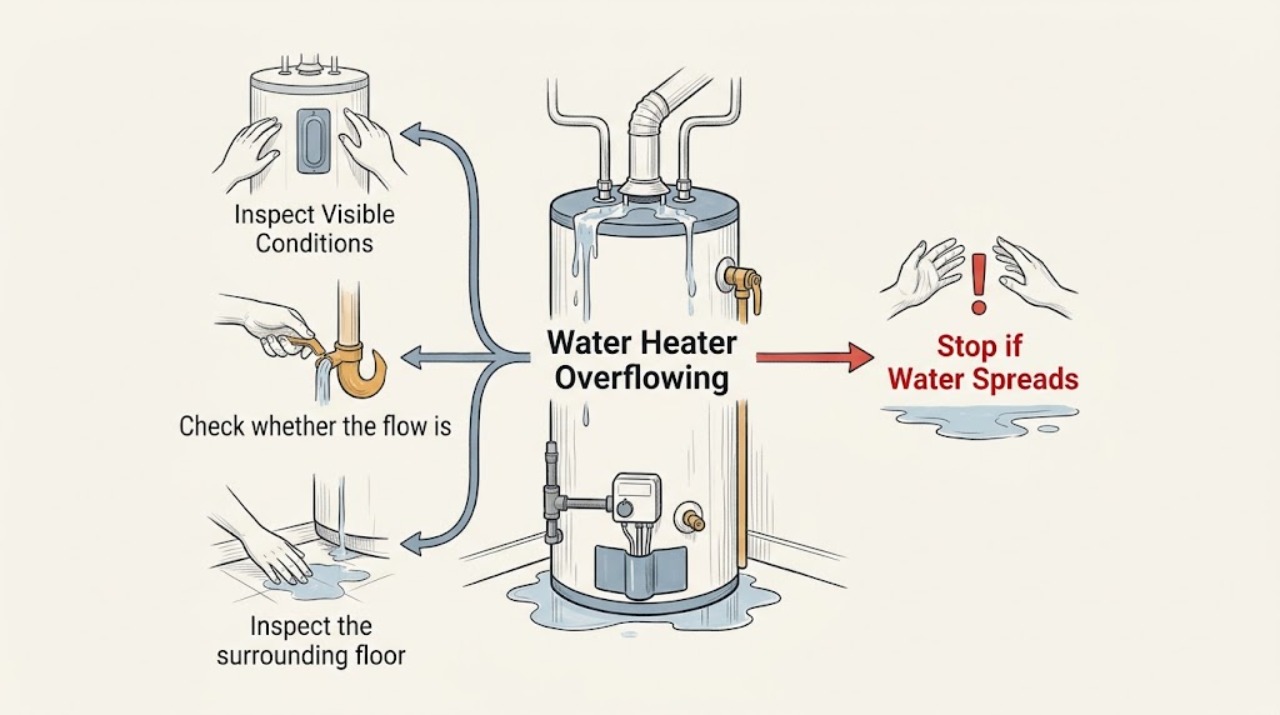
Treat an LG water heater that appears to be overflowing as a water-safety problem. From a safe position, identify whether water is coming from a connection, condensate drain, tank body, or temperature-and-pressure relief discharge. Shut off water and power if safe, never cap the relief outlet, and call qualified plumbing/service personnel for ongoing discharge or any tank leak.
-
Maytag Ice Maker Overflowing: Check Leveling and Stop the Water Safely
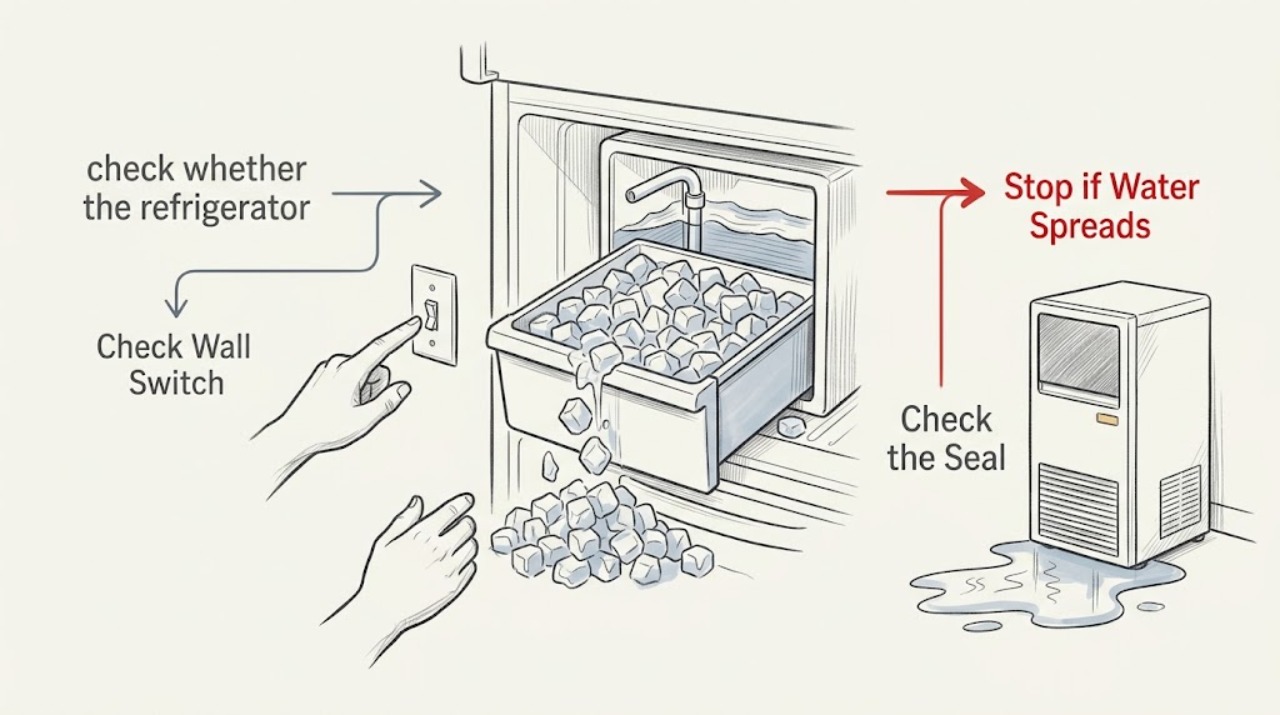
If a Maytag ice maker is overflowing, stop the water supply to the ice maker and turn the ice maker off if water continues to rise. Then check whether the refrigerator or ice maker is level and look for a visible fill or drainage issue. Do not keep cycling a leaking unit; Maytag's installation guidance directs persistent overflow to service.
-
Maytag Washing Machine Overflowing: Stop Water Safely and Find the Cause
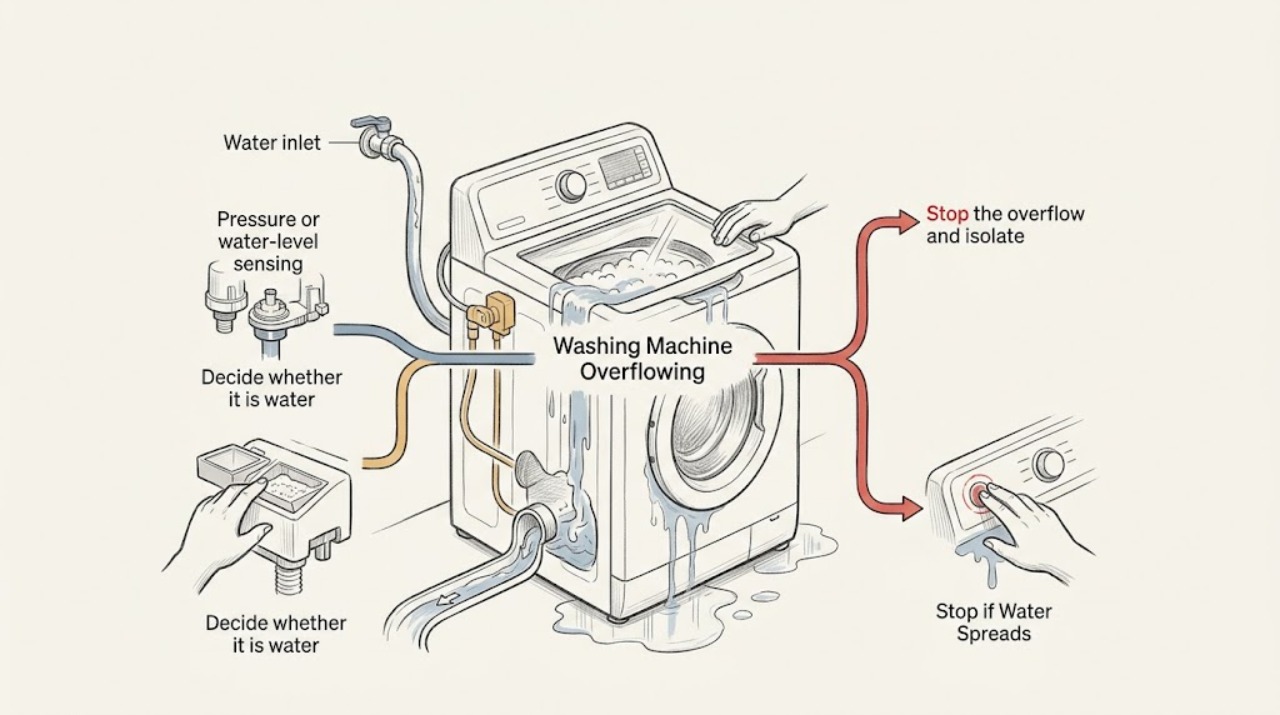
If a Maytag washer is overflowing, stop the cycle immediately and keep people away from the water. If the floor is dry and safe, close the washer's hot and cold supply taps; if water is near an outlet, cord, or appliance, do not step into it or touch the plug or controls.
-
Miele Washing Machine Overflowing
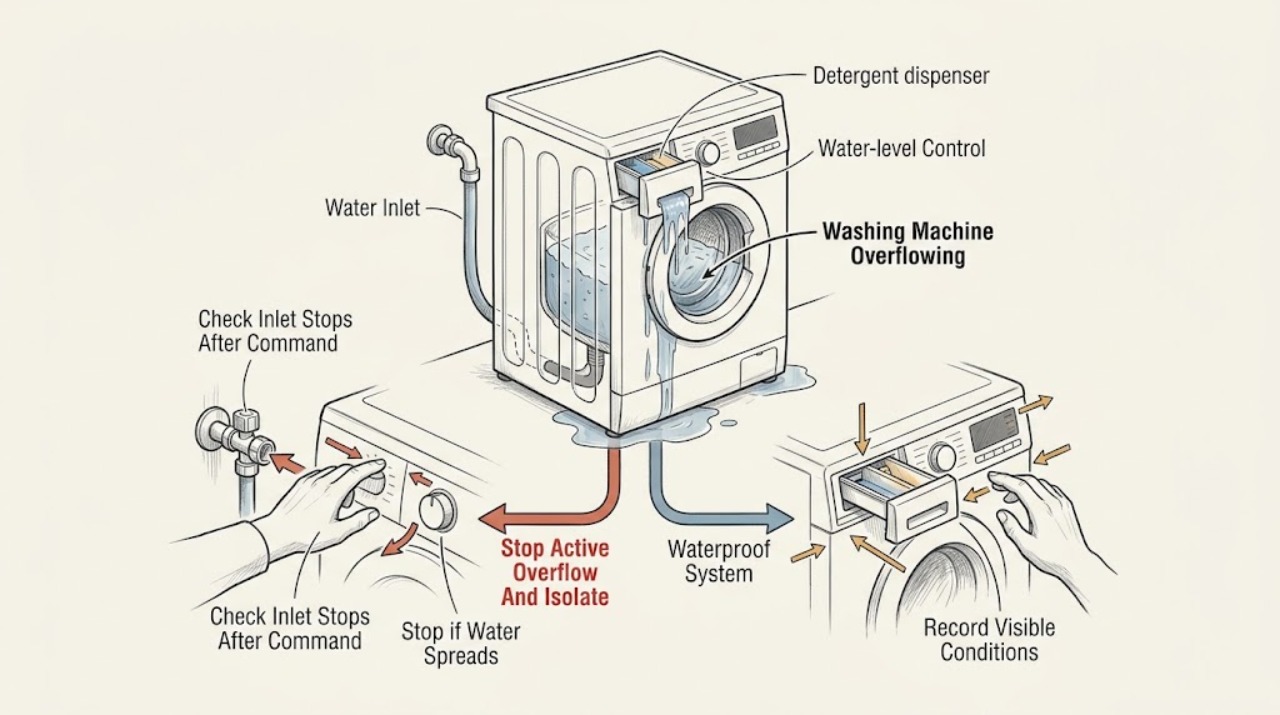
If a Miele washing machine is actively taking in water or water is approaching the door or tub rim, stop the programme, close the water tap from a dry safe position, and isolate power without touching wet electrical equipment. Then distinguish a true overfill from suds rising, a blocked drain or drain-pipe backflow, a leaking detergent drawer, or water escaping underneath.
-
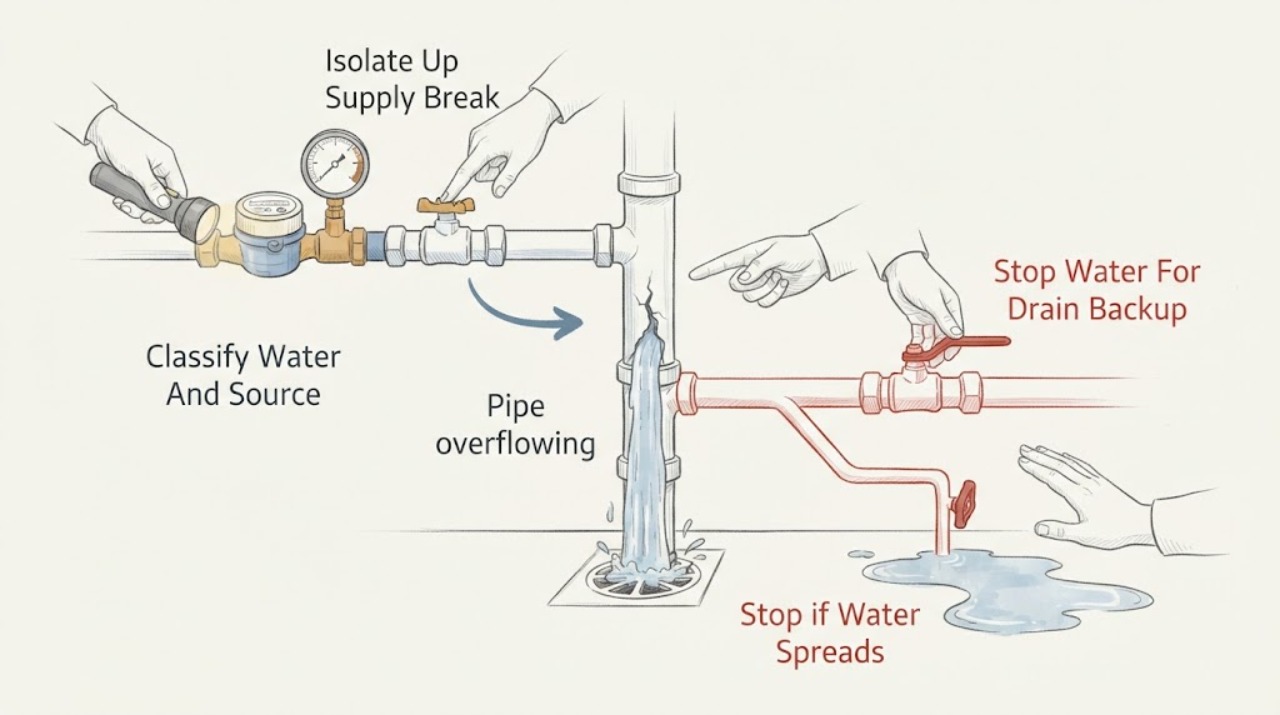
Pipe overflowing: identify a supply break versus a drain or sewer backup
An overflowing pipe needs to be classified before you touch it: clear water actively spraying or flowing from a pressurized supply pipe calls for the accessible fixture or main water shutoff, while dirty, odorous, or rising water from a drain, cleanout, toilet, or floor drain means stop using all water and treat it as a possible sewer backup.
-
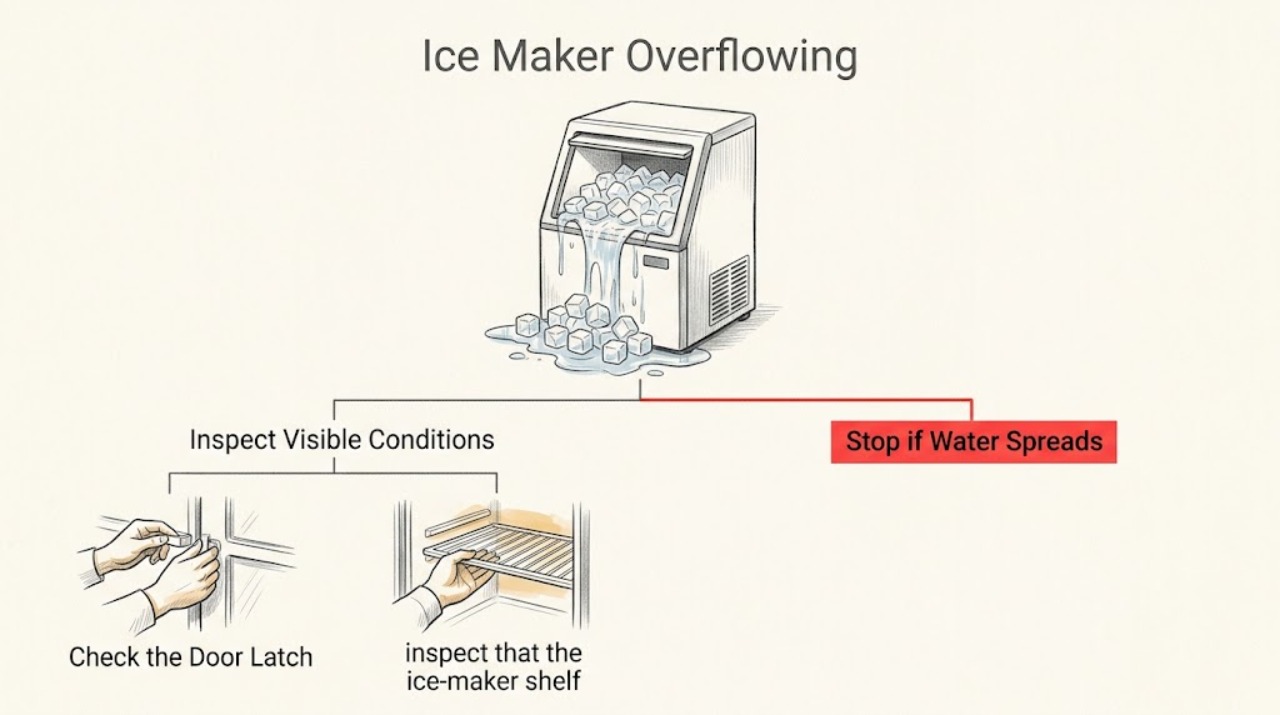
Samsung Ice Maker Overflowing
A Samsung ice maker overflows when its full-level sensor or arm does not see the ice rise as expected, often because the bucket or shelf is in the wrong position. Reinstall the bucket and any shelf exactly as the model shows, then observe whether the level reaches the sensor. Do not repeatedly press Test on a filled tray; persistent overflow needs service.
-
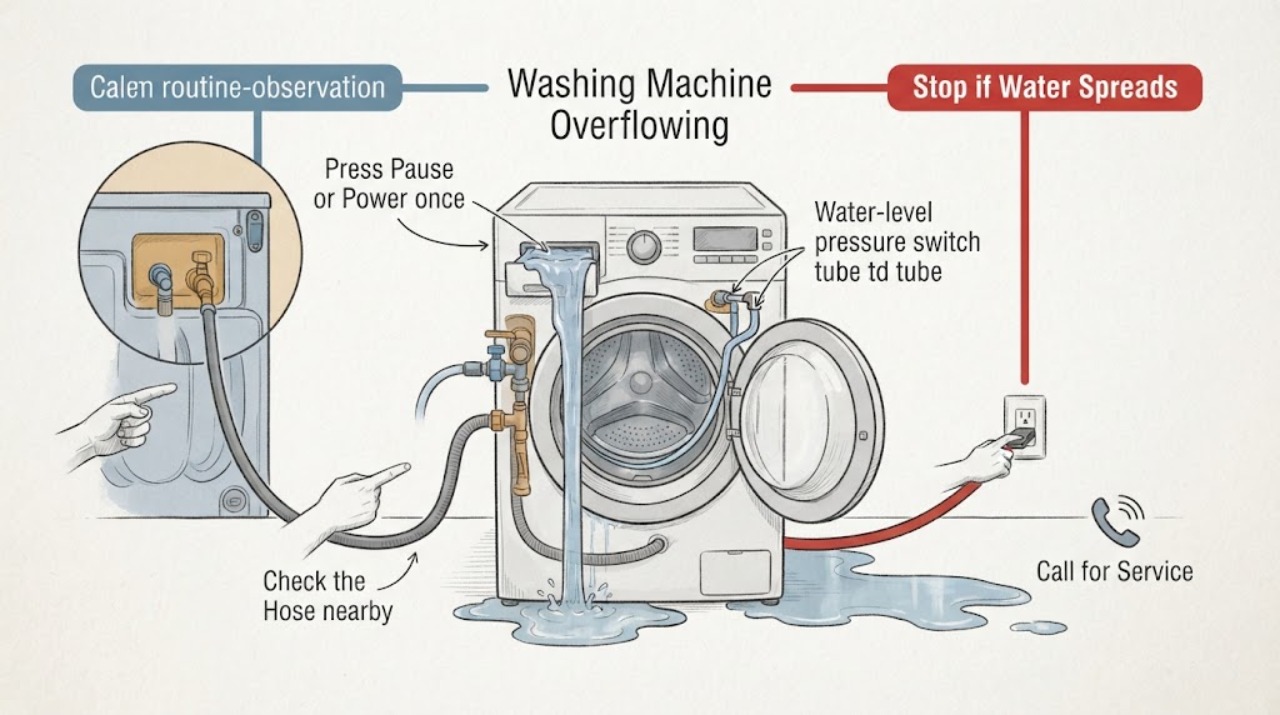
Samsung Washing Machine Overflowing: Stop the Water and Find the Cause
If a Samsung washer is actively overflowing, pause it and close the water valves immediately if they are safely reachable, then isolate power only from a dry, safe location. Keep clear of standing water near electrical equipment and hot water.
-
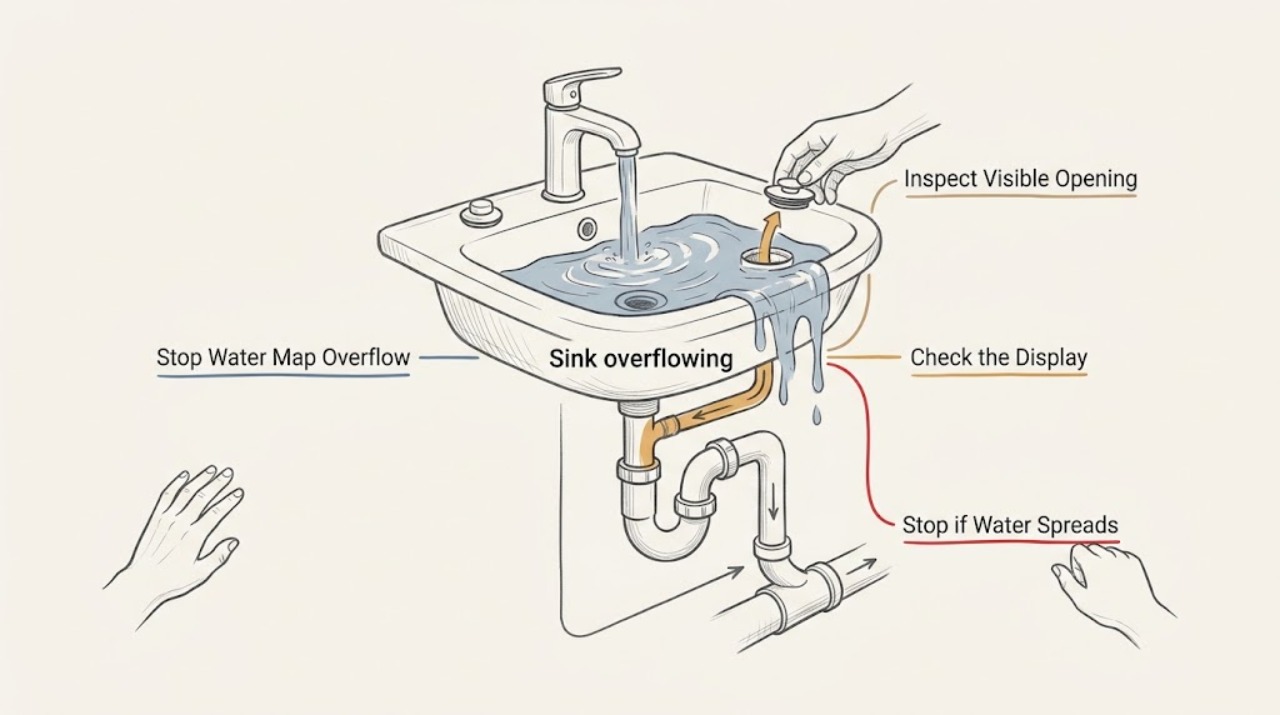
Sink overflowing: stop the water and find the safe next step
Turn off the faucet and stop using every nearby water fixture immediately. Identify whether clear water is simply entering faster than the sink drains, or whether dirty water is coming back through the drain; protect people, cabinets, and nearby electrical equipment without reaching into contaminated water.
-
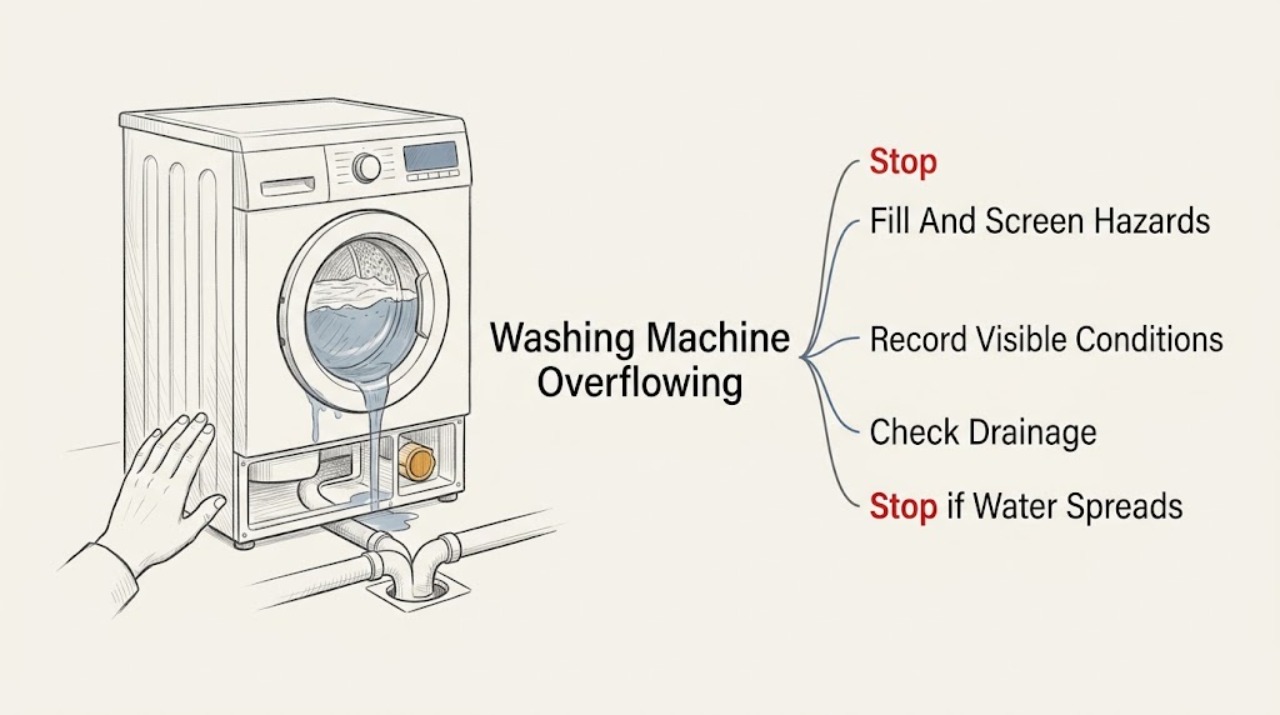
Speed Queen Washing Machine Overflowing: Stop the Water and Find the Cause Safely
If a Speed Queen washer is overflowing, stop the cycle and close both water taps from a dry, safe position; do not keep resetting or running the machine. Then determine whether water continues entering with the controls off, or whether the tub is overflowing because it cannot drain, the drain receptacle is blocked, excess suds are present, or the load and hose installation are causing a backup.
-
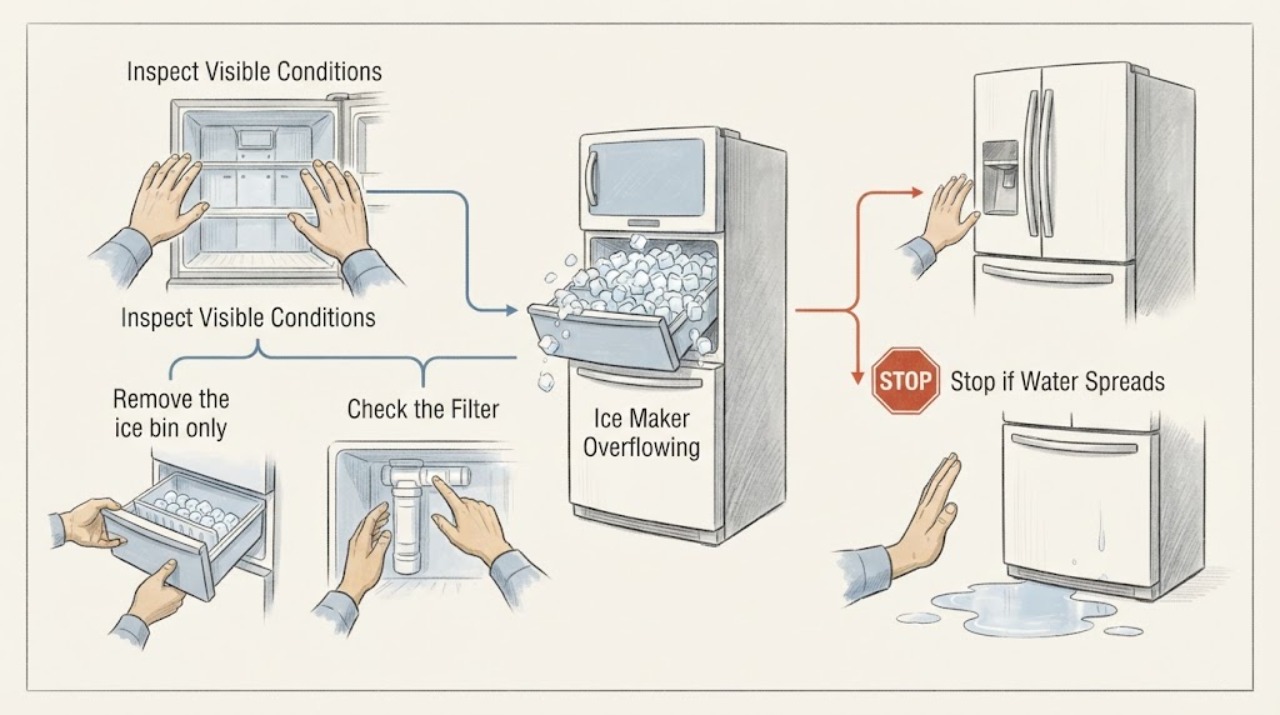
Thermador Ice Maker Overflowing
For a Thermador ice maker that is overflowing, stop dispensing or harvesting ice, check for a jammed or stuck ice-maker arm and an overfilled bin from the outside, and use the exact model manual for the ice-maker controls. Do not force the mechanism or use sharp tools; persistent overflow needs qualified service.
-
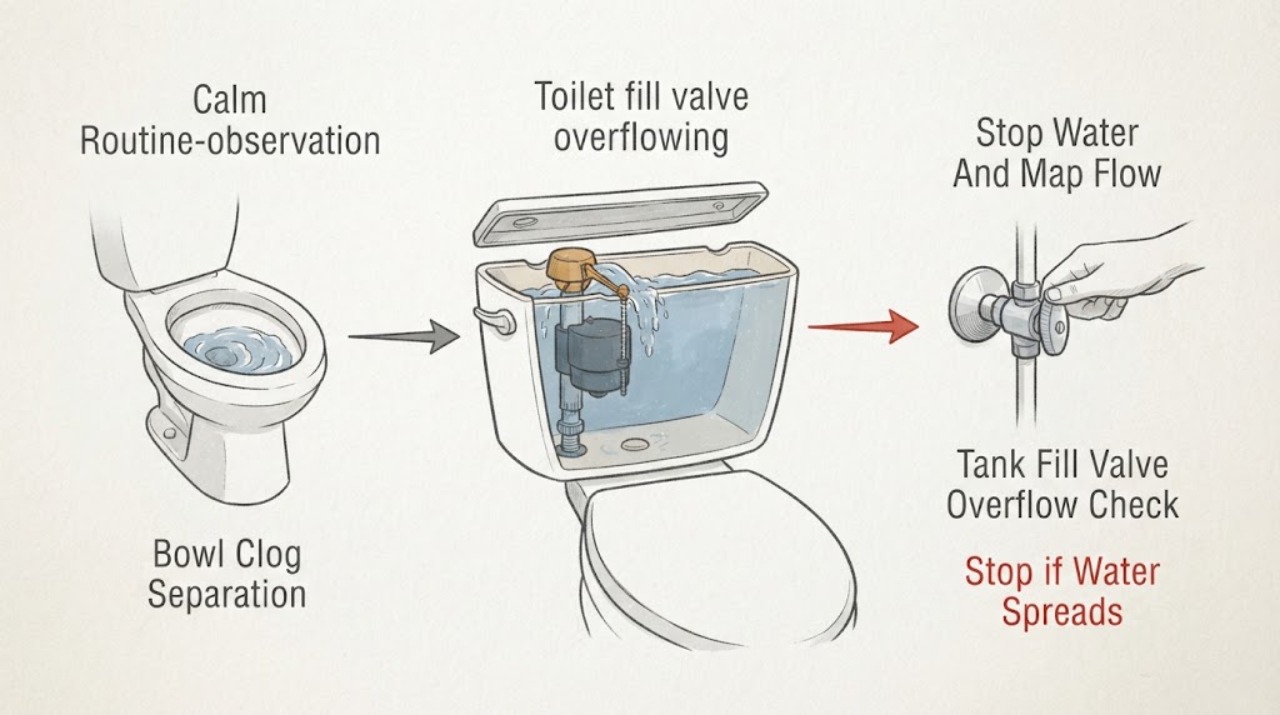
Toilet fill valve overflowing: What to Check and What to Do Next
If a toilet seems to be overflowing around the fill valve, stop pressing the handle and close the accessible toilet supply valve if it turns normally.
-
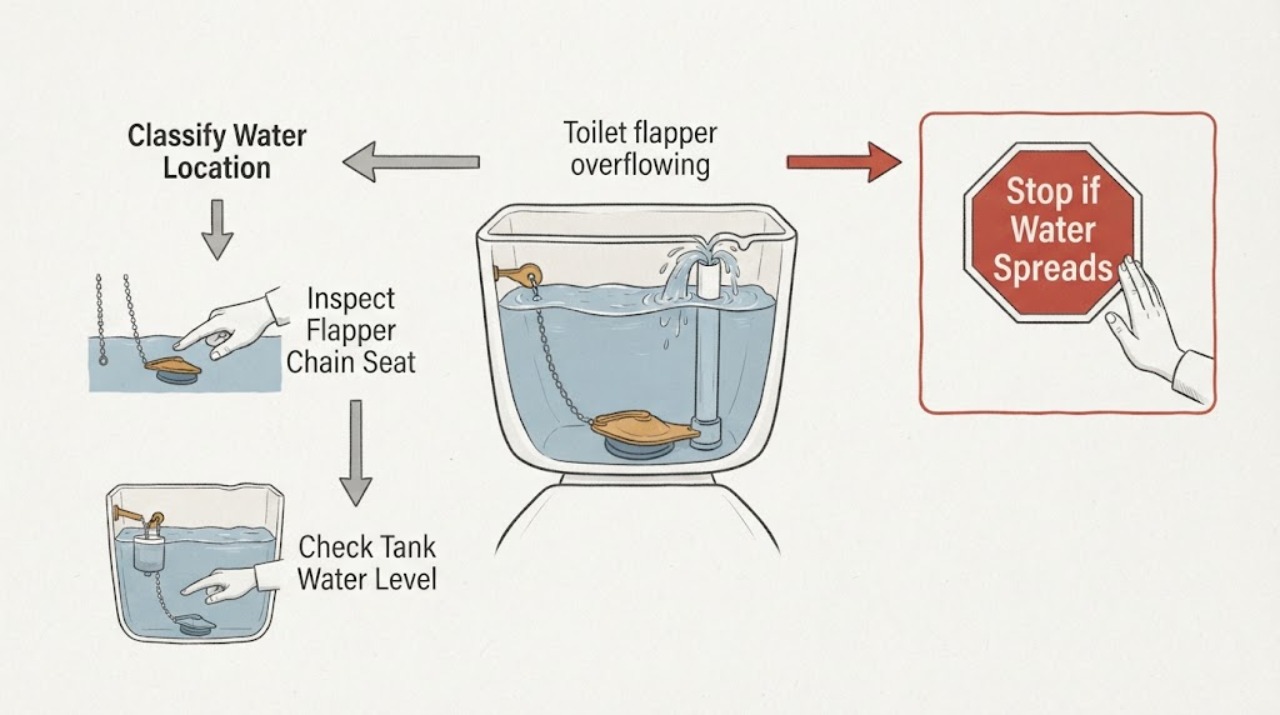
Toilet flapper overflowing: What to Check and What to Do Next
A flapper normally causes a tank-to-bowl leak or a toilet that keeps refilling; it does not by itself explain a bowl that rises and drains slowly. First stop flushing, turn the toilet's accessible shutoff valve clockwise if water is still entering, and identify whether water is rising in the bowl, spilling from the tank into the overflow tube, or appearing on the floor.
-
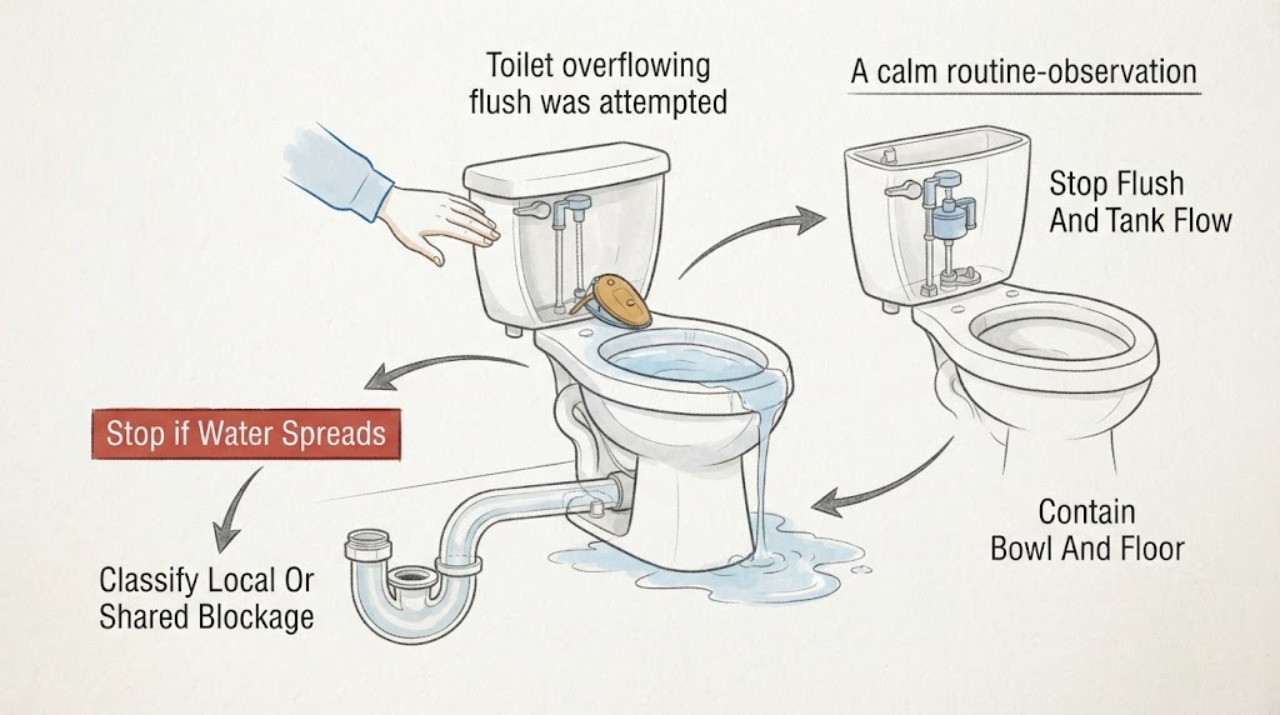
Toilet overflowing flush was attempted: What to Check and What to Do Next
If a toilet is rising after a flush was attempted, do not flush again. Turn the toilet supply valve clockwise if it turns freely; if water is still entering from the tank, remove the tank lid and hold the flapper closed or raise the float without forcing the mechanism.
-
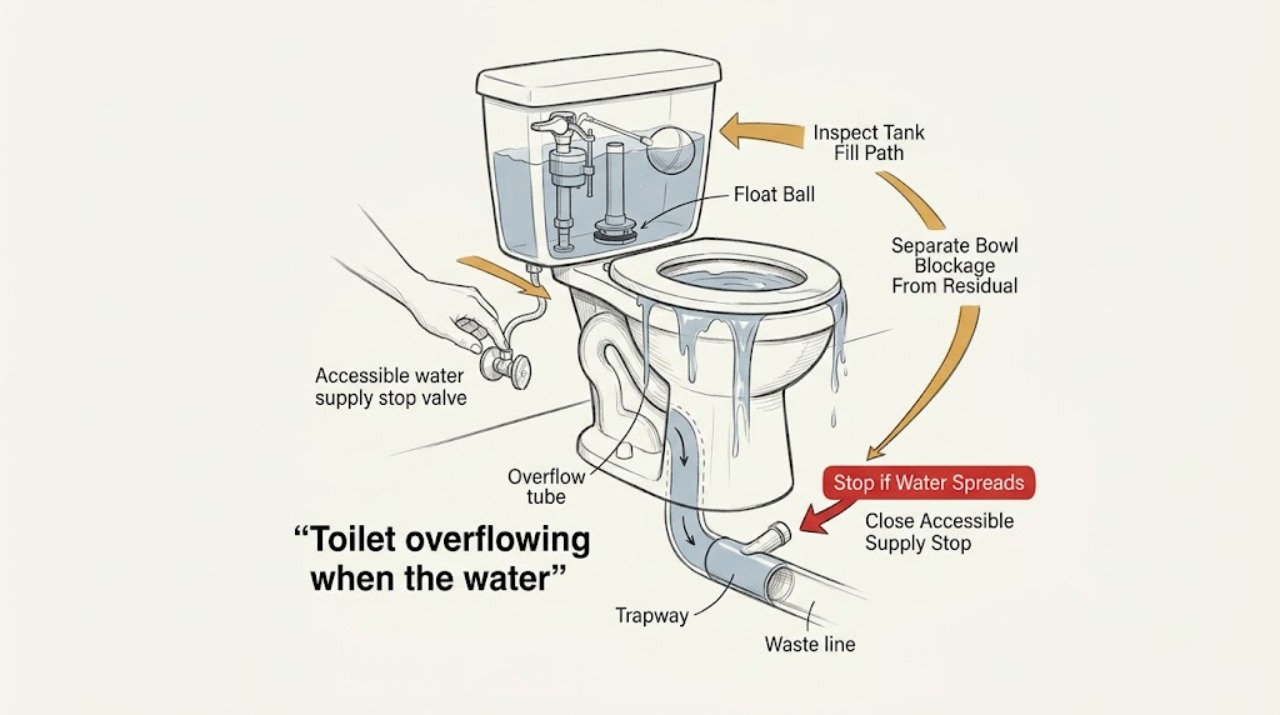
Toilet overflowing when the water supply is accessible: What to Check and What to Do Next
Stop the water before trying to clear an overflowing toilet. Since the supply stop is accessible, turn it clockwise until water stops, do not flush again, and keep people and pets away from contaminated water.
-
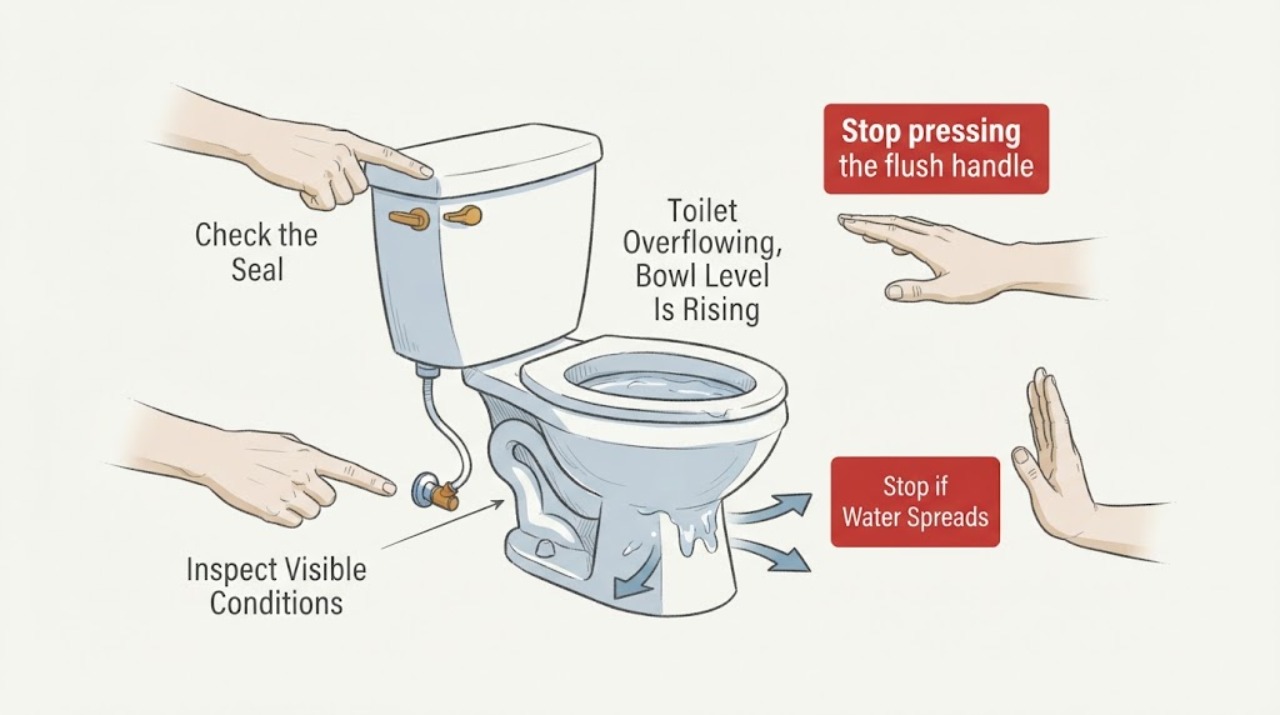
Toilet Overflowing, Bowl Level Is Rising: What to Check and What to Do Next
Stop pressing the flush handle and stop the water supply before the bowl reaches the rim. If the shutoff valve is accessible, close it; if water is still entering from the tank, lift the tank lid and hold the flapper closed or raise the float without forcing the mechanism.
-
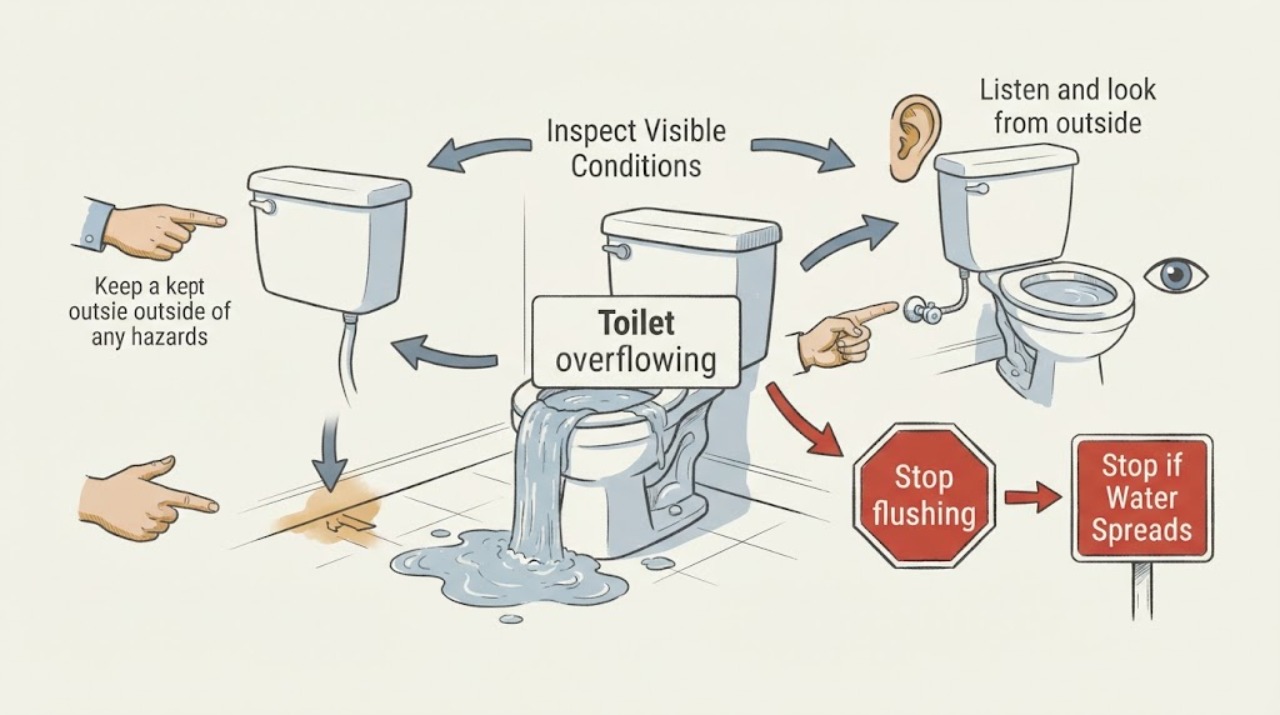
Toilet overflowing: What to Check and What to Do Next
Stop flushing immediately. From a dry, safe position, turn the toilet’s local supply shutoff clockwise if it turns normally, then keep the toilet out of service.
-
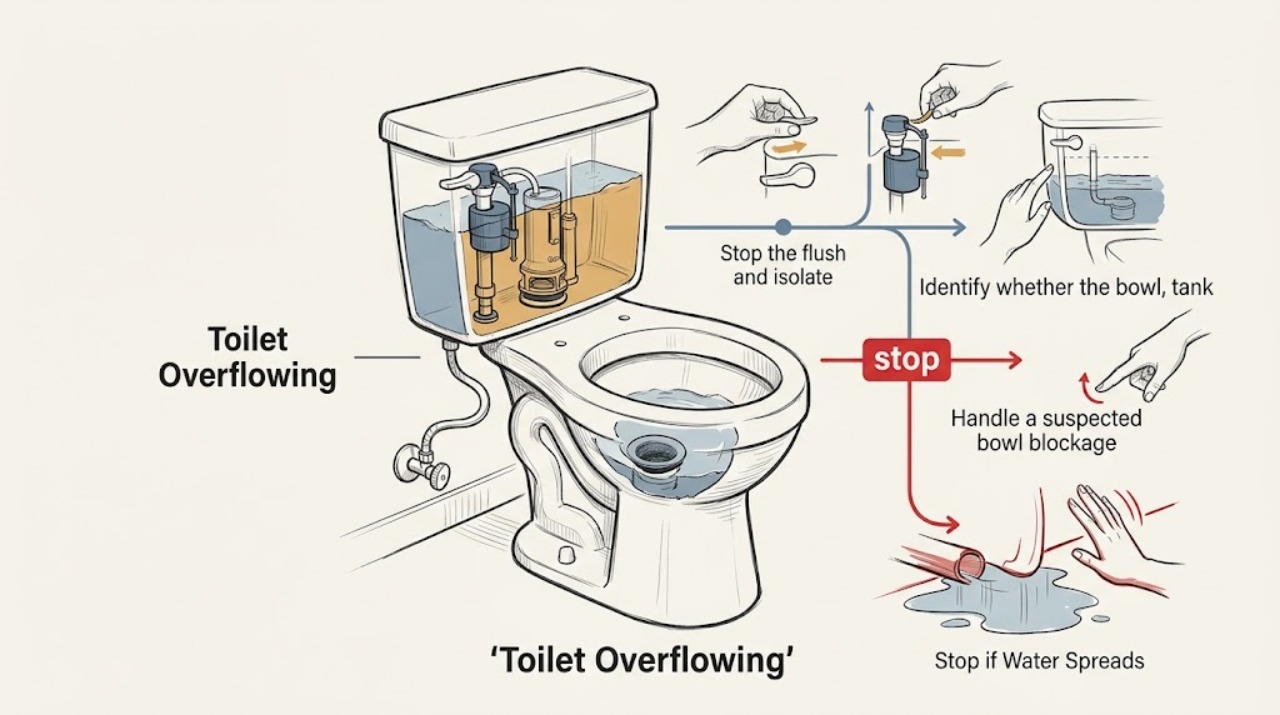
TOTO Toilet Overflowing: What to Check and What to Do Next
Stop pressing the flush handle, button, or sensor and close the toilet's nearby shutoff valve by hand if it is accessible and safe. Do not flush a TOTO bowl that is already clogged.
-
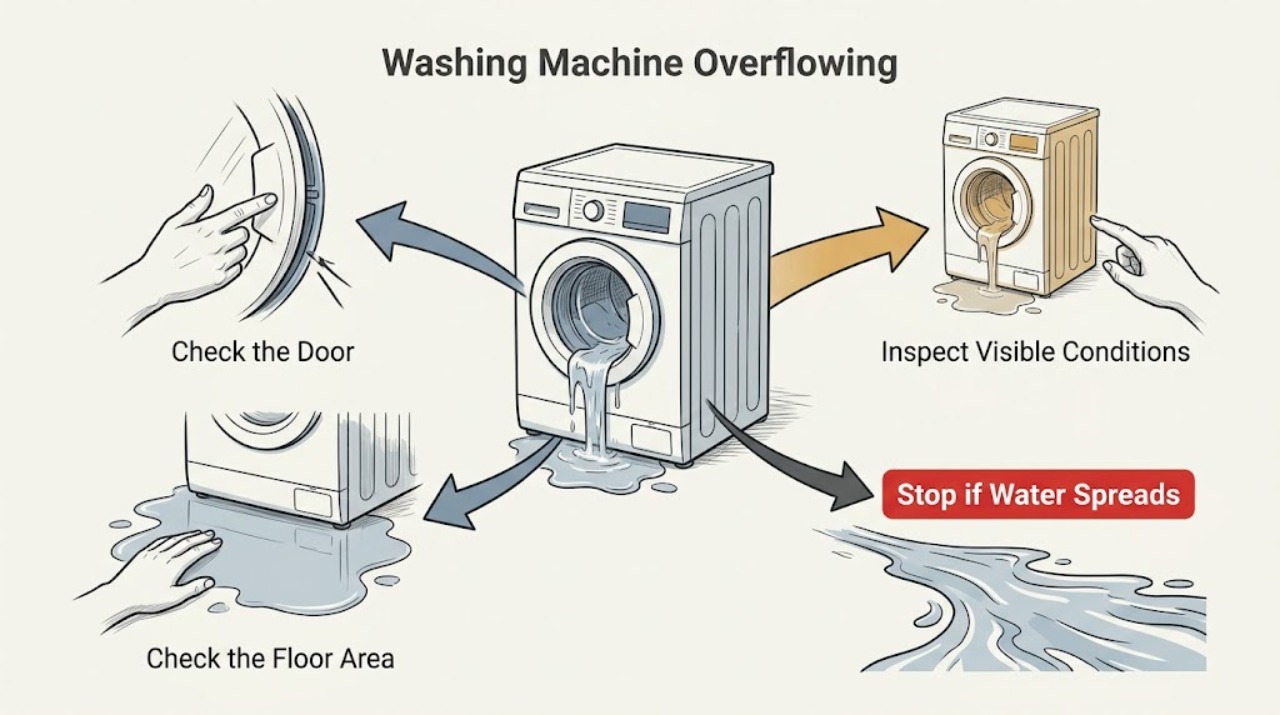
Washing Machine Overflowing: Stop the Water and Find the Safe Branch
Stop the washer immediately and cancel the program. If the hot and cold supply valves are dry and safely reachable, close them; isolate power only from a safe, dry location and never enter standing water to reach a switch or panel.
-
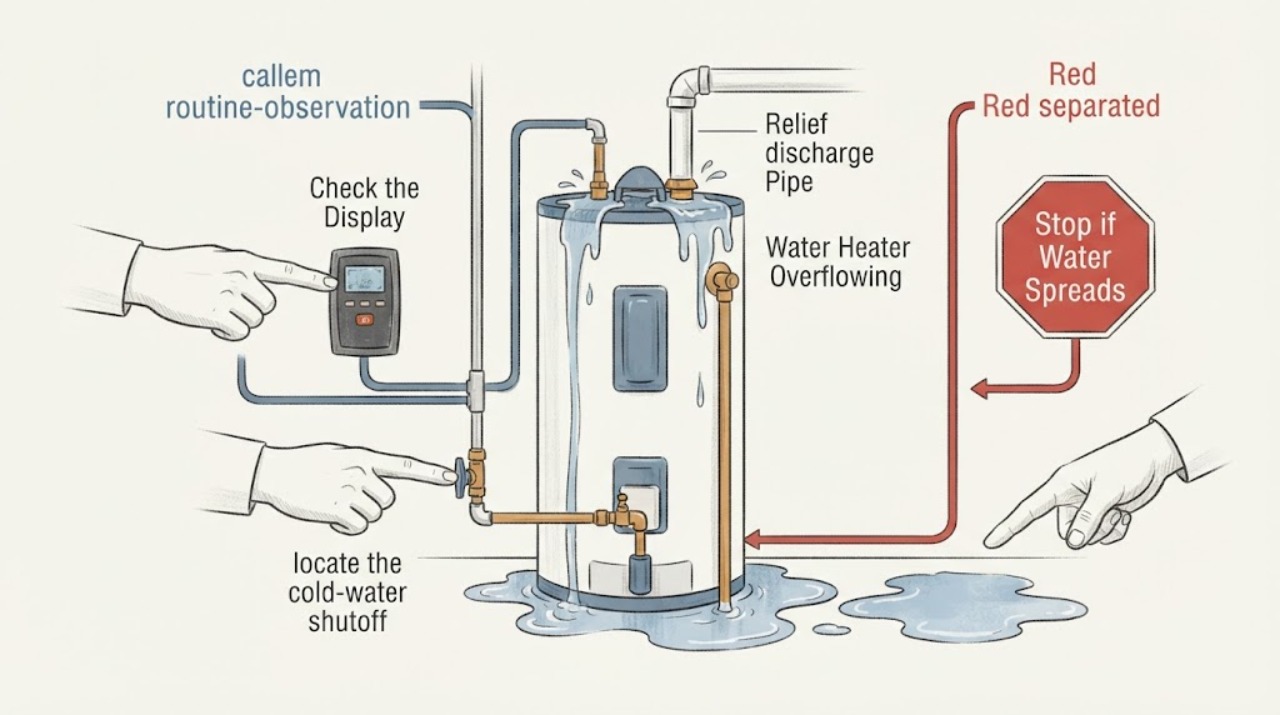
Water Heater Overflowing
Treat an overflowing water heater as a water and scald hazard. Keep people away from hot discharge, shut off the water and energy supply only if the controls are safely reachable and the exact manual permits, and identify whether water is from the relief discharge, drain valve, fittings, or a ruptured tank.
-
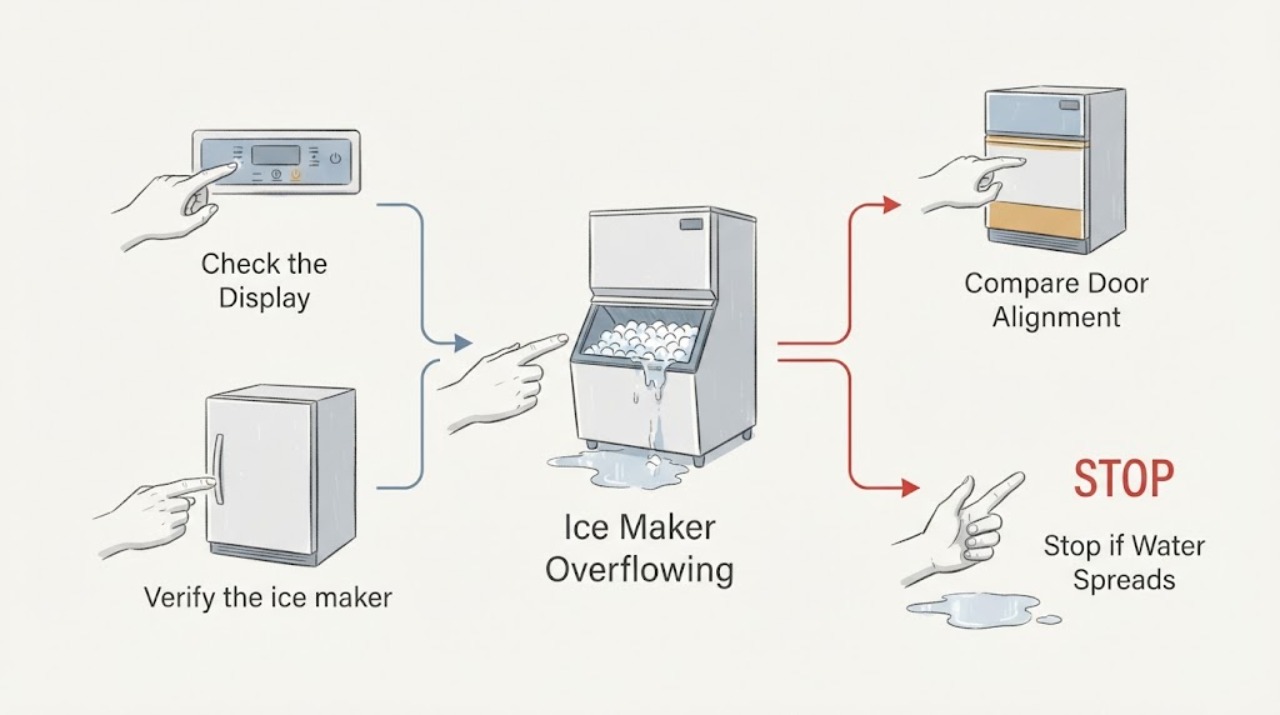
Whirlpool Ice Maker Overflowing: Check Ice Level Sensing and Water Entry
First decide whether the overflow is excess ice or liquid water. For an ice-filled bin, empty some ice, keep the bin sensor clear and clean, level the ice maker, and turn off Max/Fast/Accelerated Ice unless needed. For water in the bin or on the floor, inspect the fill-cup alignment and accessible water fittings with the maker off. If water continues entering, the bin sensor does not stop production, or a fitting leaks, stop and arrange service.