
On this page
Start here
Quick answer
If a Speed Queen washer is overflowing, stop the cycle and close both water taps from a dry, safe position; do not keep resetting or running the machine. Then determine whether water continues entering with the controls off, or whether the tub is overflowing because it cannot drain, the drain receptacle is blocked, excess suds are present, or the load and hose installation are causing a backup. Speed Queen manuals identify an overflow-level condition on some models and direct owners to check the drain path and pump foreign-object trap, while also warning that controls and procedures vary by model. Do not open a wet pump area, disconnect a pressurized hose, or touch wet electrical equipment. If water keeps entering, the overflow code returns, a leak reaches electricity, or the washer cannot safely drain, arrange qualified Speed Queen appliance service.
Before you begin
Safety first
- This article supports ordinary-access observation, safe water isolation, and model-specific controls only. Do not disconnect pressurized hoses, open wet pump areas, handle wet electrics, bypass locks, probe wiring, mix chemicals, or dismantle panels.
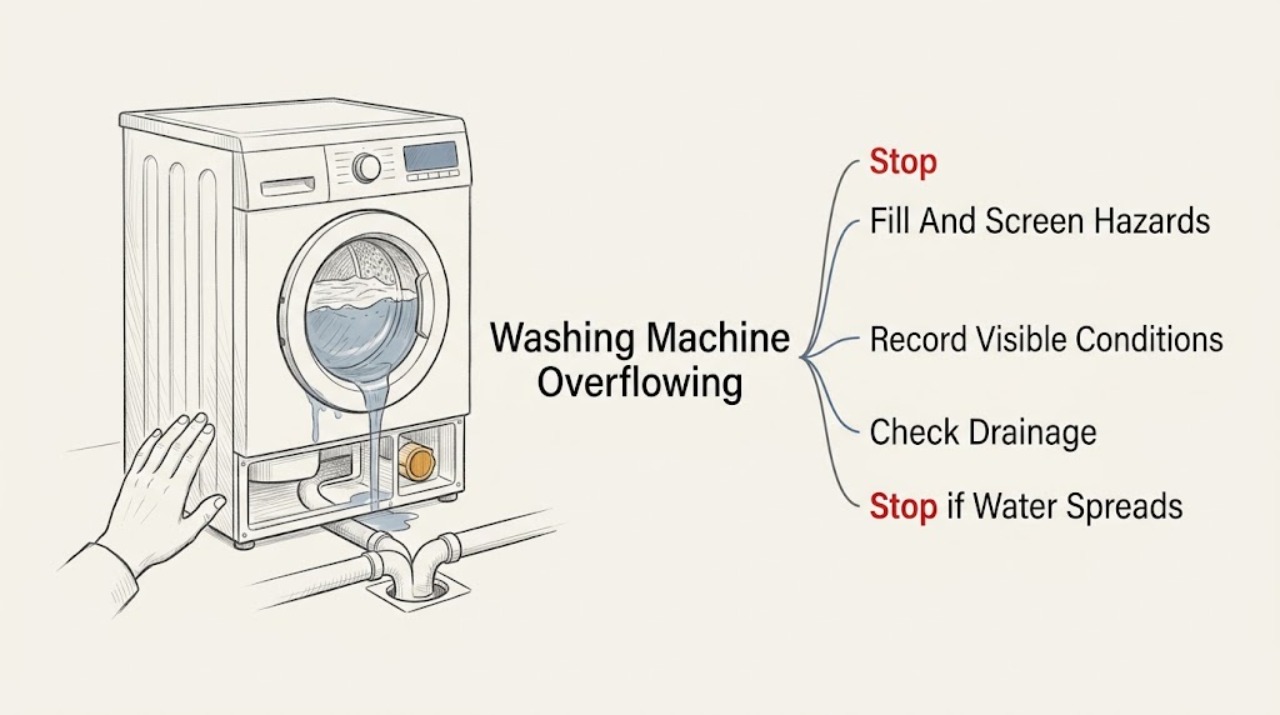
Work through in order
Diagnostic checks
Use only checks that match the exact appliance or system and its official guide.
-
Check 1
Stop the cycle and, from a dry safe position, close the washer's hot and cold water taps; look for rapid flow, water near the plug or controls, smoke, burning odor, sparks, damaged cord, a moving tub, or a breaker that has tripped.
Expected result: Record whether water stops entering when the taps are closed, whether the tub is still moving, whether water has reached electrical equipment, and whether any heat, smoke, odor, spark, or repeated trip is present.
Next step: Keep the washer off. If safe without touching wet electrics, isolate power at the normal dry disconnect and arrange qualified appliance, electrical, plumbing, or emergency help as appropriate.
Stop if: Do not touch wet electrical equipment, reach into the tub, repeatedly reset power, or restart after rapid flow, smoke, burning odor, sparks, or a trip.
Why this matters
Why: Uncontrolled inflow, flooding, moving-tub access, and electrical or fire signs override all other checks. Water that continues entering with the taps closed points toward a valve or control fault; water that stops leaves a drain or cycle branch possible.
-
Check 2
Without opening panels, record the Speed Queen model, top-load or front-load design, selected cycle, whether overflow began during fill, wash, rinse, or drain, whether the pump ran, and the complete display code or message.
Expected result: Water rising while filling and continuing after controls stop differs from water remaining after a failed drain. On some digital models, an overflow-level code such as an OF indication is distinct from a code for water remaining or a water-level sensor fault; the manual controls the interpretation.
Next step: Use the exact Speed Queen owner manual for the model and code; do not apply an overflow procedure from another platform.
Stop if: Do not continue cycles while the tub is full, the code returns, water is leaking, or any electrical hazard is present.
Why this matters
Why: The failed stage separates an inlet or level-control problem from a blocked drain, pump, foam, or cycle problem, while the model identifies the correct code and recovery procedure.
-
Check 3
After the water is controlled and the area is dry, inspect only the visible drain hose and drain receptacle for a sharp kink, crushing, displaced hose end, clog, or backup; do not aggressively move the washer.
Expected result: A kinked hose or backed-up receptacle can restrict discharge. If the receptacle backs up when discharge occurs, the household drain may be involved. If the visible path is open but the tub remains full, an internal pump trap, hose, or control fault remains possible.
Next step: Correct only a plainly visible hose-position issue without straining the fittings, or arrange plumbing help for a backed-up receptacle. If the external path is clear, follow the model manual's safe pump-trap guidance or arrange appliance service.
Stop if: Do not disconnect a full or pressurized hose, enter pooled water, snake a concealed line, or open a wet pump area.
Why this matters
Why: Speed Queen manuals and guidance distinguish external hose or receptacle restrictions from an appliance pump or foreign-object condition.
-
Check 4
Once the tub is safe and the washer is not actively filling, record whether there is heavy foam, an overloaded or tangled load, or a detergent dose or product that does not match the exact model and label.
Expected result: Heavy foam may slow draining or appear as an overflow at the standpipe; an overloaded load may stop the cycle and leave water. A normal load with no foam but persistent water points toward the drain or water-level branch.
Next step: Use the correct detergent type and dose for the model and load, and follow the manual's safe cancellation or drain procedure once. If the tub remains full or foam returns, stop and arrange service.
Stop if: Do not add a second chemical, mix cleaners, force the lid or door, or run repeated cycles with standing water or heavy suds.
Why this matters
Why: Speed Queen identifies oversudsing and overload as contributors to leak, drain, and cycle symptoms, but a suds or load observation does not rule out a pump, hose, or level-control fault.
-
Check 5
If the area is dry, the tub is not moving, no electrical or contamination hazard exists, and the exact manual gives an overflow recovery or Start/Pause procedure, perform that model-specific action once while watching from a safe position.
Expected result: The machine may pump water out, the level may remain unchanged, a code may clear, or the same overflow or water-level indication may return. A pump that runs without flow is not proof that the pump needs a particular replacement part.
Next step: Stop if water does not fall or a code returns. Follow only the exact model's user-accessible trap or drain instructions; otherwise keep the washer off and arrange service.
Stop if: Do not repeat recovery cycles indefinitely, bypass a lid or door lock, probe wiring, or open panels.
Why this matters
Why: Some Speed Queen models attempt to pump after an overflow indication, while other platforms use different codes and controls. A failed recovery may involve a blocked trap, drain, pump, level sensor, valve, or control.
-
Check 6
Only when the exact Speed Queen manual identifies a user-accessible pump foreign-object trap and the appliance is isolated, cool, stopped, and safely drained or contained, inspect that trap as directed; otherwise leave it closed.
Expected result: A trapped foreign object may be present, or the trap may be clear while flow remains absent. Uncontrolled water, heat, a damaged cap, or a trap that the manual does not identify for owners ends the check.
Next step: Clean and refit the trap only as the model manual directs, then use the documented drain check once. If overflow returns, keep the washer off and arrange qualified service.
Stop if: Do not open a hot or pressurized trap, force a cap, reach into the pump, dismantle panels, or work near wet electrics.
Why this matters
Why: A removable obstruction can explain a drain-related overflow, but a clear trap, inaccessible trap, or recurring overflow indicates a deeper pump, hose, water-level, valve, or control condition.
-
Check 7
Stop troubleshooting when water continues entering after controls or taps are stopped, the tub will not drain, the overflow or water-level code returns, the pump is silent or hums without flow, or water has reached electrical or structural areas.
Expected result: Give the technician the model and serial information, code, failed cycle stage, water and foam condition, tap and drain-hose result, drain-receptacle behavior, pump sound, trap result if the manual allowed it, and any leak or electrical symptom.
Next step: Keep the washer unused with the water supply closed and arrange qualified Speed Queen appliance service; use plumbing or electrical help when the evidence points outside the washer.
Stop if: Do not run another wash, bypass a lid or door lock, repeatedly reset a breaker, open panels, or continue after smoke, burning odor, sparks, flooding, or a trip.
Why this matters
Why: This evidence lets a qualified technician distinguish an inlet valve, water-level sensor, drain hose, pump trap, pump, control, foam, or household drain fault without unsafe disassembly.
Use your observations
Decision map
Find the observation that best matches what you see, then follow the next safe action.
-
PATH 01Safety boundary
What you see
Rapid overflow, water near electrical equipment, smoke, burning odor, sparks, damaged wiring, moving-tub access risk, or repeated breaker trips are present.
Do this next
Close the water taps and isolate power only from a dry, safe position; keep clear and arrange qualified or emergency help.
Why this path and its safety boundary
Why it matters: This is an immediate safety stop.
Safety stop: Do not touch wet electrical devices, enter pooled water, reach into the tub, or restart the washer.
-
PATH 02Safety boundary
What you see
Water continues entering while the machine is not being commanded to fill, or the overflow persists after the taps are closed.
Do this next
Keep both water taps closed, keep the washer off, and arrange appliance service; use plumbing help if the shutoff or supply itself is unsafe.
Why this path and its safety boundary
Why it matters: An inlet valve, water-level control, residual pressure, or another supply condition may be involved.
Safety stop: Do not dismantle the inlet, disconnect pressurized hoses, or keep resetting controls.
-
PATH 03Safety boundary
What you see
Inflow stops but water remains, the drain hose is kinked or clogged, the receptacle backs up, or the pump runs without lowering the level.
Do this next
Correct only a visible hose position safely or arrange plumbing help for a backed-up receptacle; use the exact manual for any trap check and service a persistent no-drain.
Why this path and its safety boundary
Why it matters: A blocked external drain, pump trap, hose, or pump condition may be causing apparent overflow.
Safety stop: Do not open a wet pump area, disconnect a full hose, or run full cycles with standing water.
-
PATH 04Safety boundary
What you see
A model-specific overflow-level indication such as OF or OF with a status indication appears.
Do this next
Record the complete code and follow the exact owner manual once; if the level does not fall or the code returns, keep the water supply closed and call service.
Why this path and its safety boundary
Why it matters: The control has detected an overflow-level condition, but the exact response varies by model.
Safety stop: Do not generalize another Speed Queen platform's code, bypass the lid or door, or repeatedly reset the machine.
-
PATH 05Safety boundary
What you see
Heavy foam, too much detergent, or an overloaded load is present and there is no immediate safety hazard.
Do this next
Stop adding detergent, follow the model's safe cancellation or drain procedure once, and correct product, dose, or load only after water is controlled.
Why this path and its safety boundary
Why it matters: Suds or load conditions may slow drain or interrupt the cycle and make the event look like an overflow.
Safety stop: Do not mix chemicals, force a spin, or keep running cycles while foam or standing water remains.
-
PATH 06Safety boundary
What you see
The exact manual identifies a user-accessible pump foreign-object trap and the washer is isolated, stopped, cool, and safely drained or contained.
Do this next
Follow only the model manual's trap procedure and perform the documented drain check once; service a clear trap or recurring overflow.
Why this path and its safety boundary
Why it matters: A visible foreign object may be restricting pump flow.
Safety stop: Do not force a cap, open a hot or pressurized area, or work near water and electricity.
-
PATH 07Safety boundary
What you see
Overflow, water-level error, or poor drainage returns after safe external and model-authorized checks.
Do this next
Keep water closed and arrange qualified Speed Queen appliance service, with plumbing help for a household drain backup.
Why this path and its safety boundary
Why it matters: An inlet valve, level sensor, drain path, pump, control, or household plumbing fault needs professional diagnosis.
Safety stop: Do not keep retrying cycles, bypass an interlock, or open panels.
Helpful context
Understand the symptom
Stop the incoming water before diagnosing the cause
Overflow is a damage and electrical risk, not a normal cycle pause. Stop the washer and close the hot and cold water taps if they can be reached from a dry position. If water continues entering with the controls off, the inlet control or valve needs service; if inflow stops but the tub remains full, the drain path or water-level decision becomes the next branch. Do not reach into a moving tub or stand in water to reach a switch.
Separate overfill from a drain backup
A washer can look overfilled when it has filled normally but cannot discharge through a kinked hose, blocked receptacle, pump trap, or heavy suds. Note whether the water level rose during fill, wash, or drain, whether the pump ran, whether water backed up at the standpipe, and whether an overflow code appeared. Speed Queen lists model-specific overflow and drain conditions; the exact display and response belong to the matching manual.
Only inspect ordinary-access conditions
After water is isolated and the area is dry, look for a visibly kinked drain hose, a displaced hose end, or a backed-up drain receptacle. Use the product's model number to find the installation and owner instructions before opening any pump or foreign-object trap. Never disconnect a full or pressurized hose, open wet electrical areas, or use a procedure copied from another Speed Queen model.
Suds and load conditions can mimic an overflow fault
Excess detergent can create suds that slow draining and may push foam toward the standpipe. An overloaded or poorly distributed load can also interrupt the cycle and leave water behind. Once the water is safely controlled, record the detergent type and amount, load size, and whether the machine displayed a suds or unbalanced condition. Do not add another chemical to counteract suds or start repeated cycles with a full tub.
When checks do not resolve it
Need a professional?
Arrange qualified Speed Queen appliance service when water continues entering, the tub cannot drain, an overflow or water-level code returns, the pump is silent or hums without flow, or the model-authorized trap check does not resolve the problem. Use plumbing help for a backed-up drain receptacle or unsafe hose installation. Request urgent help for rapid flooding, water near electricity, smoke, burning odor, sparks, exposed wiring, structural or neighboring-unit damage, or repeated breaker trips.
Safety scope: This article supports ordinary-access observation, safe water isolation, and model-specific controls only. Do not disconnect pressurized hoses, open wet pump areas, handle wet electrics, bypass locks, probe wiring, mix chemicals, or dismantle panels.
Common questions
FAQ
What should I do first if my Speed Queen washer is overflowing?
Stop the cycle and close the hot and cold water taps from a dry, safe position. Keep away from water near electrical equipment, record whether water continues entering, and do not keep resetting or running the washer.
Can a clogged drain make a Speed Queen washer look like it is overflowing?
Yes. A kinked or blocked drain hose, blocked receptacle, pump foreign-object trap, or excess suds can leave water in the tub or push foam toward the standpipe. Check only visible external conditions and use the exact manual for any trap procedure.
What does an OF code mean on a Speed Queen washer?
On some Speed Queen digital models, an OF indication identifies an overflow-level condition, but display formats and recovery steps vary. Record the complete code and use the exact model manual; a returning code or unchanged water level needs service.
Can too much detergent cause a Speed Queen washer to overflow?
Excess detergent can create heavy suds that interfere with timely draining and may appear at the standpipe. Stop adding detergent, follow the model's safe cancellation or drain instructions once, and never mix chemicals to counteract foam.
When does an overflowing Speed Queen washer need service?
Arrange service if water continues entering, the tub will not drain, the overflow or water-level code returns, the pump is silent or only hums, the trap is clear, or the problem recurs. Seek urgent help for flooding, water near electricity, smoke, burning odor, sparks, or repeated breaker trips.
Read the exact guide
Official sources
- Speed Queen | Manuals & DownloadsSpeed Queen · Official Speed Queen document portal; the machine model number is required to locate the applicable manual and procedures.
- User's GuideSpeed Queen / Alliance Laundry Systems · Official user guide with model-specific overflow status, drain hose and receptacle, water-level, suds, load, and service guidance; other models may differ.
- User's GuideSpeed Queen / Alliance Laundry Systems · Official user guide with model-specific overflow-level, drain hose, pump-trap, suds, water-level, and service guidance; other models may differ.
- Speed Queen | Tricks your washer or dryer might be playing on you (and how to solve them!)Speed Queen · Official Speed Queen article covering visible hose clogs or kinks, foreign objects near the pump, excessive suds, and the model-manual boundary.
Community feedback
Share a repair observation
Share a plain-text repair observation. Accepted observations are published automatically; this page may take a moment to update.