
On this page
Start here
Quick answer
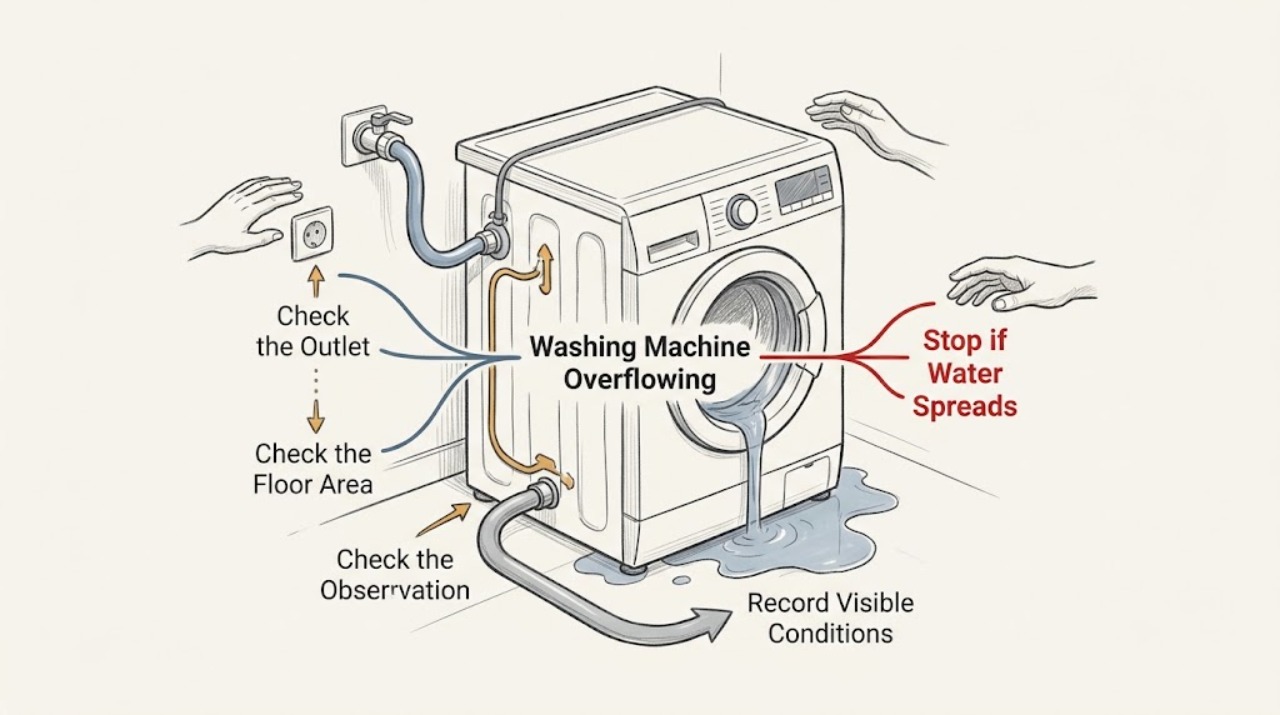
Pause the cycle immediately, turn off both household water valves, and disconnect power only if the floor, plug, and hands are dry and the outlet is safely reachable. Never reach into a moving tub or handle a wet electrical connection. If water still enters while the washer is unplugged, the inlet valve may be stuck open; keep the water valves closed and arrange qualified service. If filling stops but water rises during washing or draining, check for excess suds, an unsuitable load, a blocked or incorrectly routed drain hose, or a standpipe that is backing up. Confirm the exact Kenmore model before using a manual procedure, because Kenmore publishes model-specific manuals and controls. Stop for water near electrical parts, hot water burns, structural or floor damage, repeated overflow, or any burning smell, smoke, arcing, or power trip.
Work through in order
Diagnostic checks
Use only checks that match the exact appliance or system and its official guide.
-
Check 1
Pause or cancel the cycle if safe, turn both hot and cold supply valves fully closed, and keep clear of the tub. If the floor, outlet, plug, or washer base is wet, do not touch electrical parts; isolate power only from a dry and safe position.
Expected result: The water stops after the supply valves close, water continues to enter, the tub is still moving, or water is close to an outlet or other electrical equipment.
Next step: Leave the valves closed and do not restart the washer. If water is near electrical parts, the floor is damaged, or the flow cannot be controlled safely, leave the area and arrange appropriate emergency or qualified help.
Why this matters
Why: Closing the supply valves prevents further incoming water while the source is identified. Continued movement or wet electrical access creates a handling hazard, and water that keeps entering after the valves are closed may be residual water or a valve that is not fully shut.
-
Check 2
Once the machine is stopped and the area is dry enough for safe observation, disconnect power only if the plug and outlet are dry and reachable without stepping in water. Check whether water would have continued entering with the washer unpowered, without opening the cabinet or touching wiring.
Expected result: Water continues entering while the washer is unpowered, water stops when power is removed, or the result cannot be checked safely.
Next step: Keep both supply valves closed. Treat a valve that admits water while unpowered as a service fault and do not reconnect power for another test. If the check was unsafe, skip it and provide that limitation to the technician.
Why this matters
Why: Continued fill with no power strongly indicates a mechanically open inlet valve or uncontrolled household water path. Fill that stops with power removed shifts attention toward the control, water-level sensing, or programme logic; it does not justify live testing.
-
Check 3
With the washer isolated, identify whether the water was rising during the fill portion, during agitation, or while the washer was draining. Record the cycle, selected fill option, load size and type, detergent amount, and whether the water looked unusually foamy.
Expected result: The tub rises during fill, water splashes over during agitation, dense suds are present, or water rises when the drain pump runs.
Next step: Use the matching fill, load, suds, or drain branch. Do not repeat a full cycle while the overflow cause is unknown; retain the observations and any displayed code.
Why this matters
Why: Rising during fill points to inlet control or level sensing. Splashing with a bulky or water-resistant load can mimic an overflow, while dense suds can change water behavior. Rising during drain points toward a restricted drain route or downstream standpipe backup rather than incoming supply.
-
Check 4
If water rises during washing rather than while filling, inspect only the visible load and dispenser area after the washer is cool and isolated. Remove an obviously oversized or water-resistant load for later testing, and compare the detergent type and amount with the exact Kenmore manual; do not add more detergent or mix cleaning chemicals.
Expected result: The load is tightly packed, contains water-resistant items, detergent foam is excessive, or the basket and dispenser area appear normal.
Next step: Clean up only with safe, dry methods and do not run another loaded cycle until the water valves, drain path, and model instructions are checked. Escalate if the same symptom returns with a small, correctly dosed load.
Why this matters
Why: A large, uneven, or water-resistant load can throw water over the basket, and excess suds can make a normal fill look uncontrolled. A normal load with no excess suds makes an inlet, level-sensing, or drain fault more likely.
-
Check 5
If water rises during draining or returns after the washer pumps out, inspect the visible drain hose for a kink, crushing, loose end, or obvious blockage and confirm its routing and secure support against the exact installation instructions. Do not push a tool into the hose or dismantle the pump while water remains inside.
Expected result: The hose is kinked or displaced, water backs up at the standpipe or laundry tub, the hose appears clear and correctly secured, or the pump makes an abnormal sound.
Next step: Keep the water valves closed, correct only an obvious visible hose position issue, and do not run a full cycle to prove it. Arrange plumbing help for a standpipe backup and appliance service for a pump or internal restriction.
Why this matters
Why: A restricted or poorly routed drain path can make water spill back into the laundry area and can be mistaken for a fill problem. A clear hose with poor pumping or an abnormal pump sound points to a pump, filter, or control fault that needs model-specific service.
-
Check 6
After the valves are closed and the cause is documented, use the complete model number to open the applicable Kenmore manual and check for its water-level, inlet, drain, error-code, and safe reset instructions. If the manual permits one reset, perform no more than one supervised empty test with no exposed wiring and stop at the first abnormal symptom.
Expected result: The manual identifies a model-specific fill or drain procedure, the empty test completes without leakage, the washer refills uncontrollably, or the same overflow returns.
Next step: Close the valves again after the test and arrange qualified service for any repeat overflow, uncontrolled filling, failed drain, water-level error, or uncertain model-specific condition. Do not keep resetting or testing.
Why this matters
Why: A model-specific manual can distinguish normal fill options and error behavior, while a repeat overflow after safe visible checks indicates a fault in the inlet valve, level-sensing path, drain system, or controls. One normal empty test does not prove that a loaded cycle is safe.
Use your observations
Decision map
Find the observation that best matches what you see, then follow the next safe action.
-
PATH 01Next step
What you see
Water is actively entering or the tub is still moving
Do this next
Pause if safe, close both water valves, and keep clear. Do not reach into the tub; use qualified help if the flow or motion cannot be stopped safely.
-
PATH 02Next step
What you see
Water continues entering while the washer is unpowered
Do this next
Keep both valves closed and do not reconnect power. This is consistent with an inlet valve that is not closing and requires qualified appliance service.
-
PATH 03Next step
What you see
Water stops filling but rises during wash, with a bulky load or heavy suds
Do this next
Do not repeat the cycle. Follow the exact model's load and detergent guidance, then arrange service if the symptom returns with a small, correctly dosed load.
-
PATH 04Next step
What you see
Water rises during drain or backs up from the standpipe or laundry tub
Do this next
Keep the washer isolated and check only visible hose routing. Arrange plumbing help for a building drain or standpipe backup and appliance service for poor pumping or an internal blockage.
-
PATH 05Next step
What you see
A small, correctly prepared empty test completes normally after one manual-approved reset
Do this next
Do not assume the washer is repaired. Reopen the valves only when the area is safe and the exact manual supports continued use; stop and arrange service if any overflow returns.
-
PATH 06Next step
What you see
Water reaches electrical parts, the floor or cabinet is damaged, or there is heat, smoke, burning smell, arcing, or a repeated power trip
Do this next
Stop using the washer, keep clear of the hazard, isolate power only if safe without touching wet equipment, and seek appropriate emergency or qualified help. Do not restart it.
Helpful context
Understand the symptom
Stop the flow before diagnosing it
Press Pause or Cancel if the controls respond, close both hot and cold supply valves, and keep people away from the wet area. If the floor or outlet is wet, do not touch the plug or a switch; isolate power only from a dry, safe position. Do not reach into a moving tub. Photograph the water level and note whether the water was entering, sitting during wash, or returning from the drain before cleanup.
Overflow is not always an inlet-valve failure
A washer can appear to overfill because the inlet valve does not close, because the water-level sensing path does not stop filling, because suds or an oversized load push water over the basket, or because a drain or standpipe backs up. The observation that changes the next step is whether water continues with the washer isolated and the supply valves closed, and whether the water rises during filling or during drain-out.
Safety boundary
Stop conditions
- Do not reach into a moving tub or handle a wet plug, outlet, or electrical connection.
- Do not open the cabinet, probe live wiring, or dismantle an internal valve, pump, or level-sensing system.
- Do not keep resetting or running cycles while the overflow source is unknown.
- Do not add extra detergent or mix cleaning chemicals to correct an overflow.
- Do not restart after water reaches electrical parts, the floor or cabinet is damaged, or smoke, burning smell, arcing, abnormal heat, or a repeated power trip occurs.
Only after diagnosis
Potential parts
- water inlet valve assembly
Consider only when water continues entering with the washer unpowered or qualified service confirms that the inlet valve does not close.
Confirm the complete Kenmore model and valve configuration before ordering; do not assume fit across washer families. - water-level pressure sensor or sensing hose
Consider only when the inlet stops with power removed but the machine overfills during a normal fill and service confirms a level-sensing fault.
The sensor, hose, and control design vary by model. Do not bypass the safety sensing path or order a part without model confirmation. - drain pump or drain-path component
Consider only when the drain route and standpipe are clear but the washer cannot remove water and qualified service confirms a pump or internal drain fault.
Verify the model, pump design, and approved replacement before any repair; keep water and electrical work within the qualified service boundary.
When checks do not resolve it
Need a professional?
Use qualified appliance service for an inlet valve that admits water while unpowered, a recurring fill or water-level fault, unexplained overflow with a correctly prepared load, a poor-drain condition after visible hose checks, or any internal electrical or mechanical diagnosis. Use a qualified plumber for a building drain or standpipe that backs up.
Have this ready
- complete model number
- top-load or front-load configuration
- whether water entered with power removed
- which cycle stage produced the overflow
- selected fill option and load type
- detergent type and approximate dose
- drain hose and standpipe observations
- any displayed code and the result of the single safe test
Common questions
FAQ
What should I do first if my Kenmore washer is overflowing?
Pause or cancel if safe, close both hot and cold water valves, and keep clear of the moving tub. Disconnect power only when the floor, plug, and outlet are dry and safely reachable. Do not touch wet electrical equipment.
Why does my washer keep filling when it is unplugged?
If water continues entering with the washer unpowered, an inlet valve may not be closing. Keep both supply valves closed and do not reconnect power for more tests; arrange qualified service to diagnose the valve and related controls.
Can too much detergent make a Kenmore washer overflow?
Heavy suds can make water behave like an overflow, especially with an unsuitable load or incorrect detergent dose. Do not add more detergent or mix chemicals. Follow the exact model manual and arrange service if the symptom returns with a small, correctly dosed load.
How can I tell whether the drain is causing the overflow?
Note whether water rises during drain-out or backs up at the standpipe or laundry tub rather than during the fill. Check only visible hose routing after isolation; a building drain backup needs plumbing help, while poor pumping with a clear route needs appliance service.
Read the exact guide
Official sources
- Customer Care & Support | Kenmore AppliancesKenmore · Kenmore warranty, repair, manuals, and customer-care pathways.
- Find Your Manual | Kenmore Appliance Manuals & GuidesKenmore · Kenmore model-specific owner manuals and appliance troubleshooting resources.
- 4.8 cu. ft. Top Load Washer w/Detergent & Softener Dispenser - White ENERGY STAR Certified | KenmoreKenmore · Kenmore model 26132 top-load washer features only; not a substitute for another Kenmore model manual.
Community feedback
Share a repair observation
Share a plain-text repair observation. Accepted observations are published automatically; this page may take a moment to update.