
Kenmore appliance guidance
Kenmore Washing Machine Repair Guides
Troubleshooting and repair guidance for published Kenmore Washing Machine problems, symptoms, and maintenance questions.
Published Kenmore Washing Machine guides
Choose the guide whose symptom or condition most closely matches what you are seeing.
-
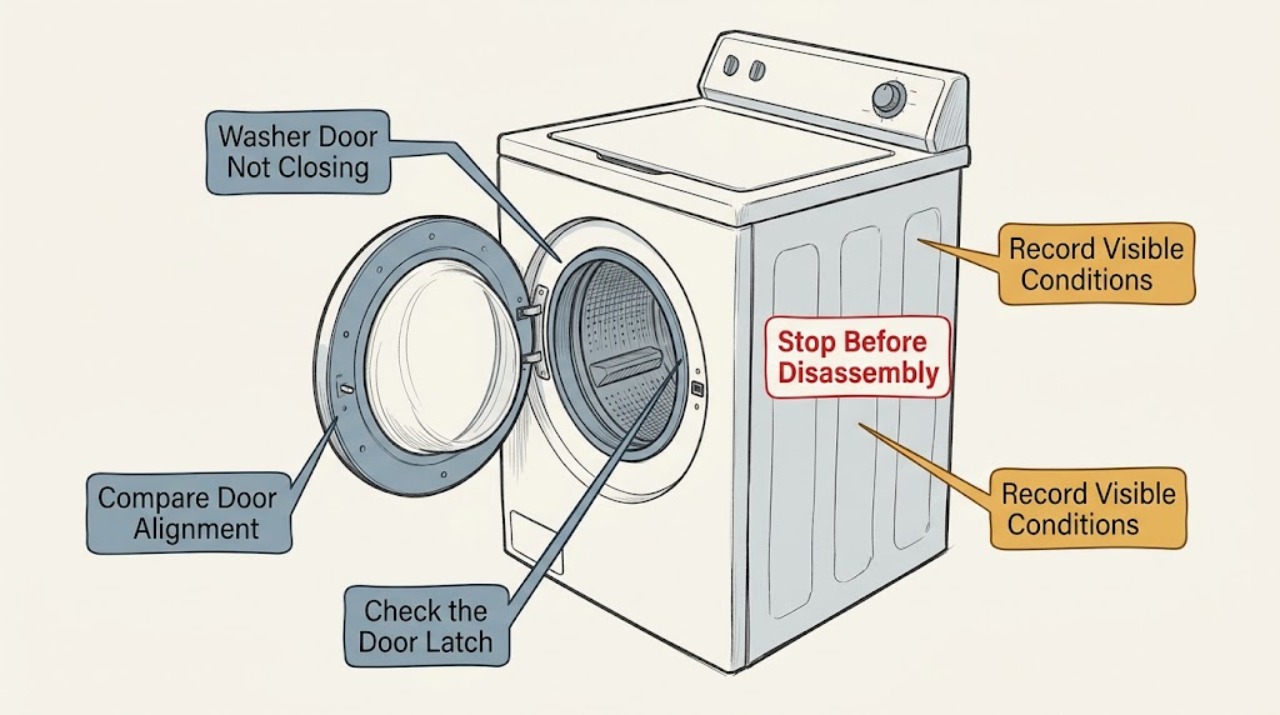
Kenmore Washer Door Not Closing: Front-Load and Top-Load Checks
Do not force a Kenmore washer door or bypass its lock. First identify whether the machine is a front-loader with a hinged door or a top-loader with a lid, and record the exact model because Kenmore designs and controls vary.
-
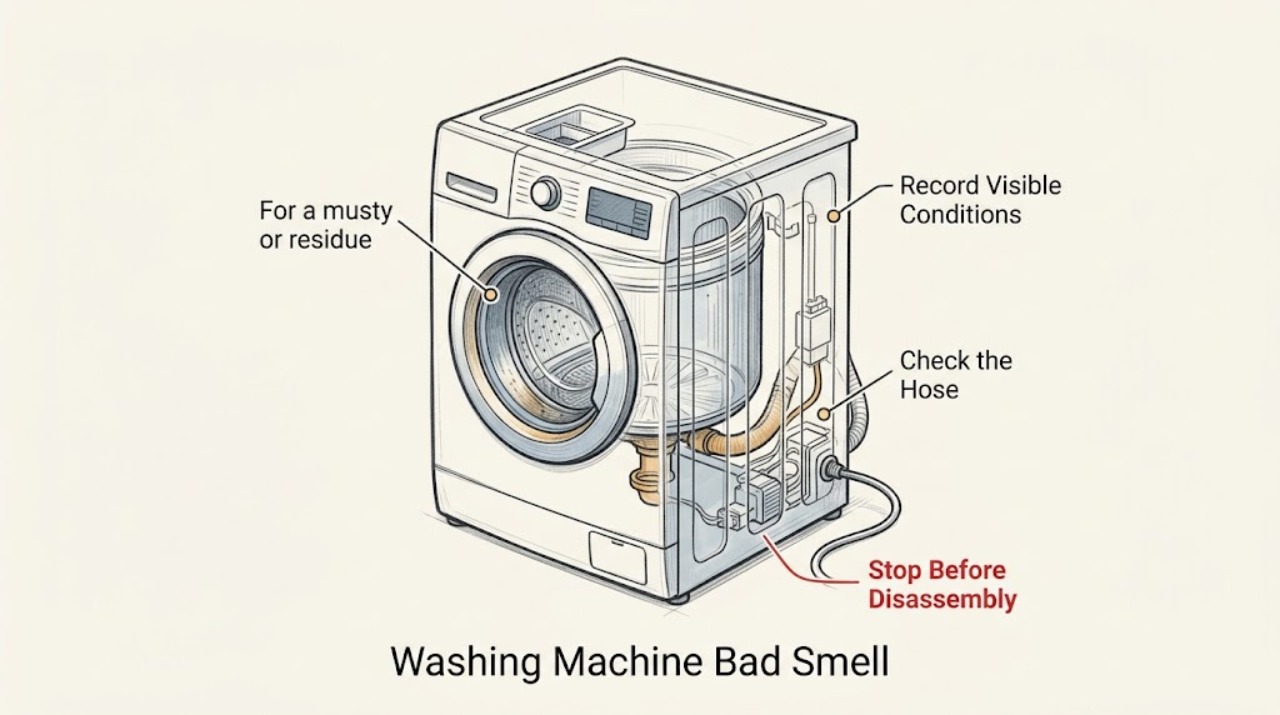
Kenmore Washing Machine Bad Smell: Separate Musty, Drain and Electrical Odors
First classify the odor before cleaning a Kenmore washing machine. A musty or earthy smell usually points toward retained moisture or residue, so inspect the door or lid, gasket, dispenser, tub opening, drain area and nearby hoses; Health Canada specifically recommends leaving a washing-machine door open between uses and checking that it drains without splashing.
-
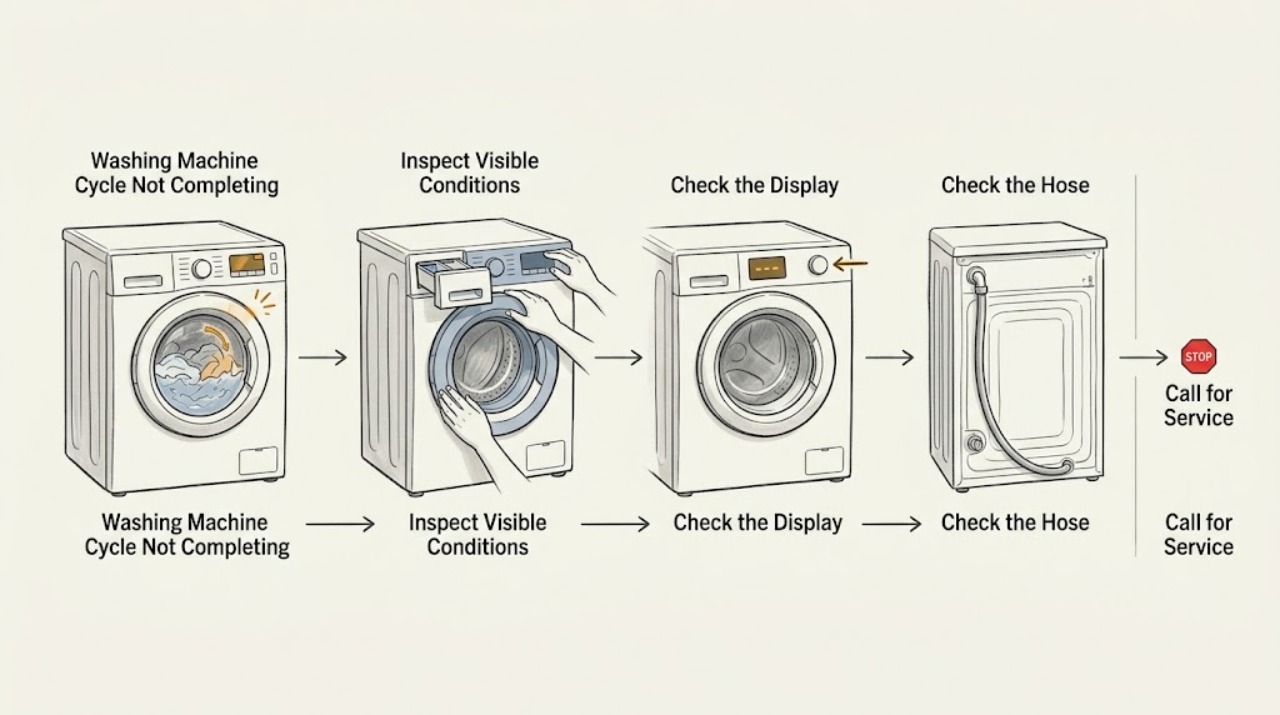
Kenmore Washing Machine Cycle Not Completing: Find the Stalled Stage Safely
A Kenmore washer that does not finish is usually waiting on one stage: filling, washing, draining, spinning, or the lid/door lock. Note the stage, the displayed code, and whether water remains; then check only the matching external cause, such as a closed supply valve, a kinked hose, an unbalanced load, or a blocked accessible drain path.
-
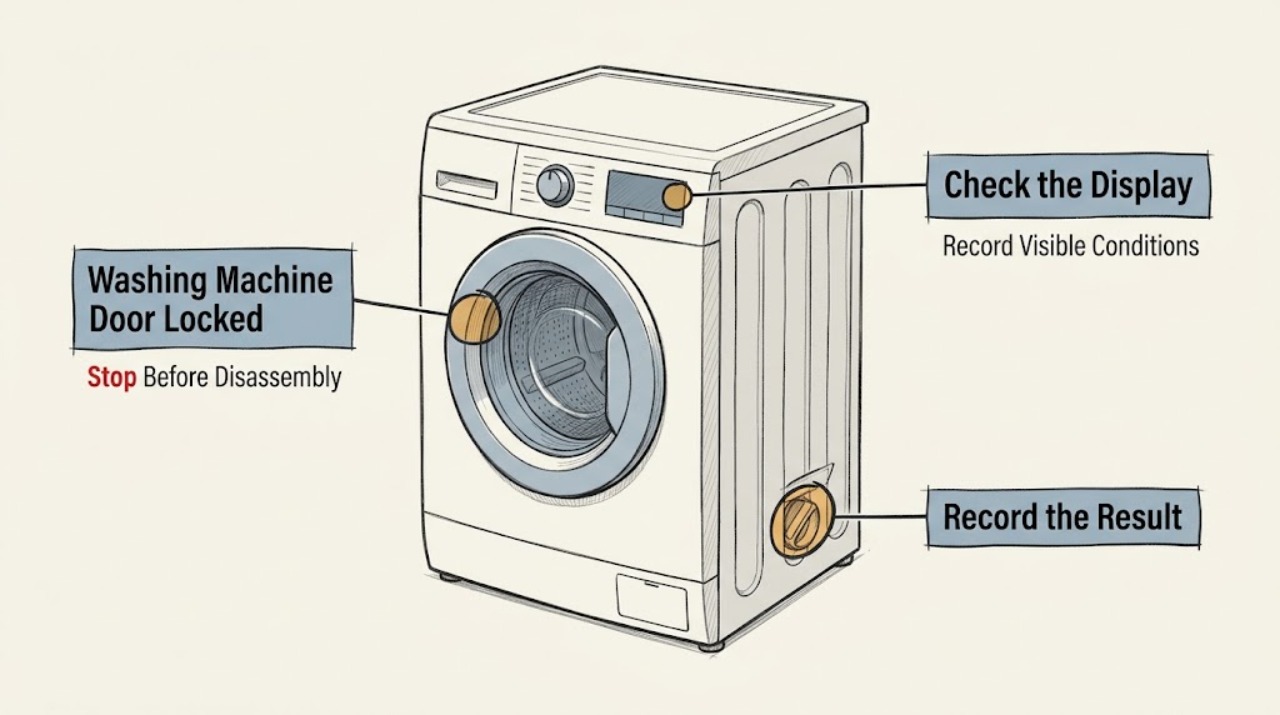
Kenmore Washing Machine Door Locked: Drain Safely and Do Not Force It
A Kenmore washer door or lid normally stays locked while the basket is moving, while water remains in the tub, or while the water is too hot; a brief power interruption or a control-lock state can also leave the controls or lock indicator active. Record the complete model number and any code, press Start/Pause or Cancel only as the Kenmore manual describes, and use Drain or Drain and Spin if the controls respond and the floor is dry.
-
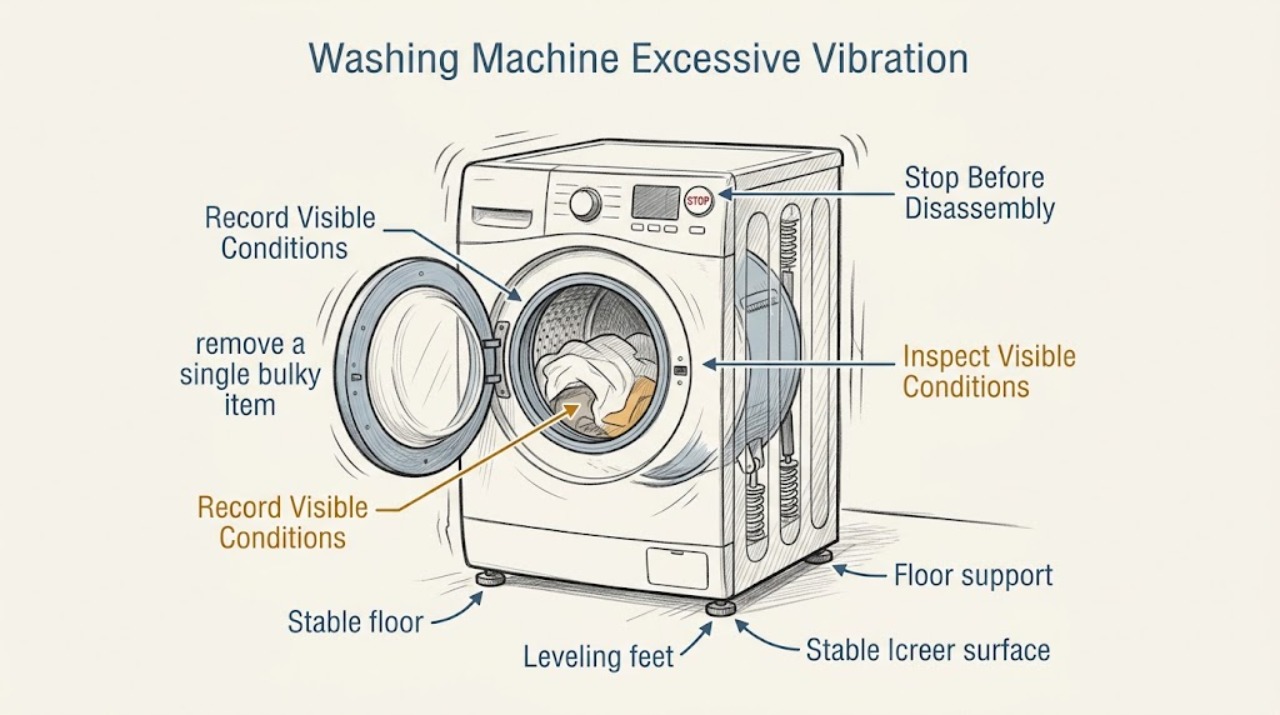
Kenmore Washing Machine Excessive Vibration: Balance, Leveling and Shipping-Bolt Checks
A Kenmore washer that vibrates excessively is most often reacting to an unbalanced load or an installation problem, but the correct check depends on whether it is a front-load or top-load model and whether it was just installed. Stop the cycle if the cabinet walks, slams violently, leaks, smells hot or electrical, sparks, shocks you, or trips the breaker.
-
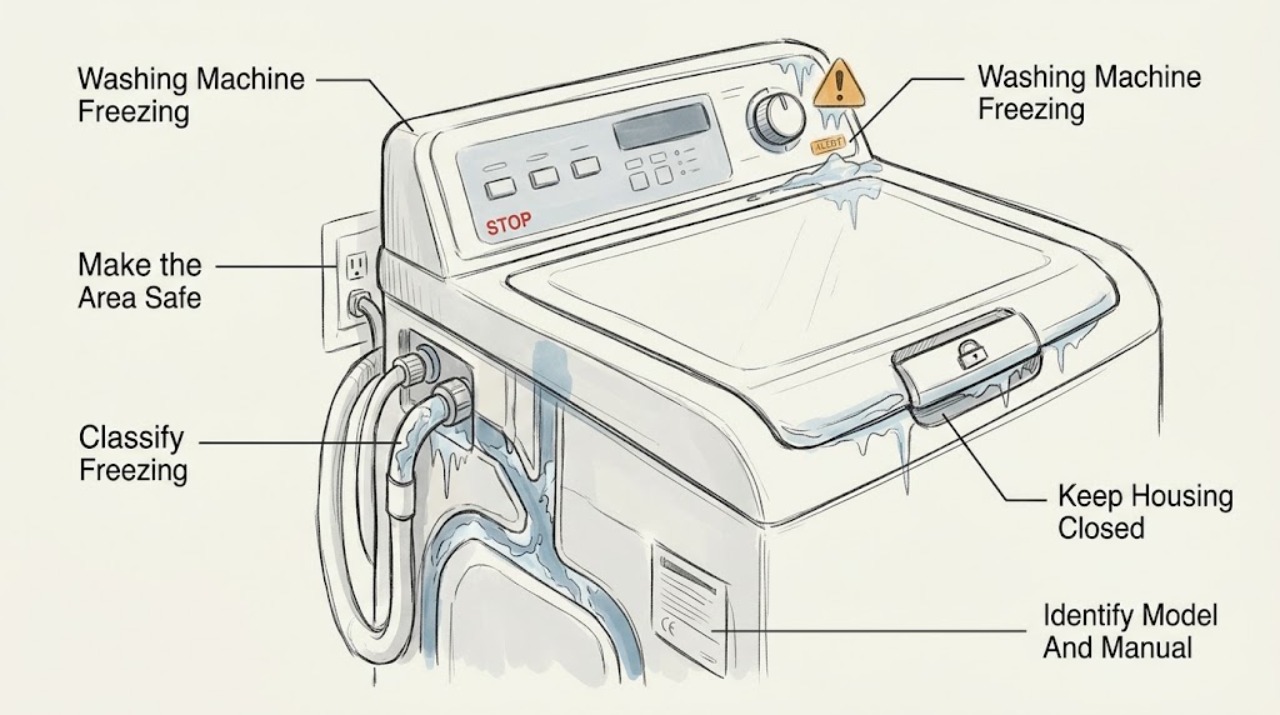
Kenmore Washing Machine Freezing: Control or Water Path?
“Freezing” on a Kenmore washing machine can mean an unresponsive display or buttons, actual ice in a cold laundry space or water path, or a cycle that is stuck with water and a locked door or lid. These are different problems.
-
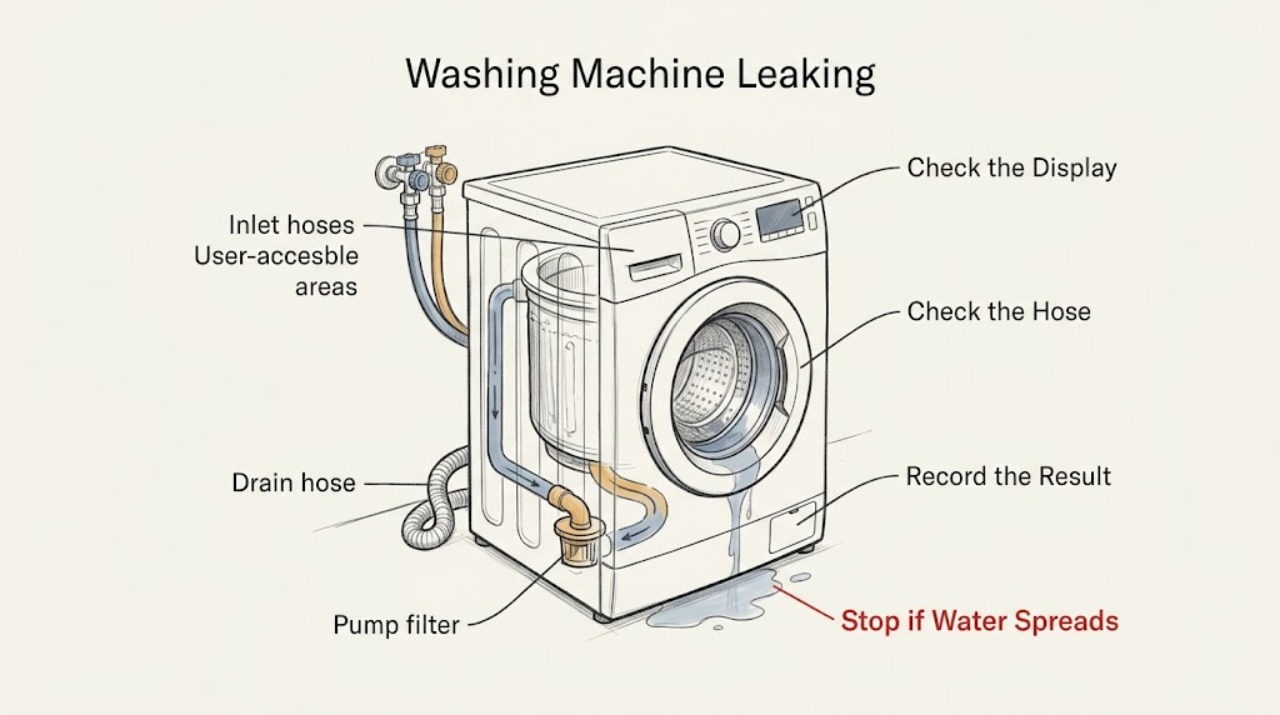
Kenmore Washing Machine Leaking: Find the Source Before It Spreads
A Kenmore washer leak is easiest to diagnose by when and where the water first appears: during filling at an inlet hose or dispenser, during washing at a door or lid seal or oversudsing condition, during draining at the drain hose or household drain, or underneath from an internal hose or pump area.
-
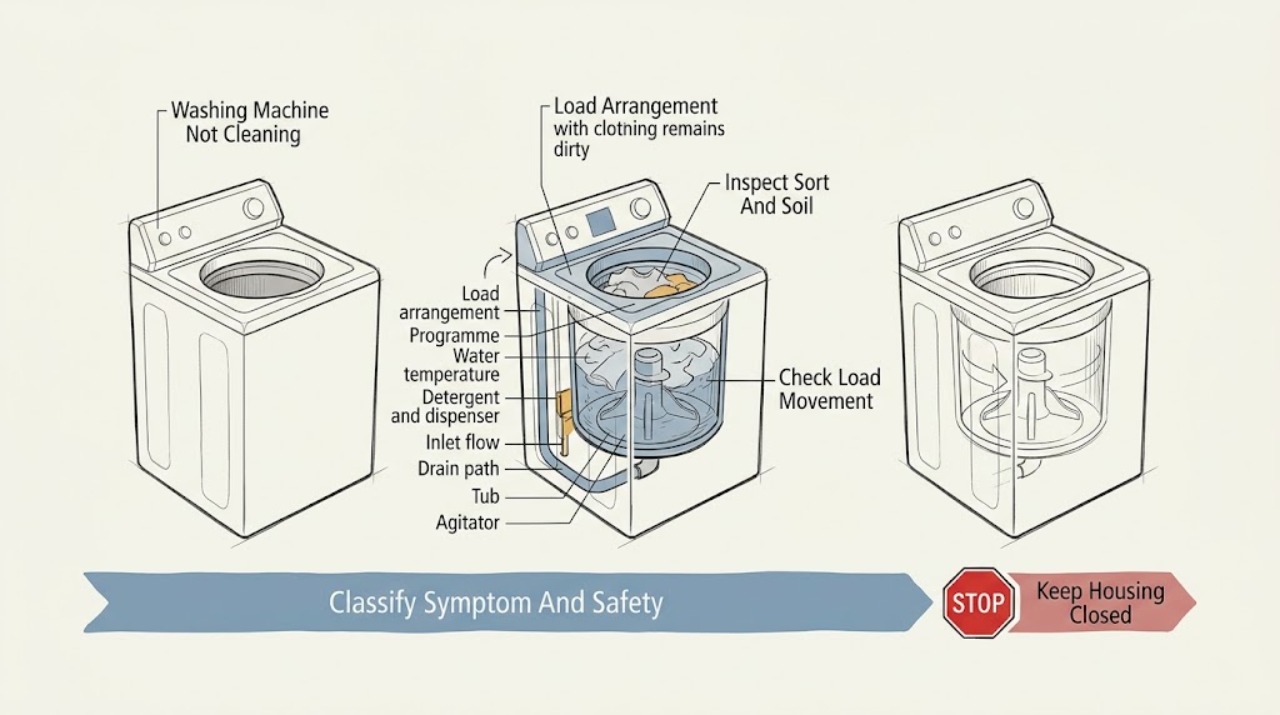
Kenmore Washing Machine Not Cleaning
If a Kenmore washer leaves clothes dirty, first separate a load problem from a washer-maintenance problem. Sort the load by color, fabric, and care-label temperature, pre-treat stains, leave enough room for the garments to move, and select a cycle and soil or temperature setting that fits the load.
-
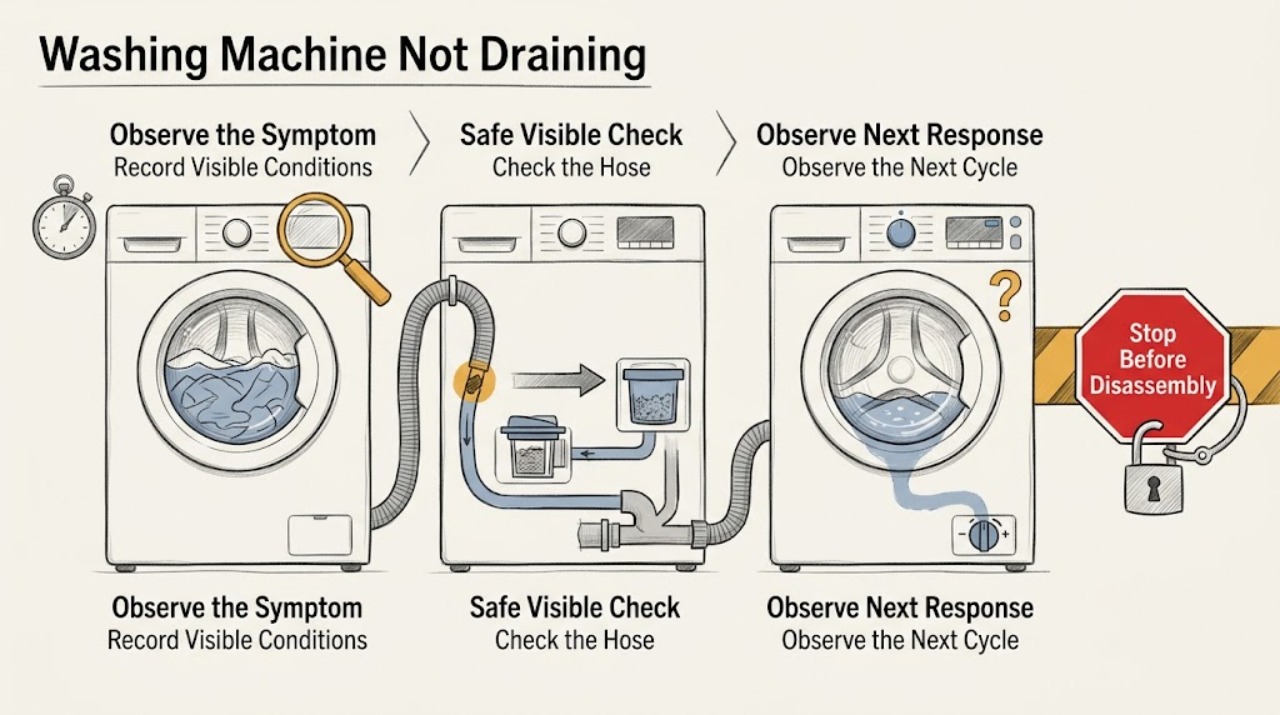
Kenmore Washing Machine Not Draining: Safe Checks for Residual Water
If a Kenmore washer leaves water behind, first note whether it stopped during wash, drain or spin and whether the water is hot. Stop the machine if water is near the outlet, a hose is leaking, the pump makes a harsh abnormal sound, or there is smoke, a burning smell, a shock or a repeated breaker trip.
-
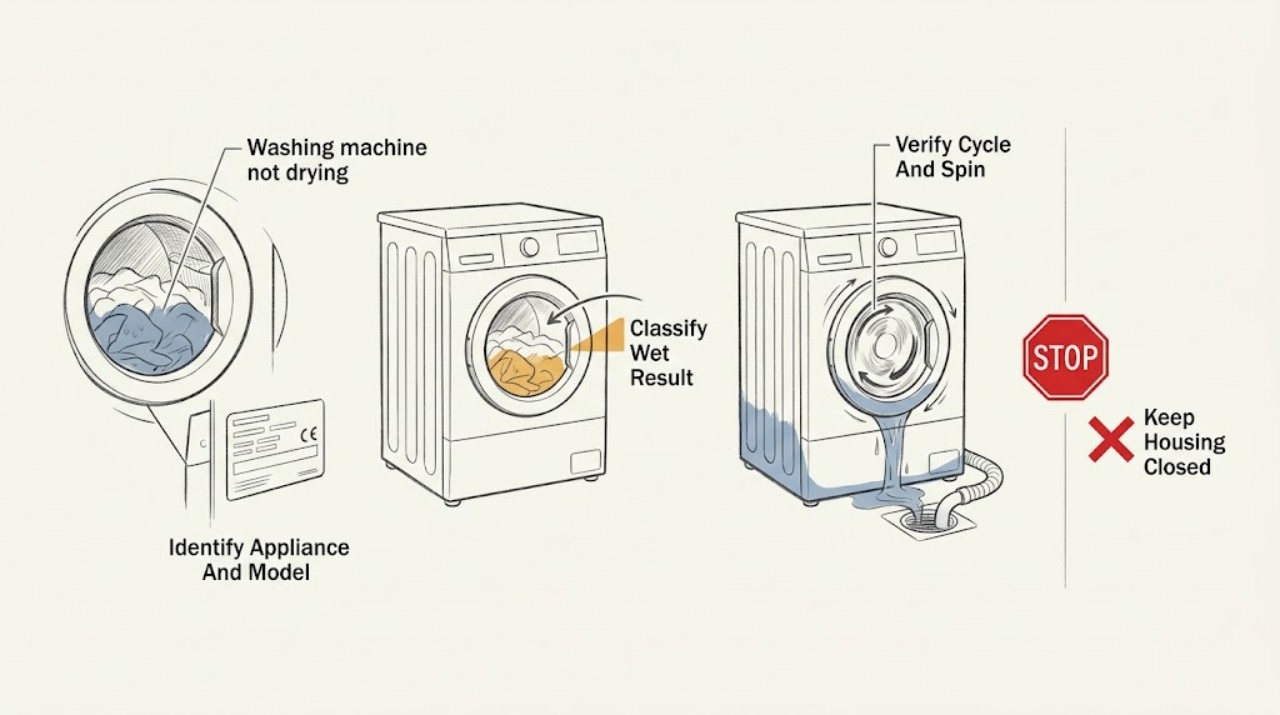
Kenmore washing machine not drying: separate wet-spin and dry-cycle problems
A Kenmore washer normally removes water by spinning; it does not heat-dry clothing unless the appliance is a Kenmore laundry center or washer-dryer with a documented dry cycle. First identify the exact model and decide whether clothes are merely left wet after wash and spin or whether a separate dry cycle is failing.
-
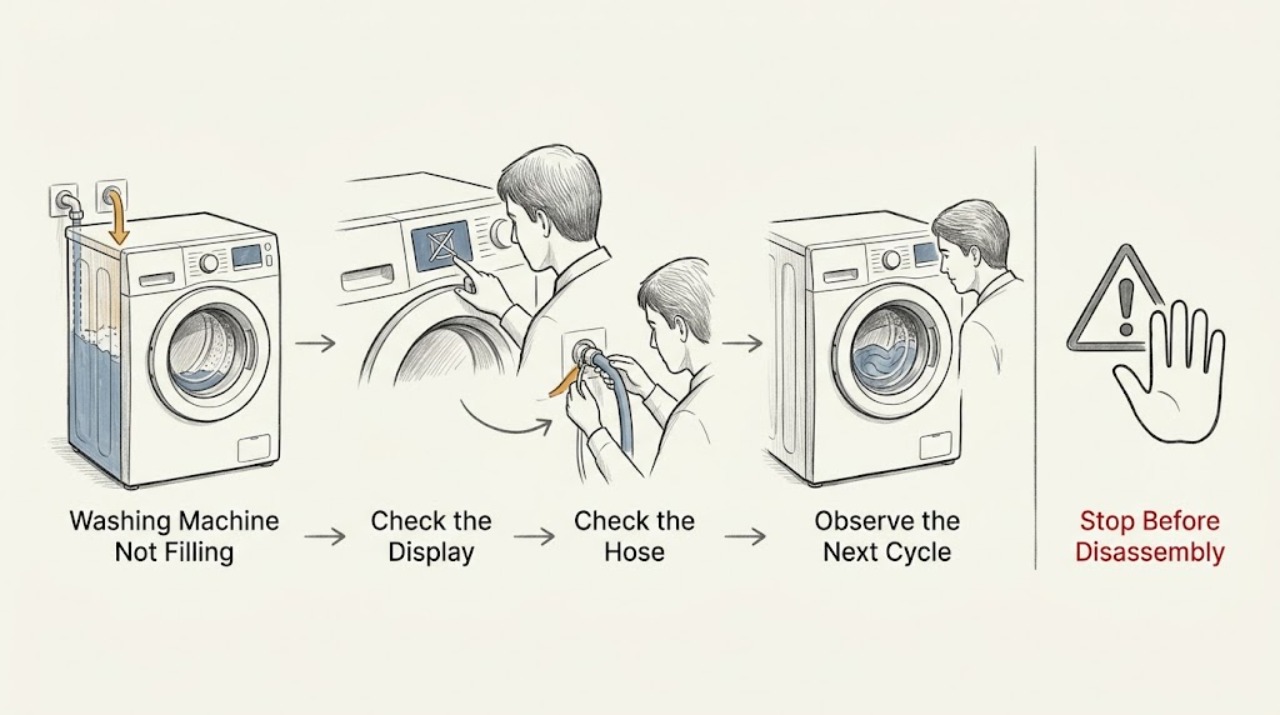
Kenmore Washing Machine Not Filling: Check Water Flow Before Parts
If a Kenmore washer will not fill, first verify that the required household water valves are fully open, the inlet hoses are connected and not kinked, and the accessible inlet screens are not blocked. Then confirm the selected cycle and lid or door state from the exact model manual. If there is still no water after those low-risk checks, stop before opening the cabinet: the inlet valve, lock or lid switch, pressure-sensing system, or control may need model-specific service.
-
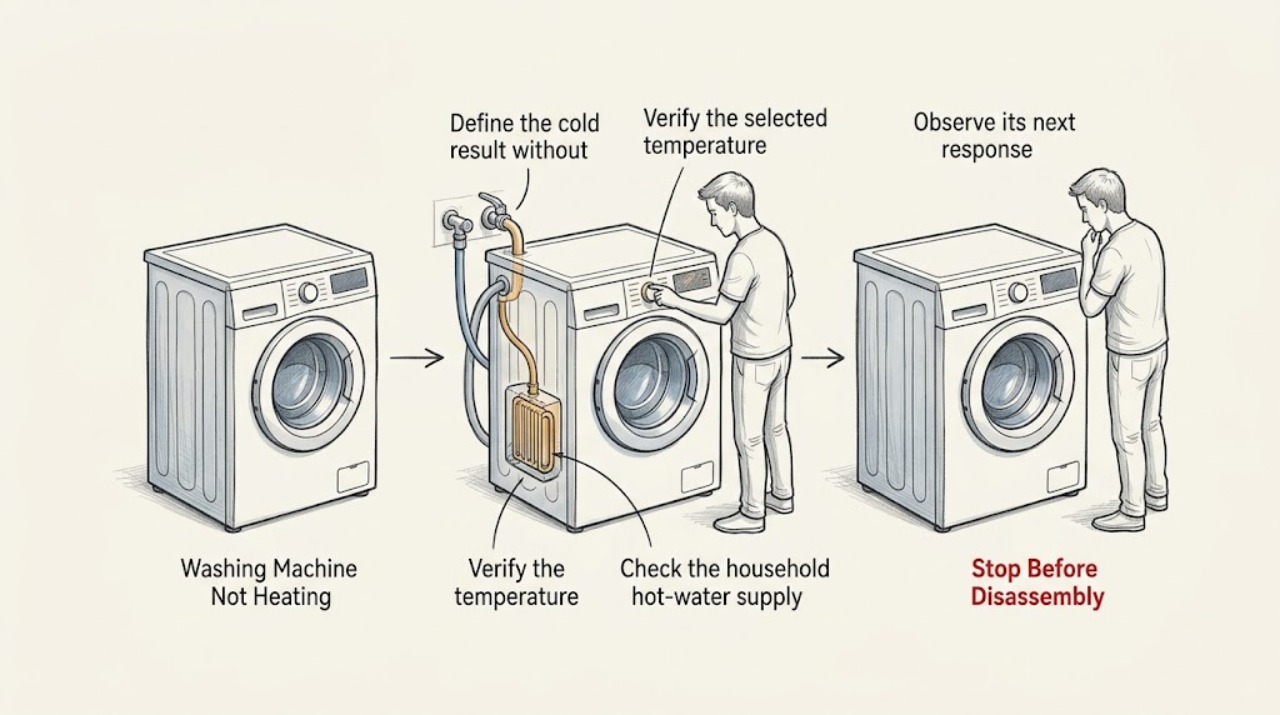
Kenmore Washing Machine Not Heating: Check the Water Path and Model Features
Most Kenmore washers do not make all of their hot wash water internally: the selected cycle may blend incoming hot and cold water, while only some models add an internal heater or steam option. Start by comparing the selected temperature with what the load actually receives, not by assuming a failed heater.
-
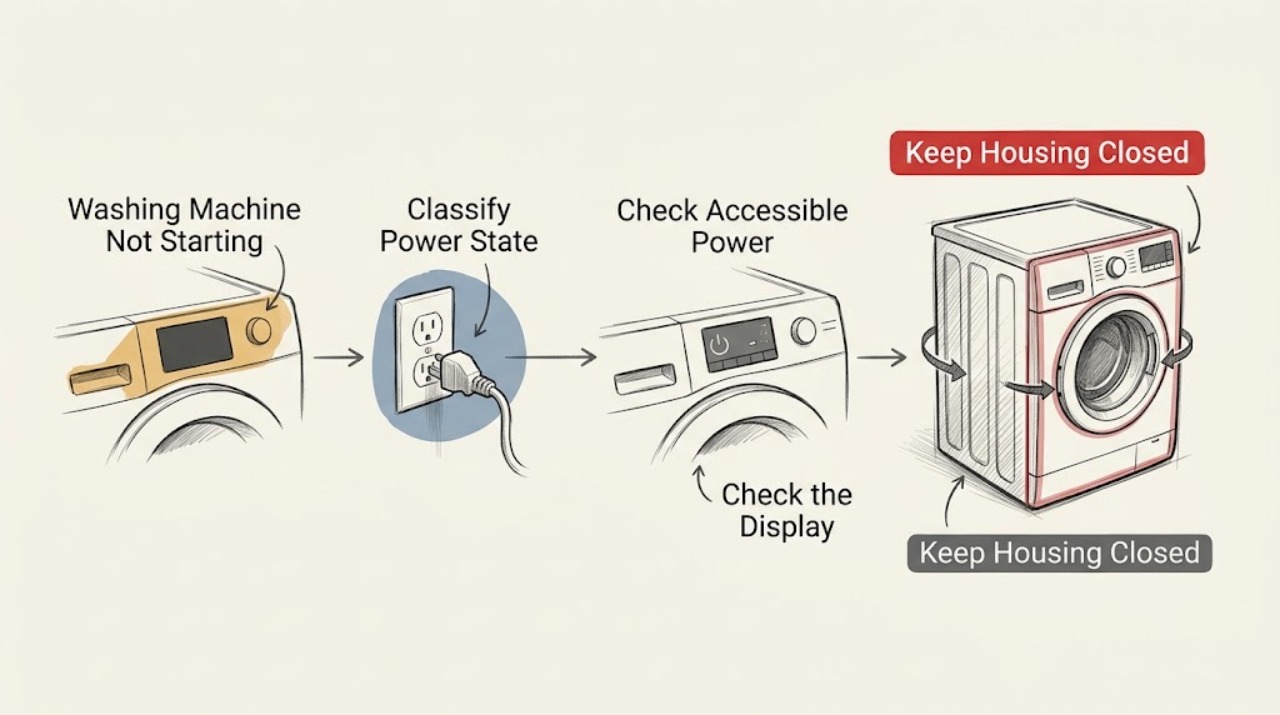
Kenmore Washing Machine Not Starting: Separate Power, Lid, Water, and Control Checks
First separate a Kenmore washer with no lights from one whose controls light up but the cycle will not begin. Check the normal supply and breaker from a safe position, then look for Control Lock, a cycle selector that is not on a valid program, a lid or door that is not fully latched, a Start button that needs a brief hold, or an exact model message about water or fill.
-
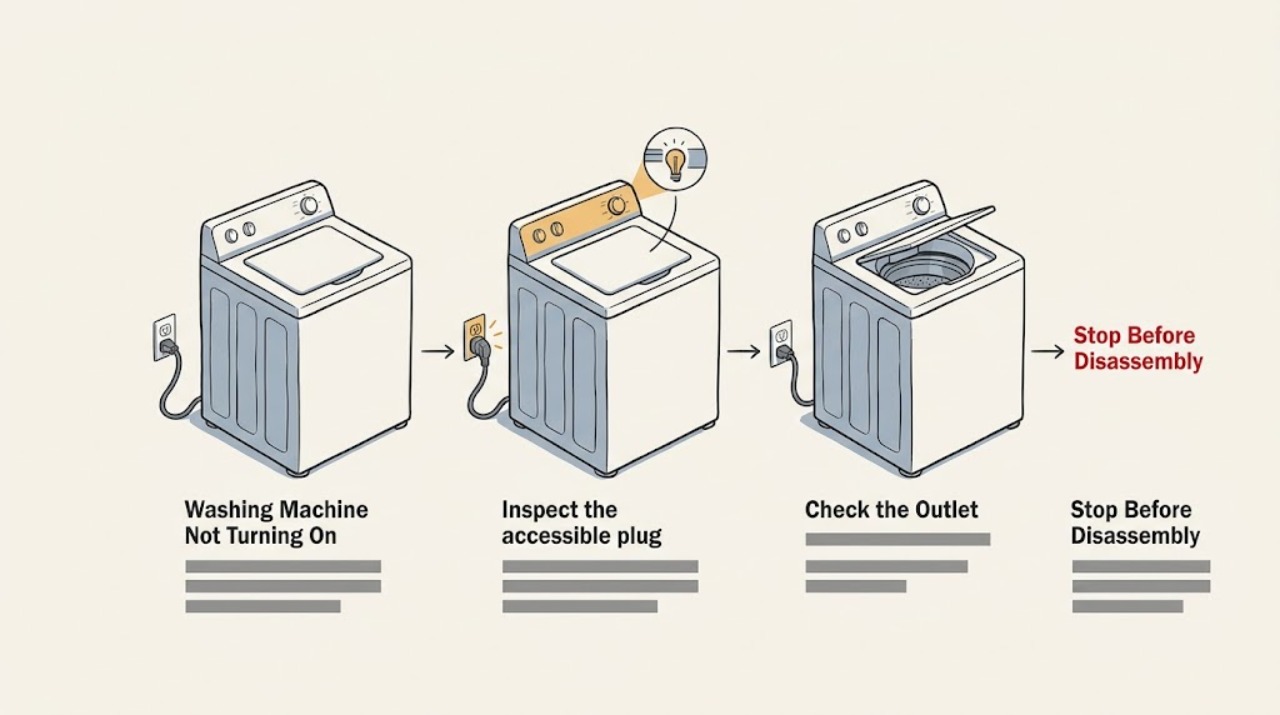
Kenmore Washing Machine Not Turning On: Safe Power and Start Checks
If a Kenmore washer has no display or response, first check the outlet and household breaker without opening the appliance, then confirm the power cord and plug are dry and undamaged. If the console lights but Start does nothing, select a valid cycle, cancel Delay Start or Control Lock if the model provides those features, and close the lid or door firmly so its interlock can engage.
-
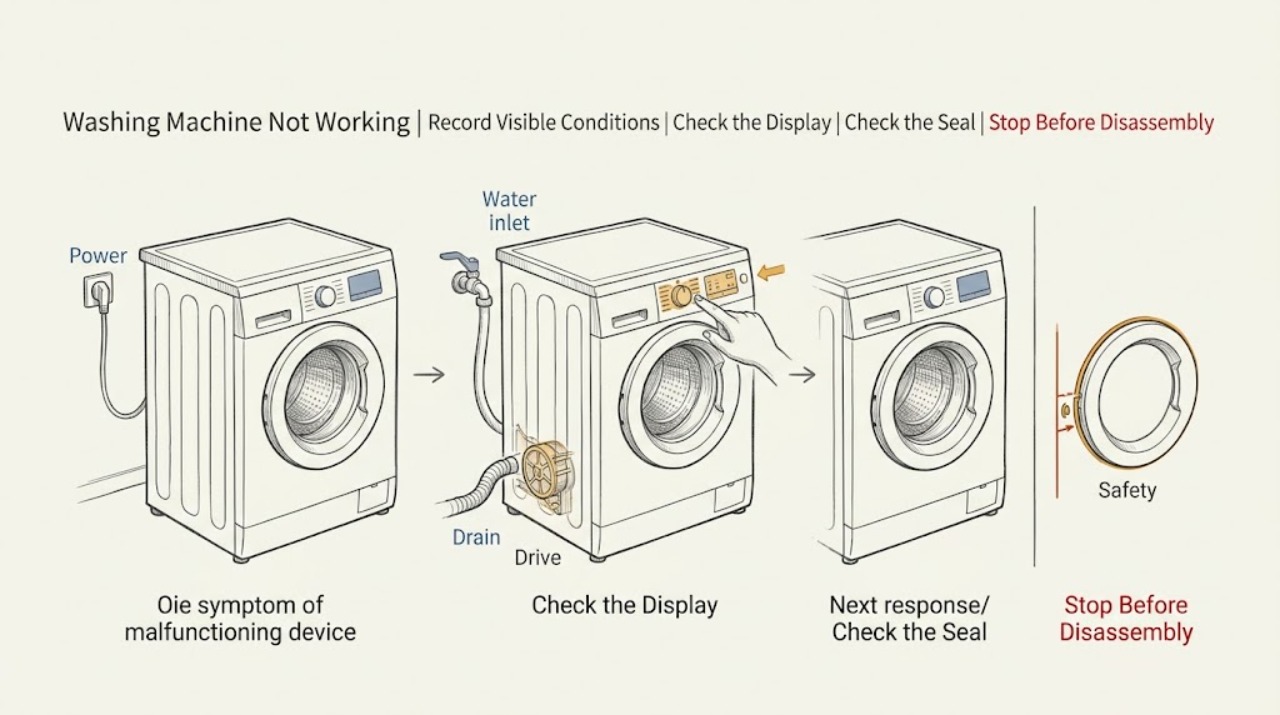
Kenmore Washing Machine Not Working: Find the Failed Stage Safely
A Kenmore washing machine that is not working should be narrowed by the stage that fails: no display or no response, no start after a command, no fill, no drain, no rotation or spin, a leak, or an error message. Do not keep testing if water reaches the outlet, the cabinet moves violently, or there is a burning smell, smoke, arc, shock, abnormal heat or a repeated breaker trip.
-
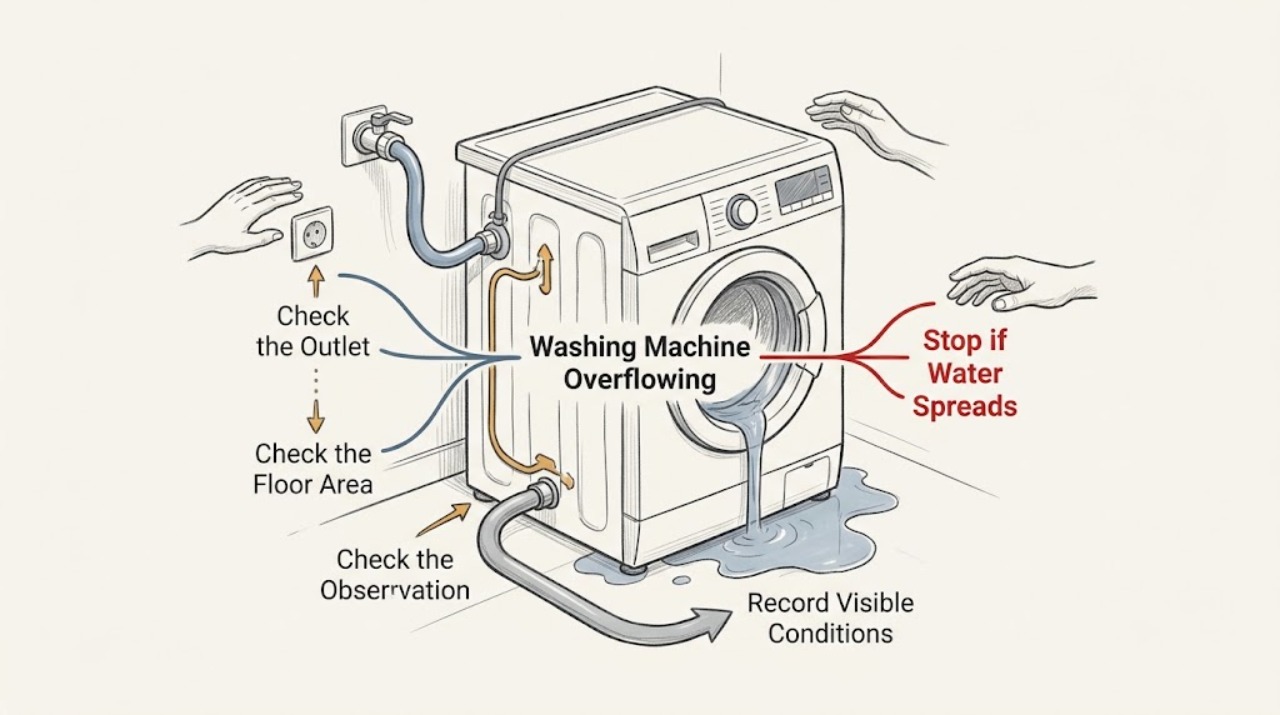
Kenmore Washing Machine Overflowing: Stop the Water and Find the Cause Safely
Pause the cycle immediately, turn off both household water valves, and disconnect power only if the floor, plug, and hands are dry and the outlet is safely reachable. Never reach into a moving tub or handle a wet electrical connection.
-
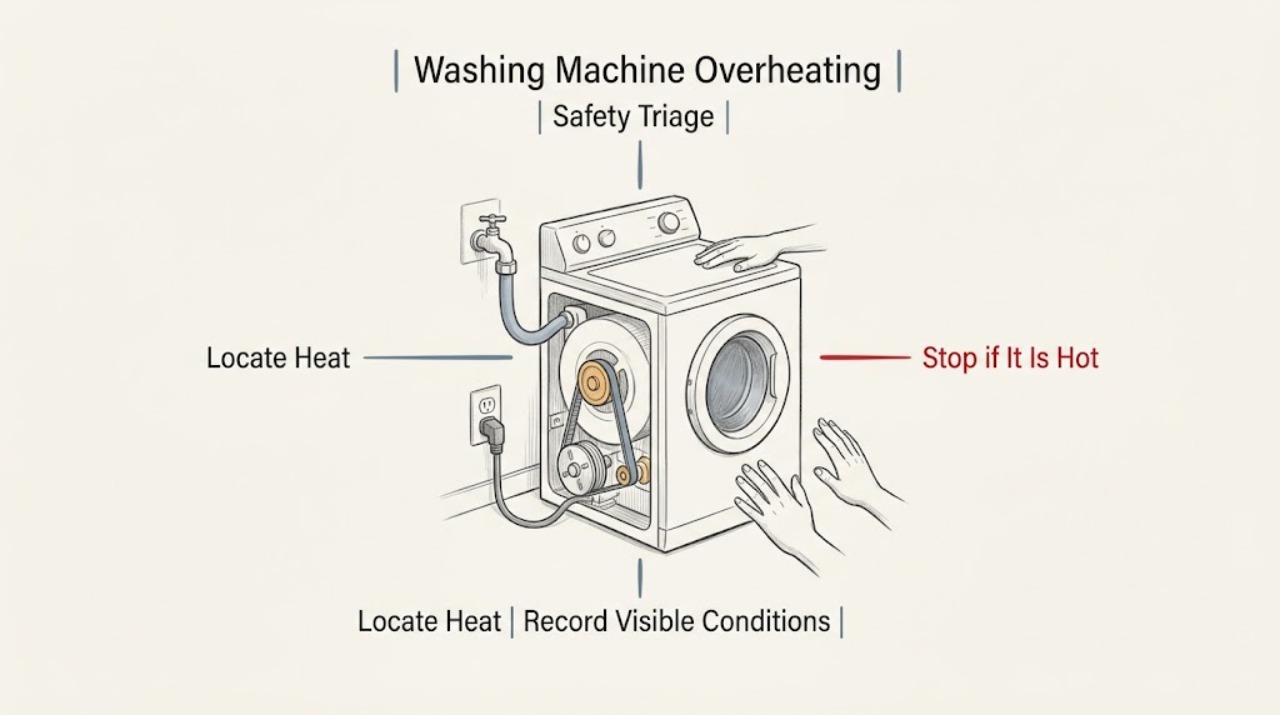
Kenmore Washing Machine Overheating: Separate Warm Water From a Real Safety Fault
A Kenmore washer can feel warm because a hot or warm cycle is bringing in heated household water, because a motor or pump has been working under load, or because the cabinet, cord, plug, or laundry is becoming abnormally hot. Do not diagnose this by touch alone.