
On this page
Start here
Quick answer
If a Kenmore washer leaves water behind, first note whether it stopped during wash, drain or spin and whether the water is hot. Stop the machine if water is near the outlet, a hose is leaking, the pump makes a harsh abnormal sound, or there is smoke, a burning smell, a shock or a repeated breaker trip. From a dry, stable position, check the selected cycle, the visible drain hose for kinks or an incorrect outlet position, and the laundry sink or standpipe for backup. A pump filter is not a universal user step: open or clean one only when the exact Kenmore model manual identifies it as accessible and gives the procedure, after isolating power and dealing safely with the water. If the washer still will not drain after model-authorized external checks, arrange service rather than opening the cabinet or guessing at a pump.
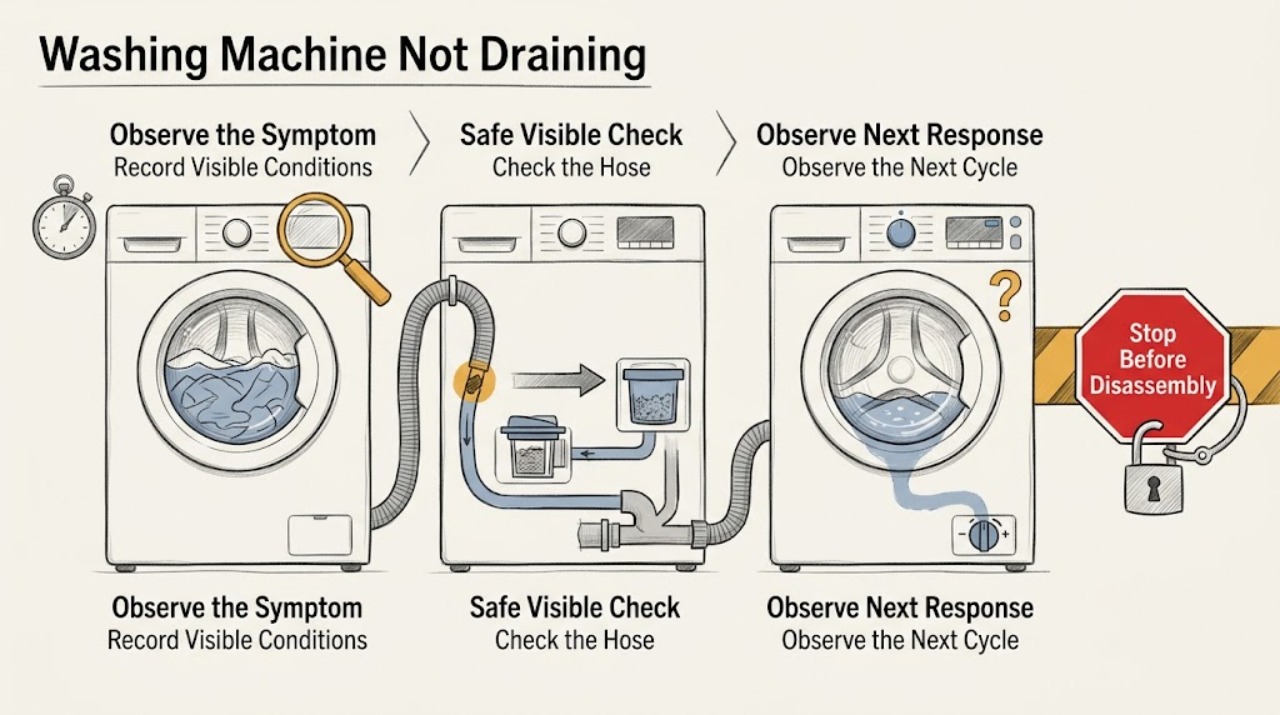
Work through in order
Diagnostic checks
Use only checks that match the exact appliance or system and its official guide.
-
Check 1
Stop the washer and record the cycle, display message and stage: did it stop before drain, hum without moving water, drain slowly, drain but refuse to spin, or finish with water left in the tub? Note whether the water is clear, soapy or contaminated, and whether it is hot. Do not reach into the water or restart a cycle if water is near the cord or outlet.
Expected result: The washer never begins draining, drains slowly, leaves a shallow residue, shows a code, produces a loud or grinding pump sound, or contains hot or contaminated standing water.
Next step: For hot water, wait for it to cool before any user-level check. For contaminated water, water near electricity, abnormal noise or any electrical warning, keep the washer off and arrange service. Otherwise continue with the visible drain-path check.
Why this matters
Why: The stage separates a start or control condition from a restricted outlet, pump-path problem or safety issue. Hot water can scald, while contaminated water and water near electricity add handling risk; a harsh new pump sound is not a reason to keep cycling the machine.
-
Check 2
With the washer stopped and stable, inspect the visible drain hose from the washer to the laundry sink, standpipe or drain. Look for a sharp kink, crushing, a hose that has slipped out, dripping or splashing outside the basin, an outlet blocked by items, or water backing up in the sink or standpipe. Do not pull the washer forward alone or loosen a wet connection while the machine is energized.
Expected result: The hose is kinked or crushed, the outlet is displaced or inserted contrary to the model guide, the sink or standpipe backs up, water splashes outside the basin, or the visible path looks clear.
Next step: Correct only an accessible kink or displaced outlet according to the exact Kenmore installation guide. Stop for a leak or backup, shut off water when safely reachable, and arrange plumbing or appliance service as appropriate.
Why this matters
Why: A restricted or incorrectly positioned hose and a blocked household drain can prevent a good pump from emptying the tub. A clear visible path shifts attention to the selected cycle, a model-specific filter or an internal fault.
-
Check 3
If the visible outlet is clear, check the controls without bypassing a safety interlock. Confirm the selected program has reached its drain or spin portion, cancel a paused or delayed state if the model shows one, and use the manual's Drain, Spin or Rinse-and-Spin command once. If the washer displays an error, record the complete code and the stage rather than treating a code from another Kenmore model as equivalent.
Expected result: A manual-authorized drain command empties the tub, the control remains paused or locked, the washer immediately returns an error, or the pump runs without moving water.
Next step: Use only the model guide's single reset or cancellation procedure. If the code returns or the pump runs dry or loudly, stop further tests and prepare the model and code for service.
Why this matters
Why: A successful command indicates a cycle or control-state issue. A persistent code or pump sound without water movement requires the exact model instructions; the same-looking display can have different meanings across configurations.
-
Check 4
If the exact Kenmore manual identifies a user-accessible pump filter, follow that manual only after disconnecting power from a safe, dry position and making a plan for residual water. Inspect the specified filter area for lint, coins or fabric, and replace the cover exactly as directed. If the manual does not identify a filter, the cover is inaccessible, the water is hot, or the filter will not release without force, do not open the cabinet or improvise a drain.
Expected result: The model guide authorizes the filter and a removable obstruction is found, the filter is clear, no filter is listed, or the cover is stuck, damaged or surrounded by water.
Next step: Remove only an accessible obstruction using the exact manual procedure and refit the cover. Stop for resistance, damage or leakage; if the filter is clear or not user-accessible, arrange model-specific service.
Why this matters
Why: A manual-authorized obstruction can restrict the pump path, but a clear filter does not prove that the pump, wiring, control or internal hose is sound. A missing or inaccessible filter is a model boundary, not an invitation to dismantle the washer.
-
Check 5
If the washer reports excessive suds or the tub contains persistent foam, record the detergent type and amount, load size and the exact code or message. Do not add more detergent, drain cleaner or an unapproved chemical. Follow the exact Kenmore manual for any model-authorized rinse or suds-recovery procedure, and stop if the tub overflows or the foam reaches electrical areas.
Expected result: Foam remains after the cycle, a model-specific suds message appears, the tub drains normally after the authorized rinse, or water and foam remain despite the procedure.
Next step: Use the model guide's detergent and rinse instructions for the next safe step. Keep the washer off for overflow, persistent standing water or a recurring code and arrange service.
Why this matters
Why: Excess foam can change the machine's drain or spin behavior, but a suds message does not rule out a blocked hose or pump path. Persistent water after an authorized response needs the same drain-path and service decision, not repeated chemical experiments.
-
Check 6
After a safe, model-authorized external correction, run at most one supervised drain or rinse-and-spin confirmation with no hands near the tub or hoses. Watch the visible outlet, floor, hose connections, pump sound and display. Stop immediately for a leak, water near the cord or outlet, a harsh abnormal sound, burning odor, smoke, sparks, shock, abnormal heat or another breaker trip.
Expected result: The tub empties and the washer completes the selected stage, drains but remains noisy, leaves water again, leaks, or develops an electrical or heat warning.
Next step: Return to normal use only if the exact guide permits it and the machine remains dry and quiet. Otherwise keep it out of service and provide the technician with the model, code, stage, water condition, hose observations and filter result.
Why this matters
Why: One successful drain supports a corrected outlet, control or accessible obstruction, but does not justify opening internal components. Repeated residual water, abnormal pump noise or any hazard indicates an unresolved pump-path, control or electrical issue.
Use your observations
Decision map
Find the observation that best matches what you see, then follow the next safe action.
-
PATH 01Next step
What you see
The hose is kinked, displaced or splashing outside the laundry sink, or the sink or standpipe backs up.
Do this next
Correct only the accessible hose position according to the exact Kenmore guide; stop for backup or a leak and arrange plumbing or appliance service.
Why this path and its safety boundary
Why it matters: The visible drain installation or household drain is restricting or mishandling discharge.
-
PATH 02Next step
What you see
The washer stops before drain or shows a code, but the visible drain path is clear.
Do this next
Record the full code and use only the exact Kenmore manual's cancellation or drain procedure; do not borrow a code explanation from another model.
Why this path and its safety boundary
Why it matters: A cycle, door or control condition may be preventing the drain command, and code meanings are model dependent.
-
PATH 03Next step
What you see
The exact manual authorizes a user-accessible pump filter and a removable obstruction is found.
Do this next
Refit the filter exactly as directed and perform one supervised confirmation. Stop for a stuck cover, damage, leakage or water near electricity.
Why this path and its safety boundary
Why it matters: The obstruction may have restricted the pump path, but the cover and surrounding seal still need to be correctly restored.
-
PATH 04Next step
What you see
The filter is clear or not user-accessible, the pump makes a harsh sound, or the tub remains full after safe external checks.
Do this next
Keep the washer out of service and request a qualified technician with the exact model, stage, code, hose result and any filter observation.
Why this path and its safety boundary
Why it matters: An internal hose, pump, control, wiring or lock condition remains possible and cannot be identified safely from outside.
-
PATH 05Next step
What you see
The water is hot or contaminated, a leak reaches the cord or outlet, or there is smoke, burning odor, a spark, shock, abnormal heat or a repeated breaker trip.
Do this next
Stop using the washer. Isolate water or power only from a safe, dry position and arrange qualified appliance, plumbing or electrical help; do not keep resetting the breaker.
Why this path and its safety boundary
Why it matters: This is a water, scald or electrical safety boundary, not a drain-clearing branch.
Helpful context
Understand the symptom
The cycle stage narrows the drain problem
A washer that never reaches drain, drains slowly, drains but will not spin, or leaves only a small amount of water has not produced the same symptom. Record the program, display message and point at which it stopped before cancelling it. If the water is hot, let it cool and avoid reaching into the tub; if it is contaminated or near electrical equipment, treat the situation as a stop condition.
Start with the visible drain path
A kinked or crushed hose, a hose inserted too far, a loose outlet, or a backed-up laundry sink can look like a failed washer pump. Kenmore has multiple washer configurations, so use the model number to retrieve the applicable installation and use guide. Inspect from outside and do not pull a heavy washer forward or disconnect a wet hose merely to investigate.
A filter is a conditional check, not a universal repair
Some designs provide a user-accessible pump filter or coin trap, while others do not. The exact Kenmore guide determines whether a filter exists, where it is, whether water must be collected, and how the cover is secured. If the guide does not authorize that access, or if the filter is stuck, damaged or surrounded by water, stop and use qualified service.
When checks do not resolve it
Need a professional?
Call a qualified appliance technician when the washer remains full after the exact Kenmore manual's external checks, when a filter is not user-accessible or will not release, when a pump makes a harsh abnormal sound, when a code returns, or whenever there is a leak, hot or contaminated water, smoke, burning odor, spark, shock, abnormal heat or repeated breaker trip.
Common questions
FAQ
Why is my Kenmore washer leaving water in the tub?
Record the cycle stage and inspect the visible drain hose and household drain after the washer stops. A kink, displaced outlet or backed-up sink can restrict discharge; if those are clear, use only the exact model manual for a drain command or user-accessible filter check. Persistent water or a harsh pump sound needs qualified service.
Should I open the pump filter on a Kenmore washer?
Only when the exact model manual identifies a user-accessible filter and gives the safe water-handling and cover procedure. Some configurations do not expose one. Do not force a cover, open the cabinet or work around hot or standing water; request service when access is unclear.
Can too much detergent stop a Kenmore washer from draining?
Excess foam can change drain or spin behavior on a model that detects suds, but it does not rule out a blocked hose or pump path. Record any code and follow the exact manual's detergent and rinse instructions; do not add drain chemicals or repeatedly run a failing cycle.
When is a Kenmore washer drain problem an emergency?
Stop immediately for water near an outlet or cord, a continuous leak or backup, hot or contaminated water that cannot be handled safely, smoke, sparks, a burning odor, abnormal heat, a shock or another breaker trip. Isolate water or power only from a safe dry position and obtain qualified help.
Read the exact guide
Official sources
- Guide to addressing moisture and mould indoorsHealth Canada · General laundry-room moisture guidance; it is not a Kenmore internal repair manual.
- CPSC Guide to Home Wiring HazardsU.S. Consumer Product Safety Commission · General electrical safety guidance for stopping use of an appliance with warning signs; it is not a Kenmore washer diagnosis.
- Home Electrical Safety ChallengeElectrical Safety Foundation International · General appliance safety guidance; it does not identify a Kenmore model or drain component.
- Find Your Manual | Kenmore Appliance Manuals & GuidesKenmore · Use the exact washer model manual before selecting a drain command, hose installation, pump-filter access or reset step.
Community feedback
Share a repair observation
Share a plain-text repair observation. Accepted observations are published automatically; this page may take a moment to update.