
Repair problem
Not Draining Troubleshooting Guides
Published FixGraph guidance for diagnosing and responding to not draining.
Matching published guides
Choose a guide that matches the service, equipment, and conditions you are seeing.
-
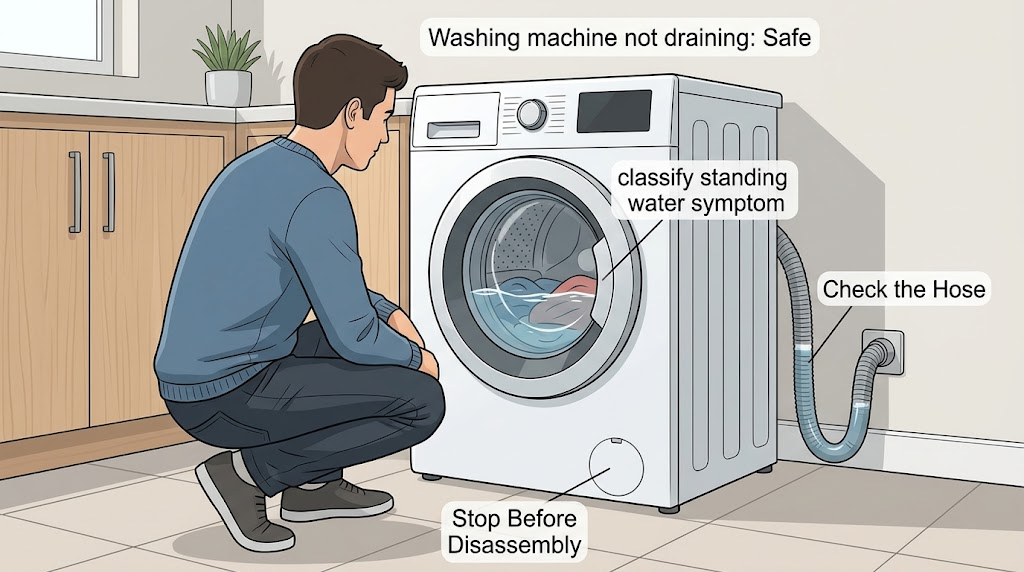
Admiral washing machine not draining: Safe checks before service
For an Admiral washing machine that will not drain, first note whether it is a top-loader or front-loader, whether the lid or door closes, and whether the load is simply wet or the tub is full of water. With the washer stopped, inspect the visible drain hose for kinks, crushing, clogs, incorrect routing, or a drainpipe problem, and check the selected cycle, spin setting, load balance, and detergent amount.
-
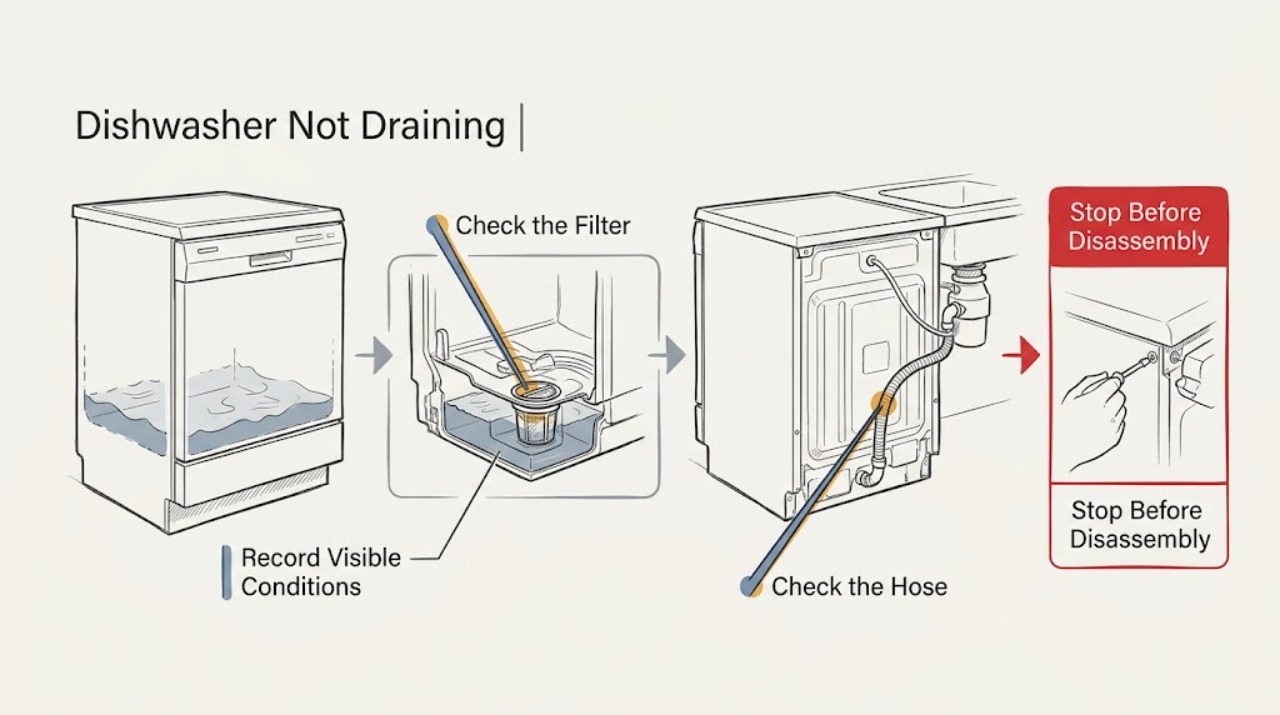
AEG Dishwasher Not Draining
If an AEG dishwasher leaves water in the tub, start with the removable filters and visible sump area, then check the sink connection and drain hose for a blockage, kink, twist, damage, or incorrect installation. A recently installed or moved dishwasher may still have the sink trap's blanking plug in place.
-
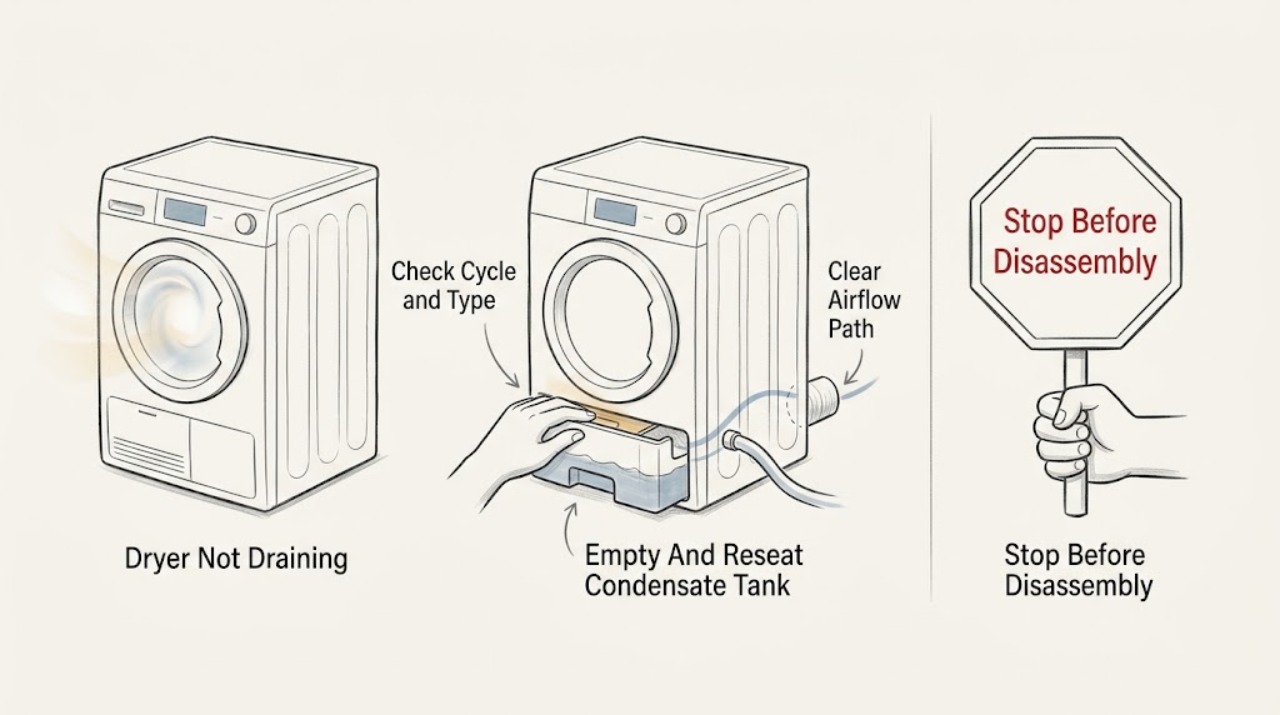
AEG Dryer Not Draining
First identify whether the AEG dryer is vented, condenser, or heat pump: the water-removal path is different. A vented dryer sends moist air through a hose to the outside and does not use the condenser/heat-pump tank checks.
-
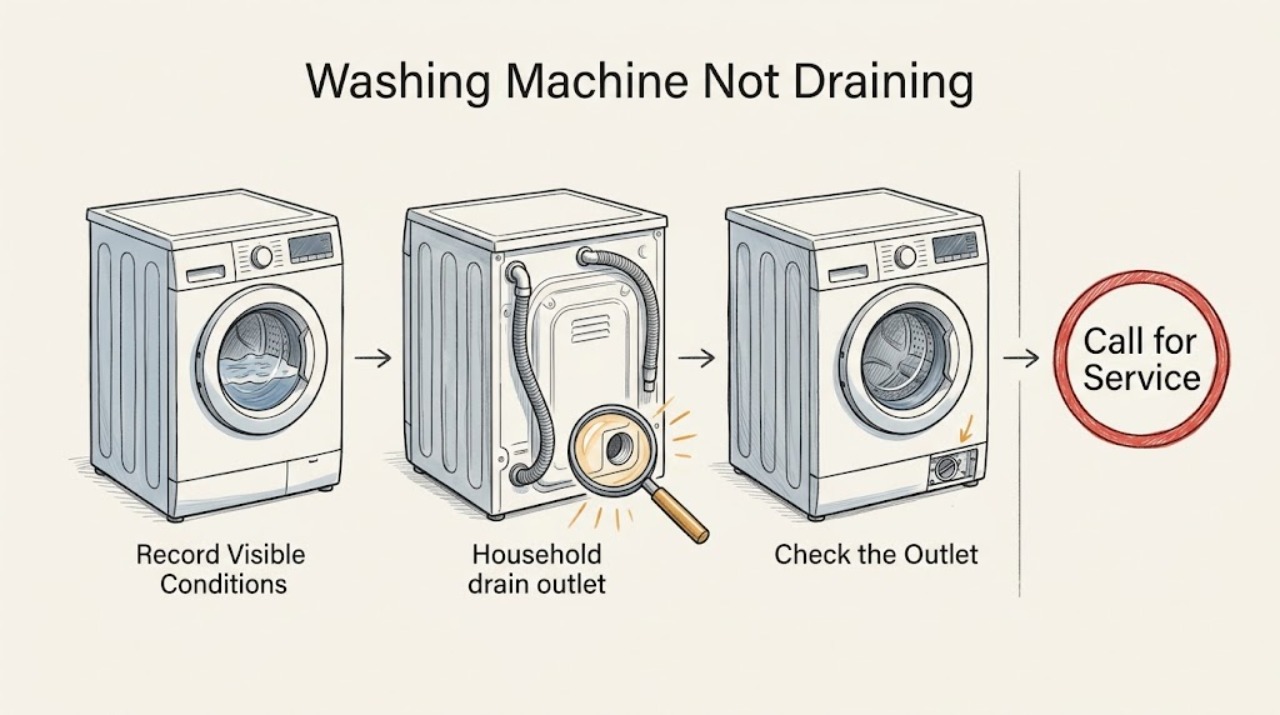
Aeg Washing Machine Not Draining: Check the Hose, Filter, and Drain Safely
If an AEG washing machine is not draining, first stop the program and note whether water remains in the drum, an E20/E21/C2-type warning or repeated beeps appear, or the pump makes an unusual sound. Unplug the machine and let hot water cool before any filter check.
-
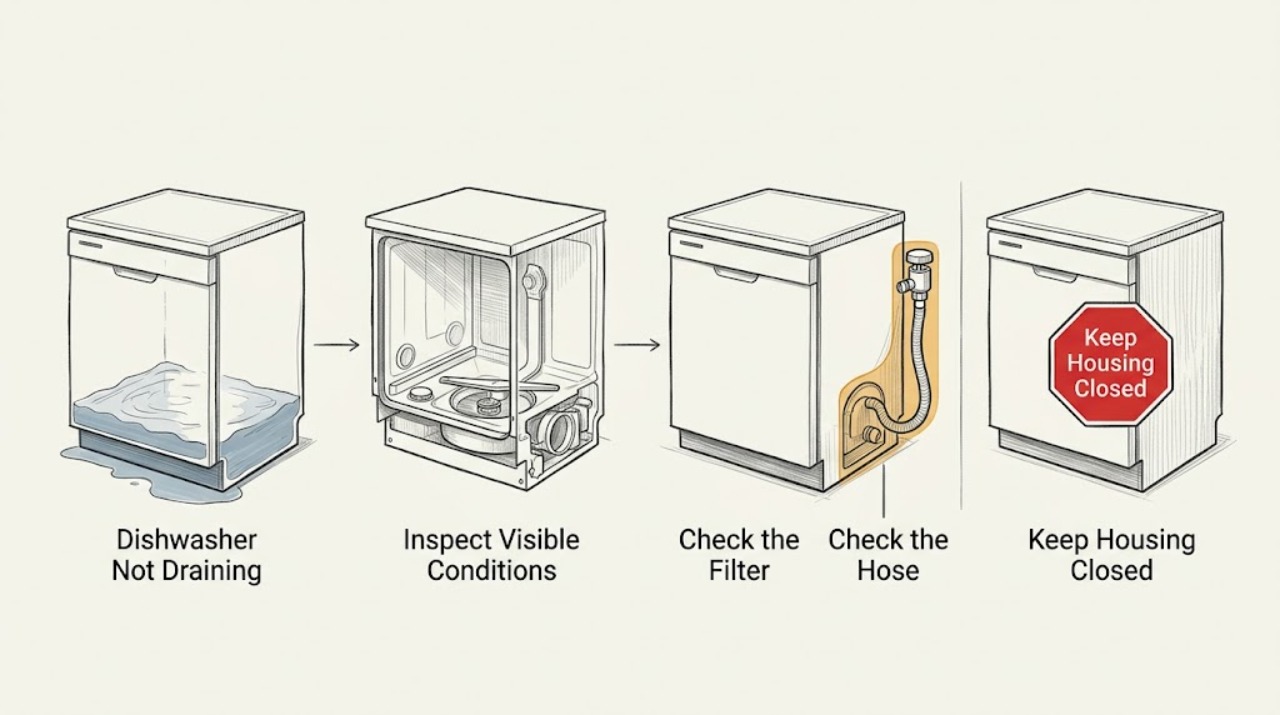
Amana Dishwasher Not Draining: Isolate Residue, Hose, and Drain Faults
First distinguish a small amount of water in the filter cup from water covering the tub floor or reaching the door. Amana says a small amount in the filter area can be normal, but substantial or recurring water usually points to a restricted filter/sump, kinked or incorrectly routed drain hose, blocked air gap or sink connection, a garbage-disposer knockout plug on a new installation, suds, or a pump/control fault.
-
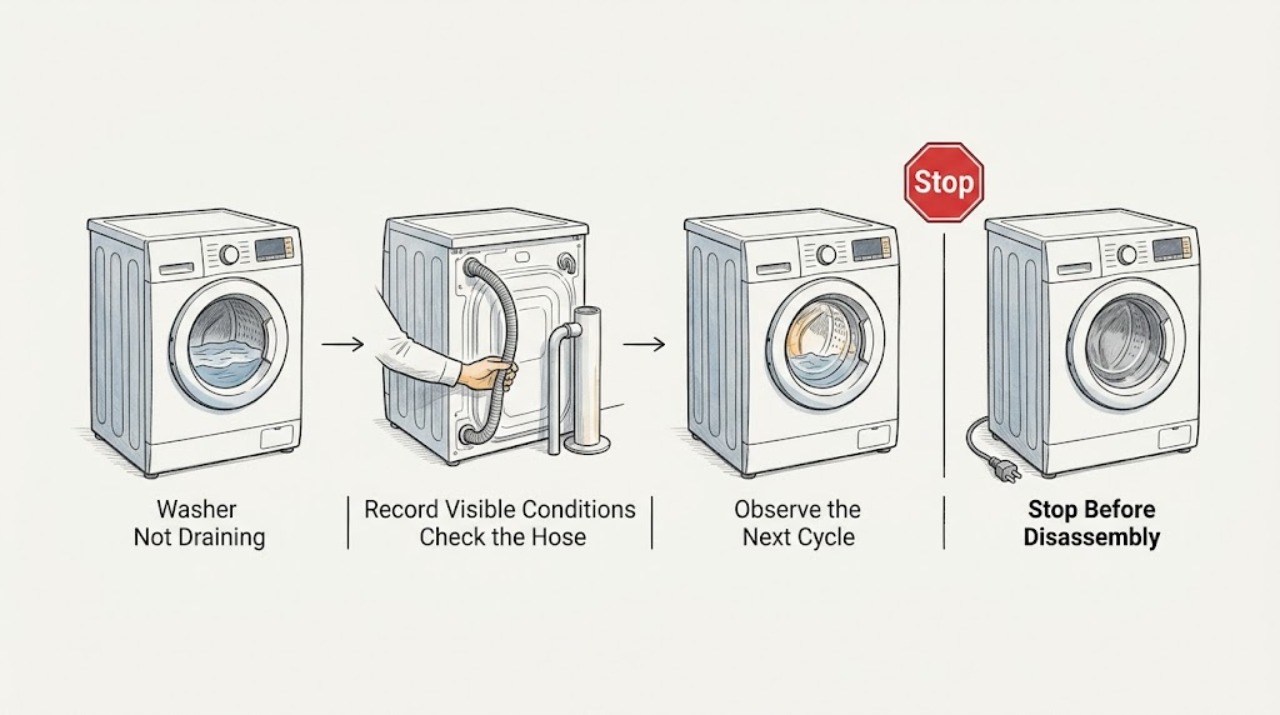
Amana Washer Not Draining: What to Check and What to Do Next
Start by noting whether the tub contains standing water, the clothes are merely very wet, or water drains slowly. With the washer stopped, check the visible drain hose for kinks, a clog, incorrect insertion, or an overly high route, and check the standpipe or utility sink for a visible blockage.
-
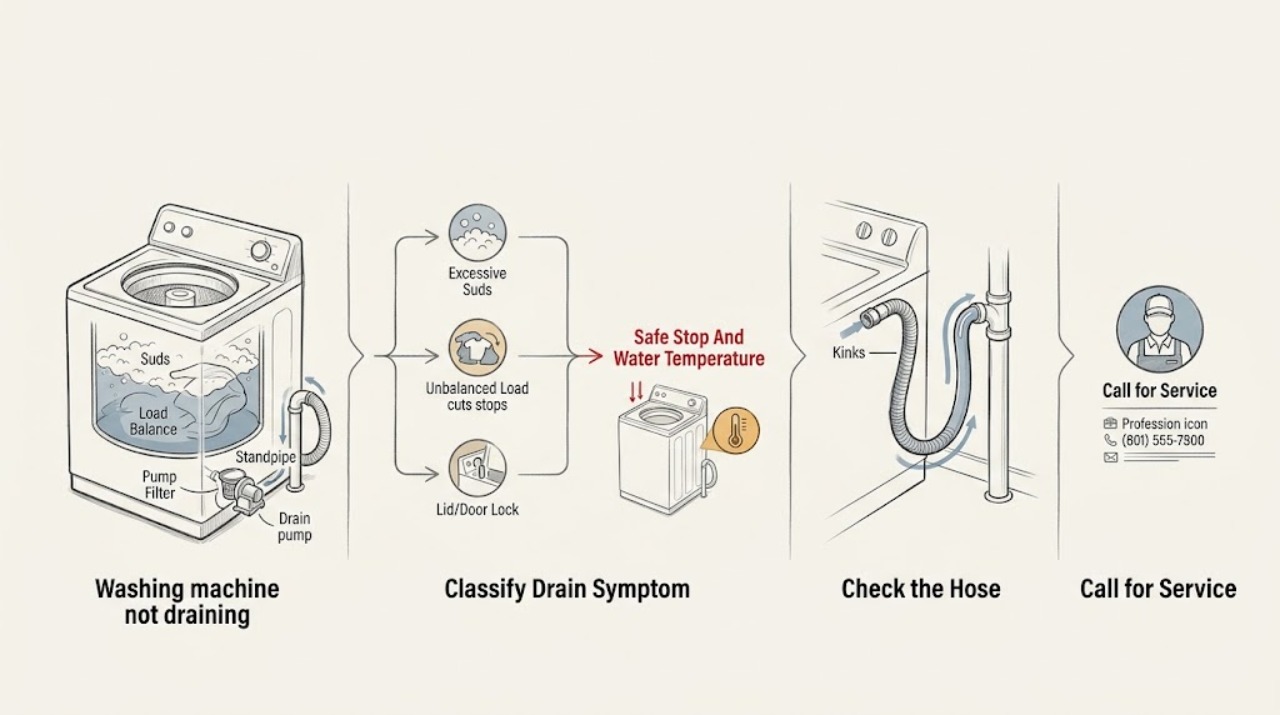
Amana washing machine not draining: check the hose, pump filter, and load safely
First check whether water is actually in the tub and whether the washer is top-load or front-load. Stop the cycle normally, keep hands out of a moving basket, and disconnect power only when the area is dry and safe.
-
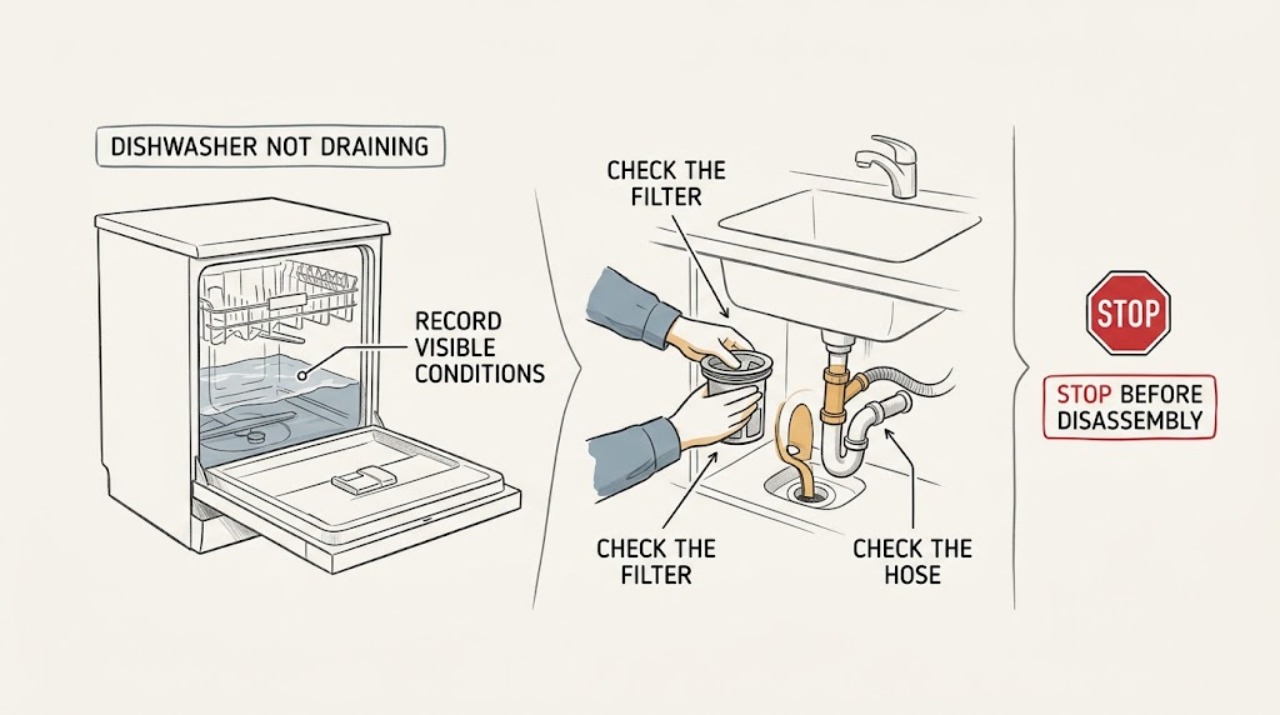
Ariston Dishwasher Not Draining: Check the Filter, Hose, and Sink Drain
If an Ariston dishwasher leaves water behind, first make sure the cycle has actually finished and note the exact display or indicator pattern. Switch the appliance off, shut off the water tap, and disconnect the plug before cleaning the accessible filter assembly.
-
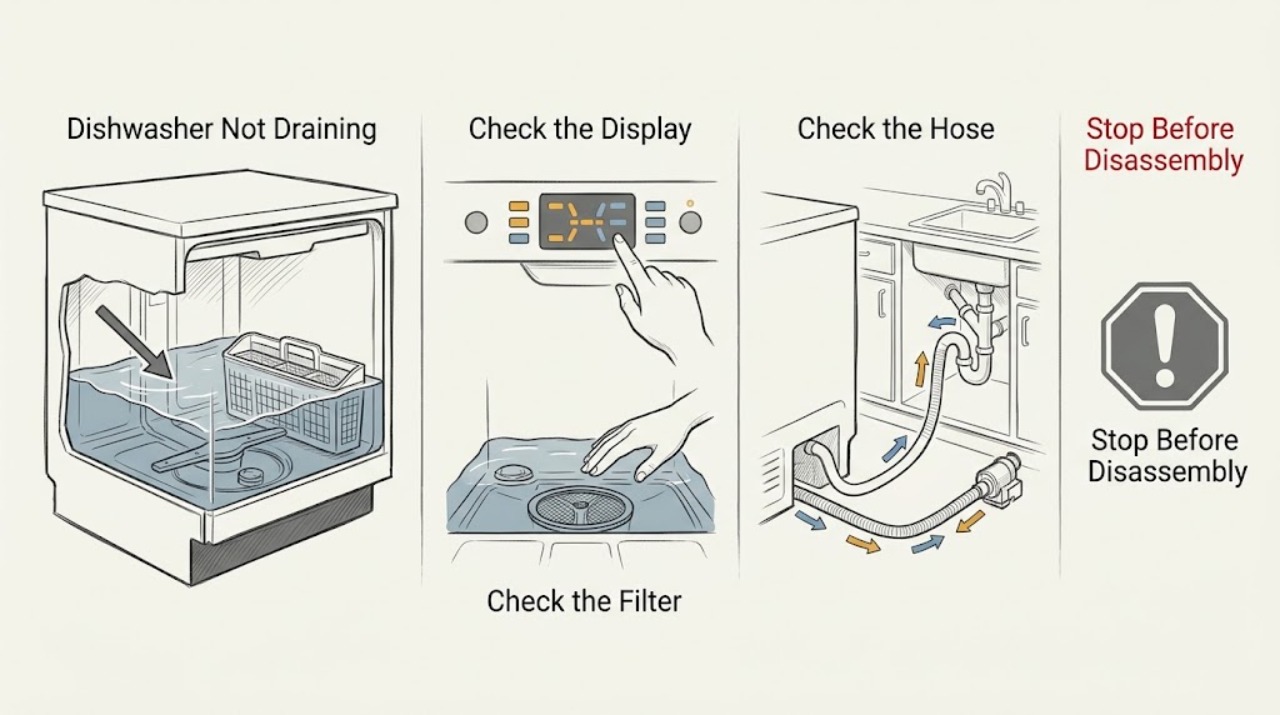
ASKO Dishwasher Not Draining: Clean Filters and Check the Drain Path
If an ASKO dishwasher is not draining, first make sure the wash cycle has actually ended and use the model's manual-drain or cancel control. Then switch the appliance off and clean the accessible filters, check the visible drain line for a kink or blockage, and confirm the drain installation still follows the model's instructions.
-
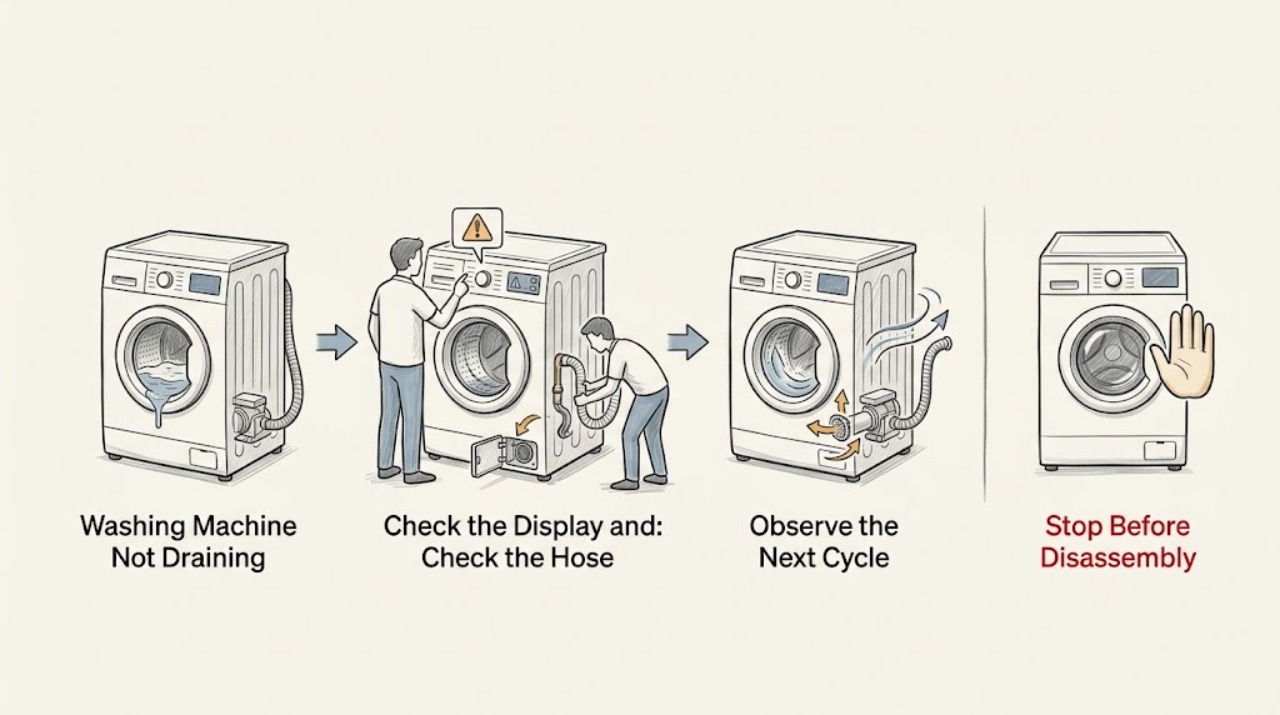
Asko Washing Machine Not Draining: Safe Hose and Filter Checks
If an Asko washing machine leaves water in the drum, stop the cycle and keep hands away from standing water and any electrical connection. With the machine safely stopped, check the externally visible drain hose for a kink, incorrect routing, or a blocked outlet, then use the exact model manual before opening a user-accessible pump-filter cover.
-
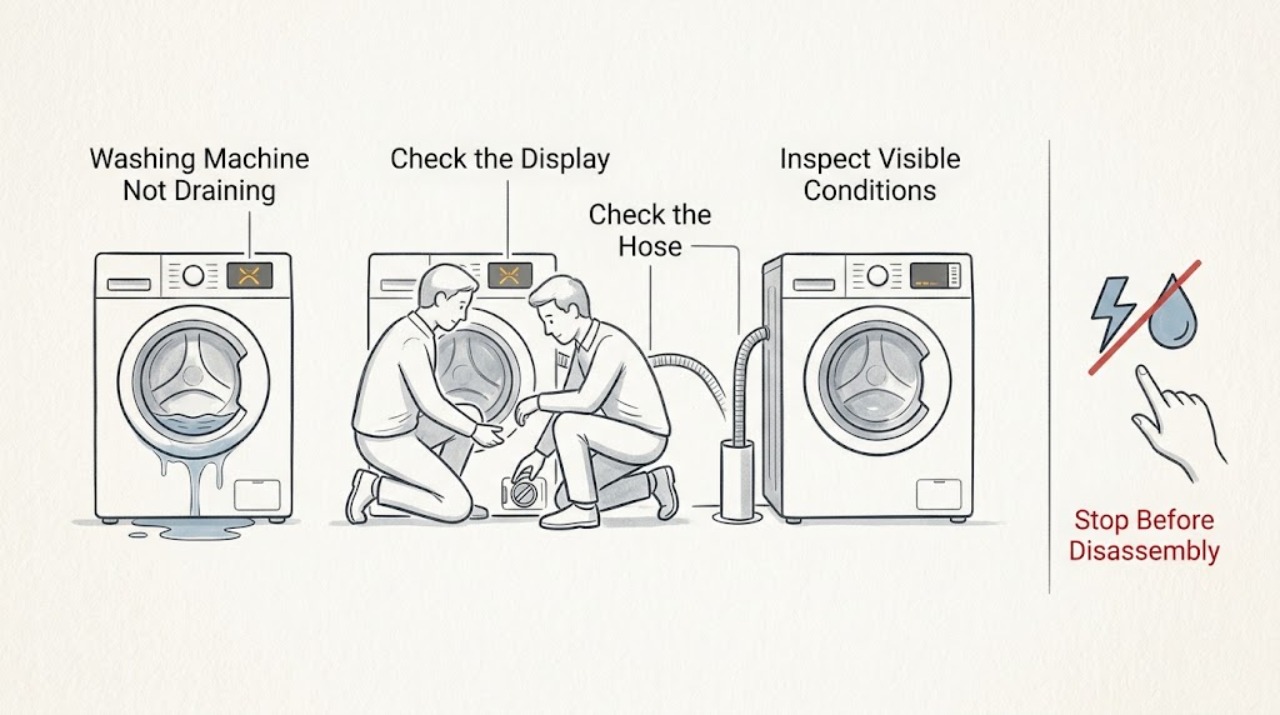
Bauknecht Washing Machine Not Draining: Safe Hose and Filter Checks
If a Bauknecht washing machine leaves water in the drum, stop the programme and keep hands away from standing water and electrical connections. From a dry, safe position, check the visible drain hose for a kink or blocked outlet, then use the exact model manual before opening any user-accessible pump filter.
-
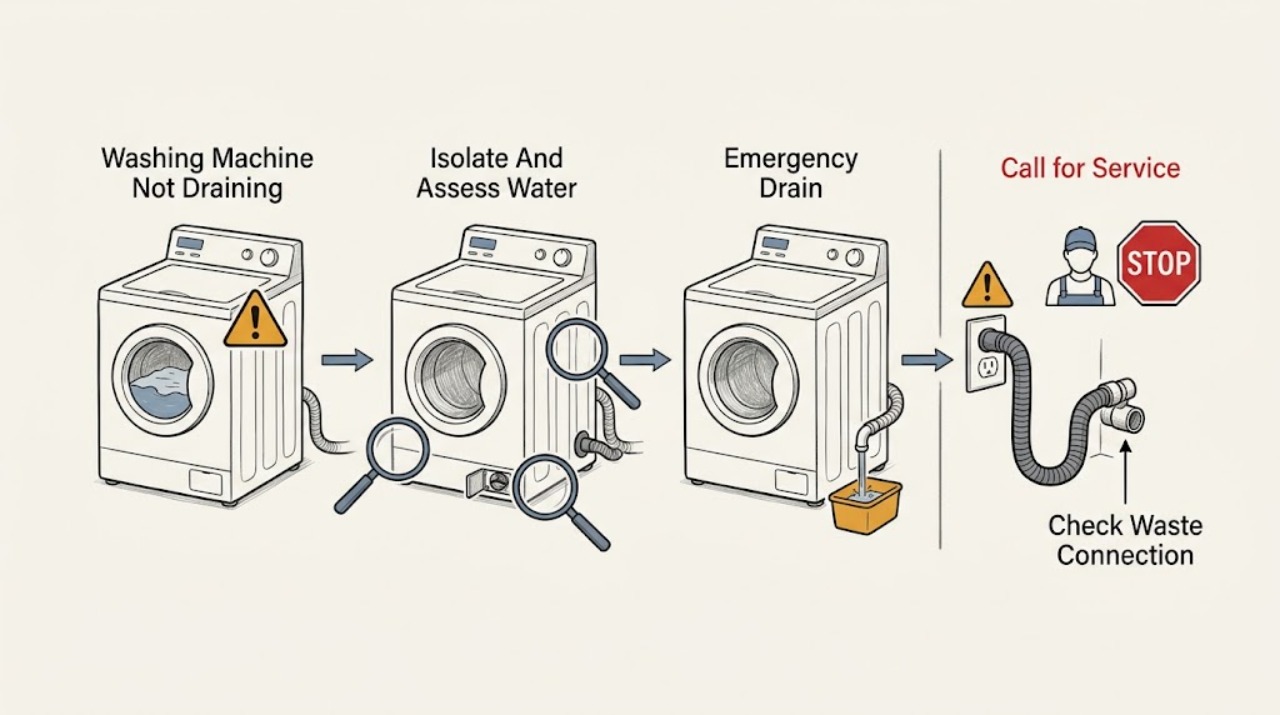
Baumatic Washing Machine Not Draining: Safe Checks Before Service
If a Baumatic washing machine is not draining, stop the programme and disconnect the appliance from the mains before examining it. If water remains in the drum, use the model's emergency-drain method or carefully lower the waste hose into a shallow bowl only when that arrangement is identified by the manual; expect water and protect the floor.
-
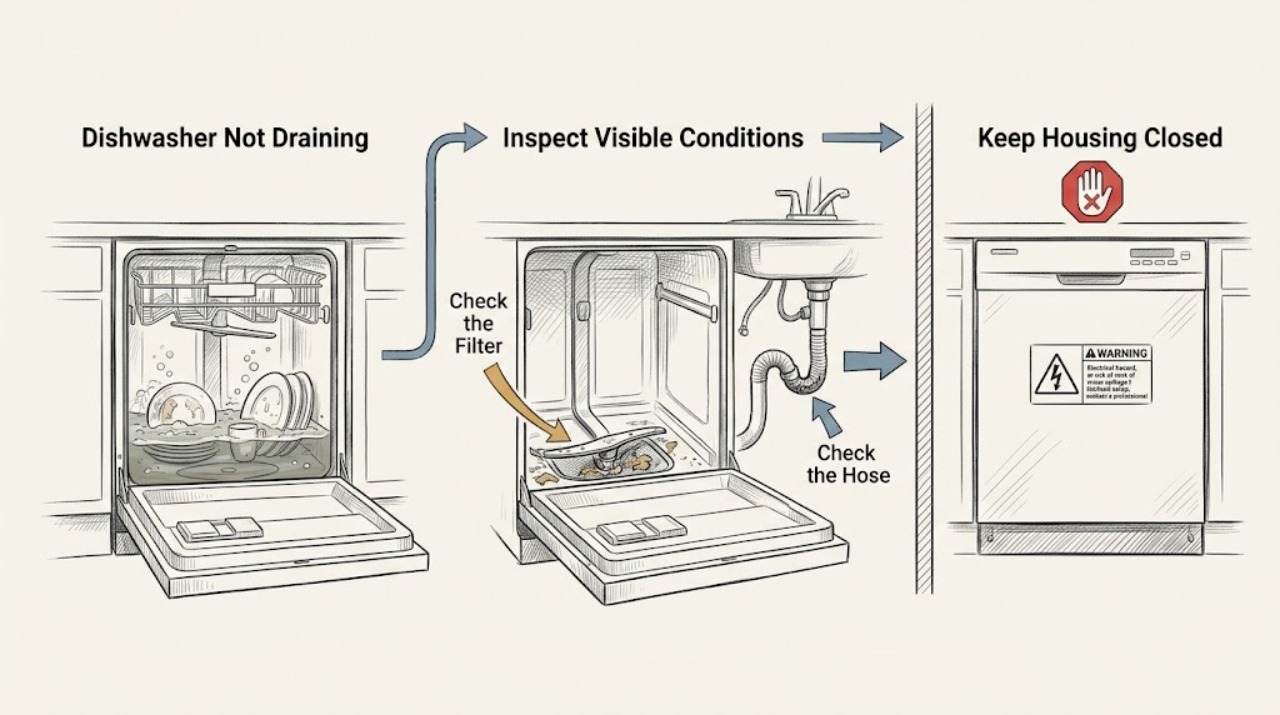
Beko Dishwasher Not Draining
If a Beko dishwasher is not draining, switch it off and disconnect it before checking the removable filters and the accessible drain route. Food debris in the filter, a crushed or twisted drain hose, an incorrectly positioned hose, or a blocked sink connection can hold water in the cabinet.
-
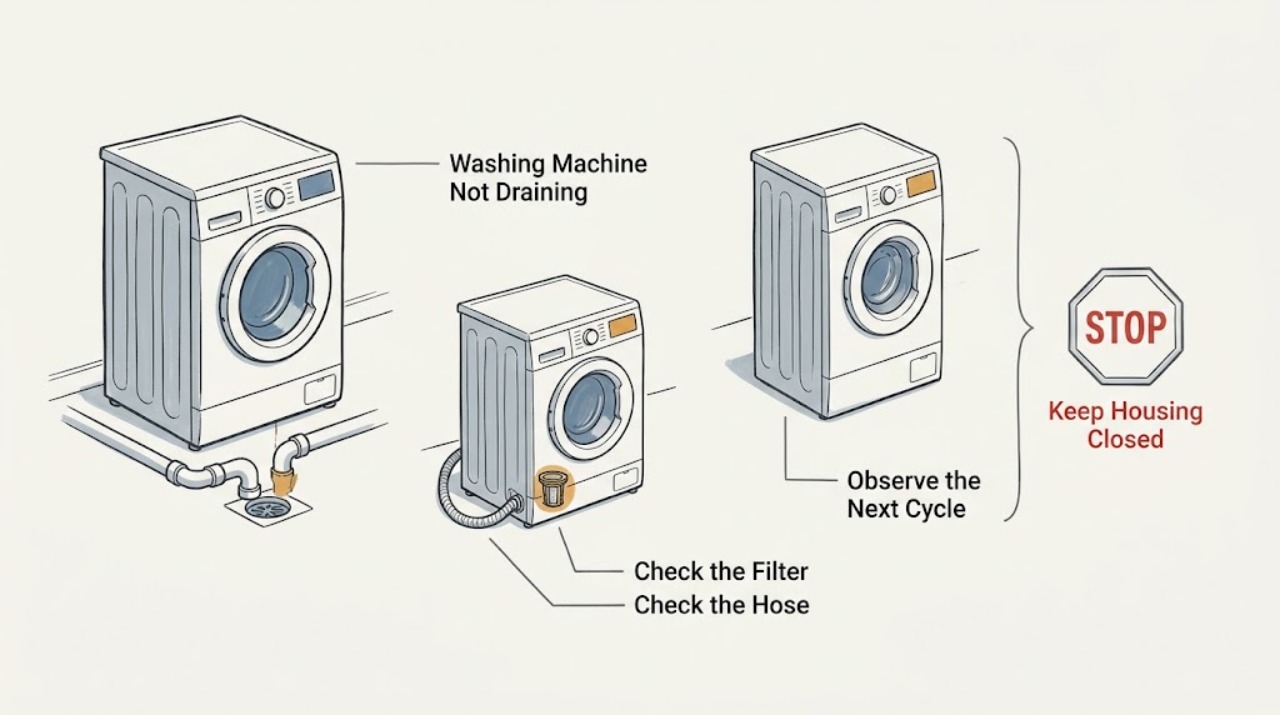
Beko Washing Machine Not Draining
If a Beko washing machine leaves water in the drum, first stop the program, unplug the appliance, and let hot water cool. The most useful user checks are the accessible pump filter, the drain hose for a bend or blockage, and the hose routing so wastewater cannot flow back into the drum.
-
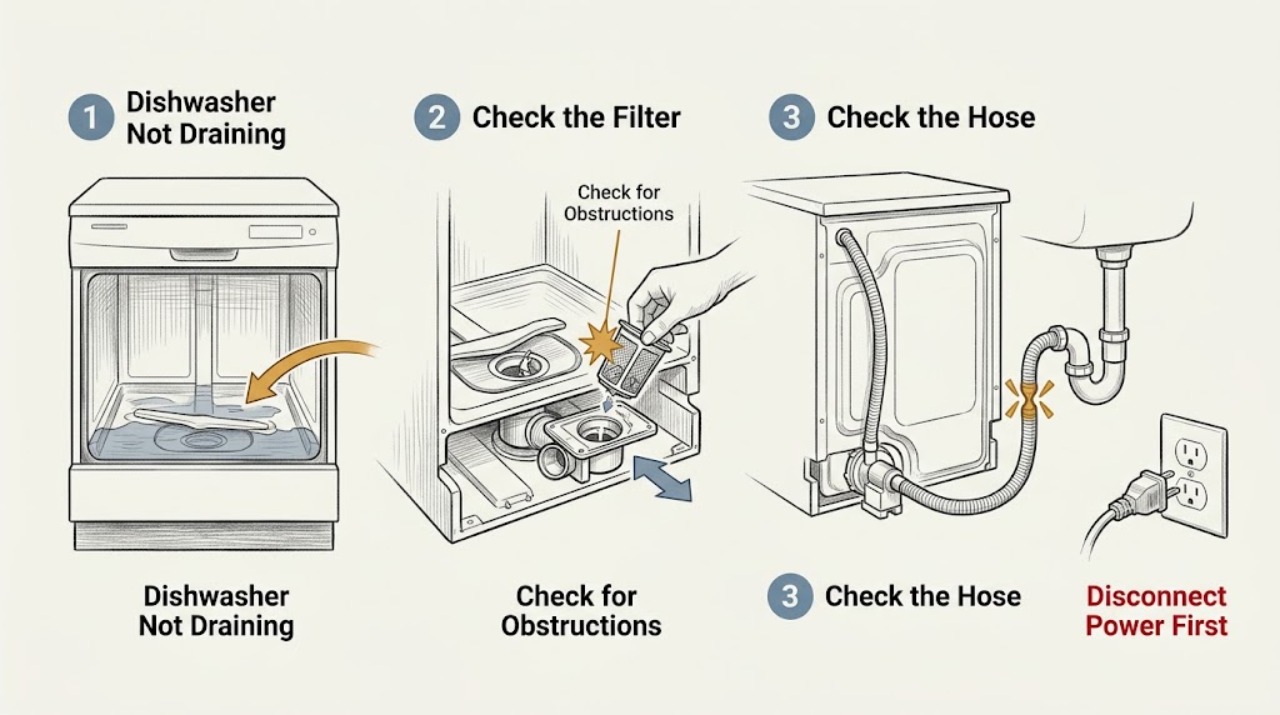
Blomberg Dishwasher Not Draining
If a Blomberg dishwasher is not draining, switch it off and unplug it before checking the accessible filter system and the external discharge hose. Clean and correctly reseat the filters, then look for a kink, blockage, or incorrect hose position; Blomberg's guidance places the drain hose between 50 cm and 100 cm above the floor.
-
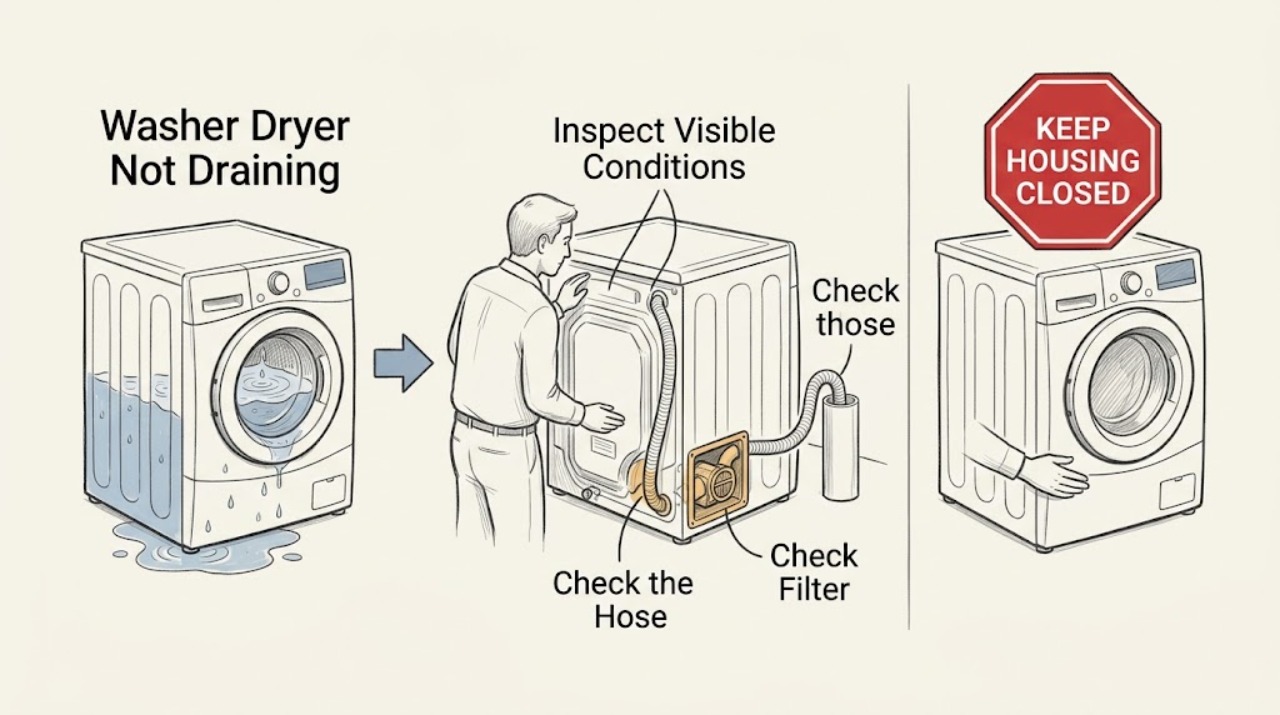
Blomberg Washer Dryer Not Draining: Check the Hose, Pump Filter, and Drain Path
If a Blomberg washer-dryer is not draining, stop the programme and first check whether the drain hose is kinked, twisted, crushed, or blocked. If water remains in the drum, do not force the door or remove the pump filter while the water may be hot; use the model instructions to cool or safely drain the water first, with a container ready.
-
Blomberg Washing Machine Not Draining
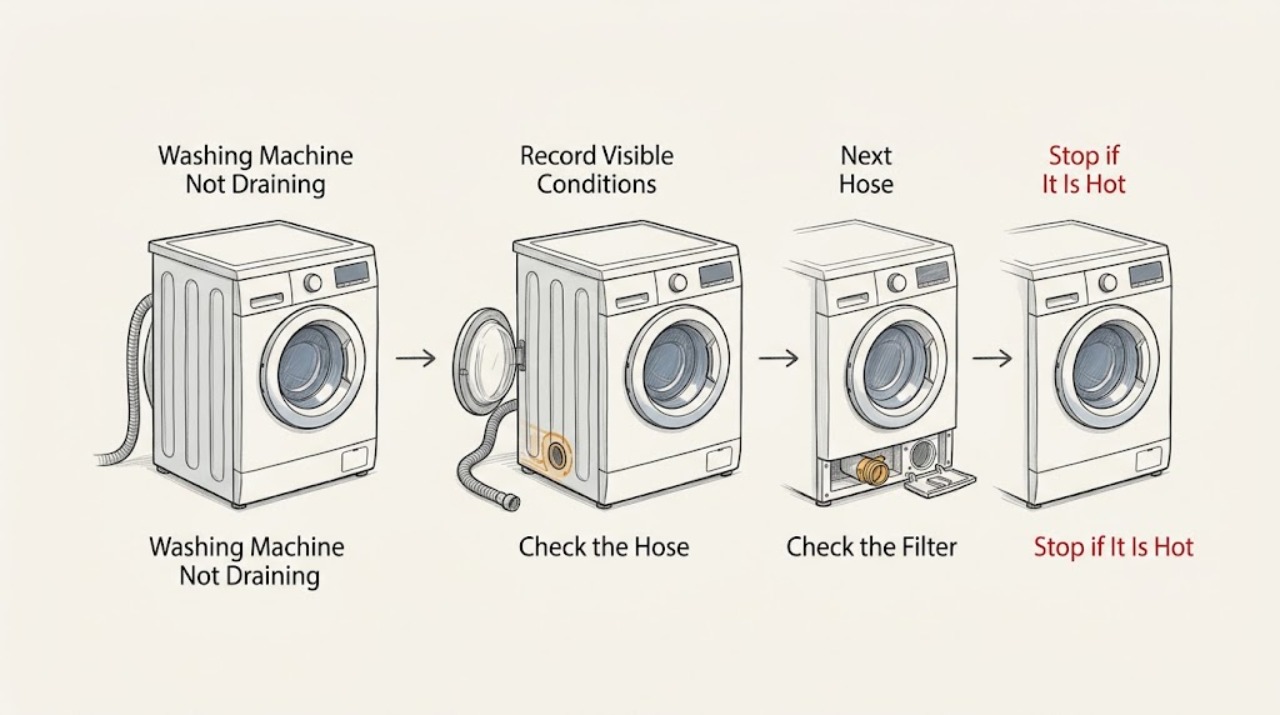
If a Blomberg washing machine leaves water in the drum, switch it off and unplug it, then check the drain hose for kinks, crushing, twists, blockage, or incorrect routing. If the hose is clear, drain the remaining water safely and clean the pump filter, allowing hot water to cool first and using a container for the release.
-
Bosch dishwasher drain hose not draining: What to Check and What to Do Next
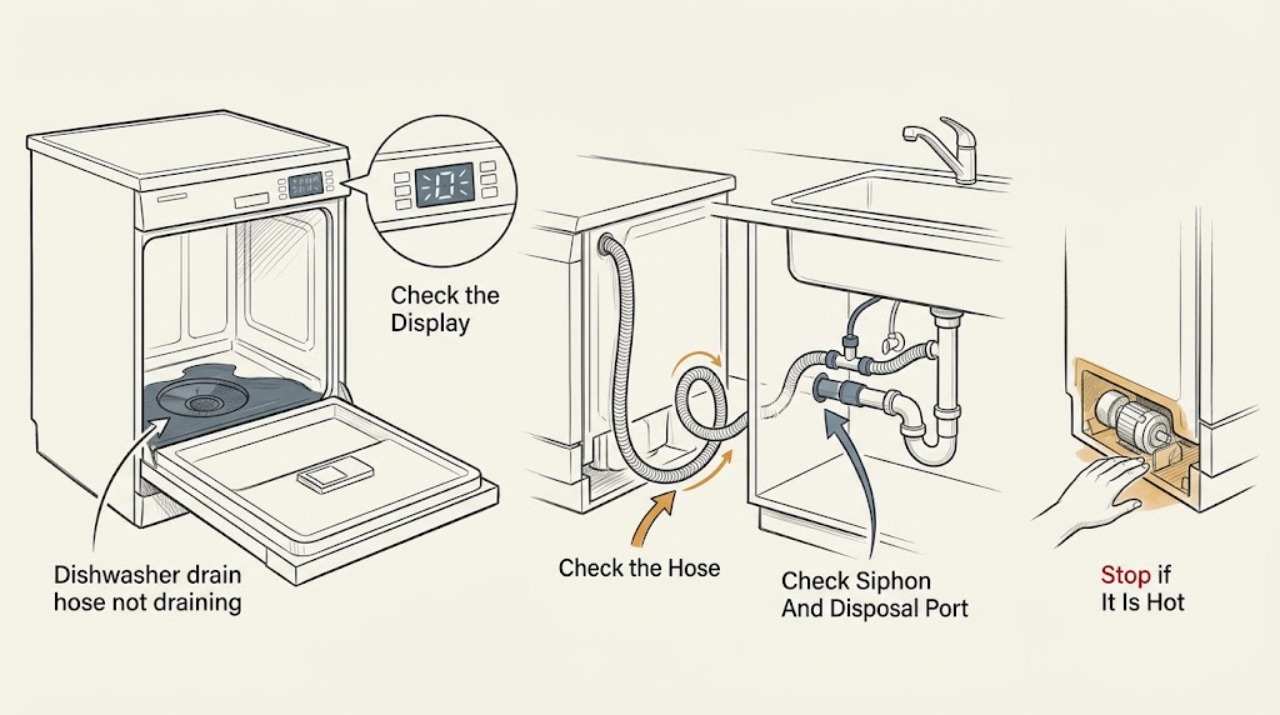
Turn the Bosch dishwasher off and identify whether water is standing in the tub, whether the drain hose is kinked or crushed, and whether an error code is present. From safe, ordinary access, check the hose routing and its connection to the sink siphon, air gap, or garbage disposal; a new disposal installation can still have its drain-port knockout plug in place.
-
Bosch dishwasher not draining: What to Check and What to Do Next
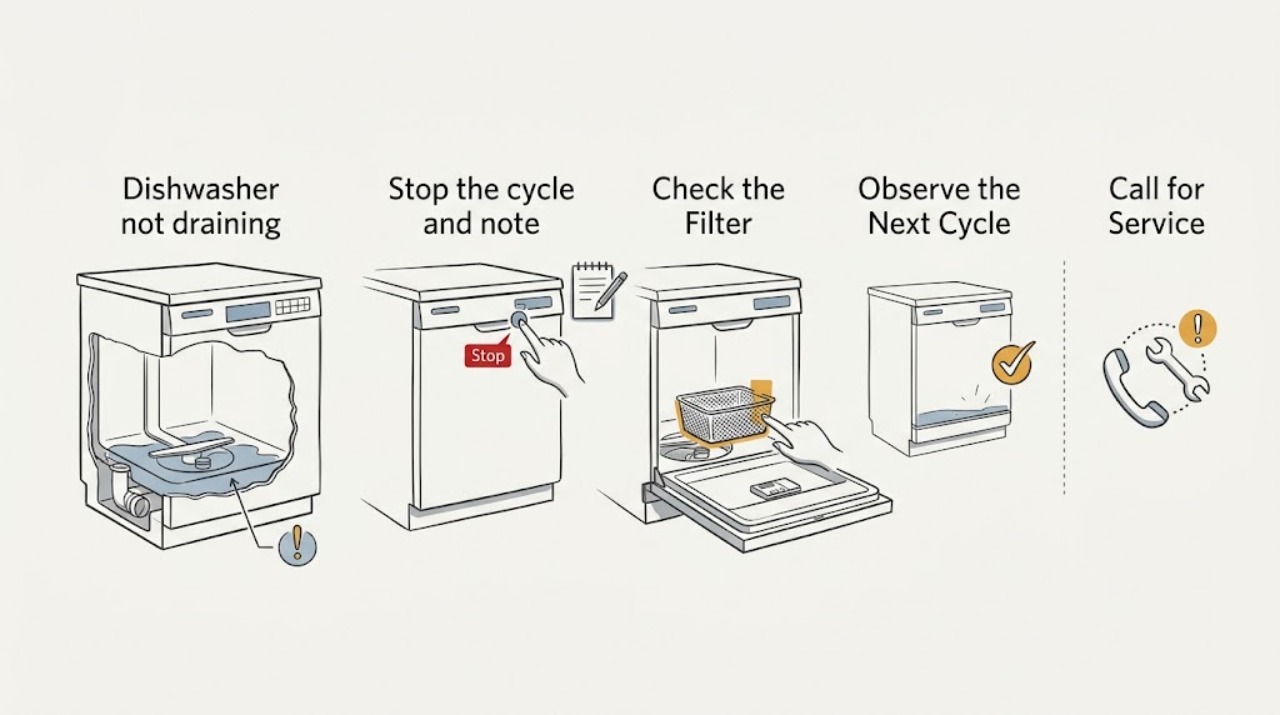
If a Bosch dishwasher leaves water in the tub, first note how much remains and whether the sink or disposer also drains poorly. Turn the dishwasher off and follow the model manual before removing the filter or pump cover.
-
Bosch Dryer Not Draining: Check the Condensation Path Safely
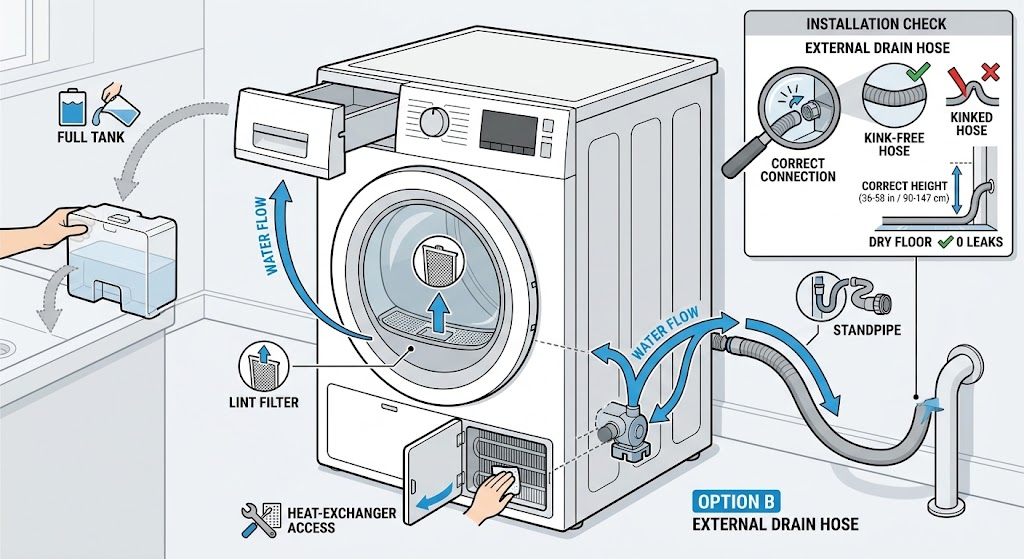
A Bosch dryer that is not draining needs an architecture check first. Condenser and heat-pump dryers remove moisture from the load and send it either to a condensation container or, on models equipped for it, through a drain hose; a vented dryer instead exhausts moist air and does not use that same water path.
-
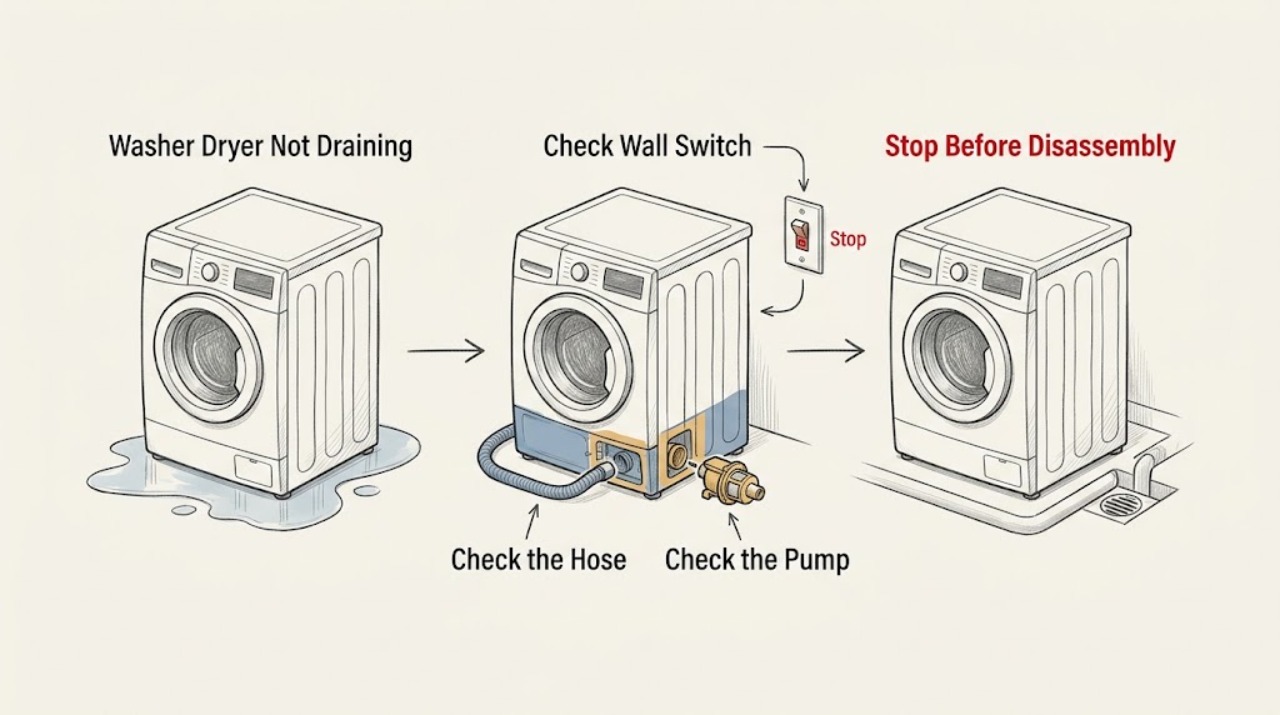
Bosch Washer Dryer Not Draining: Safe Checks Before Service
When a Bosch washer-dryer will not drain, the common user-checkable causes are a kinked or blocked waste hose, a blocked pump or filter, a selected rinse-hold state, or a programme that has not reached final drain. Stop the programme, switch off, unplug, and let hot water cool before opening any drain or pump access.
-
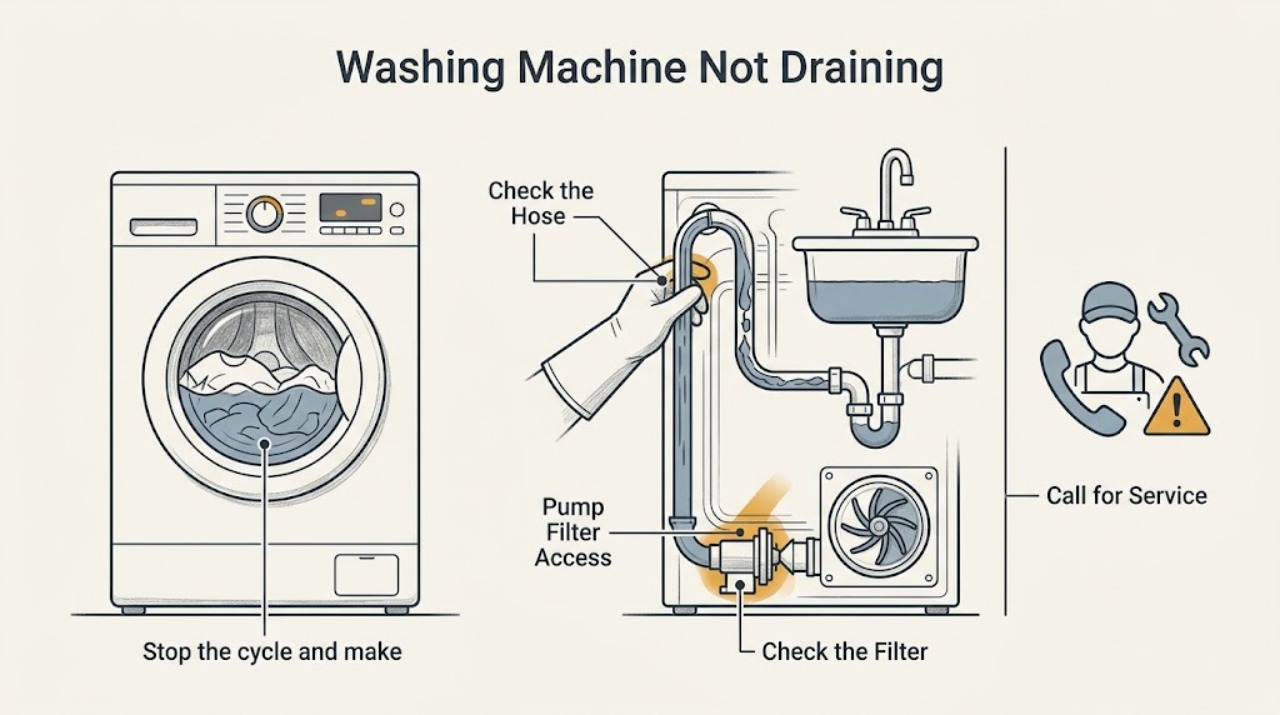
Bosch Washing Machine Not Draining: Safe Checks
If a Bosch washing machine is not draining, stop the programme and treat the remaining water as potentially hot. Turn the appliance off, unplug it, and turn off the water tap before checking the external drain hose for a kink or the siphon for a blockage.
-
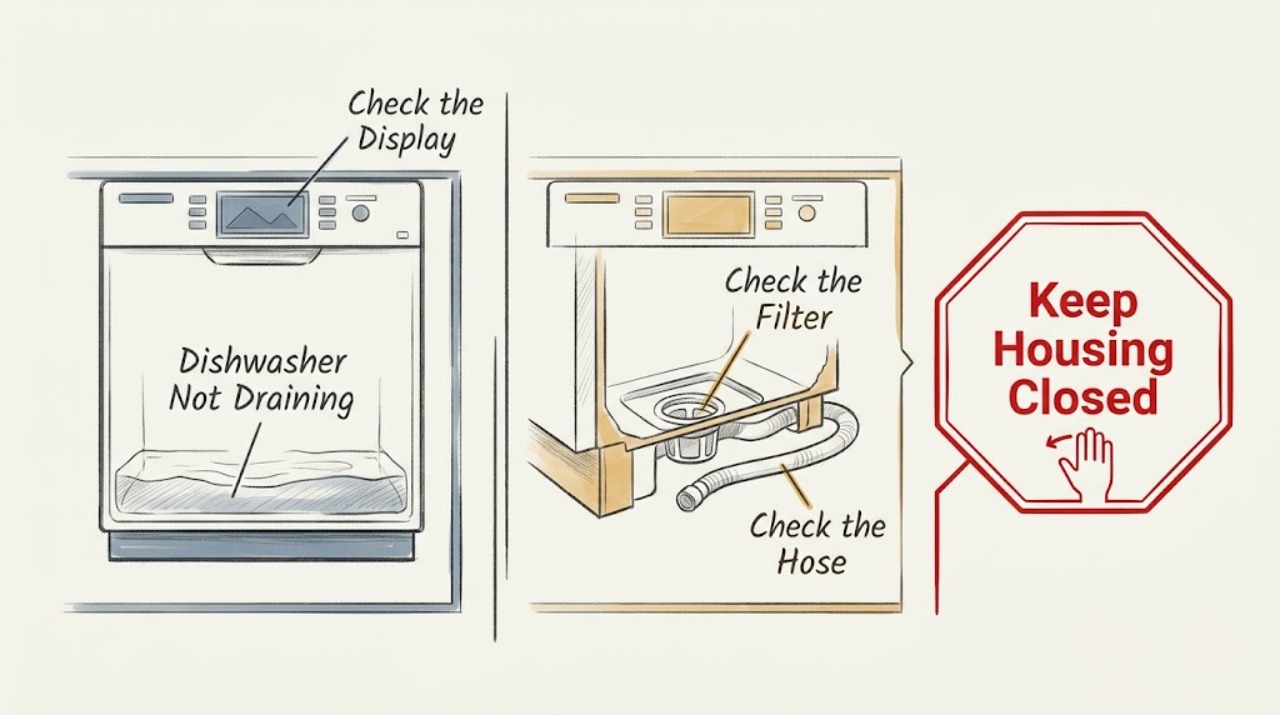
Candy Dishwasher Not Draining: Filter, Hose, and Safe Next Steps
If a Candy dishwasher leaves water in the tub, first make sure the cycle actually reached its drain phase, then switch the appliance off, unplug it, and turn off the water supply before cleaning or maintenance. With the machine safe to handle, clean and correctly reseat the filters, inspect the visible sump area for a removable obstruction without reaching into the pump, and check the accessible drain hose for kinks, crushing, blockage, or an incorrectly routed connection.
-
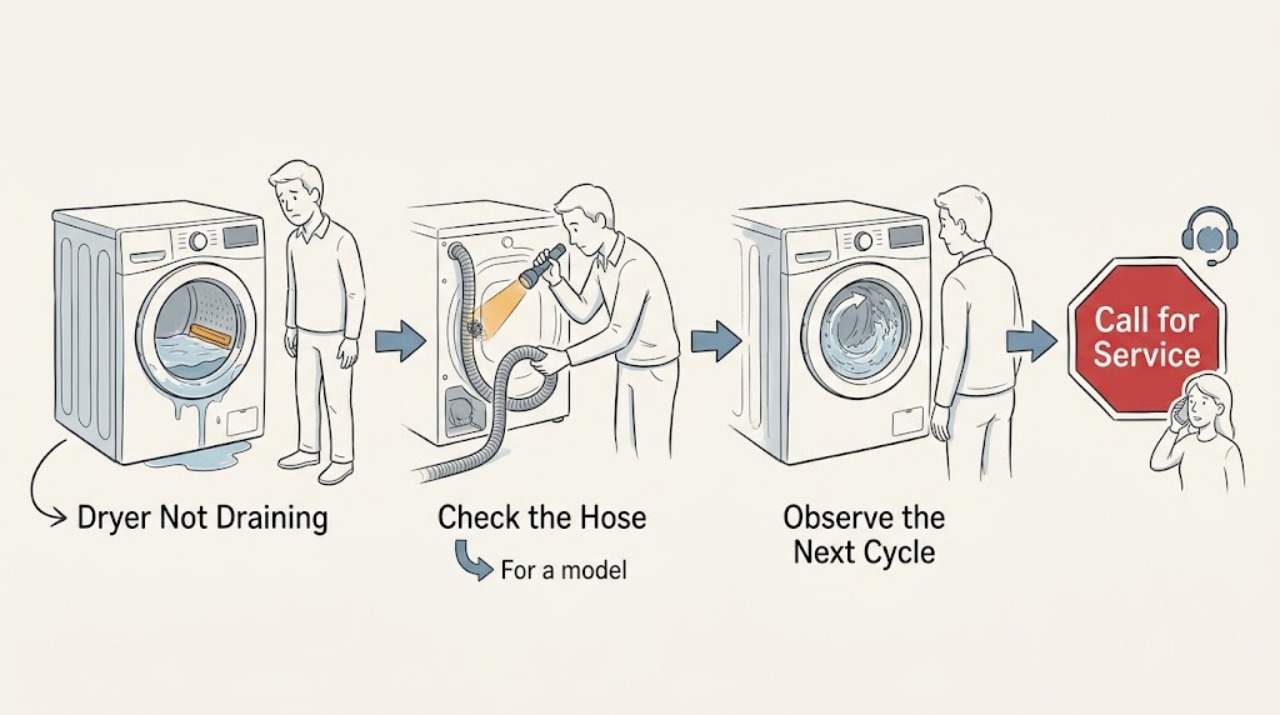
Candy Dryer Not Draining: Check the Water Path Before Service
Candy dryer drainage depends on the model: a condenser or heat-pump dryer may collect condensed water in a tank, while a model fitted for direct drainage uses a hose. First identify which arrangement your dryer has, then empty and firmly reseat the accessible tank if fitted, check the visible drain hose for a kink or poor connection if your manual says direct drainage is installed, and clean the lint filter and any model-specific condenser or filter drawer.
-
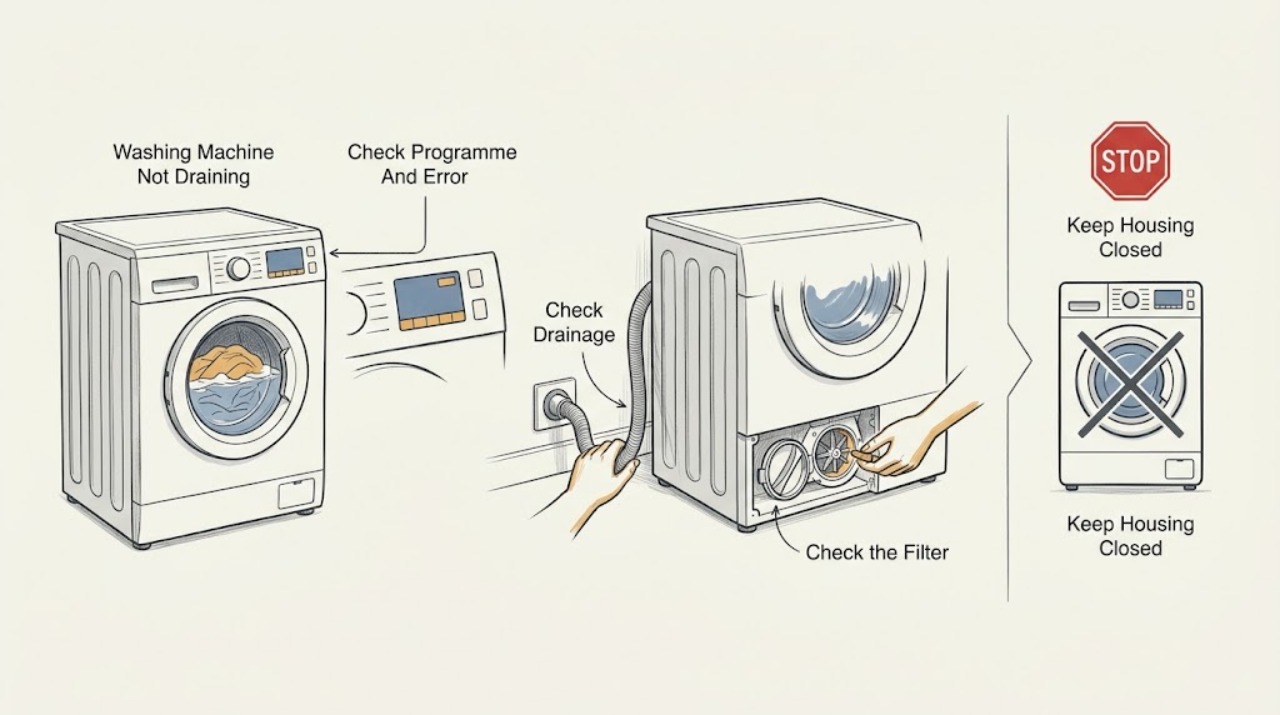
Candy Washing Machine Not Draining: Check the Programme, Hose, Filter, and Pump
If a Candy washing machine leaves water in the drum, first check that the selected programme was not designed to hold water or skip the final drain or spin. Keep children and pets away from the water, turn the machine off, and disconnect it from power only when the plug, floor, and drain area are dry and safely accessible.
-
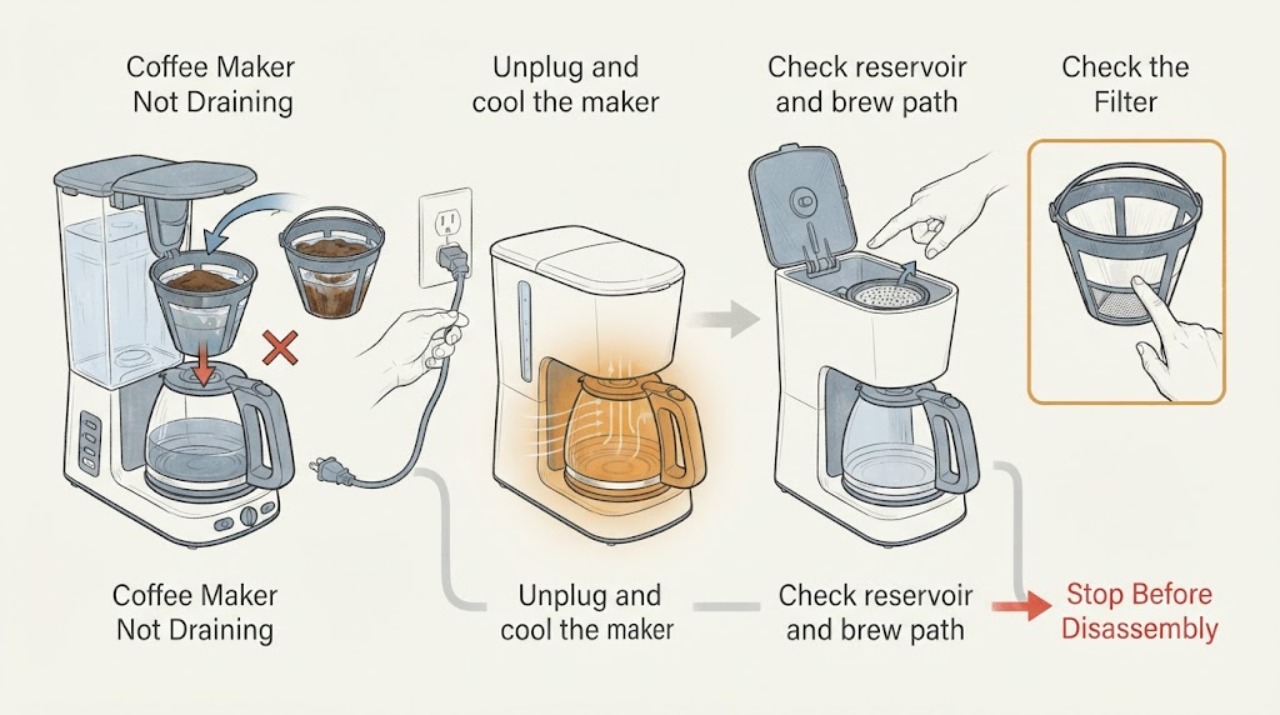
Coffee Maker Not Draining
For a coffee maker that is not draining, unplug and cool it, then check the water path, brew tank, dispensing valve, filter screen, and mineral buildup. Hamilton Beach says decalcification often corrects a clogged pump path and a blocked screen can slow dispensing. Do not open the base.
-
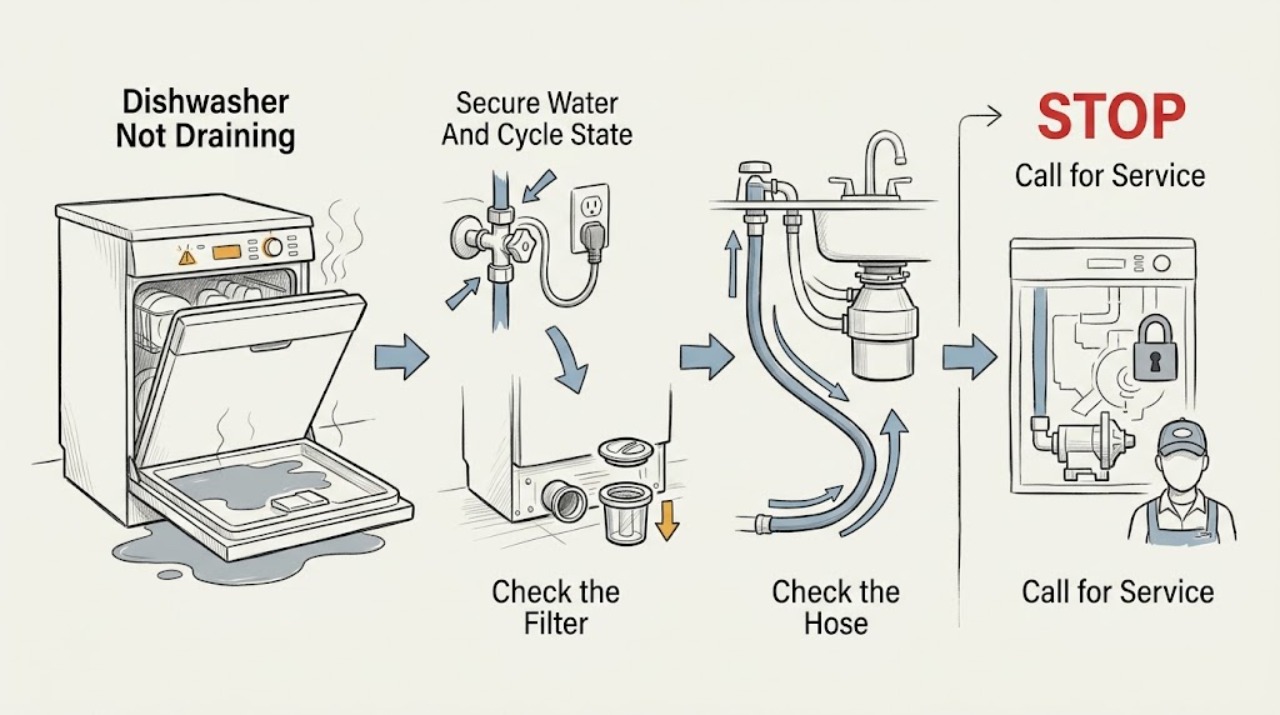
Crosley Dishwasher Not Draining: Filter, Hose, and Sink Checks
First confirm that the cycle actually finished and that the water is not simply from a paused or interrupted program. Then turn the dishwasher off and isolate power before reaching into the tub.
-
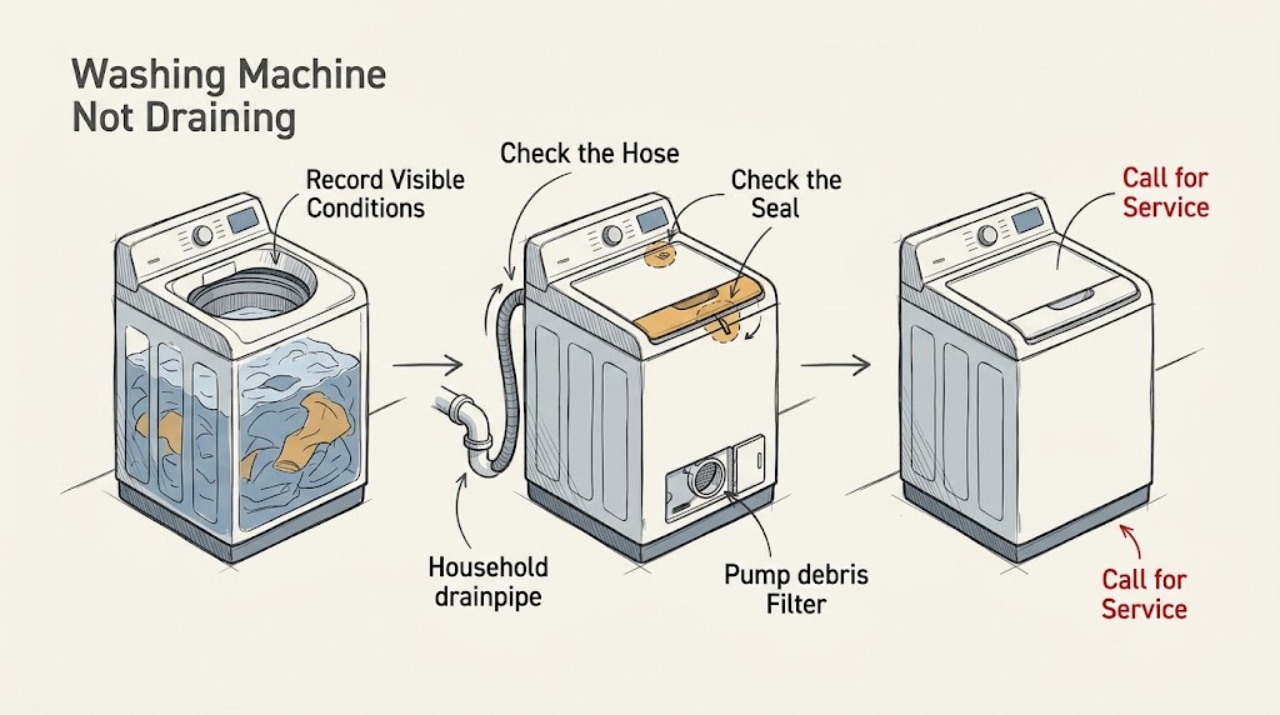
Crosley Washing Machine Not Draining
If a Crosley washer leaves water in the tub, first pause it and keep the lid or door closed until the basket has stopped. Check the external drain hose for kinks or a blockage, confirm the hose is installed with the model's required air gap and position, and inspect the household drain.
-
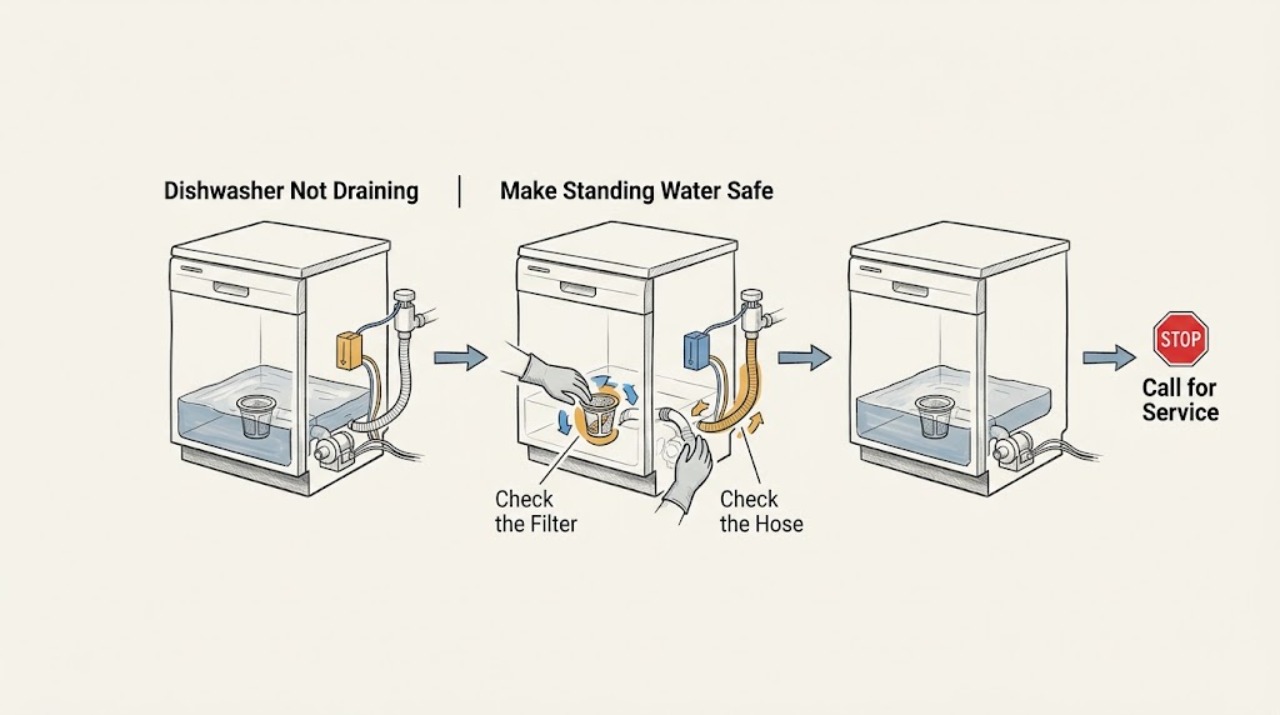
Danby Dishwasher Not Draining: Safe Checks for the Drain Path
If a Danby dishwasher leaves water after a completed cycle, first make the appliance safe: stop the cycle, let hot water cool, and do not put hands into standing water while the dishwasher is energized. With power isolated according to the exact manual, clean the user-accessible filter and drain area, then inspect the accessible drain hose for a kink, twist, clog, loose connection, or missing high loop.
-
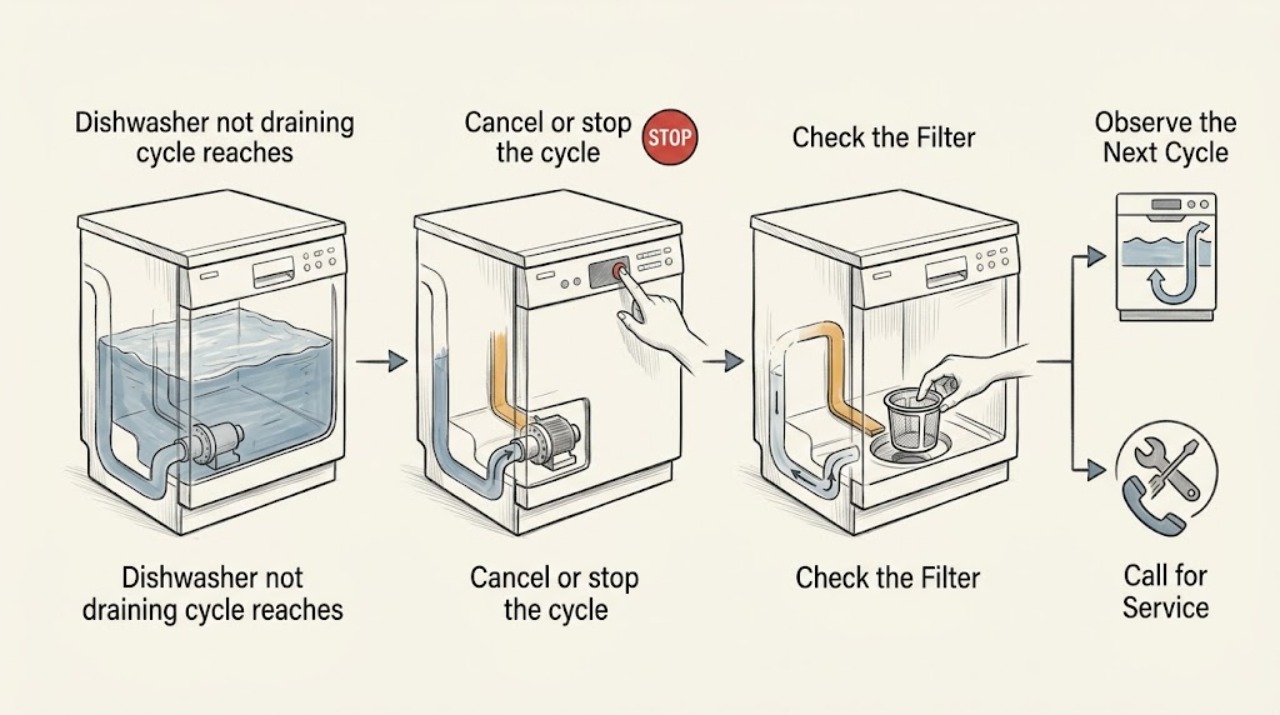
Dishwasher not draining cycle reaches drain: What to Check and What to Do Next
If a dishwasher reaches the drain portion of the cycle but leaves water in the tub, the control may be calling for drain while a filter, sump, pump inlet, drain hose, air gap, disposer connection, or sink drain is restricted.
-
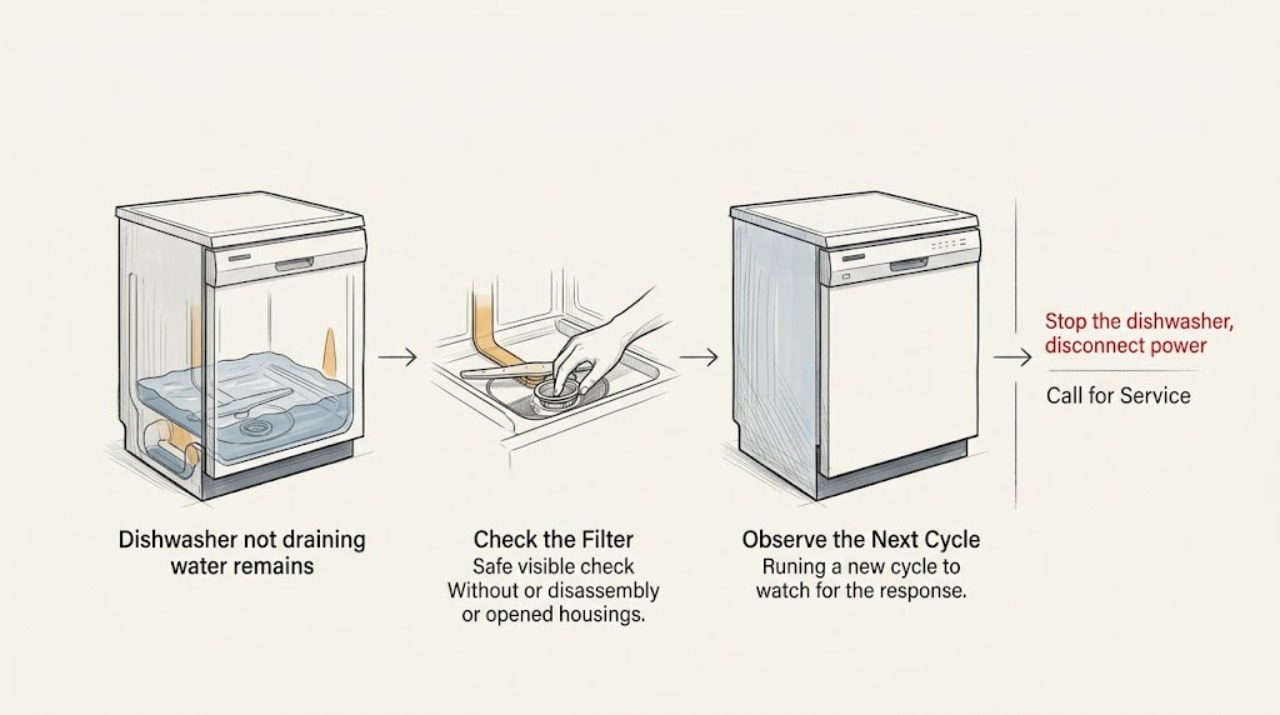
Dishwasher not draining water remains in tub: What to Check and What to Do Next
Water remaining across a dishwasher tub after the cycle usually means the drain path is restricted or the pump is not moving water. Possible points include the filter, sump, pump inlet, drain hose, air gap, disposer connection, or sink plumbing; an electrical, latch, motor, or control fault is more likely when the dishwasher reaches the drain portion but the pump is silent.
-
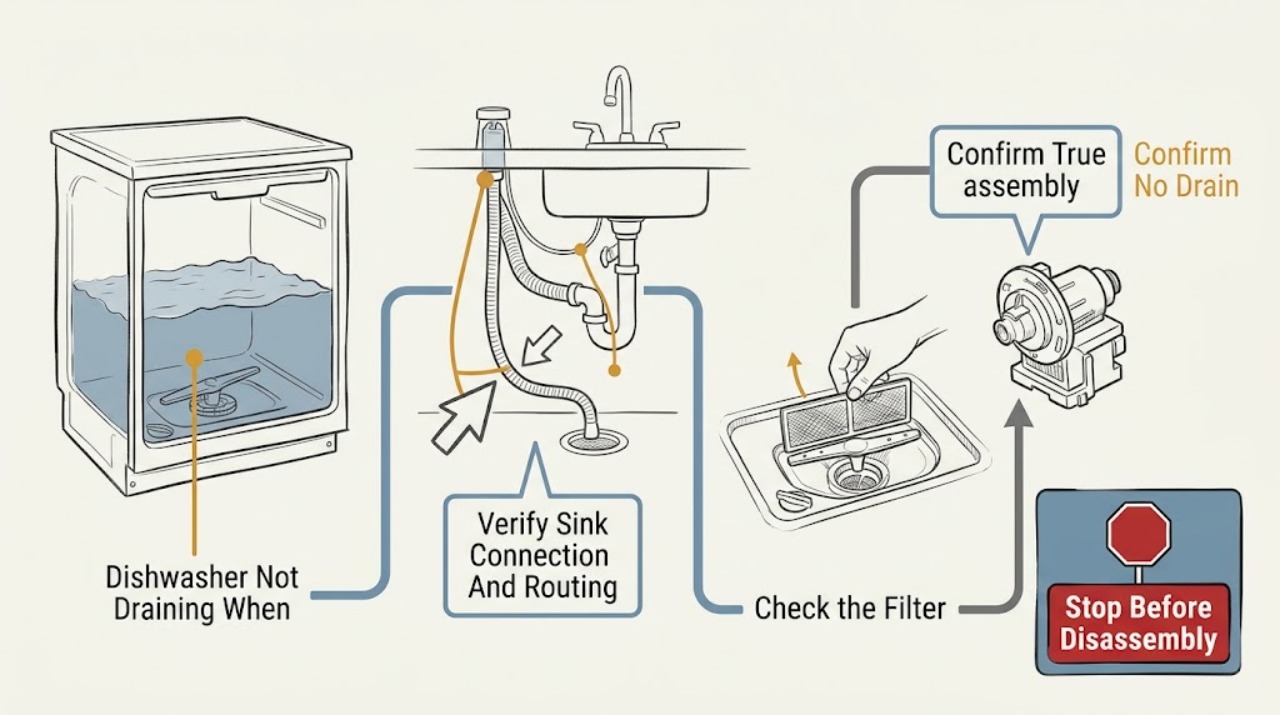
Dishwasher Not Draining When the Sink Drain May Be Clear: What to Check and What to Do Next
If the sink drains normally but the dishwasher leaves water in the tub, the blockage or failure is more likely in the dishwasher-specific path: its filter or drain area, drain hose, air gap or disposal connection, or drain pump. Turn the dishwasher off, record whether the water is above the filter and whether a drain error appears, then check the accessible sink connection and hose routing.
-
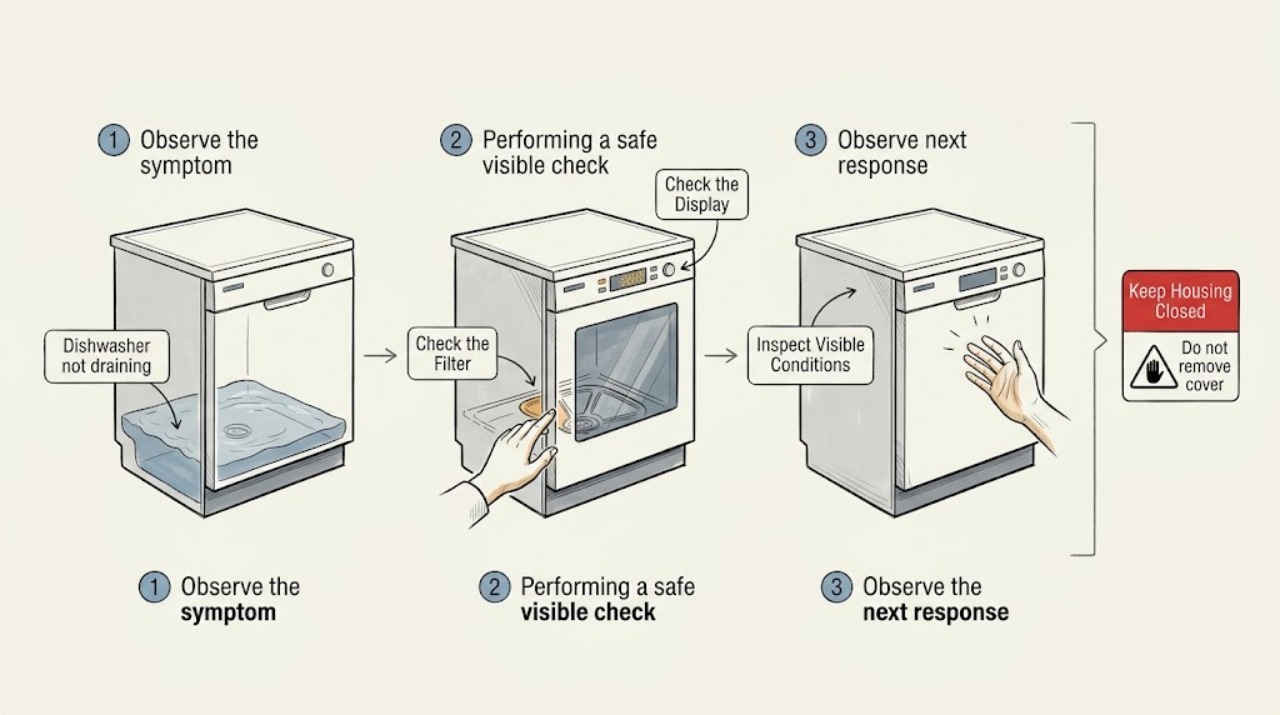
Dishwasher not draining: What to Check and What to Do Next
First distinguish a small amount of water in the filter or sump area from water covering the tub floor or reaching the door. Note whether the problem appears at the end of a cycle, after a cancellation, or after sink or disposal use, and record any displayed code or drain-pump sound.
-
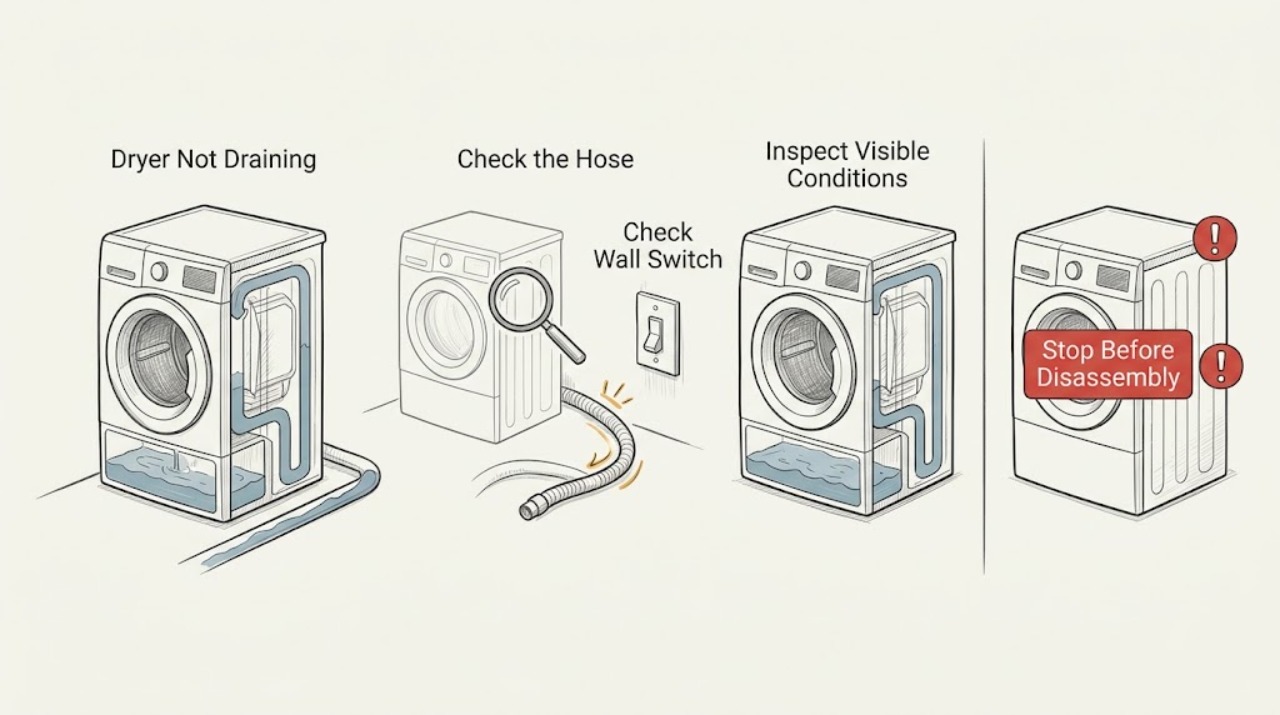
Dryer Not Draining: Identify the Dryer Type Before Checking Water Paths
First determine whether this dryer has a water path. A standard vented dryer sends moist air through an exhaust duct and normally has no condensate tank to empty; if it has no tank, drain hose, or water alert, “not draining” may actually mean clothes remain damp and the venting guide is the safer match.
-
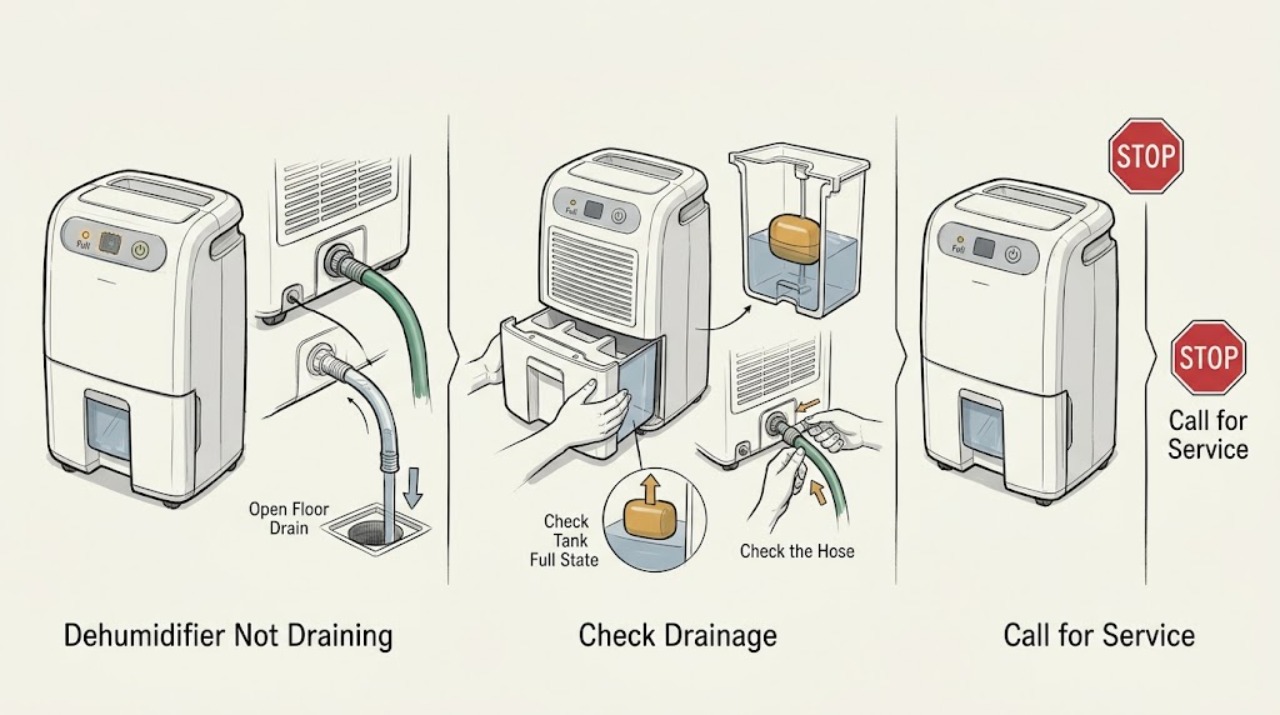
Electrolux Dehumidifier Not Draining: Bucket, Hose, and Pump-Mode Checks
First identify the complete Electrolux model because drainage architecture is not universal. Electrolux’s ED2171WA product page documents continuous drainage and a full-tank auto-stop, while the EDH10TRBW1 manual documents a water-tank mode and a gravity continuous-drain hose that must be fully seated, leak-free, free of kinks or rises, and directed to a drain lower than the unit.
-
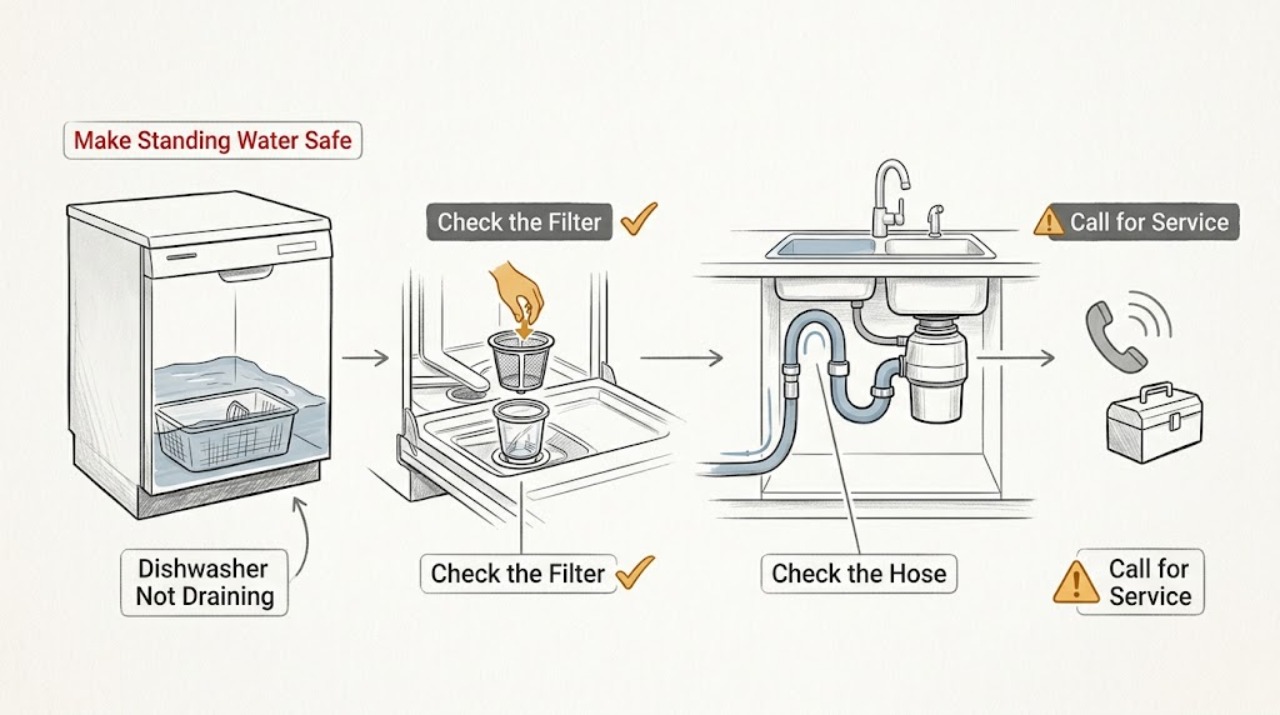
Electrolux Dishwasher Not Draining: Filter, Hose, and Standing-Water Checks
Treat standing water in an Electrolux dishwasher as a water-and-electricity safety issue first: do not reach into the water or keep cycling the appliance while it is energized, and stop for a leak near electrical parts, backflow, smoke, a burning smell, or a damaged cord.
-
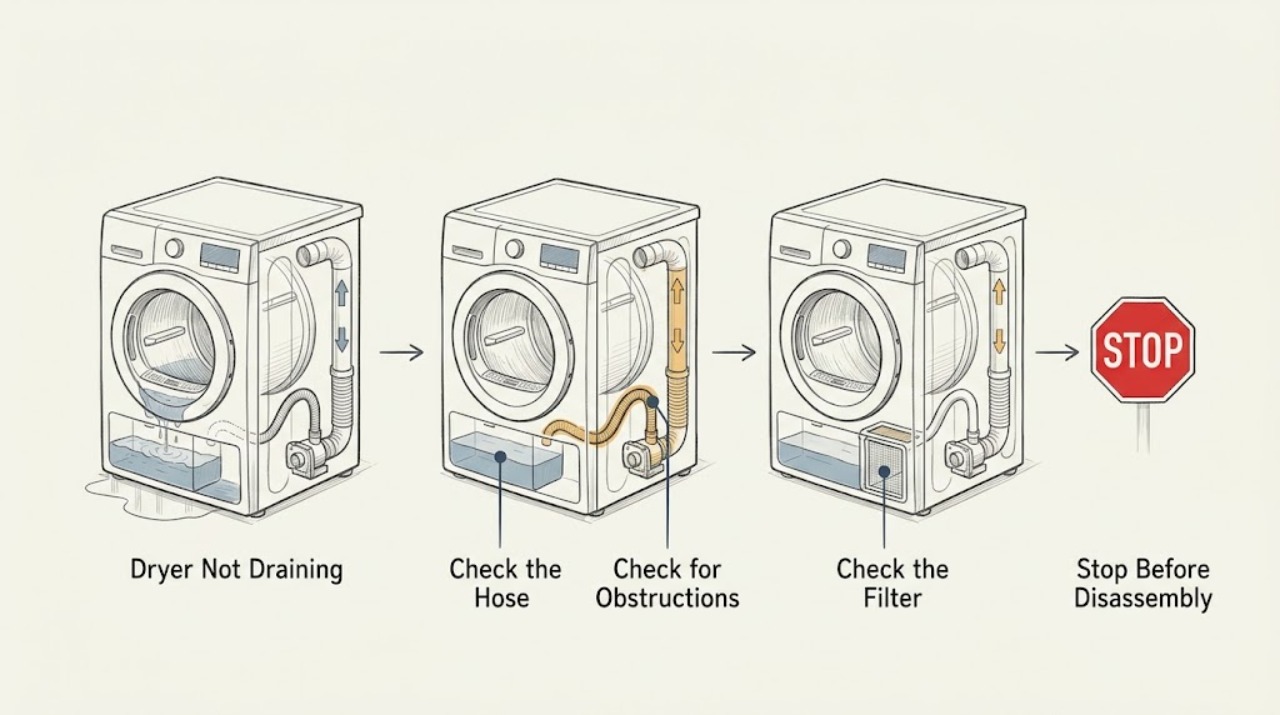
Electrolux Dryer Not Draining: Check the Water Path by Dryer Type
First identify whether the Electrolux dryer is vented, condenser, or heat pump. A vented dryer normally sends moist air through a vent hose, so inspect that hose and the outside vent rather than looking for a water tank or drain pump.
-
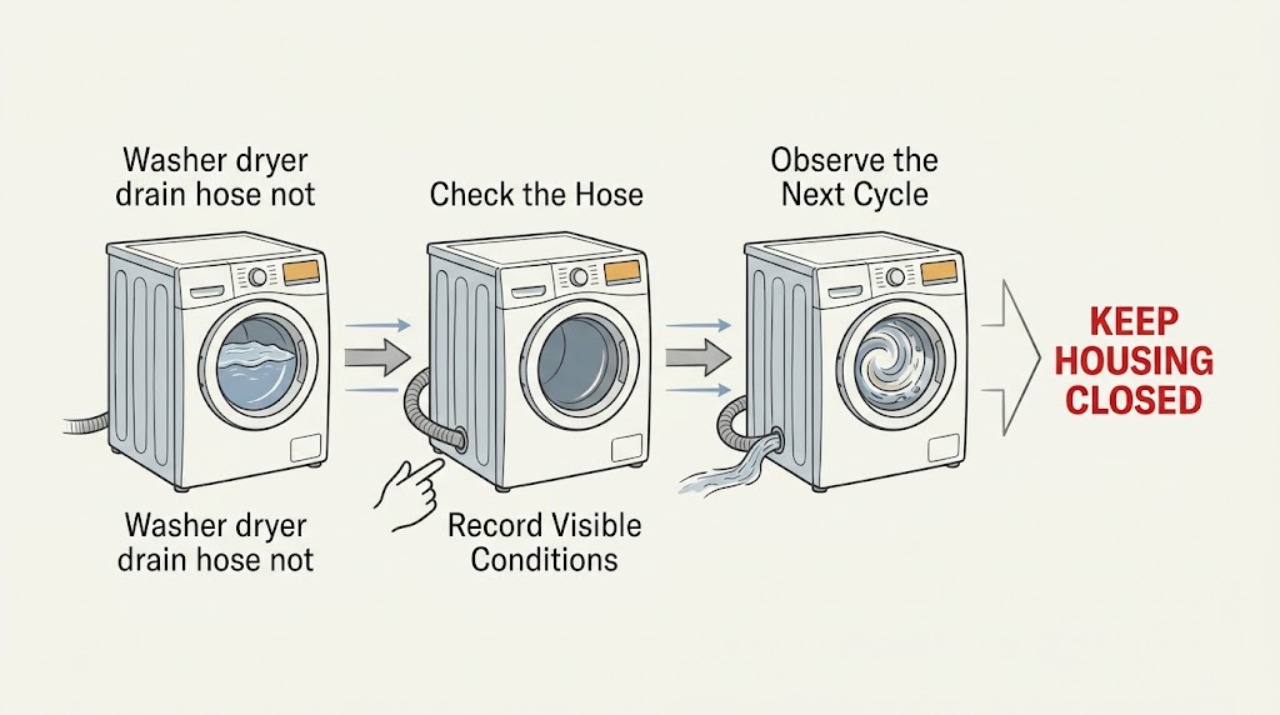
Electrolux washer dryer drain hose not draining: What to Check and What to Do Next
An Electrolux washer-dryer that is not draining may have a kinked, blocked, damaged, loose, or incorrectly positioned drain hose, a blocked household standpipe or siphon, a clogged pump or filter, or an internal pump, pressure-sensing, or control fault. Stop the cycle and note whether water remains in the drum, whether the pump can be heard, and whether the hose moves or leaks at the drain.
-
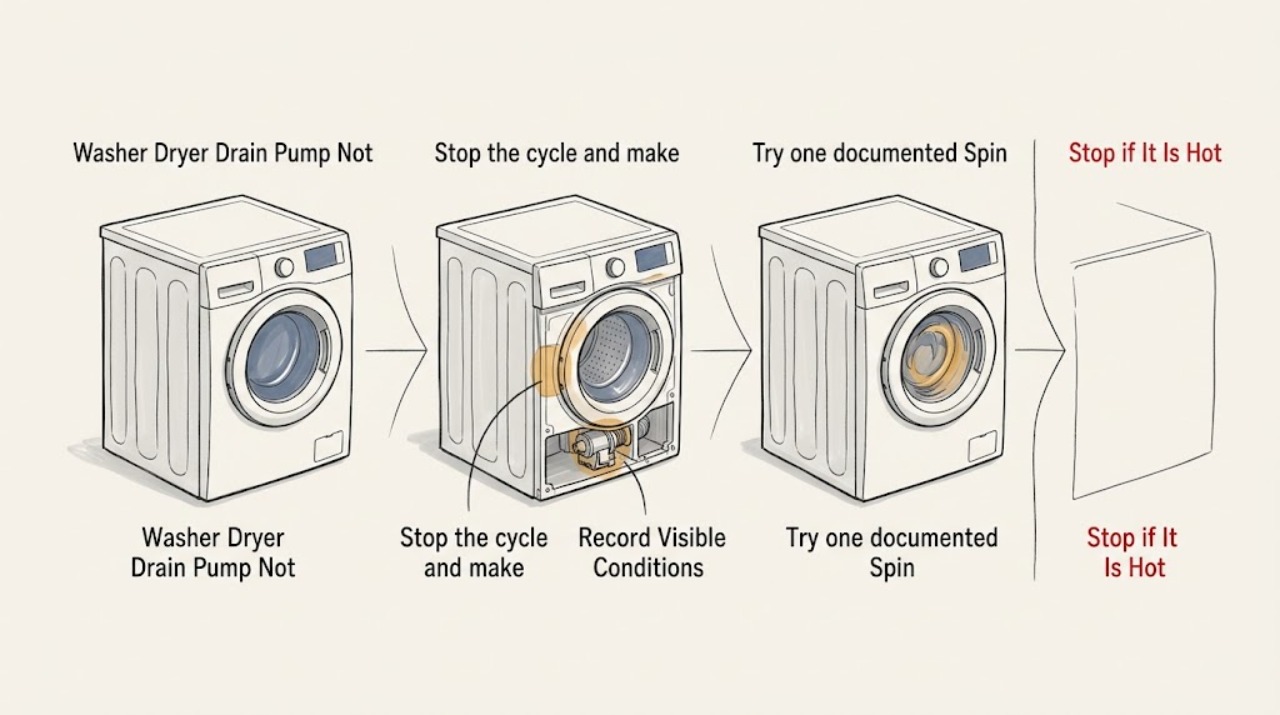
Electrolux Washer Dryer Drain Pump Not Draining: What to Check and What to Do Next
Water left in an Electrolux washer dryer does not prove that the drain pump itself has failed. First stop safely, let hot water cool, and record whether the drum is full, whether the pump hums or is silent, and whether a code such as E20, E21, or C2 appears.
-
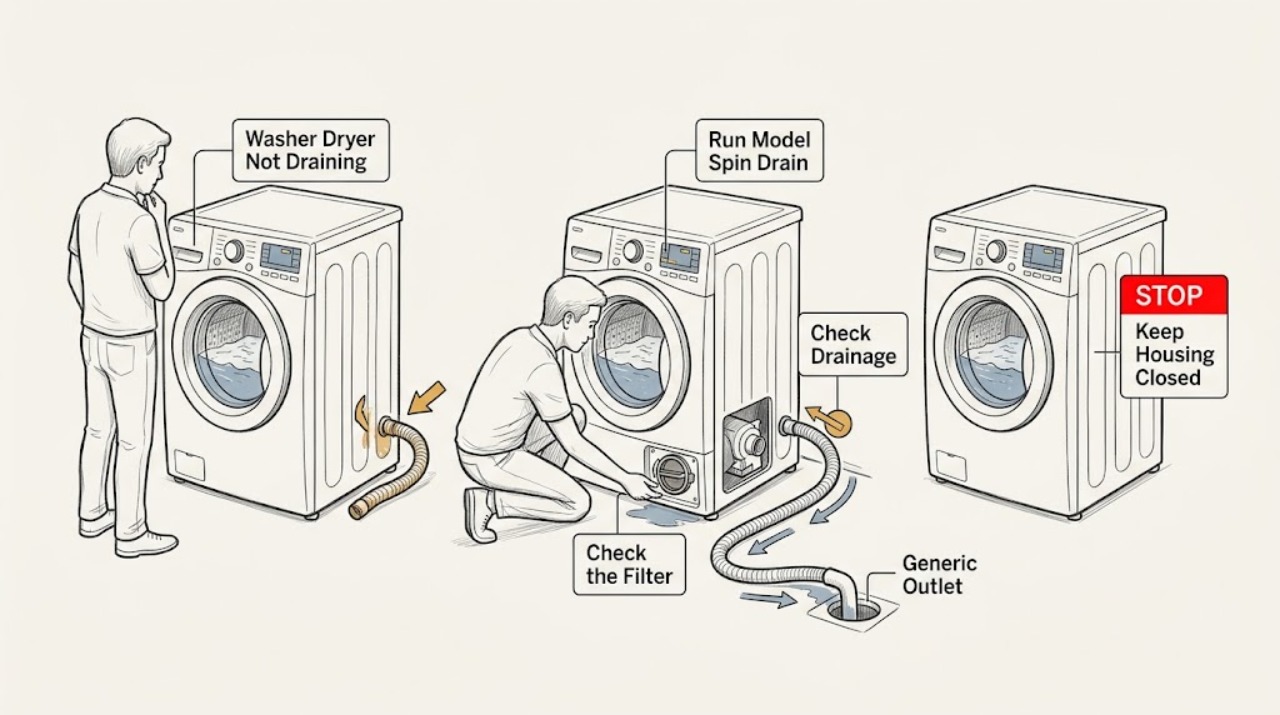
Electrolux Washer Dryer Not Draining: Safe Checks and Next Steps
If an Electrolux washer dryer leaves water in the drum, stop the cycle and let hot water cool. Try the model's Spin/Drain program once, then disconnect the appliance from mains power before any filter or drain access.
-
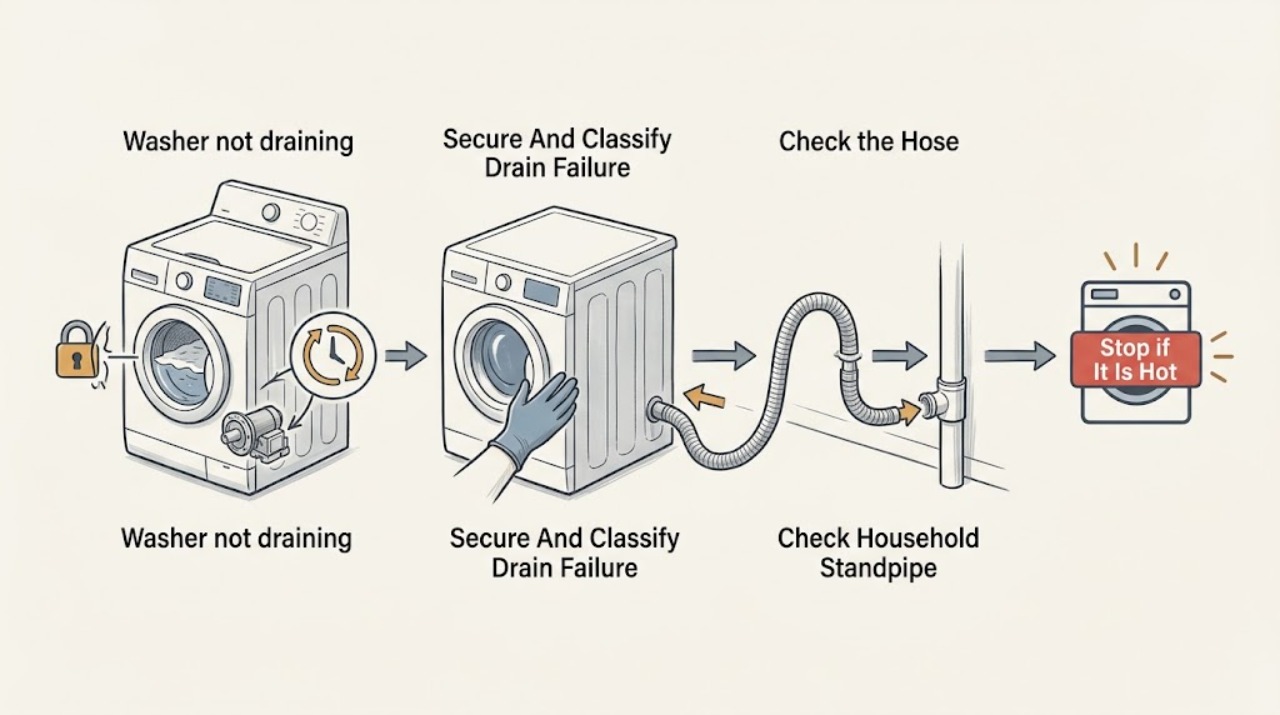
Electrolux washer not draining: What to Check and What to Do Next
If an Electrolux washer is not draining, first note whether the cycle is paused, leaves water in the drum, drains slowly, or shows E21. Stop the washer and keep hands away from the tub until all motion ends.
-
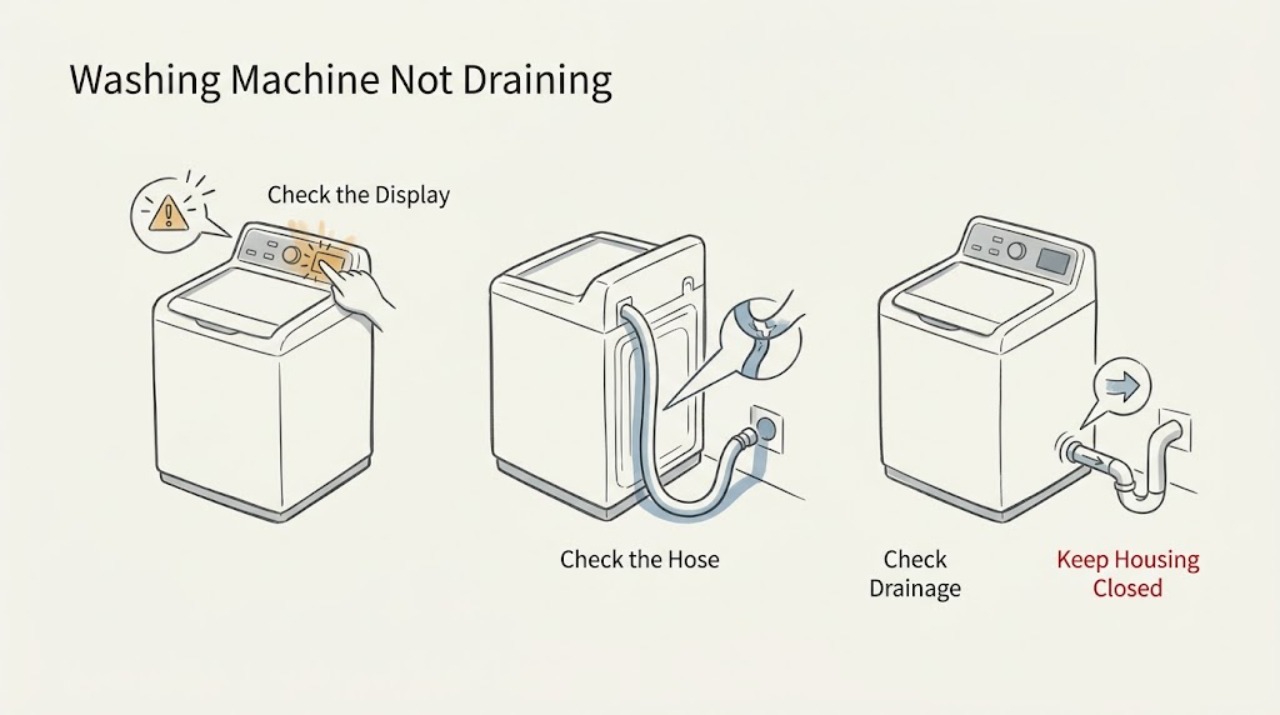
Electrolux Washing Machine Not Draining: Check the Hose, Filter, and Pump
If an Electrolux washer leaves water in the drum, stop the cycle and first check the drain hose for a kink, blockage, or incorrect installation. If the model provides an accessible pump filter or emergency drain, use the exact owner manual and drain the water into a suitable container before checking that area.
-
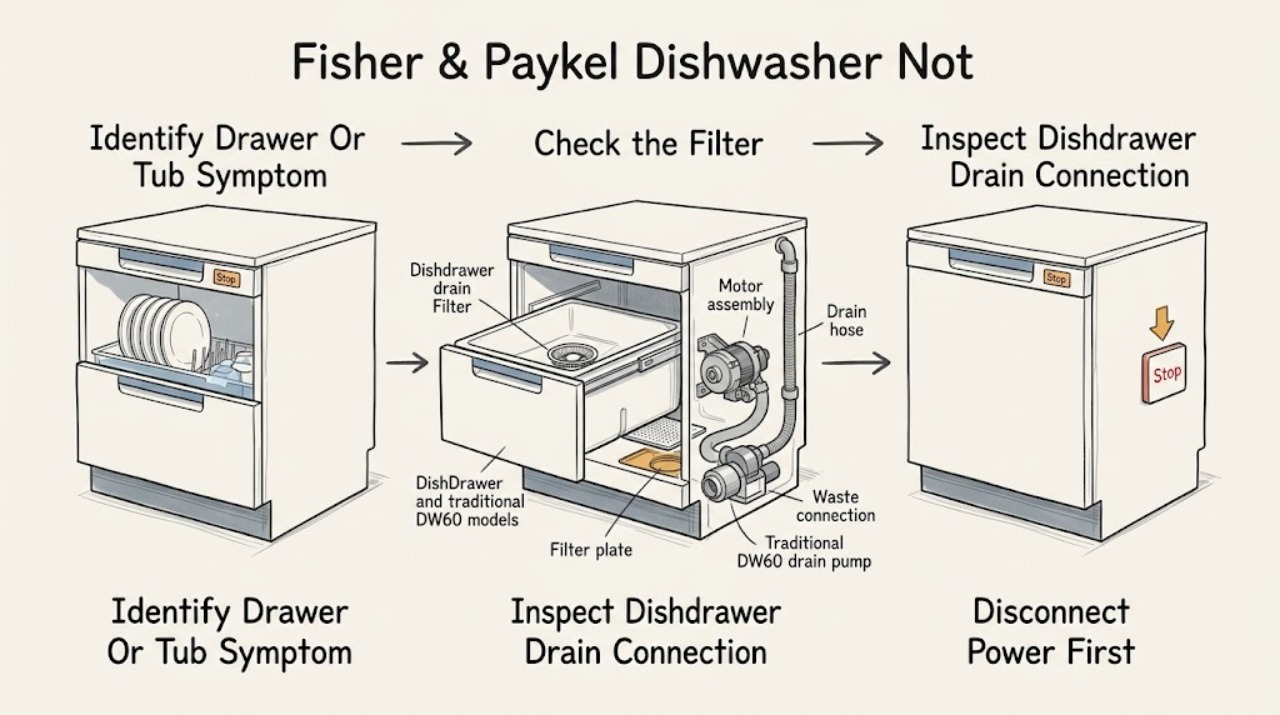
Fisher & Paykel Dishwasher Not Draining: DishDrawer and DW60 Checks
First decide whether this is a normal small amount of water in a DishDrawer filter area or true standing water across a drawer or traditional tub. On a DishDrawer, switch off and allow it to cool before cleaning the user-accessible drain filter and filter plate, then check the drawer's drain hose and waste connection for a kink or blockage.
-
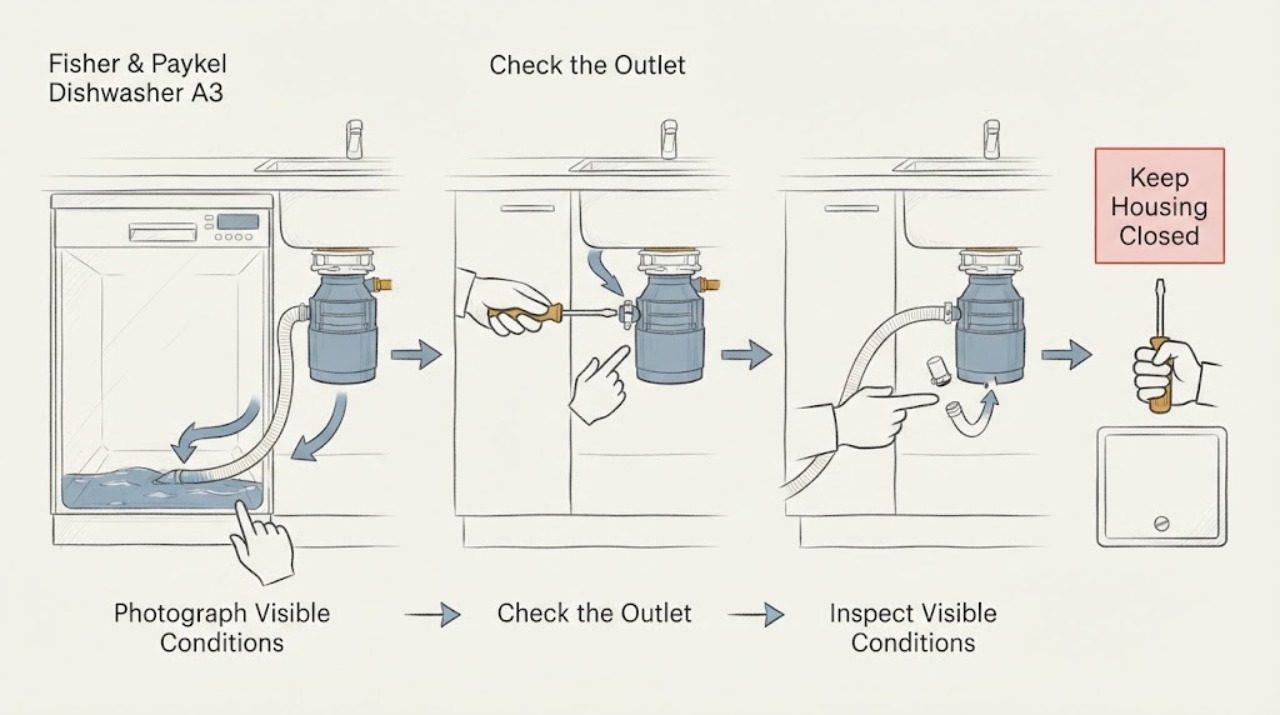
Fisher & Paykel Dishwasher A3 With a Garbage Disposal: Confirm the Model Before Clearing It
Do not treat A3 as a universal Fisher & Paykel code. The opened Fisher & Paykel guides show that A3 is used on particular DishDrawer platforms for a drain condition, but the exact model, drawer or door platform, display pattern, and market must be matched before any code instruction is used.
-
Frigidaire Dehumidifier Not Draining: Separate Bucket, Gravity Hose, and Pump Paths
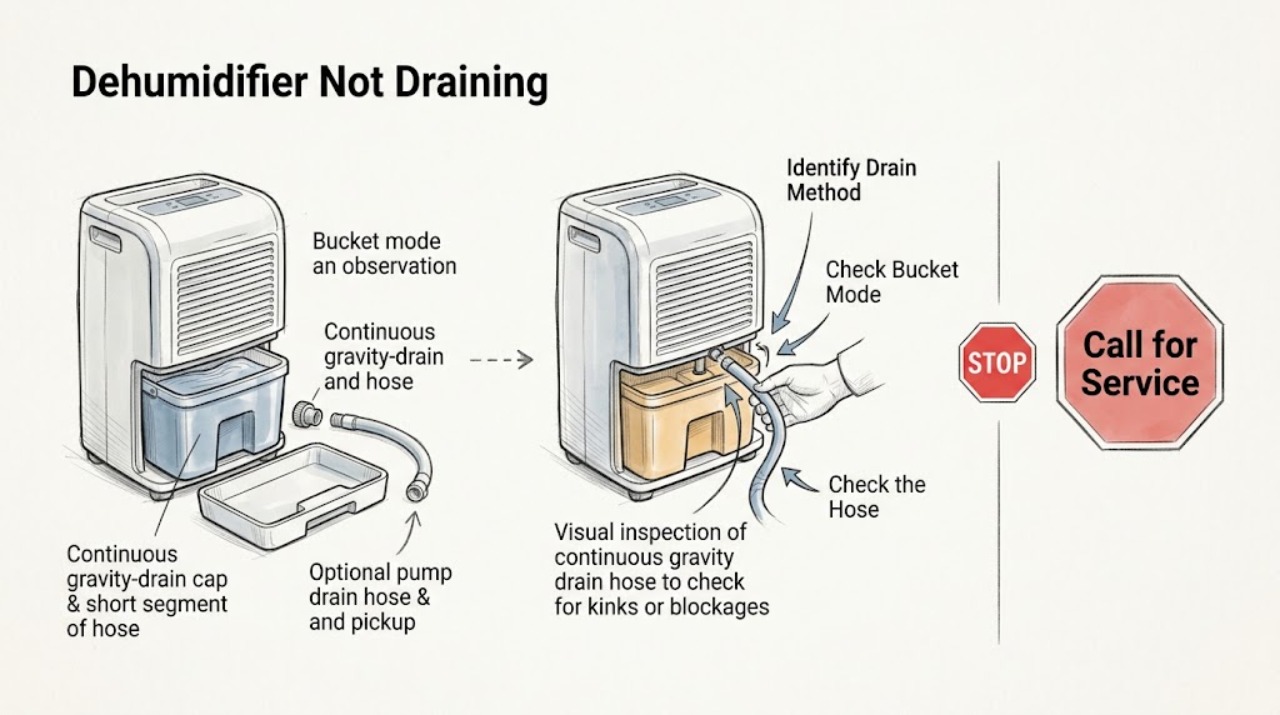
First identify the drainage method: a bucket-only unit should stop when its bucket is full and needs a correctly seated empty bucket; a continuous-drain setup relies on gravity and needs the correct cap removal, hose connection, and a hose that stays below the unit connection without kinks; a pump model needs its pump hose connected and free of blockage, kinks, or freezing.
-
Frigidaire Dishwasher Not Draining: What to Check and What to Do Next
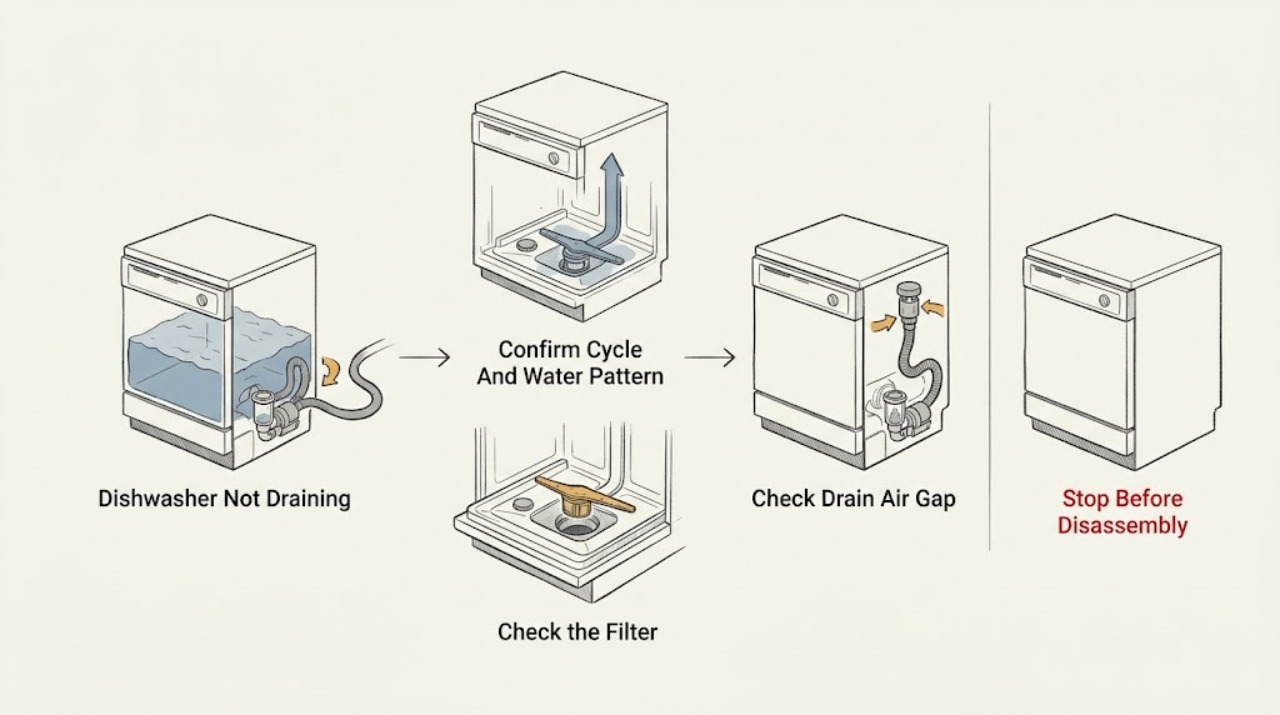
If a Frigidaire dishwasher is not draining, stop adding water and first confirm that the cycle actually finished rather than being paused or interrupted. From a dry, safe position, note the water level and inspect only accessible parts: the glass trap and filter for food or broken pieces, the visible drain hose for kinks or a moved connection, and any countertop drain air gap or garbage-disposal connection.
-
Frigidaire FAD504DWD Dehumidifier Not Draining Through the Hose: Summer Checks
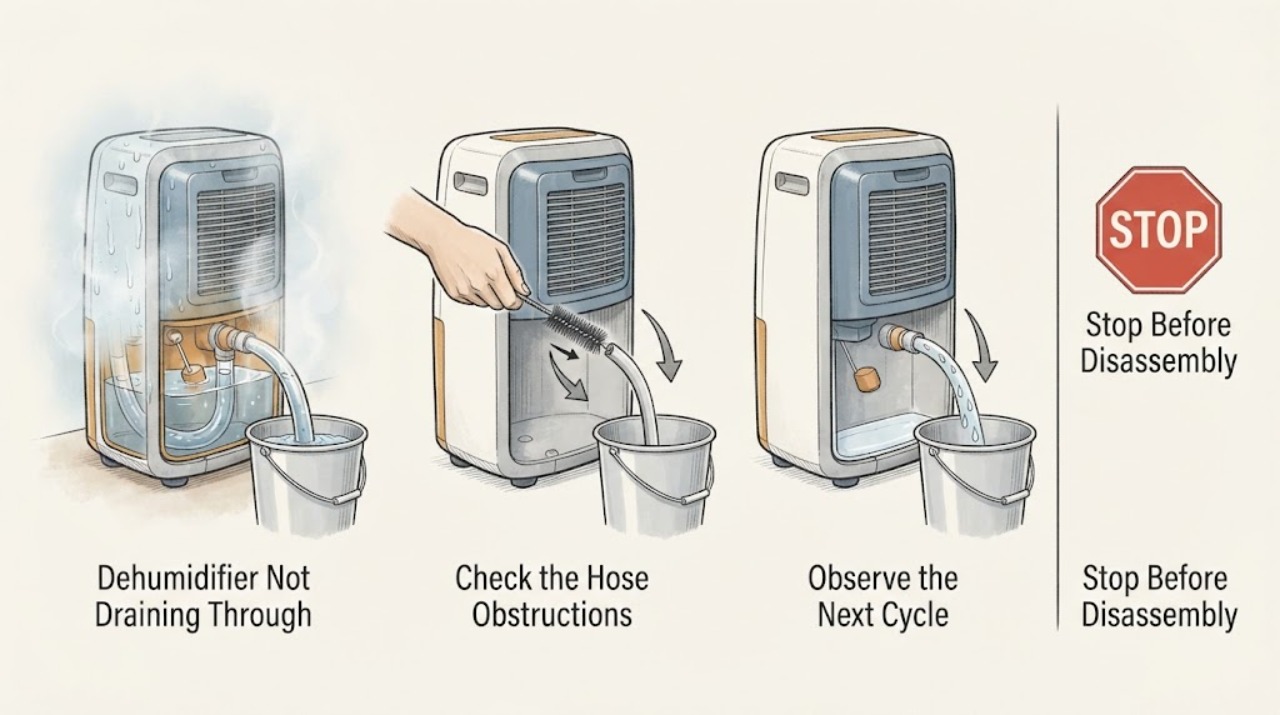
On the Frigidaire FAD504DWD, a humid room can make the dehumidifier run for long periods, but a hose that does not drain still needs a setup check. Unplug the unit before touching the hose, confirm the drain cap is removed, attach a 1/2-inch or larger hose to the continuous-drain connector, and route it below the connector with no kinks or rises.
-
Frigidaire Refrigerator Not Draining
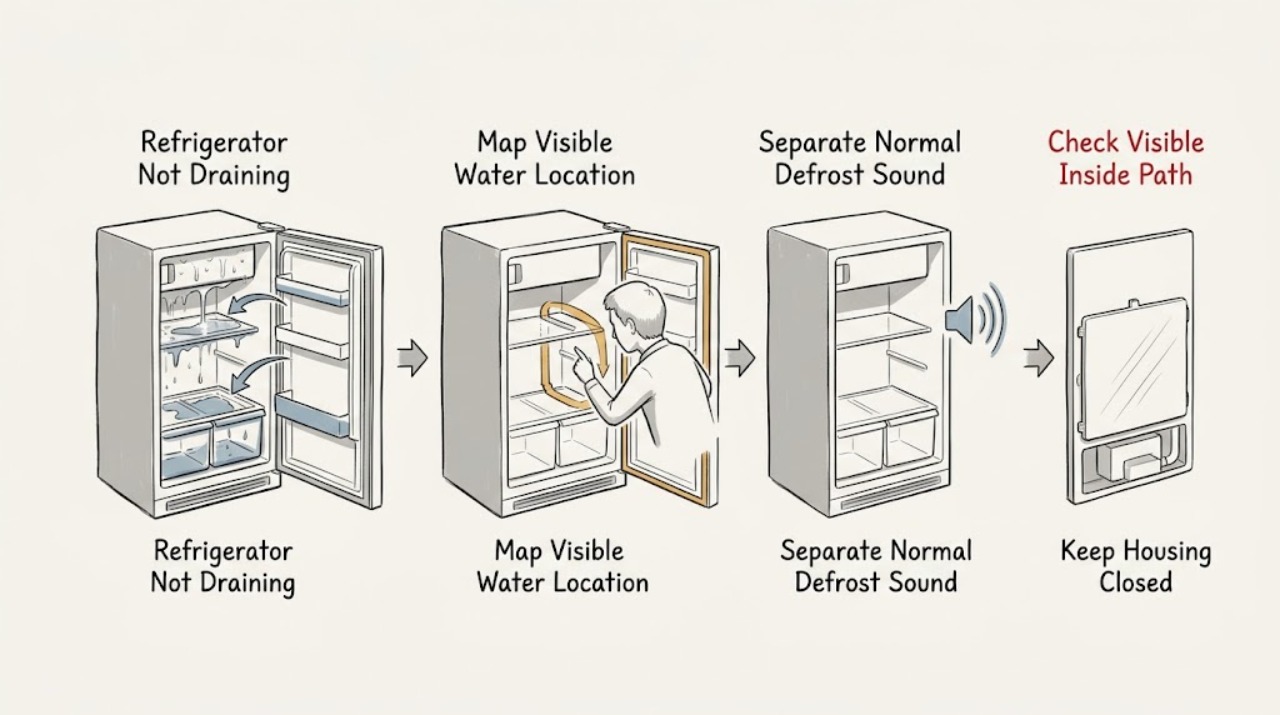
A Frigidaire refrigerator does not have one universal user-accessible drain layout, so first identify where the water is visible: inside under drawers or on a shelf, at the bottom of the cabinet, under the appliance, or on the floor behind it. A brief drip or running-water sound during an automatic defrost cycle can be normal because Frigidaire describes water entering a non-removable drain pan; visible water that does not stay contained is a separate symptom.