
On this page
Start here
Quick answer
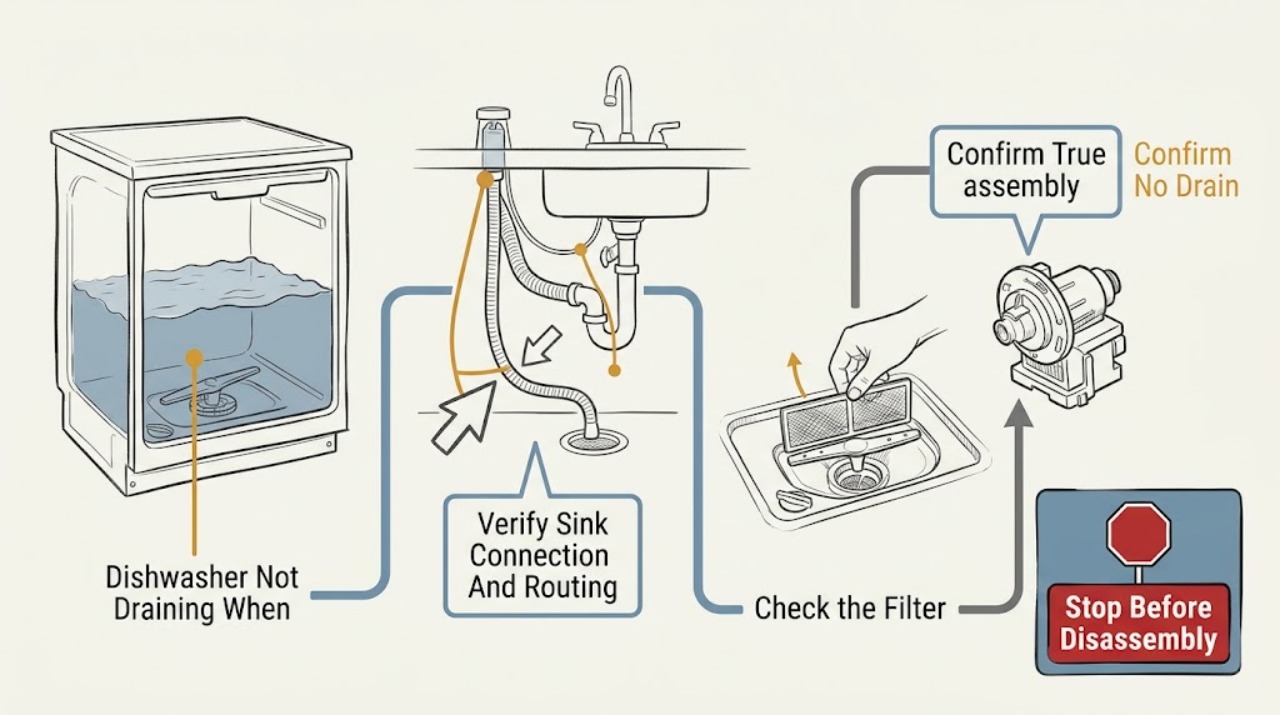
If the sink drains normally but the dishwasher leaves water in the tub, the blockage or failure is more likely in the dishwasher-specific path: its filter or drain area, drain hose, air gap or disposal connection, or drain pump. Turn the dishwasher off, record whether the water is above the filter and whether a drain error appears, then check the accessible sink connection and hose routing. Clean and correctly reassemble only the filter and drain parts identified by the owner's manual. Do not use chemical drain cleaner, reach into a hidden pump, or run repeated cycles with standing water. Persistent water, a damaged hose, an error after the accessible checks, humming without discharge, a leak, or a source that requires removing the appliance calls for qualified appliance or plumbing service.
Work through in order
Diagnostic checks
Use only checks that match the exact appliance or system and its official guide.
-
Check 1
Stop the dishwasher and let a hot cycle cool before looking inside. From a dry position, note whether water is above the filter or only in the low sump area, whether the cycle ended normally or with a drain error, and whether the pump made a drain sound. Do not start another full cycle just to reproduce the symptom.
Expected result: Water is above the filter, only a small amount remains below it, a drain error is displayed, the pump is silent or only hums, or the tub drains partway and then refills.
Next step: Keep the appliance off and use the observation to choose the sink-and-hose, filter-and-drain-area, or service branch below. If water is leaking, reaches electrical equipment, or cannot be isolated safely, stop here and arrange qualified help.
Stop if: Do not reach into standing water, touch energized parts, or keep cycling the dishwasher while the tub is not draining.
Why this matters
Why: Water above the filter or a drain error confirms a drain-path problem, while a small model-designed sump residue may not be a fault. Silent or humming behavior makes a pump, wiring, or obstruction more likely; partial drain or refilling makes routing, backflow, or a connection problem more likely.
-
Check 2
Run the connected sink for about 30 seconds and watch the sink drain, then inspect only the visible dishwasher drain hose under the sink. Look for a kink, crush point, loose-looking connection, low routing that can allow backflow, or an obstructed air gap. If a disposal or dishwasher was newly installed, note whether the dishwasher inlet connection may still have its factory plug.
Expected result: The sink backs up, the air gap spills or is dirty, the hose is kinked or damaged, water flows back into the tub, or all visible sink-side checks are normal.
Next step: Clear only accessible air-gap debris as the manual permits and straighten a gentle hose bend without disconnecting it. Refer a blocked household drain, damaged hose, new-installation connection, or suspected disposal plug to a qualified plumber or installer; proceed to the model-approved filter check only when the visible path is safe and intact.
Stop if: Do not disconnect a water or drain fitting, pull the dishwasher out, or remove a disposal plug yourself when the connection is pressurized, inaccessible, or newly installed.
Why this matters
Why: A sink that fails the flow check points to household plumbing rather than the dishwasher. An obstructed air gap, kinked hose, missing high routing, or a closed new-disposal inlet can prevent discharge even when the sink appears usable at other times. Normal visible connections shift suspicion toward the filter, sump, pump, or an internal restriction.
-
Check 3
With the dishwasher off, remove the lower rack and inspect the filter and drain opening only if the owner's manual identifies them as removable. Lift out loose food or glass with protection, rinse the filter with warm water and a soft brush, and reinstall every piece in the specified orientation until it is fully seated or locked.
Expected result: Food or a foreign object is present, the filter is coated, a drain cover or filter was mis-seated, the model has no removable filter, or the drain area is already clean and correctly assembled.
Next step: If debris was removed and all parts are correctly seated, use the model's drain-only or short test procedure once, without dishes or detergent, and watch for complete discharge. If the water remains, the pump only hums, the error returns, or no user-removable path exists, stop and arrange service.
Stop if: Do not pry a drain cover, probe a pump, handle sharp debris bare-handed, or use a chemical drain product inside the dishwasher.
Why this matters
Why: Debris or an incorrectly assembled filter can restrict flow and trigger a drain fault. A self-cleaning or non-removable design should not be forced open. A clean, correctly assembled path makes a blocked pump, internal valve, wiring fault, or hidden hose restriction more likely.
-
Check 4
After the sink-side path and model-approved filter check are complete, use the dishwasher's documented cancel-and-drain function or other manual-approved drain-only test. Observe the discharge at the sink connection without placing hands near the pump or hose fittings.
Expected result: A strong discharge clears the tub, discharge is weak or intermittent, the pump hums without moving water, the pump is silent, water returns after draining, or a drain error returns.
Next step: If it drains completely and remains dry, monitor the next normal load. For weak or absent discharge, recurring errors, or backflow, leave the dishwasher off and provide the recorded sound, error, water level, and sink-connection result to qualified appliance service or plumbing help.
Stop if: Do not bypass a control, test live wiring, remove the pump, or run repeated cycles to force a drain.
Why this matters
Why: A complete drain after cleaning supports a temporary restriction or seating issue. Weak, intermittent, silent, or humming-without-flow behavior points toward a pump, electrical control, internal obstruction, or hidden hose issue. Water returning after a successful drain points toward backflow or routing.
Use your observations
Decision map
Find the observation that best matches what you see, then follow the next safe action.
-
PATH 01Next step
What you see
The sink does not drain freely, the air gap spills, or the shared sink/disposal connection backs up while the dishwasher drain hose is intact.
Do this next
Stop the dishwasher and obtain plumbing help for the blocked drain or connection; do not pour chemical drain cleaner into the dishwasher or disconnect the fitting casually.
Why this path and its safety boundary
Why it matters: The shared household drain or sink-side connection is more likely than an internal dishwasher fault, even if the sink looked clear during a quick glance.
-
PATH 02Next step
What you see
The sink drains, but the dishwasher hose is kinked, crushed, routed without the required air gap or high loop, or the issue began with a new dishwasher or disposal.
Do this next
Keep the dishwasher off and have the installer or qualified service correct routing, connection, or a damaged hose according to the model manual and local requirements.
Why this path and its safety boundary
Why it matters: A dishwasher-specific installation or backflow path is more likely than a clogged sink; a new disposal connection can also remain closed at the dishwasher inlet.
-
PATH 03Next step
What you see
The sink and visible hose are normal, but the filter or drain opening contains food or a foreign object, or a removable filter was not locked into place.
Do this next
Clean and reseat only the manual-approved parts, then perform one documented drain-only test. Escalate if water remains above the filter or the error returns.
Why this path and its safety boundary
Why it matters: A dishwasher-internal, user-accessible restriction or filter-seating issue is more likely than household plumbing.
-
PATH 04Next step
What you see
The sink, hose, air gap, filter, and drain opening are clear, but the pump is silent or humming without discharge, the drain is weak, or the error persists.
Do this next
Leave the dishwasher off and arrange qualified appliance service. Give the technician the water level, pump sound, error code, and results of the sink, hose, and filter checks.
Why this path and its safety boundary
Why it matters: A drain pump, control, internal obstruction, check valve, or hidden hose restriction is more likely; these cannot be safely confirmed from the accessible checks alone.
Helpful context
Understand the symptom
A clear sink narrows the search, but does not clear the dishwasher path
The sink and the dishwasher share a connection, but they do not have the same flow path. A sink can drain while food debris blocks the dishwasher filter or sump, a hose is pinched, an air gap is obstructed, or a disposal connection is still closed. Treat a small amount of water below the filter as model-dependent; water remaining above the filter after a completed drain attempt is the more useful symptom to record.
Use the model manual for parts that look removable
Filter layouts, drain covers, pump access, and cancel-and-drain controls vary. A filter that is present on one dishwasher may not be user-removable on another. Follow the exact owner's manual, wear protection for sharp metal edges, and stop before removing a cover or panel that the manual does not identify as user-serviceable.
Only after diagnosis
Potential parts
- dishwasher filter or drain-screen assembly
Only consider this category when the model has a removable filter that is damaged, missing, or confirmed unable to seat after cleaning.
Confirm the exact dishwasher model and the manufacturer's filter layout before replacing any part. - dishwasher drain hose or air-gap component
Only consider this category when the visible hose or air-gap component is damaged, obstructed, or cannot maintain the model-required routing.
Verify model, connection type, routing, and local installation requirements; do not infer fit from appearance. - dishwasher drain pump or check-valve assembly
Only consider this category after the sink, hose, air gap, filter, and drain opening are clear and a weak, absent, or humming drain is confirmed.
Internal pump and valve work is model-specific; have qualified appliance service confirm the failure and fitment.
When checks do not resolve it
Need a professional?
Stop troubleshooting and obtain qualified appliance or plumbing service when water remains above the filter after a documented drain attempt, a drain error returns, the pump is silent or hums without discharge, water flows back into the tub, a hose or connection is damaged, the dishwasher leaks, a breaker trips, or the next check would require removing panels, pulling out the appliance, opening a hidden pump, disconnecting plumbing, or testing energized wiring. Use the installer for a new dishwasher or disposal connection that fails on its first drain attempt.
Common questions
FAQ
Why is my dishwasher not draining if the sink is clear?
A clear sink does not rule out a dishwasher-specific restriction. Check the dishwasher filter and drain area, the visible hose routing, the air gap or disposal connection, and the model-approved drain function. If those are clear but water remains or the pump only hums, service is needed.
Is a little water under the dishwasher filter normal?
Some models retain a small amount of water in the low sump area, so the useful comparison is whether water remains above the filter after a completed drain attempt. Use the owner's manual for the model-specific normal level; persistent water above the filter or a drain error should be treated as a fault.
Should I use drain cleaner in a dishwasher that will not drain?
No. Do not pour chemical drain cleaner into the dishwasher. Check only the accessible, manual-approved filter, drain area, hose, air gap, or sink connection, and use qualified plumbing or appliance service when the blockage is hidden or the drain remains incomplete.
Read the exact guide
Official sources
- How to Fix an LG Dishwasher That Is Not Draining (OE Error)LG USA Support · LG dishwasher no-drain causes, filter cleaning and reassembly, drain-hose inspection, air-gap and disposal checks, and service escalation
- Samsung dishwasher is not drainingSamsung · Samsung dishwasher sink drain, garbage disposal, drain hose, air gap or high-loop routing, filter and drain-area cleaning, and service troubleshooting
Community feedback
Share a repair observation
Share a plain-text repair observation. Accepted observations are published automatically; this page may take a moment to update.