
Brand-independent appliance guidance
General Dishwasher Repair Guides
Brand-independent troubleshooting and repair guidance for common dishwasher problems and maintenance questions.
General dishwasher guides
Use these guides when the problem is not limited to a specific manufacturer.
-
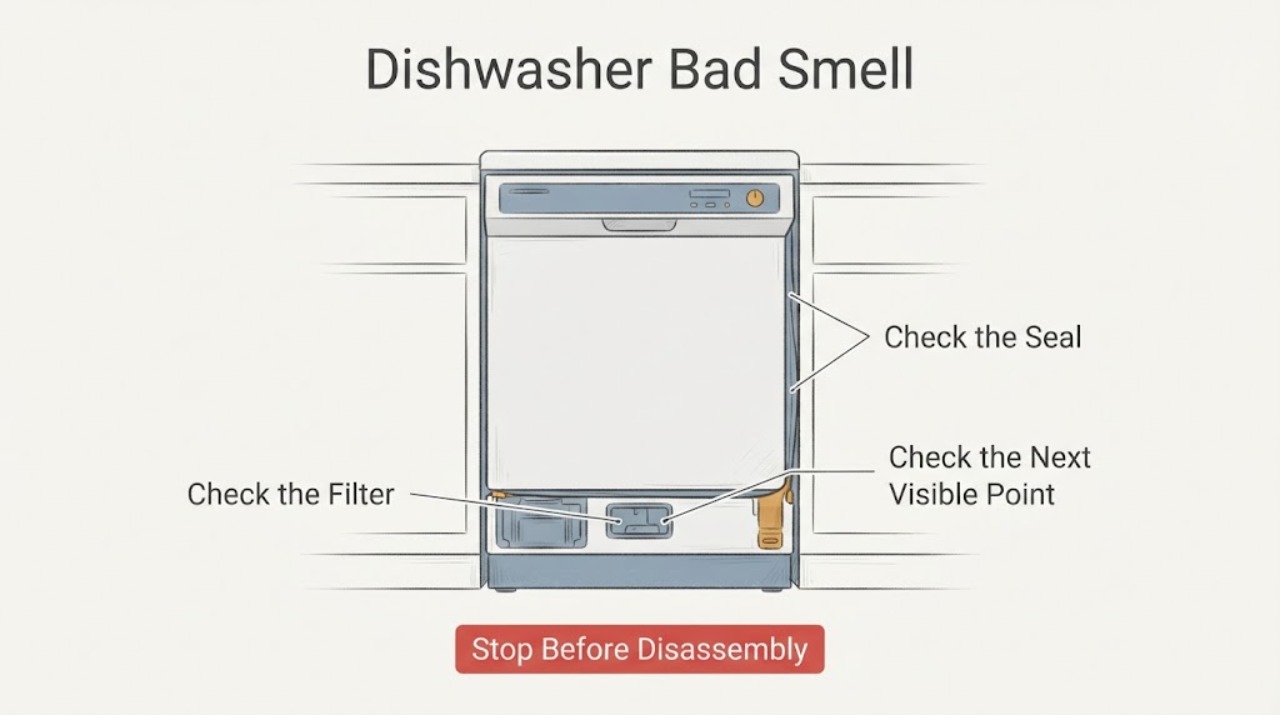
Dishwasher Bad Smell: Clean the Filter, Spray Arms, and Seal Safely
A dishwasher bad smell usually comes from food residue, a dirty filter, stagnant water, a soiled door seal, or overdue maintenance. Empty the machine, inspect the filter and spray arms, wipe accessible seals, and run only the model-approved hot maintenance cycle. Wear gloves around sharp debris, never mix cleaners, and arrange service if odor comes with standing water, sewage smell, leaks, heating failure, or repeated drain problems.
-
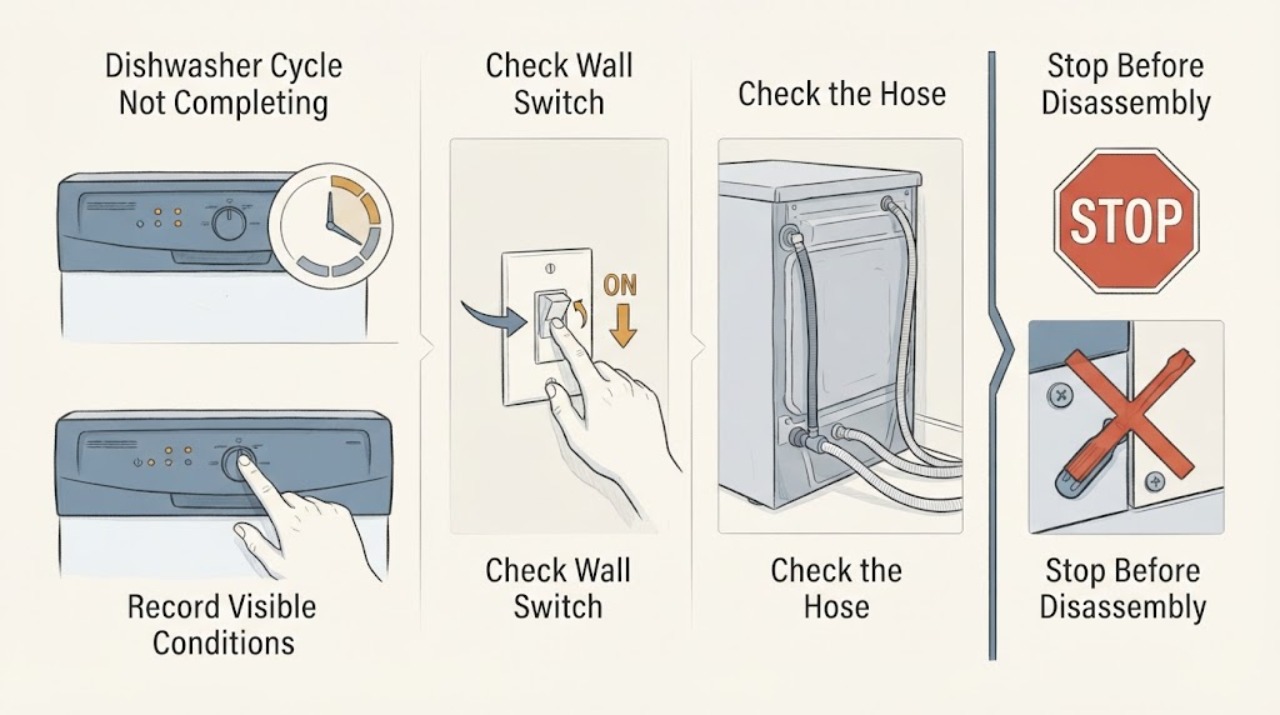
Dishwasher Cycle Not Completing
Record whether the dishwasher is waiting, not filling, leaving water, or running long. Check the exact program, delay state, inlet valve, drain hose, filter, and accessible air gap as the manual allows. Persistent no-fill/no-drain, leaks, codes, or hot water require service.
-
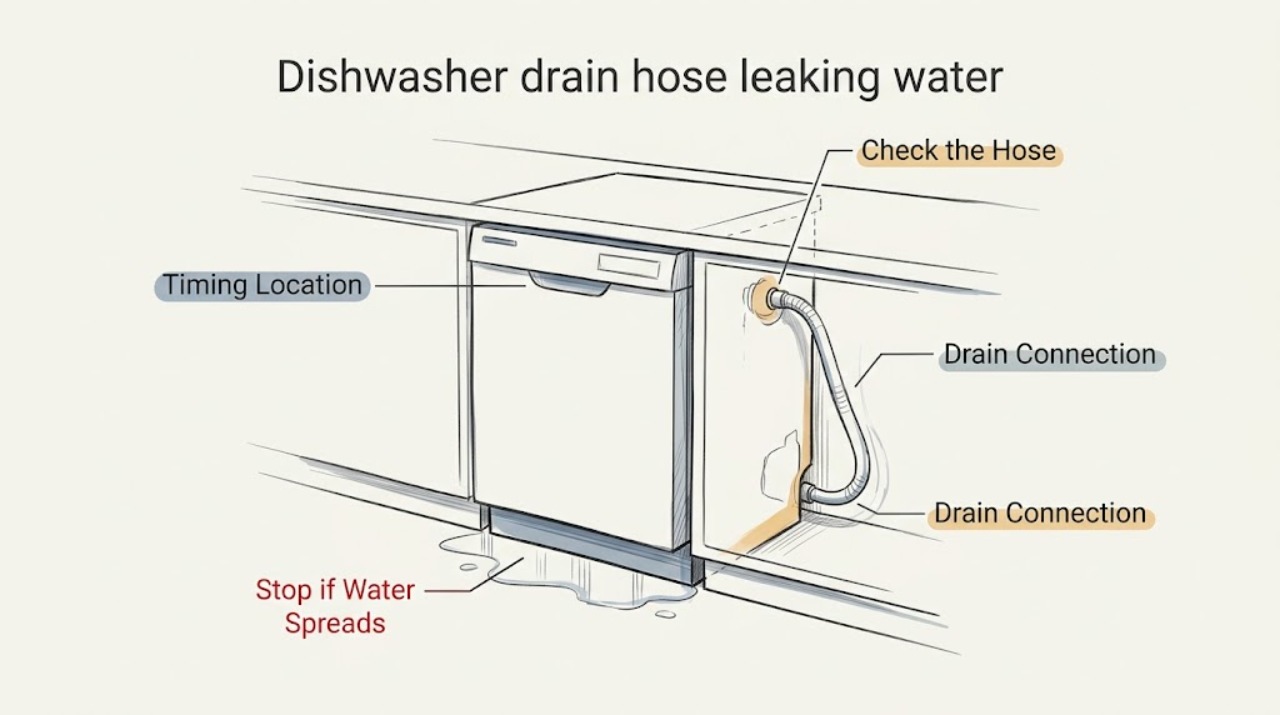
Dishwasher drain hose leaking water: What to Check and What to Do Next
For a dishwasher drain hose leaking water, first record the cycle phase and the first wet point. A leak that starts during draining at a hose end or along its route supports a drain-path assessment; water at the door during filling or washing points to another path.
-
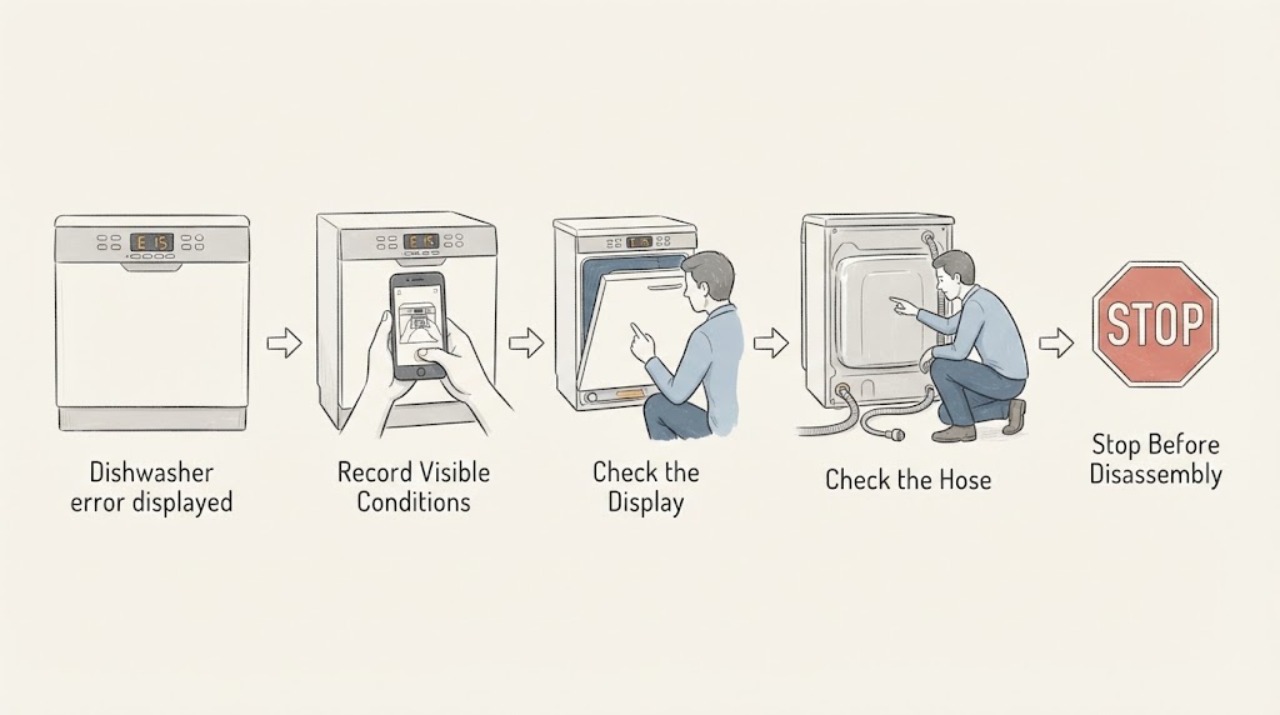
Dishwasher error displayed
When a dishwasher displays an error, record the exact code or light-flash sequence before resetting. Meanings vary by model; use the matching owner manual, then perform only its accessible check or one power cycle. A returning code, leak, fill/drain failure, or electrical warning needs qualified service.
-
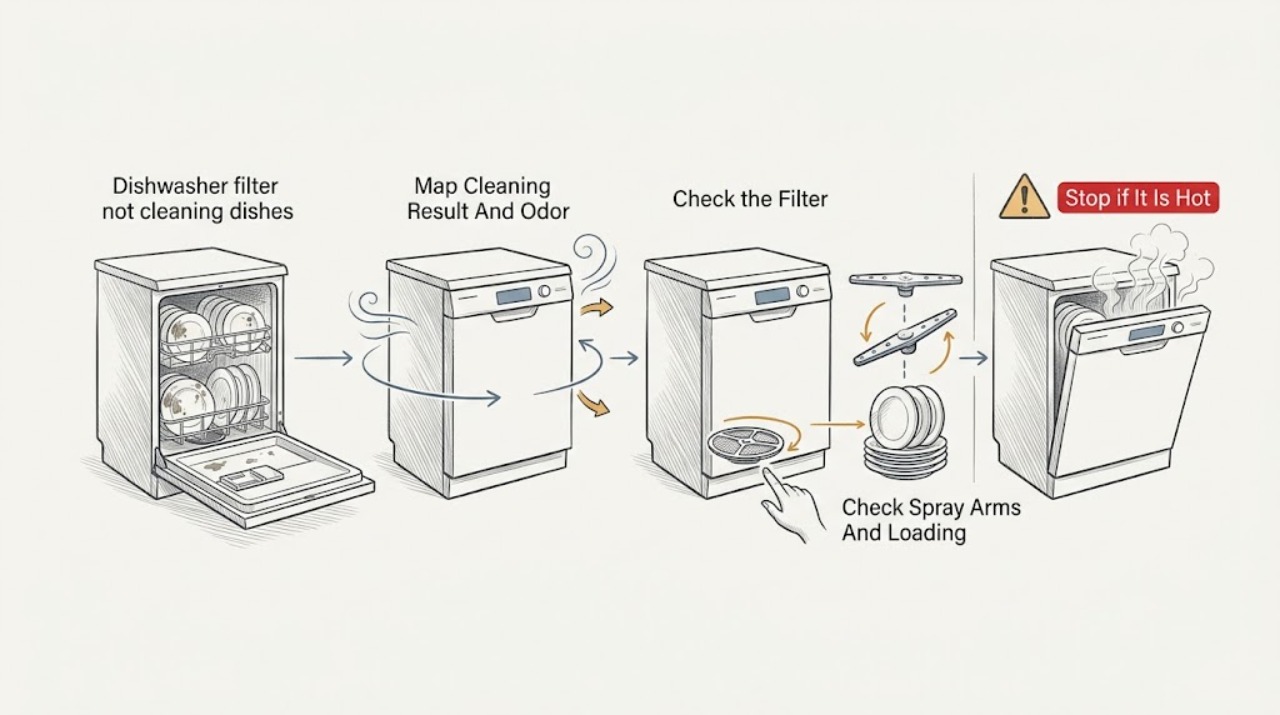
Dishwasher filter not cleaning dishes: What to Check and What to Do Next
A clogged dishwasher filter can let food circulate, reduce cleaning performance, and contribute to an unpleasant odor, but a filter is only one part of the wash path. Note whether soil is on every rack or only one area, then turn the dishwasher off and follow the exact manual to inspect and clean the accessible filter.
-
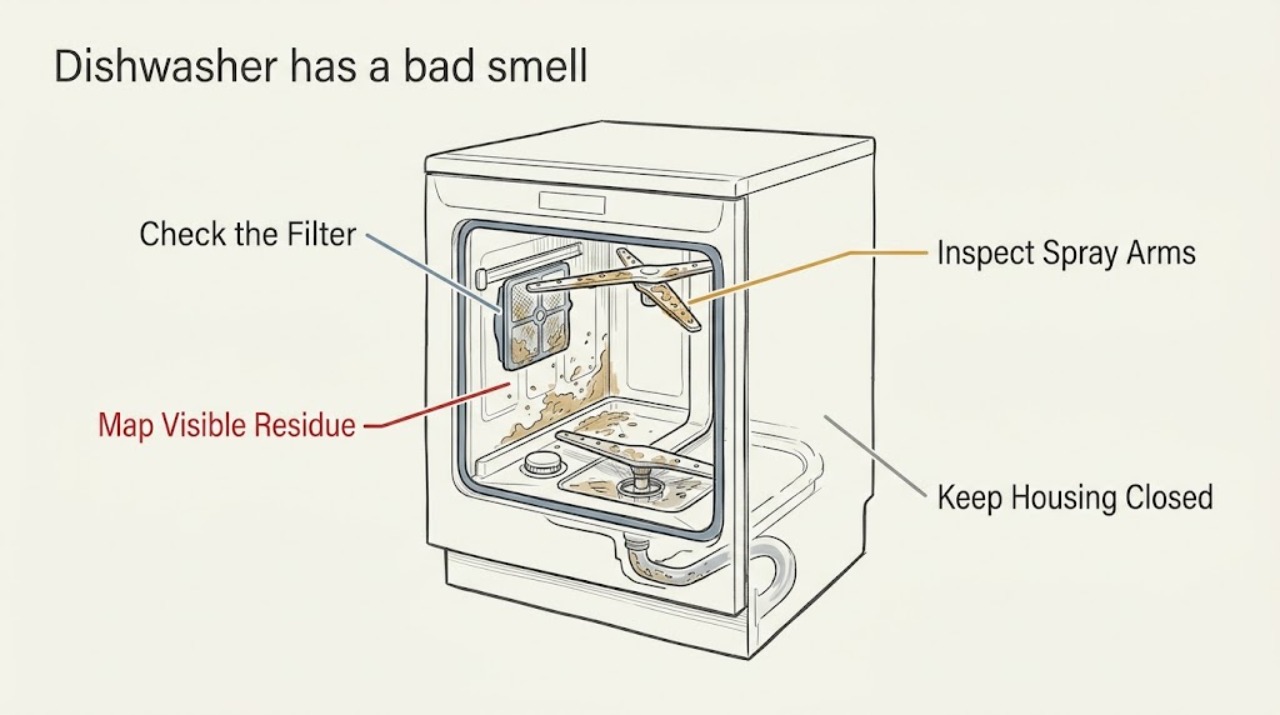
Dishwasher has a bad smell food residue is visible: What to Check and What to Do Next
When a dishwasher smells bad and food residue is visible, start with the residue rather than masking the odor. Empty the racks, remove only loose food from the tub bottom, then inspect the filter, sump or pump-inlet area, spray-arm openings, door seal, and drain path according to the exact model instructions.
-
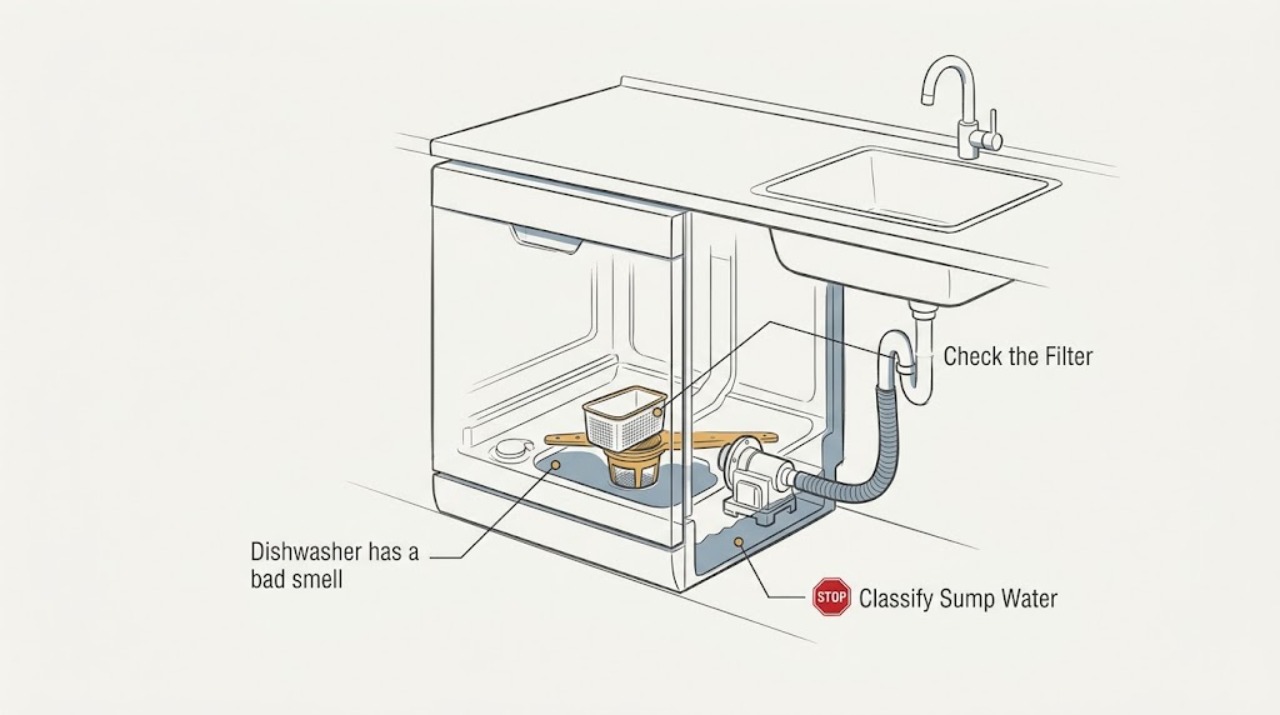
Dishwasher has a bad smell water may sit in sump: What to Check and What to Do Next
A small amount of clean water in a dishwasher's filter area or sump can be normal because it helps keep seals from drying, but dirty water that builds up, smells, returns after a cycle, or sits across the tub points to a drainage or backflow problem. First distinguish the normal filter-area water from excess or dirty water, then inspect and clean the model-approved filter and accessible sump area.
-
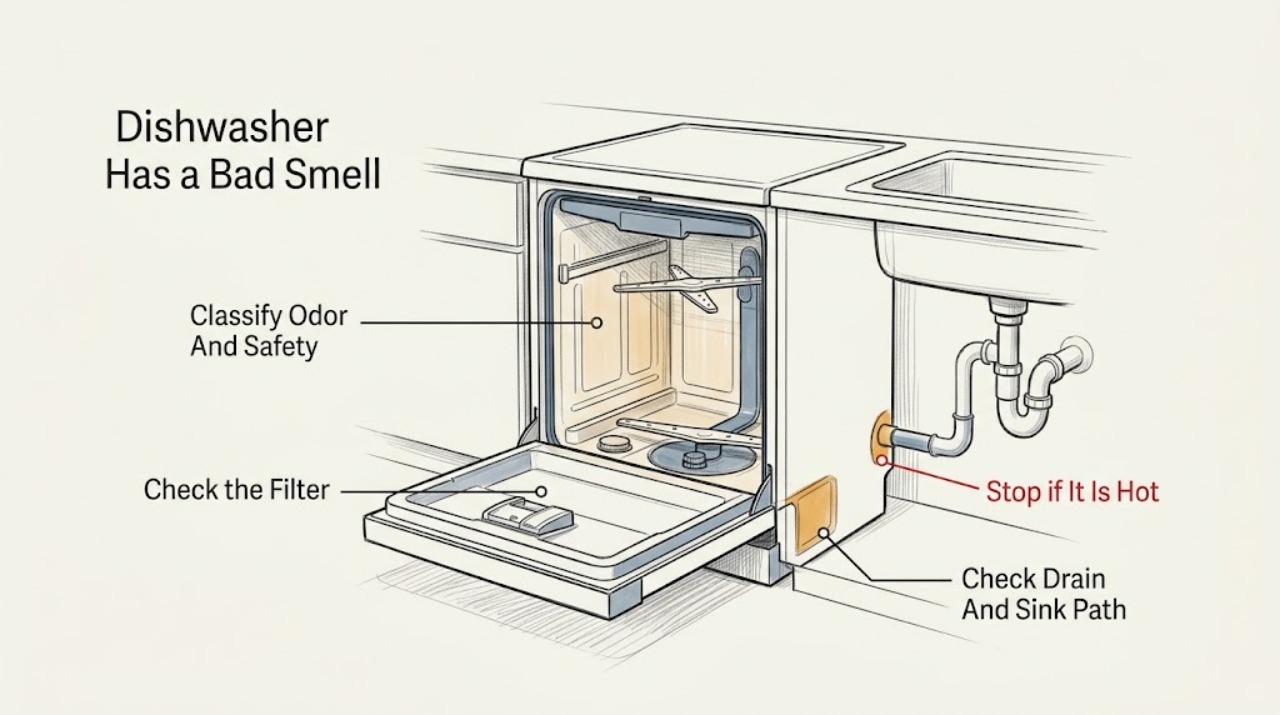
Dishwasher Has a Bad Smell That Remains Between Cycles: What to Check and What to Do Next
A dishwasher odor that returns between cycles is most often held by food soil, a dirty filter or drain area, moisture in the tub and door seal, or water that is not draining or is backing up from the sink connection. First distinguish a musty or food odor from burning, chemical, sewage, or gas-like odors, then inspect the accessible filter, drain area, spray arms, tub, and door seal with the dishwasher off.
-
Dishwasher has a bad smell: What to Check and What to Do Next
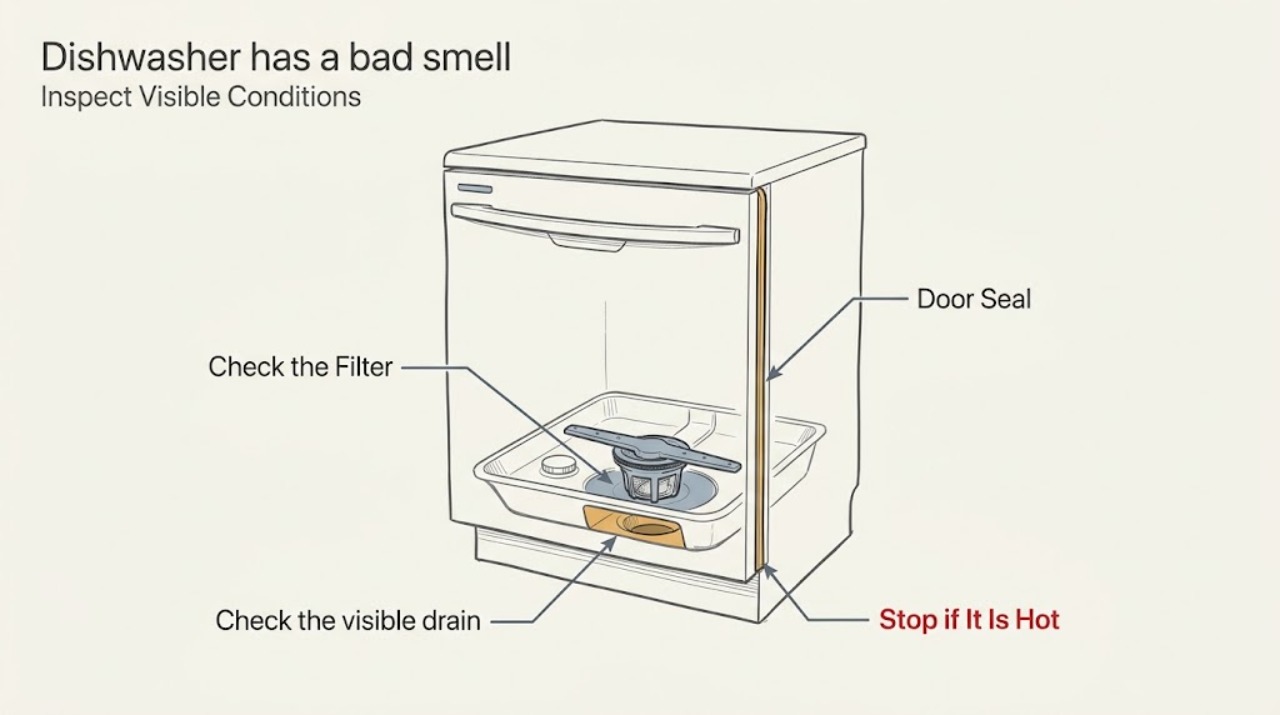
A bad dishwasher smell most often comes from food debris, stagnant water, a dirty filter or spray area, a door seal, or a drain path that is not clearing. Start with safe observations: note whether water remains in the filter area after a cycle, inspect the filter only if it is owner-accessible and the appliance is safely disconnected, look for visible debris at the bottom and door seal, and check the under-sink drain connection without disconnecting plumbing.
-
Dishwasher leaking water leak is at door or beneath unit: What to Check and What to Do Next
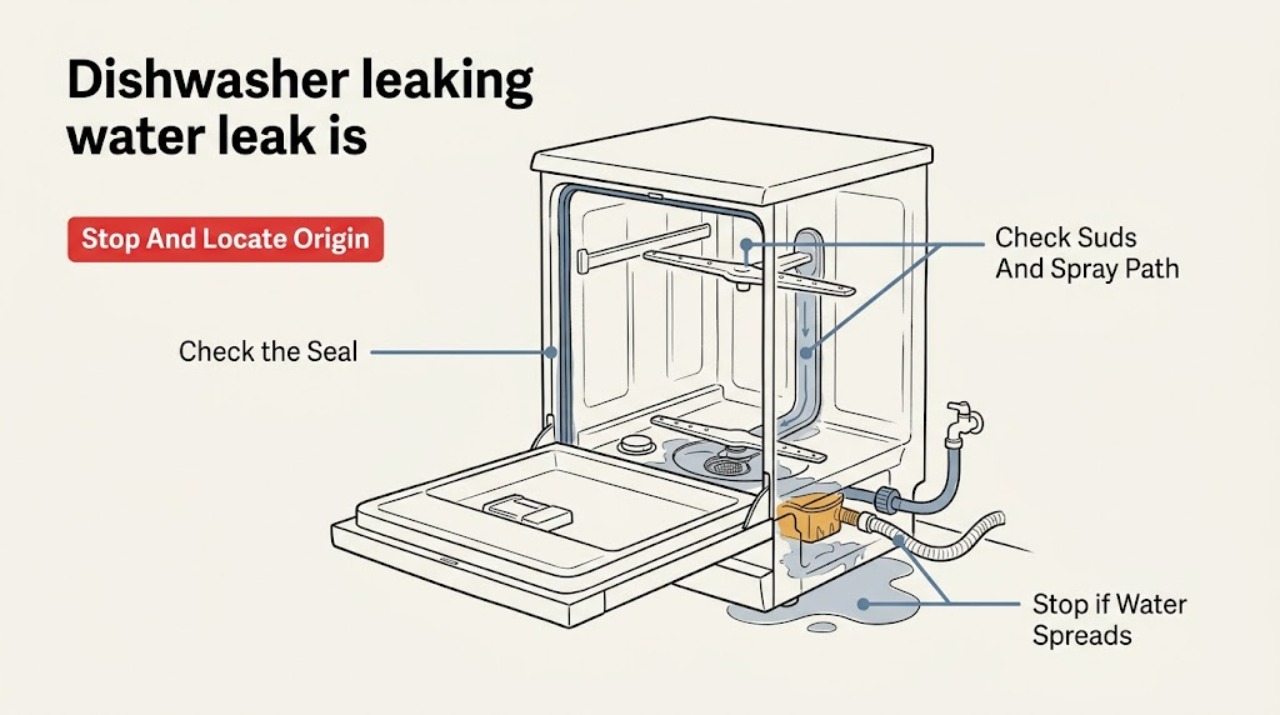
Stop the dishwasher if water is actively escaping, clean up the spill, and isolate the water supply and power only from safe, accessible controls. If the water starts at the door, inspect the gasket, food or utensils at the seal, rack loading, suds, spray direction, vent, and whether the unit is level.
-
Dishwasher leaking water during fill or wash: What to Check and What to Do Next
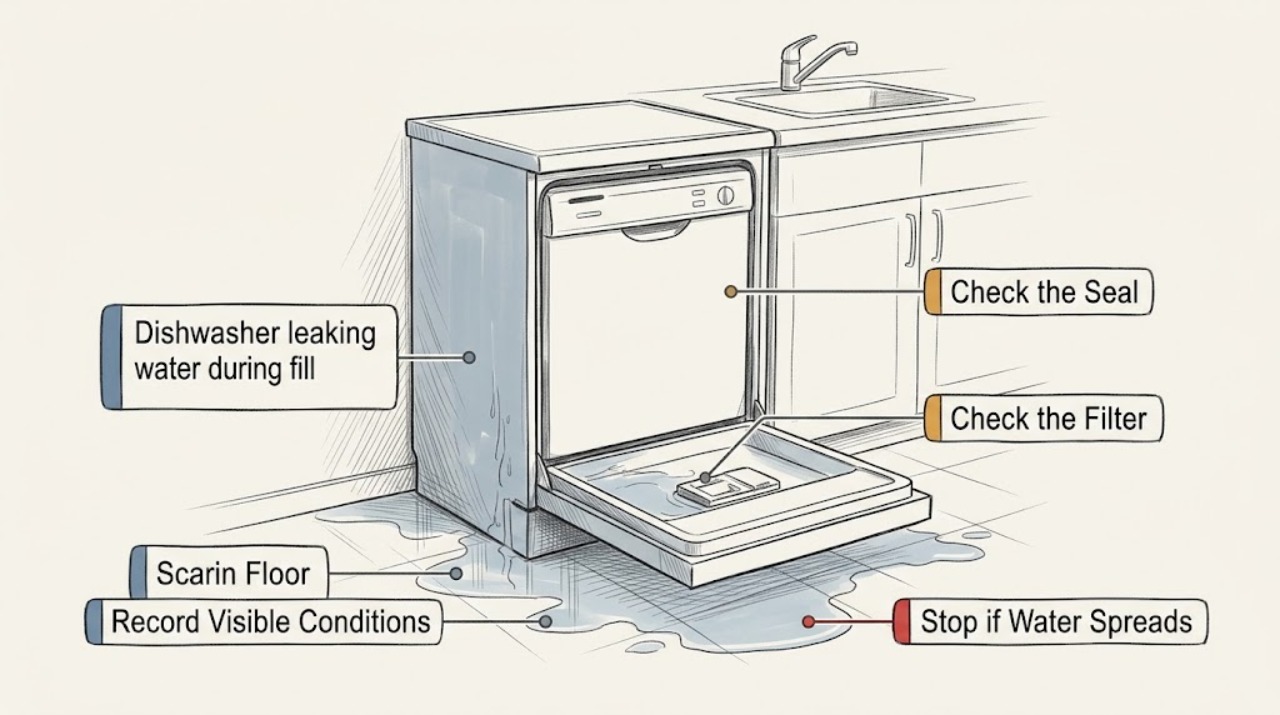
A dishwasher that leaks during fill or wash can be leaking at the door seal, an inlet or drain connection, the tub or pump area, or from excess suds and spray being directed past the door. First stop the cycle, keep water away from electrical parts, and note whether water appears at the front edge, underneath, behind the unit, or only when the spray and wash motor run.
-
Dishwasher Leaking Water With a Wet Floor: What to Check and What to Do Next
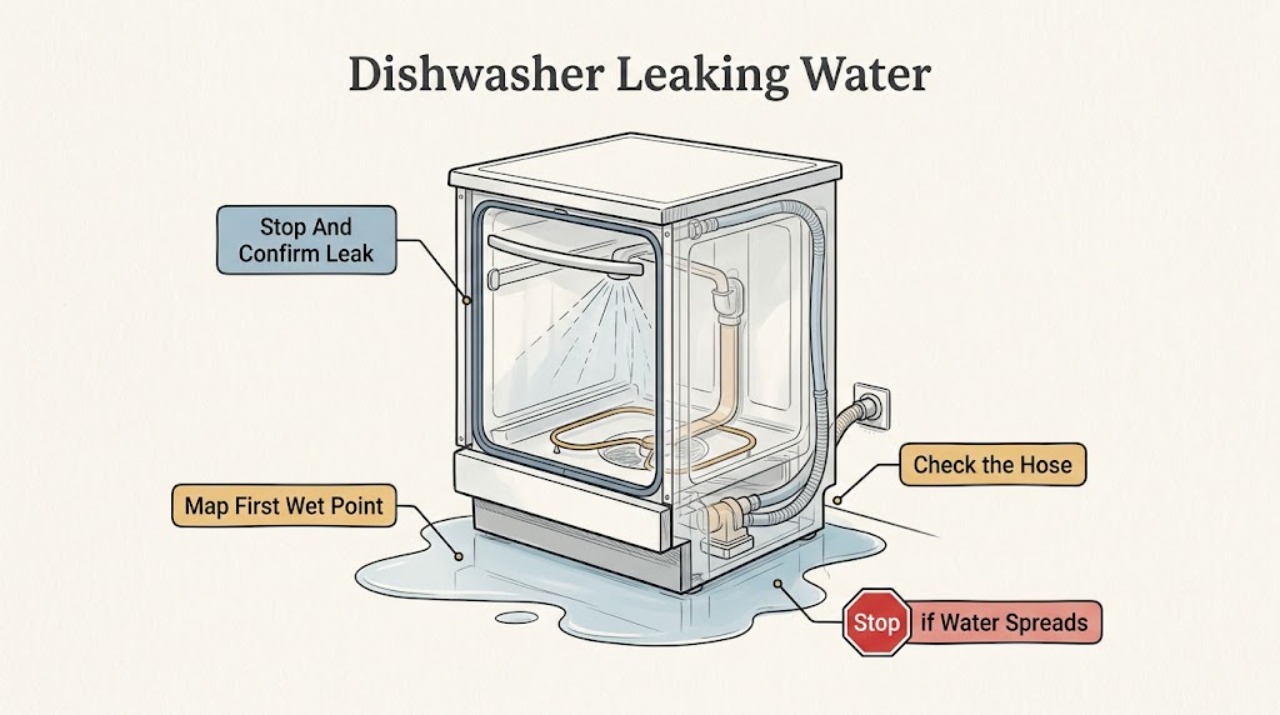
First treat a wet floor as an active water-damage risk: stop the dishwasher, keep people away from the water, and turn off power at the identified breaker and the water supply if the leak is continuing and it is safe to reach them. Wipe the floor and confirm whether water returns, then locate the first wet point without removing panels or disconnecting a pressurized line.
-
Dishwasher leaking water: What to Check and What to Do Next
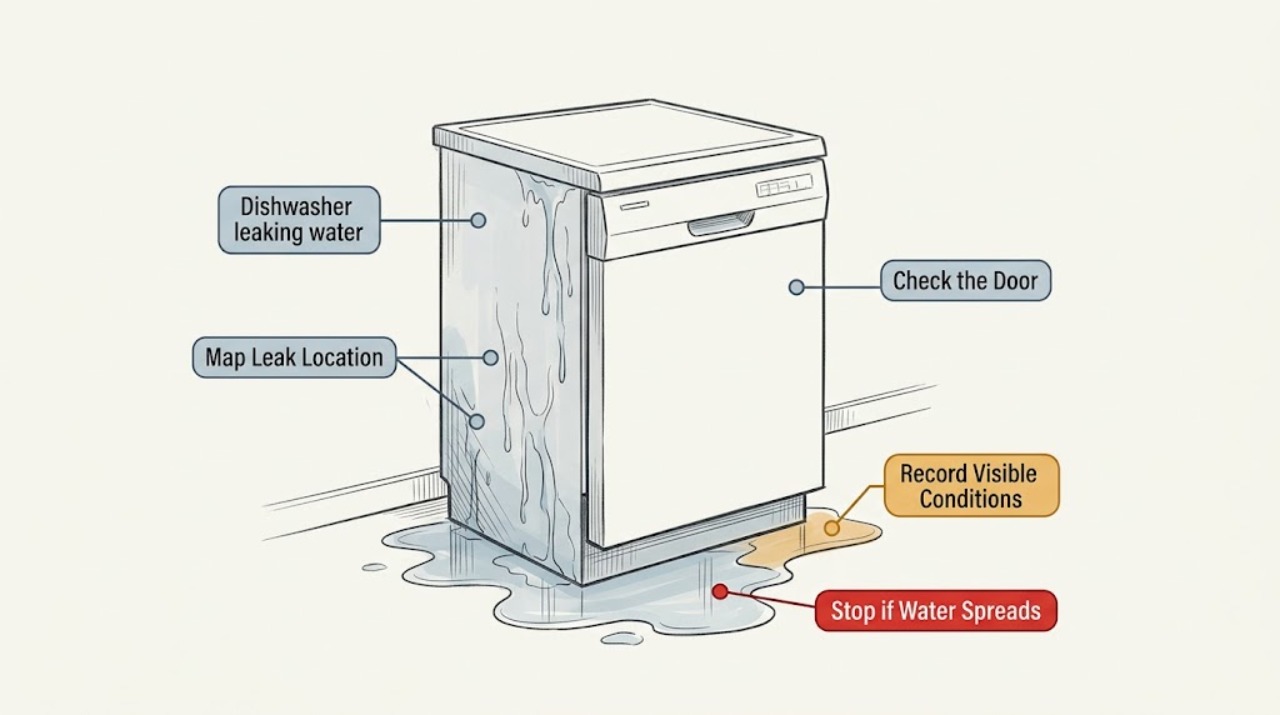
First identify where and when the dishwasher leak appears: at the door, underneath or behind the cabinet, at the sink air gap, or only when suds are present. Stop the cycle using normal controls if it is safe to do so, keep water away from electrical connections, and do not run the appliance again while an active leak is reaching cabinetry, flooring, or wiring.
-
Dishwasher Leaking: Find the Water Path Before Replacing a Part
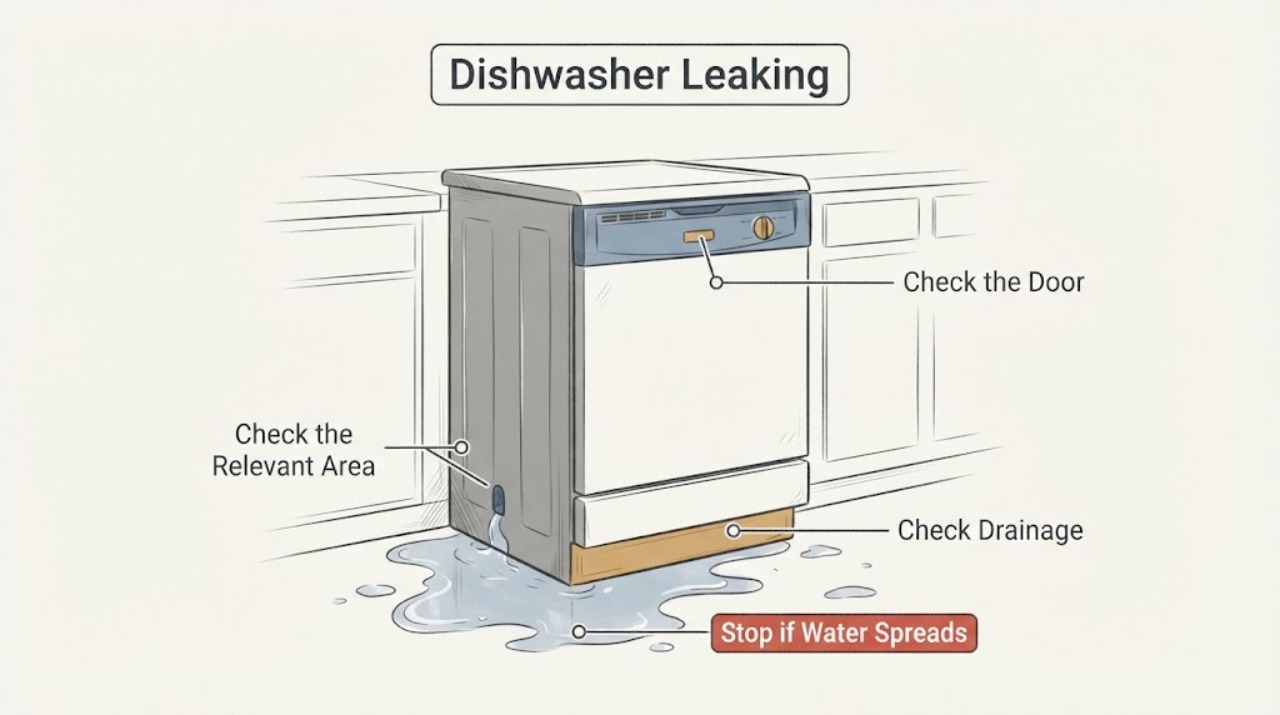
Stop a leaking dishwasher and locate where water first appears: door edge, tub bottom, inlet connection, drain route, or underneath. Whirlpool guidance points to gasket/door loading, suds, filter/drain path, leveling, and supply or drain connections. Turn off power and water when safe; persistent under-cabinet leaks, overfill, or electrical symptoms need service.
-
Dishwasher Making Noise
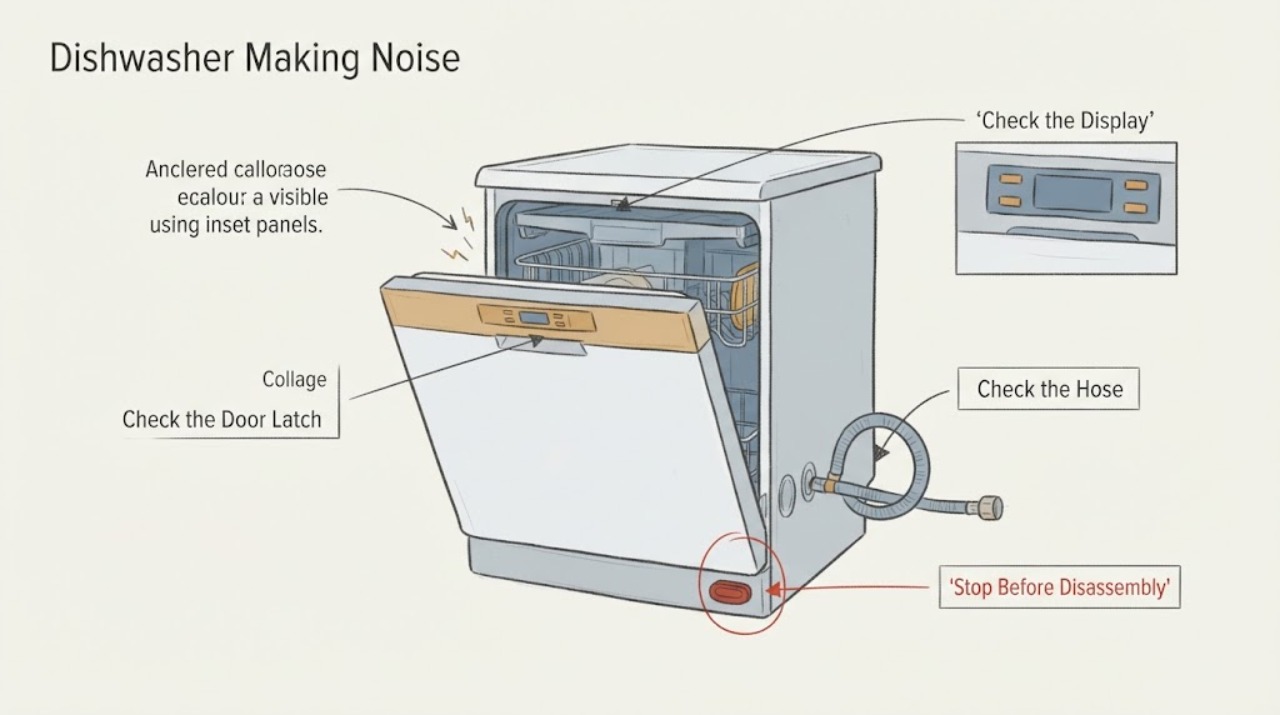
To troubleshoot a dishwasher that is making noise, first identify the exact stage and accompanying signs, then make only the safe external checks supported by the owner guidance. Stop for hazards or recurrence and arrange qualified service.
-
Dishwasher Not Cleaning Dishes (Residue Remains): What to Check and What to Do Next
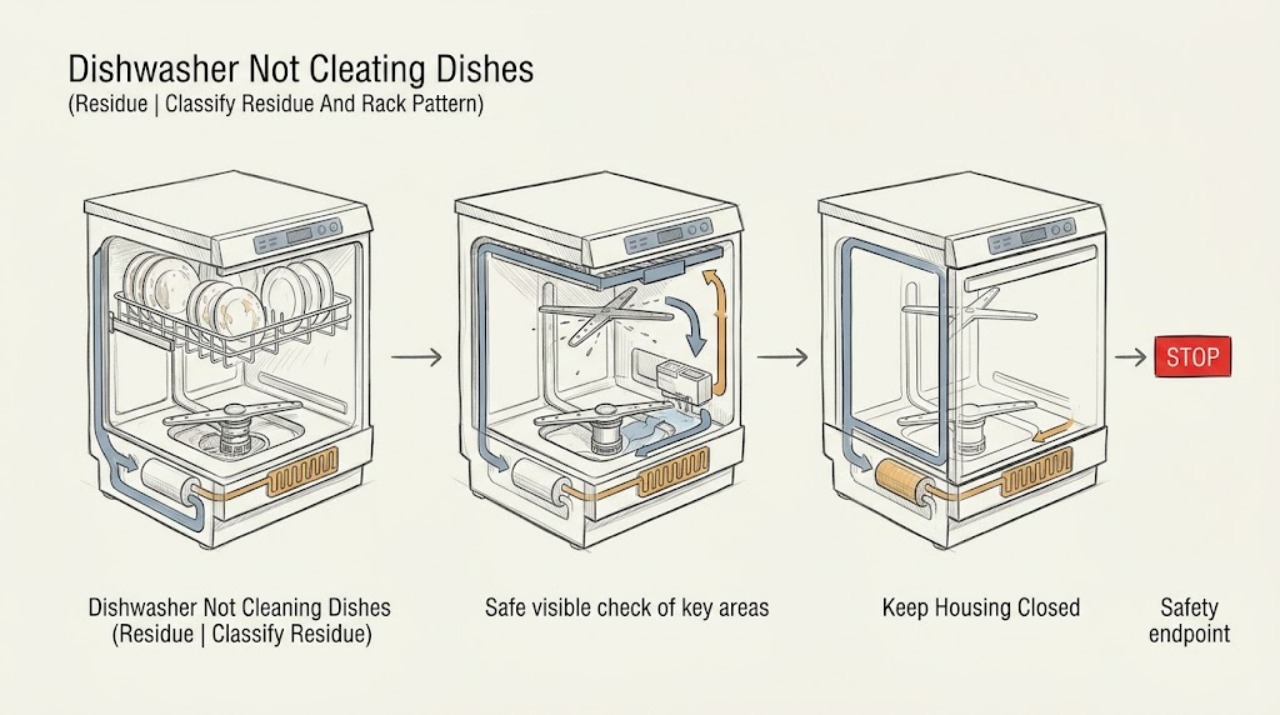
When a dishwasher leaves residue, first identify whether it is food soil, greasy film, detergent, or a white mineral haze, and note whether it affects every rack or only certain items. A dirty filter, blocked spray arm, crowded loading, blocked dispenser, unsuitable detergent, low water supply, or insufficient heat can leave residue even when the cycle finishes.
-
Dishwasher not cleaning dishes when water enters the tub: What to Check and What to Do Next
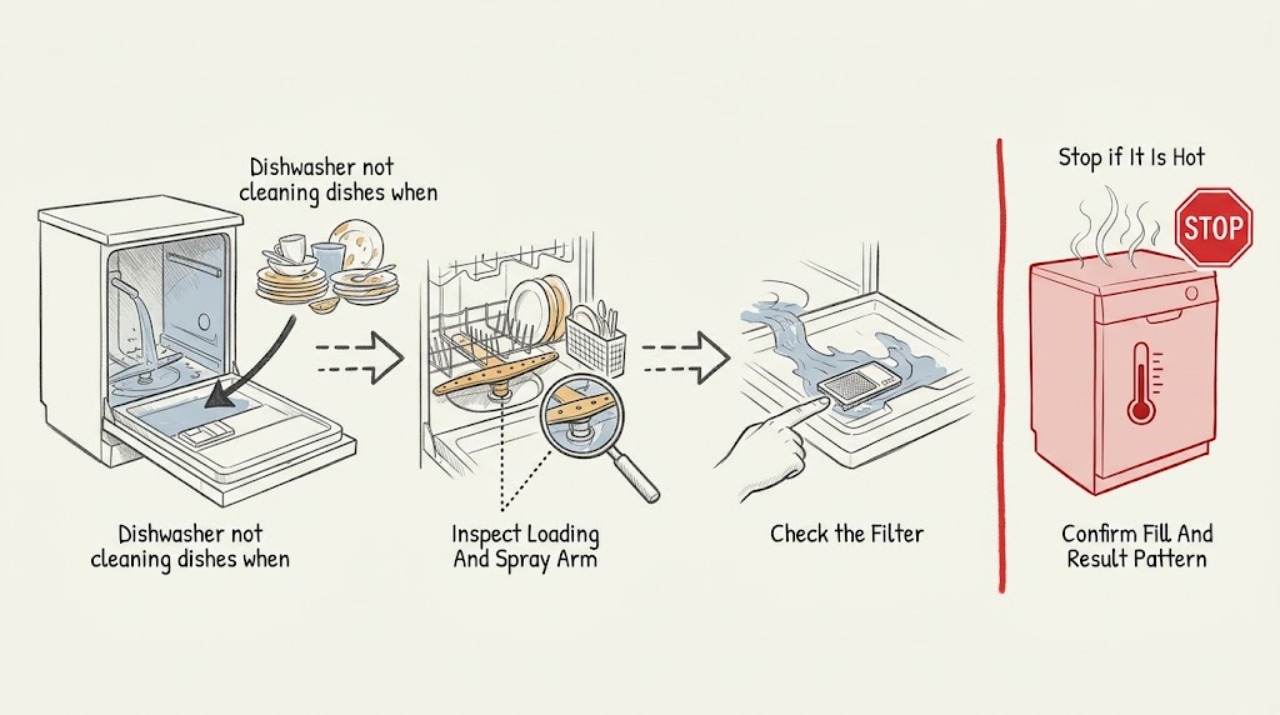
If water enters the dishwasher tub but dishes remain dirty, the problem is usually water distribution, filtration, loading, detergent release, or insufficient wash conditions rather than a simple no-fill fault. Start with the cleanable filter, spray-arm movement and blocked nozzles, rack loading, detergent dispenser, selected cycle, and any visible food or mineral buildup.
-
Dishwasher Not Cleaning Dishes, Spray Arms Do Not Rotate: What to Check and What to Do Next
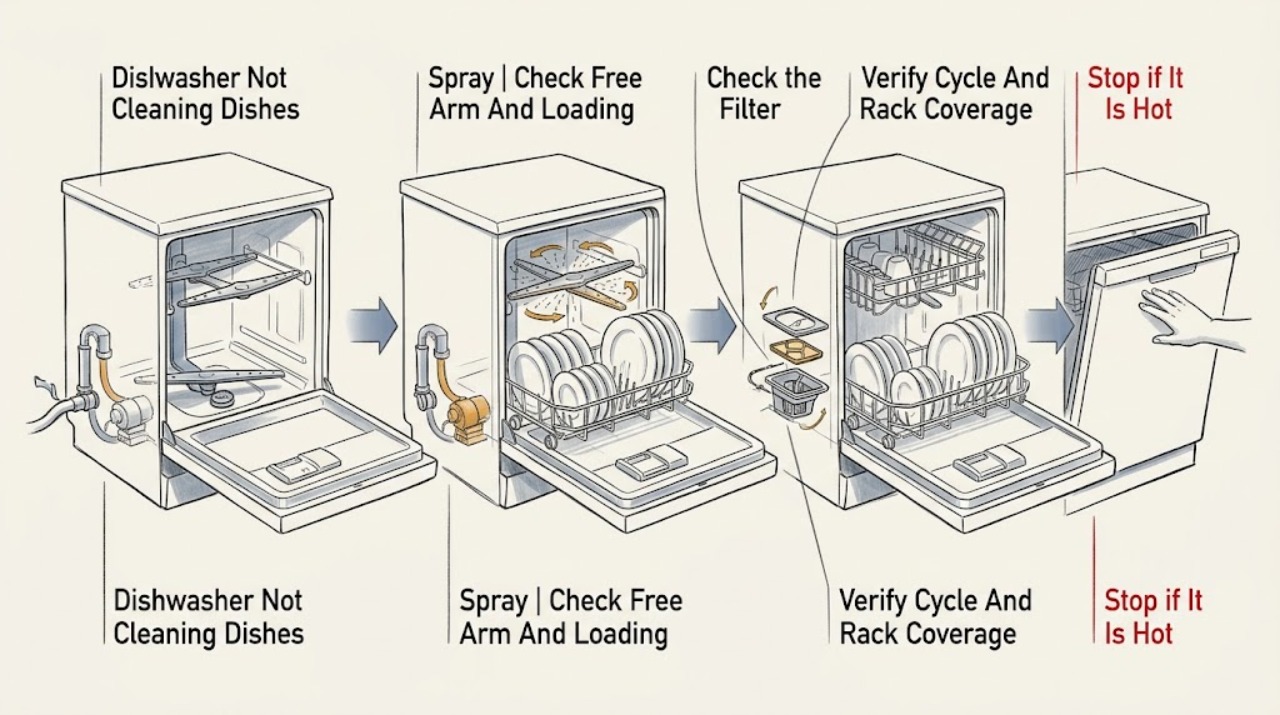
If a dishwasher is not cleaning and its spray arms do not rotate, first turn the dishwasher off and let hot parts cool, then spin each arm by hand to find a rack, utensil, tall pan, misaligned docking tube, or debris obstruction. Clean only removable spray arms and the filter as the exact owner's manual permits.
-
Dishwasher not cleaning dishes: What to Check and What to Do Next
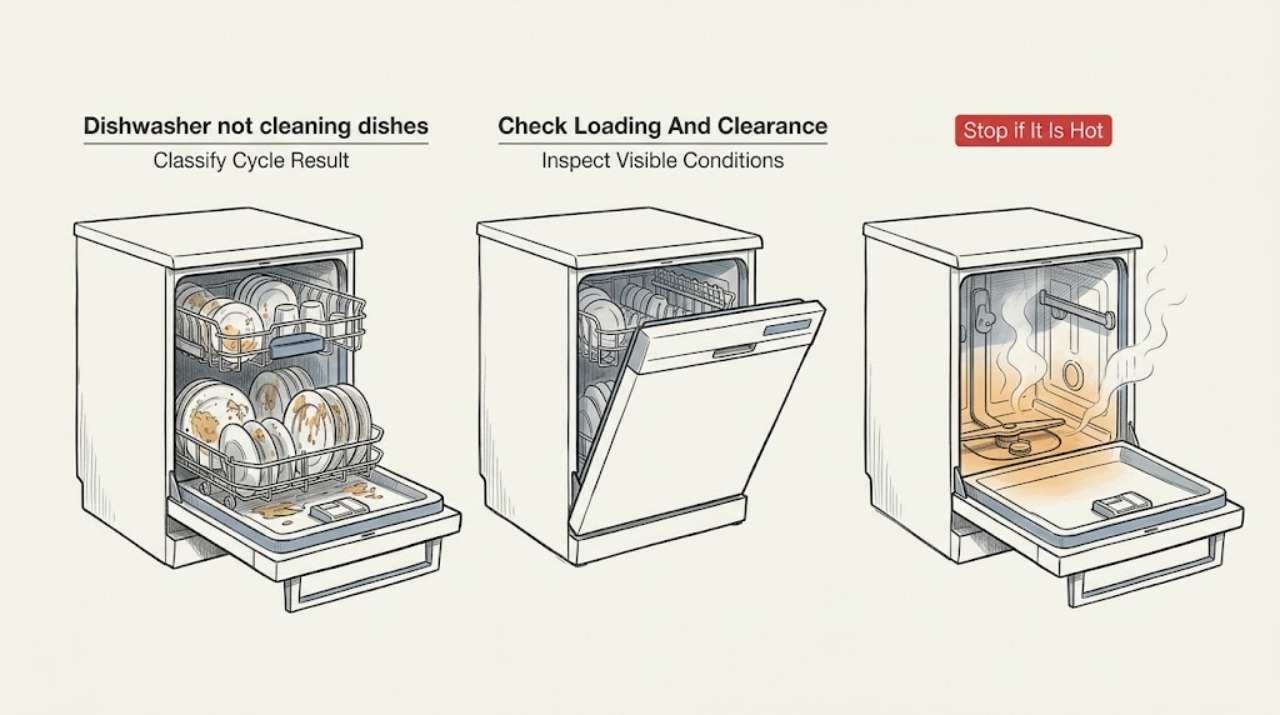
Use the dirty-dish pattern to narrow the cause: note which rack or surfaces remain dirty, whether the chosen cycle matches the soil, whether loading blocks visible spray-arm paths, whether the filter looks obstructed when safely accessible, and whether detergent and incoming water conditions appear normal. Do not reach into a running dishwasher, mix cleaners or detergents, remove pump or spray-arm assemblies, or access live wiring.
-
Dishwasher not draining cycle reaches drain: What to Check and What to Do Next
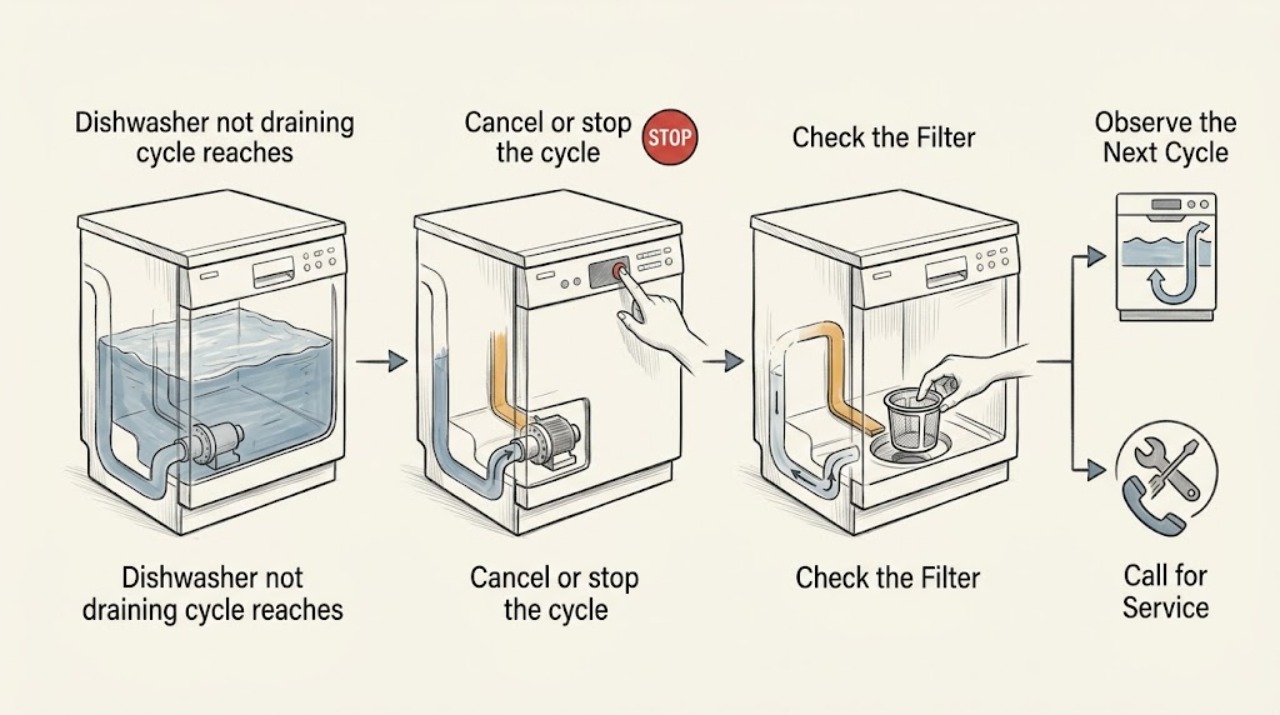
If a dishwasher reaches the drain portion of the cycle but leaves water in the tub, the control may be calling for drain while a filter, sump, pump inlet, drain hose, air gap, disposer connection, or sink drain is restricted.
-
Dishwasher not draining water remains in tub: What to Check and What to Do Next
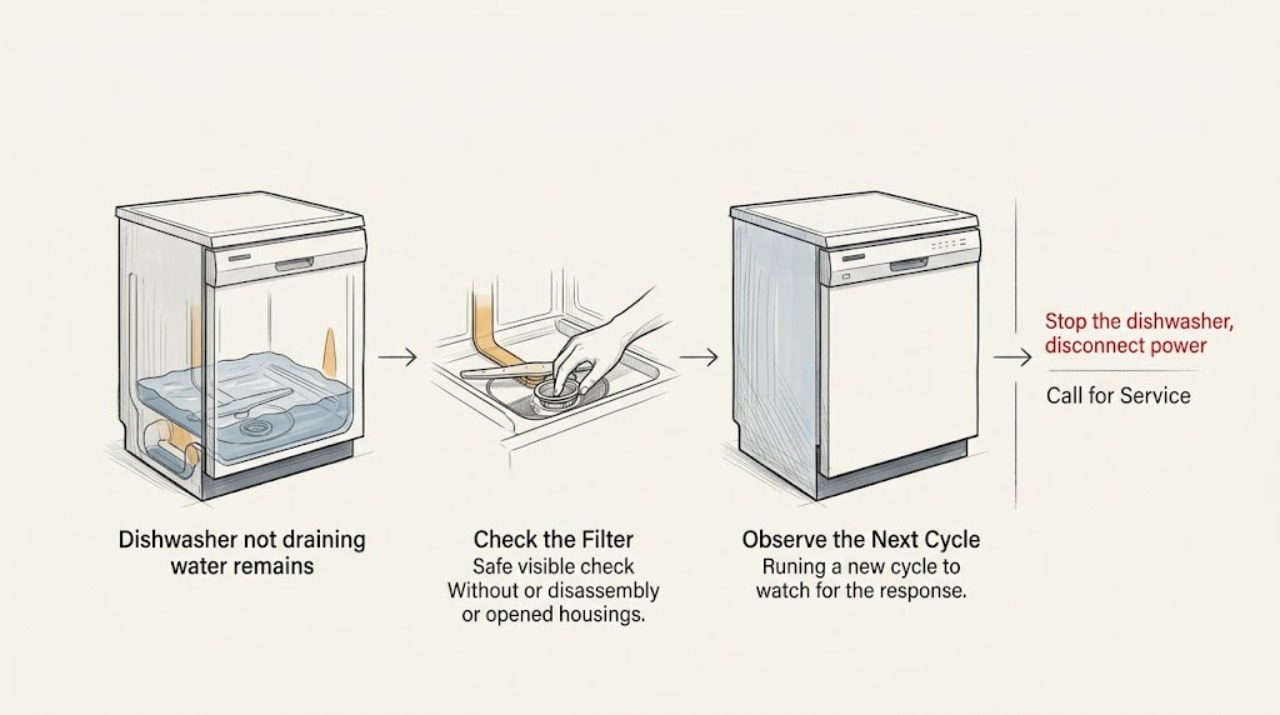
Water remaining across a dishwasher tub after the cycle usually means the drain path is restricted or the pump is not moving water. Possible points include the filter, sump, pump inlet, drain hose, air gap, disposer connection, or sink plumbing; an electrical, latch, motor, or control fault is more likely when the dishwasher reaches the drain portion but the pump is silent.
-
Dishwasher Not Draining When the Sink Drain May Be Clear: What to Check and What to Do Next
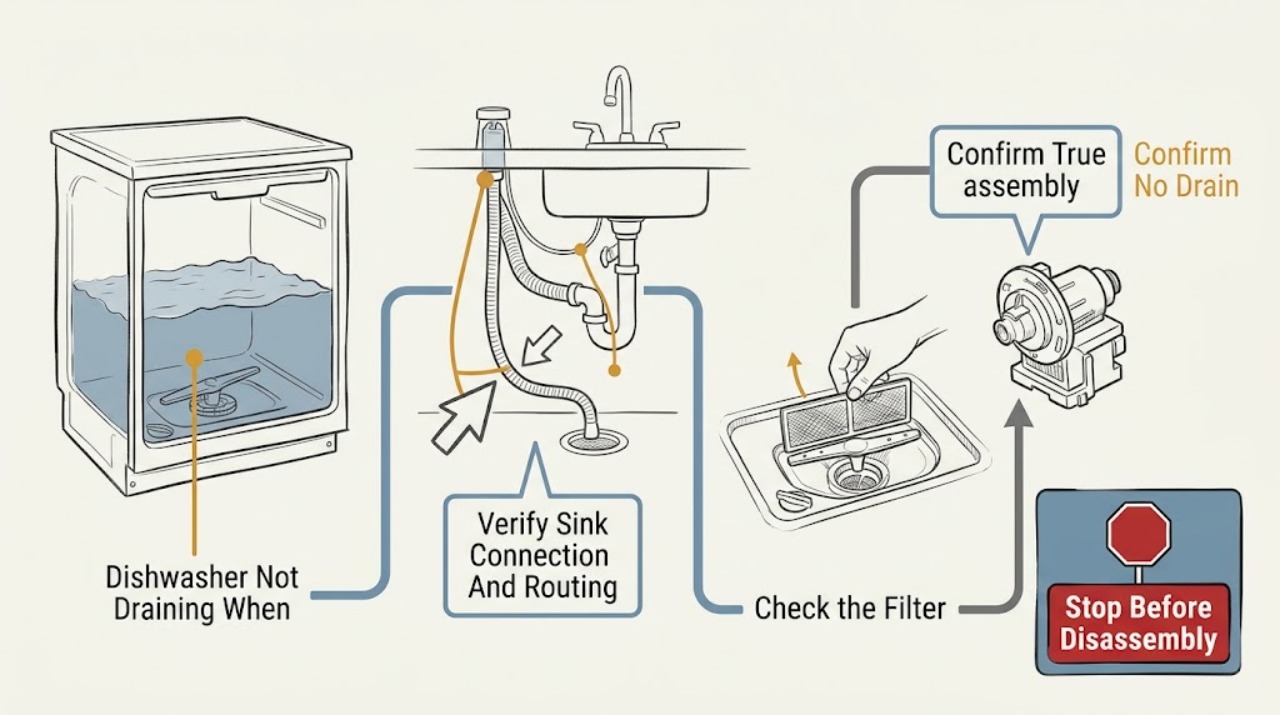
If the sink drains normally but the dishwasher leaves water in the tub, the blockage or failure is more likely in the dishwasher-specific path: its filter or drain area, drain hose, air gap or disposal connection, or drain pump. Turn the dishwasher off, record whether the water is above the filter and whether a drain error appears, then check the accessible sink connection and hose routing.
-
Dishwasher not draining: What to Check and What to Do Next
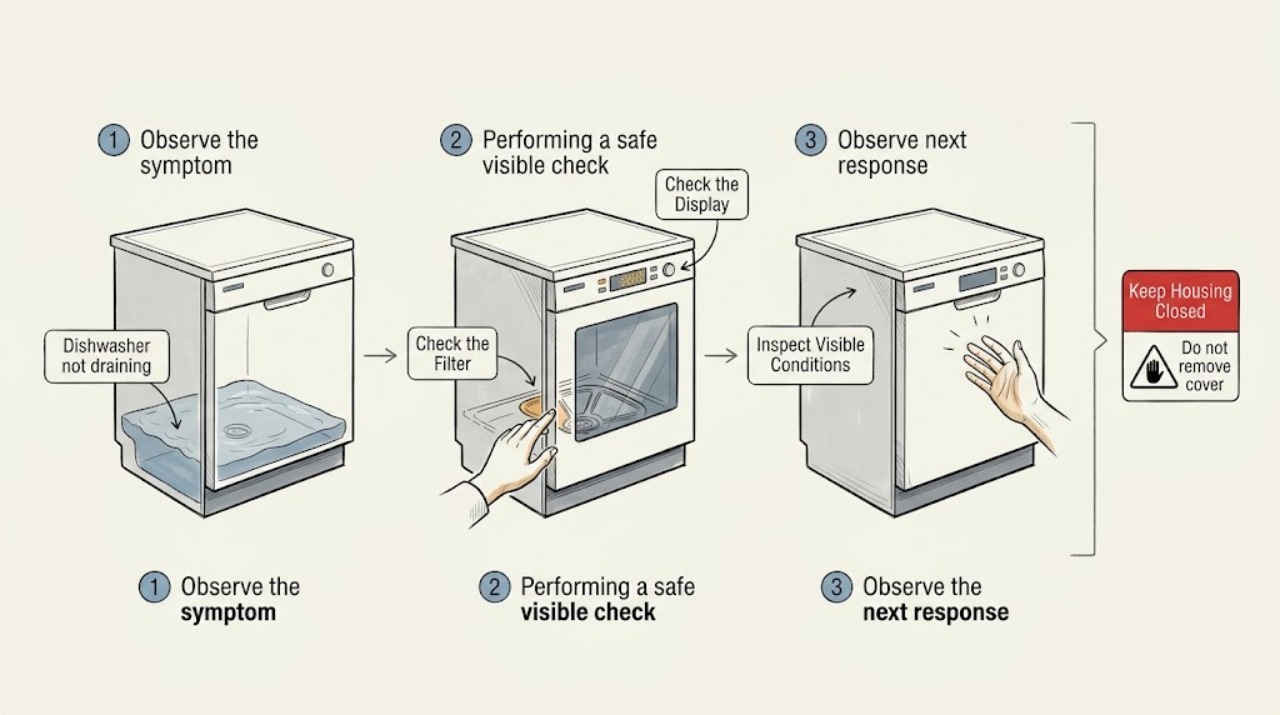
First distinguish a small amount of water in the filter or sump area from water covering the tub floor or reaching the door. Note whether the problem appears at the end of a cycle, after a cancellation, or after sink or disposal use, and record any displayed code or drain-pump sound.
-
Dishwasher not filling: What to Check and What to Do Next
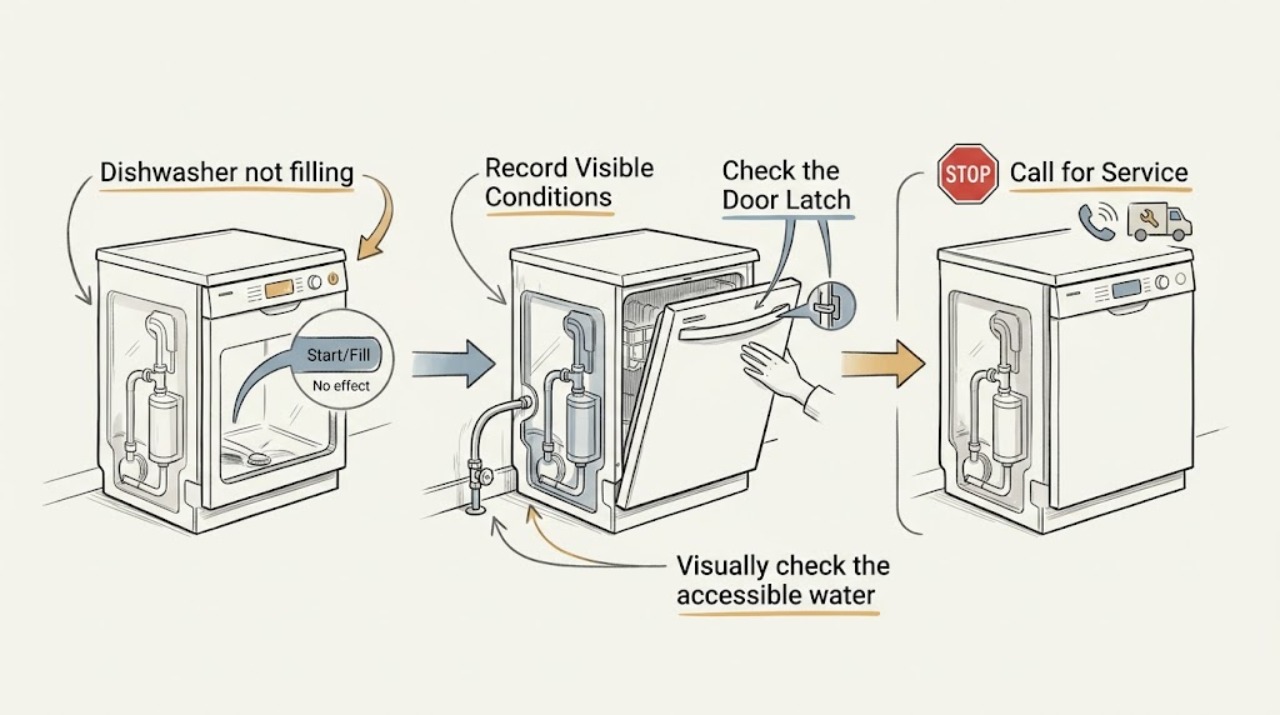
If a dishwasher runs without taking in water, first record the display or indicator state, confirm the door is fully latched without force, and visually check the accessible water-supply valve and hose for an obvious closed position, kink, or leak. A drain-hose routing issue can also make water siphon away, while a float, inlet valve, or door switch may require service.
-
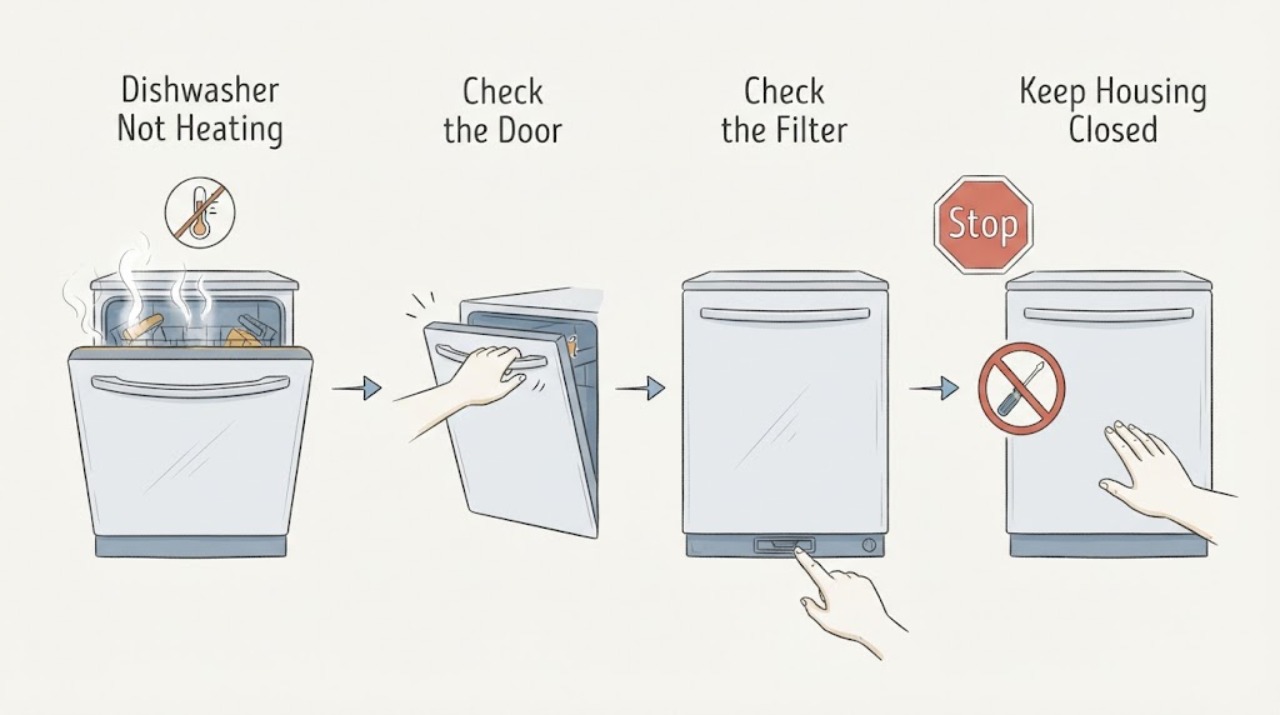
Dishwasher Not Heating
If a dishwasher is not heating, first confirm that the selected programme should heat and that the filters and sump are clear. Zanussi’s official support lists wrong programme selection, blocked filters/sump, excess foam, and a faulty heating element as distinct possibilities; a heating error code, when present, narrows the branch but remains model-specific.
-
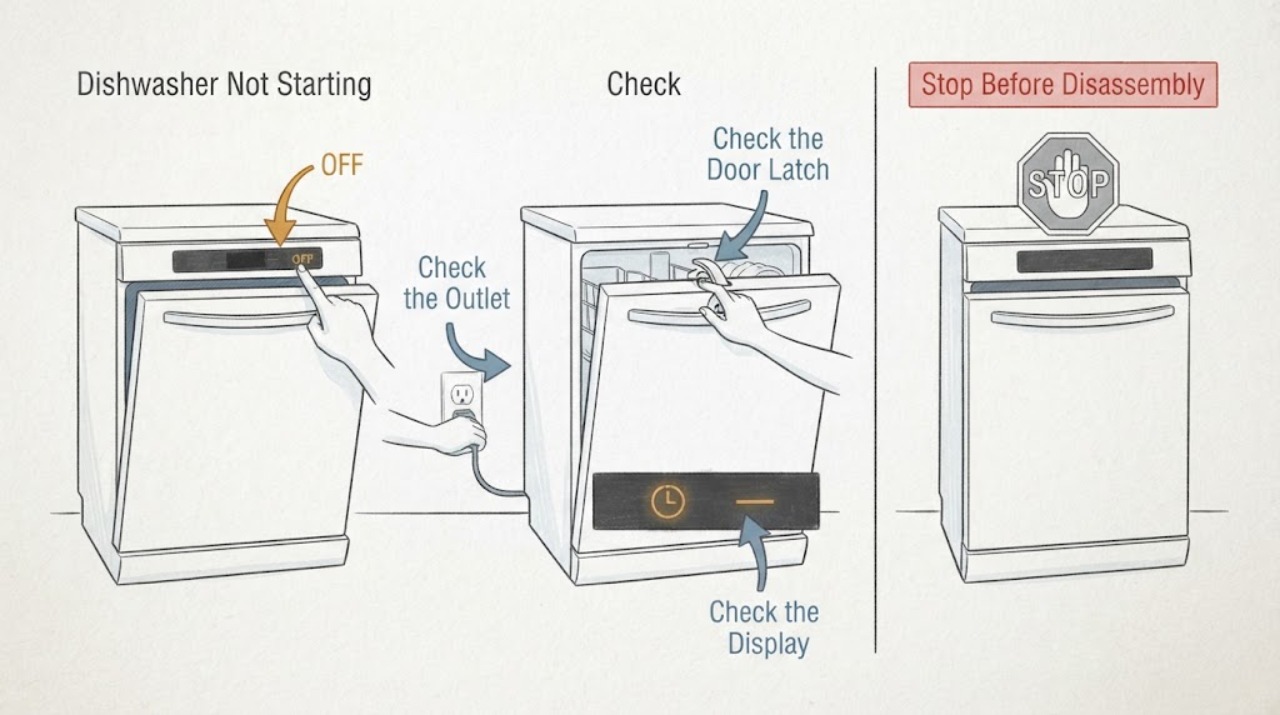
Dishwasher Not Starting
For a dishwasher that will not start, separate a dark display from a powered control panel. Check the outlet or breaker, confirm the door is fully latched and no rack or dish blocks it, clear a child lock or delayed cycle using the exact manual, and reset once if the model permits. A damaged latch, repeated no-start, water leak, or electrical issue needs qualified service.
-
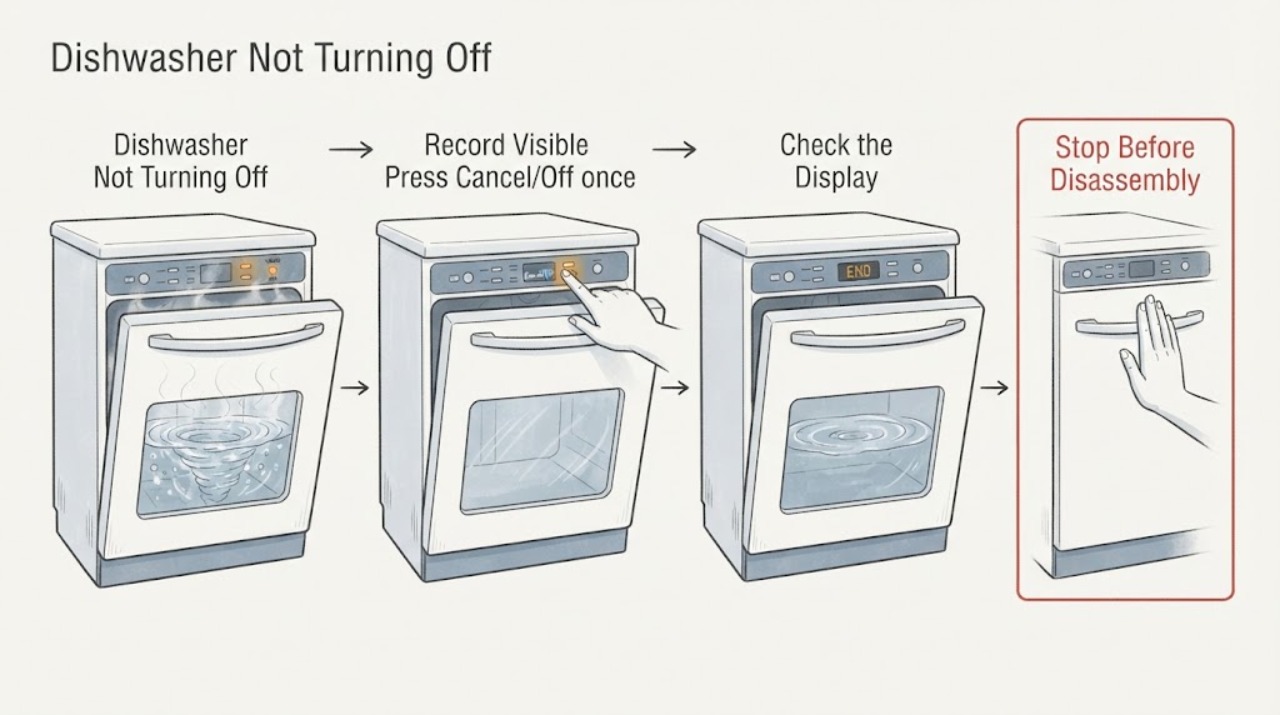
Dishwasher Not Turning Off
If a dishwasher will not turn off, press Cancel/Off once and record whether the pump, fan, or display remains active. Check delay, drain, water level, and door state using the exact manual. Do not repeatedly reset a leaking, hot, smoking, or electrically abnormal dishwasher.
-
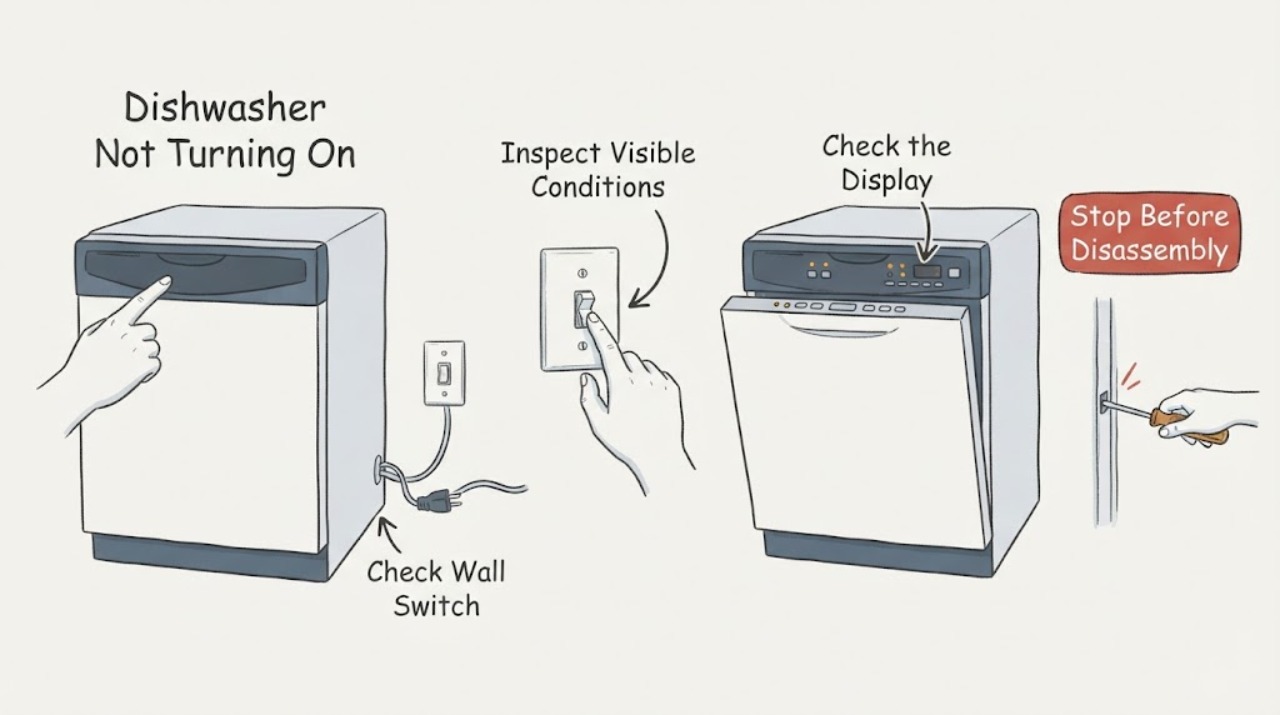
Dishwasher Not Turning On
Check a dishwasher from external power to panel and door interlock. Verify plug/switch from a dry position, check the breaker once, and use the model manual if the panel lights but a cycle will not start.
-
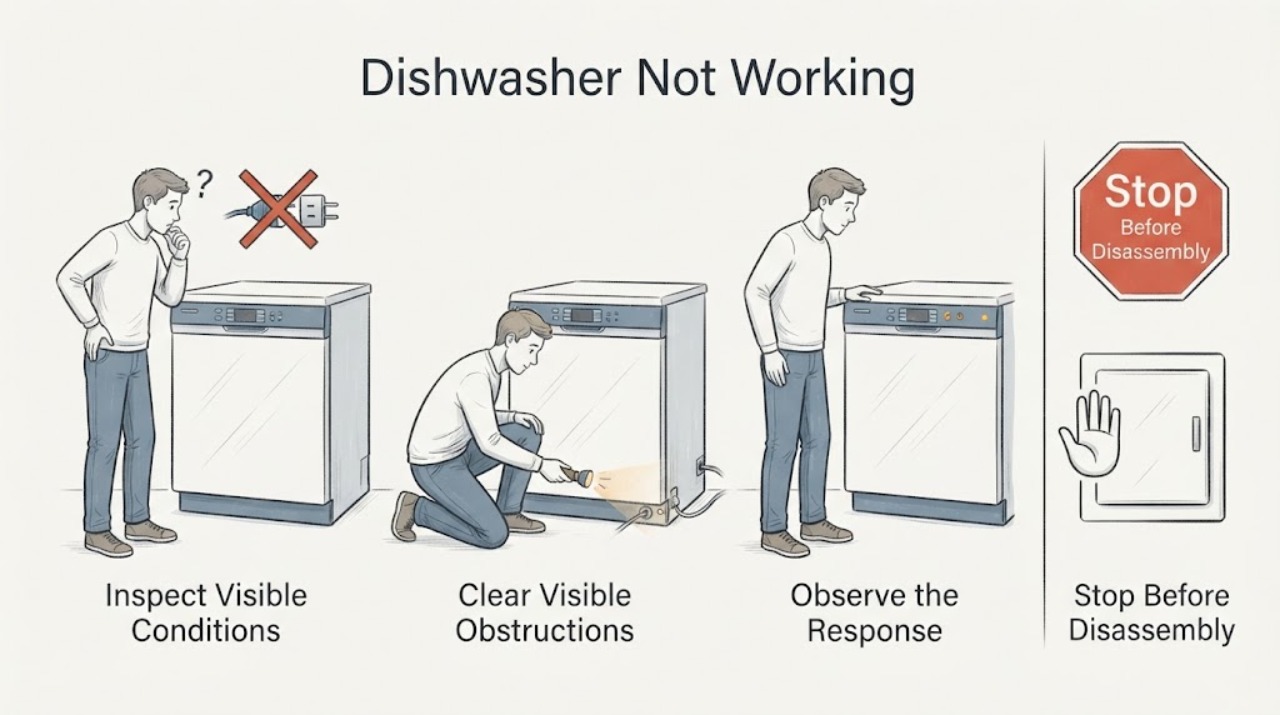
Dishwasher Not Working: Safe Checks
A dishwasher that is not working needs a quick split between no power, a control state that blocks start, a door or water-supply condition, and a cycle that starts but stops or leaves water. Check the breaker or plug, control lock or sleep mode, door latch, water tap and selected cycle in that order. Whirlpool’s guidance supports one safe reset and model-manual checks; persistent leaks, trips, or no-start after these checks need service.
-
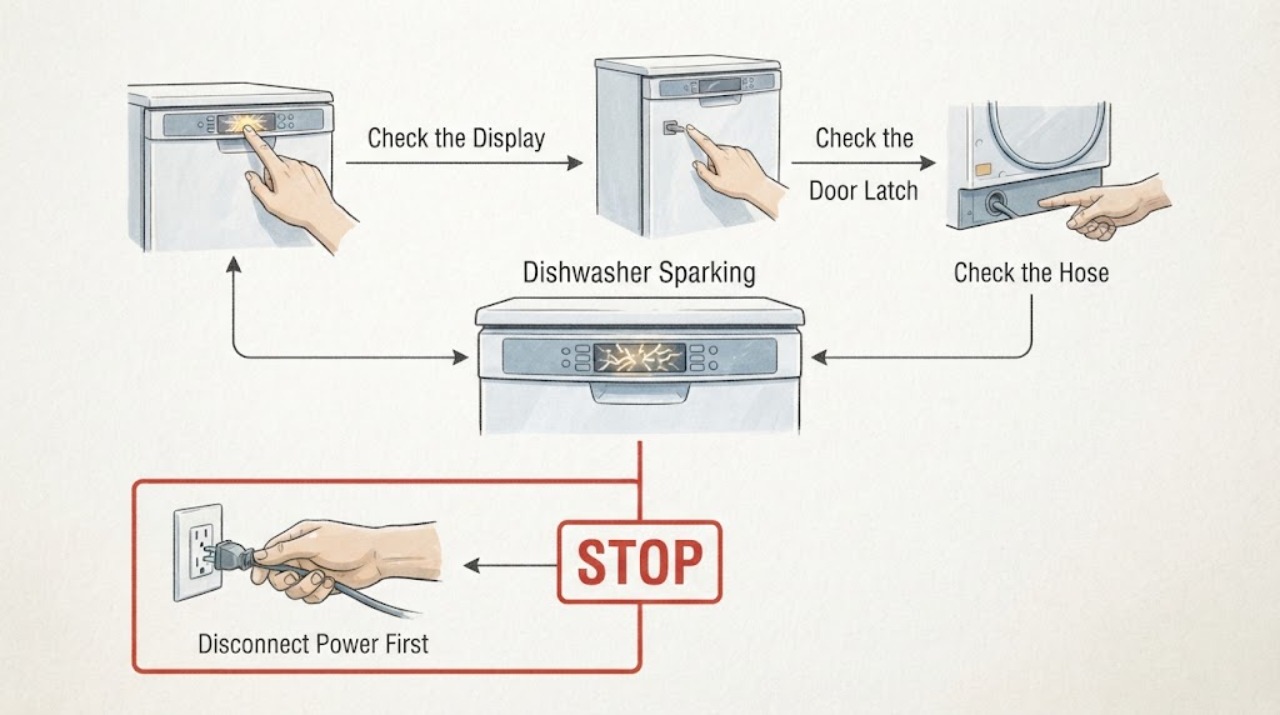
Dishwasher Sparking
To troubleshoot a dishwasher that is sparking, first identify the exact stage and accompanying signs, then make only the safe external checks supported by the owner guidance. Stop for hazards or recurrence and arrange qualified service.
-
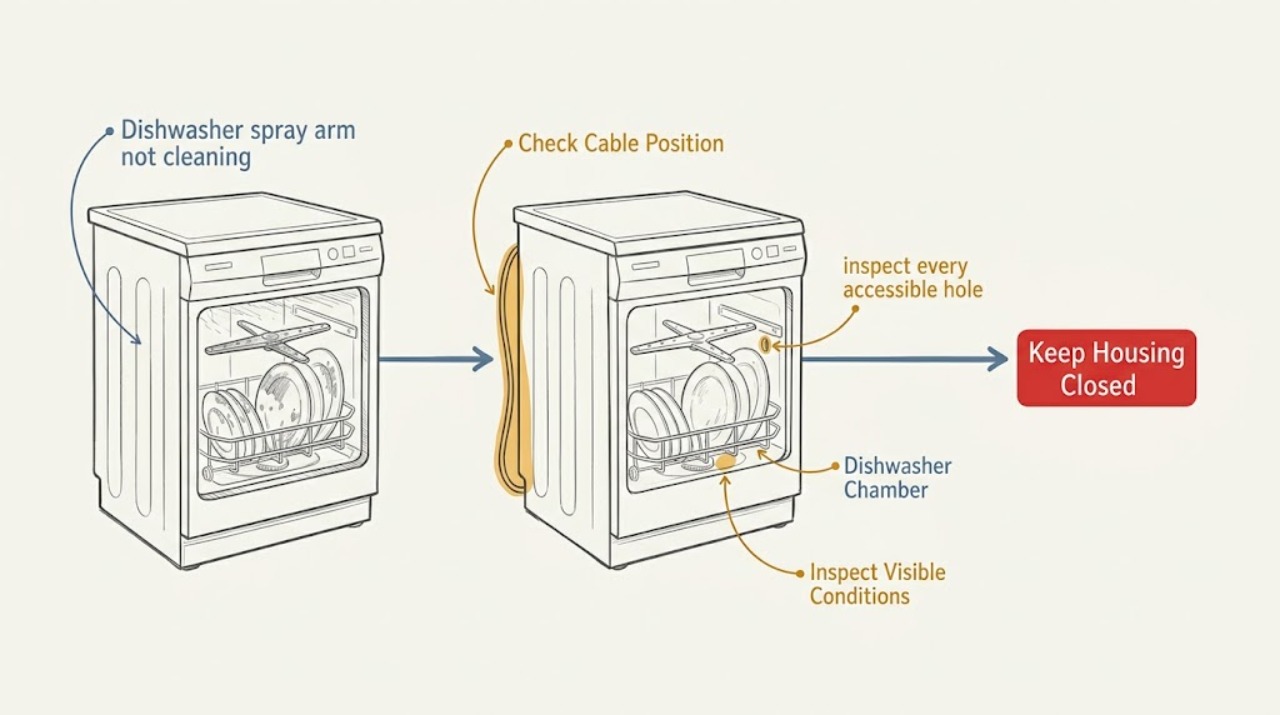
Dishwasher spray arm not cleaning dishes: What to Check and What to Do Next
If a dishwasher is not cleaning dishes, let it cool and isolate power with the model's safe instruction before reaching inside. Check the accessible spray-arm holes for food or mineral blockage, turn each arm gently by hand, and look for dish or rack interference.