
On this page
Start here
Quick answer
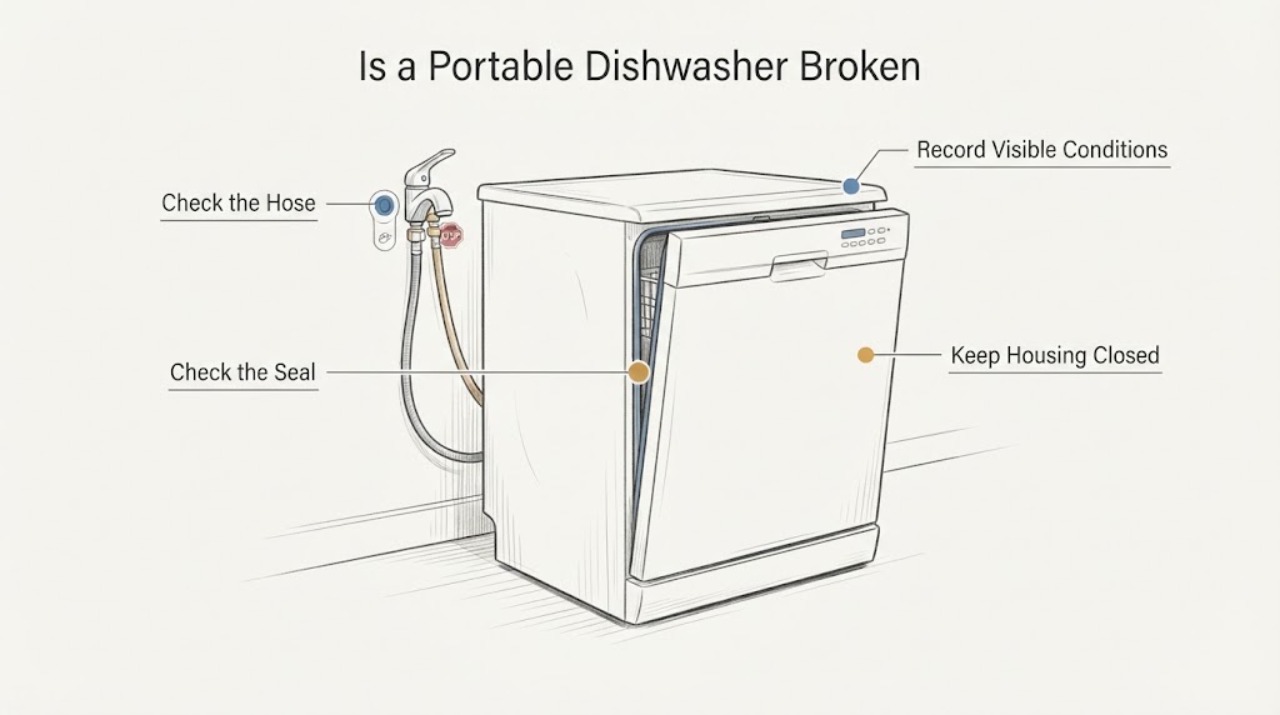
A portable dishwasher is normally connected only when it is being used, so a unit that is not connected to the sink is not, by that fact alone, broken. Whirlpool's portable-dishwasher guidance uses a faucet adapter and a hose connector for hot-water supply and drain discharge, followed by a grounded three-prong outlet. Identify the exact model, fit the correct faucet adapter, check that the connector locks without leaking, route the hoses without kinks, and then test one cycle. If the connector will not fit, leaks, or the dishwasher still will not fill or drain after a correct connection, stop and use the model manual or qualified service rather than guessing a failed part.
Work through in order
Diagnostic checks
Use only checks that match the exact appliance or system and its official guide.
-
Check 1
Confirm from the appliance label and manual that the unit is a portable or countertop-style dishwasher with a temporary faucet connection. Record the complete model number before buying or fitting an adapter.
Expected result: The unit has stored hoses or a faucet coupler and a matching portable-dishwasher manual, or it is actually a built-in dishwasher or the model cannot be identified.
Next step: Use the matching manual for the adapter and connection layout. If the unit is built-in or the identity is unclear, stop before connecting and obtain the exact installation instructions or service help.
Why this matters
Why: A portable unit can use a sink connection, while a built-in unit follows a different installation arrangement. A generic adapter cannot establish compatibility when the product identity is unresolved.
-
Check 2
With the faucet off, remove only the sink aerator as the model instructions allow and fit the supplied faucet adapter, gasket and aerator assembly. Move the dishwasher beside the sink, attach the coupler, and turn the faucet on briefly to check the fittings from outside.
Expected result: The adapter and coupler seat firmly without spraying or dripping, or the threads do not match, the coupler will not lock, or water leaks.
Next step: Turn the faucet off immediately for a leak or poor fit. Recheck only the model-specific adapter and gasket instructions; do not force the threads or continue a cycle with a leaking connection.
Why this matters
Why: A secure, dry fit supports a completed faucet connection. A mismatch or leak means the installation is unresolved; it does not identify a bad dishwasher component.
-
Check 3
Run the faucet until the water is hot, turn it off, pull out the stored hoses, pull down the locking collar, lift the hose connector onto the faucet adapter until it snaps, release the collar, and slowly open the hot water as the Whirlpool instructions describe.
Expected result: The connector snaps and stays in place with no leak, or it will not snap, releases, sprays, or leaves the hose visibly twisted.
Next step: Turn water off and correct only the visible, model-supported connection or hose routing. If it still cannot latch or leaks, keep the dishwasher unused and ask the manufacturer or a qualified technician to identify the correct connection.
Why this matters
Why: A latched connector supplies the temporary water path. A connector that will not latch or a kinked hose can prevent filling or cause a leak, but the result does not prove an internal failure.
-
Check 4
Place the drain hose so its discharge goes into the sink as designed, keep both hoses free of kinks or twists, and plug the dishwasher into a grounded three-prong outlet. Select a normal cycle and observe from outside for initial fill, draining into the sink, leaks or an electrical symptom.
Expected result: The unit fills and drains with no leak, or it remains unresponsive, does not fill/drain, trips the outlet, leaks, or shows a model-specific fault.
Next step: Stop the cycle for a leak, tripped protection or abnormal electrical symptom. For a persistent non-fill, non-drain or fault indication, record the model and symptom and use the exact manual or qualified service; do not open the base.
Why this matters
Why: Successful fill and drain after connection supports an installation issue rather than a broken appliance. A persistent symptom after a correct connection needs model-specific diagnosis; the observation alone does not identify a pump, valve or control-board failure.
-
Check 5
When finished, turn off the hot water, release pressure with the connector button, disconnect the coupler as instructed, empty residual water from the connector, unplug the power cord, and return the hoses to storage.
Expected result: The connector releases without force and no water remains uncontrolled, or it stays pressurized, cannot release, or leaks while disconnecting.
Next step: Keep the faucet off and stop if pressure will not release or water escapes. Follow the exact manual or arrange qualified service; do not cut, pry or modify the coupler.
Why this matters
Why: Whirlpool's disconnect sequence limits residual water and prevents the hose from being pulled off under pressure. A stuck or leaking connector is a service/installation problem, not a reason to pry it apart.
Use your observations
Decision map
Find the observation that best matches what you see, then follow the next safe action.
-
PATH 01Next step
What you see
The dishwasher is portable, but the faucet adapter and hose connector have not been fitted yet.
Do this next
Find the exact model manual and install the supplied adapter, then connect the coupler and hoses using the model's instructions.
Why this path and its safety boundary
Why it matters: The appliance is not ready to draw or discharge water; this is an incomplete installation state rather than evidence that it is broken.
-
PATH 02Next step
What you see
The coupler will not lock to the adapter, the faucet threads do not match, or water leaks at the fitting.
Do this next
Turn off the faucet, stop the test, and verify the exact adapter, gasket and model instructions or obtain qualified plumbing/appliance help.
Why this path and its safety boundary
Why it matters: The water connection is not safely established. Repeatedly starting the dishwasher could cause a leak and still would not diagnose an internal part.
-
PATH 03Next step
What you see
The connector is secure, hoses are routed correctly and the unit has grounded power, but it still will not fill, drain or run.
Do this next
Stop repeated cycles, record the complete model number and any display behavior, and use the model manual or qualified service for diagnosis.
Why this path and its safety boundary
Why it matters: The installation checks did not resolve the symptom. The available general portable guidance does not identify a specific failed valve, pump, motor or control from this result.
-
PATH 04Next step
What you see
There is a leak, spraying water, a tripped outlet, exposed wiring, burning odor or a connector that cannot be released safely.
Do this next
Stop the dishwasher, turn off the faucet and power from a safe position, keep the area clear, and arrange qualified service. Do not open the cabinet or bypass a safety device.
Why this path and its safety boundary
Why it matters: The situation has crossed the user-level installation check and presents water or electrical risk.
Helpful context
Understand the symptom
The wording “not connected” describes how a portable dishwasher is set up, not a confirmed internal fault. Whirlpool explains that portable units move near the sink for use and connect through the faucet rather than a permanent plumbing connection. The exact model manual still controls the adapter and connector details.
Keep the checks external: faucet adapter, hose connector, visible hoses, sink discharge and the grounded outlet. Stop for a leak, damaged connector, exposed wiring or a persistent fill/drain problem. Do not open the cabinet or order a valve, pump or control part from a unit that has not first been correctly connected.
Common questions
FAQ
Does a portable dishwasher being disconnected mean it is broken?
No. Portable dishwashers are designed to be moved beside a sink and connected when used. Confirm the faucet adapter, locking coupler, hoses and grounded outlet before treating a persistent symptom as a fault.
Can I run it without connecting the faucet hose?
Do not start a wash cycle without the model-approved water and drain connection. The portable setup uses the faucet connection to bring in hot water and discharge used water to the sink.
What if the portable dishwasher connector does not fit my faucet?
Turn the water off and use the exact model instructions to identify the supplied adapter, gasket and thread arrangement. Do not force mismatched threads or continue with a leaking fitting; obtain manufacturer or qualified plumbing help if compatibility remains unresolved.
What should I report if it still does not work after connection?
Report the complete model number, whether the connector latched dry, whether the hoses were kinked, whether the unit filled and drained, any leak or outlet trip, and any displayed code. That evidence is more useful than calling a pump or valve bad from the symptom alone.
Read the exact guide
Official sources
- How does a portable dishwasher work?Whirlpool · Opened the official Whirlpool article. It describes the portable unit's temporary sink connection and notes that exact connection instructions vary by model; it supports the family-level explanation and external hose observations, not an internal failure diagnosis.
- Installing a Portable DishwasherWhirlpool Product Help · Opened the official Whirlpool Product Help page. It is a general portable-dishwasher installation guide and says to consult the owner's manual for model-specific instructions; it supports only the external faucet, hose, power and disconnect checks used here.
Community feedback
Share a repair observation
Share a plain-text repair observation. Accepted observations are published automatically; this page may take a moment to update.