
On this page
Start here
Quick answer
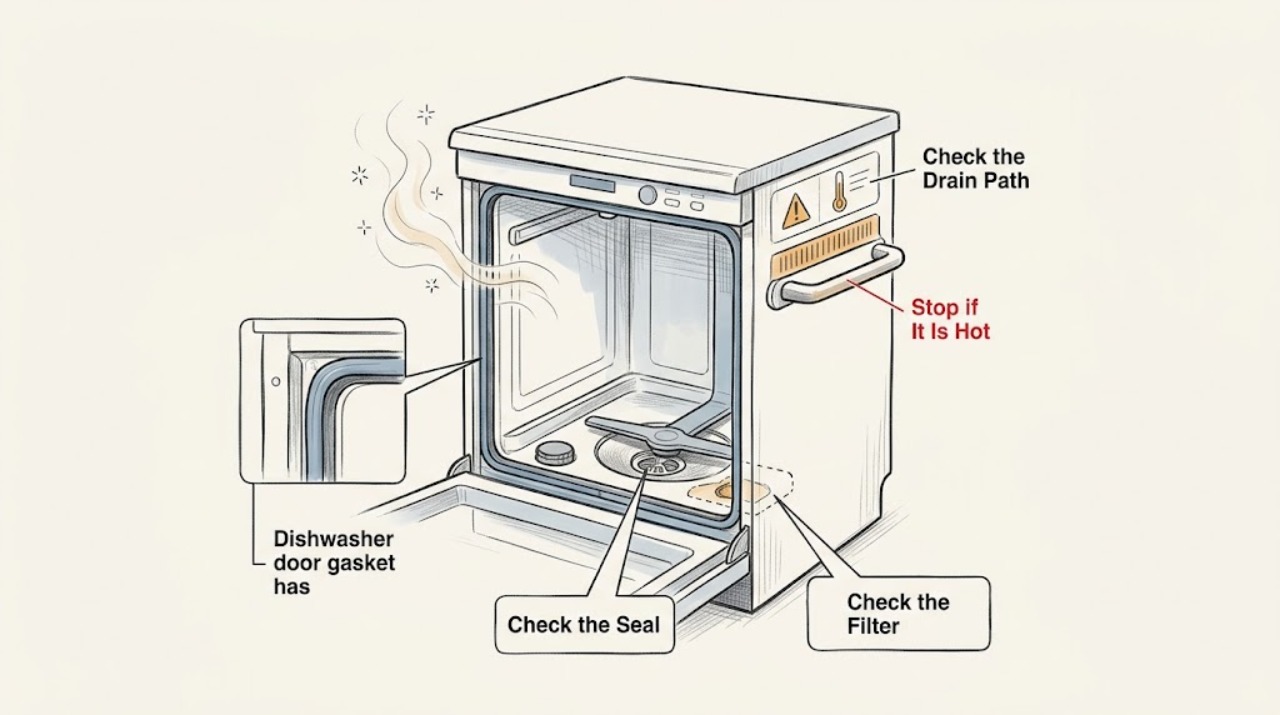
If a Bosch dishwasher door gasket smells bad, first identify whether the odor is strongest on the gasket or instead comes from the filter, sump, spray arms, drain path, or a hot or electrical area. With the dishwasher off and cool, wipe the accessible door gasket and seal with a damp cloth to remove food particles and residue; do not pull the seal out or use chlorine, abrasive cleaners, or mixed chemicals. Clean the filter only by the exact model manual, and check for standing water or food debris at the bottom. If the odor is sewage-like with poor drainage, or the gasket is torn, loose, or leaking, arrange service after safe checks. Stop using the dishwasher for smoke, burning or electrical odor, a hot cord, damaged wiring, chemical vapor, or water near electrics.
Work through in order
Diagnostic checks
Use only checks that match the exact appliance or system and its official guide.
-
Check 1
Turn the dishwasher off, allow it to cool, and inspect from a safe position whether the odor is strongest on the door gasket, at the lower tub and filter, at the spray arms, near the drain connection, or around the cord and controls. Look for smoke, burning or electrical odor, chemical vapor, a hot cord, water near electrics, or visible leakage.
Expected result: The odor is localized at the gasket, strongest at the tub bottom or filter, comes with standing water, or has a hot, electrical, chemical, smoke, or leak symptom.
Next step: For smoke, burning or electrical odor, chemical vapor, a hot cord, or water near electrics, stop using the dishwasher, keep clear, and arrange qualified or emergency help. Otherwise continue only with cool, accessible observations.
Why this matters
Why: A localized gasket odor supports accessible food soil or moisture. A bottom-of-tub or standing-water odor shifts toward filter or drainage. Heat, smoke, electrical, chemical, or wet-electrical symptoms are stop-use conditions.
-
Check 2
With the dishwasher cool and disconnected from its normal operation, wipe the accessible door gasket and seal with a damp, soft cloth, concentrating on folds, the lower corners, and the inner door edge. Remove only loose food particles; do not pull the gasket out, puncture it, or scrub with an abrasive pad.
Expected result: Food particles, grease, slime, detergent film, or trapped moisture are present; the gasket is torn, loose, hardened, or visibly deformed; or the gasket is clean and intact.
Next step: Use only the model-approved damp-cloth or cleaning procedure and allow the seal to dry. Arrange service for a damaged or leaking gasket, or when the odor returns despite a clean seal; do not remove the gasket as a first troubleshooting step.
Why this matters
Why: Accessible soil or moisture can explain an odor concentrated at the gasket. Damage or deformation can retain soil and may also cause a leak. A clean, intact gasket makes the filter, sump, spray arms, or drain path more likely.
-
Check 3
Inspect the lower tub for standing water, food debris, or residue around the filter. If the exact Bosch manual permits owner filter access, disconnect power first and remove and clean the filter only as described; keep fingers away from sharp debris and do not reach into a pump opening.
Expected result: The filter is coated with food soil, the tub holds water, the filter is damaged or will not seat, or the filter and tub bottom are clean and drain normally.
Next step: Clean and reinstall the filter only under the matching manual procedure. Stop for standing water that will not clear, a damaged filter, a blocked pump area, or any need for deeper access, and arrange qualified service.
Why this matters
Why: Bosch identifies food debris in the filter as an odor source and says the filter protects the pump. Standing water or a filter that cannot be safely seated points toward a drain or pump path; a clean filter shifts attention back to the gasket, spray arms, or interior care.
-
Check 4
Check the visible spray arms for food debris or blocked holes and inspect the tub and underside of the door for residue. Remove or rinse a spray arm only by the exact model instructions; do not poke debris deeper into a passage or use a sharp tool against the gasket.
Expected result: Spray-arm openings are blocked, food soil remains on the interior, the dishwasher is not cleaning well, or the arms and interior are clear.
Next step: Clean the accessible spray-arm parts and interior only as the manual permits, then reassess after a model-authorized care cycle. Arrange service for a blocked passage that cannot be cleared safely or an odor that persists.
Why this matters
Why: Blocked spray arms or interior deposits can leave food residue that contributes to odor even when the door gasket is clean. A clear interior with a recurring odor makes drainage, hidden soil, or a service issue more likely.
-
Check 5
When the gasket, filter, spray arms, and tub have no hazard and no standing-water problem, consult the exact Bosch manual for a dishwasher-care or empty cleaning cycle and use only products approved for that model. After use, leave the door slightly ajar when the manual allows so the interior can dry.
Expected result: The odor clears after model-authorized care, returns from the gasket, returns with standing water, or is unchanged even though accessible surfaces and the filter are clean.
Next step: Do not mix cleaners or substitute chlorine, abrasive, or unapproved products. Keep the dishwasher off and arrange service for a recurring odor, drainage symptom, damaged gasket, or any internal diagnosis.
Why this matters
Why: An odor that clears after removing food deposits and drying supports a maintenance cause. A recurring gasket odor may involve seal damage or retained soil; an odor with water points to drainage; an unchanged odor requires service diagnosis.
-
Check 6
Record the dishwasher's complete model, whether the odor is at the door gasket or elsewhere, filter and standing-water result, spray-arm condition, cleaning product used, and whether the odor returns. Do not disassemble the door or cabinet to identify the source.
Expected result: The gasket is torn or leaking, the odor persists after safe care, the dishwasher drains poorly, or the source cannot be reached without disassembly.
Next step: Leave the dishwasher out of service for a leak, standing water, hazardous odor, or recurring unexplained smell and provide the recorded pattern to qualified service. Do not order a gasket or filter without confirming the complete model and failure point.
Why this matters
Why: A damaged gasket or persistent odor after the Bosch care path needs model-specific diagnosis. A drainage-related odor can require a hose, filter, pump, or plumbing assessment; smell alone cannot identify a replacement part.
Use your observations
Decision map
Find the observation that best matches what you see, then follow the next safe action.
-
PATH 01Next step
What you see
Do this next
Wipe the seal with a damp soft cloth under the model guidance, let it dry, and reassess once. Arrange service if the gasket is damaged or the smell returns from a clean seal.
-
PATH 02Next step
What you see
Do this next
Disconnect power before model-authorized filter access and clean or reseat it only as directed. Stop for retained water, a blocked pump area, or recurring drainage and arrange service.
-
PATH 03Next step
What you see
Do this next
Clean accessible spray-arm and interior surfaces under the exact Bosch manual, then use a model-authorized care cycle. Arrange service if passages cannot be safely cleared or odor persists.
-
PATH 04Next step
What you see
Do this next
Stop using the dishwasher, keep clear, do not mix or add cleaners, and isolate power only from a safe dry location. Arrange qualified or emergency help as appropriate.
-
PATH 05Next step
What you see
Do this next
Keep the dishwasher out of service if it leaks or retains water and arrange model-specific qualified service. Do not pry out the gasket, open the sump, or order a part without confirming the model and diagnosis.
Helpful context
Understand the symptom
Confirm the odor is actually at the door gasket
A gasket can hold food soil or moisture, but an odor noticed when opening the door may originate deeper in the tub or filter. Smell and inspect from a safe position after the dishwasher is cool. Compare the gasket folds and lower seal with the filter area and any standing water; the strongest location determines the next check.
Clean the seal without damaging it
Bosch manual guidance calls for regular damp-cloth cleaning of door seals. Use a soft cloth and the model's approved cleaner only, and do not pull, puncture, scrape, or replace the gasket without model-specific information. A damaged seal can both retain soil and allow leakage.
Treat standing water and chemical odors differently
Food residue and a dirty filter suggest a maintenance path, while standing water or a sewage-like odor points toward drainage. A chlorine, solvent, hot-plastic, or electrical odor is not a cleaning diagnosis. Do not mix cleaners, use chlorine products where the manual prohibits them, or run another cycle to mask a hazardous smell.
Only after diagnosis
Potential parts
- dishwasher filter
Consider this only if model-specific inspection finds a damaged or unserviceable filter after food debris, standing water, and correct filter seating have been confirmed.
Filter design and access vary by Bosch model. Confirm the complete model and manufacturer's fit information before ordering. - dishwasher door gasket
Consider this only when the door gasket is torn, deformed, leaking, or remains the confirmed odor source after safe cleaning.
Gasket profile and installation vary by model. Confirm the complete Bosch model and manufacturer's fit information before ordering. - dishwasher drain hose
Consider this only when qualified diagnosis confirms a damaged or restricted appliance drain hose after the filter and household drain path have been separated.
Hose routing and connections vary by model and installation. Confirm the complete Bosch model and service diagnosis before ordering.
When checks do not resolve it
Need a professional?
Arrange qualified service for a torn or leaking door gasket, recurring odor after safe cleaning, standing water, poor drainage, a blocked or inaccessible filter or pump area, or any need to open the door assembly or cabinet. Treat smoke, chemical vapor, burning odor, hot cord, or wet electrical connections as immediate stop-use conditions.
Common questions
FAQ
Why does my Bosch dishwasher door gasket smell bad?
Food particles, grease, detergent film, or moisture may be trapped on the accessible seal. Wipe it with a damp soft cloth under the model guidance, and arrange service if the gasket is damaged or the odor returns from a clean seal.
Could the dishwasher filter be causing the smell instead of the gasket?
Yes. Bosch identifies food debris in the bottom filter as a common odor source. Compare the odor location, then clean the filter only under the exact manual and with power disconnected before access.
How should I clean a Bosch dishwasher door gasket?
When the appliance is cool and off, wipe the accessible gasket and seal with a damp, soft cloth to remove food particles and residue. Do not pull out the gasket, use abrasives, or use a product the manual does not approve.
Should I use bleach to remove a Bosch dishwasher gasket odor?
Do not improvise with chlorine or mixed cleaners. Bosch manual guidance says to use suitable cleaning agents, and the model's instructions control which dishwasher-care product is appropriate.
Why does the Bosch dishwasher smell like sewage?
If the odor is strongest near standing water, the filter, or the drain path, drainage or retained food debris is more likely than the door gasket. Stop for persistent standing water or poor drainage and arrange service.
Can a damaged Bosch dishwasher door gasket cause an odor and a leak?
A torn, loose, or deformed gasket can retain soil and may also allow leakage. Do not pry it out or guess at a replacement; document the model and arrange model-specific service.
Should I leave my Bosch dishwasher door open after cleaning?
Bosch manual guidance says to leave the door slightly ajar when the appliance is not going to be used for a while to help prevent unpleasant odors, provided this is safe in your space.
When should a smelly Bosch dishwasher door gasket be serviced?
Arrange service for a torn or leaking gasket, persistent odor after safe gasket and filter care, standing water, poor drainage, or any internal access. Stop immediately for smoke, burning or electrical odor, chemical vapor, a hot cord, or water near electrics.
Read the exact guide
Official sources
- How to Clean a Smelly Dishwasher | What Causes The Bad Smell?Bosch · Bosch dishwasher odor causes, filter cleaning, spray-arm checks, and care guidance
- How to Properly Clean Your Dishwasher FilterBosch · Bosch dishwasher filter location, removal reference, cleaning, and pump-protection purpose
- Use and Care Manual SGX78B55UCBosch · Bosch dishwasher manual guidance for door seals, cleaning products, odor prevention, machine care, and safety
Community feedback
Share a repair observation
Share a plain-text repair observation. Accepted observations are published automatically; this page may take a moment to update.