
On this page
Start here
Quick answer
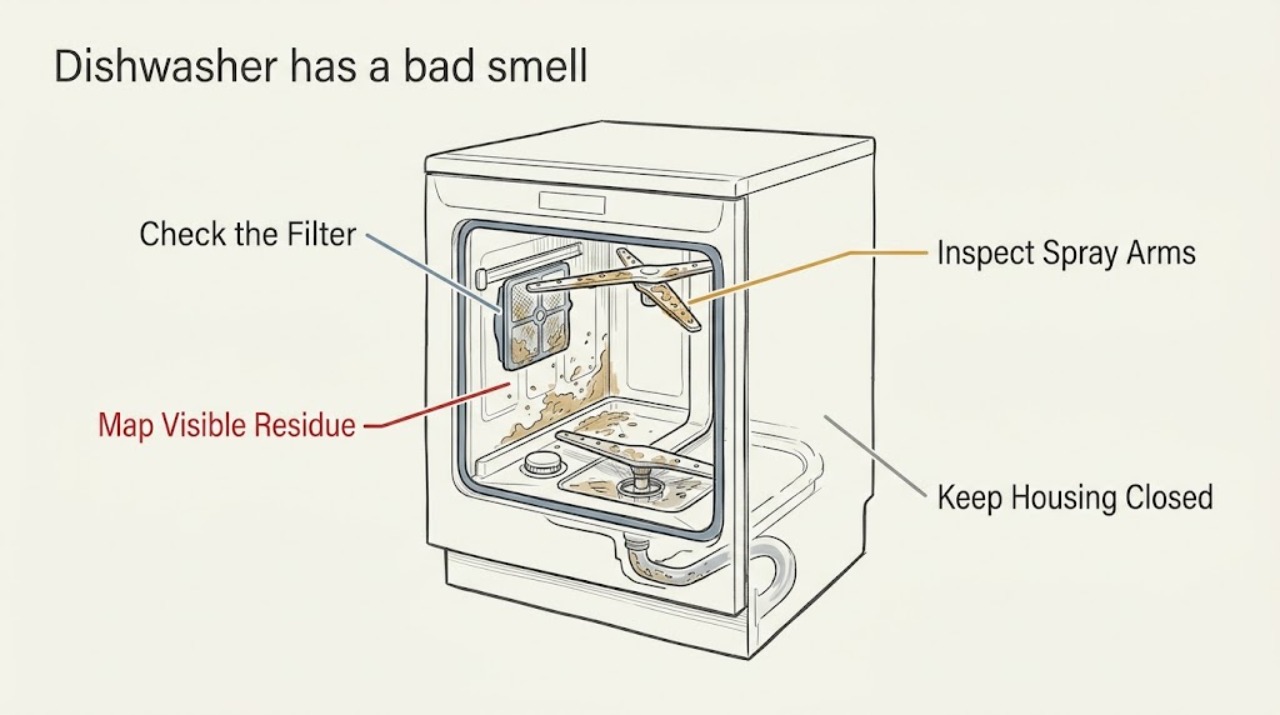
When a dishwasher smells bad and food residue is visible, start with the residue rather than masking the odor. Empty the racks, remove only loose food from the tub bottom, then inspect the filter, sump or pump-inlet area, spray-arm openings, door seal, and drain path according to the exact model instructions. Rinse a removable filter with warm water and a soft brush, reinstall it fully locked, and never run the dishwasher without its required filters. Check whether dirty water remains after a cycle and whether spray arms are blocked. Use only one manufacturer-approved dishwasher cleaner method at a time; never mix cleaners. If food returns after the filter and spray path are clean, standing water remains, the drain hose lacks the required installation loop or air gap, or the odor is burning, chemical, or electrical, stop and arrange qualified appliance or plumbing service.
Before you begin
Safety first
- This article supports emptying the racks, removing loose accessible food, model-approved filter and spray-arm care, wiping accessible seals, and one approved maintenance-cleaning method. Do not probe pumps, use drain chemicals, mix cleaners, open panels, touch hot elements, or alter drainage or wiring.
Work through in order
Diagnostic checks
Use only checks that match the exact appliance or system and its official guide.
-
Check 1
Empty the dishwasher and, with the appliance off and cool, inspect the tub bottom, filter area, sump opening, spray arms, rack undersides, and door seal. Remove only loose food particles that are easy to reach without tools or deep probing.
Expected result: Residue is concentrated on the filter, at the tub or sump bottom, in spray-arm openings, on the door seal, or spread across dishes and the interior; dirty water is also visible or not.
Next step: Photograph the pattern and continue with the matching filter, spray, seal, or drain check; do not run another cycle with loose food blocking the filter area.
Stop if: Stop for broken glass, sharp metal, exposed wiring, hot water, chemical residue, or debris that cannot be removed without reaching into a pump or disassembling the appliance.
Why this matters
Why: Filter or sump residue points toward filtration or drainage. Blocked spray openings point toward circulation. Seal or interior residue supports a cleaning issue. Widespread soil or standing dirty water suggests that the dishwasher is not washing or draining effectively rather than having odor alone.
-
Check 2
Use the exact model manual to remove the dishwasher filter, rinse it under warm running water, and gently brush stuck food with a soft brush. Inspect the mesh and locking surfaces, then reinstall every filter until it is fully seated and locked.
Expected result: The filter is visibly dirty, damaged, missing, loose, or clean and correctly locked; food residue is also present below it or not.
Next step: Run the next normal cycle only after the filter is correctly installed. Compare the tub bottom, dish soil, and odor afterward; if the model has a non-removable maintenance-free filter, follow its manual instead of forcing removal.
Stop if: Do not use a wire brush, scouring pad, knife, chemical drain opener, or the dishwasher without the required filter assembly installed.
Why this matters
Why: A dirty, damaged, missing, or loose filter can let food recirculate, restrict flow, and contribute to odor. A clean, intact, locked filter with residue below it keeps the sump, pump inlet, spray coverage, and drain path in consideration.
-
Check 3
With the racks out and the dishwasher off, inspect the spray-arm jets and confirm that the arms can move as the model manual describes. Clear only accessible food debris with the approved gentle method; do not force an arm or enlarge a jet.
Expected result: One or more jets are blocked, an arm is obstructed by a dish or rack item, the arms appear damaged, or the spray path is clear.
Next step: Correct the loading obstruction and clean only according to the model instructions, then run a normal cycle and inspect whether food returns. Request service for a cracked arm, poor rotation, or persistent residue with clear jets.
Stop if: Do not use metal tools that can damage jets, remove a spray arm without the manual procedure, or reach into the pump while looking for a blockage.
Why this matters
Why: Blocked jets or loading that prevents arm movement can leave visible food on dishes and in the tub, allowing odor to persist. Clear spray paths with a clean filter make drainage, detergent, water temperature, or circulation faults more likely.
-
Check 4
After a completed cycle and once the interior is safe to inspect, note whether dirty water or food remains in the bottom. From accessible areas, look for an obstruction at the filter or drain opening and, if visible, check whether the drain hose installation has the model-required high loop or air gap.
Expected result: The bottom is clear, a small normal amount of water remains in the filter area, dirty water or food remains across the tub, the filter area is blocked, or the drain-hose arrangement is missing or unclear.
Next step: Remove only loose visible debris from the accessible filter area and follow the model drain guidance. If water remains across the tub, the hose arrangement is wrong or unknown, or the issue returns, stop and arrange appliance or plumbing service.
Stop if: Do not use drain-opening chemicals, probe a hidden pump, disconnect a drain hose, or alter the drain installation without the exact instructions and proper water containment.
Why this matters
Why: Food and dirty water across the tub support a drainage or pump-inlet problem. A blocked filter can restrict drainage. An incorrect or unclear drain-hose installation can allow dirty water to return, so this is an installation or plumbing question rather than a deodorizing step.
-
Check 5
Wipe the door seal, lower door edge, tub corners, and accessible interior surfaces with a soft cloth and the model-approved mild cleaning method. If the manual permits, run one maintenance cycle with one approved dishwasher cleaner method and no dishes.
Expected result: Grease or food soil is removed and the odor improves, the seal is torn or remains dirty in a hidden section, the odor remains with a clean interior, or a chemical or burning smell appears.
Next step: Use only the single approved cleaning method and observe the next cycle. Replace a damaged seal only with model-confirmed parts, and arrange service for persistent odor or a non-food smell.
Stop if: Never mix cleaners, use concentrated chemicals or abrasives, run an unapproved cleaning product, or continue operating for smoke, burning odor, or electrical smell.
Why this matters
Why: Improvement supports surface residue as a contributor. A damaged seal can retain soil or leak. Persistent odor after the visible residue path is clean points toward hidden drainage, filter, pump, ventilation, or material issues. A chemical or burning smell is not a food-residue problem.
-
Check 6
Record the dishwasher model, residue locations, filter and spray-arm condition, bottom-water result, drain-hose arrangement, cleaning method, and before-and-after odor or dish-soil result.
Expected result: The odor and visible food residue clear after correct filter, spray, drain, and interior care, or food and odor return despite those checks.
Next step: Continue the model's routine filter and cleaning schedule when resolved. If residue returns, drainage is poor, or the model procedure is unavailable, give the record to a qualified appliance technician or plumber.
Stop if: Do not order a pump, filter, spray arm, drain hose, or seal by appearance alone, and do not open panels or bypass safety interlocks to find the source.
Why this matters
Why: A successful result supports trapped residue and maintenance as the cause. Recurring residue means filtration, circulation, drainage, loading, water delivery, or an internal component still needs diagnosis; the smell alone cannot identify a pump or drain part.
Use your observations
Decision map
Find the observation that best matches what you see, then follow the next safe action.
-
PATH 01Safety boundary
What you see
Food residue is concentrated on a dirty or loose filter or around the accessible sump area, and the dishwasher is not leaving widespread dirty water.
Do this next
Clean the filter using the model procedure, remove loose accessible residue, lock the filter in place, and compare the next cycle's tub and dish results.
Why this path and its safety boundary
Why it matters: Trapped food in the filtration path is the leading odor source, with circulation and drainage still worth checking after cleaning.
Safety stop: Do not run without the filter, probe the pump, or use abrasive tools or drain chemicals.
-
PATH 02Safety boundary
What you see
The filter is clean and locked, but spray-arm jets are blocked or a rack item prevents an arm from moving, and visible food remains on dishes or the tub.
Do this next
Restore clear arm movement and clean the jets using the exact model method, then run a normal cycle and inspect for returning residue.
Why this path and its safety boundary
Why it matters: Poor spray coverage is more likely than a filter-only odor; food can remain wet in the machine and create odor between cycles.
Safety stop: Do not enlarge jets, force the arm, or reach into a hidden pump to clear a suspected obstruction.
-
PATH 03Safety boundary
What you see
Food and dirty water remain across the tub after a cycle, the filter area is blocked, or the drain hose lacks the required high loop or air-gap arrangement.
Do this next
Stop using the dishwasher if water is accumulating, remove only loose visible debris from the accessible filter area, and arrange appliance or plumbing service to verify drainage and installation.
Why this path and its safety boundary
Why it matters: A drainage, pump-inlet, or drain-installation problem is more likely than surface odor; returning dirty water can recoat the tub with food residue.
Safety stop: Do not use drain opener, dismantle the pump, disconnect the drain hose, or continue cycles with dirty water returning.
-
PATH 04Safety boundary
What you see
Visible food is removed, the filter is locked, spray paths are clear, the dishwasher drains normally, and the odor improves after one approved interior-cleaning cycle.
Do this next
Resume normal use with the model's loading and filter-care guidance, scrape large food particles, and monitor whether residue or odor returns.
Why this path and its safety boundary
Why it matters: Trapped food, grease, or seal residue was likely the main contributor rather than a failed internal component.
Safety stop: Do not use multiple cleaners together or ignore recurring food, standing water, leaks, or a new non-food odor.
-
PATH 05Safety boundary
What you see
Food residue returns after correct filter, spray, drain, and interior checks, or the odor is burning, electrical, solvent-like, or accompanied by smoke, a leak, or unusual heat.
Do this next
Stop the dishwasher, isolate power and water only through normal accessible controls when safe, keep the area ventilated, and arrange qualified appliance service or plumbing inspection.
Why this path and its safety boundary
Why it matters: A hidden pump, drain, seal, wiring, heating, material, or installation issue cannot be safely identified as food residue and may cause damage or a safety hazard.
Safety stop: Do not run more cycles, mix chemicals, touch the heating element while hot, open panels, or investigate wiring or a concealed pump.
Helpful context
Understand the symptom
Visible food residue is a useful diagnostic clue
Food on the tub bottom, around the filter or sump, on the spray arms, or along the door seal can decompose between cycles and create a bad smell. It also shows that residue is not being captured, circulated, or drained as intended. Note where it is concentrated before wiping everything away; the location helps separate filtration, spray coverage, loading, and drainage problems.
Clean the filter without damaging or bypassing it
Filter designs differ, so use the exact dishwasher manual to identify and remove yours. Rinse a removable filter under running water and use a soft brush for stuck soil. Do not use a wire brush or scouring pad, and do not operate the dishwasher until every required filter is seated and locked. A filter that is dirty, loose, or missing can allow food to recirculate and may contribute to odor or poor cleaning.
Check circulation and drainage separately
A blocked spray-arm jet can leave food behind even when the filter is clean, while water or food remaining in the bottom points toward a sump, pump-inlet, filter, drain hose, or installation issue. Inspect only accessible areas and follow the model procedure. Do not reach into a hidden pump, use drain-opening chemicals, or dismantle a drain connection as a first response.
Deep-clean only after the residue path is addressed
Wipe the door seal and interior surfaces with a soft cloth and the model-approved mild cleaning method. A dishwasher cleaner or white-vinegar maintenance cycle may help with grease and odor-causing film when the manual allows it, but it will not correct a blocked filter, failed drain, poor spray coverage, or a damaged seal. Never combine cleaning chemicals, and stop for a burning, solvent, or electrical odor.
Safety boundary
Stop conditions
- Stop and isolate the dishwasher through normal accessible controls for smoke, burning or electrical odor, unusual heat, an active leak, or water near electrical equipment.
- Do not run the dishwasher without all required filters correctly seated and locked, and do not use wire brushes, scouring pads, knives, or abrasive tools on filter mesh or spray jets.
- Do not use drain-opening chemicals, probe a hidden pump, remove panels, bypass an interlock, or alter the drain hose installation as a first troubleshooting step.
- Use only one model-approved cleaner method at a time; never mix vinegar, bleach, ammonia, detergent, or other cleaning chemicals.
- Stop and arrange appliance or plumbing service when food and dirty water return after cleaning, the drain arrangement is wrong or unknown, the filter or spray arm is damaged, or the odor persists.
Only after diagnosis
Potential parts
- dishwasher filter assembly
Consider this category only when the exact model uses a replaceable filter and inspection confirms the filter is cracked, warped, missing, or cannot be restored by approved cleaning.
Confirm the dishwasher model, filter style, locking arrangement, and manufacturer fit information before ordering; do not operate without the required filter installed. - dishwasher spray arm
Consider this category only when a model-specific inspection confirms a cracked, damaged, or persistently blocked spray arm after approved cleaning and loading correction.
Confirm the exact model, arm position, hub or retaining design, and manufacturer fit information before ordering; do not enlarge spray jets. - dishwasher drain pump or drain hose
Consider this category only when dirty water remains or returns and a qualified diagnosis confirms a pump, hose, obstruction, or drain-installation failure.
Confirm the model, pump or hose configuration, drain routing, and manufacturer fit information; drainage work may require appliance or plumbing service. - dishwasher door gasket
Consider this category only when the door seal is torn, deformed, soil-retaining, or leaking and the exact model identifies it as replaceable.
Confirm the model, gasket profile, installation orientation, and manufacturer fit information before ordering; do not use sealant to compensate for a mismatch.
When checks do not resolve it
Need a professional?
Arrange qualified appliance or plumbing service when food residue returns after the filter, spray-arm, sump, drain, seal, and approved interior-cleaning checks; dirty water remains across the tub; the drain hose lacks the required high loop or air gap; a filter, spray arm, seal, pump, or drain path is damaged; or the odor is burning, electrical, chemical, or otherwise not explained by food. Seek urgent help for smoke, fire, or immediate electrical danger.
Safety scope: This article supports emptying the racks, removing loose accessible food, model-approved filter and spray-arm care, wiping accessible seals, and one approved maintenance-cleaning method. Do not probe pumps, use drain chemicals, mix cleaners, open panels, touch hot elements, or alter drainage or wiring.
Common questions
FAQ
Why does my dishwasher smell bad when food residue is visible?
Food can be trapped in the filter, sump, spray arms, tub bottom, or door seal and remain wet between cycles. Note where the residue is concentrated, then clean the model-approved filter and spray path and check whether the dishwasher drains fully.
Can I run a dishwasher without its filter while cleaning it?
No. Reinstall every required filter and lock it correctly before operating. A missing or loose filter can let food recirculate, restrict flow, or allow debris to reach the pump.
What if the dishwasher filter is clean but food and odor return?
Check spray-arm movement and jets, loading that blocks circulation, food around the accessible sump, and whether dirty water remains or returns after a cycle. Persistent residue with poor drainage can require pump, hose, drain-installation, or circulation service.
Should I use vinegar, bleach, or multiple cleaners for a smelly dishwasher?
Use only the exact model's approved cleaning method and one cleaner at a time. Never mix vinegar, bleach, ammonia, detergent, drain opener, or other chemicals. Stop for a burning, electrical, chemical, or smoke odor and arrange service.
Read the exact guide
Official sources
- Dishwasher - OdorsGE Appliances · Official cross-brand dishwasher guidance used to distinguish food residue, blocked pump-inlet or spray jets, dirty-water return from drain installation, and non-food odors.
- How to Clean the Dishwasher FiltersWhirlpool Product Help · Official guidance used for visible soil on filters, soft-brush cleaning, filter locking, and the prohibition on operating without required filters.
- Cleaning the Dishwasher InteriorWhirlpool Product Help · Official guidance used for food, grease, mineral residue, door seals, interior cleaning, and the caution that cleaning products and vinegar follow model directions.
- Removing Odors in your DishwasherWhirlpool Product Help · Official dishwasher-care guidance used for visible food debris, stagnant water, filter and spray-arm cleaning, door seals, interior cleaning, drainage, and prevention.
Community feedback
Share a repair observation
Share a plain-text repair observation. Accepted observations are published automatically; this page may take a moment to update.